Biol 301 Lab 3 quiz
 Studied by 0 people
 Call with Kai
 Learn
Learn Practice Test
 Spaced Repetition
 Match
Match Flashcards
 Knowt Play
1/11

There's no tags or description
Looks like no tags are added yet.
Name | Mastery | Learn | Test | Matching | Spaced | Call with Kai |
|---|
No study sessions yet.
12 Terms
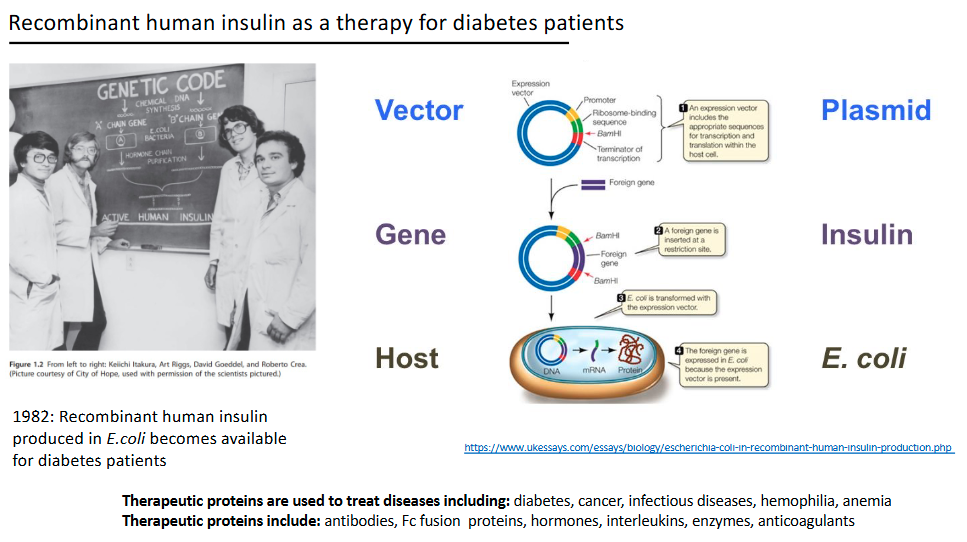
How did we create insulin for diabetics?
Recombinant human insulin produced in E.coli becomes available for diabetes patients
What are plasmids?
Circular, double-stranded pieces of DNA found in bacteria (but also archaea and eukarya) that are separate and replicate separately from the host’s chromosomal DNA (though inside the host
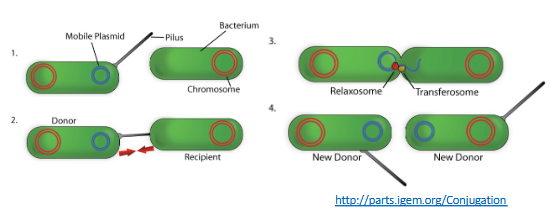
Horizontal gene transfer
Plasmid is transferred to neighboring bacteria through conjugation
What are the functions of a plasmid in a lab?
Used as vehicles or vectors to multiply pieces of DNA or to introduce foreign DNA into organisms to make them express genes of interes
Why do we use plasmid in the lab?
Can ‘easily’ be modified
Can be produced in large quantities from bacterial cultures
Can harbor the desired gene, but also a distinguishing gene (i.e. a selectable marker/antibiotics resistance)
What are the 3 basic features of a cloning vector?
1. Origin of replication (promoter equivalent)
2. Antibiotic resistance
3. Multiple cloning site (MCS) – a portion of the
plasmid with many consecutive restriction sites.
What was the original purpose of restriction enzymes?
To protect bacteria from phages
Bacteria protect themselves using methylation (or restriction sites not in genome)
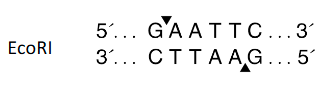
Restriction enzyme site properties?
Palindromic
4-8 bp long
What was the earlier use of restriction enzymes?
Cut the DNA into small pieces for easier analysis
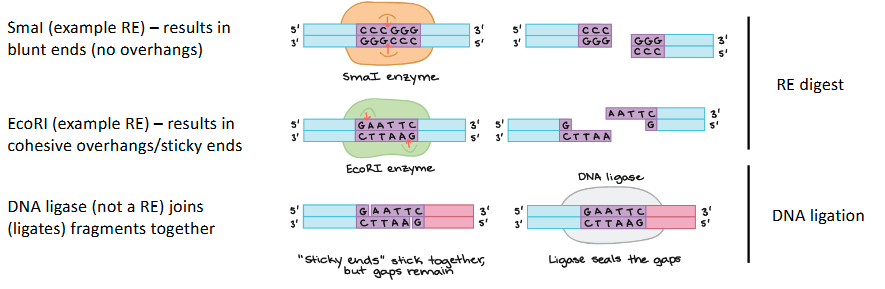
Smal & EcoRI & DNA ligase functions
Issue with blunt-end ligation in a lab?
No orientation
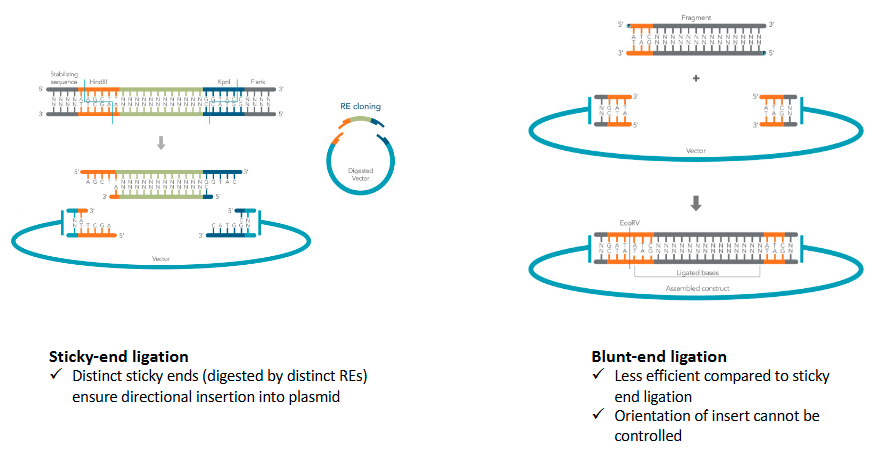
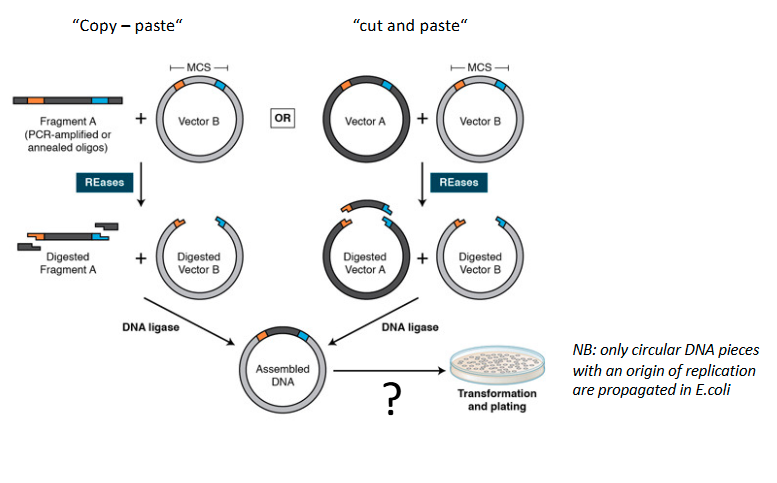
Recombining DNA fragments using restriction enzymes and DNA ligase (not a question)
 Note
Note  Flashcards (23)