L9 + L10 Multi-Species Dynamics
 Studied by 0 people
 Call Kai
 Learn
Learn Practice Test
 Spaced Repetition
 Match
Match Flashcards
 Knowt Play
1/39

There's no tags or description
Looks like no tags are added yet.
Name | Mastery | Learn | Test | Matching | Spaced | Call with Kai |
|---|
No study sessions yet.
40 Terms
What is the same about species in the same trophic level?
species use same resource (e.g. food, light, space, mating partners)
Results in inter-specific competition
What makes species a part of different trophic levels?
One species uses other species as resource
-Weak link at individual level: predation and herbivory
-Strong link at individual level: Parasitism and disease
Why does competition occur?
- Usually, at least one resource limiting population size
- Individuals from different species will compete for this limited resource
- Superior competitor will outcompete inferior competitor
What will happen if there is no resource limiting the species?
population size will increase until a resource becomes limiting
Can species coexist?
yes
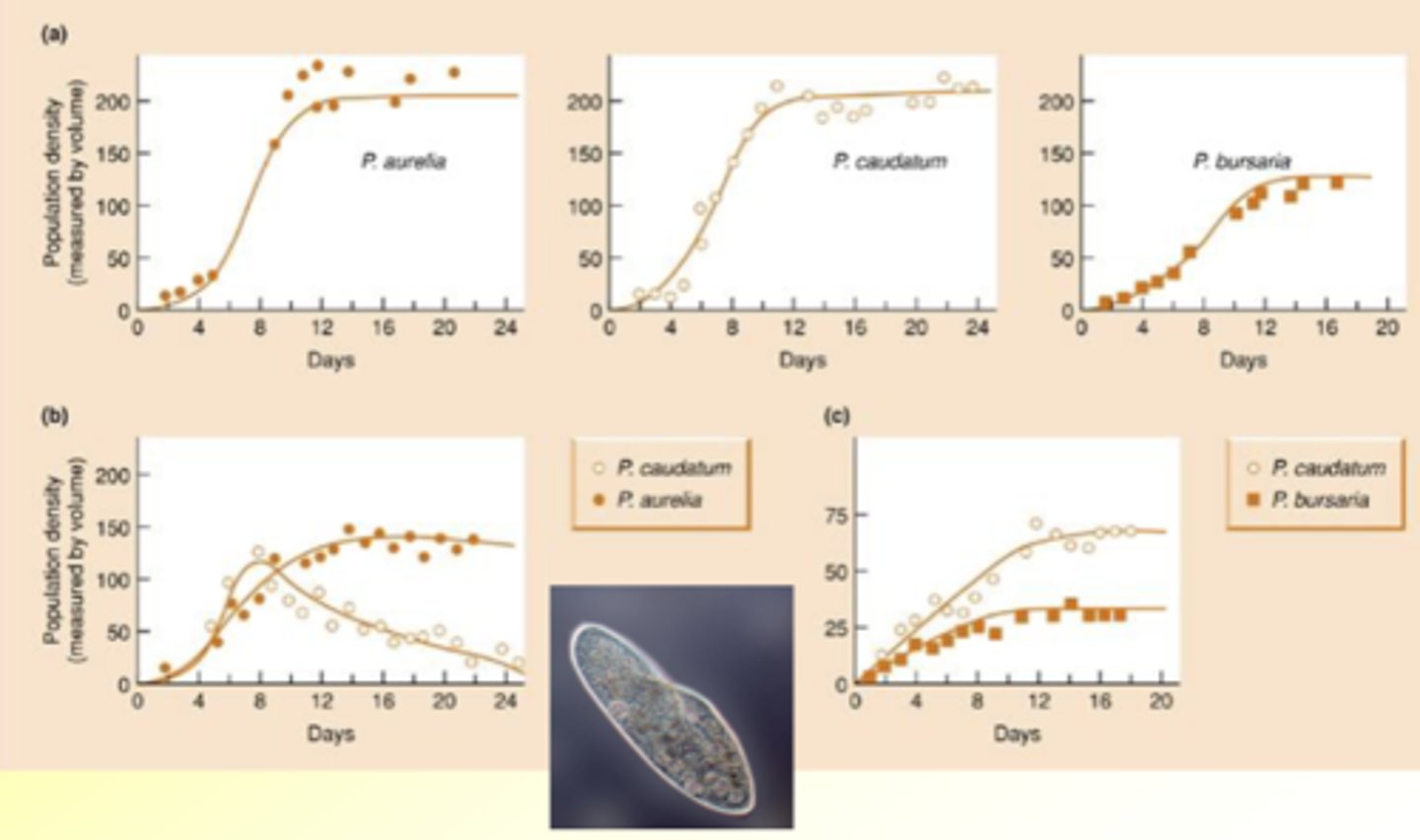
What is an example of Competitive exclusion & coexistence
In different species of paramecium
can have situations when they outcompete each other and where they coexist
What does the Lotka-Volterra model show?
a model of predator-prey interactions that incorporates oscillations in predator and prey populations and shows predator numbers lagging behind those of their prey
very simplistic, but useful for insight
Lotka (US) and Volterra (It) were mathematicians in the 1920s. Lotka deserves the sole credit for this particular set of equations, but all the literature refers to the set as the "Lotka-Volterra competition equations"
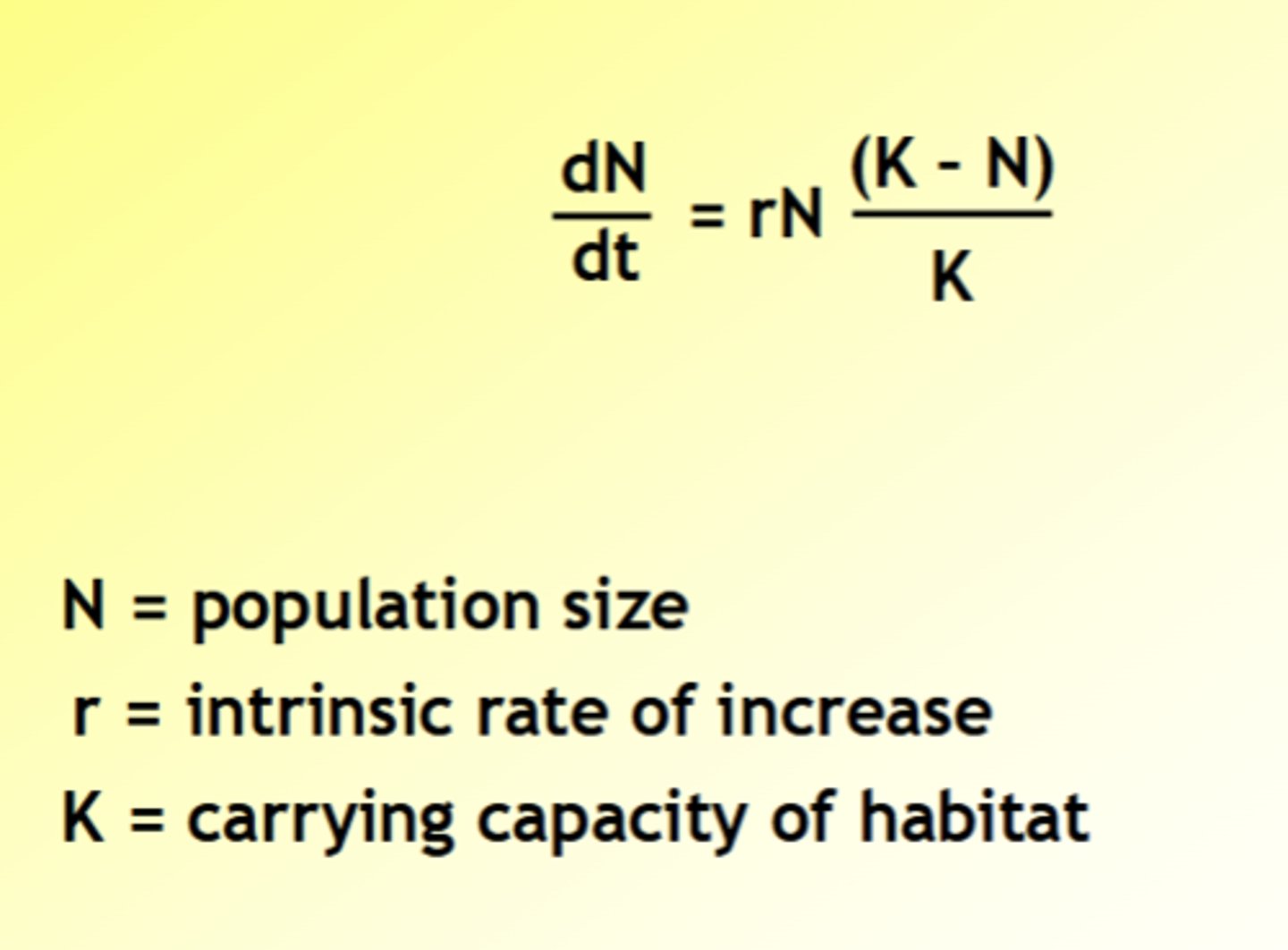
What is the Lotka-Volterra Logistic equation for one species?
What is the Lotka-Volterra equation for 2 species?
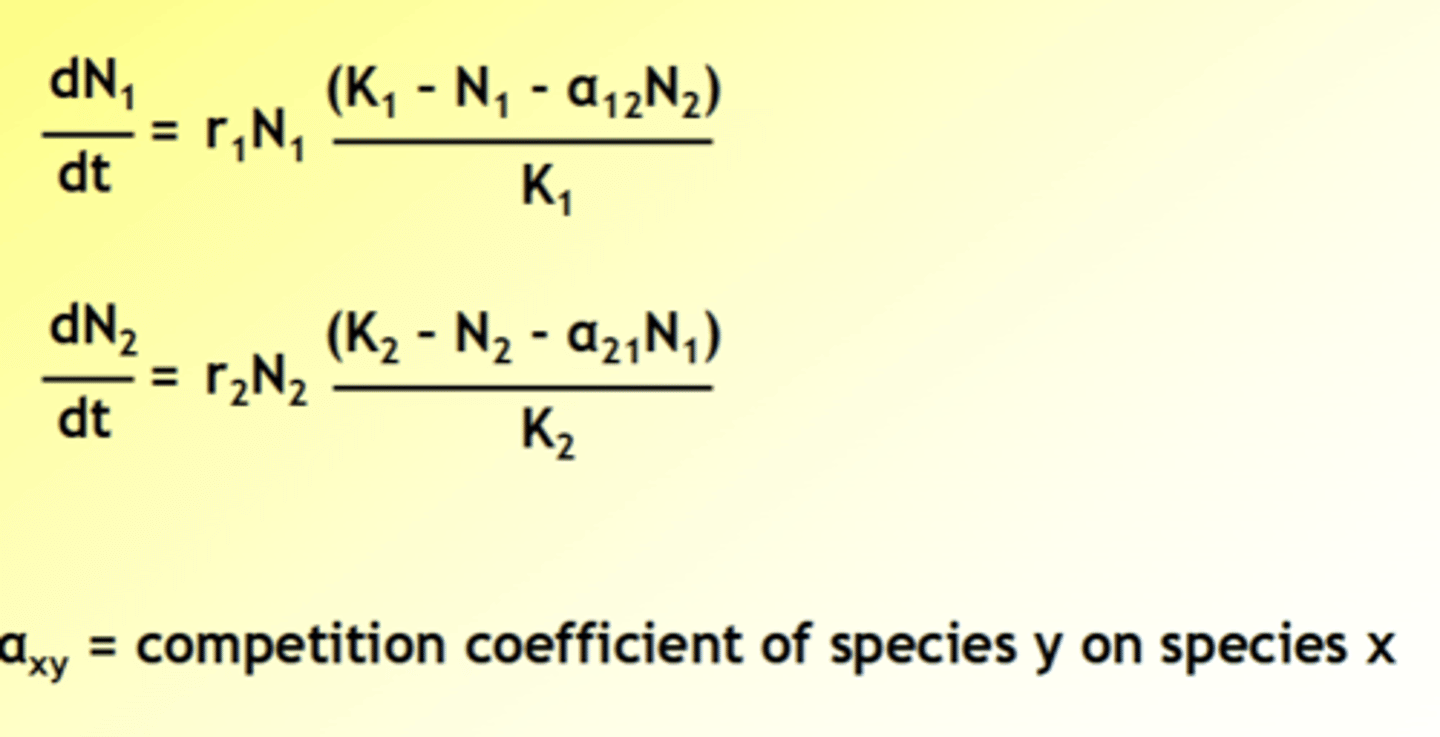
What does competition coefficient mean?
a measure of the effect of one individual of species 2 on the growth of species 1
Under what circumstances do N1 (number of individuals in species 1), N2 (number of individuals in species 2) increase/decrease?
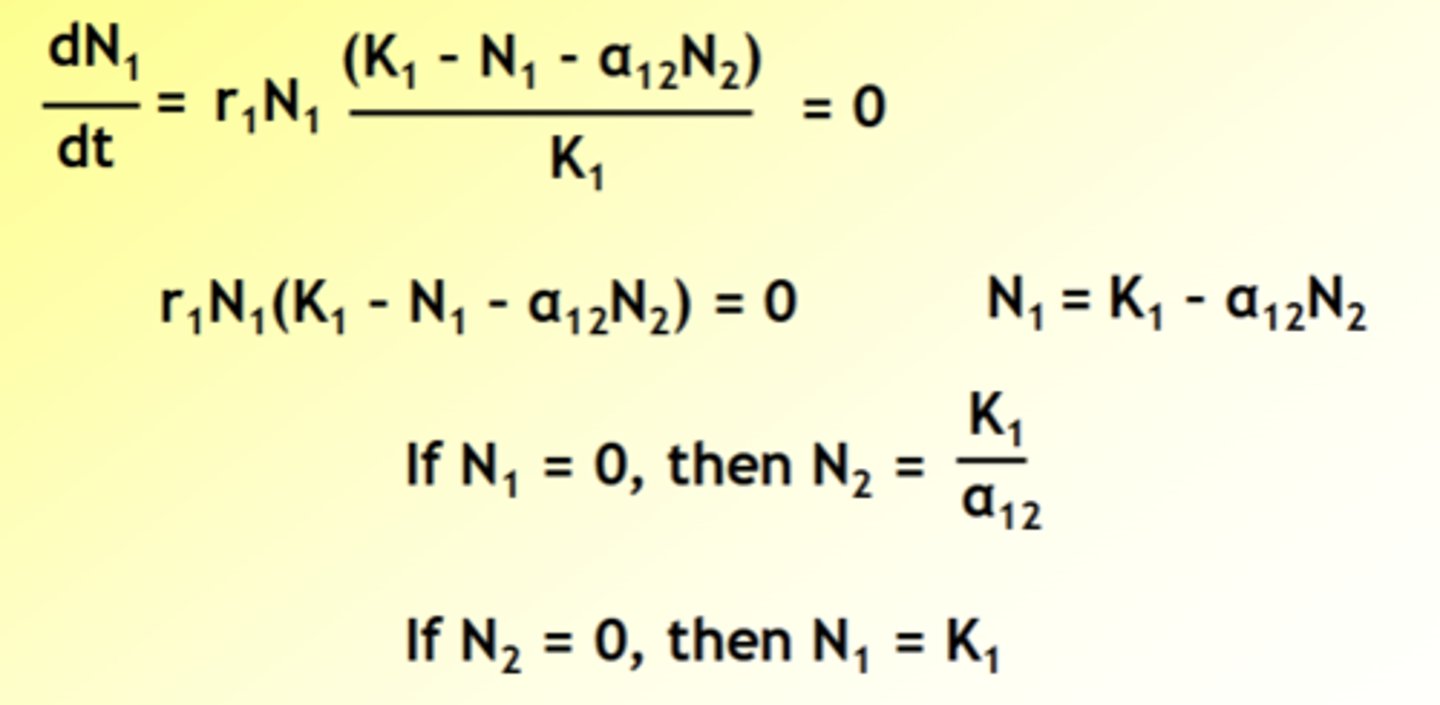
What is the equation for the Zero isocline in species 1 and 2?
If on left size species 1 would increase
If on right side species 1 would decrease
for species 2 if population is below line it will increase
If population is above line it will decrease
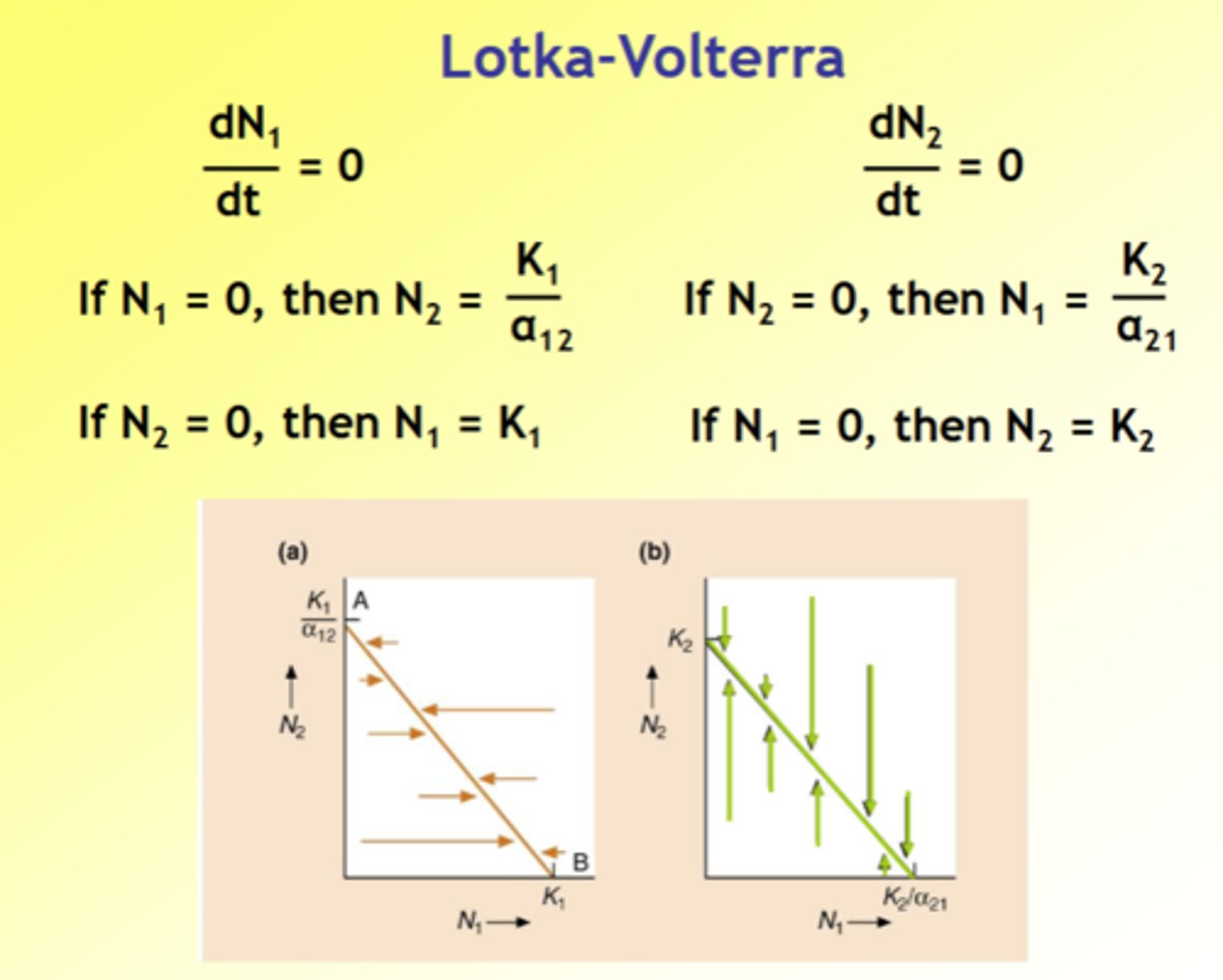
What does Zero isocline mean?
no change in population size
How can the graphs be put on top of each other to represent both species?
1. Below green line will move towards green line
- between then species 2 decrease and species 1 increase (exclusion occurs)
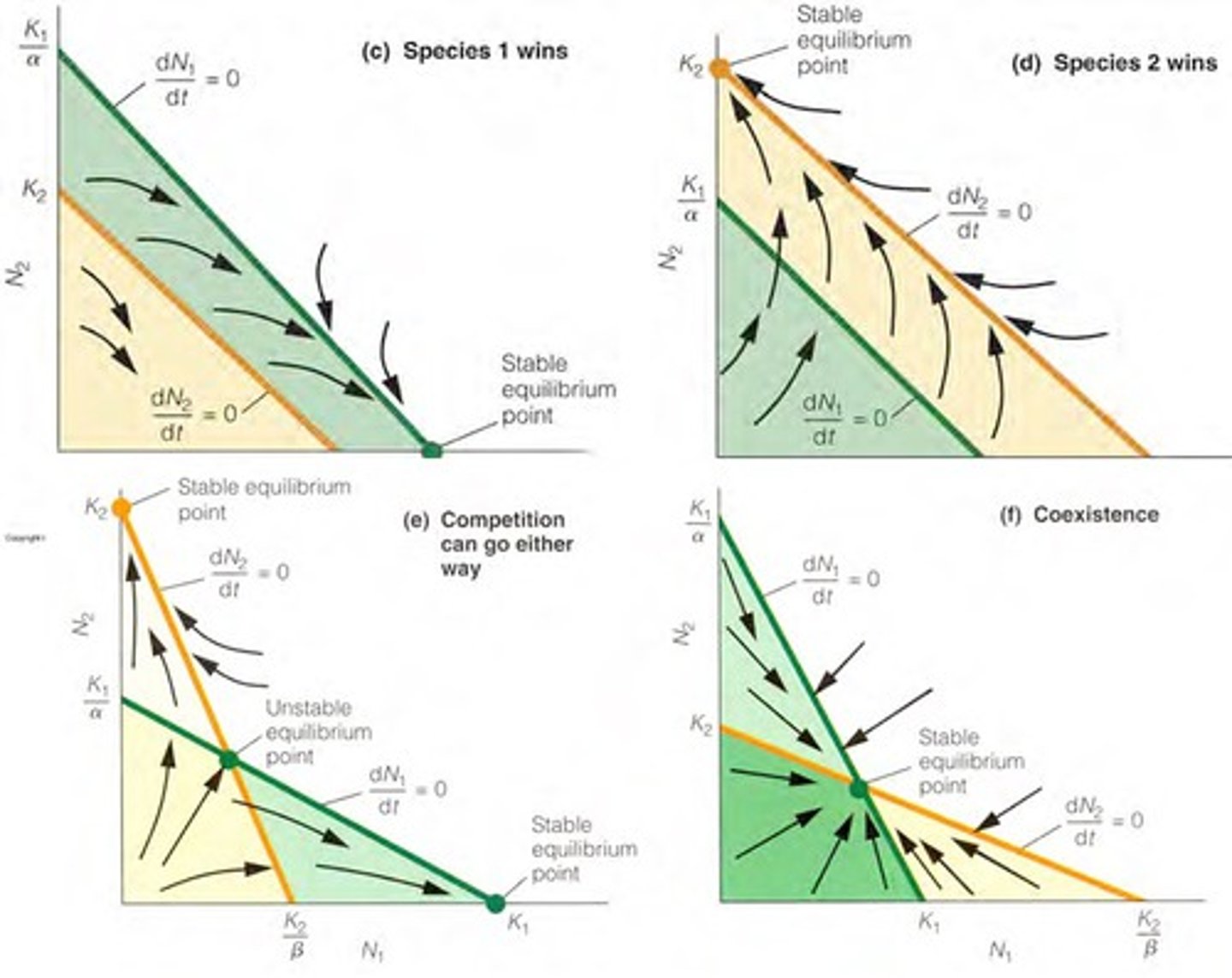
What is the 1st way of overlapping the Lotka-Volterra graphs?
- Effect of species 2 on itself < effect of species 1 on species 2
- Effect of species 1 on itself > effect of species 2 on species 1
- Species 1 is strong interspecific competitor, species 2 is weak interspecific competitor: species 1 always excludes species 2
If species 1 in middle goes towards green arrow
If species 2 in middle go in direction of orange arrow
Overall goes in direction of black arrow
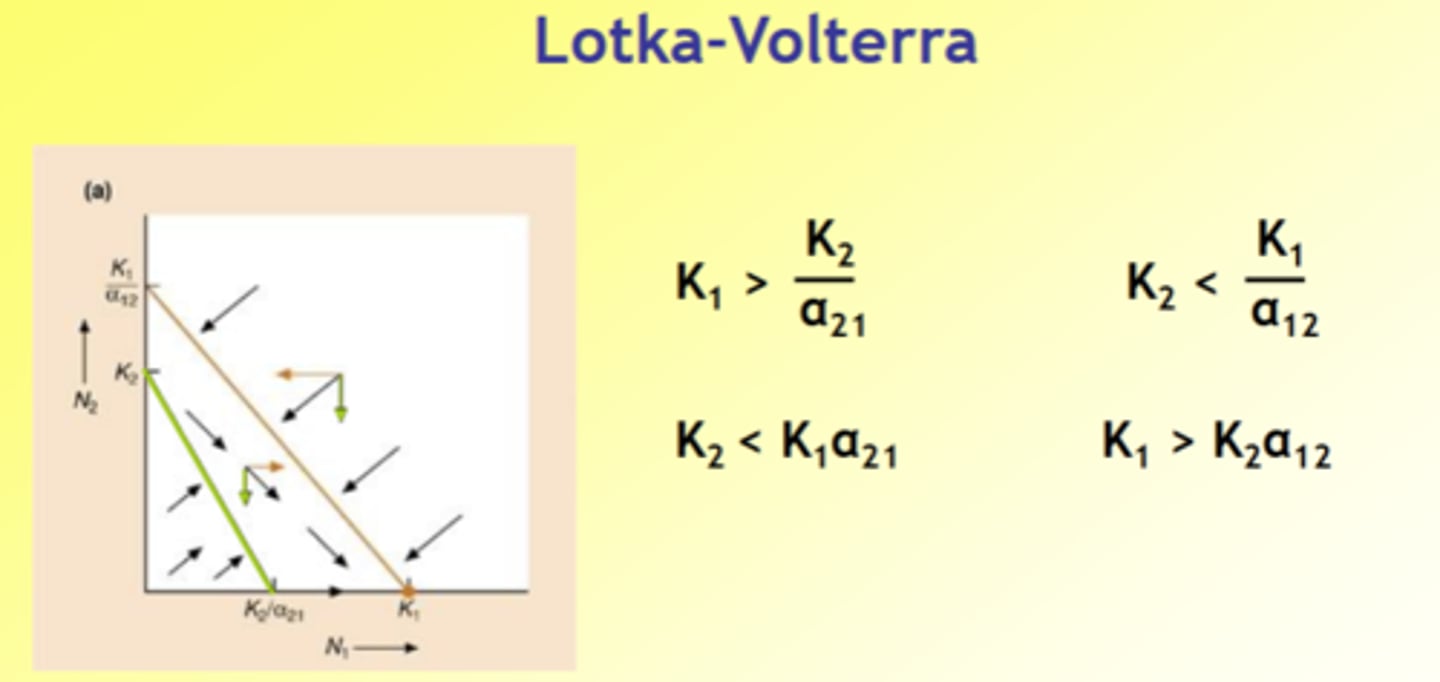
What is the 2nd way of overlapping the graphs?
- Effect of species 2 on itself > effect of species 1 on species 2
- Effect of species 1 on itself < effect of species 2 on species 1
- Species 2 is strong interspecific competitor, species 1 is weak interspecific competitor: species 2 always excludes species 1
opposite of 1st
species 1 on bottom
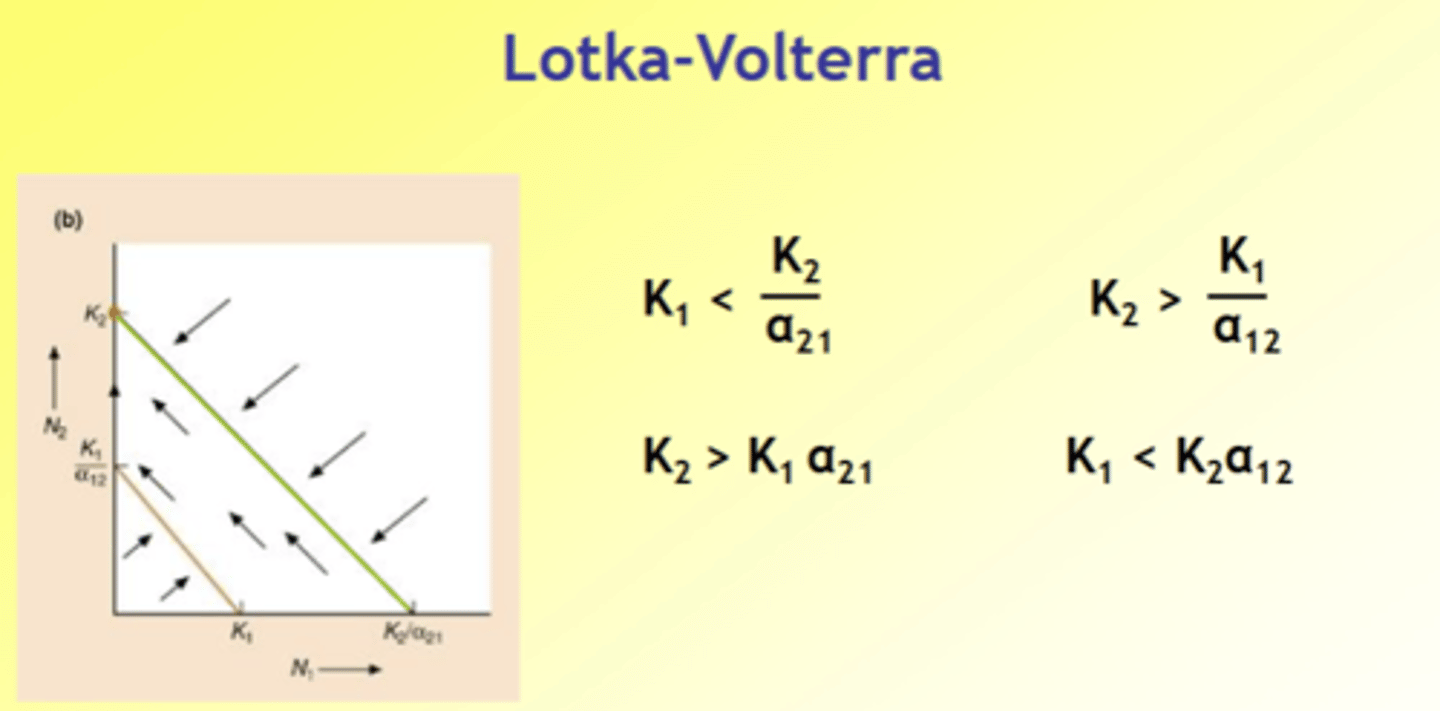
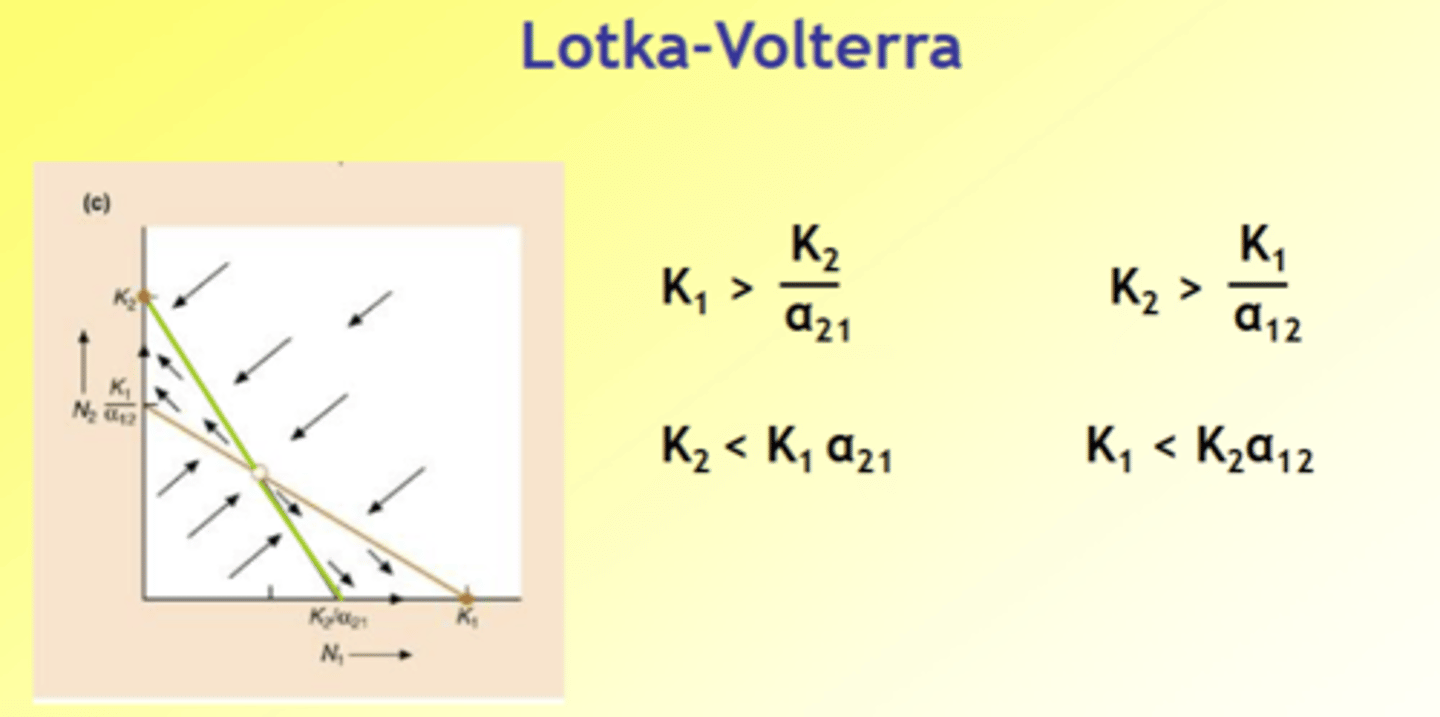
What is the 3rd way of overlapping the Lotka-Volterra graphs?
- Effect of species 2 on itself < effect of species 1 on species 2
- Effect of species 1 on itself < effect of species 2 on species 1
- Both species are strong interspecific competitors, which one excludes which one depends on initial densities
Which species outcompetes which species depends on initial environment/ circumstances
if in middle unstable equilibrium
Where you start determines where it goes
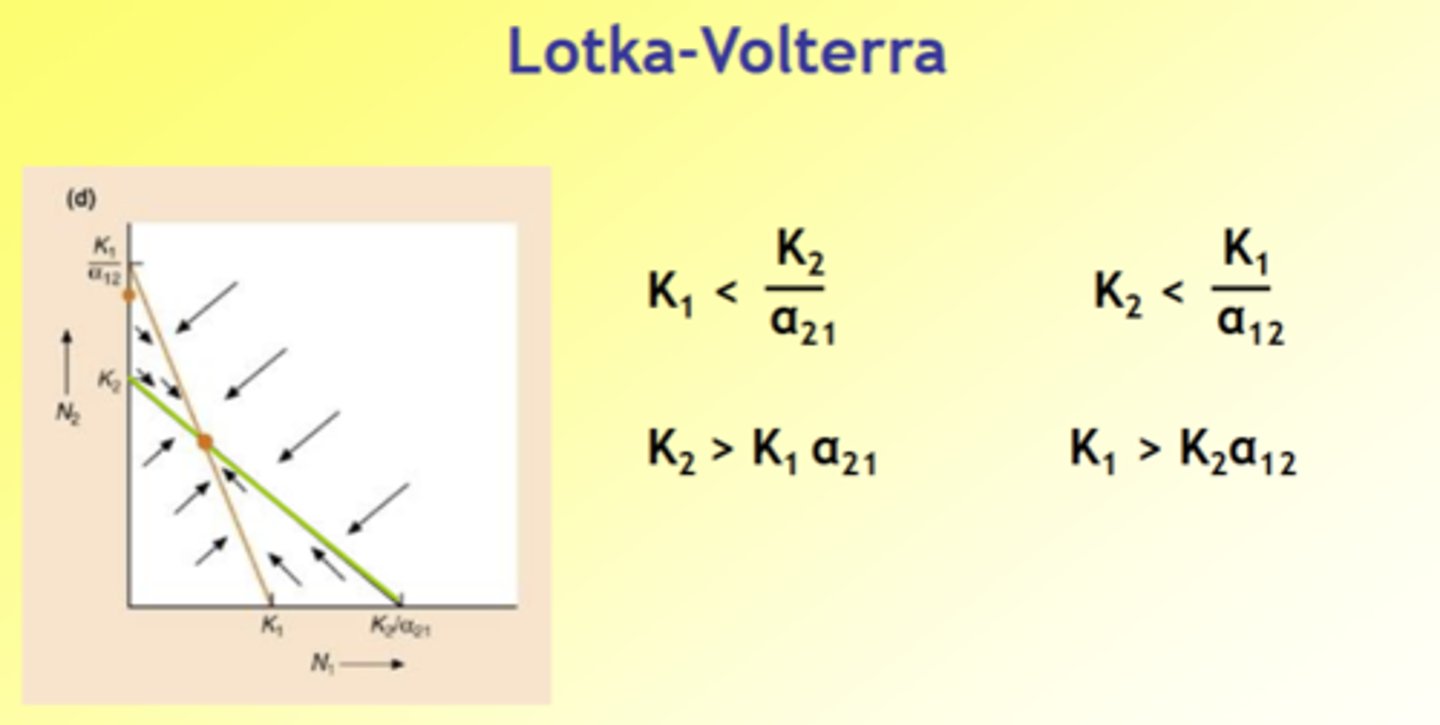
What is the 4th way of overlapping the Lotka-Volterra graphs?
- Effect of species 2 on itself > effect of species 1 on species 2
- Effect of species 1 on itself > effect of species 2 on species 1
- Both species have less effect on the other species than on themselves and therefore coexist
All point towards stable equilibrium
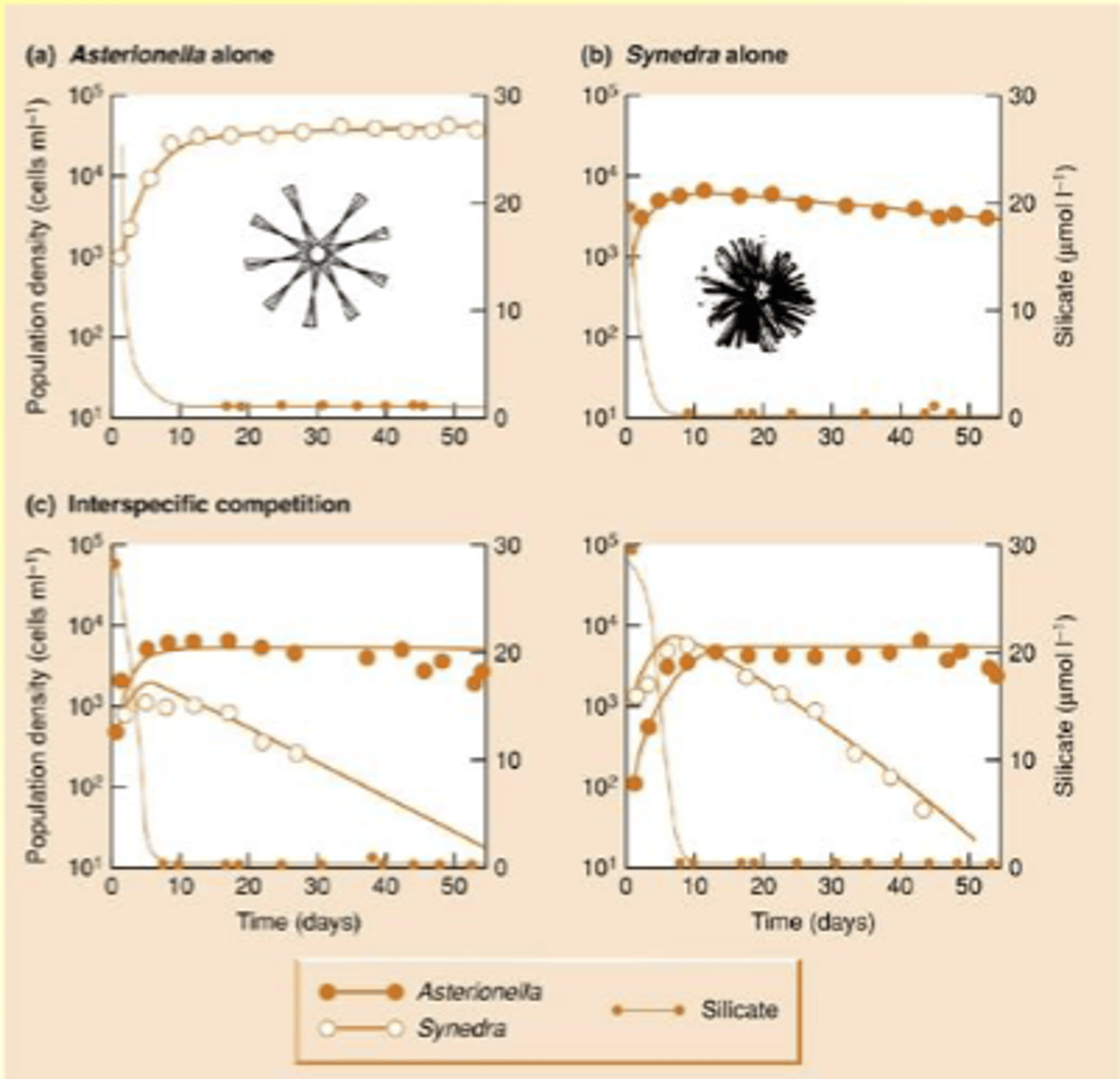
How was the Lotka-Volterra model tested?
- Vandermeer (1969) Ecology 50: 362-371
- Competition experiments using four species of ciliates
- Uses Lotka-Volterra model
- Results of competition experiments pretty much as predicted by model
What is intra specific competition?
competition between individuals of the same species
What is inter-specific competition?
competition between different species
What is a superior competitor?
Is that species that can reduce the resource to its lowest level (at the lower level other species cannot exist on it)
What is resource-based competition?
resource that species are competing for
Limited resource 'somehow' included in competition coefficient α
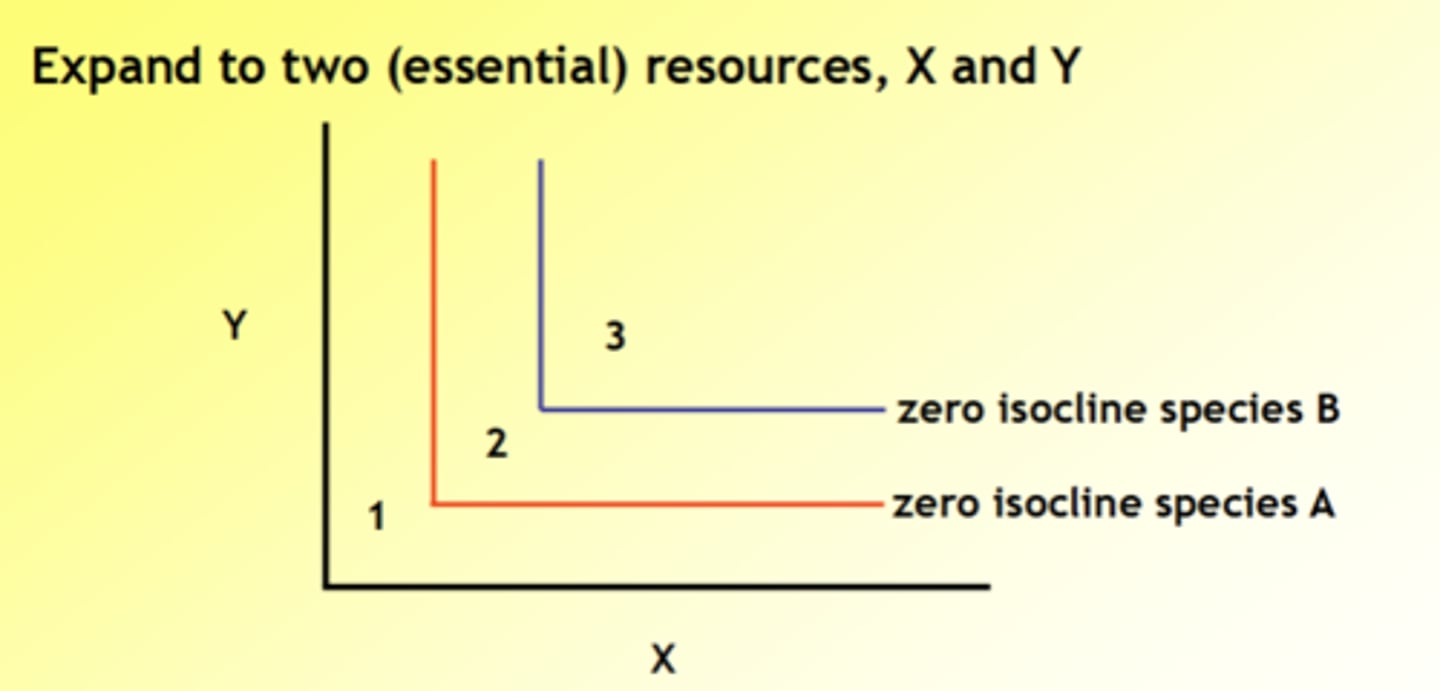
How can you represent resource based competition between 2 species?
- Habitat in 1: too poor for either species
- Habitat in 2: species A can grow, but too poor for species B
- Habitat in 3: species A outcompetes species B, because it can reduce resources to a lower level
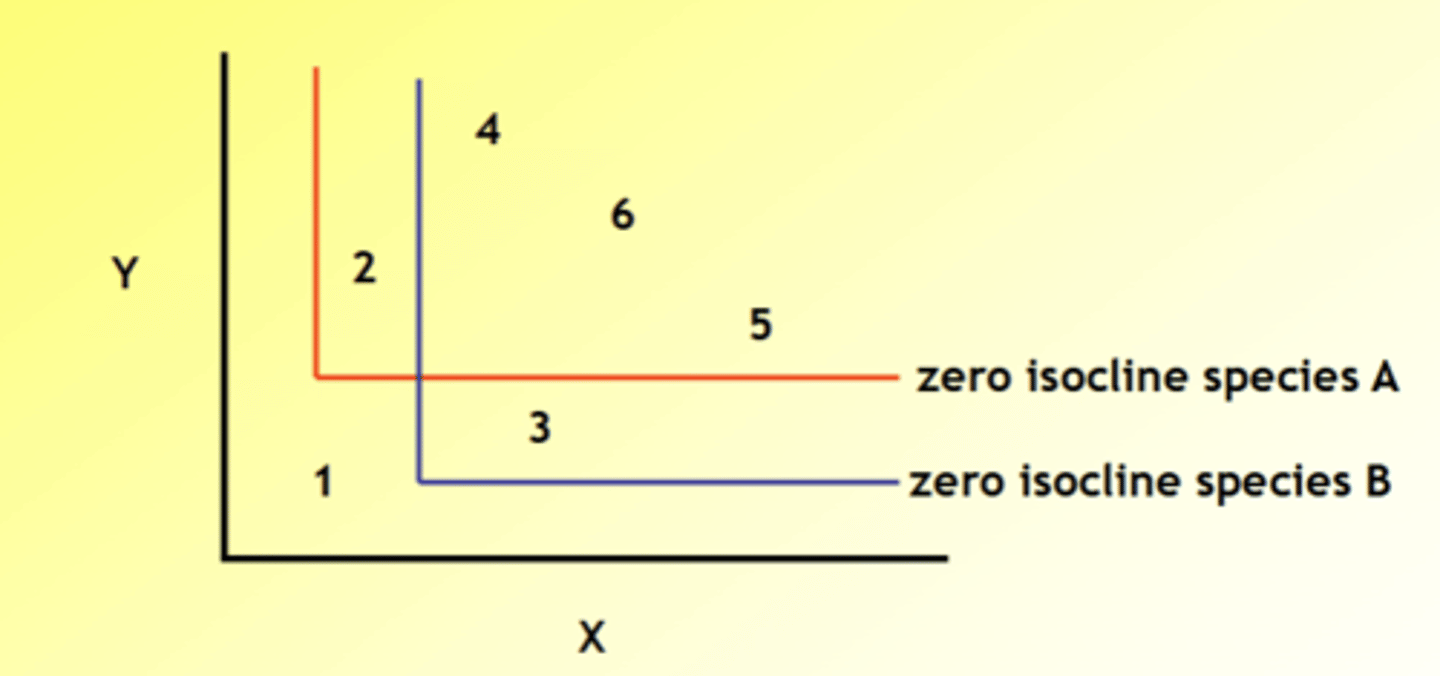
What happens when you cross the zero isoclines in resource based competition between 2 species?
- Habitat in 1: too poor for either species
- Habitat in 2: species A can grow, but too poor for species B
- Habitat in 3: species B can grow, but too poor for species A
- Habitat in 4: resource X more limiting than resource Y; species A outcompetes species B, because it can reduce resources to a lower level
- Habitat in 5: resource Y more limiting than resource X; species B outcompetes species A, because it can reduce resources to a lower level
- Habitat in 6: species A more limited by resource Y than by resource X and species B more limited by resource X than by resource Y
What is the reality of coexistance?
Reality outside: high numbers of species coexisting
- Coexistence in LV only in ¼ of cases
When there is one resource, who wins?
One resource: superior competitor always wins
When there is more than 1 resource who wins?
- More than one resource: coexistence possible
- Add more resource dimensions
What is the competition-colonization trade off?
- Two species; S1 is superior competitor, S2 is superior disperser
- Simulation model: 2-dimensional lattice used to show this
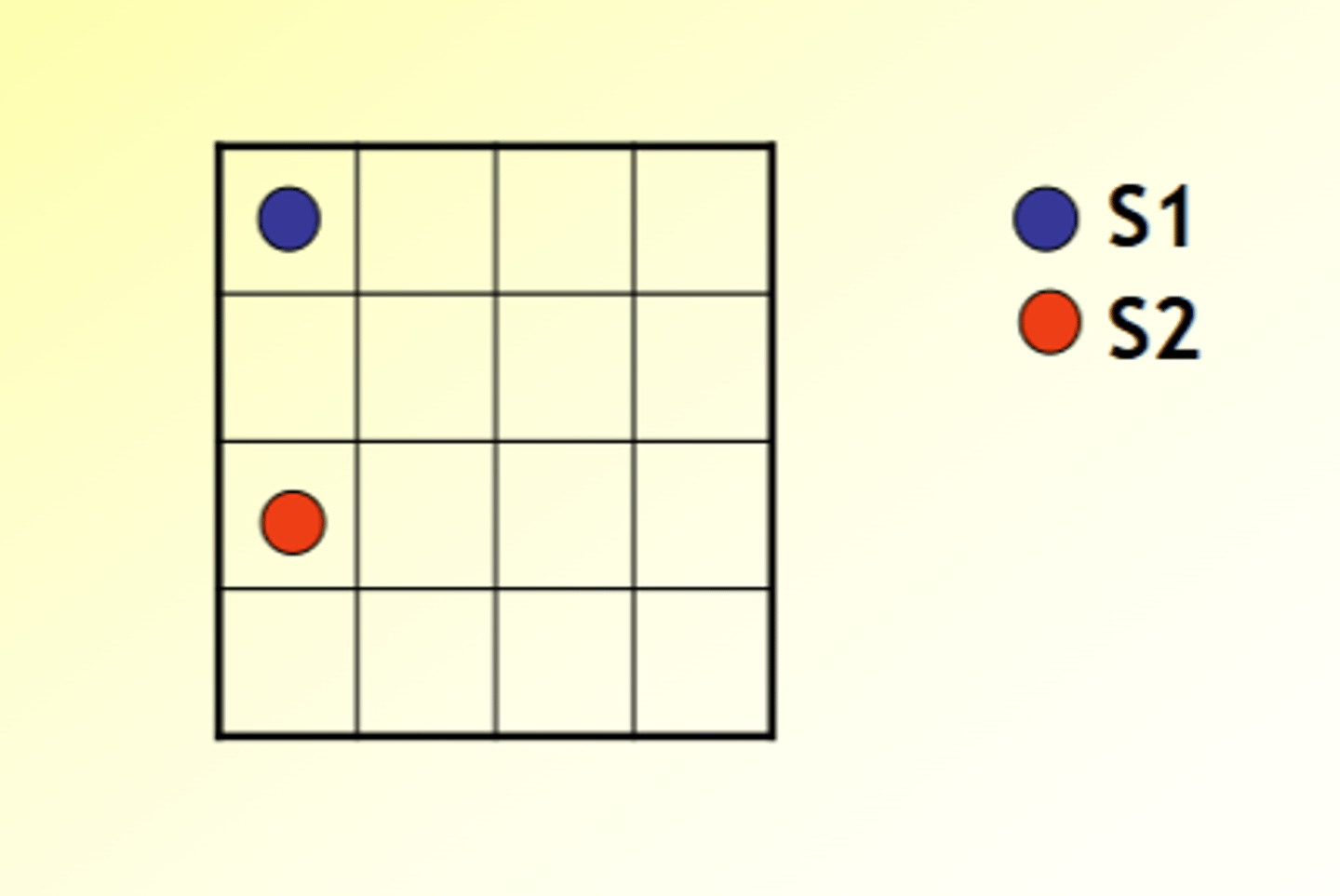
How does the 2 dimensional lattice show the competition-colonization trade off?
- S1 offspring can only move one cell
- S2 offspring can move to any empty cell
- If S1 and S2 occur in the same cell, S1 always wins
- Competition-colonization trade-off
- Both S1 and S2 die after some time
- S2 can persist if cE* > 1
- c = fecundity S2; E* = proportion of empty cells
In this model, one species is a superior competitor but can only invade nearby patches, while the other is an inferior competitor but can colonize distant patches, allowing them both to coexist on the lattice instead of the superior competitor excluding the other. This occurs because the "colonizer" can find new vacant patches that the "competitor" cannot reach, and the "competitor" can outcompete the "colonizer" in patches where they both exist.

How were fruit flies used to show competition-colonization trade-off?
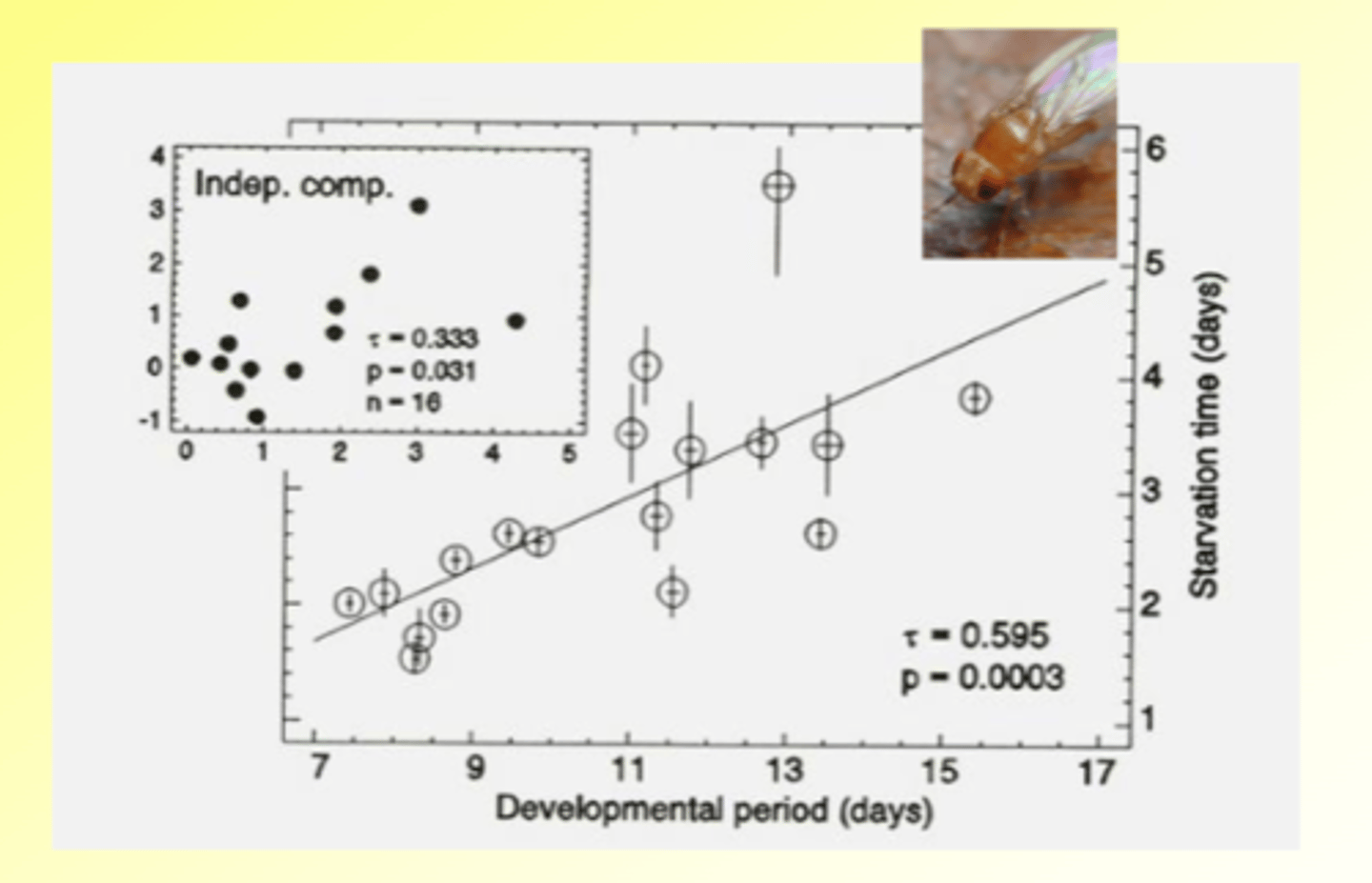
- Work by Sevenster in early 1990s: Drosophila species on fruits in the tropics
~ Looked 20 species on same fruit (same food source): Spondias mombin
- Saw the group was pretty much stable and coexisted on the same resource
- This was because there was: Spatial and temporal variation in abundance of fruits (complexity and heterogeneity in the habitat)
- Looked at Two key traits: larval development period (key trait in competitive ability) and adult starvation tolerance (how long can live without food and water) (key in dispersal ability)
- Trade-off between developmental period and starvationtime
-'Fast' species do better when fruits are common; 'slow' species do better when fruits are scarce
Can you have a species that is a good disperser and competitor?
No its good at one or the other
Why do no species go extinct in the fly data?
'Fast' species do better when fruits are common; 'slow' species do better when fruits are scarce
Balance out
What did Pseudomonas fluorescens in vials with liquid nutrients being shaken and still show about complexity and niche differentiation?
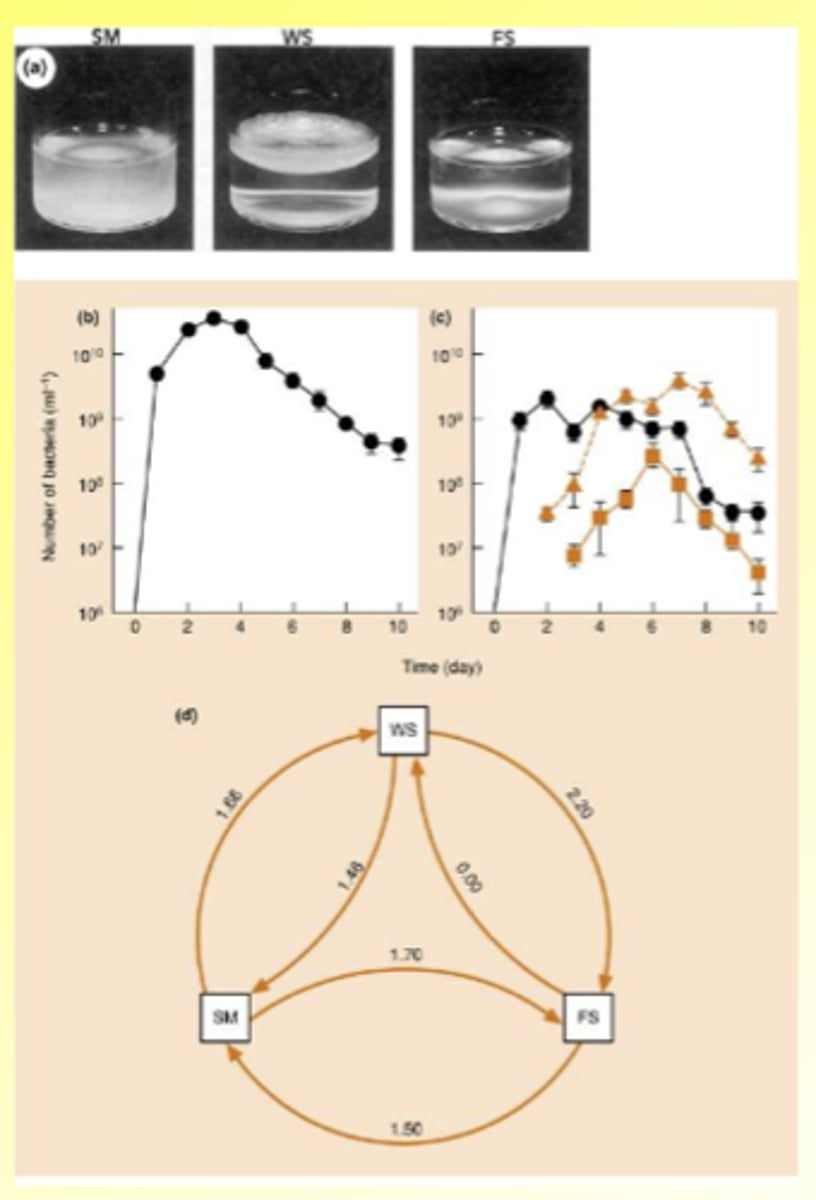
- Recent work by Rainey et al: Pseudomonas fluorescens in vials with liquid nutrients
- If vials are shaken, one form present of bacterium: 'smooth' (SM)
- If vials are left standing still, several forms of bacteria coexist: 'smooth' (SM), 'wrinkly spreaders' (WR), 'fuzzy spreaders'(FS), etc
- Shaken vials = homogeneous environment
- Standing vials = heterogeneity -> complexity -> coexistence through niche differentiation
What does this data on the bacteria in the complexity and niche differentiation experiment show?
- Different forms arise from single type (SM) as a result of mutation and natural selection
- Because they are asexual, they can be considered as separate species
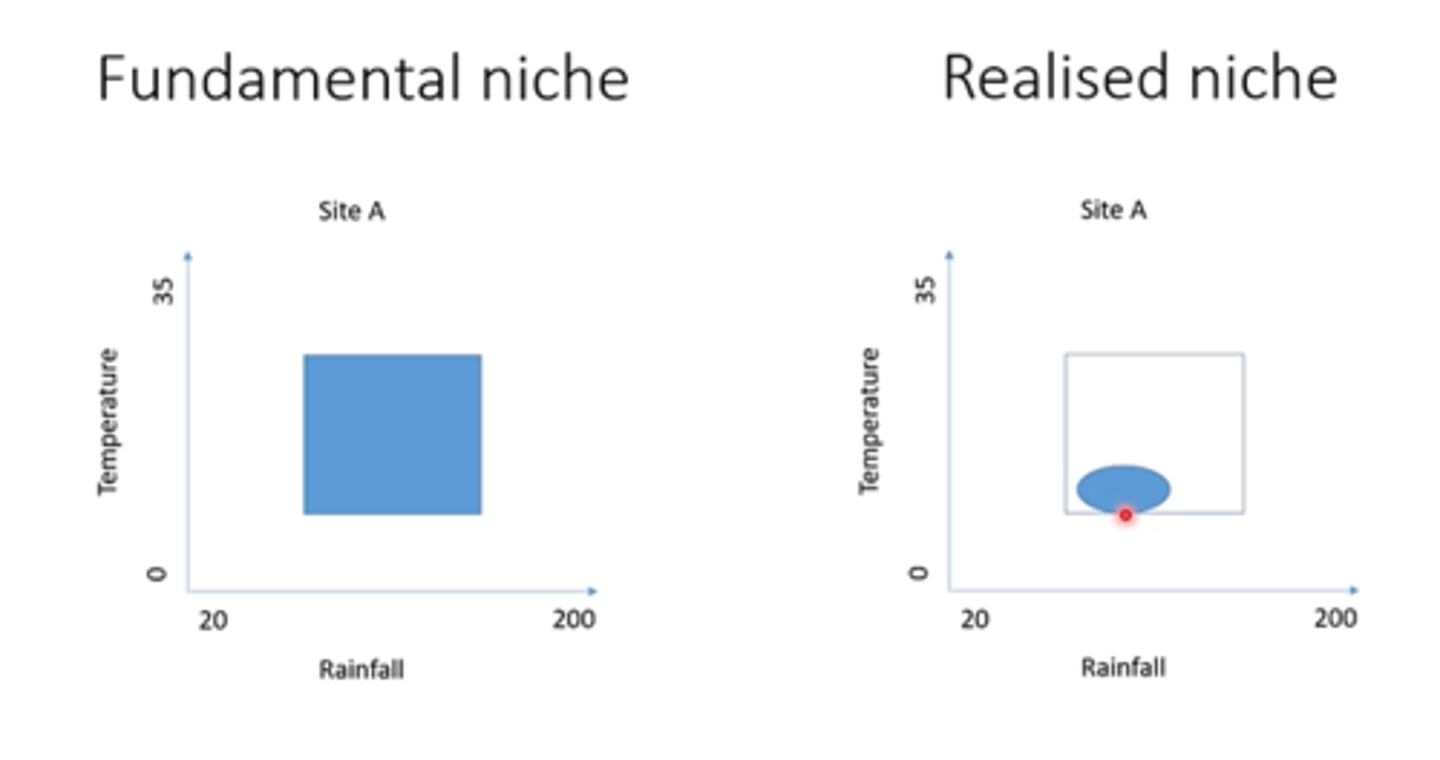
What is a fundamental niche?
set of environmental parameters within which a species can survive
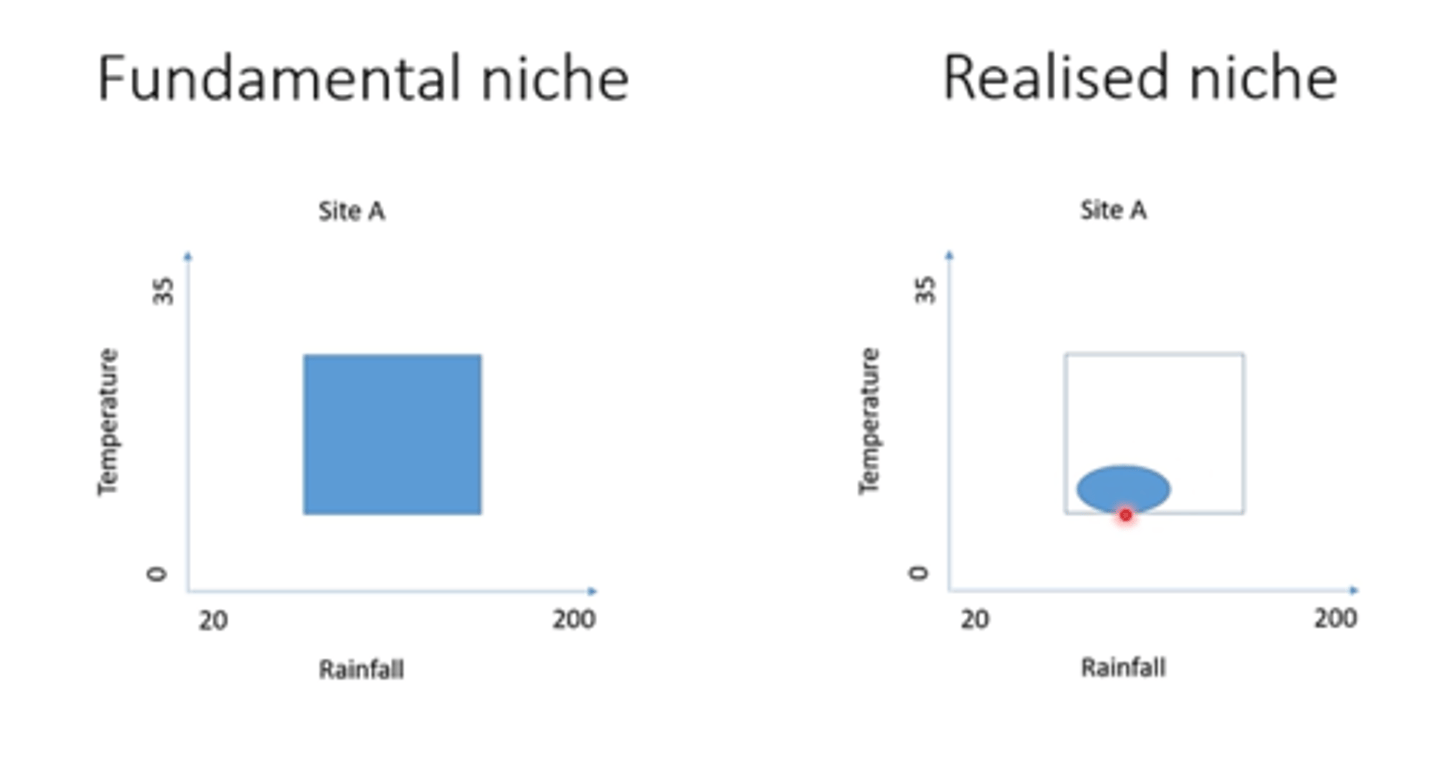
What is a realised niche?
part of the fundamental niche, occupied in the presence of competitors
What is the idea of the 'ghost of competition past'?
suggesting that the effects of past competition continue to shape a species' traits and distribution even after direct competition has decreased or disappeared
Eg. British broad-leaved woodlands have large mix of birds
- Same food requirements (insects, seeds in winter) – same fundamental niche
- Subtle differences in e.g. where they forage, size of insects and seeds – different realised niches
What questions have arised because of the 'ghost of competition past' idea?
- Species have been different from the start?
- Coexistence due to existing species differences?
- Case of evolution of niche differentiation?
- Coexistence due to competitive interactions in the past?
What plays an important role in shaping a community?
competition
 Note
Note  Flashcards (58)