Cognitive maps, perception
 Studied by 0 people
 Call with Kai
 Learn
Learn Practice Test
 Spaced Repetition
 Match
Match Flashcards
 Knowt Play
1/41

There's no tags or description
Looks like no tags are added yet.
Name | Mastery | Learn | Test | Matching | Spaced | Call with Kai |
|---|
No study sessions yet.
42 Terms
Cognitive Maps
Are a representation of space that describes distances and directions which includes knowing where you are within this map.
Two types of cognitive maps
Survey representations and route representations
Survey Representations
Birds eye view, using external references such as north/south
Route Representations
A path view relative to self. (ex. turn left after captain’s den to reach CNU)
How do people differ
People differ in how they navigate a spatial scene and not everyone creates a cognitive map
Features of cognitive map
1. Shortcuts 2. landmarks 3. integrating routes to create a survey (bird’s eye view) map
What brain regions do cognitive maps use
Research suggests hippocampus may create a map (place learning); while basal ganglia (“striatal system”) creates a route (response learning)
Dual solution paradigm
Meaning that people can use a mixture of the two strategies
Shortcuts rely on what brain region?
Hippocampus
Familiar routes rely on what brain region?
Basal ganglia (“striatal system”)
What future research needs to be done on cognitive maps
Research needs to keep in mind how they are defining features of a cognitive map and be prepared to test for individual variation
Define perception
Is an experience resulting from stimulation of the senses
What is perception based on
What we sense, past experiences, expectations
Types of processing
Bottom-up processing and top-down processing
Bottom-up Processing
Perception comes from stimuli in the environment. Parts are identified and put together and then recognition occurs.

Top-down Processing
People construct perceptions using information based on knowledge and expectations. We use our knowledge to inform our perceptions
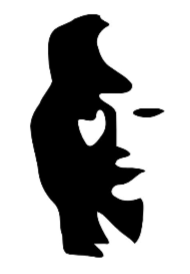
Helmholtz’s theory of unconscious inference
Perception is based on unconscious assumptions about the environment based on past experiences.
Likelihood Principle
We perceive the “most likely” objects based on expected patterns
Object Permeance
Babies as young as 4 months are aware of how objects should behave relative to other objects. Research done by Jean Piaget. A behavioral measure for a young participant who cannot speak is how long they look at something
Measure a behavioral reaction
Recording behavioral response or reaction to a situation or stimulus
Measure reaction time
Amount of time it takes to respond to a stimulus. Amount of time it takes to complete a task. Frequently called “response time” or RT.
Measure performance
How many correct or incorrect? Measure “self-corrections”. Behavioral measures are frequently paired with other methods.
Summary of perception
Perception is an experience resulting from stimulation of the senses. Perception is based on a combination of (i) what we sense (ii) past experiences and (iii) expectations. Perception can occur through bottom-up and/or top-down processing. Perception (as well as other forms of cognition) can be measured by multiple behavioral measures, which include three broad categories: reaction, time, and performance.
Parts of the brain
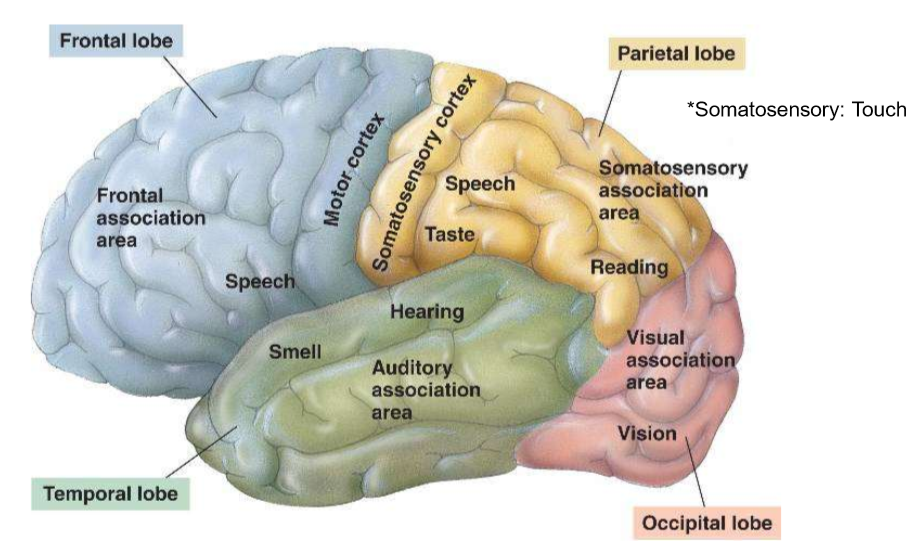
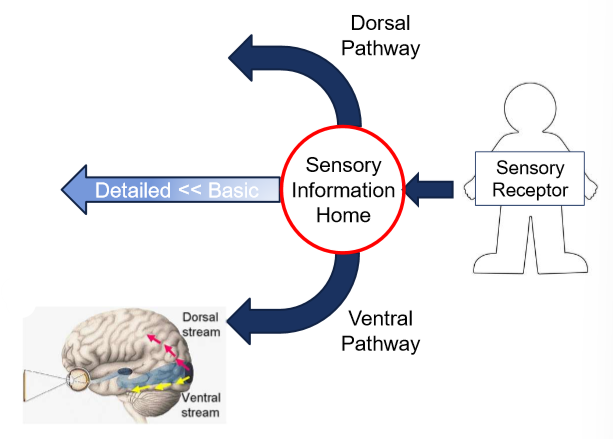
Sensory Common Thread
Each sensory modality has its own pathway but they all follow a similar pattern. Information closest to sensory information “home” (known as primary sensory cortex), the more basic. Information becomes more complex as we move down the path of sensory processing.
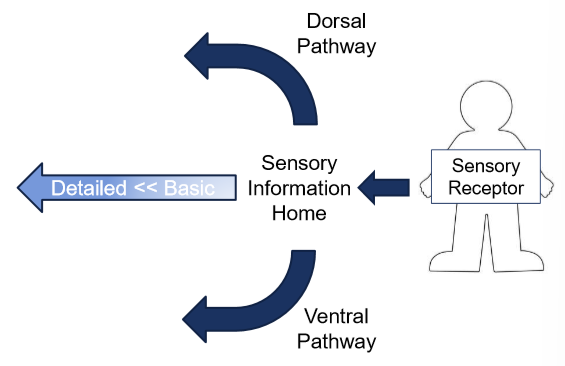
Two primary pathways in sensory receptor
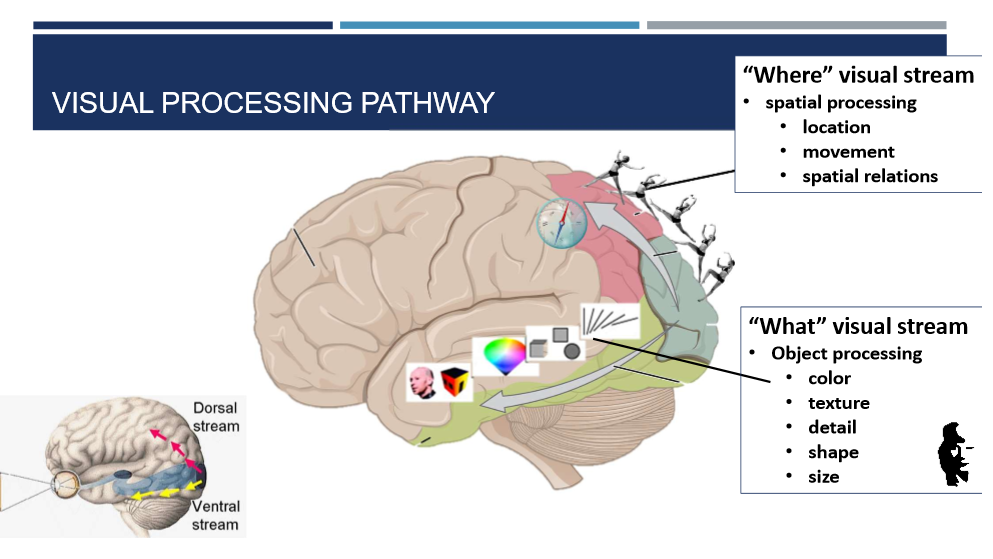
Dorsal (where) and ventral (what)
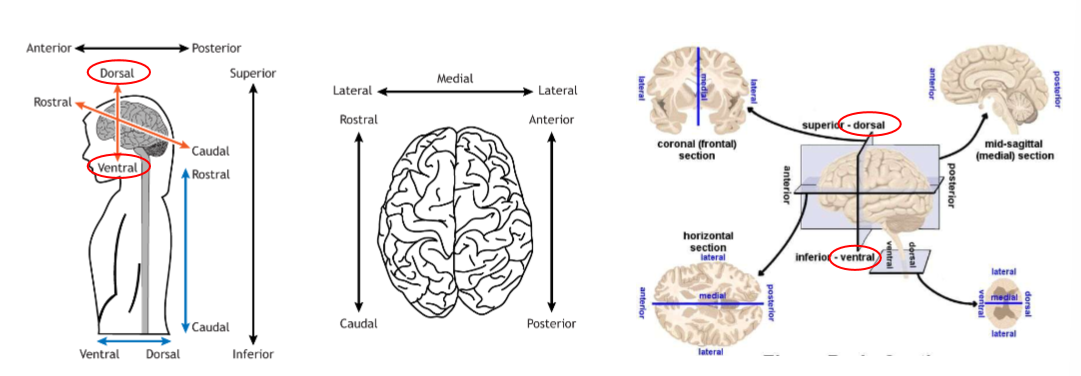
Visual Processing Pathway
Primary visual cortex (V1) is the “sensory information home”. Basic visual information could be lines and colors. More complex visual information would be whole objects, faces, etc.
Visual Processing Pathway
“Where” visual stream: spatial processing, location, movement, spatial relations. “What” visual stream: object processing, color, texture, detail, shape, size.
Summary of “Where is perception”
Each of the five senses has a primary sensory cortex (a “home”). For visual processing this is the primary visual cortex (aka V1). Sensory pathways follow a similar pattern. Upon entering the brain, they travel to their respective primary sensory cortex, then information travels along (at least) two pathways: the dorsal and ventral pathways.
Gestalt School of Thought
The whole is greater than the sum of its parts
Gestalt laws of perception
A collection of principles (or laws) that attempt explains how we perceive (organize & interpret) visual information into unified wholes. Law of good continuation, law of good figure, law of similarity, law of familiarity, law of proximity, law of common fate

Law of Good Continuation
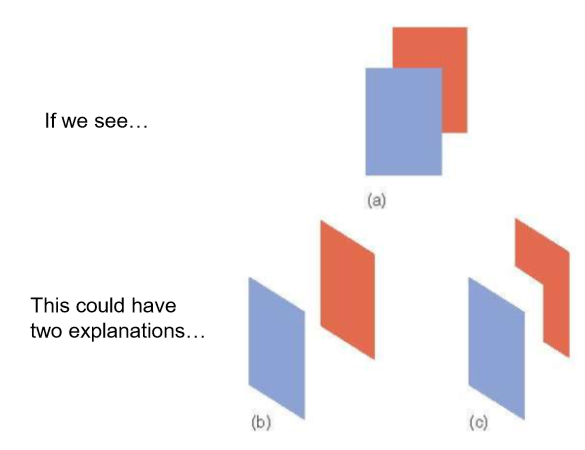
Applies to points that, when connected, result in straight or smooth lines that are seen as belonging together. Lines tend to be seen as flowing the smoothest path. Objects that are overlapping by other objects are perceived as continuing behind the overlapping object.
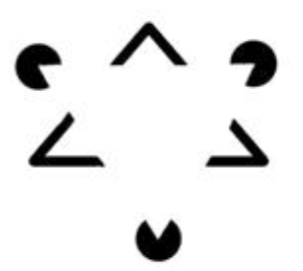
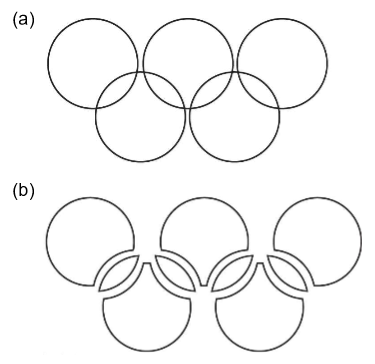
Law of Good Figure
Aka Law of Simplicity. Every stimulus pattern is seen so the resulting structure is as simple as possible. In our example we see five circles in (a) but (b) is perceived as a more complex array of nine objects
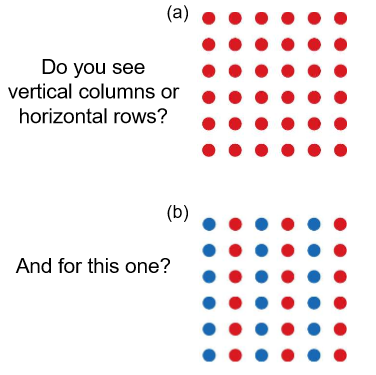
Law of Similarity
Similar things appear grouped together.
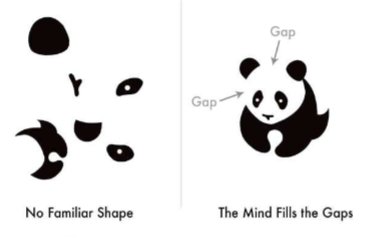
Law of Familiarity
Things are more likely to form groups if the groups appear familiar or meaningful.
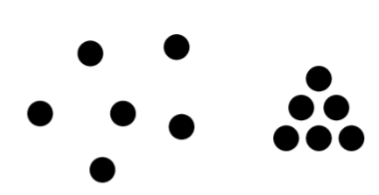
Law of Proximity
Things near each other appear grouped together.
Law of Common Fate
Things moving in the same direction appear to be grouped together.
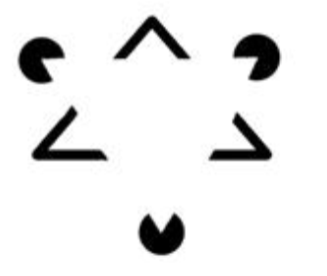
Optical Illusions
When we visually perceive something that is different from our reality. The gestalt laws can be used to help describe how our brains create these optical illusions.
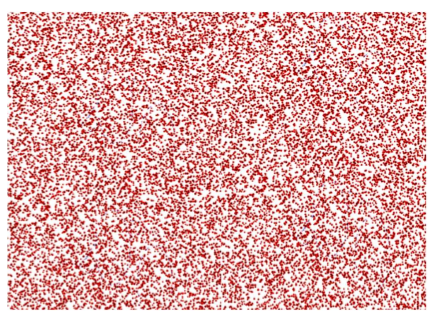
Visual Processing and Perception
Bottom-up: taking in visual pattern. Image is perceived as the same pattern. Top-up: required to “override” sensory input and to systematically count the dots. If this were a behavioral experiment, we could measure how long it takes to do the task and/or accuracy of responses.
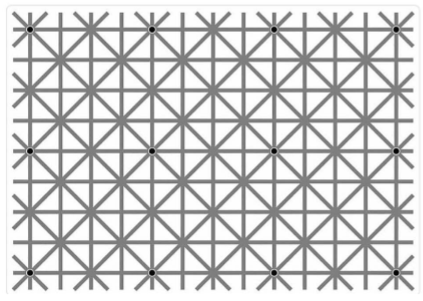
Perception in occipital lobe
Law of Familiarity: Things are more likely to form groups if the groups appear familiar or meaningful. Law of Good Continuation: Applies to points that, when connected, result in straight or smooth lines that are seen as belonging together. Law of Good Figure/Simplicity: every stimulus pattern is seen so the resulting structure is as simple as possible. Gestalt laws of perceptual organization can work in combination to create an optical illusion.
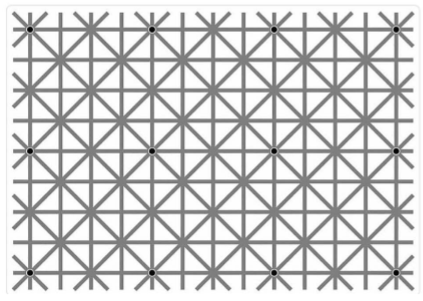
Sensory perception and the brain
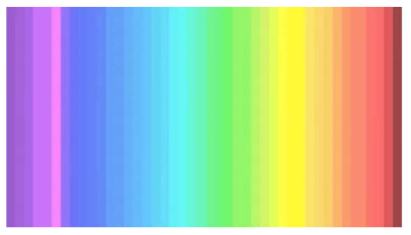
Sensory perception is not always an accurate representation of the stimulus. This can be limited by: sensory detecting abilities (sensory receptors). Conflicts with bottom-up and top-down processing. How many colors do you see? <20 dichromat (2 color receptors), 20-32 trichromat (3 color receptors), 33-39 tetrachromat (4 color receptors)
Summary of Gestalt Laws & Optical Illusions
The six gestalt laws of perceptual organization are a collection of principles (or laws) that attempt explain how we perceive objects. The gestalt laws can be used to describe how these optical illusions are created. Both top-down and bottom-up processing can influence our perception.
 Note
Note  Flashcards (23)