[FUNAV] M5 | METEOROLOGY AND IT’S IMPACT ON AVIATION
 Studied by 0 people
 Call with Kai
 Learn
Learn Practice Test
 Spaced Repetition
 Match
Match Flashcards
 Knowt Play
1/54

There's no tags or description
Looks like no tags are added yet.
Name | Mastery | Learn | Test | Matching | Spaced | Call with Kai |
|---|
No study sessions yet.
55 Terms
atmosphere
The mixture of gases which surround
the earth, held in place by gravity.
What is it made of?
78% Nitrogen
21% oxygen
1% other gases
atmosphere
is characterised with its temperature changes in height
troposphere
[Layers of Atmosphere]
The most important layer for aviation is the ______, because:
All weather occurs here
All commercial flight phases
interact with this laye
Tropopause
Boundary
Temperature changes stop
Where most commercial aviation takes place
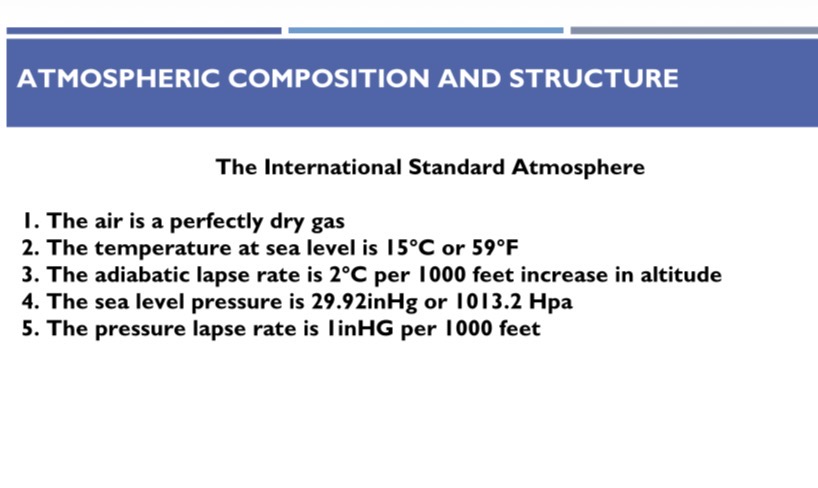
ATMOSPHERIC COMPOSITION AND STRUCTURE
Low-pressure
[WEATHER SYSTEM: How They Affect Operations]
______ systems bring:
Poor visibility
Thunderstorms
Strong winds
Turbulence
High-pressure
[WEATHER SYSTEM: How They Affect Operations]
_________ systems support:
Higher arrival rates
Better on-time performance
Safer ground operations
Low-pressure
When a _______ system approaches an airport:
ATC may reduce arrival flow
Airlines prepare for delays
Passenger congestion increases
Operations managers must act early,
not react late
monsoons
[GLOBAL CIRCULATION PATTERNS]
The Earth heats unevenly. Warm air rises near the equator and moves
outward, creating global wind systems.
Here in the Philippines, this results in ______.
Amihan; Habagat
[GLOBAL CIRCULATION PATTERNS]
______: Strong winds, cooler air
_______: Heavy rain, thunderstorms, flooding risk
Seasonal scheduling
Flood mitigation planning
Staffing adjustments
Equipment readiness
[GLOBAL CIRCULATION PATTERNS]
For aviation managers, this knowledge supports: (4)
Weather is predictable at the seasonal level—even if daily weather is not
Moist air is lifted → Air is cooled and dew point is reached → Air is then saturated → Water vapour condenses into water droplets
How Clouds Form?
Humidity
Lifting action (Convection, Orographic lifting)
Instability
Condensation Nuclei (Dust, Pollen, Dirt, Salt)
Requirements for Formation: (4)
1.Low Level Clouds
2.Mid Level Clouds
3.High Level Clouds
4.Clouds with
Extensive Vertical
Development
Families of Clouds: (4)
Low-Level Clouds
[Families of Clouds]
Clouds that form near the ground, usually below 6,500 feet.
Mid-Level Clouds
Clouds that form between 6,500 and 20,000 feet.
High-Level Clouds
Clouds that form above 20,000 feet, made mostly of ice crystals.
Clouds with Extensive Vertical Development
Clouds that grow vertically from low to high levels, often producing storms and heavy rain.
Stratus cloud
[CLOUD TYPES AND FORMATION]
Low-level
Reduce visibility
Common in overcast condition
Nimbostratus clouds
[CLOUD TYPES AND FORMATION]
Low to mid-level
Bring continuous rain
Affect runway conditions and braking action
Altostratus clouds
[CLOUD TYPES AND FORMATION]
Mid-level
Indicate approaching weather systems
May lead to rain or storm
Cirrus cloud
[CLOUD TYPES AND FORMATION]
High-level
Thin and wispy
Indicate changing weather patterns
Cumulus cloud
[CLOUD TYPES AND FORMATION]
Low to mid-level
Puffy with flat bases
Generally fair weather but can develop into storm
Cumulonimbus clouds
[CLOUD TYPES AND FORMATION]
Extensive vertical development
Associated with thunderstorms
Cause turbulence, heavy rain, lightning, and wind shear
Precipitation Forms
Occurs when water droplets or ice crystals in clouds grow too heavy for the air to hold
Rain
Falls to the ground as:
from nimbostratus or cumulonimbus clouds
Snow
Falls to the ground as:
from high-altitude clouds in cold regions
Hail
Falls to the ground as:
ice pellets from cumulonimbus clouds with strong updraft
Heavy rain
[Effects on Flight Safety]
reduces visibility; risk of hydroplaning on runways
Snow/Ice
[Effects on Flight Safety]
slippery runways; aircraft surface icing
Hail
[Effects on Flight Safety]
potential damage to aircraft fuselage and engine
Effects on Runway Operation
Requires snow removal, de-icing, and runway friction monitoring
Drainage and braking action assessments are critical for safe takeoff and landing
Effects on Flight Schedulin
Intense precipitation may cause:
Delays
Diversions
Cancellations
Impacts fuel usage, crew scheduling, and operational costs
Thunderstorms pose additional risks
Lightning hazards to ground staff
Suspension of refueling and baggage loading
Key factors: direction, speed, and wind pattern
Why winds matter in Aviation?
Wind Direction
Determines runway selection
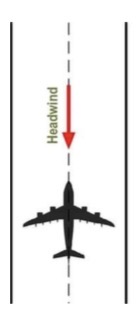
Headwind
[Wind Direction]
Shorter takeoff and landing distances
Preferred for safe operations
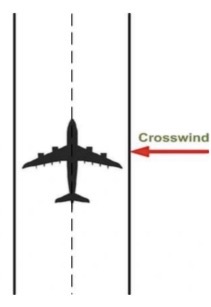
Crosswind
[Wind Direction]
Increases handling difficulty
May cause runway restrictions or delays
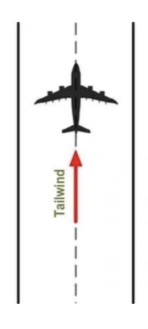
Tailwind
[Wind Direction]
Increases takeoff and landing distance
Generally avoided in operation
Wind Speed
Affects ground handling, aircraft parking, and ground equipment safety
Wind Speed
Strong winds increase operational risk
May cause:
Go-arounds
Delays and reduced arrival rates
Temporary reduction in airport
capacity
Jet streams (cruising)
[Wind Pattern]
Tailwinds reduce fuel burn and flight time
Headwinds increase fuel consumption and delays
Seasonal winds (monsoons)
[Wind Pattern]
Influence scheduling, runway usage, and delay pattern
Strong crosswinds
________ at an airport may require:
Runway configuration changes
Reduced arrival flow
Delay and congestion management in terminal
Visibility
Refers to how far a pilot can clearly see the runway, lights, and surroundings
Visibility
Critical for takeoff, landing, and overall airport capacity
Reduced visibility directly affects safety and operational efficiency
Fog
Forms when moist air near the ground cools to its dew point; Creates suspended water droplets, reducing visibility
Fog
Can occur even without rain or strong winds; Often the most disruptive weather phenomenon for airports
VISIBILITY AND FOG
Effects on Airport Operations
Reduced arrival and departure rates
ATC may implement Low-Visibility Procedures (LVPs)
Runway spacing increases → fewer aircraft can land safely
Weather
Aircraft performance is directly influenced by weather conditions
_______ affects lift, engine power, braking, and flight stability
Understanding this interaction supports safe and efficient operational decisions
Temperature
Lift and Engine Power
High temperatures
______ reduce air density
Reduced air density results in:
Less lift
Lower engine efficiency
Longer takeoff distances
Wind
– Takeoff and Landing Limits
Wind direction and speed significantly affect aircraft control
Rain
– Braking Efficiency
Wet runways reduce friction
Increased risk of hydroplaning
Longer stopping distances during landing
Turbulence
– Safety and Passenger Comfort
_______ poses safety risks to:
Passengers
Cabin crew
May require altitude or route adjustments
 Note
Note  Flashcards (23)