AP Psych Unit 2 | Sensation: Vision
 Studied by 1 person
 Call Kai
 Learn
Learn Practice Test
 Spaced Repetition
 Match
Match Flashcards
 Knowt Play
1/16

Earn XP
Description and Tags
Name | Mastery | Learn | Test | Matching | Spaced |
|---|
No study sessions yet.
17 Terms
Retina
The light-sensitive inner surface of the eye containing photoreceptor cells that convert light into neural signals.
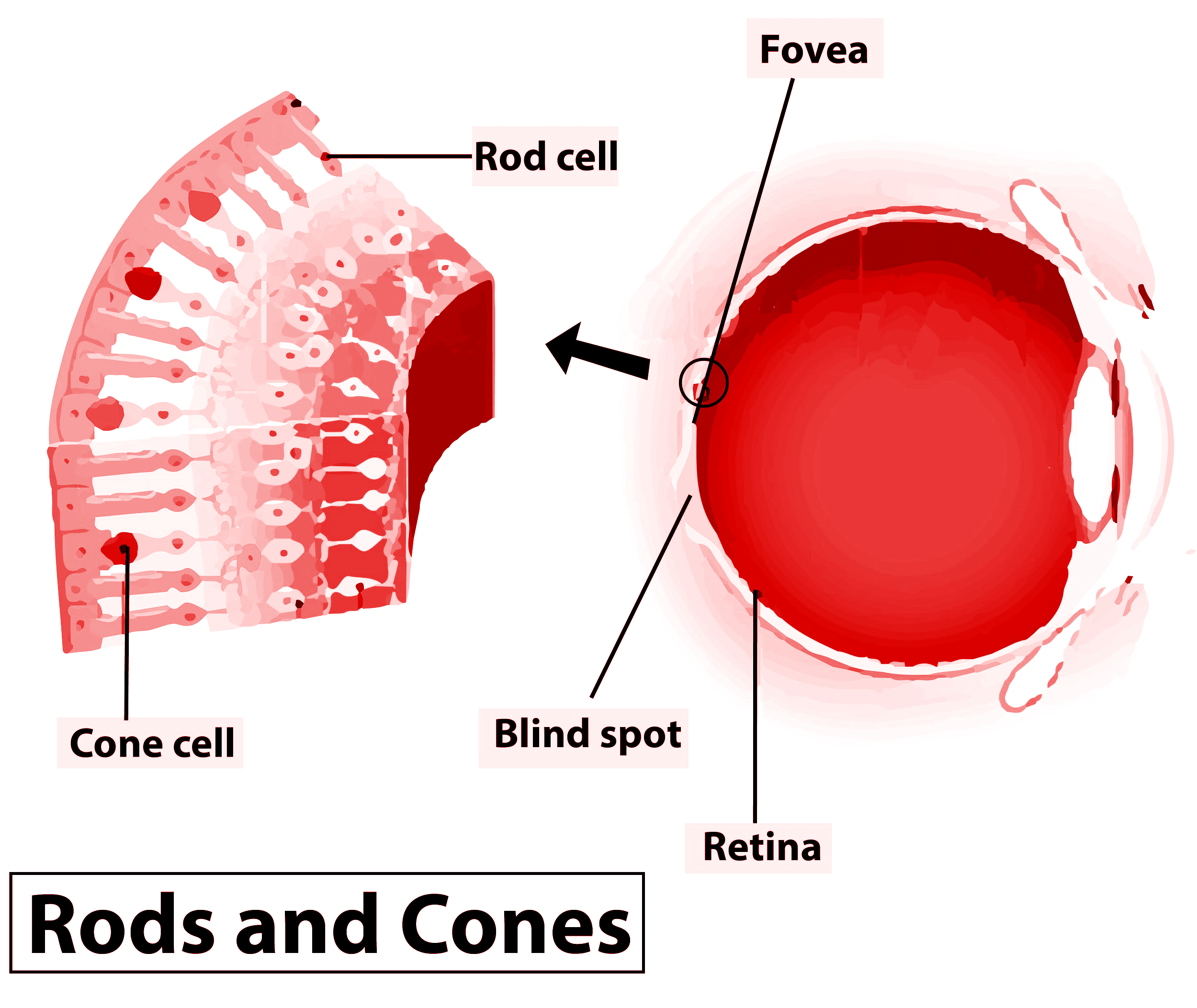
Rods
Photoreceptor cells in the retina responsible for vision in low light conditions and detecting motion. They provide black-and-white vision and are highly sensitive to light, allowing us to see in dim environments.
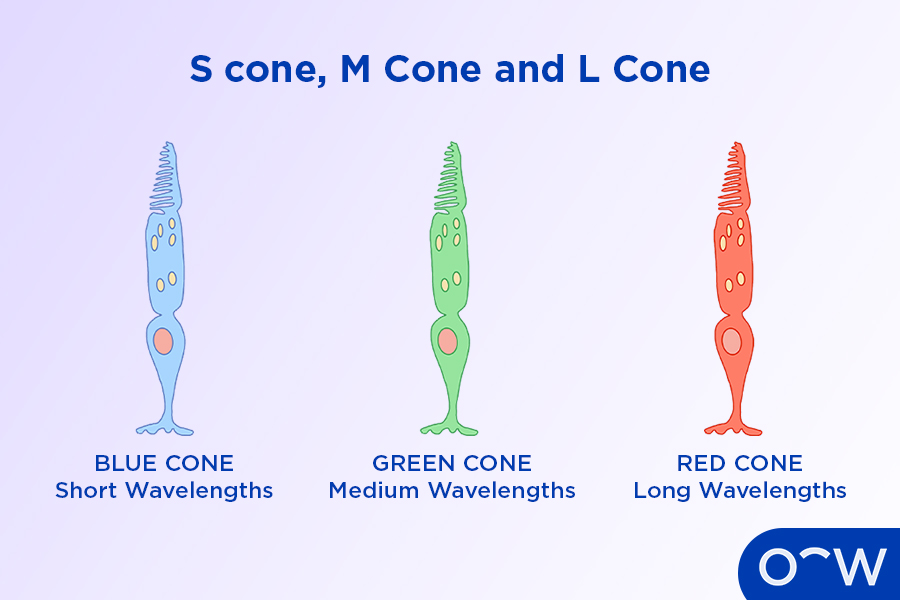
Cones
Photoreceptor cells in the retina responsible for color vision and detail in bright light. They enable us to perceive colors and fine visual details, such as reading text or distinguishing between different hues.
Fovea
Central area of the retina responsible for sharp central vision. It contains a high concentration of cone cells (no rods), enabling detailed and color vision.
Blind spot
Area on the retina where the optic nerve exits the eye, lacking photoreceptor cells. It's a spot where vision is absent, as there are no light-sensitive cells to detect visual stimuli.
Ganglion cells
Neurons in the retina that receive visual information from bipolar cells and transmit it to the brain via the optic nerve. They play a crucial role in processing visual signals and relaying them to the brain for further interpretation.
Lens
Transparent structure in the eye that focuses light onto the retina. It adjusts its shape to help the eye properly refract light, enabling clear vision at different distances.
Accommodation
The process by which the lens of the eye changes its shape to focus on objects at different distances. It allows for clear vision of both nearby and distant objects by adjusting the curvature of the lens.
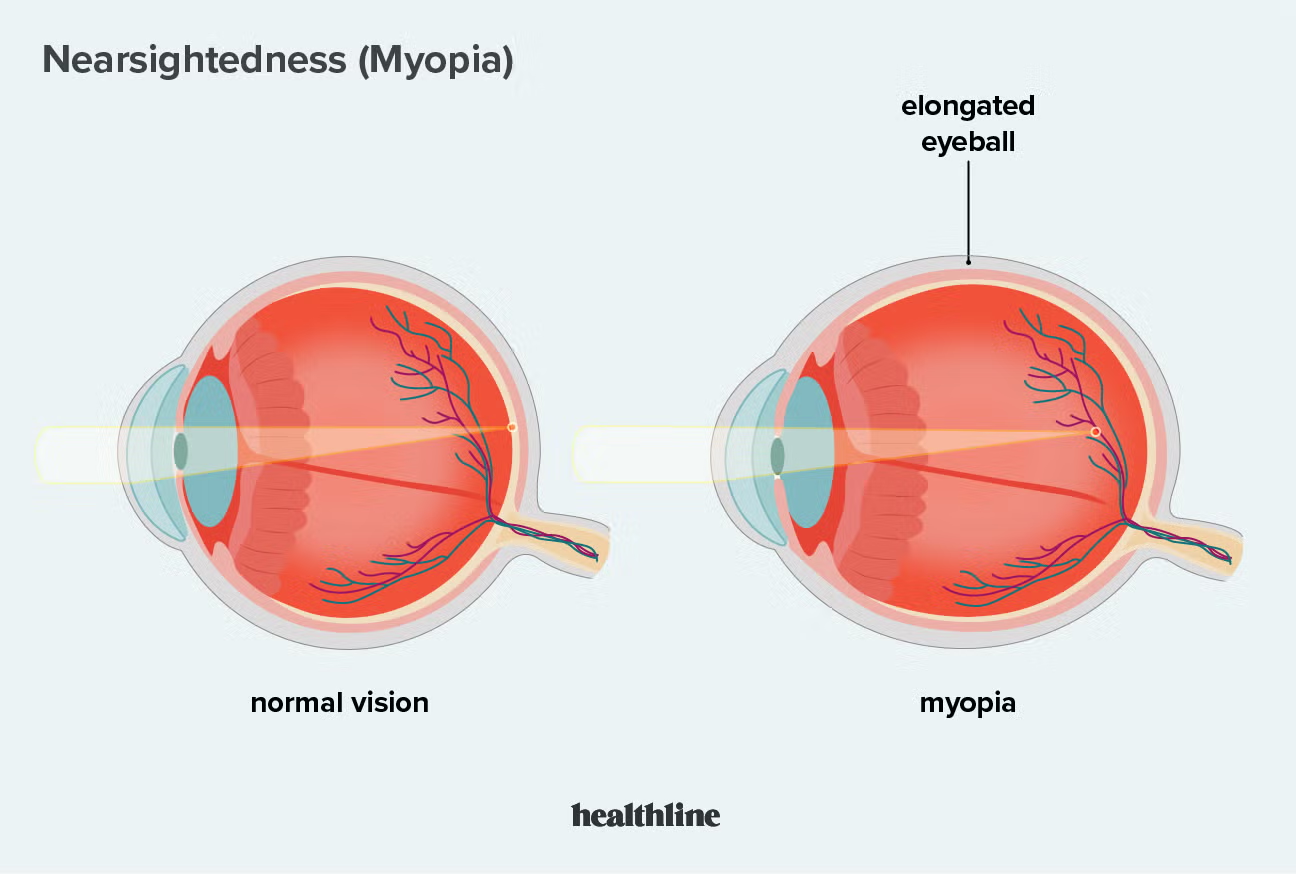
Nearsightedness
A common vision condition where close objects appear clear, but distant objects appear blurry. It occurs when the eyeball is too long or the cornea is too curved, causing light to focus in front of the retina instead of on it.
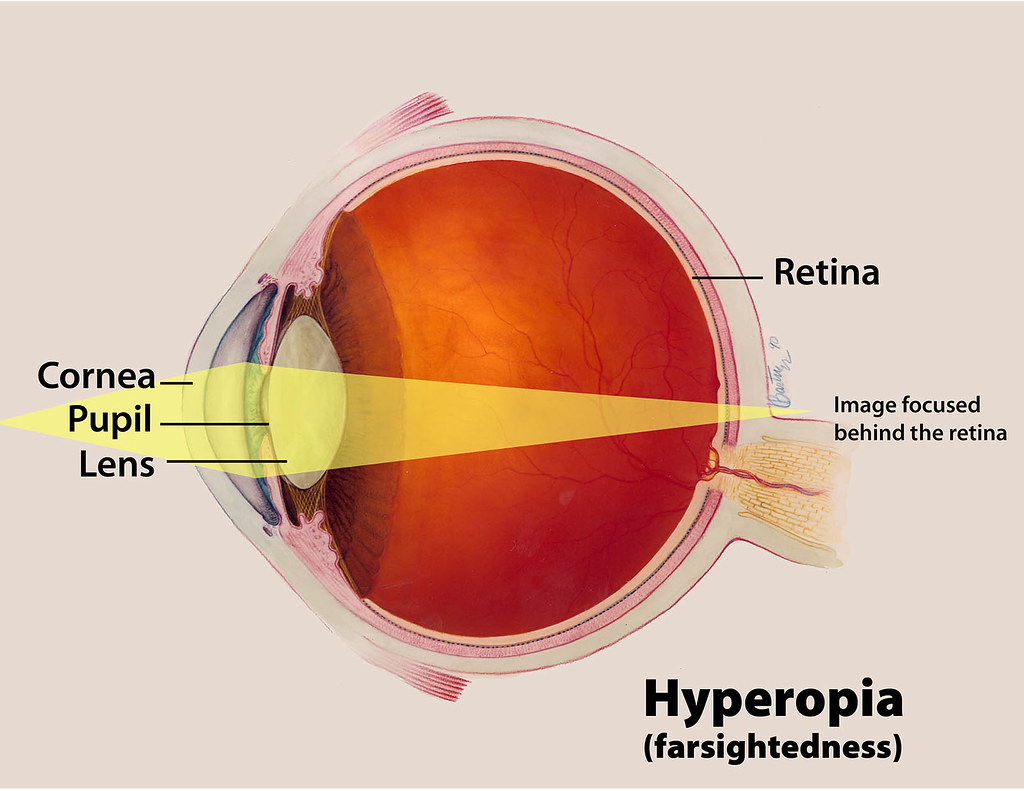
Farsightedness
A vision condition where distant objects are seen more clearly than close ones. It happens when the eyeball is too short or the cornea is too flat, causing light to focus behind the retina rather than directly on it.
Trichromatic theory
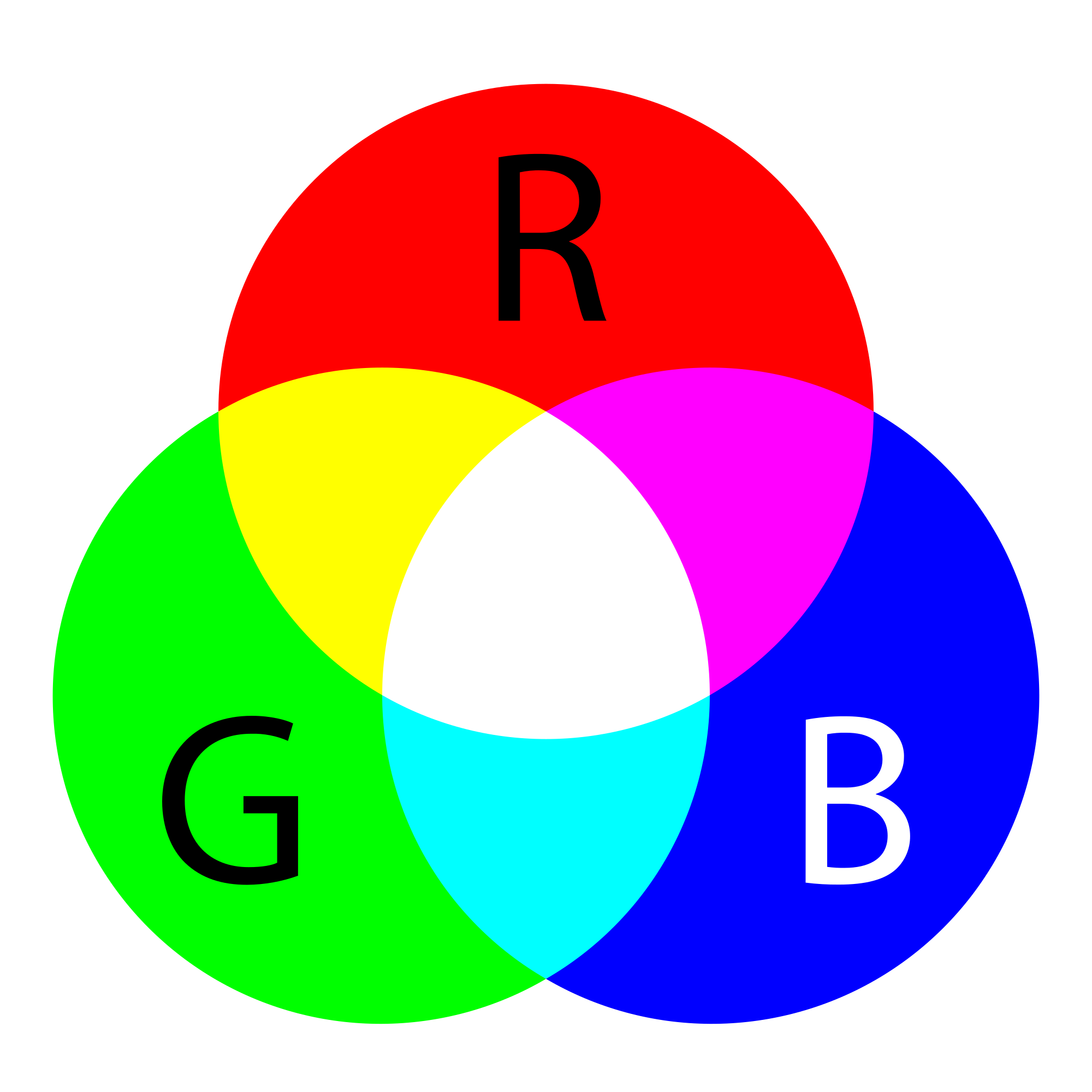
A theory proposing that color vision is based on three types of cone receptors, each sensitive to different wavelengths of light (red, green, and blue). The brain combines signals from these cones to create the perception of a wide range of colors.
Opponent-process theory
A theory proposing that color vision is based on pairs of opposing color processes (red-green, blue-yellow, and black-white).
Afterimages
Visual sensations that persist after a stimulus is removed. They occur due to temporary overstimulation of cone cells in the retina, resulting in a brief perception of an inverted or complementary image.
Dichromatism
A type of color vision deficiency where an individual has only two types of functioning cone cells instead of the normal three. (red-green colorblindness, blue-yellow colorblindess)
Monochromatism
A rare form of color blindness where an individual has only one type of functioning cone cell, or none at all. This results in the inability to perceive colors, seeing the world in shades of gray.
Blindsight
A phenomenon where individuals with damage to their visual cortex can respond to visual stimuli without consciously perceiving them. It suggests that some visual processing can occur unconsciously, bypassing traditional pathways in the brain.
Prosopagnosia
A neurological condition characterized by the inability to recognize familiar faces, including one's own face, despite intact vision and intellect. It's often referred to as face blindness.
 Note
Note  Flashcards (177)