N402 EXAM 2: Psychopharmacology
 Studied by 0 people
 Call Kai
 Learn
Learn Practice Test
 Spaced Repetition
 Match
Match Flashcards
 Knowt Play
1/91

There's no tags or description
Looks like no tags are added yet.
Name | Mastery | Learn | Test | Matching | Spaced | Call with Kai |
|---|
No study sessions yet.
92 Terms
Antipsychotics
block dopamine (too much dopamine makes you hear/see things)
- first and second gen
first generation (typical) antipsychotic
used for...
- psychosis
- schizophrenia
- agression/irritability
- biploar
(postive psychosis symptoms)
Extrapyramidal Side Effects (EPSE)
positive symptoms of psychosis
Delusions, hallucinations, disorganized speech, and disorganized/catatonic behavior
negative symptoms of psychosis
Reduced/absent emotional expression, reduced quantity/fluency of speech, reduced initiative or will to do things (avolition)
- harder to detect things, patient can hide them
EPSE
- dystonia
- drug induced parkinsonism
- akathisia
- tardive dyskinesia
dytonia
bizarre/severe muscle contractions (severe spasm)
- reversible
- can occur abruptly or w other s/e
EPSE
drug induced parkinson's (parkinsonism syndrome)
Masked like faces, resting tremor, cogwheel rigidity, shuffling gait, and bradykinesia.
- commonly occurs after week or two of the medication
- results of dopamine blockade
EPSE
what meds can we give patients experiencing parkinsonism syndrome?
diphenhydramine (benadryl)
benzatropine (cogentin)
trihexyphenidyl (artane)
DiphBenzTri for parkinsonism
Akathisia
lots of energy, cannot sit --> restlessness/vague feeling of apprehension/irritability
- desire to move
- occurs after 3 or more wks of Tx
Ex: restless, tapping leg
EPSE
Tardive Dyskinesia
involuntary movements of the facial muscles, tongue, and limbs; a possible neurotoxic side effect of long-term use of antipsychotics
- lip smacking, etc.
SEVERE d/t IRREVERSIBLE
- late onset, could be on med for years
EPSE
first gen antipsychotic meds
Haloperidol (Haldol)
Chlorpromazine (Thorazine)
"azine's"
second generation (atypical) antipsychotics
used for...
- psychotic dx
- schizphrenia
- bipolar
- depression
- aggression
more metabolic s/sx
- increased weight
- increased BS
- hyperprolactinemia
- irregular cycle
second gen antipsychotic meds
Clozapine (Clozaril)
Risperidone (Risperdol)
Olanzapine (Zyprexa)
Quetiapine (Seroquel)
Ziprasidone (Geodone)
Apriprazole (Abilify)
Lurasidone (Latuda)
Paliperidone (Invega)
"idone" and "apine"
second gen - heart s/s
keep an eye, these can irritate the heart
Ziprasidone (Geodone)
Apriprazole (Abilify)
take w food --> bioavailability - binds w food
Risperidone (Risperdol)
black box warning for older adults (progress cognitive dx --> dementia)
Clozapine (Clozaril)
Agranulocytosis
can affect WBC --> s/s of infection/increased WBC is s/e
anticholinergic s/e
in general for all antipsychotics
- dry mouth
- blurry vission
- constipation
- urinary retention
- tachy
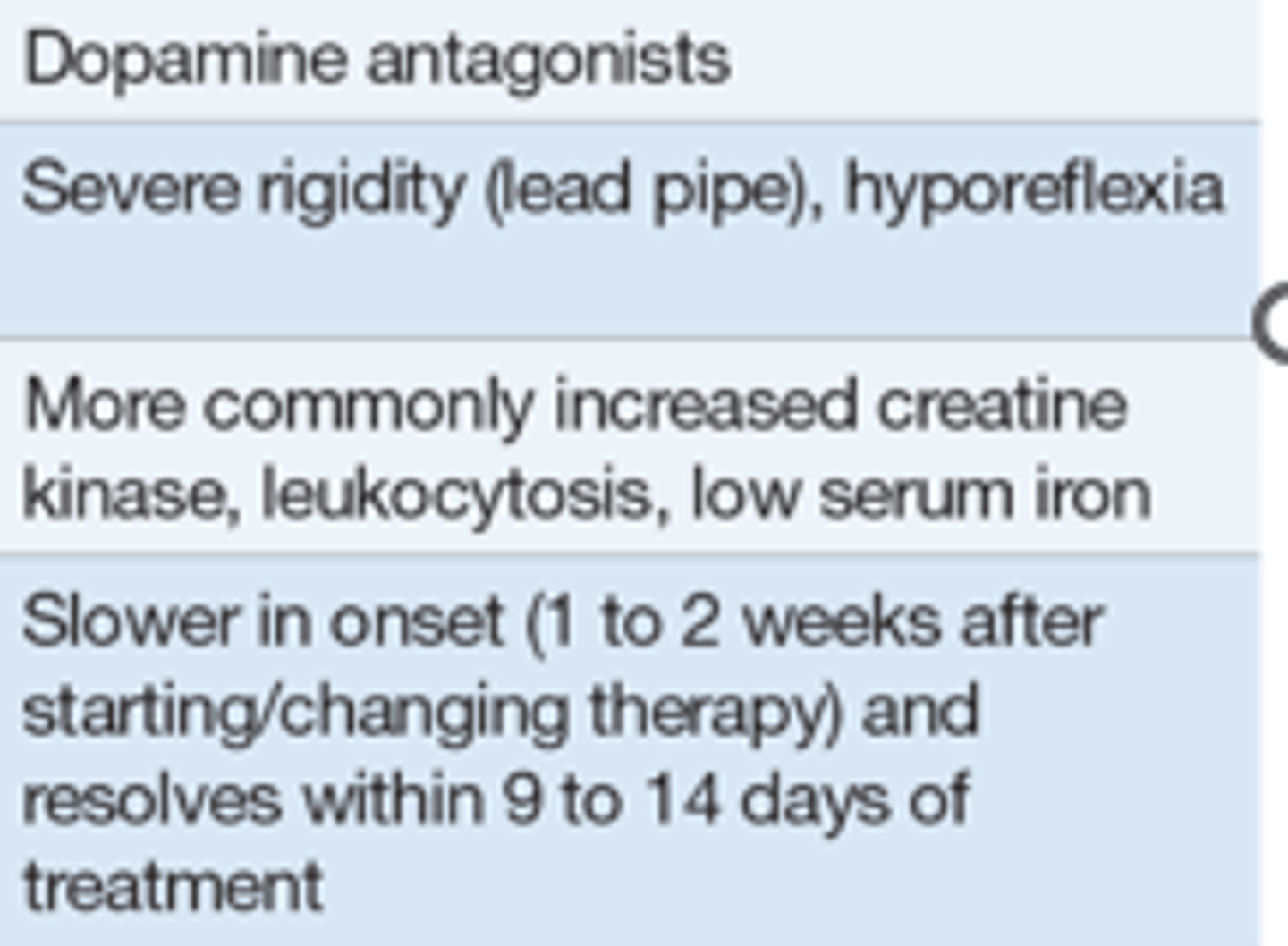
NMS
neuroleptic malignant syndrome
F - fever
E - encephalopathy --> change in LOC/confusion
V - vitals change --> high BP/HR
E - enzymes --> Cr-Phos, if high damages muscles (REGIDITY)
R - rigidity
comes from antipsychotic meds
antidepressants risks
- serotonin syndrome
- discontinuation syndrome
- sexual s/e
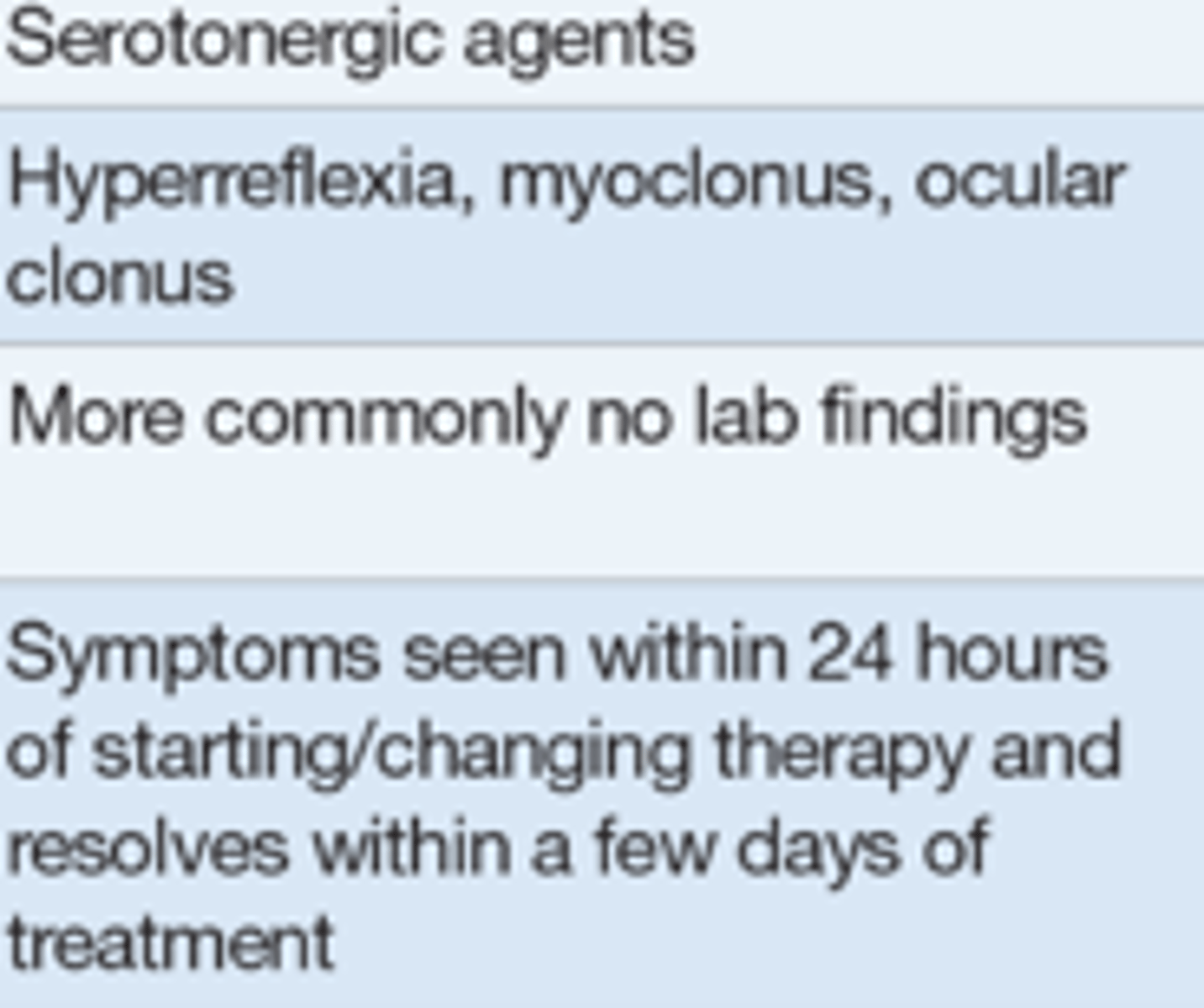
serotonin syndrome
With any drug that increases serotonin --> hyperthermia, confusion, myoclonus, cardiovascular instability, flushing, diarrhea, seizures.
- confusion
- h/a
- irritability
discontinuation syndrome
patient stops taking med (withdrawal, irritability, anxious, etc.)
ETOH w antidepressatns
is an antidepressant --> decreases effect
antidepressant - SSRI's
depression/anxiety, premenstrual dysphoric disorder, PTSD, OCD
SSRI meds
Fluoxetine (Prozac)
Sertraline (Zoloft)
Fluvoxamine (Luvox)
"xetine" and "opram"
- n/v
- constipation, diarrhea
- dry mouth
- h/a
- dizziness
- sleep disturbance
- tremor
- sexual s/e (erectile dysfunction)
SSRI common s/e
serotonin syndrome and serotonin discontinuation syndrome s/e's too !
SSRI's and antiepileptics
lowered seizure threshold
SSRI's and alcohol, benzodiazepines
increased sedation
SSRI's and warfarin, NSAIDs
increased risk of bleeding
SSRI's and MAOIs
hypertensive crisis
SSRI's and Buspirone (BuSpar), TCAs (especially clomipramine), selegiline (Eldepryl), St. John's Wort
serotonin syndrome
bruxism and SSRI's
zoloft, efexor cause
give busbar - helps w managing anxiety (can decrease bruxism)
bruxism
grinding teeth
Tricyclic antidepressants
Imipramine (Trofranil)
Amitriptyline (Elavil)
Nortriptyline (Pamelor)
"Triptyline" and "Pramine"
TCA's indication
depression/anxiety and pain
blocks serotonin and norepinephrine
- many CONTRA's
-N/V
-H/A
-Constipation
-Tachycardia
-Dizziness
-Ortho hypotension
-Dysrhythmias
-Blurred vision
-Sexual side effects
TCA's s/e
TCA's and MAOI's
High fever, convulsions, death
TACs and St. John's Wort, tramadol (Ultram)
Seizures, serotonin syndrome
TCAs and Clonidine (Catapres), epinephrine
severe HTN
TCAs and Acetylcholine blockers
paralytic HTN
TCAs and Alcohol and carbamezipine (Tegretol)
Blocks antidepressant action, increases sedation
TCAs and Cimetidine (Tagamet), bupropion (BuSpar)
Increased TCA blood levels, increased side effects
Monnamine Oxidase Inhibitors
MAOIs
Nar, Par, Mar
Nardil (phenelzine)
Parnate (tranyclypramine)
Marplan (isocarboxazid)
selegiline (emsam) trasndermal patch
MAOIs
depression/anxiety
Tyramine induced HTN crisis
- food, sluids, or meds w tyramine --> cheese syndrome
MAOIs and SSRIs, TCAs, atomoxetine (Strattera), duloxetine (Cymbalta), dextromethorphan (an ingredient in many cough syrups), venlafaxine (Effexor), St. John's Wort, ginkgo
serotonin syndrome
MAOIs and Morphine and other narcotic pain relievers,
antihypertensives
hypotension
MAOIs and All other antidepressants, pseudoephedrine, amphetamines, cocaine cyclobenzaprine (Flexeril), dopamine, methyldopa, levodopa, epinephrine, buspirone (BuSpar)
Hypertensive crisis (these side effects can occur even if taken within 2 weeks of stopping MAOIs)
MAOIs and Buspirone (BuSpar)
psychosis, agitation, seizures
MAOIs and antidiabetcis
hypoglycemia
MAOIs and Tegretol
fever, HTN, seizures
SNRIs
Venlafaxine (Effexor)
Duloxetine (Cymbalta)
antidepressant
NDRI
Bupropion (Wellbutrin)
depression/smoking and ADHD
SARI
Desyrel (Trazodone)
Venlafaxine (Effexor)
s/e HTN
Desyrel (Trazodone)
"trazobone"
often used at bedtime --> sedating effect, dreams
lithium and salt
lithium is a salt --> anything depleting sodium makes more receptors available = increased risk for lithium toxicity
need adequate fluid and salt intake
mood stabilizers
Lithium (eskalith, lithobid)
Lamotrigine (Lamictal)
Gabapentin (Neurontin)
Carbamazepine (Tegretol)
Lamotrigine (Lamictal)
risk for steven-johnson syndrome
- any concerns over skin, itch, etc. --> STOP
Gabapentin (Neurontin)
antianxiety and pain
Carbamazepine (Tegretol)
risk for agranulocytosis --> monitor WBC
Valporic Acid (Depakote)
mood stabilizor
most common for acute mania
monitor platelets and liver
lithium safe level
0.6-1.2
- diarrhea
- n/v
- ataxia
- tremors
- muscle
- weakness or unsteady gait
lithium toxicity s/s
lithium: watch...
kidney/thyroid as lithium can affect other organs
Anxiolytics
antidepressants (SSRI and others)
Benzodiazepines
Clonazepam (Klonopin)
Alprazolam (Xanax)
Lorazepam (Ativan)
DIazepam (Valium)
"Pam" and "Lam"
addicting - not long term
Anxiolytics: short acting
Alprazolam (Xanax)
Lorazepam (Ativan)
Anxiolytics: long acting
Clonazepam (Klonopin)
DIazepam (Valium)
Chlordiazepoxide ( Librium)
benzo
acute ETOH withdrawal
Clorazepate (Tranxene)
benzo
anxiety, sleeping, ETOH withdrawal
Oxazepam (Serax)
Benzo
Tx anxiety/depression and ETOH withdrawal
benzos
ETOH withdrawal mostly
Buspirone (Baspar)
works gradually (low dependence rate) --> helps w general anxiety
Propranol (Inderol)
helps w anxiety (brings BP down) helps w tremors
Clonidine (Catapres)
relaxes blood vessels (helps w withdrawal)
- Tx anxiety
Hydroxyzine (atarax/vistaril)
has antihistamine and sedative effect
- Tx anxiety
A 32-year-old female client arrives to the unit from the emergency department and reports an increase in anxiety. She reports that she is experiencing nausea. She reports that she has recently discontinued alprazolam (Xanax) and that she takes this medication on a regular basis. You note that the patient is sweating, becoming agitated, and having tremors. The nurse reviews the client’s assessment data to prepare the plan of care.
1.Administering buspirone (BuSpar) to decrease the patient’s anxiety
2.Contacting the doctor immediately to notify of signs/symptoms and notify that the patient recently discontinued alprazolam (Xanax)
3.Assessing the patient for signs of developing tolerance
4.Instructing the patient not to stop taking the drug abruptly in the future
4
Abrupt withdrawal of a benzodiazepine can be life-threating. The appropriate action is to contact the doctor immediately to notify of signs/symptoms and notify that the patient recently discontinued alprazolam (Xanax).
Which of the following medications would be an appropriate prn medication for an individual with anxiety symptoms?
a)Buspirone
b)Alprazolam
c)Fluoxetine
d)Sertraline
B
•Alprazolam is a benzodiazepine that works as a CNS depressant to produce quick-acting effects of relaxation in an individual with anxiety symptoms.
•Buspirone has a delayed effect and should not be used on a prn basis.
•Fluoxetine and sertraline may be used on a long-term basis with individuals who have anxiety disorders but are not effective on a prn basis for anxiety symptoms.
sedative-hypnotics
anxiety and insomnia
- Barbiturates ("barbitols")
- Benzodiazepines ("lam" and "pam")
- Eszopiclone ( Lunesta)
- Zaleplon (Sonata)
- Zolpidem ( Ambien)
** start them off ensuring they have sleep routine
methylphenidate (Ritalin)
ADHD agents: Tx narcoepsy + obesity
Clonidine (Catapres) and guanfacine (Tenex)...
Tx HTN, ADHD, opioid withdrawal
psychostimulants
- used for ADHD, narcolepsy, depression
Nausea, Weight loss, decreased appetite, headache, insomnia, tachycardia, nervousness
psychostimulants s/e
psychostimulants things to think about
- growth stage? apetite affected
- heart stuff? stimulant not good
Psychostimulants
Dextroamphetamine and Amphetamine (Adderall)
Dextroamphetamine (Dexedrine)
Lisdexamfetamine (Vyvanse)
Methylphendiate (Ritalin, Concerta)
A child is taking guanfacine for ADHD. Which of the following would be part of the client education associated with administration of this medication?
a)Do not take with foods that contain tyramine.
b)Always use sunblock when spending time outdoors.
c)Report for blood tests once a month.
d)Do not discontinue the medication abruptly.
D
•Clients taking an alpha agonist should not discontinue therapy abruptly.
•To do so may result in symptoms of nervousness, agitation, headache, and tremor, and a rapid rise in blood pressure.
•Dosage should be tapered gradually under the supervision of the physician.
Donepezil (Aricept)
Memantine (Namenda)
"mine"
cognitive enhancers
won't fix, but slow down progression
s/e - N,V, Diarrhea Constipation, weight loss, fatigue
Disulfram (antabuse)
Naltrexone (Revia)
Buprenorphine/Naloxone (Suboxone)
Acamprostate (Campral)
substance abuse
Disulfram (antabuse)
help w ETOH withdrawal
Naltrexone (Revia)
helps w ETOH/opioid
Acamprostate (Campral)
helps w balancing and reducing cravings
Serotonin Syndrome table
NMS table
 Note
Note  Flashcards (58)