Hypothalamic-Pituitary-Adrenal Axis Function
 Studied by 0 people
 Call Kai
 Learn
Learn Practice Test
 Spaced Repetition
 Match
Match Flashcards
 Knowt Play
1/34

There's no tags or description
Looks like no tags are added yet.
Name | Mastery | Learn | Test | Matching | Spaced | Call with Kai |
|---|
No analytics yet
Send a link to your students to track their progress
35 Terms
What does the hypothalamus control?
the pituitary gland
What is the role of the pituitary gland?
secrets may different hormones, some of which affect other glands
What are the 2 lobes of the pituitary gland?
posterior pituitary - neural, connected to hypothalamus via the stalk
anterior pituitary - not neural, part that secretes hormones to rest of body- e.g PRL, LH FSH TSH GH ACTH
What do the supraoptic nucleus and paraventricular nucleus do and where are they found ?
found in the hypothalamus and produce oxytocin and vasopressin (Anti Diuretic Hormone - ADH ) which is then released from the posterior pituitary
What is the role of anriginine vasopressing AVP/ADH ? (same thing)
increases reabsorption of water through the kidney tubules,
secondary role increasing arteriole vessel resistance and also raising blood pressure
What does deficiency of AVP/ADH result in and what are the oral manifestations and what causes it
failure to properly regulate water balance - excessive thirst and urination
can lead to xerostomia (dry mouth)
caused by: damage to hypothalamus/ pituitary gland through tumours, surgery, injury, radiotherapy
explain pituitary neuroendocrine tumours ( PitNETs) / adenomas
tumors in anterior pituitary
mostly benign
usually hereditary
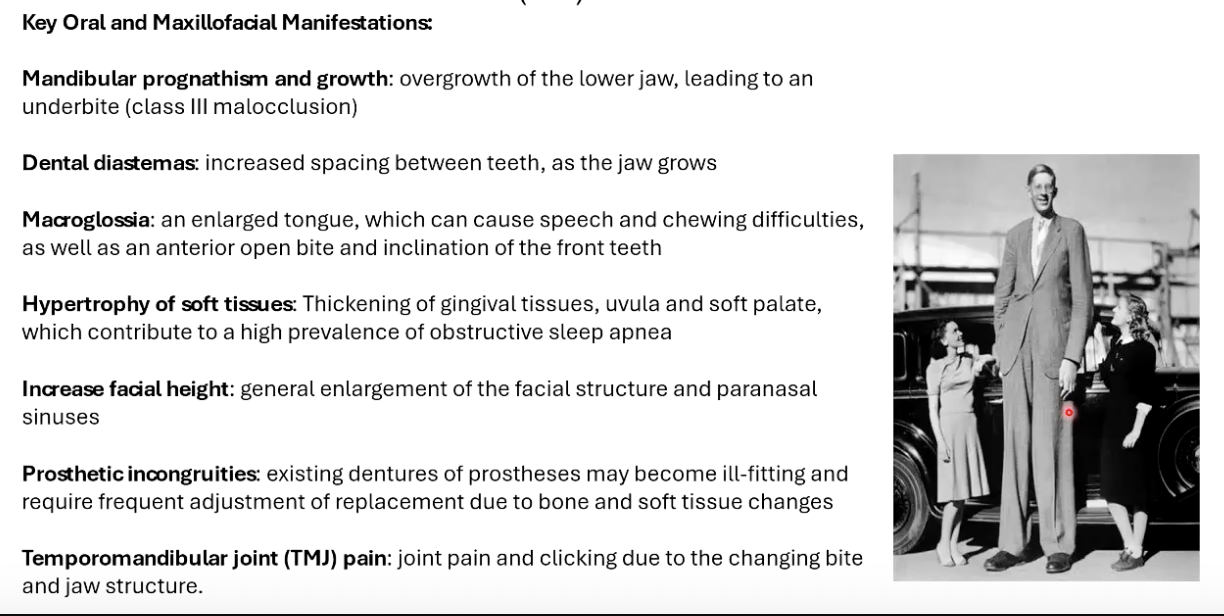
can lead to acromegaly ( adult ) /gigantism ( in childhood) because of excessive growth hormone (GH) secretion
symptoms are general patient history e/g headache, visual problems
Oral and maxillofacial manifestations of acromegaly/gigantism
what is hypopituitarism
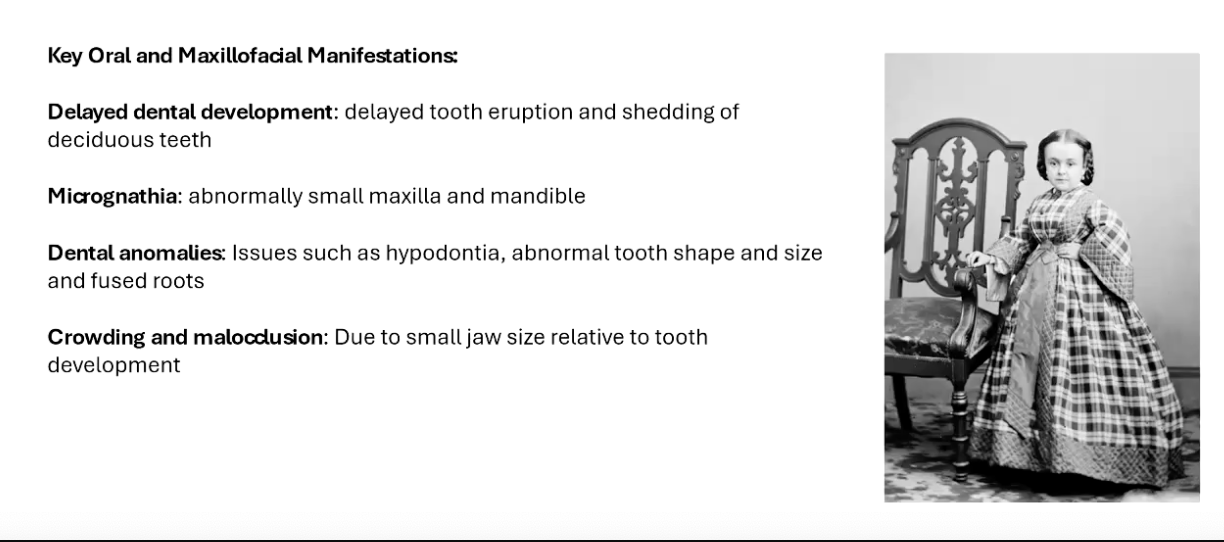
insufficient production of pituitary hormones
mainly from the anterior pituitary
happens because of damage to pituiatry or it not developing properly
Oral and maxillofacial manifestations of hypopituitarism
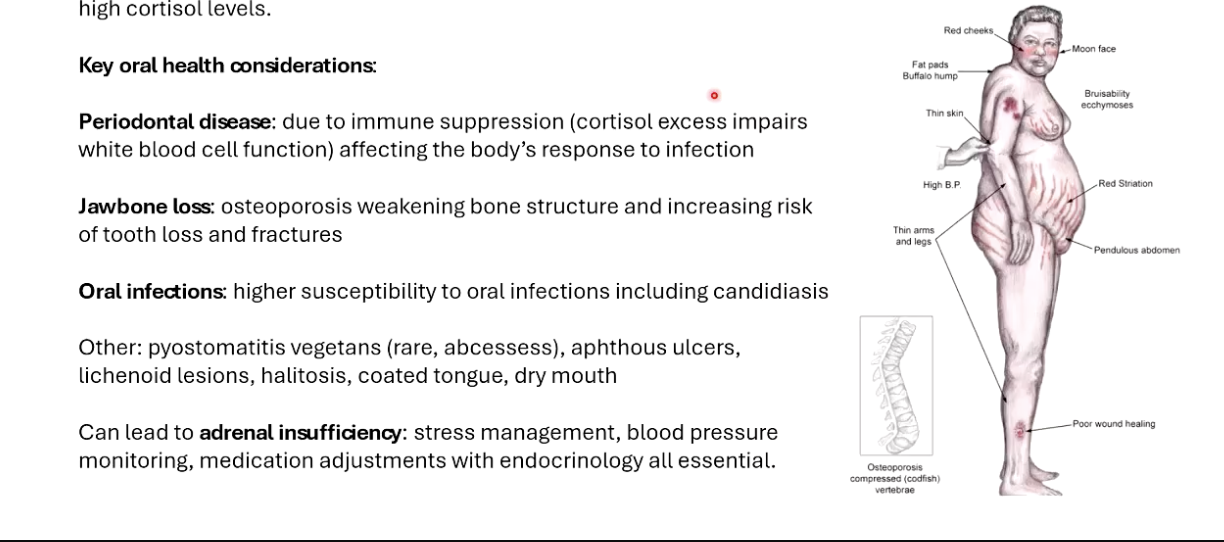
what is Cushings disease and its oral manifestations
disorder caused by excess adrenocorticotrophic hormone ( ACTH) and so high cortisol levels
What is the general definition of stress?
non-specific response of the body to any factor that overwhelms or threatens to overwhelm the body's compensatory abilities to maintain homeostasis
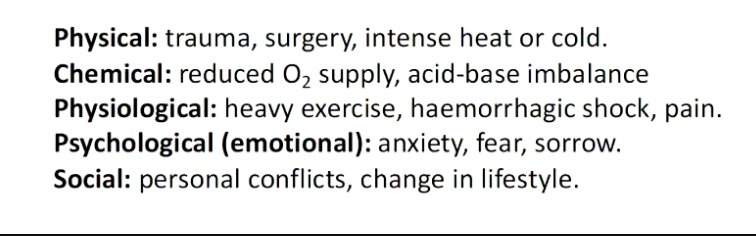
what are the different types of stressors
What are the major physiological responses to experimental stressors?
adrenal hyperplasia ( bigger adrenal gland)
atrophy of immune system organs (thymus, spleen, lymph) ( getting smaller)
peptic ulcers
All stressors increase adrenal glucocorticoid secretion
What is the general adaptation syndrome (GAS) and what are the 3 phases
1. Alarm - fight or flight; short term response using adrenaline
2. Resistance to stress - chronic: glucocorticoid (cortisol) levels elevated (x10)
3. Exhaustion - immune suppression, illness, death
What is the role of hypothalamus during fight or flight in stage 1
activates the sympathetic division of the ANS and inhibits parasympathetic control of dually innervated organs
the adrenal glands respond to the hypothalamus
where are suprarenal glands ( adrenal ) situated
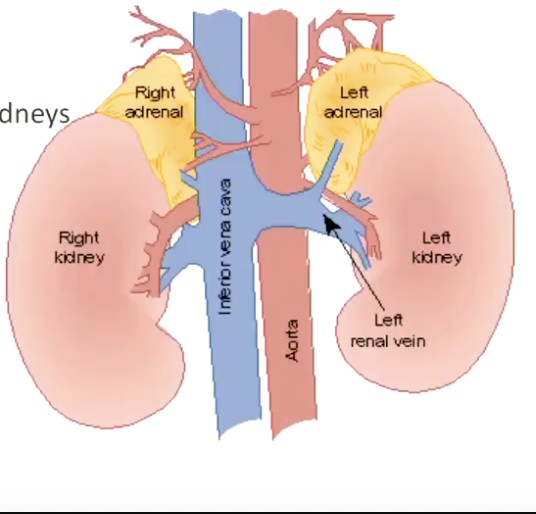
above the kidneys
How do adrenal glands develop?
- develop from 2 tissues
- develops from mesoderm and the neural crest
What are the distinct parts of an adrenal gland?
medulla
cortex
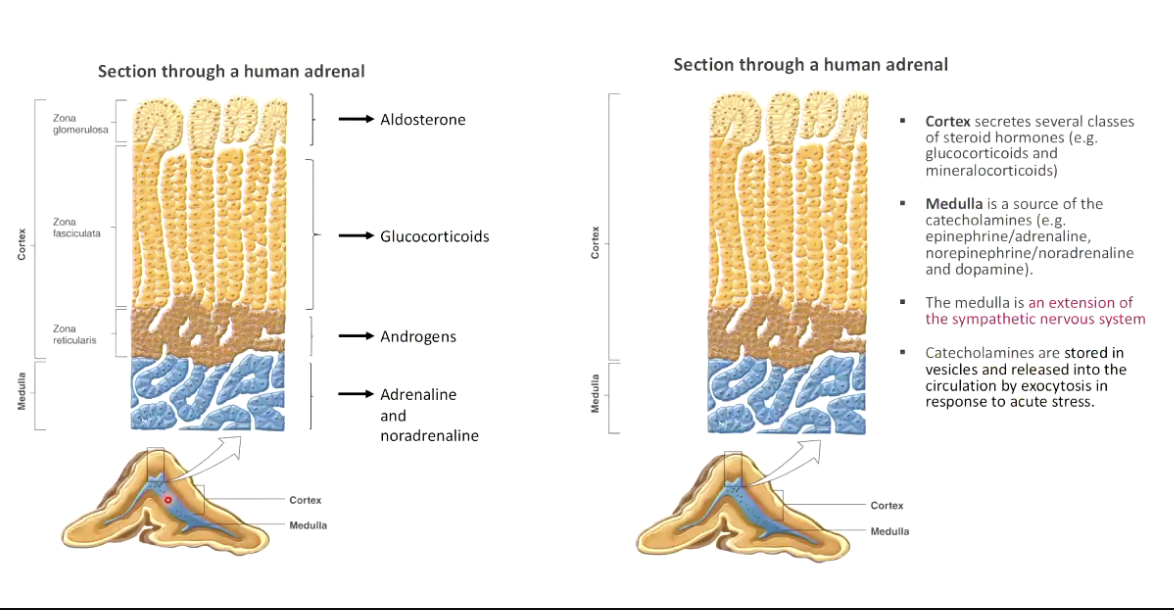
What does each part of the adrenal gland produce?
zona glomerulosa ⇒ aldosterone is made here
zona fasciculata ⇒ cortisol is made here in SER
zona reticularis ⇒ produces androgens
medulla ⇒ adrenaline and noradrenaline (catecholamines) are made here
- is an extension of SNS
What are the effects are adrenaline and noradrenaline?
• Increase heart rate and force of contractions à increased cardiac output
• Increase vasoconstriction leading to increased blood pressure
• Divert blood flow from viscera to skeletal muscles
• Increase glycogenolysis leading to elevated blood glucose
• Increase lipolysis to free fatty acids and glycerol, that can be used for energy
• Inhibit insulin secretion, further increasing blood glucose
• Stimulate thermogenesis
• Increase ventilation (bronchodilation, respiration rate)
stage 2 of GAS what does resistance to chronic stress do and the hypothalamus roles
chronically elevated levels of cortisol
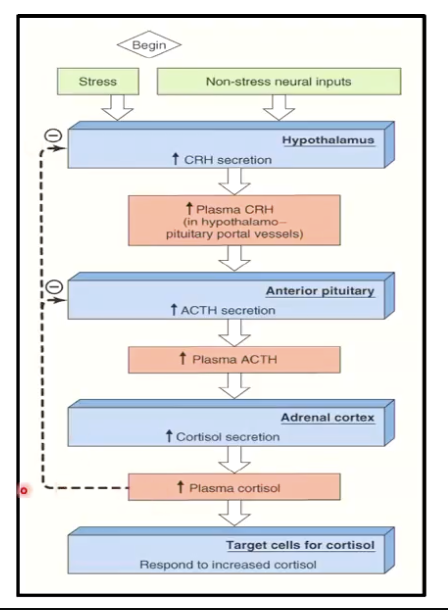
- hypothalamus neurones secrete CRH at the median eminence which enters the portal vessels to control the release of ACTH from the anterior pituitary
- ACTH enters the venous drainage to be transported to the adrenal glands whereby ACTH receptors are stimulated to synthesise and secrete cortisol
How does negative feedback of cortisol secretion work?
ACTH is needed to stimulate the synthesis and secrete cortisol
ACTH secretion is controlled by the hypothalamic secretion of CRH
cortisol inhibits hypothalamus and anterior pituatry
is cortisol lipophilic?
yes
cortisol is derived from cholesterol so is lipophilic
Is cortisol stored?
no
steroid hormones aren't stored and are only made when required
what are the 2 types of corticosteroids and where are they released from
mineralocorticoids, glucocorticoids
both released from the adrenal cortex
effects of mineralocorticoids (e.g aldosterone)
Control electrolyte and fluid balance
Act on distal tubules & collecting ducts of the kidney
↑ Na⁺ reabsorption, ↑ K⁺ excretion
Na⁺ retention → water retention → ↑ ECF volume & blood pressure
Essential for life (loss → ↓ plasma volume → shock)
Secretion controlled by renin–angiotensin system, independent of anterior pituitary
effects of glucocorticoids ( e.g cortisol)
Key hormone for stress adaptation (especially long-term stress)
Catabolic effects:
↑ glucose availability
Mobilises amino acids & fatty acids
Acts on carbohydrate, protein, and fat metabolism
What are the catabolic effects of cortisol in response to stress?
opposite those of insulin, maintains metabolic enzyme expression
- protein breakdown in muscle, bone, liver
- associated with illness/surgery
- hepatic gluconeogenesis
- lipolysis to generate FA and glycerol
- elevated cortisol can trigger insulin resistance
-enhances cardiovascular reactivity to catecholamines by allowing vasoconstriction in response to noradrenaline and adrenaline - heart can respond better to sympathetic input important as it shows how chronic stress can cause hypertension and low cortisolcan cause hypotension
How does cortisol affect inflammatory and immune responses?
- inhibition of prostoglandin and leukotriene production (inflammatory mediators)
- inflammatory cytokines stimulate ACTH, hence cortisol secretion in a -ve loop to dampen inflammatory responses
- cortisol can be used as anti-inflamamtory therapy but prolonged use has side effectse.g. down regulation of ACTH secretion and adrenal atrophya
- chronic stress suppresses immune system = infections
How does cortisol affect reproduction and growth?
- can cause reduction in bone density, skin thickness, muscle mass
- could cause growth retardation in children
- chronic stress in adults can reduce fertility
stage 3 of GA- exhaustion
Prolonged stress → high cortisol
Cortisol is strongly catabolic
Breakdown of muscle, bone, skin, immune tissues
Substrates used for gluconeogenesis
Leads to:
↓ bone density
↓ immune function
↓ fertility
Metabolic resources depleted → exhaustion
Outcome: immune suppression, illness, possible death
Stress-related diseases (quick summary)
Stress responses are helpful short-term for physical stress (↑ heart rate, breathing, fuel mobilisation)
Chronic psychological stress makes these responses inappropriate
Persistently high cortisol → ↓ immune function → ↑ infection risk (possibly cancer)
Stress worsens diabetes by ↑ insulin resistance
Prolonged sympathetic activation → ↑ risk of hypertension and atherosclerosis
What is Addison's disease?
Adrenal cortex damaged by TB or by autoimmune (>80%) destruction leading to cortisol deficiency
What can adrenal insufficiency cause and how is it treated ?
- hypotension, hypoglycaemia, tiredness, weakness, anorexia, vomiting, depression
- maybe misdiagnosed as chronic fatigue syndrome
- inability to respond to stress = Addisonian crisis, fatal if left untreated - treated by steroid replacement therapies
 Note
Note  Flashcards (39)