APUSH Sources 9-10
 Studied by 2 people
 Call Kai
 Learn
Learn Practice Test
 Spaced Repetition
 Match
Match Flashcards
 Knowt Play
1/14

Earn XP
Description and Tags
(1R) and (2R) of context and significance.
Name | Mastery | Learn | Test | Matching | Spaced | Call with Kai |
|---|
No analytics yet
Send a link to your students to track their progress
15 Terms
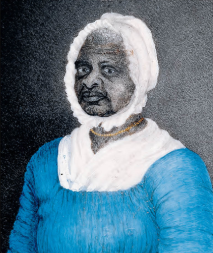
Context:
(1R) This image represents a Massachusetts slave Elizabeth Freeman who won her suit for freedom against her Massachusetts master during the 1780s.
(2R) Egalitarian sentiments became prevalent after the American Revolution, which challenged the institution of slavery.
Significance:
(1R) Her case for freedom challenged the institution of slavery in Massachusetts on the basis of its Constitution, which led to the end of slavery in the state.
(2R) This was a pivotal victory for abolition movements in the United States, which would eventually lead to the end of slavery in every state after the Civil War.
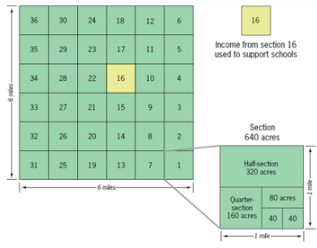
Context:
(1R) The diagram illustrates a standardized system created by the Articles of Confederation that transferred ownership of westward lands of the US to the federal government in the 1780s.
(2R) The aftermath of the American Revolution led to increasing economic problems such as debt, which caused them to parcel off new territory for sale.
Significance:
(1R) This territorial system was a promise to the formation of new states in westward areas and parcels of land were sold to help pay America’s war debt from the Revolution.
(2R) Policies such as the Land Ordinance of 1785 and the Northwest Ordinance of 1787 helped deal with the problem of establishing a republic over large amounts of land through innovative land policies.
(3R) Although the Articles of Confederation was mostly a failing document that weakened the government, the land ordinances were one of its rare successes.
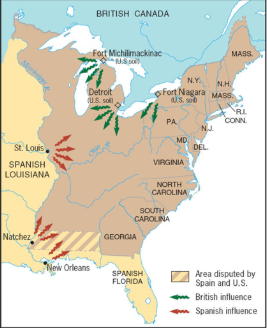
Context:
(1R) This map depicts British threats from the north and Spanish threats from the west of American territories, which represents the prevailing European influence that colonists had to deal with.
(2R) The Articles of Confederation initiated weak foreign policies regarding international threats and influences after the American Revolution, allowing European nations to freely influence bordering regions.
(3R) The British traded with native tribes as a means to create an alliance and create a barrier against future American attacks on Canada while the Spanish held strong control over the Mississippi River, a key trading river.
Significance:
(1R) Treaties such as Jay’s and Pickney’s Treaty helped neutralize America’s tense relationship with Britain and Spain, respectively, securing American protection.
(2R) Poor foreign relations led to America being portrayed as an “Ugly Duckling” that had no European allies, which restricted trade and hindered the growth of America’s economy.
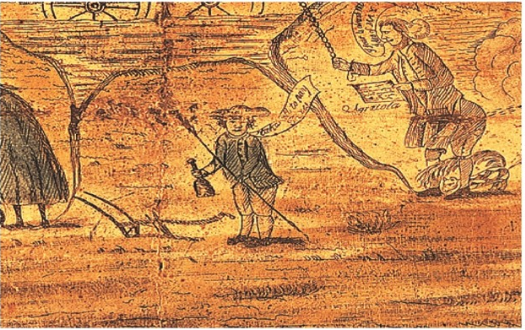
Context:
(1R) This image portrays debt-stricken and poor farmers in the US in 1787 who sought for taxation reforms.
(2R) After the Revolutionary War, the US had accumulated high war debts and was financially unstable, which caused them to raise taxes, hurting poor farmers.
Significance:
(1R) This document illustrates the weaknesses of the Articles of Confederation when it came to taxation and economic reforms; it was largely ineffective and stirred up revolts and discontent.
(2R) Protestors like these farmers led to Shay’s Rebellion, which expressed the idea to American leaders that the government was weak and economically insufficient under the Articles of Confederation and therefore needed a new Constitution.

Context:
(1R) The Constitutional Convention, headed by George Washington, the chair of whom is depicted in the picture, sought to reform the weaknesses brought by the Articles of Confederation in the 1780s.
(2R) Various factors such as discontent among farmers following the inability of the Articles of Confederation to compensate them, ineffective tax policies, and the need for a stronger government elevated the need for the Constitutional Convention.
Significance:
(1R) The Constitutional Convention bypassed its original purpose to only revise the Articles of Confederation and instead created a new constitution that later became the foundation for America’s modern government.
(2R) There were also increased tensions between Anti-Federalists and Federalists when it came to the creation of the Constitution, thus leading to a compromise that ended up with the creation of a federal Bill of Rights.
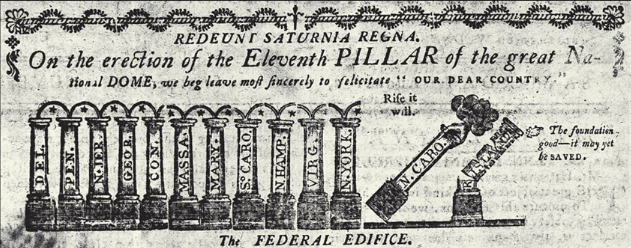
Context:
(1R) This cartoon depicts North Carolina and Rhode Island as the “laggard states” and mocks them for not ratifying the Constitution.
(2R) The formation of a new constitution from the Constitutional Convention was advocated for Federalists with The Federalist Papers.
(3R) States such as North Carolina and Rhode Island were the last few Anti-Federalist states that strongly disagreed with the creation of the Constitution because they believed it stripped the people of their power.
Significance:
(1R) The Constitution was eventually adopted by larger states, making it pass due to the 9/13 state requirement.
(2R) The Constitution united the American states under a new and stronger government, despite the division between factions (Federalist and Anti-Federalist).
(3R) Acceptance of the Constitution led to the encroachment of state powers during Adams’ presidency as seen in the Sedition Acts.
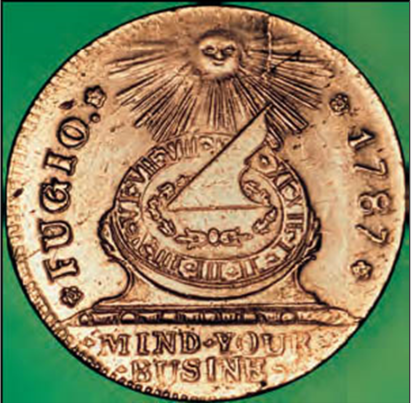
Context:
(1R) This is an image of the first coin and thus the first currency to be authorized by Congress, which was adopted in the 1780s.
(2R) The creation of a new constitution led to the formation of a new currency and economic policies such as debt assumption to combat the war debt that the US accumulated.
Significance:
(1R) The ability to mint currency demonstrates the increased power of the federal government under the Constitution.
(2R) The coin illustrates the unity of the thirteen states under a uniform currency and economic system, which fulfilled a goal of the Constitutional Convention to have the Federal government control commerce.
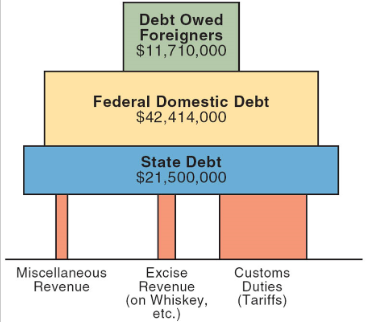
Context:
(1R) The document portrays the debt incurred by the early republic and the individual states as well as the primary sources of revenue to pay it off.
(2R) Primarily due to the Revolutionary War’s high costs, the American government initially incurred a high debt that it could not easily pay, and Hamilton’s choice to incur the state debt increased the challenge.
Significance:
(1R) Such a model would tightly bind both the states and other creditors to the success of the US, securing many benefactors for the growth of the country during the debt-stricken early republic.
(2R) Taxes imposed during this policy would lead to large scale conflicts between the aristocracy and backcountry farmers such as the Whiskey Rebellion.
(3R) The passing of this policy would move the capital to a new location: from Philadelphia to near the mouth of the Chesapeake.
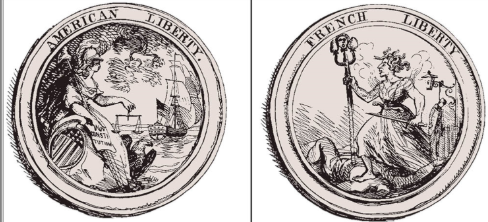
Context:
(1R) The document depicts a British portrayal of the virtuous and successful American and destructive and violent French revolutions.
(2R) The American Revolution inspired the French Revolution, and the similar views motivating the American and French revolutions led to a common comparison of the two rebellions because both involved enraged citizens rebelling against a large power to secure individual rights.
Significance:
(1R) The document compares and contrasts the two revolutions because although they both were motivated by similar factors, the American Revolution led to a surprising victory for the people, while the French Revolution seemed only to worsen the state of the nation.
(2R) Once the French Revolution became violent and chaotic, it also had a divisive effect on the US, leading to a collapse of support among the Federalists while the Jeffersonians regretted the losses but still supported the original values of the revolution.
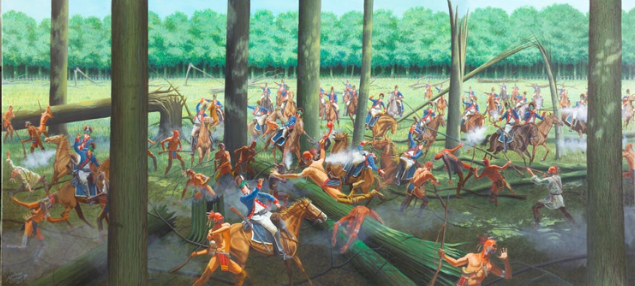
Context:
(1R) The document depicts the fierce Battle of Fallen Timbers between American General Wayne and soldiers of the Miami Confederacy, led by Little Turtle.
(2R) American conflict with Indian tribes on the frontier continued, and the British often provided aid to the Indians to attempt to seize dominance over American territory, but they did not provide as much assistance here, leading to an American victory.
Significance:
(1R) The event led to the signing of the Treaty of Greenville, in which the confederacy ceded additional land, representing expanding American influence over native tribes.
(2R) The document represents continued British influence in America and their disregard for the Treaty of Paris, who still desired control and would side with forces in conflict with the new republic to consolidate power.
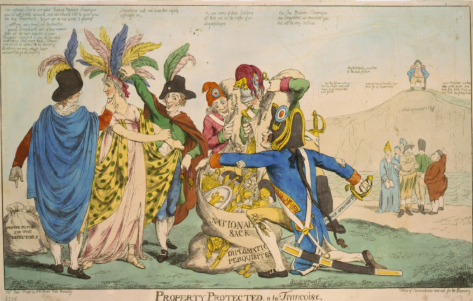
Context:
(1R) The document depicts the XYZ Affair, in which American envoys attempted to negotiate with the French foreign minister, but were rejected by the French unless paid a steep price to speak with him.
(2R) Due to anger with Jay’s Treaty and fear that America might be attempting to side with the British, their greatest enemy, France began to disrupt American merchant vessels and turn away envoys for negotiation.
Significance:
(1R) The document represents an ongoing process of strained relations between America and France, leading to both the XYZ Affair and the Quasi War.
(2R) This bitter relationship represented in the document led to the Convention of 1800, and although that created peace, it marked the end of the Franco-American alliance.
(3R) Such treatment of envoys was common in Europe, with steep bribes being requested to meet with officials, but Americans were unfamiliar with this idea and resisted.
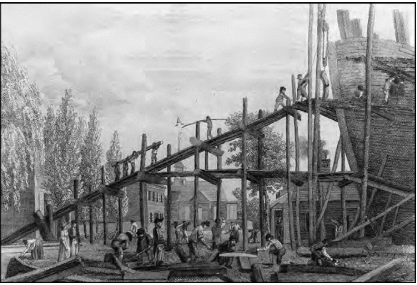
Context:
(1R) The frigate is the USS Philadelphia which was captured by Barbary pirates during the Barbary Wars and was later burned down to prevent the pirates’ use of it.
(2R) The frigate was commissioned in the larger Barbary Wars and French attacks for defense, as the Barbary pirates were attacking American shipping and commerce.
Significance:
(1R) The frigate signifies the response to the French attacks and the XYZ affair, as it led to the creation of the Navy and the expansion of the US Navy itself.
(2R) The development of American military defenses was a departure from the earlier idea that American foreign policy should be diplomacy rather than warfare.
(3R) The Barbary Wars reflected the military weakness and fragility of the American military and economy compared to the Barbary pirates.
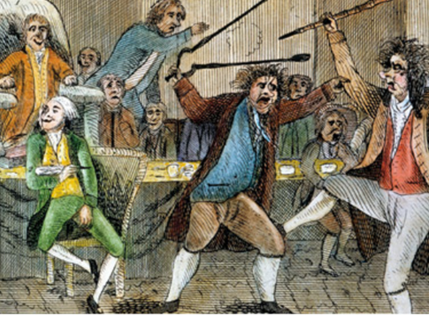
Context:
(1R) This is a satirical representation of Matthew Lyon’s fight with the Federalist representative Roger Griswold in Congress.
(2R) Matthew Lyon, also known as the “Spitting Lion,” became famous for spitting in the face of a Federalist and was a critic of the Adams administration, soon serving time in jail under the Sedition Act.
Significance:
(1R) The illustration demonstrates the stark division and opposition to Adams’ Sedition Act, while also illustrating the fact that critics were often jailed and silenced, such as Matthew Lyon.
(2R) The illustration also signifies the reaction by Antifederalists, who passed nullification acts in the form of the Virginia and Kentucky Resolutions, which invoked the compact theory.
(3R) The illustration further demonstrates the perceived near-dictatorial rule of John Adams through this Sedition Act, as Mercy Otis Warren wrote in her scathing letter to Adams, saying it was a betrayal of American values.
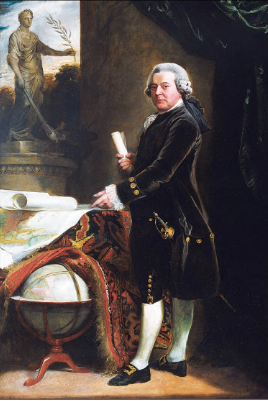
Context:
(1R) John Adams is depicted in this image, dated 1783, by John Singleton Copley, dressed in an ornamental fashion.
(2R) John Adams soon became the 2nd president of the US with his staunchly Federalist stance, hoping to strengthen the power of the central government, evidenced through the Sedition Act.
Significance:
(1R) The manner in which Adams is dressed in is regal and aristocratic, reinforcing his own administration through its Sedition Act, which was seen as an oppression of freedom of press and speech.
(2R) The ideals portrayed in the picture are ironically different from the ideals in the Convention of 1800, especially as the picture demonstrates regality, compared to the republican ideals pushed in the Convention of 1800.
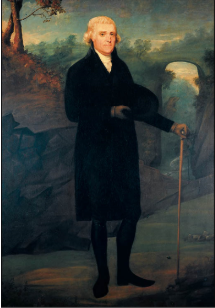
Context:
(1R) Thomas Jefferson was an excellent statesman who authored the Declaration of Independence and the Statute of Virginia for Religious Freedom.
(2R) Thomas Jefferson was the 3rd President and a staunch Antifederalist, protesting for small farmers and the Jeffersonian South, forming the Democratic-Republicans with Madison.
Significance:
(1R) Jefferson’s beliefs put him at odds with Adams, who was a Federalist, leading to the formation of the first political parties in America, with his simple dress reflecting better public perception of him, such as Mercy Otis Warren’s favorable view of Antifederalists.
(2R) The formation of political parties and Jefferson’s own beliefs led to the formation of a loyal opposition and the constant division within government against Adams, with Jefferson being more of an advocate for states’ rights and working-class individuals, such as small farmers.
 Note
Note  Flashcards (35)