Photosynthesis: Light Reactions and Calvin Cycle in Biology
 Call Kai
 Learn
Learn Practice Test
 Spaced Repetition
 Match
Match Flashcards
 Knowt Play
1/26

There's no tags or description
Looks like no tags are added yet.
Name | Mastery | Learn | Test | Matching | Spaced | Call with Kai |
|---|
No analytics yet
Send a link to your students to track their progress
27 Terms
What is the first step in the flow of energy through most living organisms?
Photosynthesis
What is the primary purpose of photosynthesis?
To convert light energy into stored chemical energy of organic molecules.
What are the two main phases of photosynthesis?
Light-dependent reactions and carbon fixation reactions (Calvin Cycle).
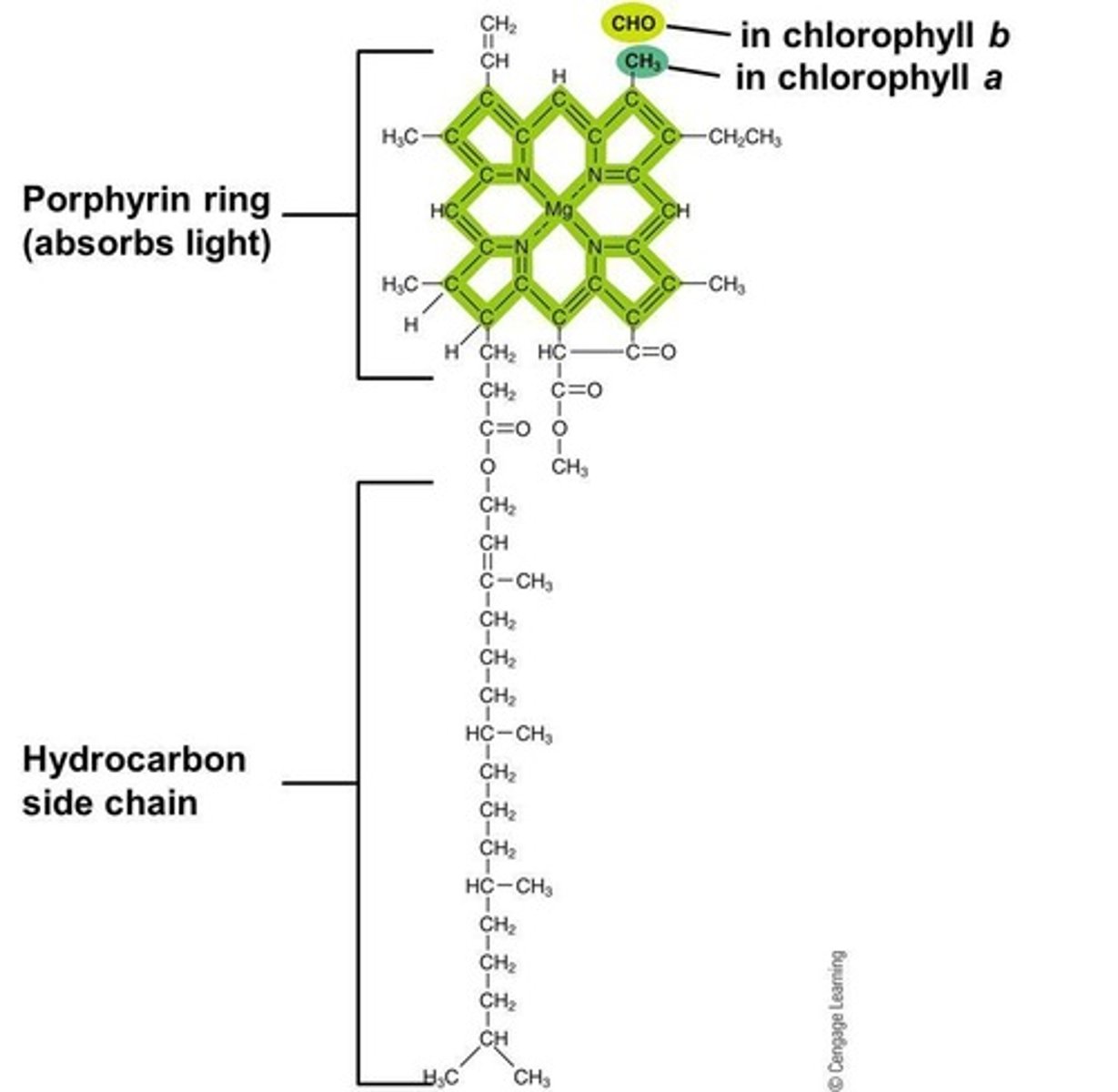
What is the role of chlorophyll in photosynthesis?
Chlorophyll absorbs light energy, primarily in blue and red wavelengths.
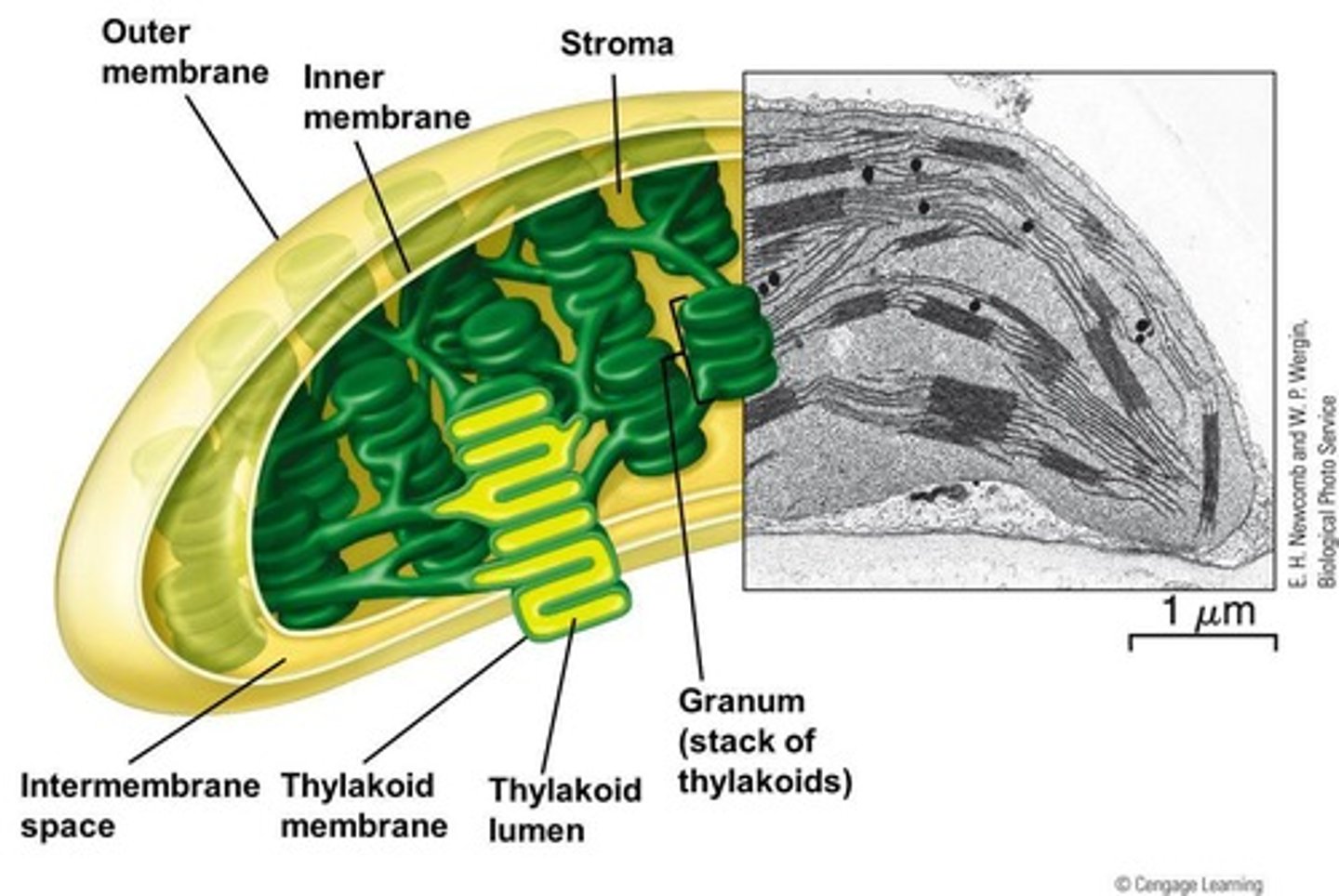
Where do light-dependent reactions occur?
In the thylakoid membranes of the chloroplast.
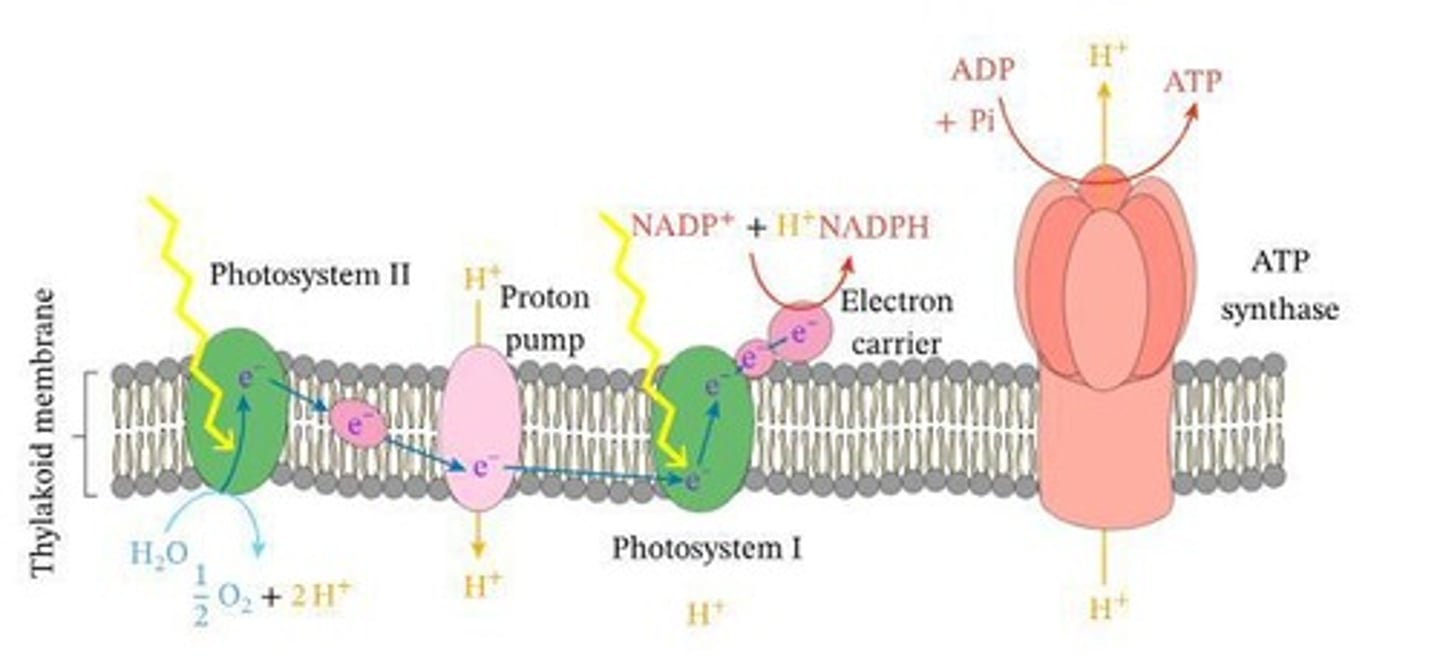
What are the products of light-dependent reactions?
ATP, NADPH, and oxygen (O₂) as a byproduct.
What is the function of the enzyme Rubisco in the Calvin Cycle?
Rubisco fixes carbon dioxide into organic molecules.
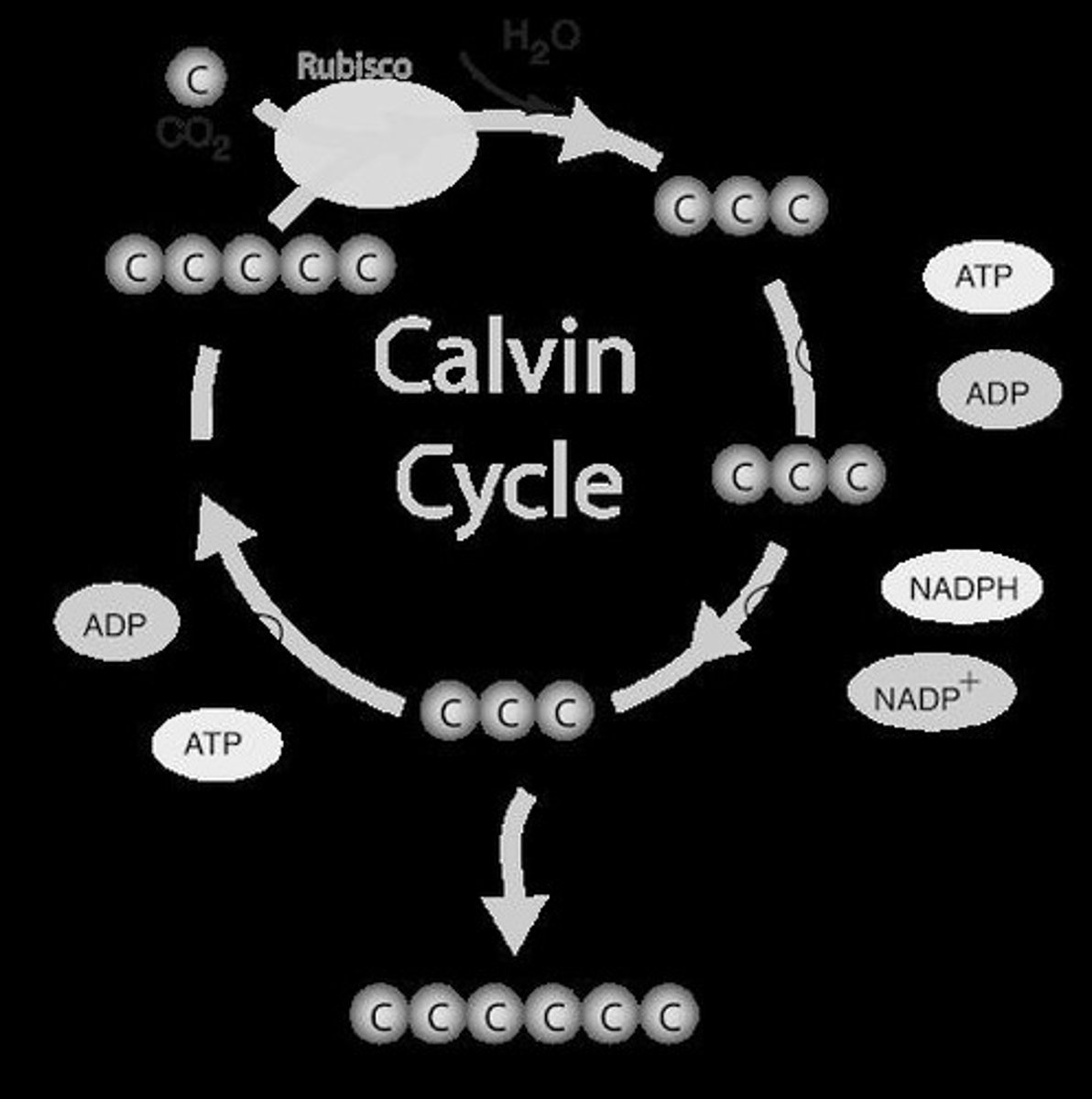
What is produced during the carbon reduction phase of the Calvin Cycle?
G3P (glyceraldehyde-3-phosphate) is produced.
What happens to G3P after it is produced in the Calvin Cycle?
It can be used to form glucose, starch, or other sugars.
What is the significance of the light compensation point?
It is the point where photosynthesis equals respiration.
What are C3 plants?
Plants that perform the Calvin Cycle in the same cell where CO₂ is fixed.
What is photorespiration, and when does it occur?
Photorespiration occurs when RuBisCO binds O₂ instead of CO₂, typically on hot or dry days.
How do C4 plants adapt to low CO₂ conditions?
They initially fix CO₂ into a 4-carbon molecule in one cell and then transfer it to another cell for the Calvin Cycle.
What is the advantage of CAM plants?
They fix CO₂ at night and release it during the day, allowing photosynthesis to occur while minimizing water loss.
What is the role of ATP and NADPH in the Calvin Cycle?
They provide energy and electrons for the conversion of CO₂ into organic molecules.
What are the inputs for the carbon fixation reactions?
6 CO₂, ATP, and NADPH.
What is the structure of chloroplasts?
Chloroplasts have a double membrane, stroma, and thylakoids arranged in stacks called grana.
What are carotenoids?
Accessory pigments that absorb different wavelengths of light than chlorophyll and appear yellow or orange.
What is photolysis in the context of photosynthesis?
The splitting of water molecules to replace lost electrons in Photosystem II, releasing O₂.
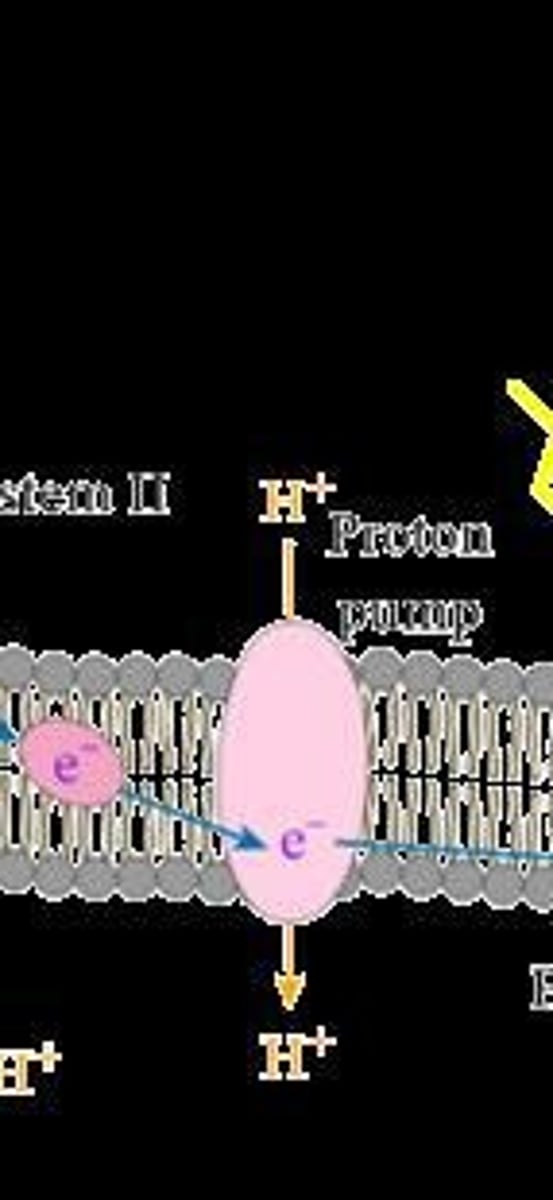
What happens in the electron transport chain during light-dependent reactions?
Excited electrons move down the chain, pumping H⁺ ions and creating a proton gradient to produce ATP.
What is the main product of the Calvin Cycle?
A net G3P molecule, which can be used to synthesize glucose or other carbohydrates.
How does photosynthesis benefit the environment?
It provides organic molecules for heterotrophs, removes CO₂, and produces O₂ essential for aerobic life.
What is the difference between photosynthesis and cellular respiration?
Photosynthesis stores energy using sunlight, while cellular respiration releases energy from glucose.
What is the purpose of the light-dependent reactions?
To capture light energy and convert it into chemical energy in the form of ATP and NADPH.
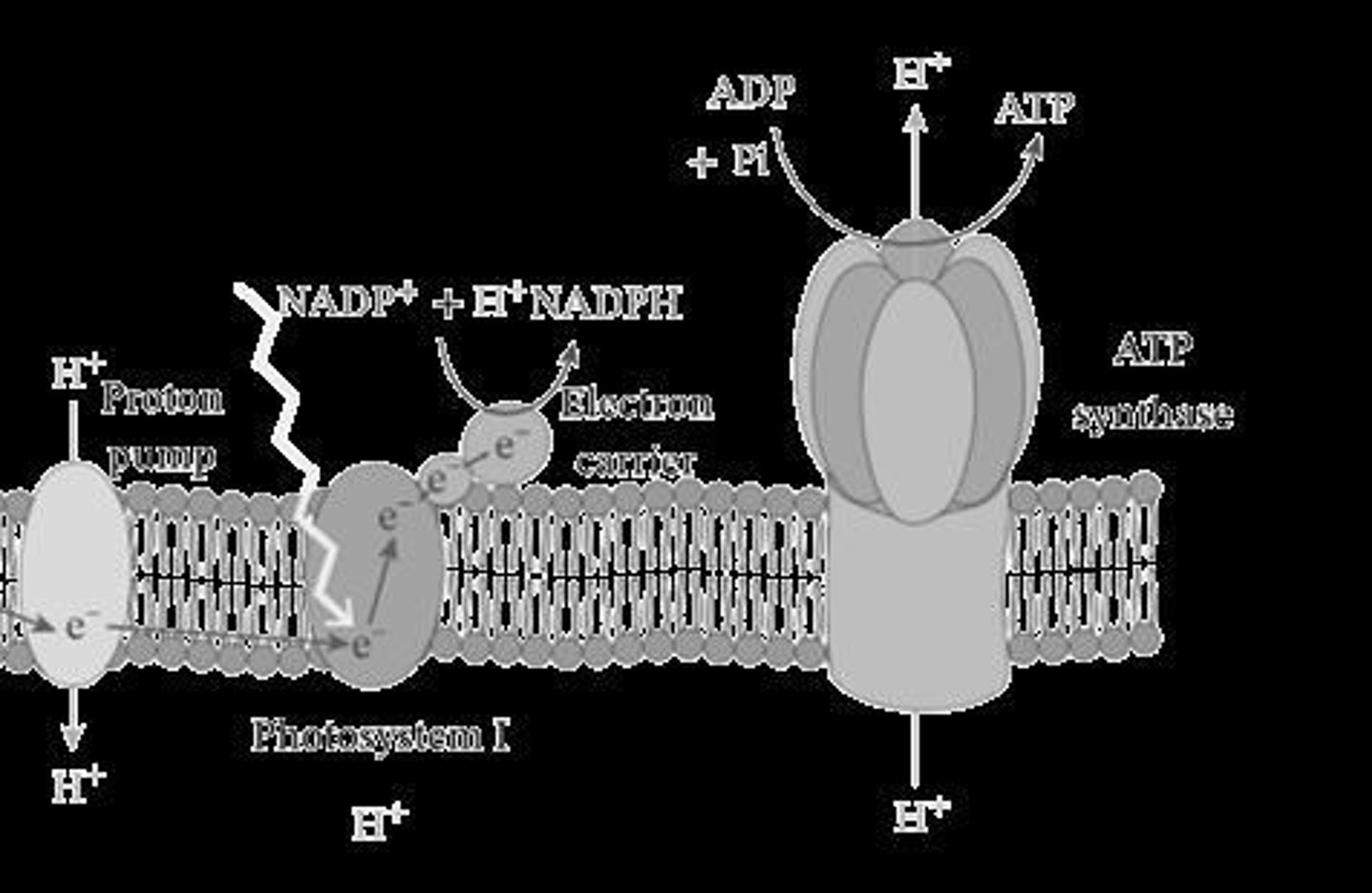
What is the role of the thylakoid membranes?
They are involved in ATP synthesis during the light-dependent reactions.
What is the significance of oxygen produced during photosynthesis?
Oxygen is released as a byproduct and is essential for aerobic life.
What are the outputs of the Calvin Cycle?
1 net G3P molecule, ADP + Pi, NADP⁺, and regenerated RuBP.

