HUMBEHV 2B06 - WEEK 9 TOKEN ECONOMIES & GROUP CONTINGENCIES
 Call Kai
 Learn
Learn Practice Test
 Spaced Repetition
 Match
Match Flashcards
 Knowt Play
1/19

There's no tags or description
Looks like no tags are added yet.
Name | Mastery | Learn | Test | Matching | Spaced | Call with Kai |
|---|
No analytics yet
Send a link to your students to track their progress
20 Terms
Group Contingencies
A common consequence (usually a reward/reinforcer) is delivered depending on the behaviour of:
- One individual of the group
- Part of the group
- The entire group

Group Contingencies: Why use them?
- They are a time saver
- More practical in group settings
- Uses peer influence and peer monitoring (can help, but can also be harmful if misused)

Independent Group Contingencies
- This contingency applies to all group members, but only those who meet the set criteria/expectations get reinforcement.
- These are often paired with contracts or token systems (e.g., allowance)
- It does not encourage peer cooperation, tutoring, or assistance
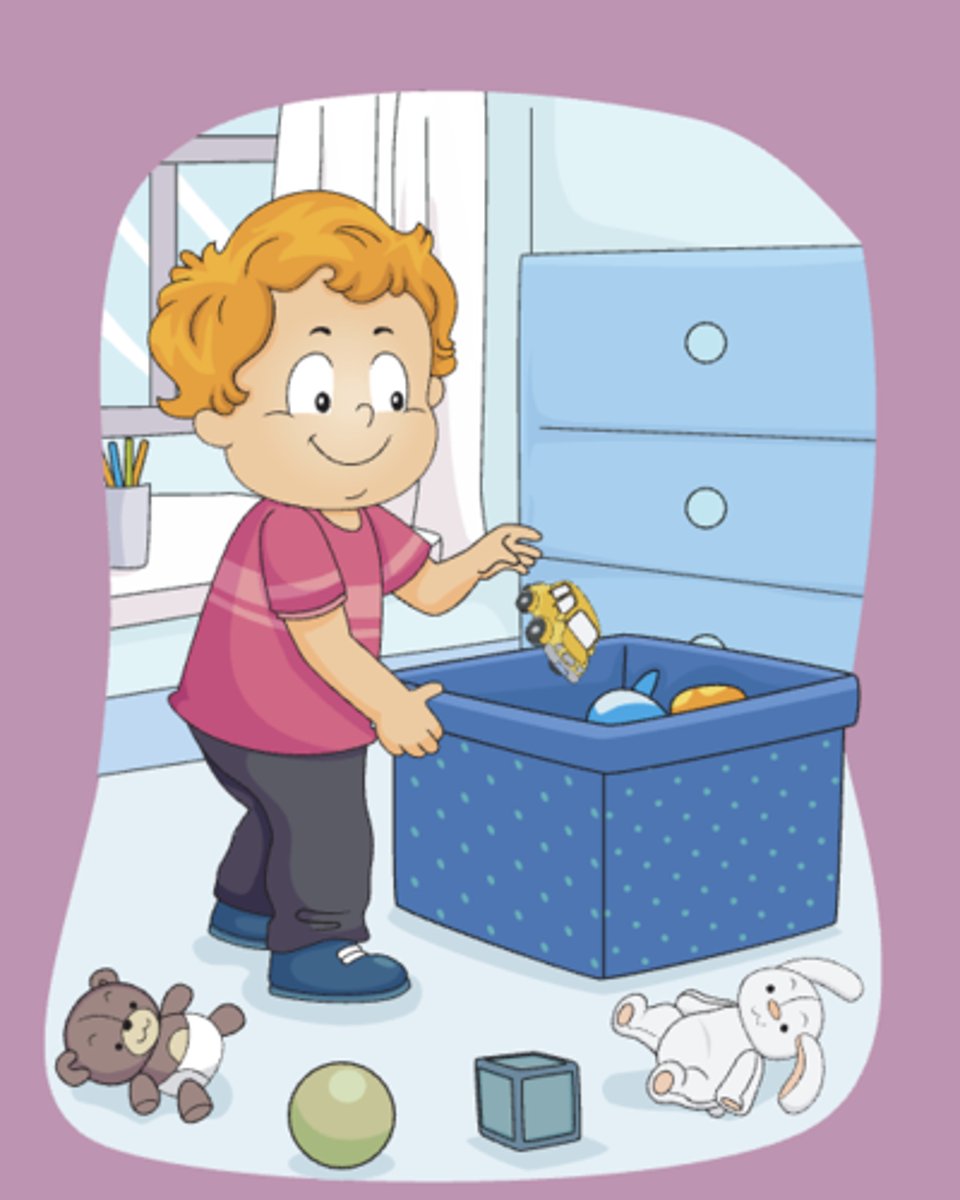
Interdependent Group Contingencies
- All members of a group must meet the contingency criterion for anyone to earn reinforcement.
- Either the total group meets criterion and is everyone reinforced OR the group average meets criterion and everyone reinforced.
- Ex. Good behaviour / Good Student Games (competitions).
- Promotes peer cooperation, tutoring, and assistance.
- Uses peer influence strategically to improve outcomes.

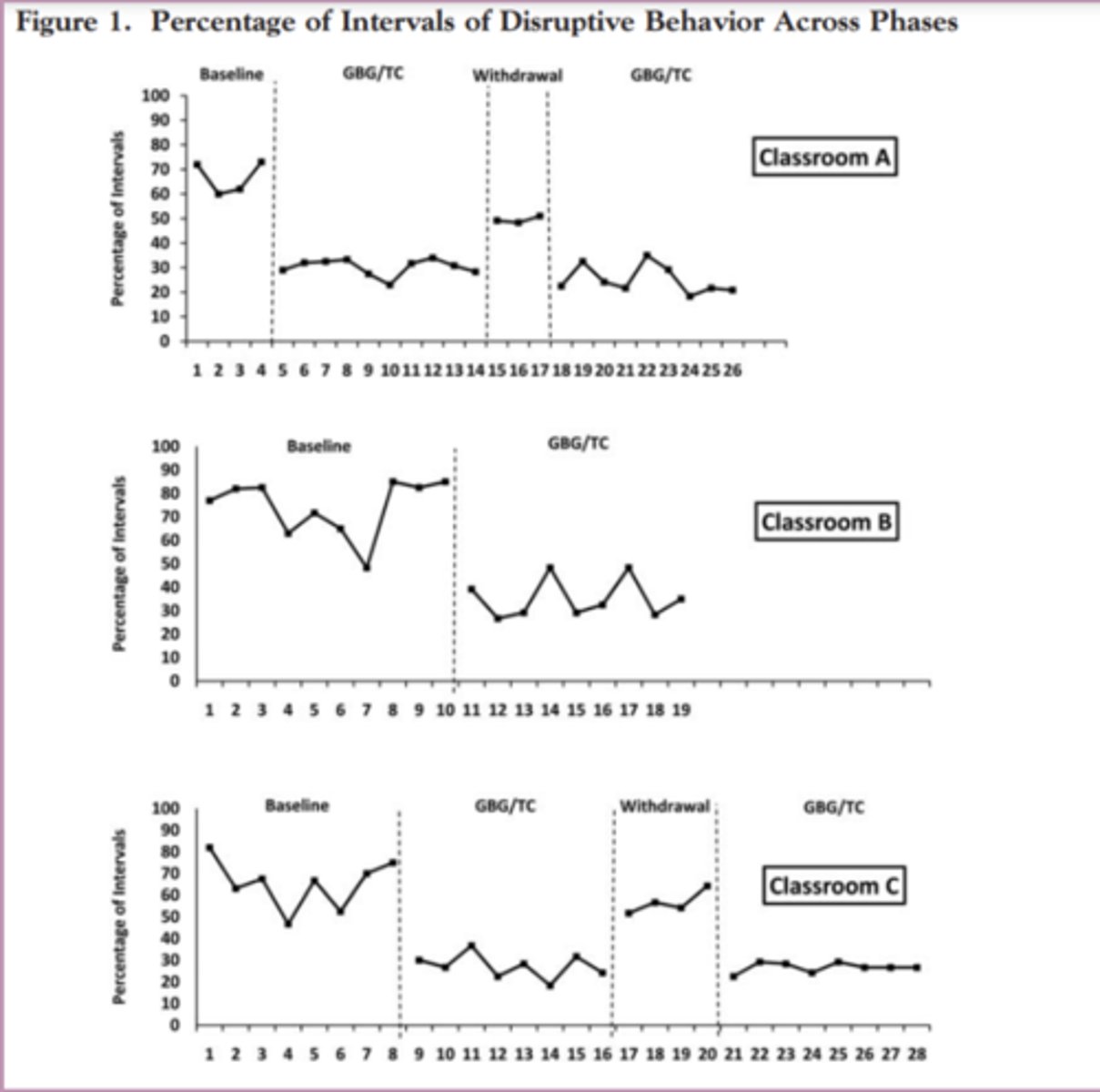
The Good Behaviour Game
Interdependent Group Contingencies
- First demonstrated in the 1960s with 4th-grade students (Barrish, Saunders & Wolf, 1969).
How it works:
- Divide class into teams.
- Set rules for appropriate behaviour.
- Mark points for rule-breaking.
- Team wins if points remain below a predetermined limit of rule breaking.
- Winning team (with the lowest number of rule breaks) receives rewards.
- Serves as a classroom management tool that reduces disruptive behaviour.
- Encourages peer monitoring and cooperation.
Dependent Group Contingencies
- Reinforcement for the whole group is based on the performance of one individual or a handful of individuals. (ex. playing on a sports team)
- Also called "The Hero Procedure"
- Promotes peer cooperation
- Encourages peer tutoring/assistance
- Uses peer influence to support behaviour change
Implementing a group contingency
- Choose a powerful reinforcer (ask them!)
- Identify the target behaviour and note collateral behaviours that might be affected
- Set appropriate performance criteria
- Combine with other procedures
- Select the most appropriate group contingency
- Monitor individual and group performance
What are Token Economies?: Three major components
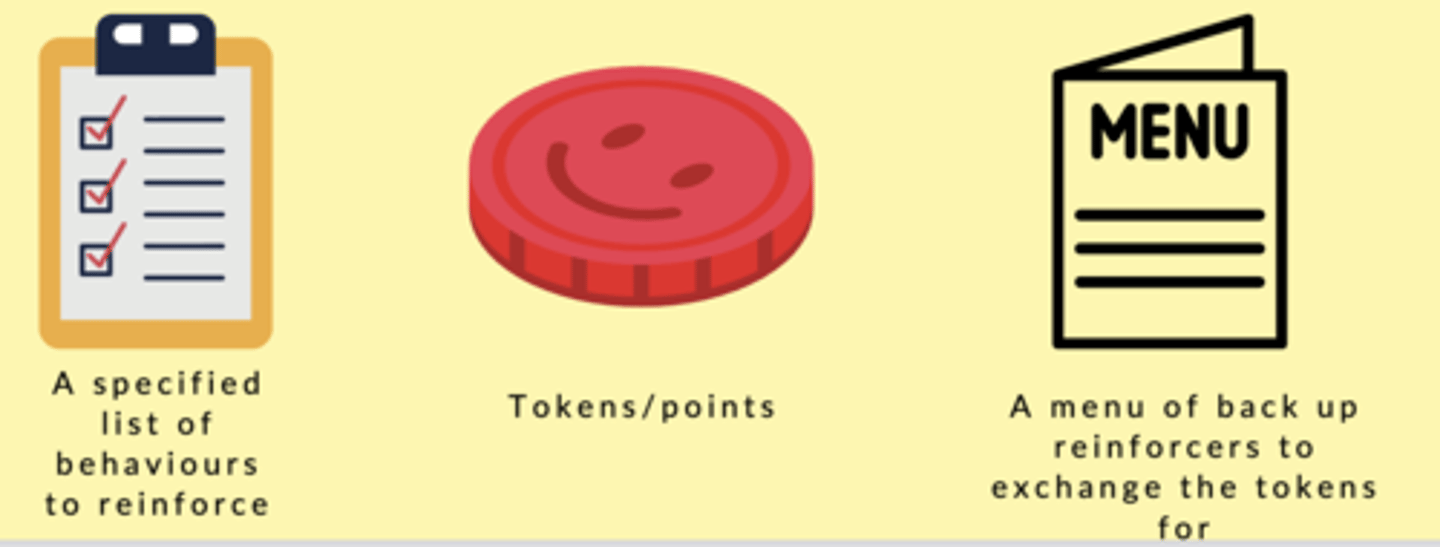
A token economy is a behaviour change system with three major components:
- A specified list of behaviours to reinforce
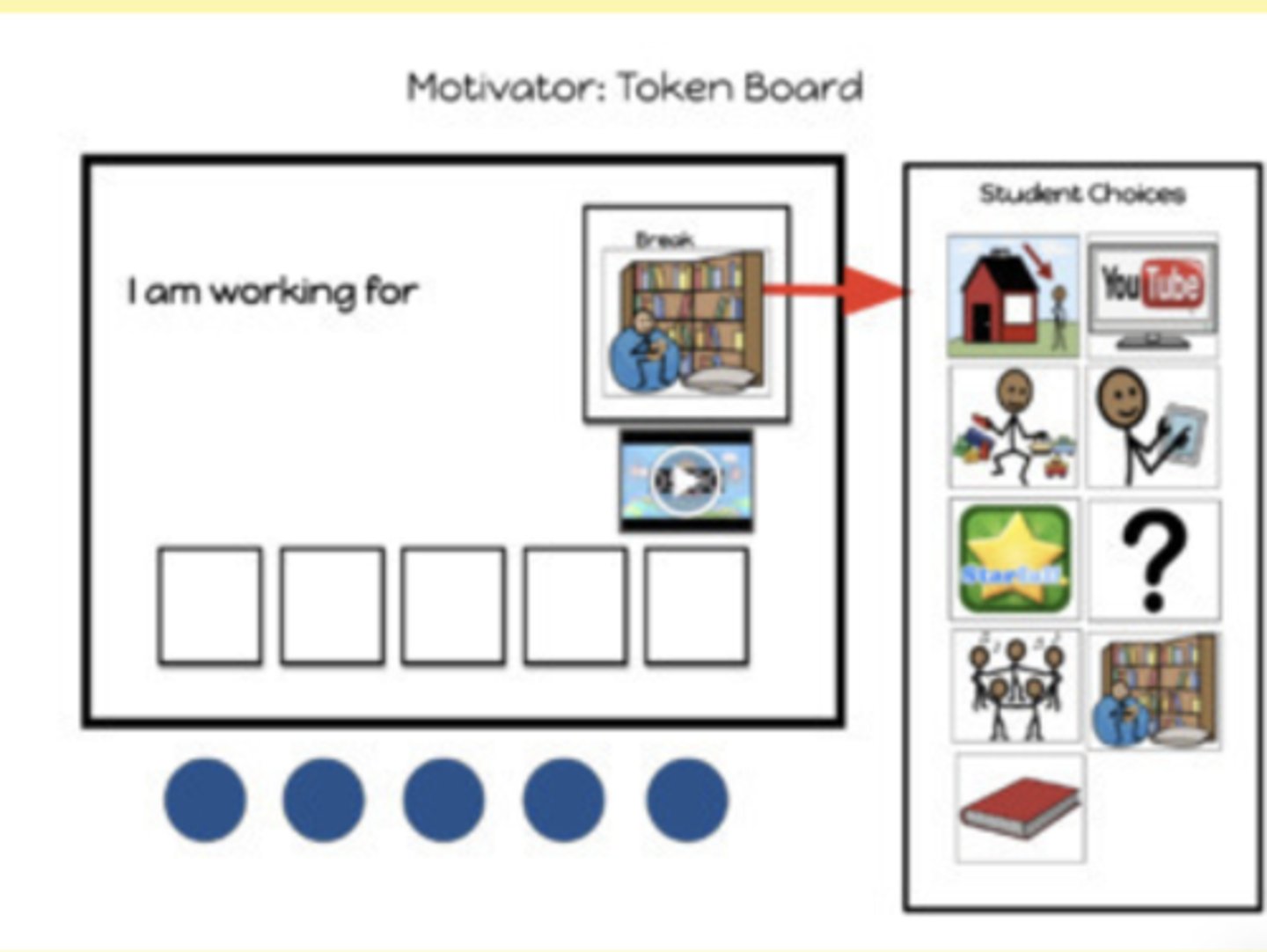
- Token/points (an intermediate reinforcer that provides a visual!)
- A menu of back up reinforces to exchange for he token
Token economies: How do you use them?
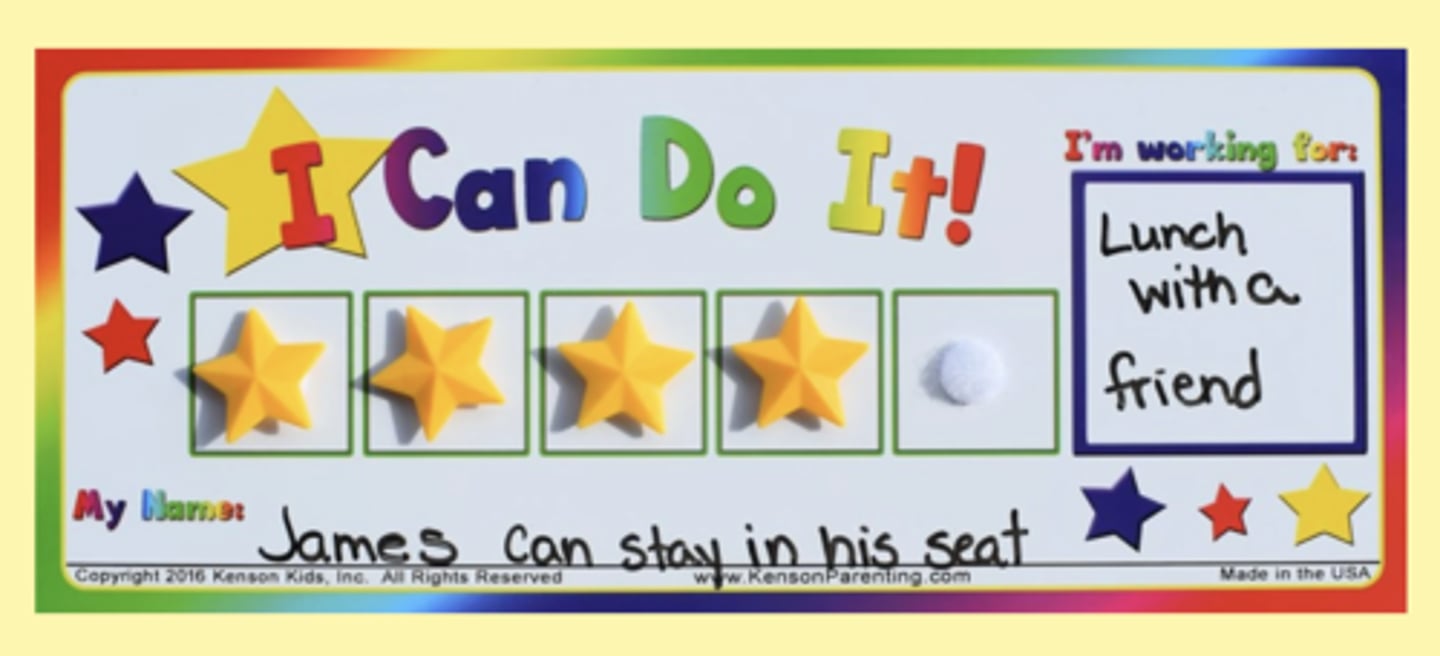
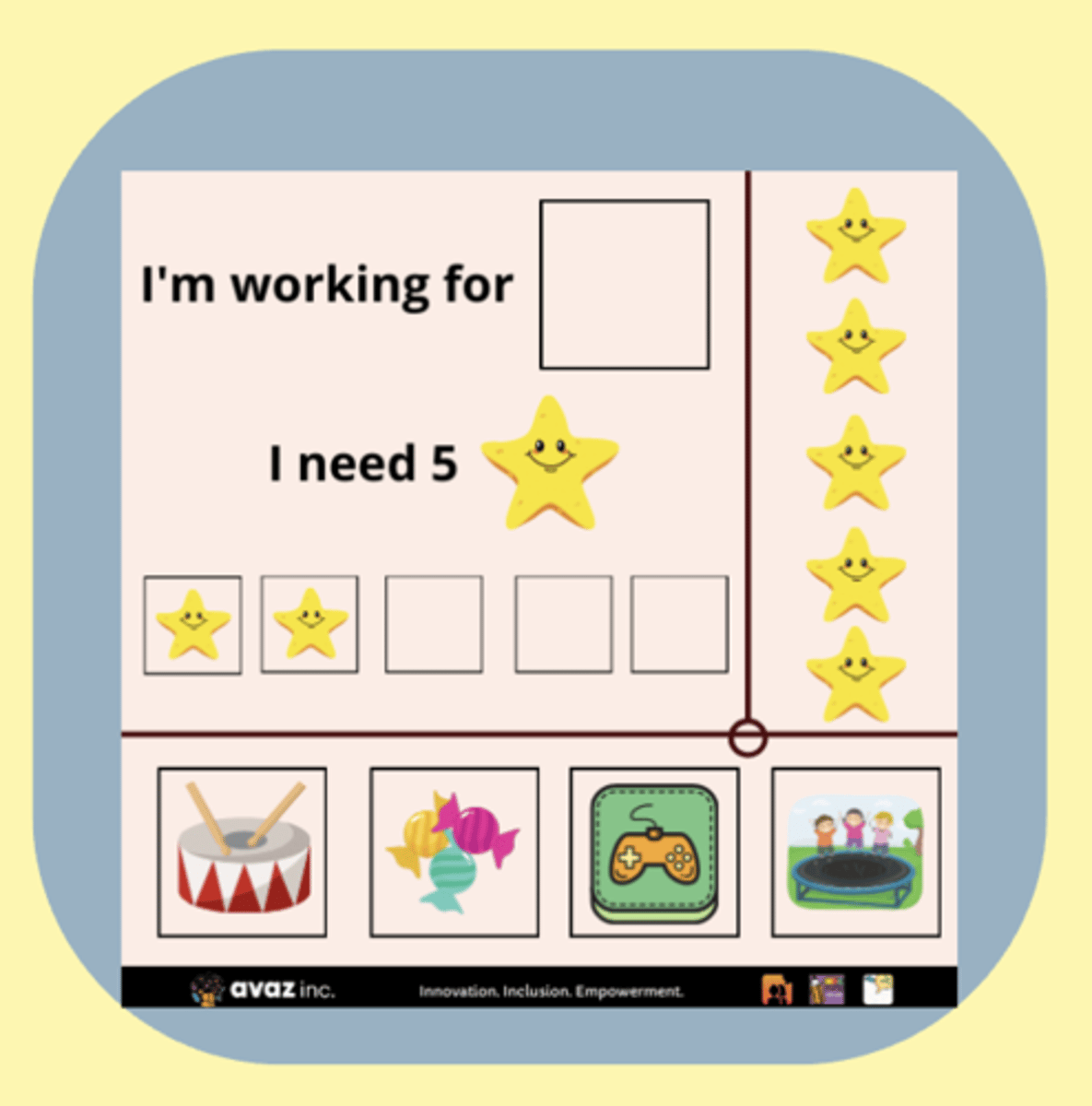
- Use symbols that represent an upcoming reward
- Tokens become secondary/conditioned reinforcers because they can be exchanged for items or activities.
- Ex. Bingo dabbers, Stickers, Point systems
- Students earn a certain number of tokens → then gain access to a preferred item.

Designing a token economy
1. Select tokens
2. Identify target behaviours/rules
3. Choose a menu of back-up reinforcers
4. Set the exchange ratio and specify when/how tokens are given and exchanged
5. Field test the system
1. Selecting Tokens
Designing a token economy
Examples of tokens: Washers, checkers, coupons. poker chips, tally marks, stickers, holes punched in cards
Considerations
- Must be safe
- Control counterfeiting/bootlegging (you don't want clients to be trading them with others)
- Durable
- Accessible
- Cheap
- Tokens should not be so desirable that the learner doesn’t want to exchange them
2. Identify Target Behaviours and Rules
Designing a token economy
- Select measurable/observable behaviours
- Specify criteria for task completion
- Start with a small number of behaviours
- Ensure learners have the prerequisite skills (e.g., fine motor skills)
- It is OK to individualize (e.g., maybe use a bigger or smaller token board); rules don’t need to be the same for everyone!

3. Select a Menu of Backup Reinforcers
Designing a token economy
- Use naturally occurring activities when possible
- Include privileges
- Tangibles and edibles can also be used
- Note: Follow all ethical and legal rules

4. Establish Rules of Exchange
Designing a token economy
Set a ratio of exchange
- Start with a small ratio (e.g., 1 token for a toy car)
- Adjust later for maintenance (e.g., 3 token for a toy car)
Procedure for token dispensation
- Tokens may need storage containers!
Procedure for exchange
- Usually involves a store
- Initially, keep store open frequently
- Over time, make access more intermittent
5. Field Test The System
Designing a token economy
- For 3–5 days, tally how many tokens you would have given for target behaviours (without actually giving them)
- Analyze the data to see if the system seems appropriate
- Design your system based on this test!
Implementing a Token Economy
Implementation Steps:
- Describe the procedure to learners
- Model token delivery (e.g., placing the token on the board) and exchange procedures (e.g., exchanging the tokens in the store)
Address management issues:
- Teach students where/how to store tokens (secure location)
- Discourage hoarding and encourage saving when appropriate
- Handle chronic rule-breakers with special considerations (e.g., response cost; negative punishment, reinforcer assessment)
Withdrawing the Token Program
Steps for Fading Tokens:
- Plan for maintenance and generalization
- Pair tokens with social praise
- Gradually increase responses required to earn tokens
- Gradually decrease duration the system is in place
- Gradually increase natural reinforcers and fade contrived ones
- Increase price of more desirable items systematically
- Fade physical evidence of tokens over time
Token Tips
Avoid battles:
- Be factual when learners don’t earn tokens
- Don’t nag!
- Stay neutral; avoid confrontation about tokens
Response cost (Be cautious):
- Most systems include response cost
- Learners must know which behaviours lead to response cost
- Match the cost to the severity of behaviour
- Avoid putting learners “in the hole”
Advantages of Token Systems
- Easy to give and collect
- Structures reinforcement: prompts mediators to reinforce consistently
- Immediate reinforcement without disrupting ongoing activity
- Teaches saving skills for future purchases
- Reduces likelihood of satiation
- Response cost is easy to implement
- Flexibility: a different person can deliver backup reinforcer than the one who gave the tokens
Disadvantages of Token Systems
- High maintenance: programs require constant attention
- Mediator training required: staff, teachers, or parents must implement accurately and consistently
- Artificial nature: must plan for fading tokens once behaviour is established
- Time and resources: similar to real-world systems (e.g., money), maintaining a token system takes significant effort

