Cranial Nerves VIII-XII: Functions and Components
 Call Kai
 Learn
Learn Practice Test
 Spaced Repetition
 Match
Match Flashcards
 Knowt Play
1/3

There's no tags or description
Looks like no tags are added yet.
Name | Mastery | Learn | Test | Matching | Spaced | Call with Kai |
|---|
No analytics yet
Send a link to your students to track their progress
4 Terms
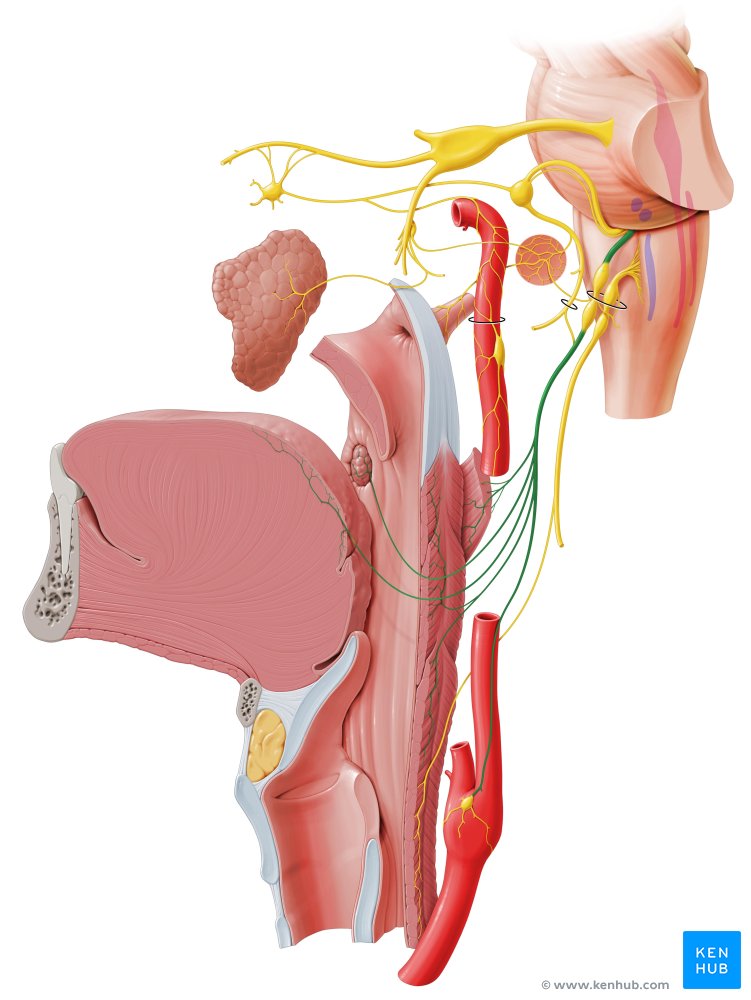
name, components, functions, and clinical importance of CN IX?
name: glossopharyngeal
functions/components:
SpS → SVA: taste in posterior 1/3 of tongue
brachial motor (GSE): motor control of stylopharyngeus muscle
brachial sensory (GSA): sensation in inner surface of eardrum, skin of part of pinna, upper pharynx
visceral sensory (GVA): sensation to carotid bodies (chemoreceptors that monitor oxygen, breathing, HR)
visceral motor (GVE): motor control over parotid glands (salivary glands)
clinical importance: swallowing, gag reflex, taste, saliva secretion
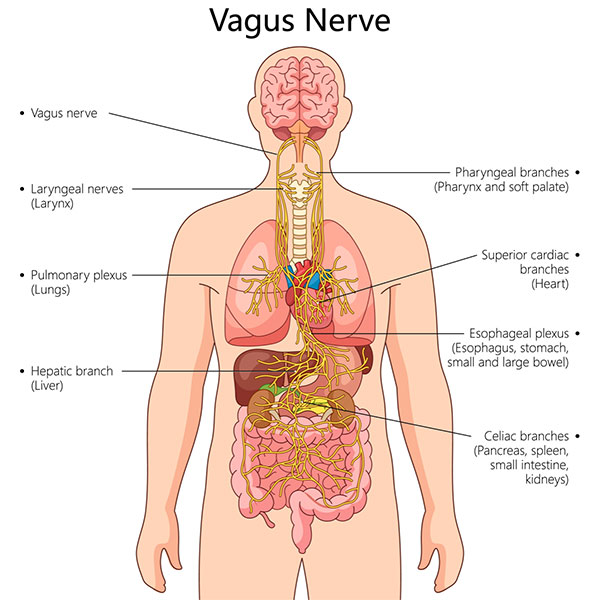
name, components, functions, and clinical importance of CN X?
name: vagus → “wandering”
functions/components:
SpS → SVA: taste in back of pharynx
brachial motor (GSE): voluntary control over pharynx, palate, larynx
visceral motor (GVE): involuntary control of organs below the head at the terminal ganglia (heart, lungs, gut)
visceral sensory (GVA): sensation from thoracic and abdominal viscera (heart, lungs, gut) and pharynx
clinical importance: control over laryngeal, pharyngeal, and esophageal muscles
notes: longest and largest cranial nerve
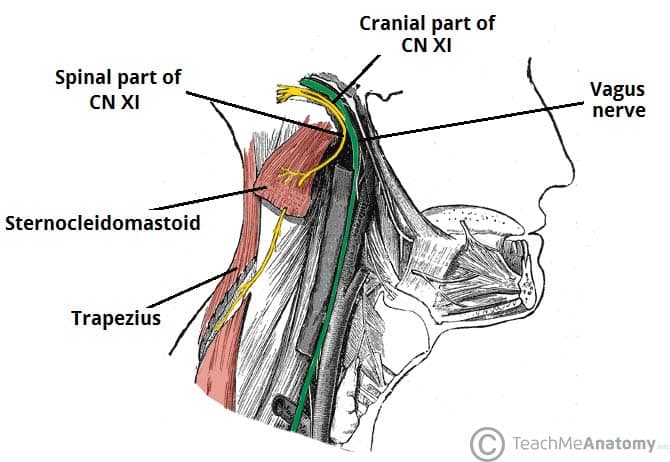
name, components, functions, and clinical importance of CN XI?
name: spinal accessory
functions/components:
brachial motor (GSE): voluntary control over trapezius and sternocleidomastoid muscles
notes: originates in spinal cord, travels up through foramen magnum and then back down through jugular foramen
clincal importance: posture while eating and swallowing
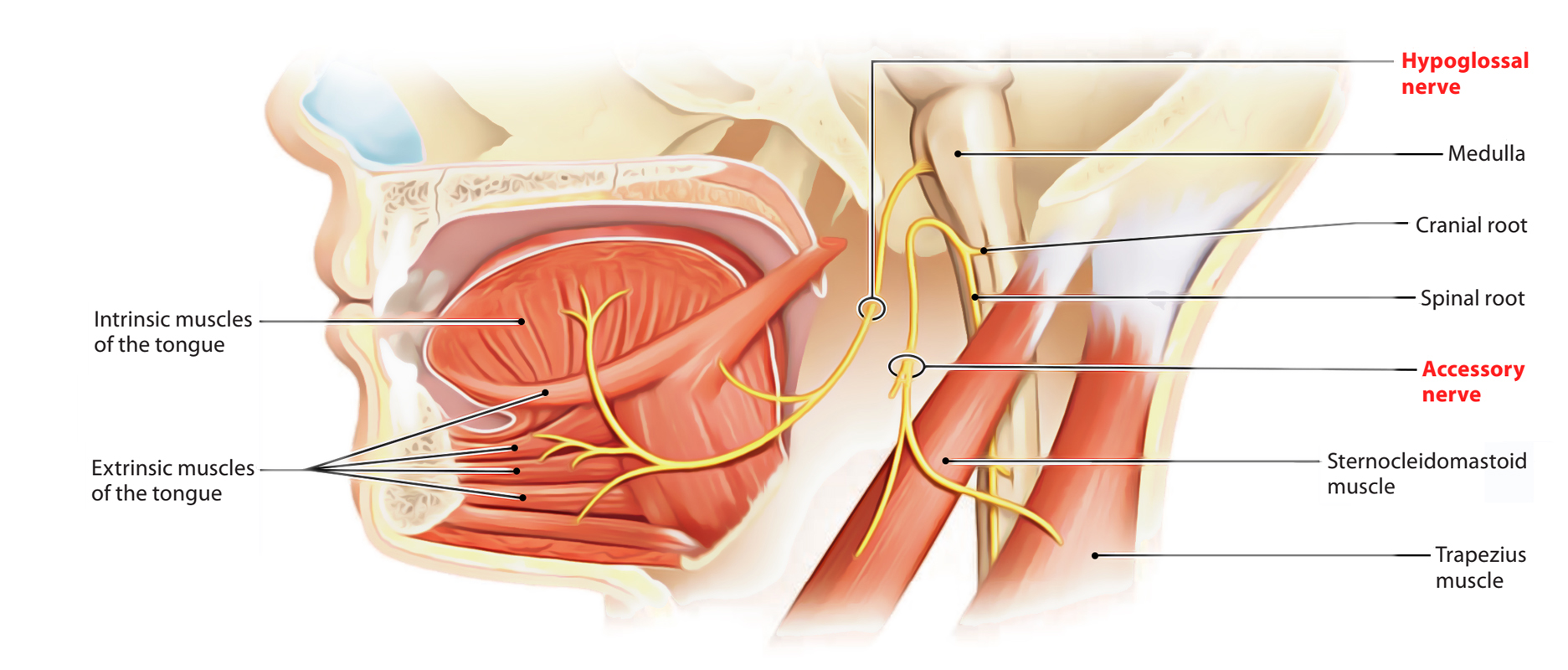
name, components, functions, and clinical importance of CN XII?
name: hypoglossal
functions/components:
brachial motor (GSE): voluntary control of intrinsic and extrinsic tongue muscles
clinical importance: swallowing, chewing, manipulating food

