Chapter 4 - Taxonomy and Speciation
 Studied by 0 people
 Call Kai
 Learn
Learn Practice Test
 Spaced Repetition
 Match
Match Flashcards
 Knowt Play
1/31

There's no tags or description
Looks like no tags are added yet.
Name | Mastery | Learn | Test | Matching | Spaced | Call with Kai |
|---|
No analytics yet
Send a link to your students to track their progress
32 Terms
Taxonomy
science of classification, especially of biological organisms
based on evolutionary relationships, not just physical appearance (like how early naturalists thought)
Taxonomic hierarchy of humans
Domain - Eukarya
Kingdom - Animalia
Phylum - Chordata
Subphylum - Vertebrata
Class - Mammalia
Subclass - Eutheria
Order - Primates
Superfamily - Hominidea
Homologous traits
AKA shared derived traits
similarities based on common descent from a common ancestor
analogous traits
similarities based on common function with no assumed common evolutionary descent
AKA Homoplasy
ex. birds and bats don’t have a common ancestor, but have wings with similar function (flying)
homologous traits in tetrapods
all tetrapods have the same basic limb bone structure (with modification) derived from a common tetrapod ancestor
tetrapod = four footed vertebrates
convergent evolution
takes species without a common ancestor and evolves them to have a similar function
ex. birds, insects that can fly, and bats
primitive (ancestral) traits
passed on from an ancestor without evolutionary modification
if your ancestor has the same trait as you, it’s primitive
doesn’t help sort out taxonomic groups
derived (modified) traits
modified by evolution from the ancestral condition
if you have a trait that your ancestor doesn’t, it is derived
helps sort out taxonomic categories
can traits be both derived and primitive
yes depending on the context
ex. 4 limbs
comparing mammals with mammals
it is primitive since even if mammal species evolved from other mammals, they share the same trait
comparing mammals with fish
derived since mammals evolved from fish, and fish don’t have 4 limbs
Linnean Taxonomy
system that classifies organisms based on shared physical traits
only classification, no concept of evolutionary relationships
evolutionary systematics
traditional approach that interprets evolutionary relationships based on a wide range of evidence (like evolutionary traits)
cladistics
groups organisms based on evolutionary relationships
specifically derived homologous characters
grades vs clades
evolutionary systematics - uses evolutionary traits, is more intuitive, but doesn’t make biological sense all of the time
based on grades
ex. birds are not grouped with reptiles since they don’t look physically similar (even though they evolved from dinos)
cladistics - based on derived homologous characters
based on clades
ex. clade: Amniotes (birds reptiles and mammals)
grouped together because they share a common ancestor which layed eggs
grades
groups of species that share physical similarities
clades
groups which share ancestry, even if they are not physically similar
phylogenetic tree
diagram that shows evolutionary relationships based on evolutionary systematics
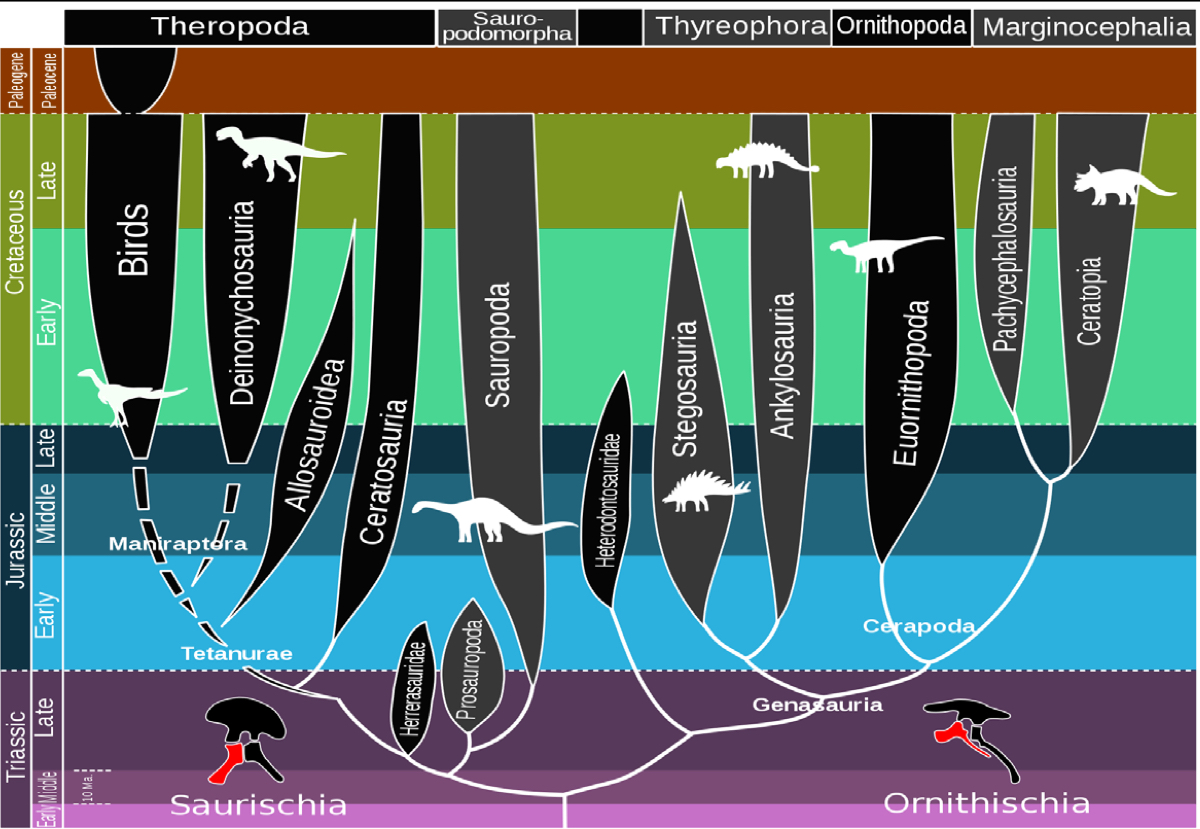
problems with evolutionary systematics
closely related organisms sometimes have unique differences and distantly related organisms sometimes have primitive similarities
cladogram
diagram that shows evolutionary relationships based on cladistics
branching tree with nodes that represent shared ancestors
based on shared derived characters
doesn’t take into account of time and doesn’t suggest ancestor-descendant relationships
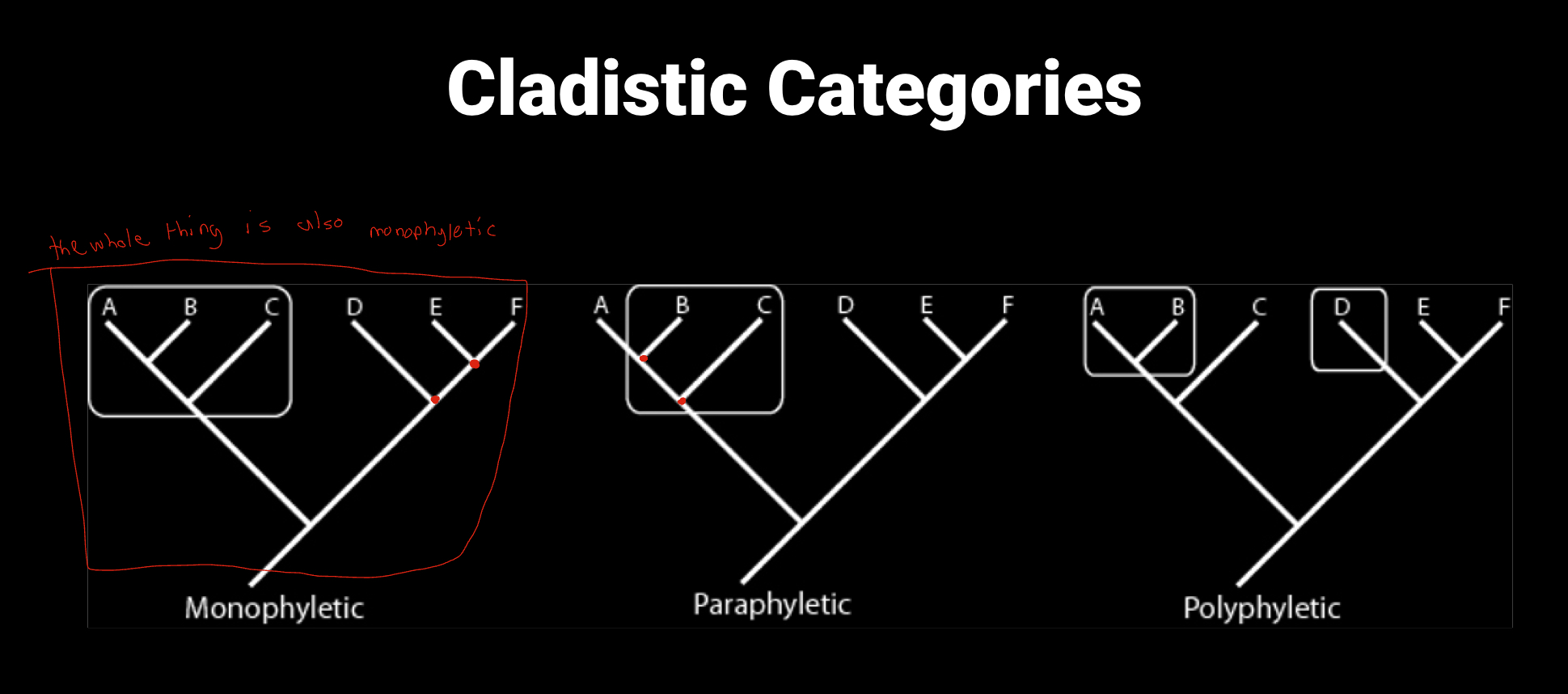
types of clade groups (cladistic categories)
Monophyletic clade - includes all descendants from one ancestor
the only evolutionarily meaningful cladistic category
paraphyletic group - does not include all descendants of a common ancestor
polyphyletic group - includes two groups that are not closely related
outgroup - distantly related group that is used to establish primitive and derived traits
synapomorphies
traits shared in common between two life-forms and their common ancestor
most useful for making evolutionary interpretations
ex. shared presence of feathers in birds and dinos
which is better cladistics or evolutionary systematics?
neither
cladistics - helps us understand evolutionary relationships more accurately
evolutionary systematics - works better intuitively with our understanding of life, but not biologically all the time
species
group of organism’s that can interbreed to produce offspring, but can’t produce viable offspring with other species
concept that scientists made up to help understand biological diversity
biological species concept + problems with it
members of a species are interfertile but reproductively isolated from other species
problem - asexual organisms don’t interbreed, so BSC doesn’t work here
speciation and ways it can happen
process where new species evolve from existing species
does not happen instantaneously
one species can change over time into a single very different species
or population can diversify into two or more distinct species (through isolation and other selective pressures)
allopatric speciation
speciation by geographic isolation
something causes population to be divided by geography
natural selection occurs if there is little to no gene flow
eventually they become different species
4 types of speciation
allopatric speciation - speciation due to geographic isolation
peripatric speciation - speciation due to genetic drift (isolated from original population)
parapatric - speciation in adjacent region
sympatric - speciation in same region
adaptive radation and factors
when one species rapidly splits into multiple different species through adapting to different environments
two factors that allows species (or group of species) to diverge into as many variations:
its adaptive potential (evolvability)
adaptive opportunities of the available niches
hybrids
cross between two populations
as species diverge, interfertility decreases
only closely related taxa can hybridize
Sometimes two organisms of different species can still produce offspring
these hybrid offspring or often sterile
but fertility depends on how distantly related their parents are
hybrid examples
horses and donkeys - different species
they can interpreed to produce hybrids (like mules)
these hybrids are usually not fertile
zebroids
zorse - male zebra x female horse hybrid
zonkey - male zebra x female donkey hybrid
ligers and tigons
hybrids and speciation
hybridization is considered a negative influence on speciation according to zoologists and anthropologists
but we realize now this isn’t true
hybridization may drive evolutionary change
Infraspecific variation
variation accounted for by individual, age, and sex differences (sexual dimorphism)
interspecific variation
variation representing differences between reproductively isolated groups
 Note
Note  Flashcards (39)