Exam Three Sports Psychology Arousal, Stress, and Anxiety
 Studied by 0 people
 Call Kai
 Learn
Learn Practice Test
 Spaced Repetition
 Match
Match Flashcards
 Knowt Play
1/22

There's no tags or description
Looks like no tags are added yet.
Name | Mastery | Learn | Test | Matching | Spaced | Call with Kai |
|---|
No analytics yet
Send a link to your students to track their progress
23 Terms
Arousal
a blend of physiological and psychological activation, varying in intensity along a continuum
Anxiety
a negative emotional state with feelings of worry, nervousness, and apprehension associated with activation or arousal of the body
Cognitive
Somatic
State Anxiety
refers to “right now” feelings that change from moment to moment
cognitive state and somatic state components
perceived control
Trait Anxiety
a personality disposition that is stable over time
somatic trait, worry trait, and concentration disruption
Physiological Signs to Measure Arousal and Anxiety
heart rate, respiration, skin conductance, biochemistry
requires lab equipment
objective
Global and Multidimensional Self-Report Scales to Measure Arousal and Anxiety
CSAI-2, SCAT, SAS
pencil and paper
scored low to high
subjective
Stress
a substantial imbalance between physical and psychological demands placed on an individual and his or her response capability under conditions in which failure to meet demands has important consequences
Sources of Stress
job change
death of family member
daily hassles
money
time demands
relationships
lifestyle
performance outcome
self-doubts
team selection
communication with coaches and/or teammates
injury/illness
Situational Sources of Stress and Anxiety
event importance
uncertainty
Personal Sources of Stress and Anxiety
trait anxiety
self-esteem
social physique anxiety
How Arousal and Anxiety Affect Performance
drive theory
social facilitation
inverted-u hypothesis
individualized zones of optimal functioning (IZOF)
multidimensional anxiety theory
catastrophe model
reversal theory
anxiety direction and intensity
Drive Theory Predictions
on well-learned skills, an individual’s arousal or state of anxiety increases; so too does performance
a constant incline in a graph
Social Facilitation Theory
Zajonc (1965) - revised Drive Theory
the presence of others enhances performance on simple or well-learned skills and inhibits performance on complex or unlearned skills
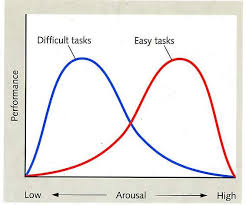
Multidimensional Anxiety Theory
cognitive anxiety is negatively related to performance
somatic anxiety is related to performance in an inverted-u pattern
little support for its predictions
Reversal Theory
how arousal affects performance depends on an individual’s interpretation of his or her arousal level
arousal can be interpreted as pleasant (excitement) or as unpleasant (anxiety
arousal interpreted as pleasant facilitates performance
arousal interpreted as unpleasant hurts performance
Anxiety-Performance Relationship
an individual’s interpretation of anxiety symptoms is important for understanding the relationship
intensity (how much anxiety one feels)
direction (a person’s interpretation of anxiety as facilitating or debilitating to performance)
Facilitative Anxiety
viewing anxiety as positive leads to superior performance
Debilitative Anxiety
Viewing anxiety as negative leads to impaired performance
Perception of Control
internal or external locus of control moderates type of anxiety
Significance of All Arousal-Performance Views
arousal and state anxiety can be facilitative or debilitative based on self-confidence and enhanced perceptions of control
arousal is multifaceted
consists of physical activation of arousal and the interpretation of arousal
it is doubtful that the optimal level of arousal is always at the midpoint of the arousal scale
interaction of physiological activation and arousal interpretation is more important than actual levels of each
limit “psyching-up”
practice effective coping skills
How Arousal Influences Performance
increased muscle tension, fatigue, and coordination difficulties
changes in attention, concentration, and visual search (narrowing of attention, shift to dominant style, attending to inappropriate cues, performance worries and situation-irrelevant thoughts, visual cues are differently identified and processed when performers are anxious)
Symptoms of Arousal and State Anxiety
cold, clammy hands
constant need to urinate
profuse sweating
negative self-talk
dazed look in eyes
feeling ill
headache
cotton mouth
constant sickness
difficulty sleeping
increased muscle tension
butterflies in stomach
inability to concentrate
consistently better performance in non-evaluative situations
Developing Confidence
for those with trait anxiety, focus on the process of preparing rather than the evaluation
con
 Note
Note  Flashcards (39)