Week 1 Content
 Studied by 0 people
 Call Kai
 Learn
Learn Practice Test
 Spaced Repetition
 Match
Match Flashcards
 Knowt Play
1/33

There's no tags or description
Looks like no tags are added yet.
Name | Mastery | Learn | Test | Matching | Spaced | Call with Kai |
|---|
No analytics yet
Send a link to your students to track their progress
34 Terms
What is Molarity (M)?
moles of solute/(per) liter of solution
What are aqueous solutions?
water mixtures
What’s a solute?
the thing that gets dissolved
What’s a solvent?
medium that the solute get’s dissolved into
What’s Soluble mean?
able to diffuse into something (there can be limits to this)
What’s miscible mean?
able to form a homogeneous mixture w/ other substance.
Soluble VS. Miscible?
generally is applicable to things VS. 2 substances that are liquids being mixed.
What’s Aqueous mean?
H2O mixture that is homogenous
What does Precipitate mean as a noun?
un-dissolved solid that isn’t in a liquid or solution
What does Precipitate mean as a verb?
the formation of a solid from a liquid or solution
What’s a Covalent bond? what element type is it usually bonded with?
shared e- (non metals)
What’s a Ionic bond? what element type is it usually bonded with?
element/compound will take an electron (metal to non-metal) (ion to ion)
When writing the formula for ionic bonds what element comes 1st then 2nd?
Metal
Non metal
What’s a SN #?
number of atoms bonded & any lone pairs in relation to the central atom
What’s a dipole dipole force?
when dipoles interact w/ each other
What is a Hydrogen bond?
still a dipole dipole interaction but is a much stronger. Only consist of (N-H, O-H & F-H)
What are the most electronegative atoms?
N, O & F
What are London Dispersion forces?
momentary dipoles, very weak (non-polar covalent can do this too)
What’s an electrolyte?
substance that produces ions in a solution when it dissolves into H2O
What’s an electrolyte solution?
solution that can conduct electricity
what are nonelectroyes?
don’t produce ions in solution & can’t conduct electricity
when it comes to electrolytes → the greater degree of ionization it will correspond …..
with stronger electrolytes.
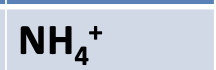
formula of ammonium? & ion type?
polyatomic
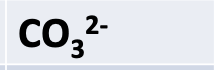
formula of carbonate? & ion type?
polyatomic
formula of bicarbonate? & ion type?
polyatomic

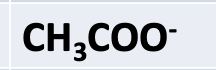
formula of acetate? & ion type?
polyatomic
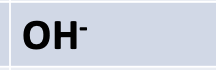
formula of Hydroxide? & ion type?
polyatomic
formula of nitrite? & ion type?
polyatomic

formula of nitrate? & ion type?
polyatomic
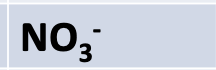
formula of phosphate? & ion type?
polyatomic

formula of sulfite? & ion type?
polyatomic
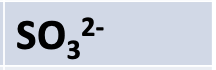
formula of sulfate? & ion type?
polyatomic
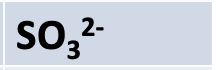
formula of bisulfate? & ion type?
polyatomic
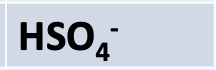
formula of perchlorate? & ion type?
polyatomic

 Note
Note  Flashcards (50)