Chapter 20 + 1 - Functions and Sequences + Data Interpretation
 Call Kai
 Learn
Learn Practice Test
 Spaced Repetition
 Match
Match Flashcards
 Knowt Play
1/25

There's no tags or description
Looks like no tags are added yet.
Name | Mastery | Learn | Test | Matching | Spaced | Call with Kai |
|---|
No analytics yet
Send a link to your students to track their progress
26 Terms
What are the allowable inputs to a function called?
The Domain (all the x values)
When will the output of a function not be a real number?
The denominator of a fraction is zero
The radicand of an even-indexed root is negative
What are the values of the domain of a function?
The domain of a function will be all values of x expect those that produce a denominator of 0 or a negative radicand under an even square root
What is the range?
The set of all possible outputs of a function (“the y values”)
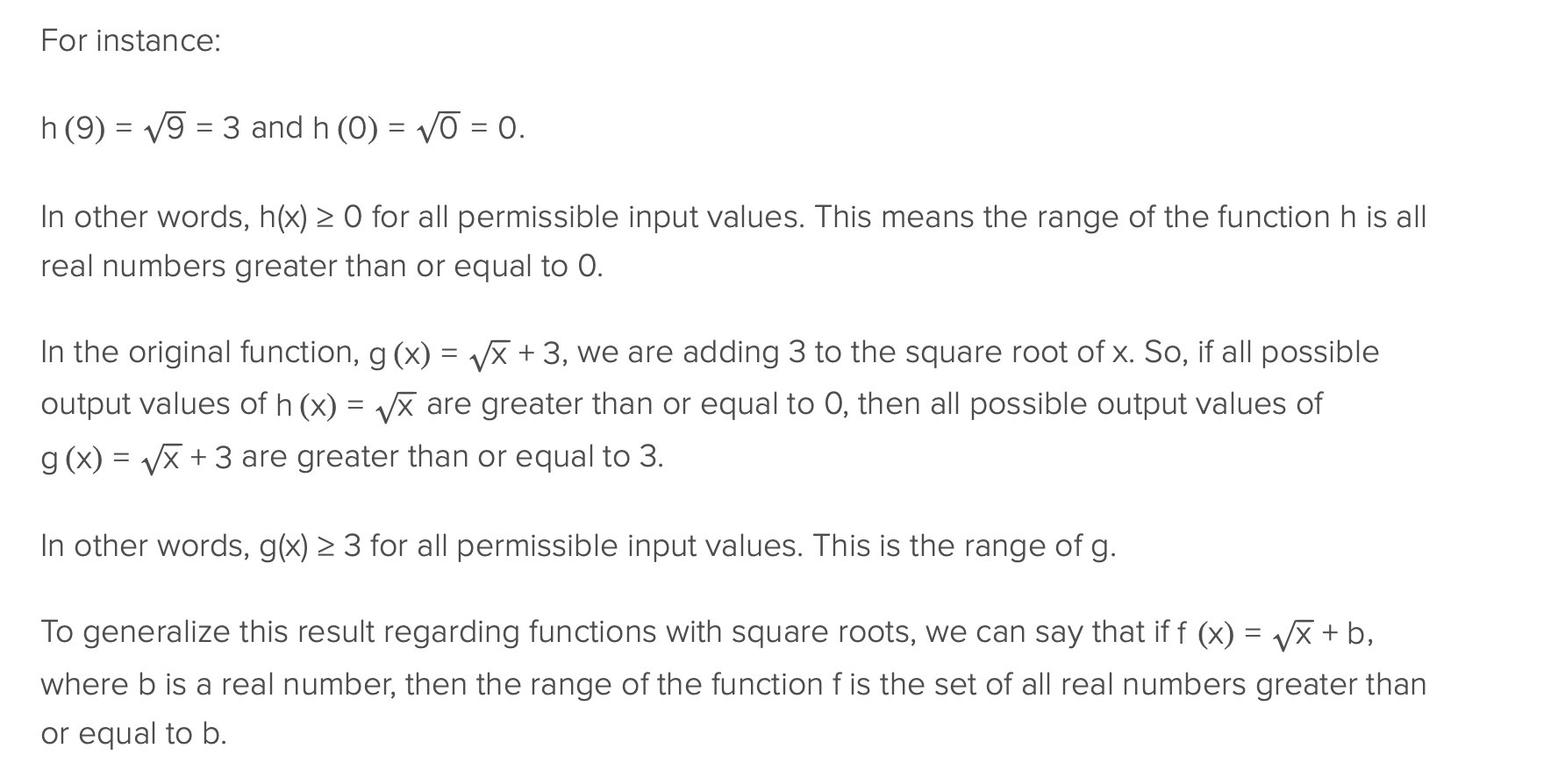
If f(x) = √x + b, where b is a real number, then what is the range of the set
The range of of the set is all real numbers greater than or equal to b
range ≥ b
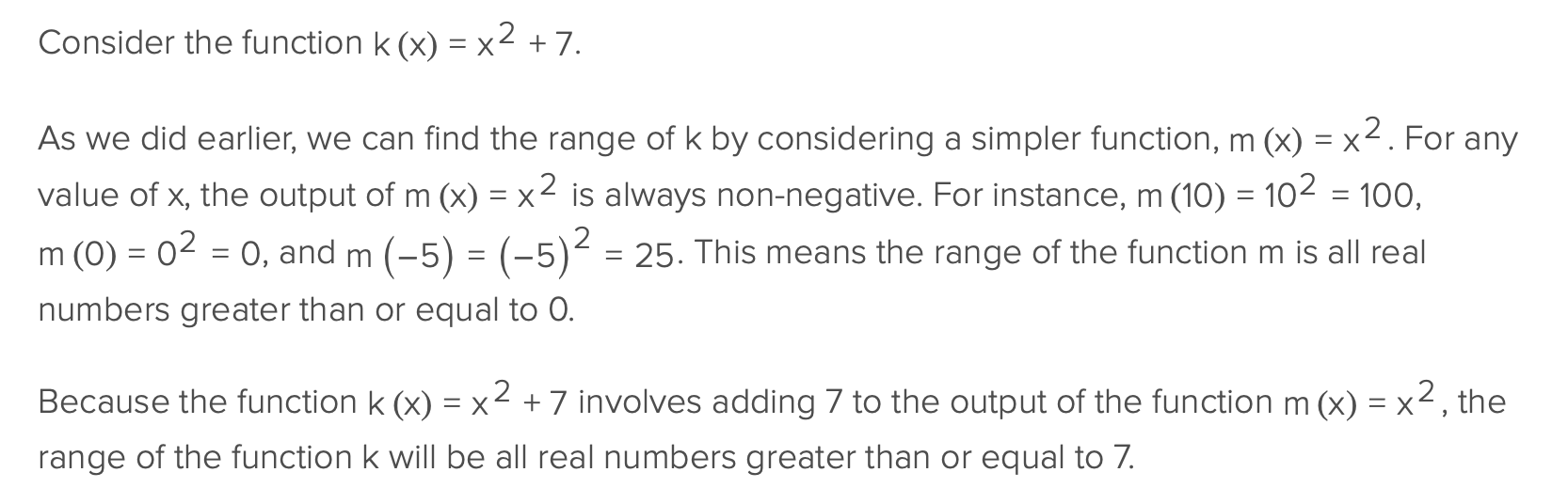
If f(x) = xⁿ + c where n is a positive even integer, what is the range of f?
f is the set of all real numbers greater than or equal to c?
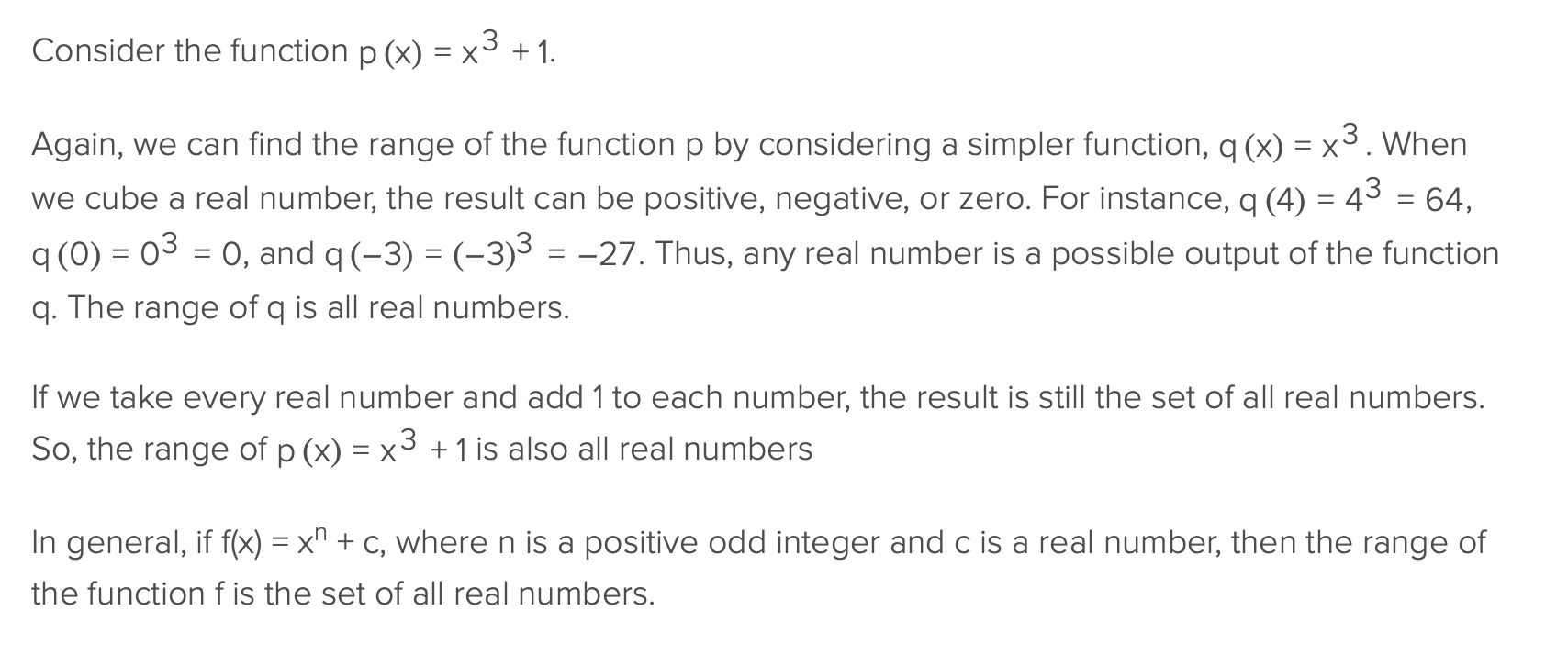
If f(x) = xⁿ + c where n is a positive odd integer, what is the range of f?
The range would be all real numbers
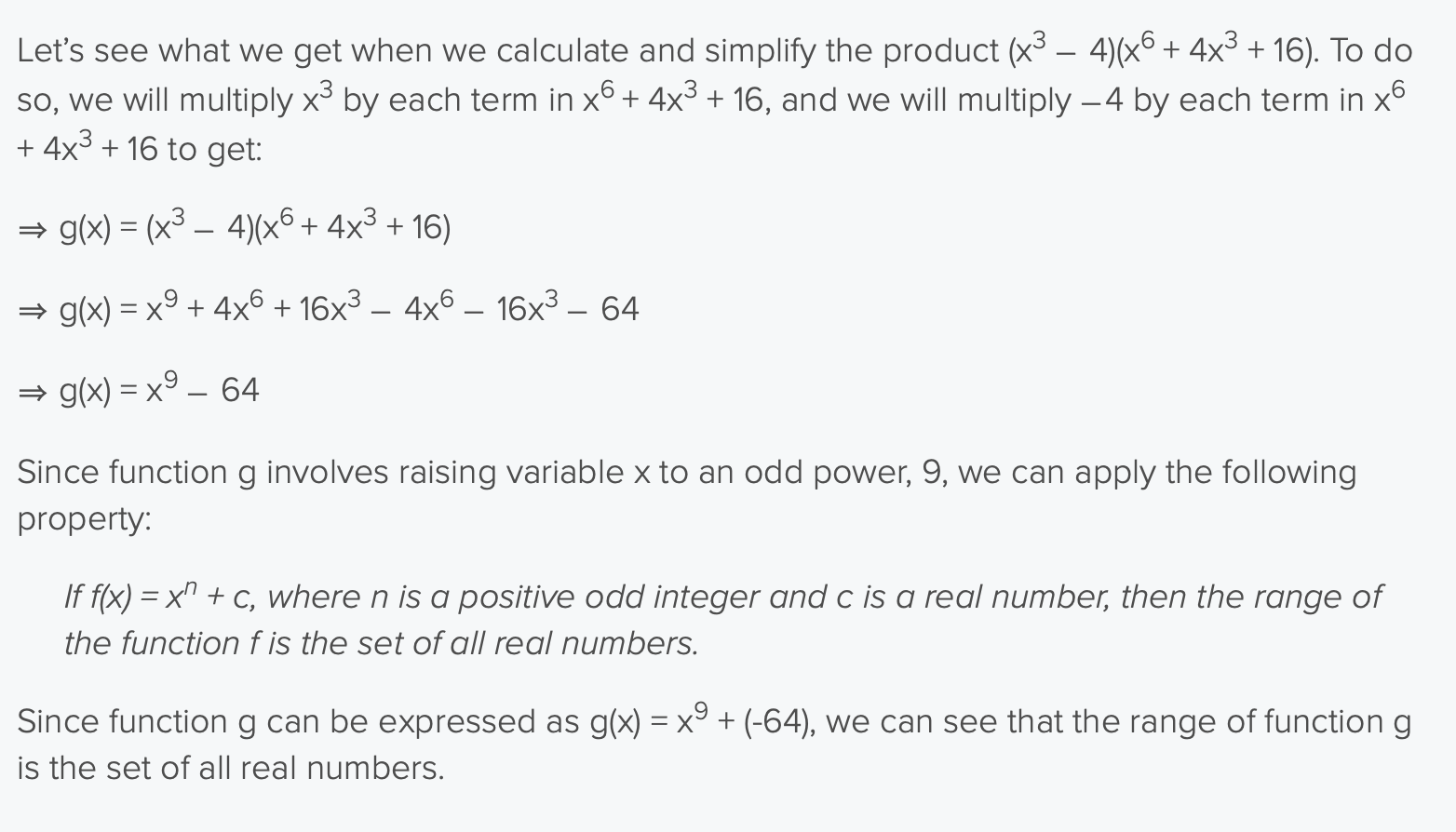
What is the range of the function g if g(x) = (x³ - 4)(x⁶ + 4x³ + 16)
All real numbers
If f(x) = ax + b, where a ≠ 0 and b is any real number, what is the range of the function?
the range would be all real numbers
How do you determine the range of an unfamiliar question type?
Find the following values:
find the functions maximum possible output
the functions minimum input
values that cannot be outputs
How to know if something is a function?
Each x-value must have only one y-value. If any x maps to multiple y-values, the relation is not a function
What test must you use on a graph to check if it’s a function?
The vertical line test
If a problem asks you to find the next terms in the sequence, what info do you need to have?
First check if the formula (or rule) for the sequence is given. If you don’t have a formula, there’s no way to know what terms come next in the sequence
What does it mean to be an arithmetic sequence? What is the formula for an arithmetic sequence?
aₙ = a₁ + (n-1)d
a₁ is the first number in the sequence
aₙ is the nth term in the sequence!
d is the common difference
How do you find the common difference of an arithmetic sequence?
Subtract the previous term of a sequence from the term that comes directly after it
for example, if a₁ = 5, a₂ = 8, and a₃ = 11 are 3 consecutive terms of an arithmetic sequence
a₃ - a₂ = 11 - 8 = 3 is the common difference
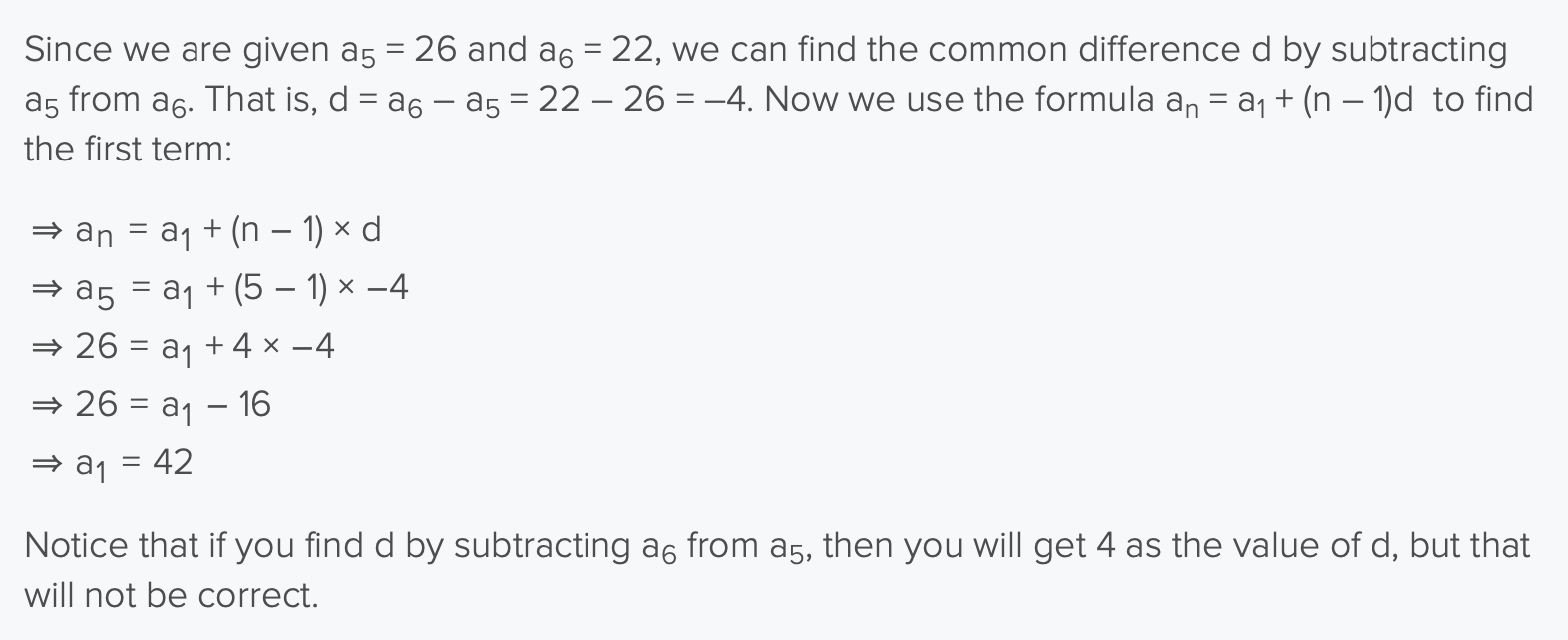
In an arithmetic sequence, the 5th term is 26 and the 6th term is 22. What’s the first term of this sequence?
42
What is the sum of the the first n terms of an arithmetic sequence?
Sₙ = (n)(a₁ + aₙ)/2
n = number of terms
a₁ = first term
aₙ = nth term
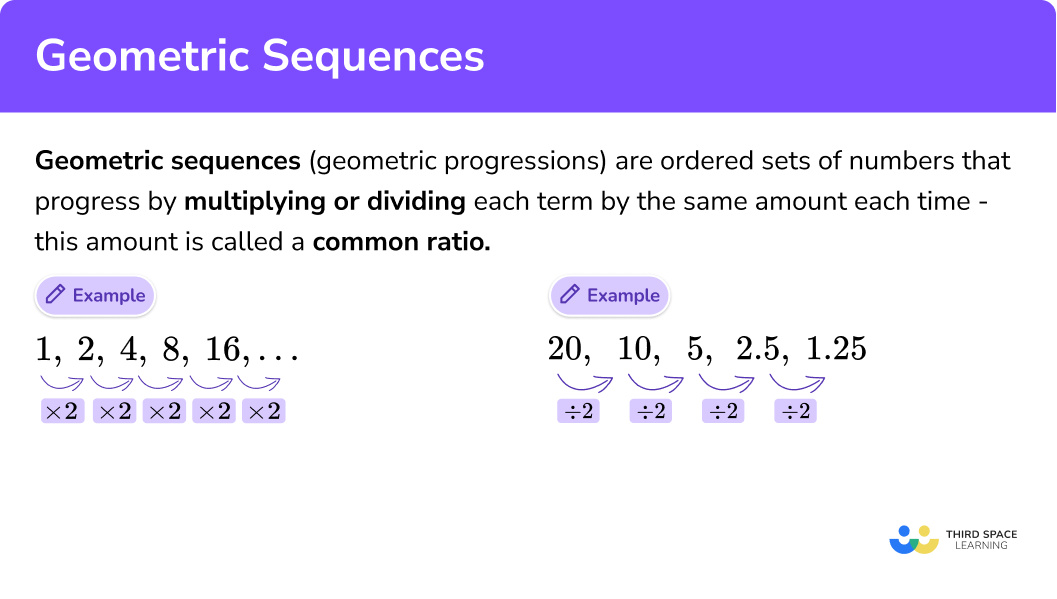
What is a geometric sequence?
A geometric sequence means the ratio between every pair of consecutive terms is the same
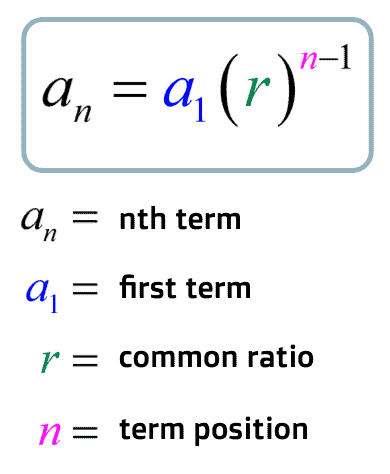
What is the formula for a geometric sequence?
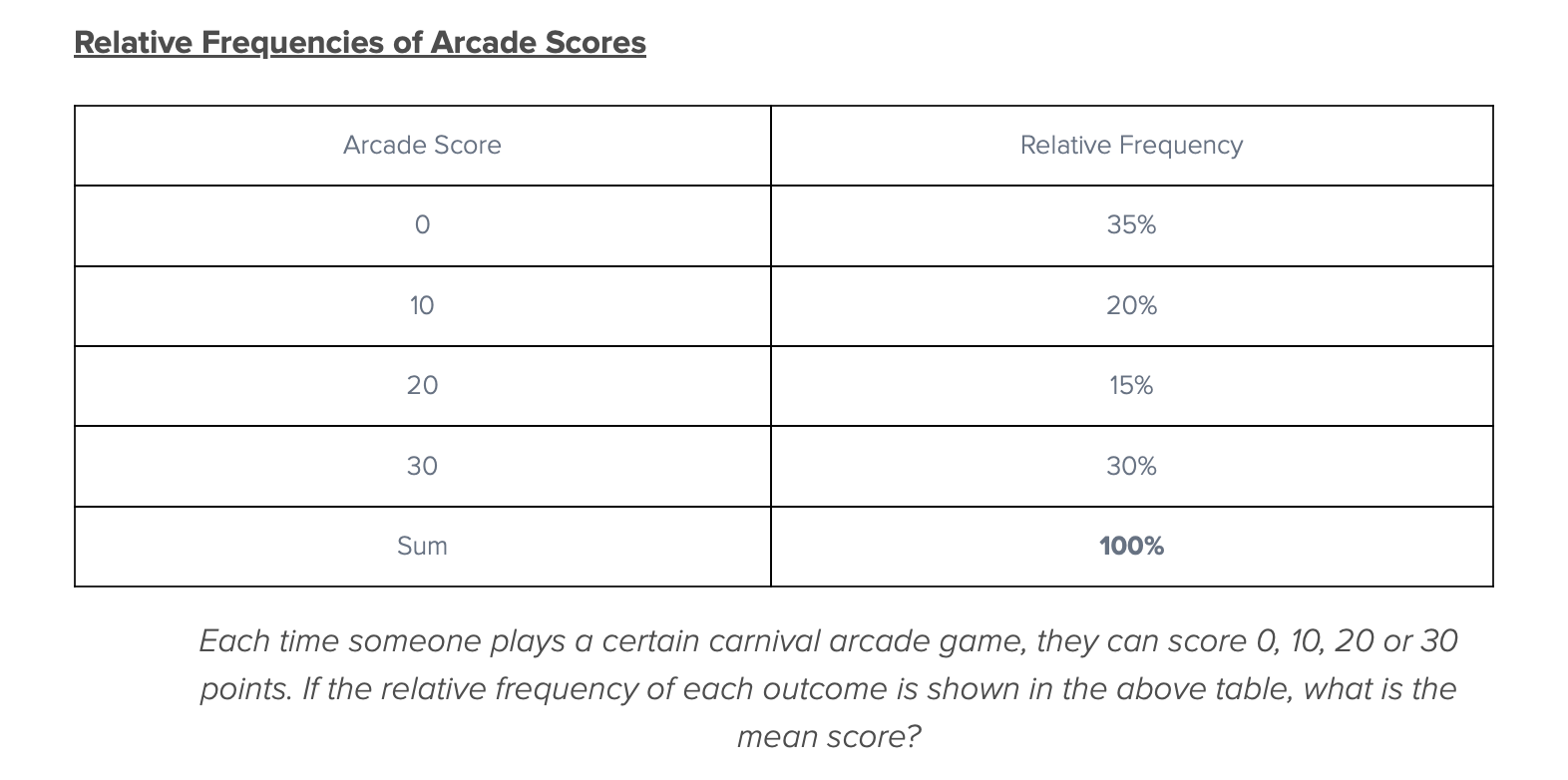
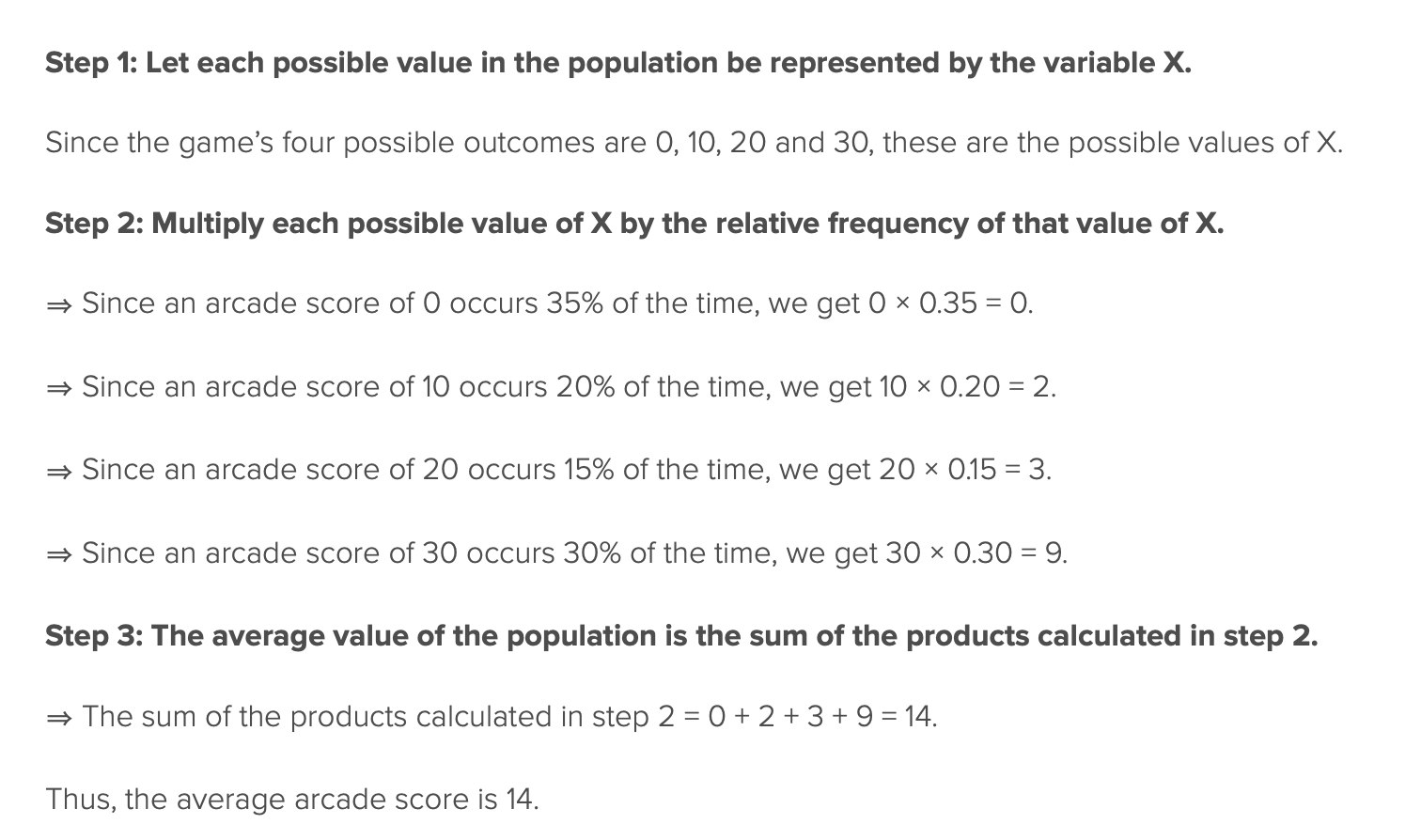
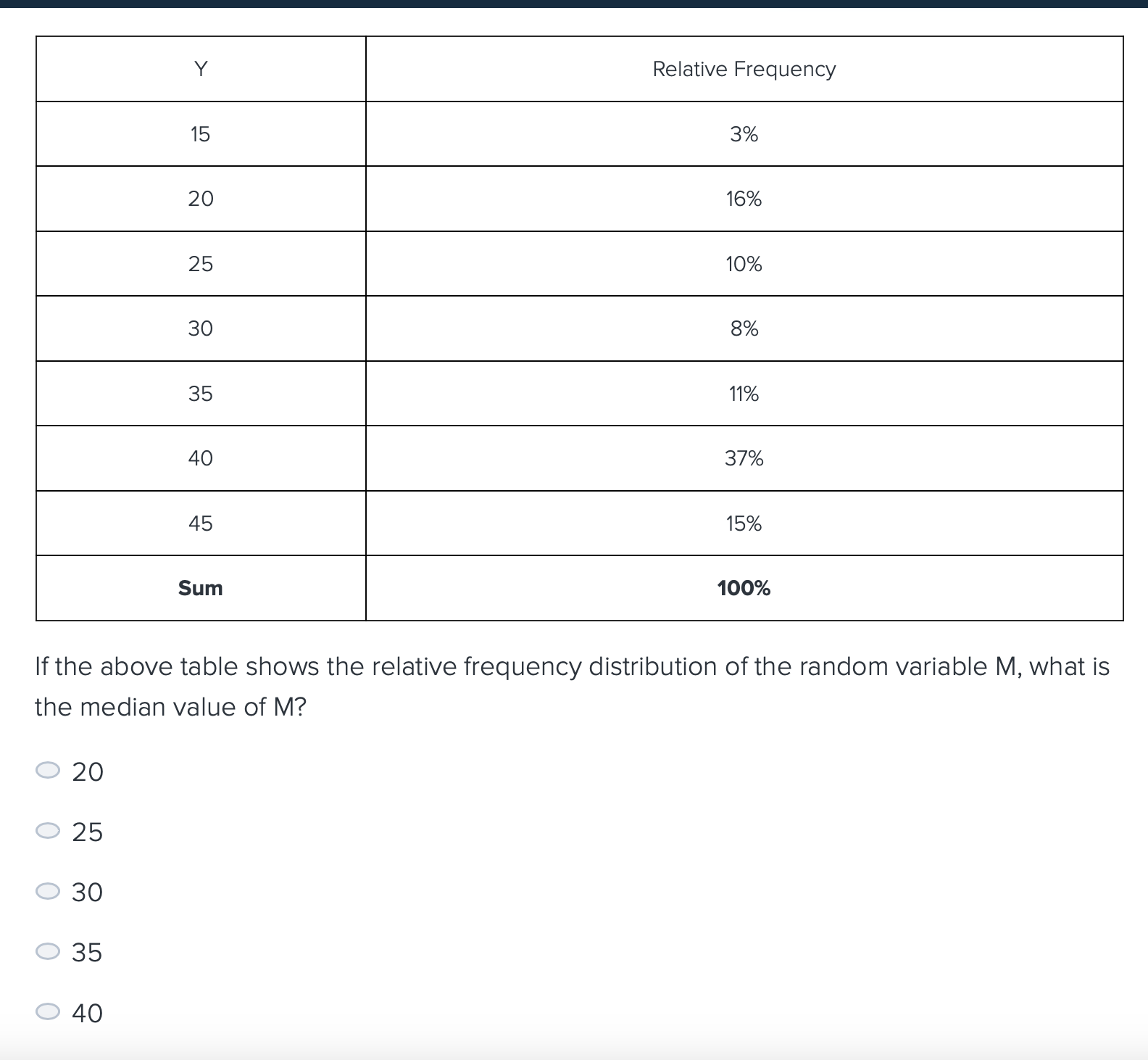
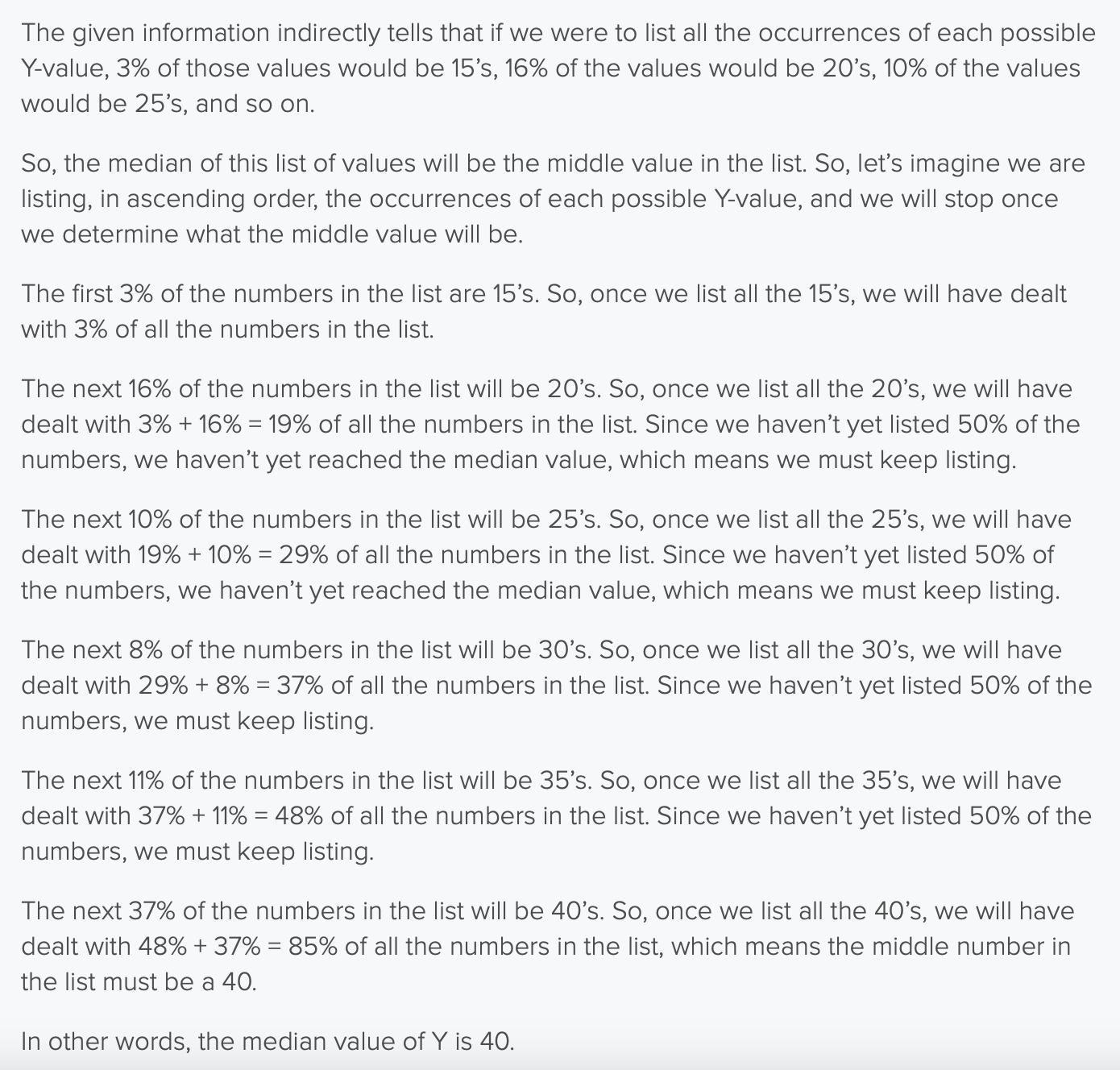
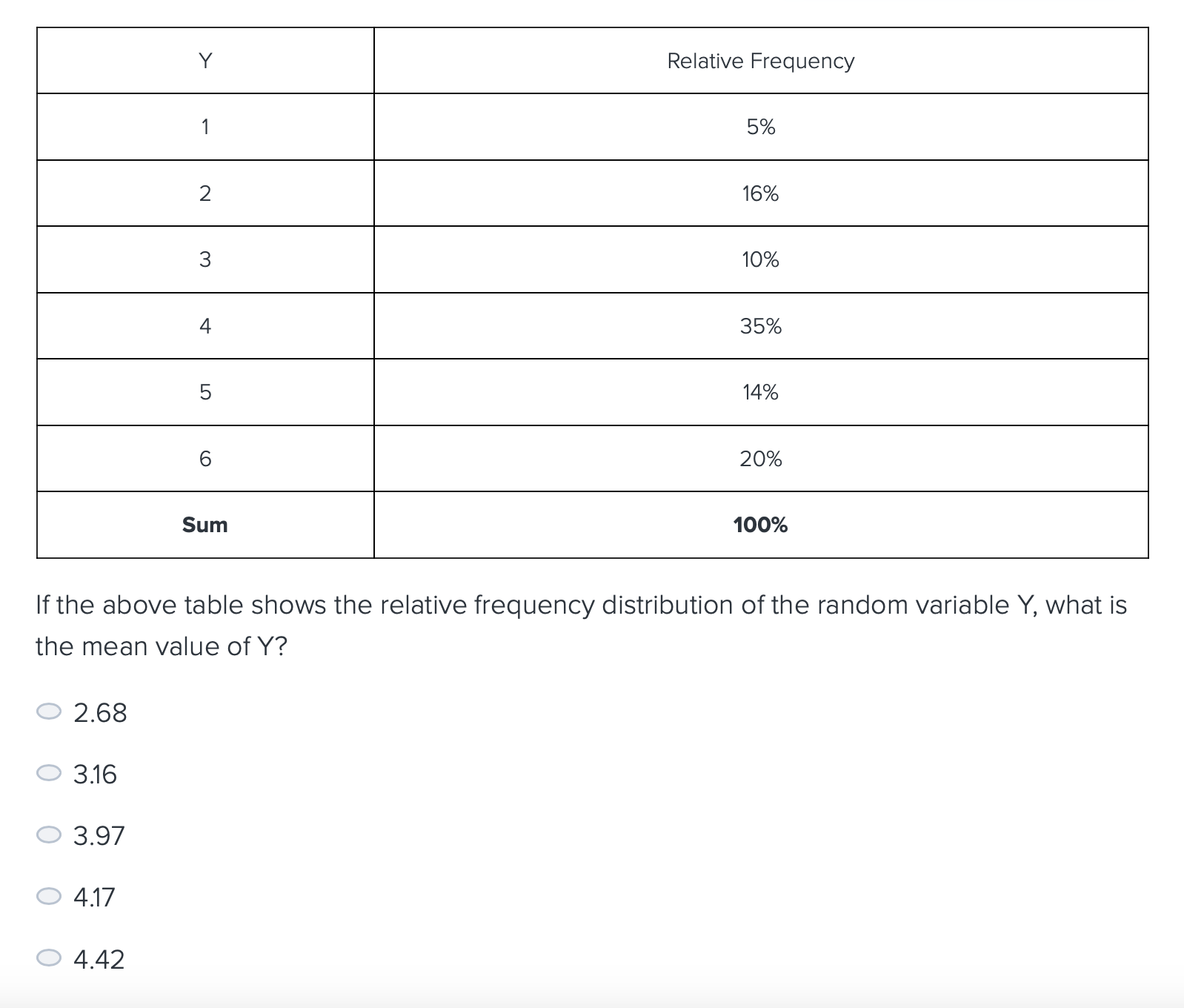
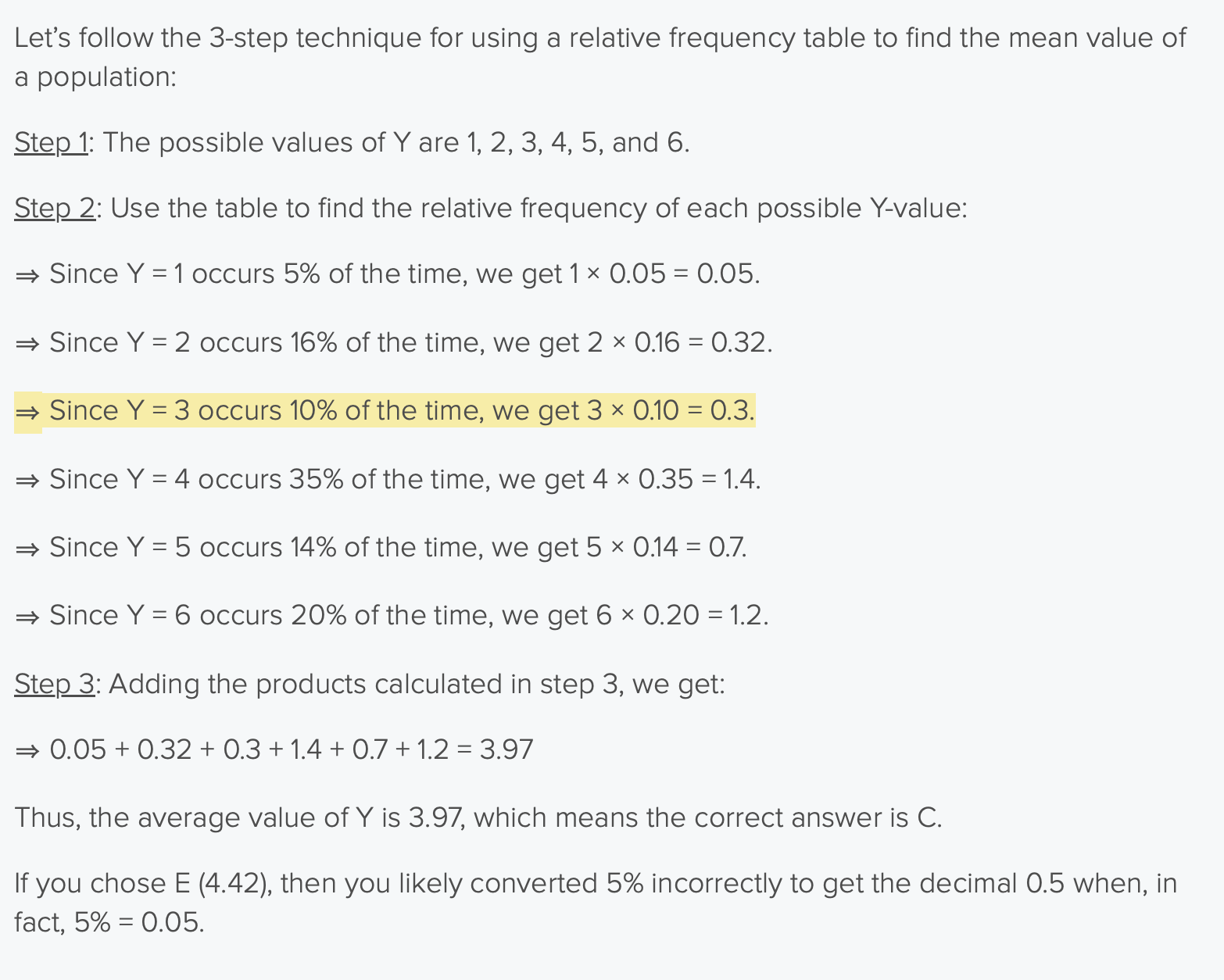
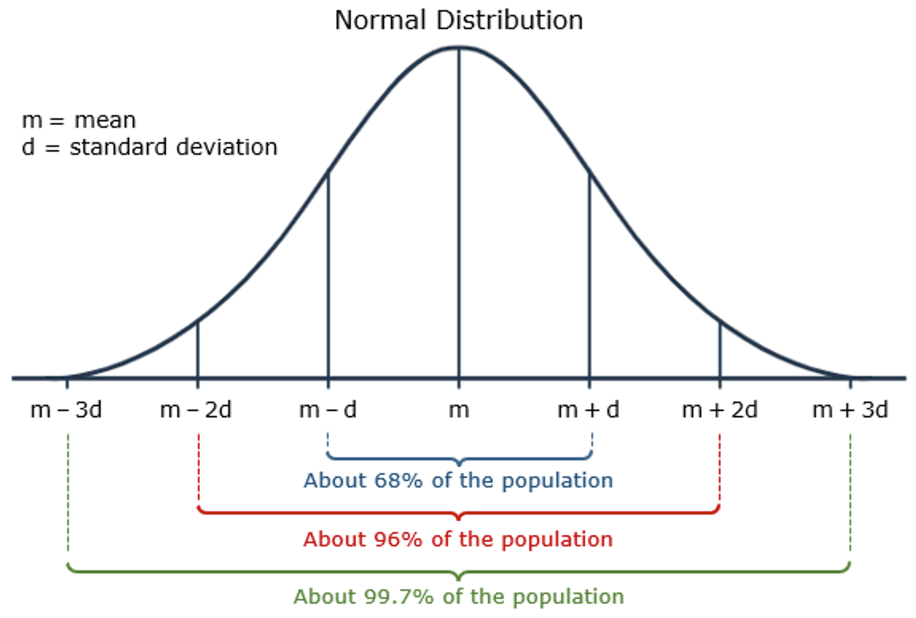
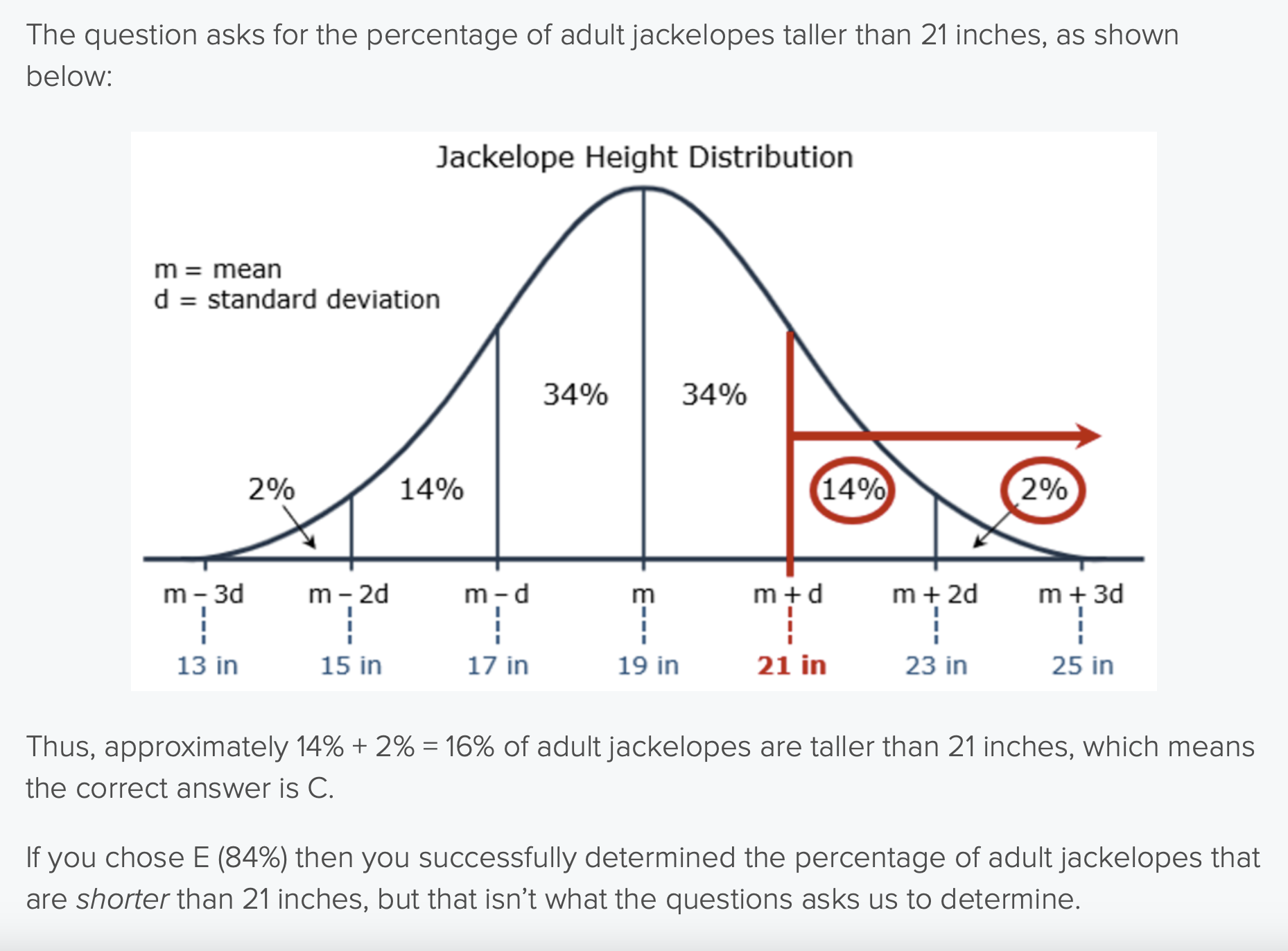
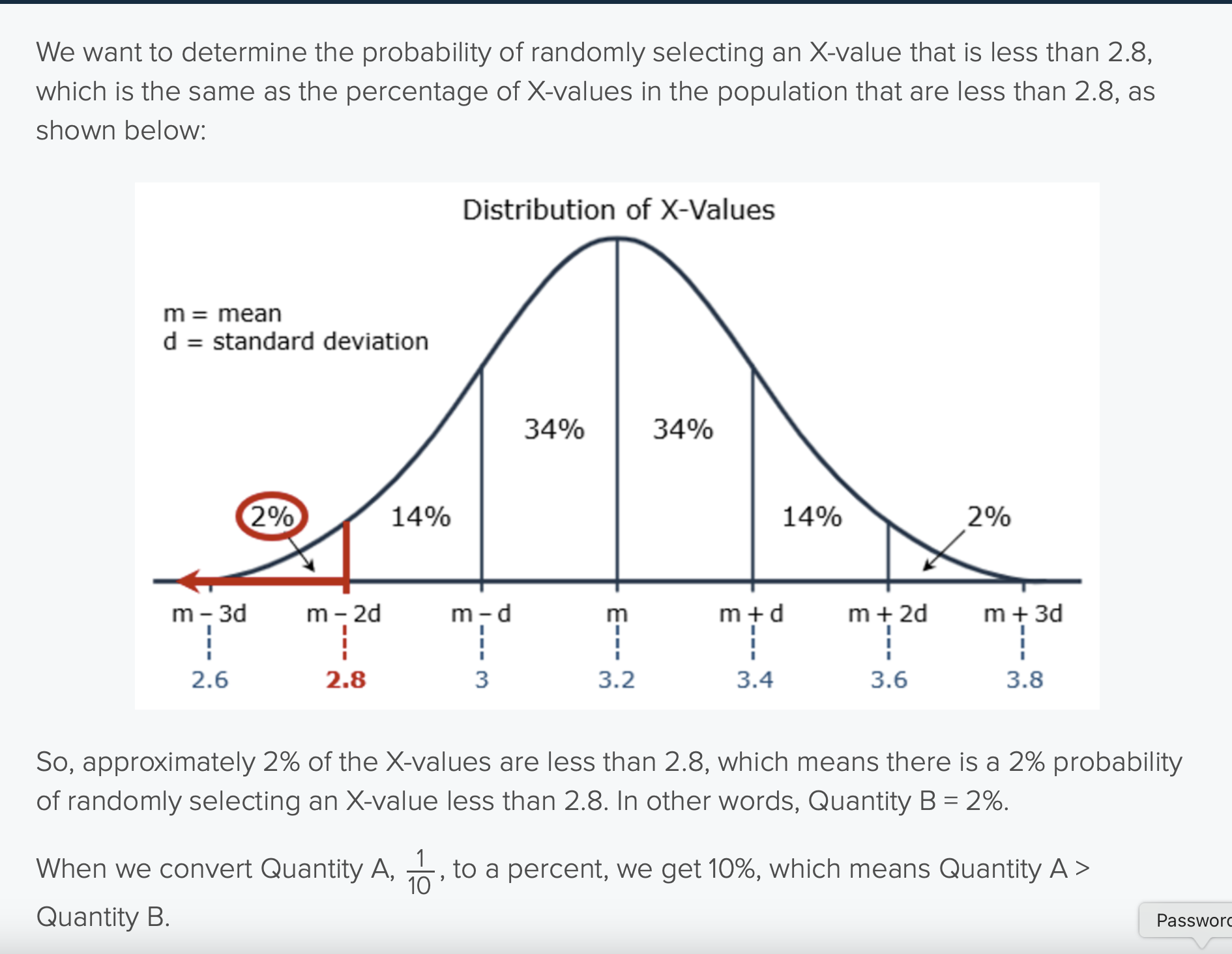
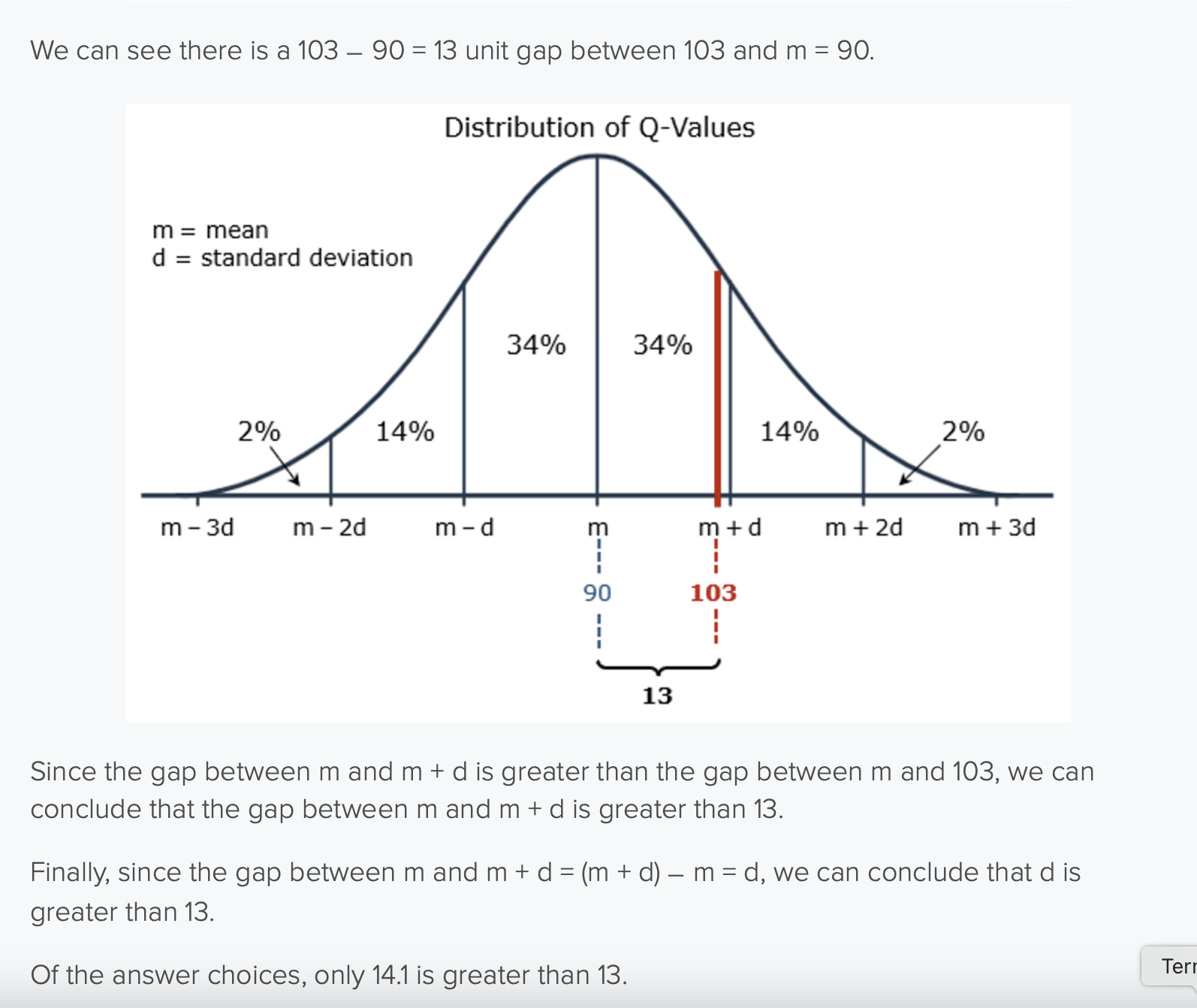
What do you need to know about a normal distribution in a graph?
the mean, median, and mode are all nearly equal
~2% of the data points will be between 3 and 2 standard deviations below the mean
~14% of the data points will be between 2 and 1 standard deviation below the mean
~34% of the data points will be between the mean and 1 standard deviation below the mean
~34% of the data points will be between the mean and 1 standard deviation above the mean
~14% of the data points will be between 1 and 2 standard deviations above the mean
~2% of the data points will be between 2 and 3 standard deviations below the mean