Chapter 10 - Meiosis and Sexual Life Cycles
 Call Kai
 Learn
Learn Practice Test
 Spaced Repetition
 Match
Match Flashcards
 Knowt Play
1/36

There's no tags or description
Looks like no tags are added yet.
Name | Mastery | Learn | Test | Matching | Spaced | Call with Kai | Chat |
|---|
No analytics yet
Send a link to your students to track their progress
37 Terms
Inheritance (Heredity)
transmission of genes from one generation o the next
results in both similarity and variation between progeny
genetics
study of heredity and the inheritance of variation
what is special about inheritance in prokaryotes
they are able to move genes horizontally
meaning genes can go from individual to individual in the same generation or species
genes
encodes information for a product (usually a protein) which results in a specific characteristic
alleles
alternate forms of a gene resulting in a different trait expressed
locus
specific location of a gene on a chromosome
human genome
contains 46 chromosomes in somatic cells
diploid compliment - 22 pairs of homologous chromosomes and 2 sex influencing chromosomes
sex chromosomes are X and Y (X is very large, Y is very small
homologous chromosomes
same genes in the same places, but not the same alleles
karyotype and why is it helpful
complete set of an individual’s chromosomes organized by shape and size
can help us discover an excess or lack of chromosomes or missing a section of chromosomes
does NOT help us with finding smaller mutations like in nucleotides
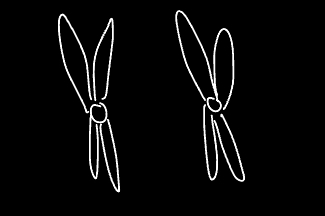
why are these homologous but no homozygous
same genes, but different alleles
gametes
specialized cells produced for asexual reproduction
produced through meiosis (usually)
contain haploid compliment of DNA
how many autosomes and sex chromosomes are in gametes
22 autosomes and 1 sex chromosome
which sex cell determines sex of offspring
sperm because egg cells only have X chromosomes while sperm cells have X and Y chromosomes
how does sexual reproduction differ sexual in organisms
differs between types of life cycles but always involves both mitosis and meiosis
which between haploid and diploid cells undergo mitosis or meiosis
haploid and diploid cells both go through mitosis, but only diploid cells go through meiosis
why is sexual reproduction costly for an organism
locating a mate and competition for a mate
main benefit of sexual reproduction
genetic variability in progeny
how does variability affect stability in a population
lower variability = lower stability since if all individuals are the same and are exposed to a change (like a virus), all of them will probably be affected
types of life cycles
animals - no haploid multicellular organisms
plants and some algae - alteration of generations
multicellular diploid and haploid organisms
cycle between sporophyte (diploid) and gametophyte (haploid)
most fungi and some protists - no diploid multicellular organisms
gametes are produced through mitosis
how does inherited DNA direct development
nuclei in egg cell and sperm cell contains DNA, so when they fuse in fertilization, DNA is received from both parents
embryo cells multiply along with copies of that inherited DNA
leads to offspring receiving traits inherited from both parents
meiosis summary
double division cycle
diploid to haploid intermediates (meiosis 1)
haploid intermediates increase in number (meiosis 2)
Prophase 1
homologous chromosomes pair up to form tetrads
homologous genes on either chromosome are aligned
crossing over occurs
synapsis
homologous chromosomes paired up together and are held together by synapsis
tetrad
4 sister chromatids in 2 homologous chromosomes held together by synapsis
crossing over and its steps
exchange of genetic info between nonsister chromatids
each pair of homologs line up along their length, allele to allele
DNA of two nonsister chromatids is broken at corresponding lcations
as the DNA condenses, the synaptonemal complex forms and attaches one homolog to the other through synapsis
as chromosomes reach the metaphase plate, the synaptonemal complex disassambles
cross overs between homologs are called chiasmata
chiasmata
cross over between homologs
recombinant chromosomes
end result of crossing-over and synapsis
two sister chromatids of a single homologous chromosome are no longer identical in alleles
contain a new combination of alleles compared to the chromosomes from each parent
metaphase 1
instead of duplicated chromosomes, tetrads are arranged on the metaphase plate
each homologous chromosomes is attached to only one pole, not both
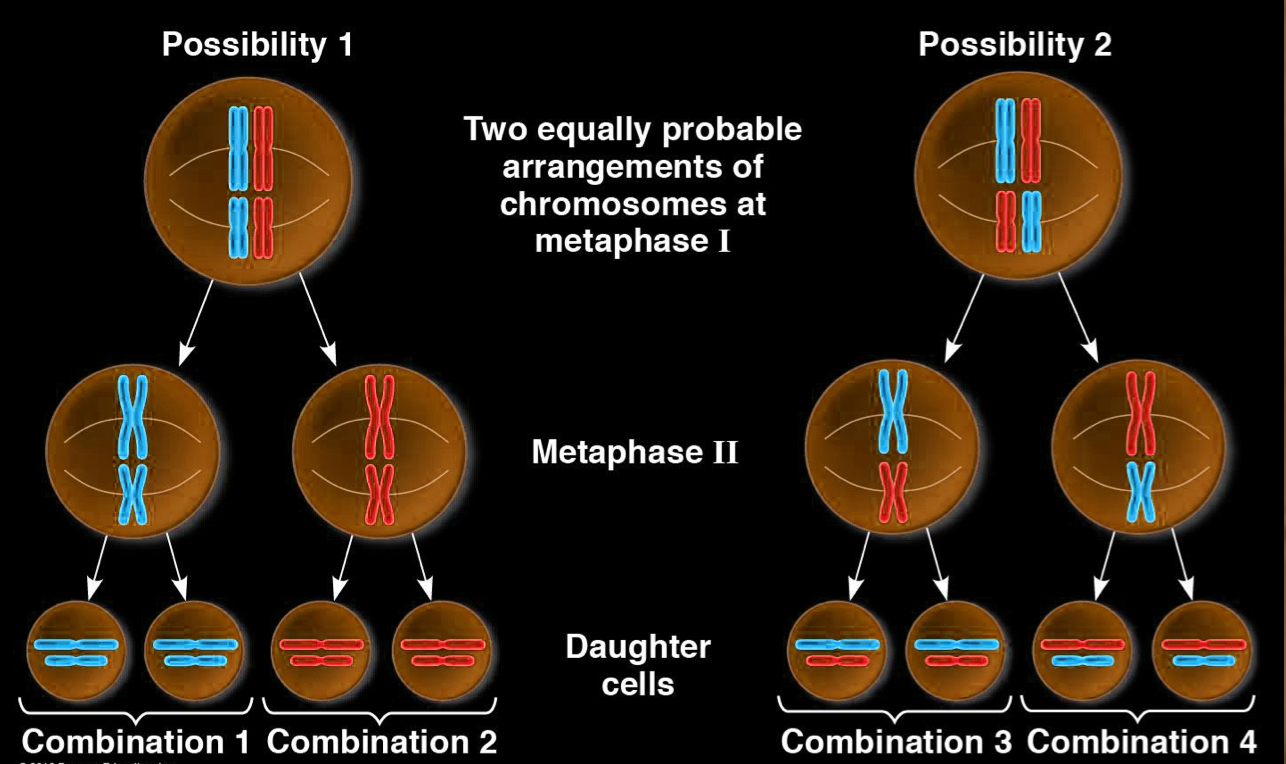
independent assortment occurs
independent assortment
happens during metaphase 1
orientation of maternal vs paternal chromosomes towards a pole is random
each homologous pair is sorted independently of the other pairs
this means there are 2^n different possibilities for each mitotic event
for humans 2^23 =8,388,608 8.4 million
Anaphase 1
proteins which hold nonsister chromatids together as a tetrad are broken down
sister chromatids of the same chromosome remain attached together
homologous chromosomes are moved to opposite poles
telophase 1 and cytokinesis
haploid set of chromosomes is contained in each half of the cell by a newly formed nuclear membrane
each duplicated chromosomes now consists of two genetically unique sister chromatids
haploid cells result from cytokinesis
interkinesis
occurs between meiosis 1 and 2
similar to interphase, cell synthesizes proteins and stores energy for another round of division
chromosomes are not fully condensed during interkinesis
NO REPLICATION OF DNA
centrosomes DO replicate again
Meiosis 2
basically mitosis again
no crossing over
no independent assortment
result of meiosis 1
2 haploid cells containing duplicated chromosomes from the parent cell
meiosis 1 is the reduction phase
do sister chromatids or chromosomes separate in meiosis 2
sister chromatids
result of meiosis
4 haploid cells, all genetically unique compared to the parent cell, with half the genetic complement in each cell
random fertilization and how it affects genetic variabilit
union of haploid gametes to create a diploid zygote
which gametes actually participate in any fertilization is random
each parent produces 8.4 million different gametes due to random assortment
combination of independent assortment and random fertilization = 70 trillion different diploid combinations possible in the zygote
crossing over adds to this genetic variance