chapter 5 - haloalkanes environmental effects
 Call Kai
 Learn
Learn Practice Test
 Spaced Repetition
 Match
Match Flashcards
 Knowt Play
1/17

There's no tags or description
Looks like no tags are added yet.
Name | Mastery | Learn | Test | Matching | Spaced | Call with Kai | Chat |
|---|
No analytics yet
Send a link to your students to track their progress
18 Terms
what is a CFC?
a chlorofluorocarbon molecule
they only contain carbon, chlorine and fluorine atoms
what is ozone?
has the formula O3
it is less stable than O2
ozone is formed from oxygen and UV light
it is present in low concentrations
the highest concentrations are in the ozone layer of the earth’s atmosphere
what is photolysis?
means broken down by light
CFCs undergo photolysis in the atmosphere
what does photolysis produce?
chlorine radicals
chlorine radicals react with ozone
what type of mechanism is the destruction of ozone?
free radical substitution mechanism
initiation, propagation and termination steps of the destruction of ozone?
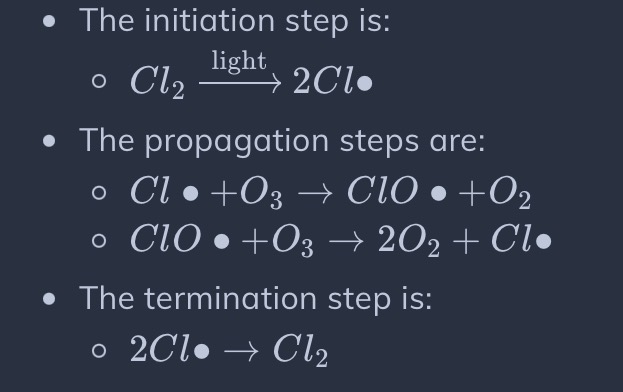
overall mechanism reaction for destruction of ozone?
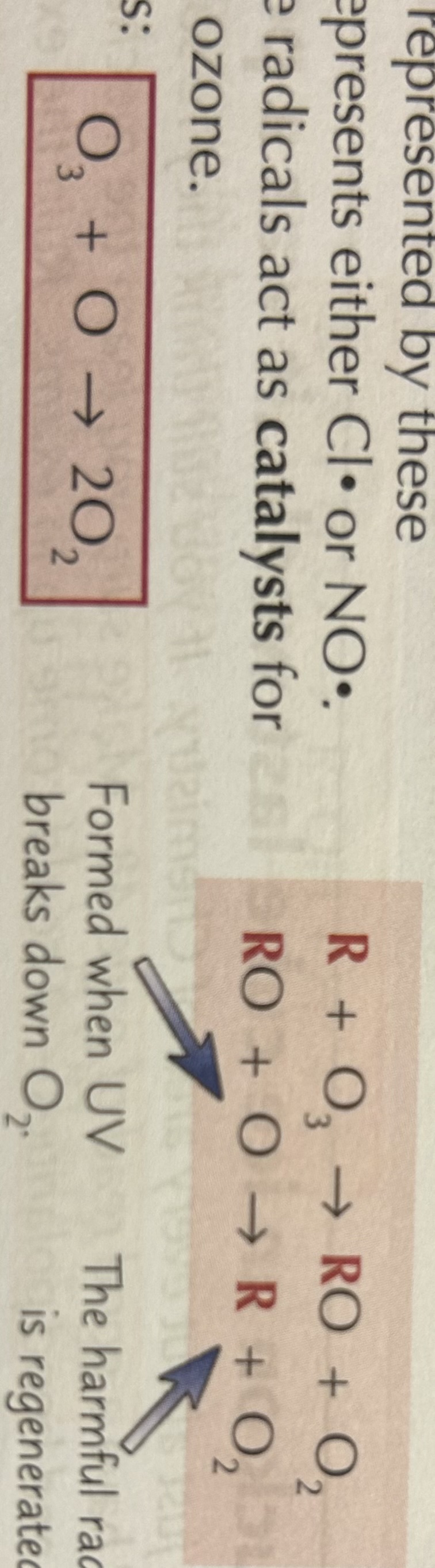
what are CFCs used in?
aerosols
as coolants in fridges
solvents in the industry
however, scientists collected evidence in the 1970s that they were damaging the ozone layer
this led to bans, and the development of safer alternatives like hydrofluorocarbons (HFCs) and hydrocarbons
why are CFC’s good for their uses?
because they are:
volatile
low boiling
non-toxic
non-flammable
unreactive
what forms the holes in the ozone layer?
CFCs in the upper atmosphere absorb UV radiation and split to form chlorine free radicals
these free radicals catalyse the destruction of ozone, destroying ozone molecules
then they are regenerated to destroy more ozone
how many ozone molecules can one atom of chlorine destroy before it forms a stable compound?
10,000
why are holes in the ozone layer bad?
because they allow more harmful radiation to reach the earth
what else can destroy ozone?
NO (nitrogen monoxide) free radicals from nitrogen oxides
what are nitrogen oxides produced from?
car and aircraft engines
thunderstorms
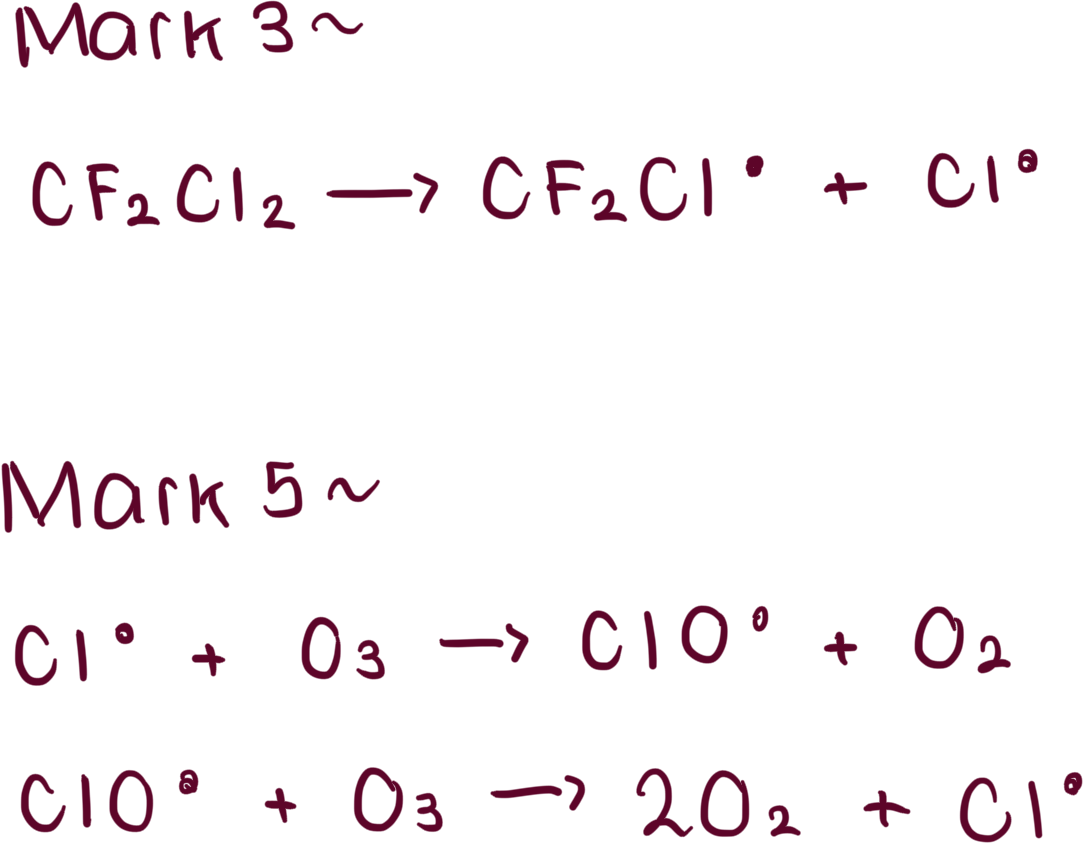
question: explain how CFCs cause a depletion in the ozone layer and include relevant equations in your answer (5)
M1- chlorine free radicals are formed in the upper atmosphere
M2- when energy from ultra-violet radiation causes the C-Cl bonds in CFCs to break
M4- the chlorine free radical atoms catalyse the decomposition of ozone due to these reactions because they are regenerated
what is the benefit of the ozone layer?
the frequency of uv light absorbed by the ozone layer is equal to the frequency of biologically damaging uv radiation
ozone layer filters out harmful uv and allows life on earth to survive
uv light can increase risk of skin cancer and increase crop mutation
what bond is more likely to break when CF3Cl is exposed to UV radiation?
the C-Cl bond because it is the weaker bond
why is there still concern about ozone depletion?
CFCs take many years to reach the ozone layer
CFCs are still being used up
there are other ozone depleting substances, such as NO and HFCs