Cognitive and computational Unit test
 Call Kai
 Learn
Learn Practice Test
 Spaced Repetition
 Match
Match Flashcards
 Knowt Play
1/29

There's no tags or description
Looks like no tags are added yet.
Name | Mastery | Learn | Test | Matching | Spaced | Call with Kai |
|---|
No analytics yet
Send a link to your students to track their progress
30 Terms
Hippocampus
episodic memory encoding and retrieving
spatial navigation
contextual representation
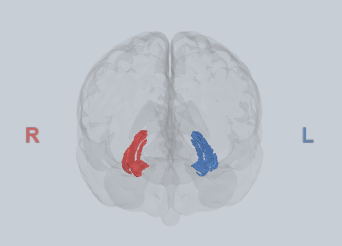
Thalamus
gates information flow based on attentional state and arousal
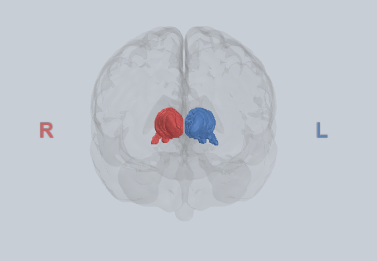
Pulvinar
filters and routes information based on tasks and commands
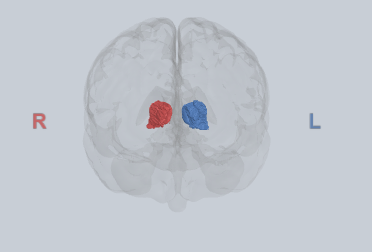
Amygdala
emotional evaluation
salience detection
social cognition
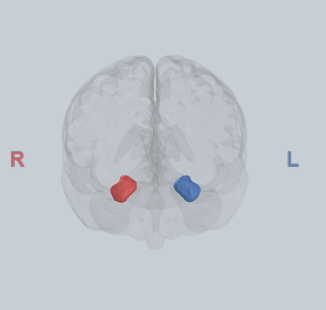
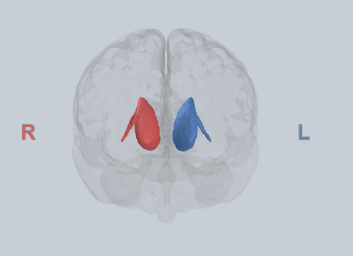
Caudate
Computes action values given current goals
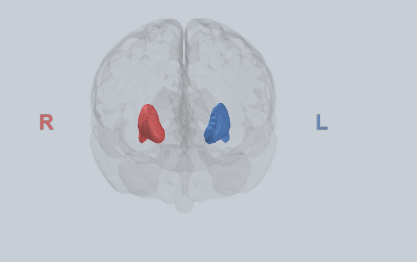
Putamen
Associates stimuli with responses based on learned context
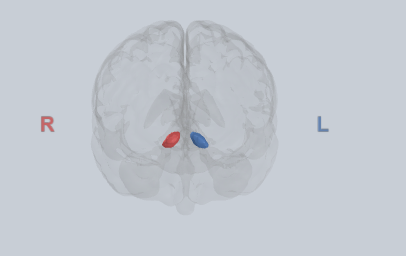
Nucleus Accumbens
integrates motivational state with action selection
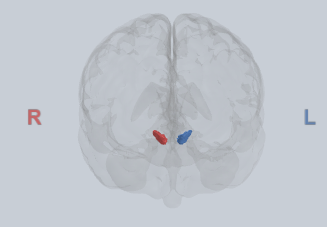
Substantia Nigra
Signals prediction errors—what's unexpected given current expectations
Cortico-subcortical Loops
Information relay process that has information flow bidirectionally

The Canonical Equation: R
The neural response— how active the neuron becomes

The Canonical Equation: γ (gamma)
a scaling factor for overall response magnitude

The Canonical Equation: D
The driving input, the stimulus the neuron is turned to
The Canonical Equation: σ (sigma)
the “transition point” controlling when context dominates

The Dendritic Equation: Vm
Membrane potential— the neuron’s output voltage

The Dendritic Equation: gE, gL, gI
Conductances— how open each channel is (excitatory, inhibitory, leak)

The Dendritic Equation: EI, EL, EE
Reversal Potentials—the voltage each channel type pulls towards
The Dendritic Equation: Numerator
weighted sum of reversal potentials
each input’s vote on where the membrane potential should go
weighted by how open its channels are
The Dendritic Equation: Denominator
The sum of all open channels and how open each one is
The Divisor
LFP (Local Field Potential)
Electrical fields from nearby neurons
measured with electrodes inside brain
EEG (Electroencephalography)
measures summed electrical dipoles through he scalp
Non-invasive millisecond timing
MEG (magnetoencephalography)
magnetic fields outside head
non-invasive, excellent localization
BOLD Signal (Blood Oxygen Level Dependent)
Measure of changes in the ratio of oxygenated to deoxygenated hemoglobin in the blood near neural tissue
reflects the input to neurons

