Reproductive System III

0.0(0)
studied byStudied by 0 people
0.0(0)
full-widthCall Kai
learnLearn
examPractice Test
spaced repetitionSpaced Repetition
heart puzzleMatch
flashcardsFlashcards
GameKnowt Play
Card Sorting

1/29

encourage image

There's no tags or description

Looks like no tags are added yet.

Study Analytics
Name
Mastery
Learn
Test
Matching
Spaced

No study sessions yet.

30 Terms

1
New cards

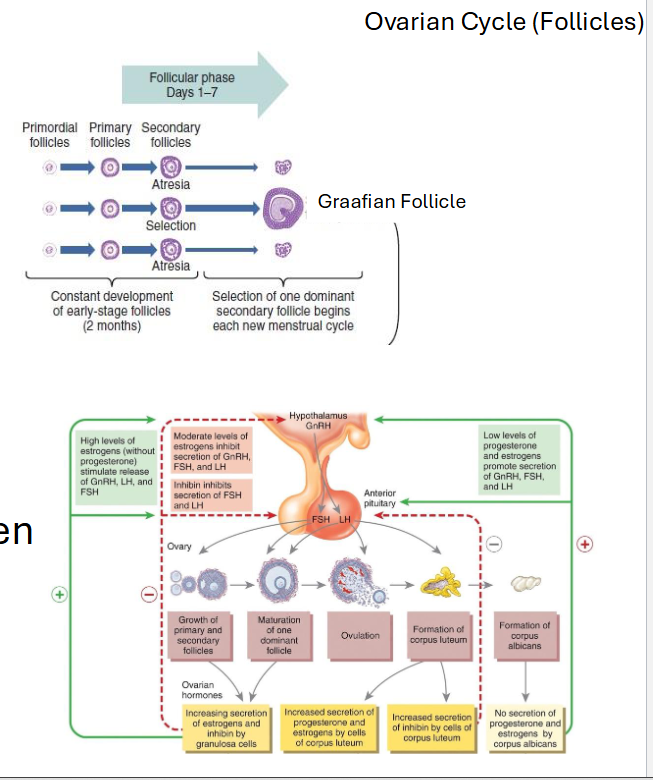
The Ovarian Cycle Overview

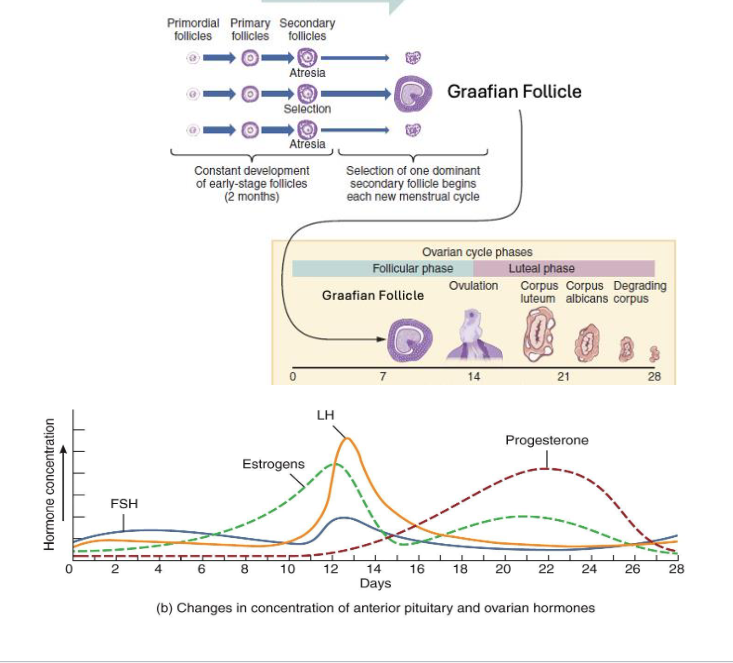
• Three Phases:
• Follicular: ~ day 1-13
• Ovulation: ~ day 14
• Luteal: ~ day 15-28
• ~28 days (but variable; luteal phase ~14 days is consistent)
<p><span style="color: rgb(0, 0, 0);"><span>• Three Phases:</span></span><span style="color: rgb(0, 0, 0);"><br>   </span><span style="color: rgb(0, 0, 0);"><span>• Follicular: ~ day 1-13</span></span><span style="color: rgb(0, 0, 0);"><br>   </span><span style="color: rgb(0, 0, 0);"><span>• Ovulation: ~ day 14</span></span><span style="color: rgb(0, 0, 0);"><br>   </span><span style="color: rgb(0, 0, 0);"><span>• Luteal: ~ day 15-28</span></span><span style="color: rgb(0, 0, 0);"><br></span><span style="color: rgb(0, 0, 0);"><span>• ~28 days (but variable; luteal phase ~14 days is consistent)</span></span></p>
2
New cards

Follicular Phase

• Days 1-13
• FSH stimulates follicle growth
• Granulosa cells → rising estrogen
• Dominant follicle selection
• Clarification from last lecture
• Key Idea: ā€œFollicle grows and estrogen rises.ā€

<p><span style="color: rgb(0, 0, 0);"><span>• Days 1-13</span></span><span style="color: rgb(0, 0, 0);"><br></span><span style="color: rgb(0, 0, 0);"><span>• </span><strong><span>FSH</span></strong><span> stimulates follicle growth</span></span><span style="color: rgb(0, 0, 0);"><br></span><span style="color: rgb(0, 0, 0);"><span>• Granulosa cells → rising </span><strong><span>estrogen</span></strong></span><span style="color: rgb(0, 0, 0);"><br></span><span style="color: rgb(0, 0, 0);"><span>• Dominant follicle selection</span></span><span style="color: rgb(0, 0, 0);"><br></span><span style="color: rgb(0, 0, 0);"><span>• Clarification from last lecture</span></span><span style="color: rgb(0, 0, 0);"><br></span><span style="color: rgb(0, 0, 0);"><span>• </span><strong><span>Key Idea</span></strong><span>: ā€œFollicle grows and estrogen rises.ā€</span></span></p>
3
New cards

Ovulation

• Day ~14
• Rising estrogen → positive feedback → LH surge
• LH surge causes rupture of the Graafian follicle
• Secondary oocyte released (arrested in Metaphase II)
• Key Idea: ā€œLH surge ruptures the follicle.ā€

4
New cards

Luteal Phase

• Days 15-28
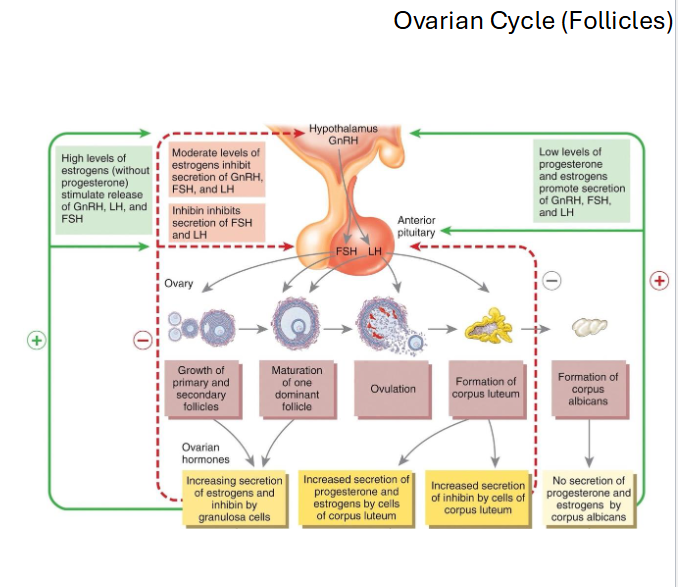
• Ruptured follicle → corpus luteum
• Corpus luteum secretes progesterone + estrogen
• Purpose: maintain and thicken endometrium
• Key idea: Progesterone is the dominant hormone of this phase.
<p><span style="color: rgb(0, 0, 0);"><span>• Days 15-28</span></span><span style="color: rgb(0, 0, 0);"><br></span><span style="color: rgb(0, 0, 0);"><span>• Ruptured follicle → </span><strong><span>corpus luteu</span></strong><span>m</span></span><span style="color: rgb(0, 0, 0);"><br></span><span style="color: rgb(0, 0, 0);"><span>• Corpus luteum secretes </span><strong><span>progesterone + estrogen</span></strong></span><span style="color: rgb(0, 0, 0);"><br></span><span style="color: rgb(0, 0, 0);"><span>• Purpose: maintain and thicken endometrium</span></span><span style="color: rgb(0, 0, 0);"><br></span><span style="color: rgb(0, 0, 0);"><span>• </span><strong><span>Key idea</span></strong><span>: Progesterone is the </span><strong><span>dominan</span></strong><span>t hormone of this phase.</span></span></p>
5
New cards
<p><span><span>Uterine Cycle Overview</span></span></p>

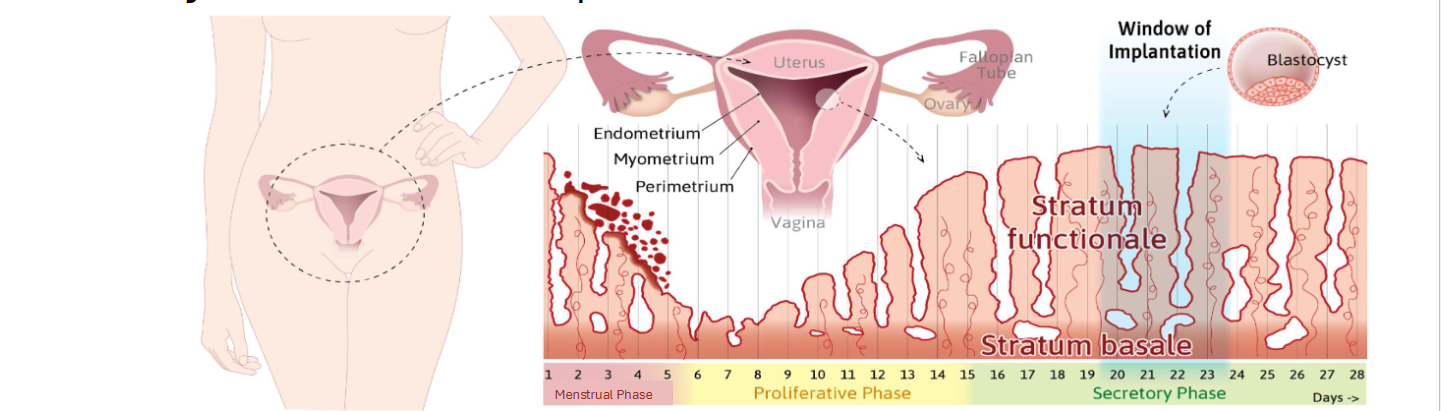
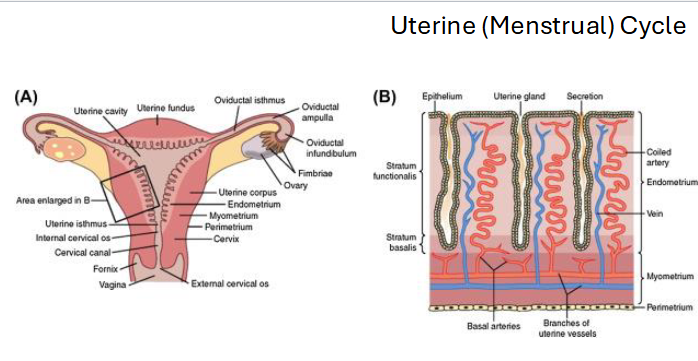
Uterine Cycle Overview

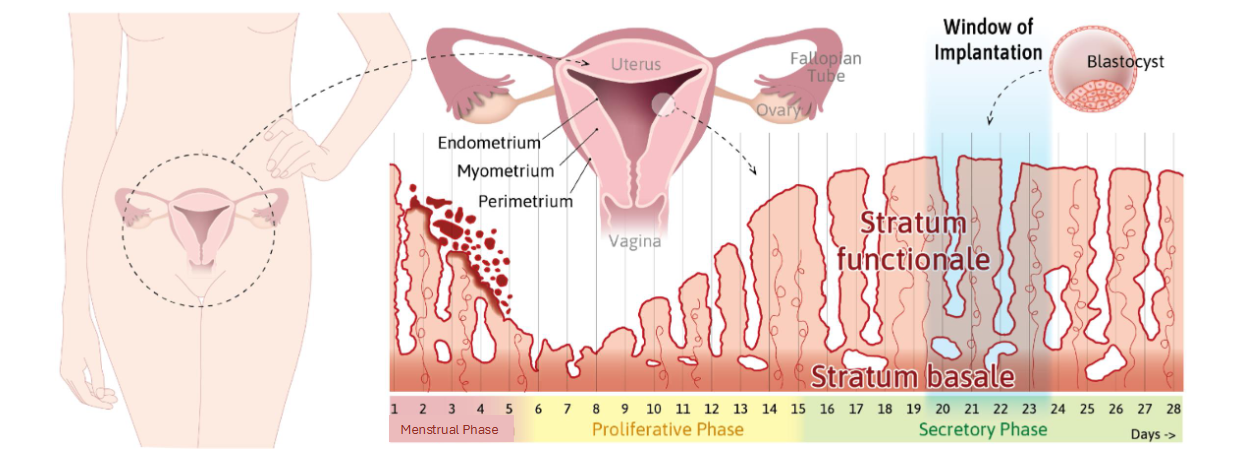
• Three Phases:
• Menstrual phase (days 1-5): Shelding
• Proliferative phase (days 6-14): Rebuiding - Estrogen
• Secretory phase (days 15-28): Sistaning →Progesterone
<p><span style="color: rgb(0, 0, 0);"><span>• Three Phases:<br>• Menstrual phase (days 1-5): Shelding<br>• Proliferative phase (days 6-14): Rebuiding - Estrogen<br>• Secretory phase (days 15-28): Sistaning →Progesterone</span></span></p>
6
New cards

Menstrual Phase

• Shedding of functional layer of endometrium
• Triggered by the drop in estrogen/progesterone
• Corpus Luteum
• Spiral arteries constrict → tissue breaks down
• Key Idea: ā€œHormone drop = endometrium sheds.ā€

<p><span style="color: rgb(0, 0, 0);"><span>• Shedding of </span><strong><span>functional laye</span></strong><span>r of endometrium</span></span><span style="color: rgb(0, 0, 0);"><br></span><span style="color: rgb(0, 0, 0);"><span>• Triggered by the drop in estrogen/progesterone</span></span><span style="color: rgb(0, 0, 0);"><br></span><span style="color: rgb(0, 0, 0);"><span>• Corpus Luteum</span></span><span style="color: rgb(0, 0, 0);"><br></span><span style="color: rgb(0, 0, 0);"><span>• Spiral arteries constrict → tissue breaks down</span></span><span style="color: rgb(0, 0, 0);"><br></span><span style="color: rgb(0, 0, 0);"><span>•</span><strong><span> Key Idea:</span></strong><span> ā€œHormone drop = endometrium sheds.ā€</span></span></p>
7
New cards

Proliferative Phase

• Estrogen from follicles rebuilds functional layer
• Endometrial glands lengthen
• Cervical mucus becomes thinner (fertile window)
• Key Idea: ā€œEstrogen rebuilds the lining.ā€

<p><span style="color: rgb(5, 5, 5);"><span>• Estrogen from follicles rebuilds functional layer</span></span><span style="color: rgb(5, 5, 5);"><br></span><span style="color: rgb(5, 5, 5);"><span>• Endometrial glands lengthen</span></span><span style="color: rgb(5, 5, 5);"><br></span><span style="color: rgb(5, 5, 5);"><span>• Cervical mucus becomes thinner (fertile window)</span></span><span style="color: rgb(5, 5, 5);"><br></span><span style="color: rgb(5, 5, 5);"><span>• </span><strong><span>Key Idea: </span></strong><span>ā€œEstrogen rebuilds the lining.ā€</span></span></p>
8
New cards

Secretory Phase

• Progesterone from corpus luteum stabilizes and thickens endometrium
• Glands coil and secrete nutrients
• Uterus readies for implantation
•
Key Idea: ā€œProgesterone prepares for pregnancy.ā€

<p><span style="color: rgb(0, 0, 0);"><span>• Progesterone from corpus luteum stabilizes and thickens endometrium<br>• Glands coil and secrete nutrients<br>• Uterus readies for implantation<br>•</span><strong><span> Key Idea: </span></strong><span>ā€œProgesterone prepares for pregnancy.ā€</span></span></p>
9
New cards
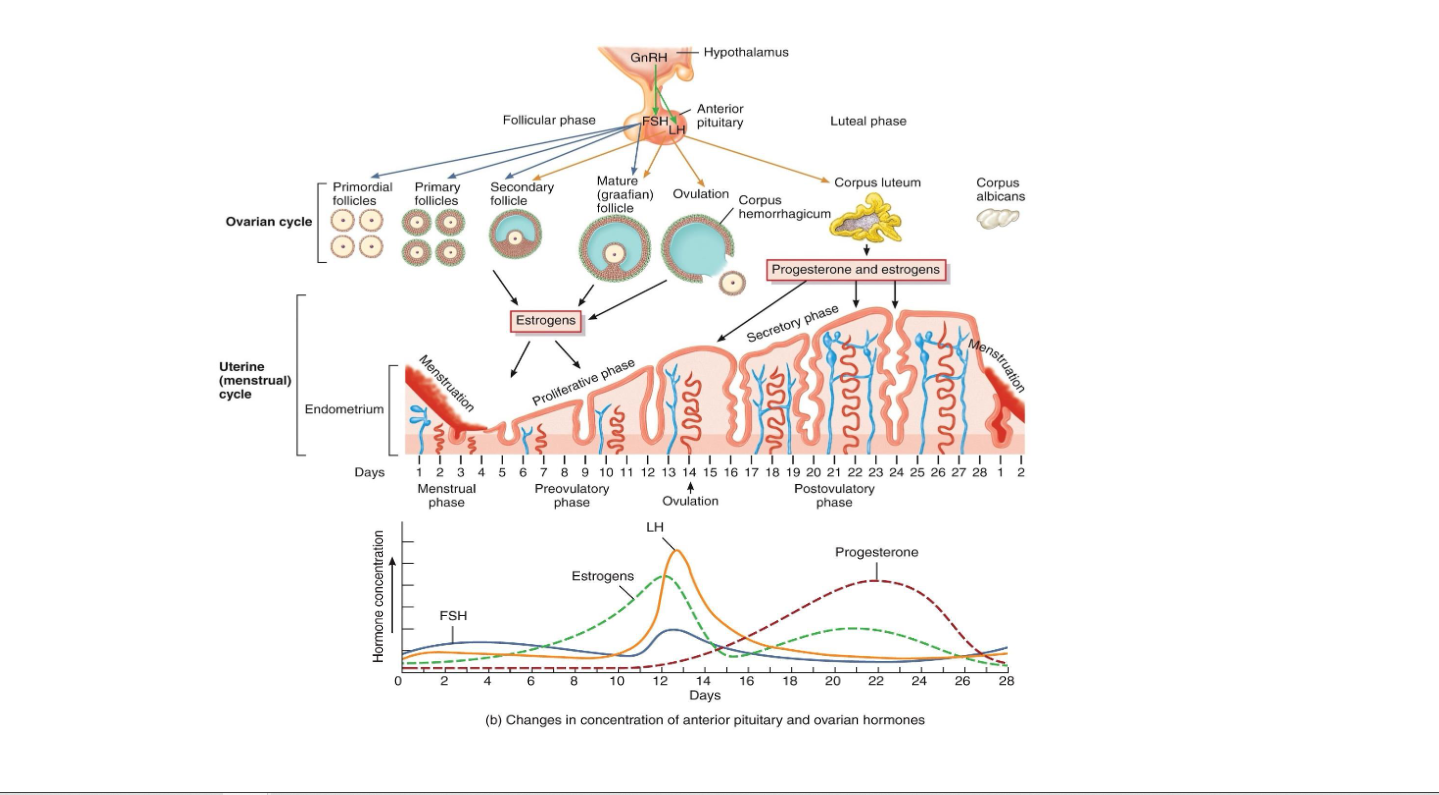
<p><span><span>The Integration Diagram</span></span></p>

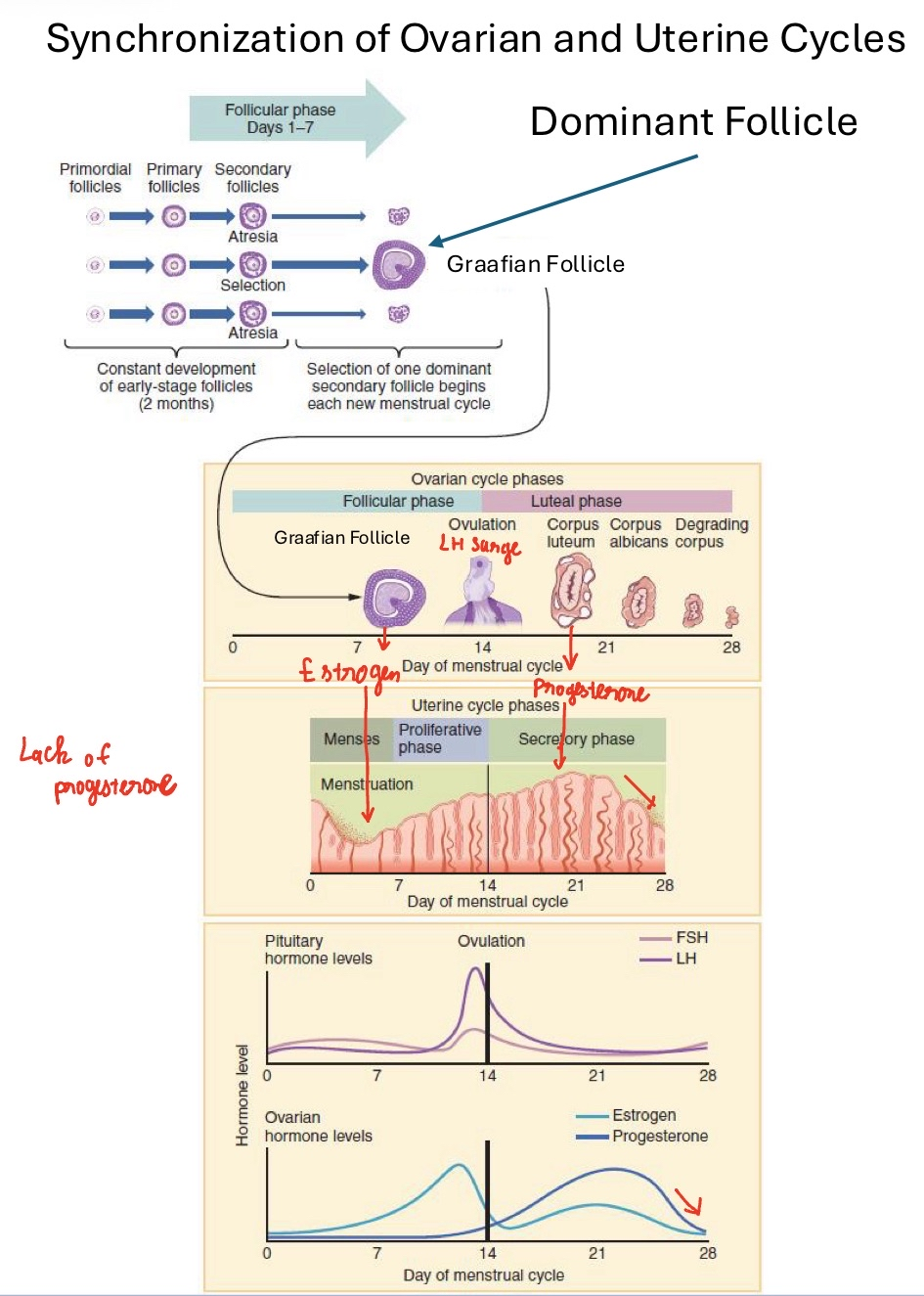
The Integration Diagram

• FSH, LH
• Estrogen, Progesterone
• Ovarian Cycle
• Uterine Cycle
• Notice:
• Estrogen peak → LH surge
• Progesterone peak → secretory phase
• Hormone drop → menstruation
<p><span style="color: rgb(0, 0, 0);"><span>• FSH, LH</span></span><span style="color: rgb(0, 0, 0);"><br></span><span style="color: rgb(0, 0, 0);"><span>• Estrogen, Progesterone</span></span><span style="color: rgb(0, 0, 0);"><br></span><span style="color: rgb(0, 0, 0);"><span>• Ovarian Cycle</span></span><span style="color: rgb(0, 0, 0);"><br></span><span style="color: rgb(0, 0, 0);"><span>• Uterine Cycle</span></span><span style="color: rgb(0, 0, 0);"><br></span><span style="color: rgb(0, 0, 0);"><span>• Notice:</span></span><span style="color: rgb(0, 0, 0);"><br>   </span><span style="color: rgb(0, 0, 0);"><span>• Estrogen peak → LH surge</span></span><span style="color: rgb(0, 0, 0);"><br>   </span><span style="color: rgb(0, 0, 0);"><span>• Progesterone peak → secretory phase</span></span><span style="color: rgb(0, 0, 0);"><br>   </span><span style="color: rgb(0, 0, 0);"><span>• Hormone drop → menstruation</span></span></p>
10
New cards

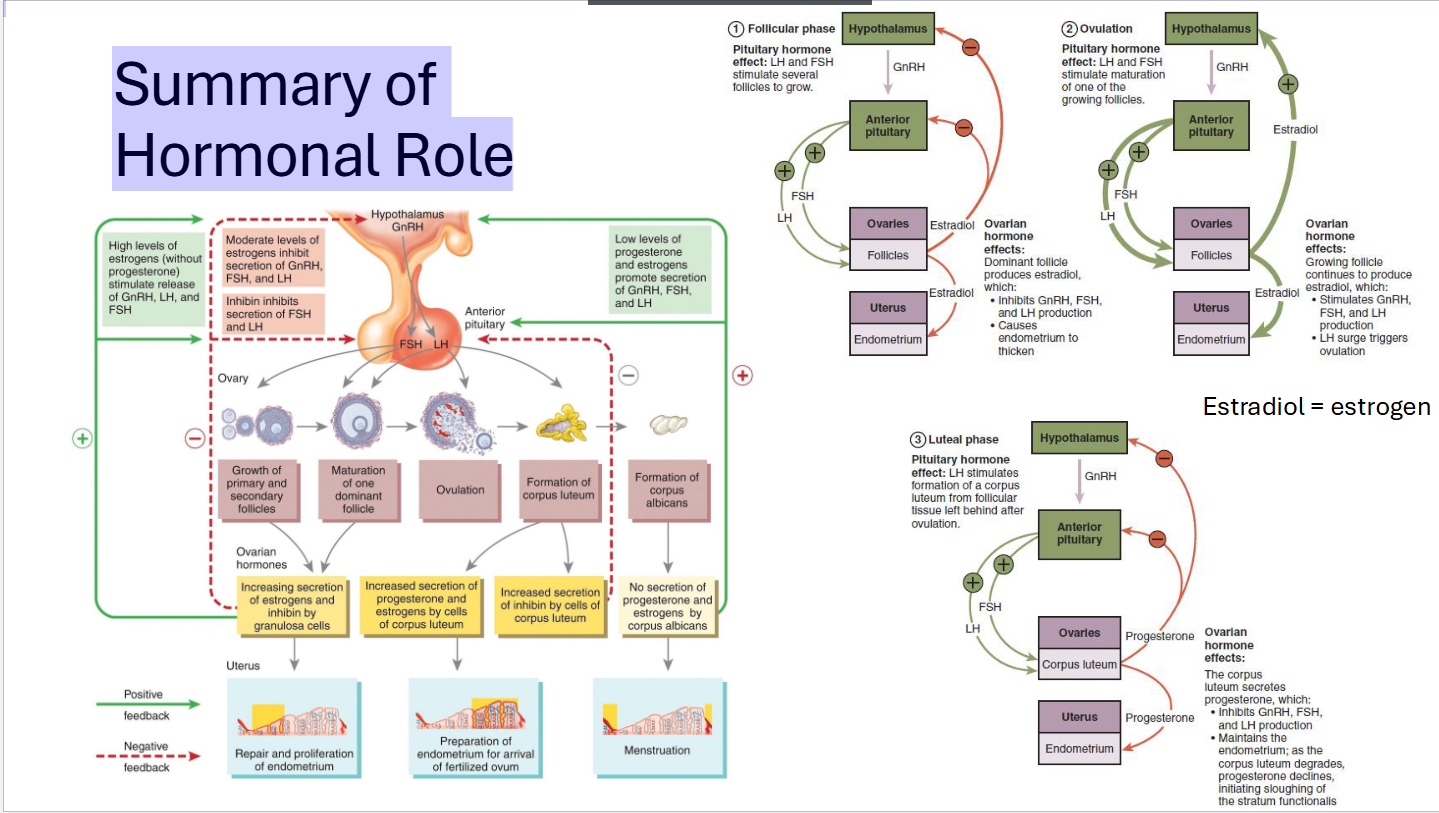
Summary of Hormonal Role

knowt flashcard image
11
New cards

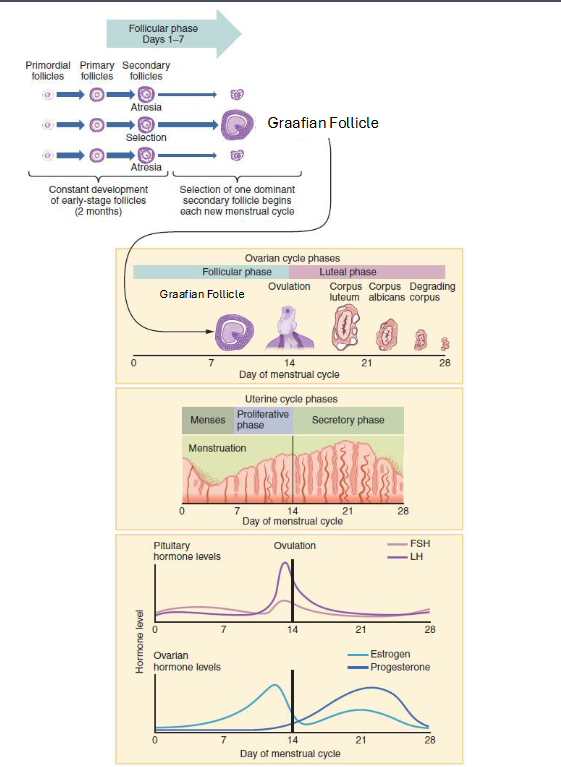
If no fertilization occurs...

• Corpus luteum → corpus albicans
• Progesterone & estrogen fall → menstruation begins
• FSH rises → next cycle begins
<p><span style="color: rgb(0, 0, 0);"><span>• Corpus luteum → corpus albicans</span></span><span style="color: rgb(0, 0, 0);"><br></span><span style="color: rgb(0, 0, 0);"><span>• Progesterone &amp; estrogen fall → menstruation begins</span></span><span style="color: rgb(0, 0, 0);"><br></span><span style="color: rgb(0, 0, 0);"><span>• FSH rises → next cycle begins</span></span></p>
12
New cards

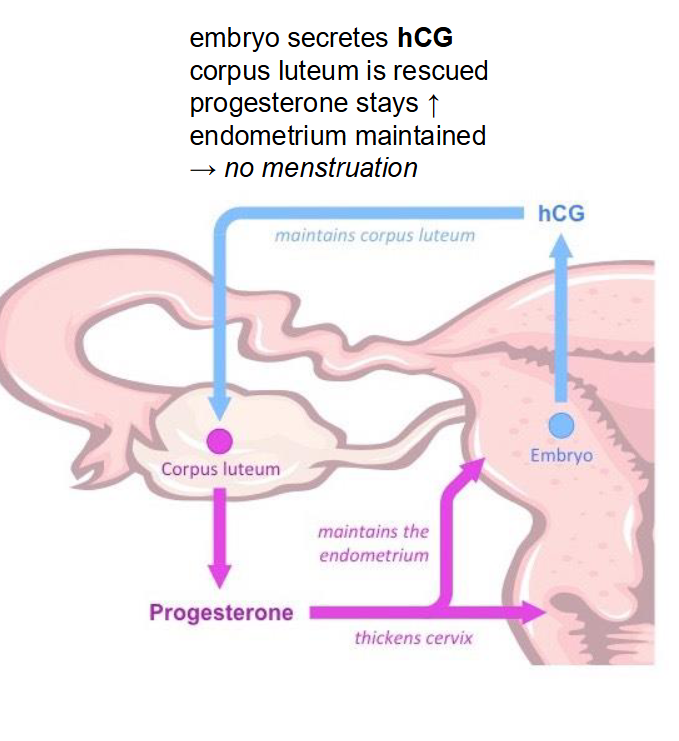
If fertilization (and implantation) does occur...

• Embryo secreting hCG
• hCG = human chorionic gonadotropin
• Acts like LH
• Keeps the Corpus Luteum alive
• Corpus Luteum keeps secreting progesterone
• If progesterone levels stay high, what won’t happen?

No Menstruation
<p><span style="color: rgb(0, 0, 0);"><span>• Embryo secreting hCG</span></span><span style="color: rgb(0, 0, 0);"><br></span><span style="color: rgb(0, 0, 0);"><span>• hCG = human chorionic gonadotropin</span></span><span style="color: rgb(0, 0, 0);"><br></span><span style="color: rgb(0, 0, 0);"><span>• Acts like LH</span></span><span style="color: rgb(0, 0, 0);"><br></span><span style="color: rgb(0, 0, 0);"><span>• Keeps the Corpus Luteum alive</span></span><span style="color: rgb(0, 0, 0);"><br></span><span style="color: rgb(0, 0, 0);"><span>• Corpus Luteum keeps secreting progesterone</span></span><span style="color: rgb(0, 0, 0);"><br></span><span style="color: rgb(0, 0, 0);"><span>• If progesterone levels stay high, what won’t happen?</span></span></p><p><span style="color: rgb(0, 0, 0);"><span>No Menstruation</span></span></p>
13
New cards

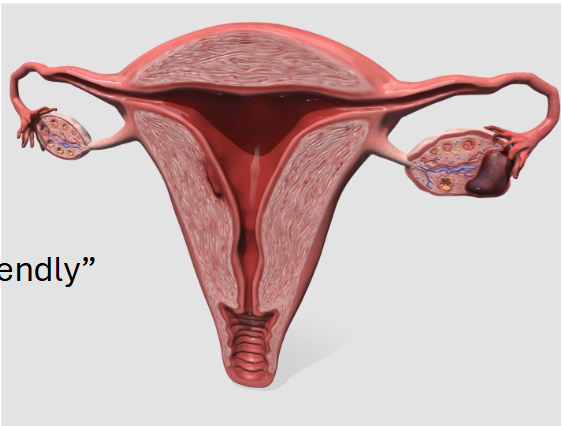
Uterine Environment Changes

• Before Ovulation: Estrogen Dominant
• Estrogen causes:
1. Cervical mucus thin/watery
2. Cervix to slightly open
3. Uterine Contractions
• Uterine/Cervical Environment is ā€œSperm-Friendlyā€
• After Ovulation: Progesterone Dominant
• Progesterone causes:
1. Cervical Mucus thick/sticky/impenetrable
• Protection for fertilized egg from infection
• Uterine/Cervical Environment is ā€œEmbryo-Friendlyā€

<p><span style="color: rgb(0, 0, 0);"><span>• Before Ovulation: Estrogen Dominant</span></span><span style="color: rgb(0, 0, 0);"><br>  </span><span style="color: rgb(0, 0, 0);"><span>• Estrogen causes:</span></span><span style="color: rgb(0, 0, 0);"><br>     </span><span style="color: rgb(0, 0, 0);"><span>1. Cervical mucus thin/watery</span></span><span style="color: rgb(0, 0, 0);"><br>     </span><span style="color: rgb(0, 0, 0);"><span>2. Cervix to slightly open</span></span><span style="color: rgb(0, 0, 0);"><br>     </span><span style="color: rgb(0, 0, 0);"><span>3. Uterine Contractions</span></span><span style="color: rgb(0, 0, 0);"><br>  </span><span style="color: rgb(0, 0, 0);"><span>• Uterine/Cervical Environment is ā€œSperm-Friendlyā€</span></span><span style="color: rgb(0, 0, 0);"><br></span><span style="color: rgb(0, 0, 0);"><span>• After Ovulation: Progesterone Dominant</span></span><span style="color: rgb(0, 0, 0);"><br>  </span><span style="color: rgb(0, 0, 0);"><span>• Progesterone causes:</span></span><span style="color: rgb(0, 0, 0);"><br>     </span><span style="color: rgb(0, 0, 0);"><span>1. Cervical Mucus thick/sticky/impenetrable</span></span><span style="color: rgb(0, 0, 0);"><br>     </span><span style="color: rgb(0, 0, 0);"><span>• Protection for fertilized egg from infection</span></span><span style="color: rgb(0, 0, 0);"><br></span><span style="color: rgb(0, 0, 0);"><span>• Uterine/Cervical Environment is ā€œEmbryo-Friendlyā€</span></span></p>
14
New cards
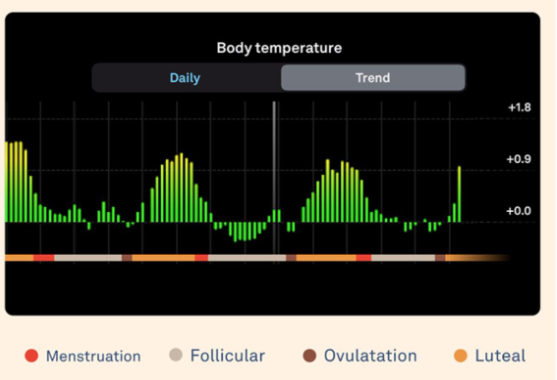
<p><span><span>Basal Body Temperature Shift</span></span></p>

Basal Body Temperature Shift

• Progesterone slightly raises body temperature after ovulation
• 0.3–0.5°C
• Detectable with continuous charting
• Confirms ovulation has occurred
<p><span style="color: rgb(0, 0, 0);"><span>• Progesterone slightly r</span><strong><span>aises body temperature</span></strong><span> after ovulation</span></span><span style="color: rgb(0, 0, 0);"><br>     </span><span style="color: rgb(0, 0, 0);"><span>• 0.3–0.5°C</span></span><span style="color: rgb(0, 0, 0);"><br></span><span style="color: rgb(0, 0, 0);"><span>• Detectable with continuous charting</span></span><span style="color: rgb(0, 0, 0);"><br></span><span style="color: rgb(0, 0, 0);"><span>• Confirms ovulation has occurred</span></span></p>
15
New cards

Implantation Window

• Secretory endometrium optimal around days 20–24
• Progesterone maintains uterus
• Corpus luteum survives only if hCG from embryo arrives

16
New cards

What hormonal birth control does

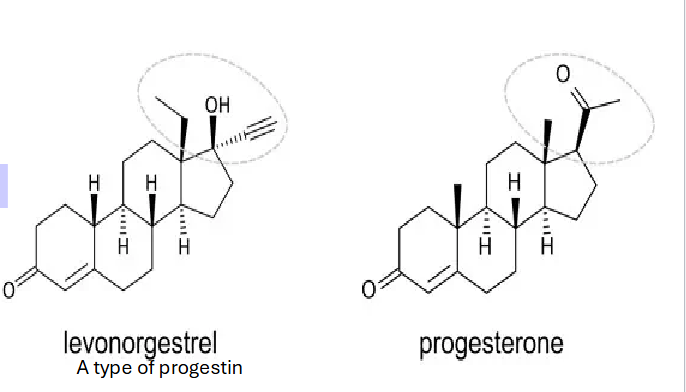
• Contains progestin (mimics progesterone)
• Negative feedback on Hypothalamus and Anterior Pituitary
• Prevents ovulation by blocking LH surge
• Thickens cervical mucus
• Thins endometrium
• Key Idea: ā€œNo LH surge = no ovulation.

<p><span style="color: rgb(0, 0, 0);"><span>• Contains progestin (mimics progesterone)</span></span><span style="color: rgb(0, 0, 0);"><br></span><span style="color: rgb(0, 0, 0);"><span>• Negative feedback on Hypothalamus and Anterior Pituitary</span></span><span style="color: rgb(0, 0, 0);"><br></span><span style="color: rgb(0, 0, 0);"><span>• Prevents ovulation by blocking LH surge</span></span><span style="color: rgb(0, 0, 0);"><br></span><span style="color: rgb(0, 0, 0);"><span>• Thickens cervical mucus</span></span><span style="color: rgb(0, 0, 0);"><br></span><span style="color: rgb(0, 0, 0);"><span>• Thins endometrium</span></span><span style="color: rgb(0, 0, 0);"><br></span><span style="color: rgb(0, 0, 0);"><strong><span>• Key Idea:</span></strong><span> ā€œNo LH surge = no ovulation.</span></span></p>
17
New cards

Which best explains why only one follicle becomes dominant?
A. It has more LH receptors and survives high LH
B. It has more FSH receptors and survives falling FSH
C. It has more progesterone receptors and survives high progesterone
D. It produces less estrogen than other follicles

B. It has more FSH receptors and survives falling FSH

18
New cards

A fertilized embryo implants in the uterus approximately:
A. 12 hours after ovulation
B. 1–2 days after ovulation
C. 3–4 days after ovulation
D. 6–7 days after ovulation

D. 6–7 days after ovulation

19
New cards

Menstruation occurs primarily because:
A. FSH rises
B. LH rises
C. Progesterone and estrogen fall
D. Estrogen rises sharply

C. Progesterone and estrogen fall

20
New cards

If the corpus luteum fails to form, what
happens to the hormones?
A. Progesterone rises
B. Estrogen rises
C. FSH and LH rise
D. hCG rises

C. FSH and LH rise

21
New cards

Which hormone is primarily responsible for rebuilding the endometrium?

Estrogen

22
New cards

Which follicle ultimately becomes the dominant follicle?

Graagian Foolicle

23
New cards


What hormone is MOST responsible for preventing a second ovulation in the same cycle?

Progesterone

24
New cards

Write a 3-4 sentence essay for this prompt:
Explain how an implanted embryo maintains the
maternal endometrium during early pregnancy. In your
answer, describe the hormone the embryo produces,
what ovarian structure it affects, and how this prevents
menstruation

Embryo escreting HcG. It act like LH and keep corpus Luteum alive. Corpus can secreting progestion but progesterone need to maintain for endometrium so it wont be mentration.

25
New cards

Which of the following BEST explains why meiosis I, but not meiosis II, reduces chromosome number?
A. DNA replication occurs before meiosis II but not meiosis I
B. Homologous chromosomes separate in meiosis I, but sister chromatids separate in meiosis II
C. Cytokinesis fails to occur in meiosis I
D. Crossing over occurs only in meiosis II

B. Homologous chromosomes separate in meiosis I, but sister chromatids separate in meiosis II

26
New cards

Which event MOST directly contributes to genetic diversity in gametes?
A. Telophase II
B. Cytokinesis
C. Crossing over in prophase I
D. Random alignment of sister chromatids in meiosis II

C. Crossing over in prophase I

27
New cards

In oogenesis, the secondary oocyte is arrested in which phase until fertilization?
A. Prophase I
B. Metaphase II
C. Anaphase I
D. Telophase II

B. Metaphase II

28
New cards

Which statement correctly compares spermatogenesis and oogenesis?
A. Both produce four functional gametes
B. Only spermatogenesis involves meiosis II
C. Oogenesis begins before birth, but spermatogenesis begins at puberty
D. Crossing over occurs only in spermatogenesis

C. Oogenesis begins before birth, but spermatogenesis begins at puberty

29
New cards

A mutation reduces LH receptor expression on theca cells. Which outcome is MOST likely?
A. Excess androgen production → excess estrogen
B. Decreased androgen → decreased estrogen production
C. Increased FSH → increased estrogen production
D. No effect on estrogen production

B. Decreased androgen → decreased estrogen production

30
New cards

Which of the following BEST explains why more than one secondary follicle begins maturing each cycle? (if you are confused, we will clarify this today)
A. Only one follicle can respond to LH
B. Multiple follicles respond to early FSH, but only one survives falling FSH levels
C. The ovary needs multiple follicles to produce enough estrogen
D. The primary oocyte divides asymmetrically

B. Multiple follicles respond to early FSH, but only one survives falling FSH levels

Explore top flashcards

dates histoire
Updated 1110d ago
flashcards Flashcards (45)
RT VIVA
Updated 282d ago
flashcards Flashcards (50)
Basic vocabulary
Updated 711d ago
flashcards Flashcards (307)
Calculus
Updated 985d ago
flashcards Flashcards (102)
dates histoire
Updated 1110d ago
flashcards Flashcards (45)
RT VIVA
Updated 282d ago
flashcards Flashcards (50)
Basic vocabulary
Updated 711d ago
flashcards Flashcards (307)
Calculus
Updated 985d ago
flashcards Flashcards (102)