Domestication Traits and Evolution of Dogs and Cats
 Studied by 0 people
 Call with Kai
 Learn
Learn Practice Test
 Spaced Repetition
 Match
Match Flashcards
 Knowt Play
1/25

There's no tags or description
Looks like no tags are added yet.
Name | Mastery | Learn | Test | Matching | Spaced | Call with Kai |
|---|
No analytics yet
Send a link to your students to track their progress
26 Terms
What are some traits that favor domestication?
Group structure, sexual behavior, parent-young interaction, flexibility in diet, and ability to be confined.
How does group structure contribute to domestication?
Animals that live in groups with social hierarchies reduce confrontation and allow for a human to maintain a leadership role.
What role does sexual behavior play in domestication?
Ritualized reproductive behaviors and promiscuous mating allow humans to breed animals for desired traits.
What is the significance of parent-young interaction in domestication?
Wide acceptance of human presence and intervention leads to decreased stress and the possibility for tameness.
What are some consequences of domestication?
Increase in neotenic traits, improved fertility, decreased independent survival traits, and decreased brain size in dogs compared to wolves.
What is meant by neotenic traits in domesticated animals?
Traits that are juvenile or immature, retained into adulthood, often selected for by humans.
How do domesticated animals read human cues?
They can interpret human body posture, facial expressions, and even pointing gestures.
What evidence supports that dogs evolved from wolves?
Similar social structures, the same number of chromosomes (78), and similar mitochondrial DNA.
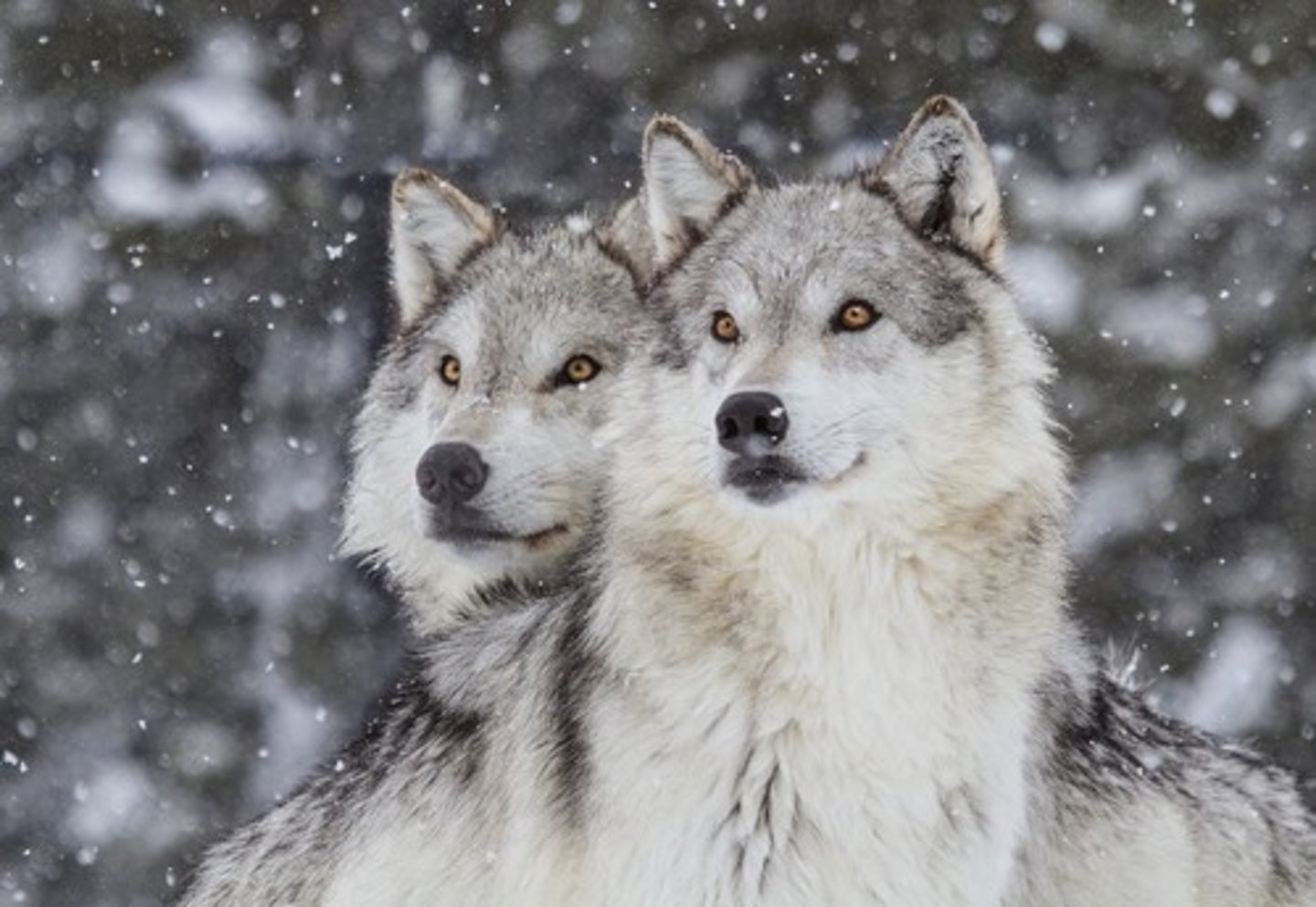
What are key developmental differences between wolves and dogs?
Dogs have a delayed critical period of socialization and are more obedient, relying on humans for support.
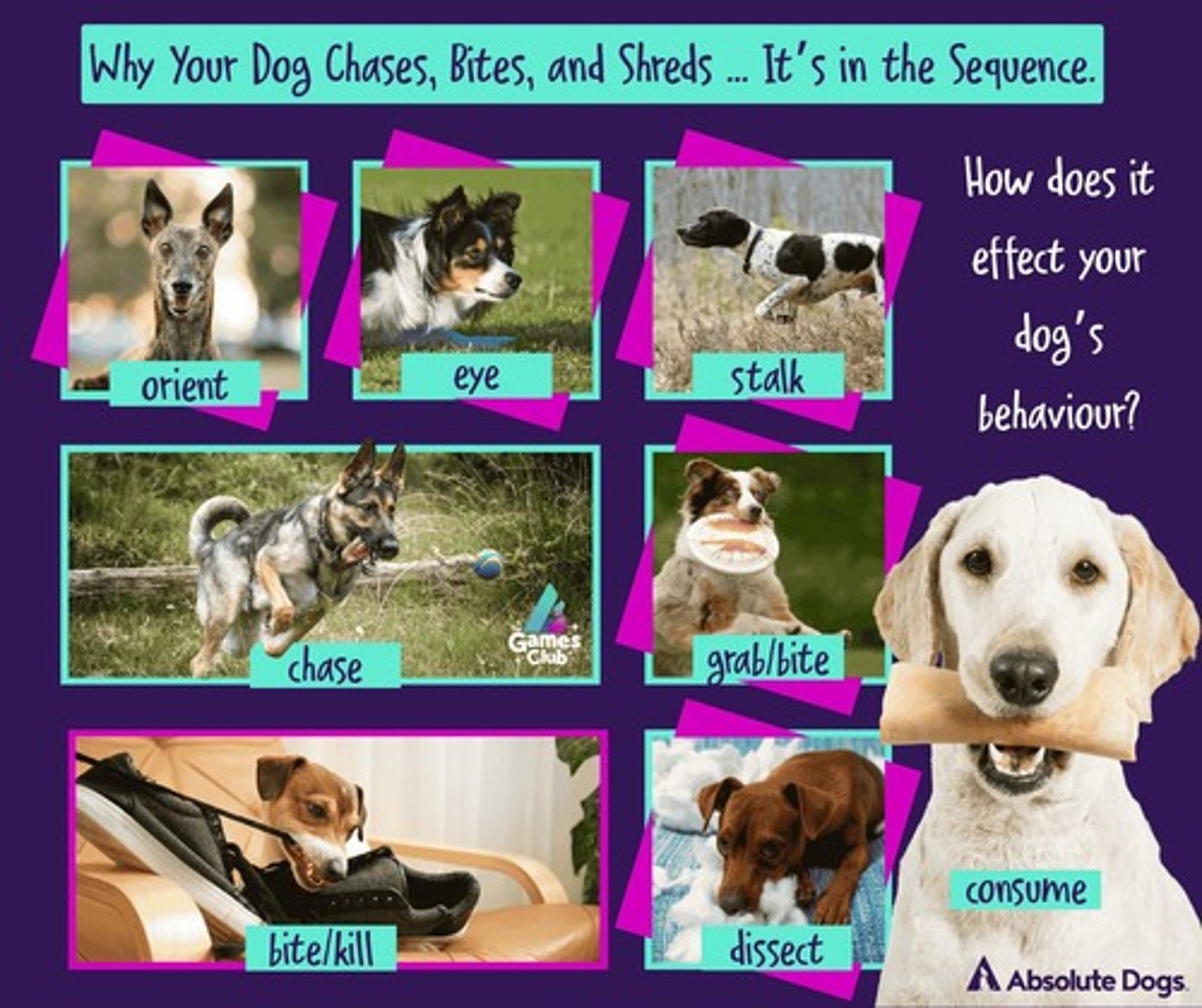
What are the simplified phases of wolf pup development according to Raymond Coppinger?
Reactive, Play, Stalking/Heading, Heeling, Adult - Kill Behavior.
What is the predatory sequence in relation to dogs?
Dogs have been selected to emphasize parts of the predatory sequence but are often locked into juvenile stages of behavior.
What is the impact of domestication on dog behavior?
Domestication has rewired how dogs interact with humans, moving away from dominance theories to understanding social intelligence.
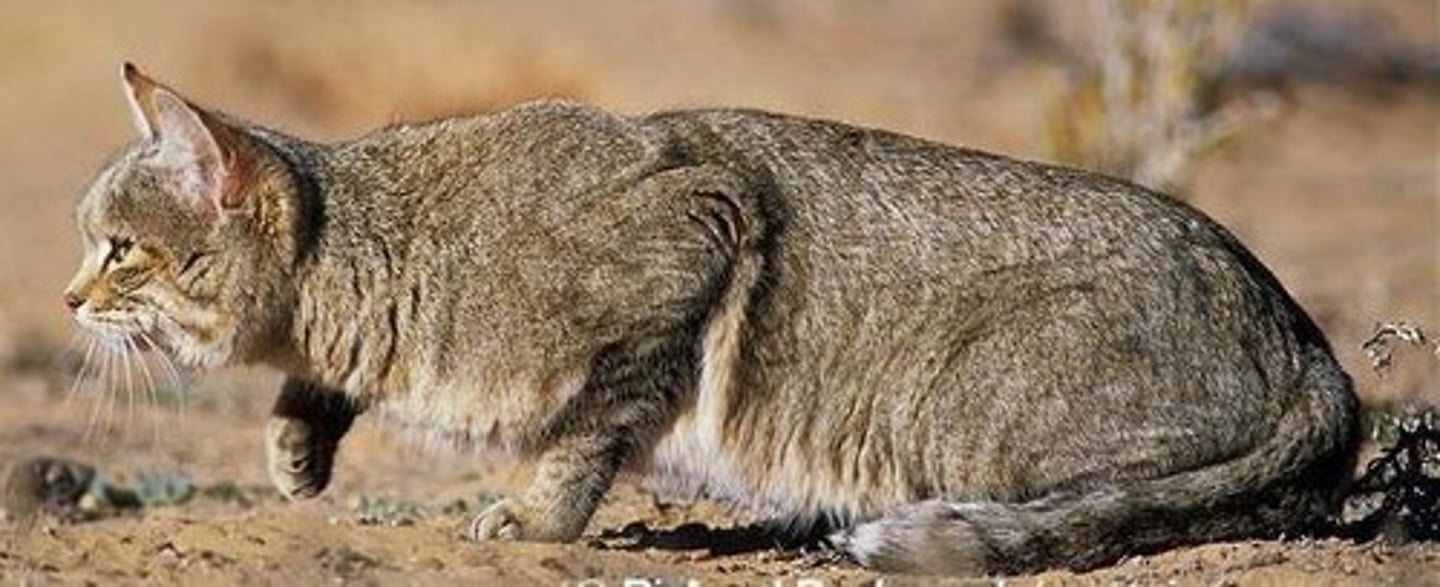
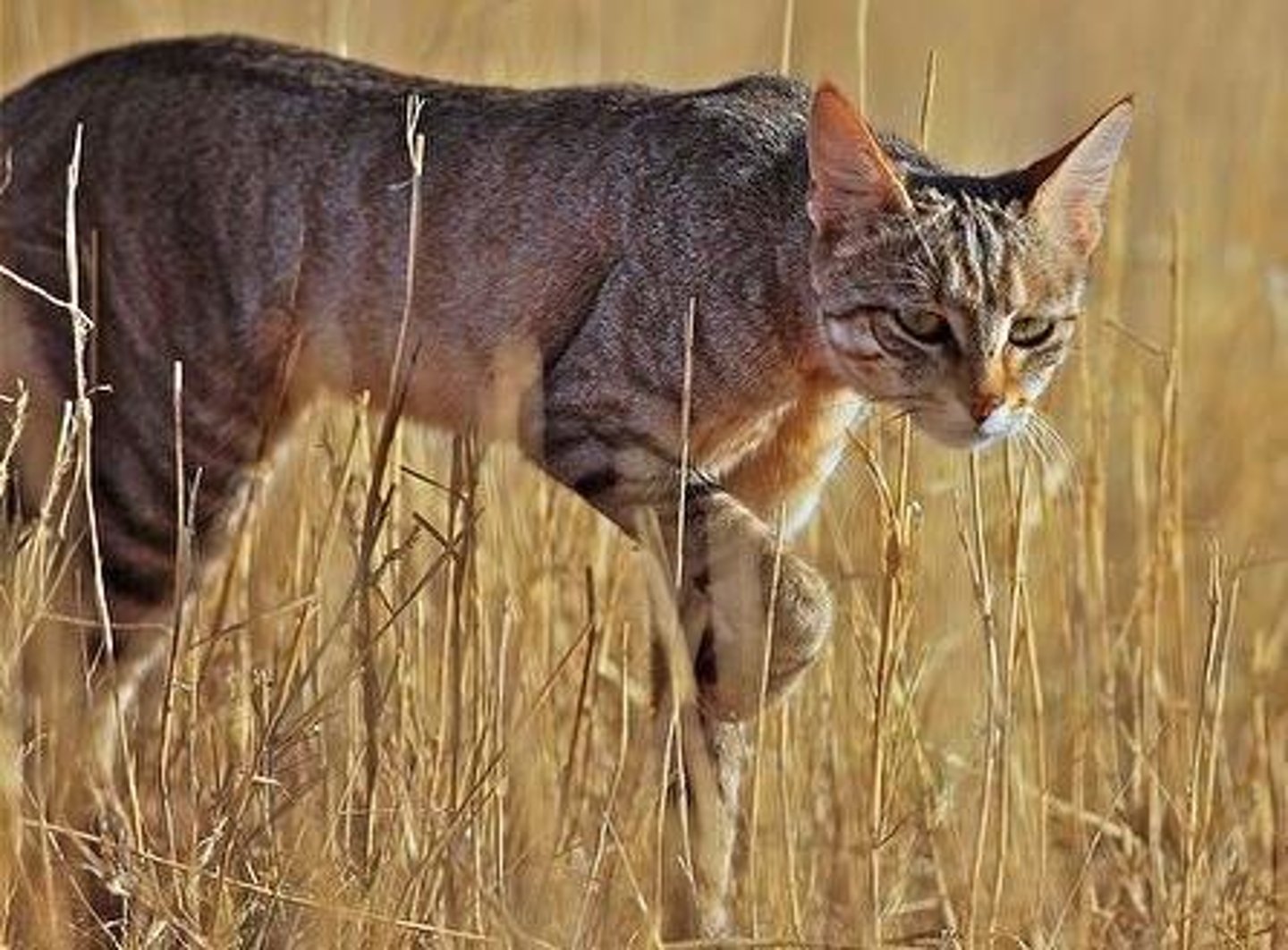
What is the classification of the domestic cat?
Domestic cat = Felis catus; Wild progenitor species = African wildcat (Felis silvestris lybica).

How does cat domestication differ from dog domestication?
Cats show fewer pronounced changes in structure and body size and retain the ability to hunt independently.
What was the historical significance of cats in Egypt?
Cats were domesticated for pest control and spiritual purposes, considered sacred and associated with the goddess Bastet.
How did attitudes towards cats change during the Middle Ages?
Cats were associated with pagan practices, leading to their torture and killing for over 400 years.
What role did cats play during the Bubonic Plague?
Cats were reinstated to control rat populations, which were vectors for the disease.
What was the impact of Pasteur's germ theory on the perception of cats?
Cats were recognized for their cleanliness and welcomed back into homes.
What are some genetic insights gained from studying dogs?
Dogs provide insights into dietary adaptation and susceptibility to diseases, sharing genetic markers with humans.
What does the term 'neoteny' refer to in the context of dog behavior?
The retention of juvenile traits into adulthood, influencing behavior and interactions with humans.
Why is understanding canine domestication important for dog care?
It helps facilitate better interactions and care by recognizing their evolved social intelligence and biological needs.
What does 'flexibility in diet' mean in terms of domestication traits?
The ability of animals to adapt to various food sources, which aids in their domestication.
What is the significance of decreased flight distance in domesticated animals?
It indicates a tolerance for human presence and a potential for tameness.
How does the social behavior of dogs differ from that of wolves?
Dogs are more obedient and depend on humans, while wolves rely on complex pack structures.
What is the role of genetics in animal behavior?
Behavior is complex, often polygenic, and shows a continuous range of variation influenced by both genetics and environment.
What are some challenges in studying animal behavior?
Behavior can be difficult to quantify and study due to its complexity and variation among individuals.
 Note
Note  Flashcards (126)