Cell Reproduction: Chapter 10
 Studied by 11 people
 Call with Kai
 Learn
Learn Practice Test
 Spaced Repetition
 Match
Match Flashcards
 Knowt Play
1/79

There's no tags or description
Looks like no tags are added yet.
Name | Mastery | Learn | Test | Matching | Spaced | Call with Kai |
|---|
No study sessions yet.
80 Terms
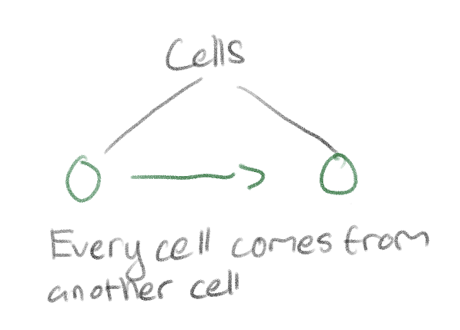
Where do cells come from?
From other cells
Cell Theory: Rudolf Virchow (1850s): “Every cell from a cell”
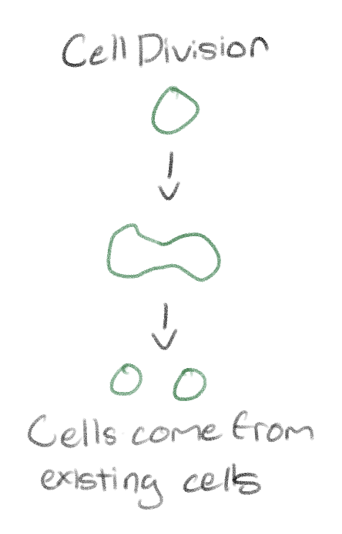
What is cell division?
The production of new cells from existing cells
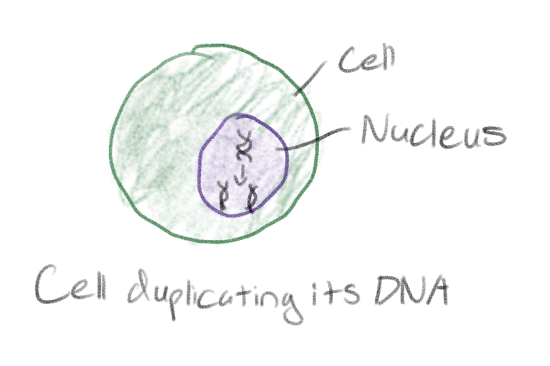
Before a cell divides, what must it do?
Copy its DNA
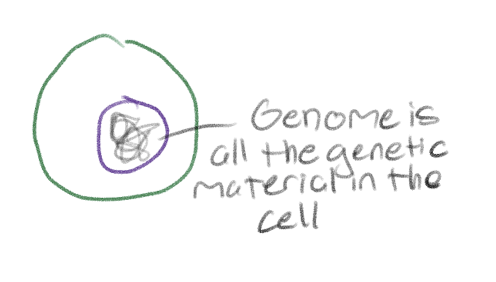
What is a genome?
All the genetic material in the cell
What are chromosomes/chromatin?
DNA + Associated proteins
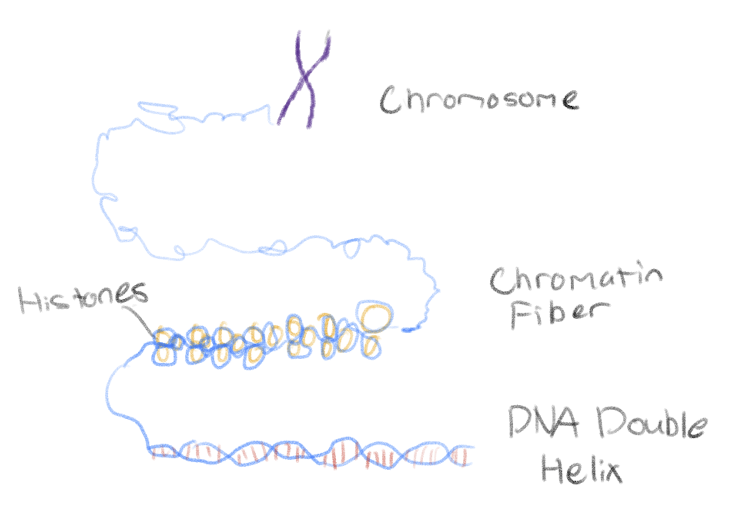
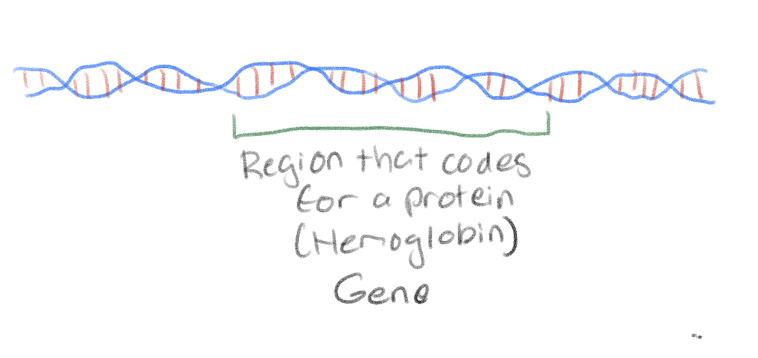
What are genes?
DNA regions that code for proteins
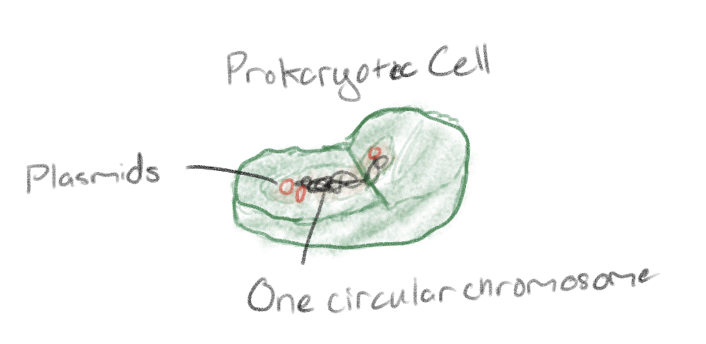
Describe prokaryotic DNA.
One circular chromosomes
May also have plasmids
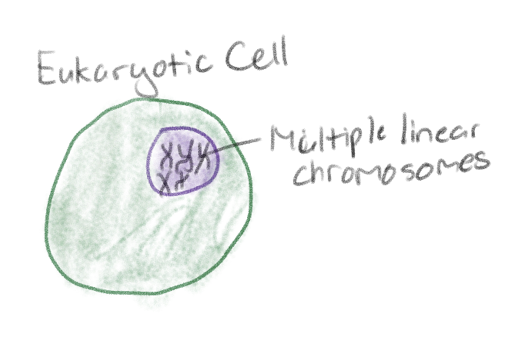
Describe eukaryotic DNA
Multiple linear chromosomes
Compare somatic and gamete cells in terms of how many chromosomes and type of each in humans.
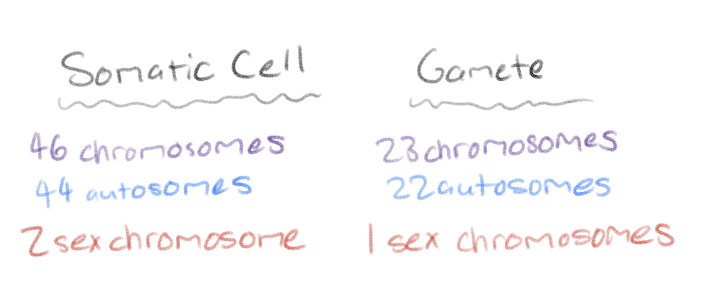
Is somatic cells or gamete cells 1n? How about 2n?
Gamete cells are 1n while somatic cells are 2n
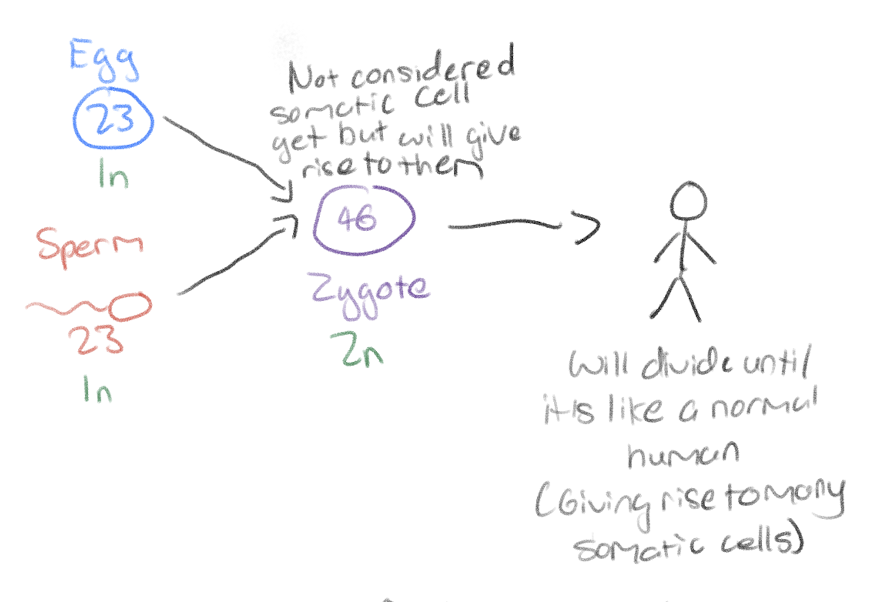
Why are gametes 1n or in humans 23 chromosomes while somatic cells are 2n?
Because gametes only have one set of chromosomes and that they have to pair up with another gamete to have their 2n
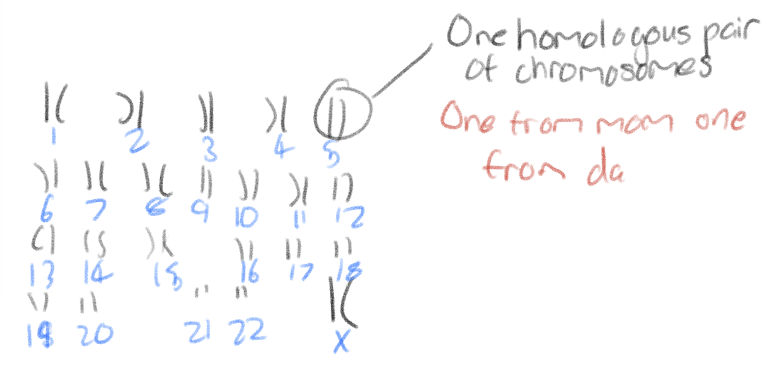
What is a karyotype?
Picture of chromosomes from 1 cell; arranged in homologous pairs
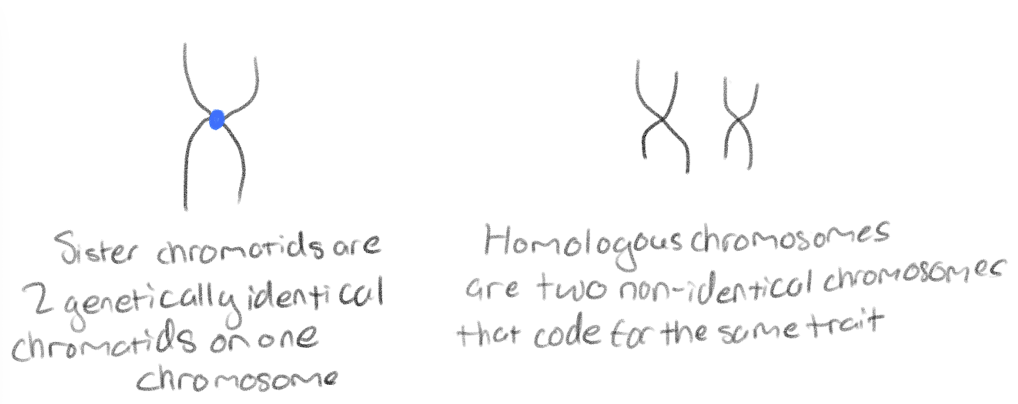
Each duplicated chromosomes has what?
Two identical sister chromatids.
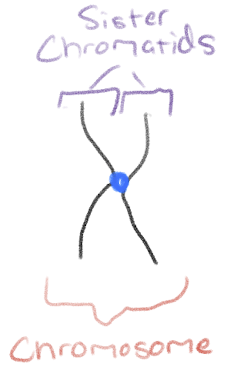
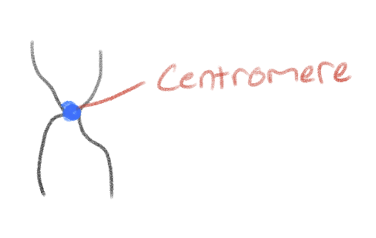
What is a centromere?
The location of closest attachment between chromatids
What is the difference between sister chromatids and homologous chromosomes?
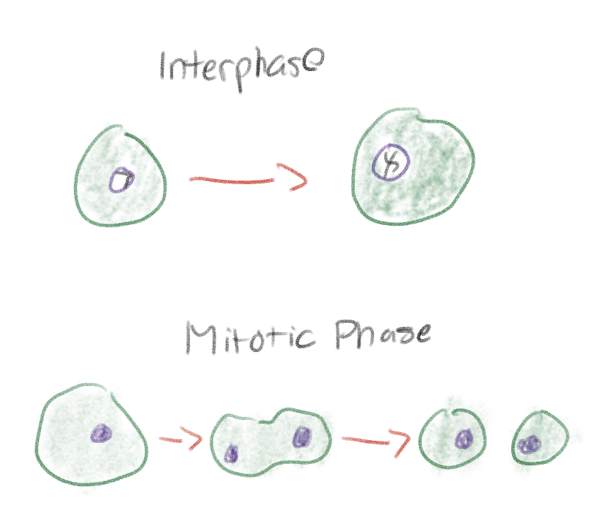
What is the cell doing all the time?
The cell function
What are the phases of the cell cycle and briefly describe them?
Interphase: It is where the cell spends most of its time
Grows and develops while preparing for cell division
Mitotic phase: Mitosis and cytokinesis
When the cell divides
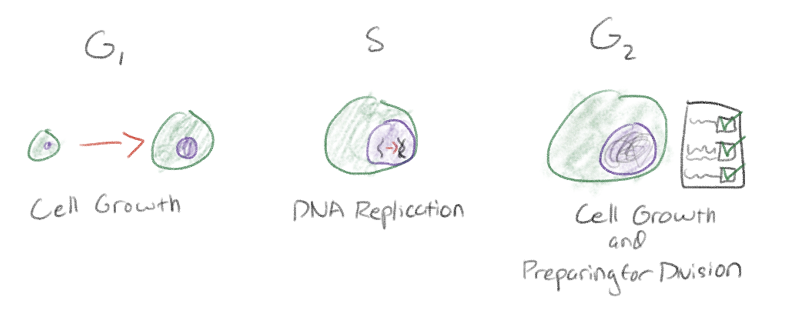
Describe the phases of interphase and briefly describe them.
G1: “first gap”: Cell growth
S: “synthesis”: DNA Replication
G2: “Second gap” Cell growth and preparation for division
Checking off if it has everything ready for division such as if the DNA is replicated correctly
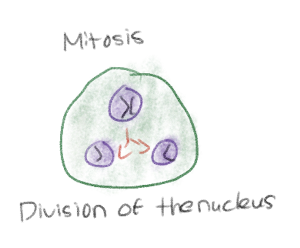
What is mitosis?
“Karyokinesis” Like karyotypes
Division of the nucleus and its contents
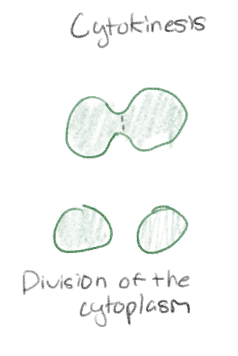
What is cytokinesis?
Division of the cytoplasm and contents
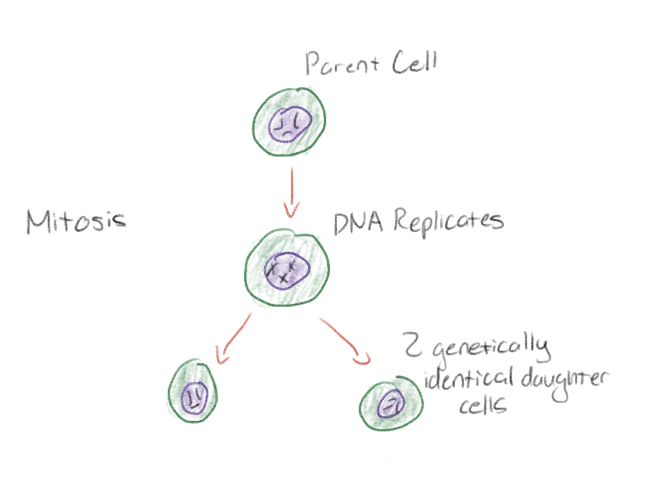
Mitosis (with cytokinesis) produces what?
Two genetically identical daughter cells
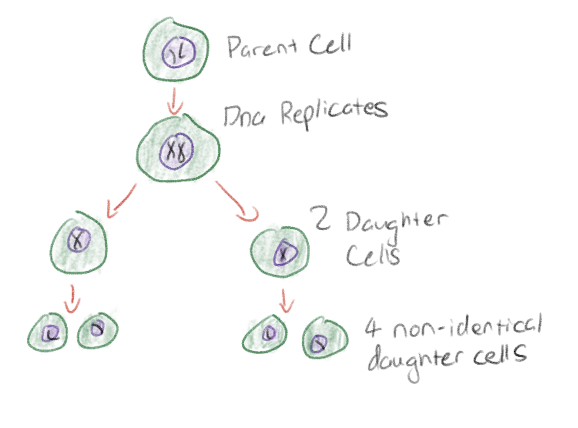
Meiosis produces what?
4 non-identical daughter cells that have half the number of chromosomes of the parent daughter cells
What is the difference between haploid and diploid cells?
Haploid -
Gametes
1n
26 chromosomes (humans)
Diploid -
Somatic cells
2n
23 chromosomes (humans)
What are the phases of mitosis?
Prophase
Prometaphase
Metaphase
Anaphase
Telophase
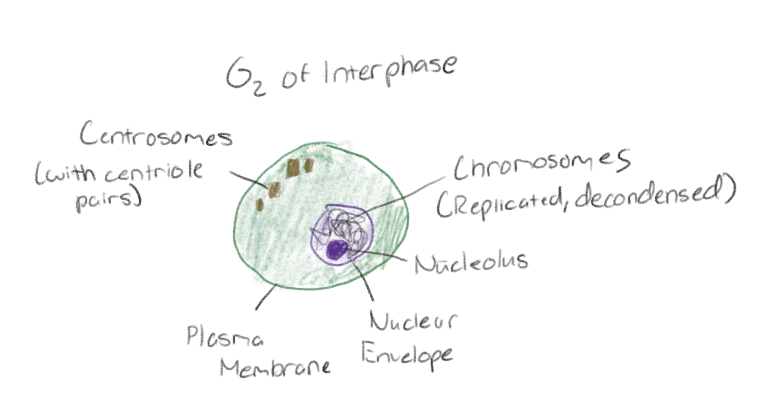
Interphase (G2): before mitosis starts.
Cells grow, replenish energy, and synthesize macromolecules
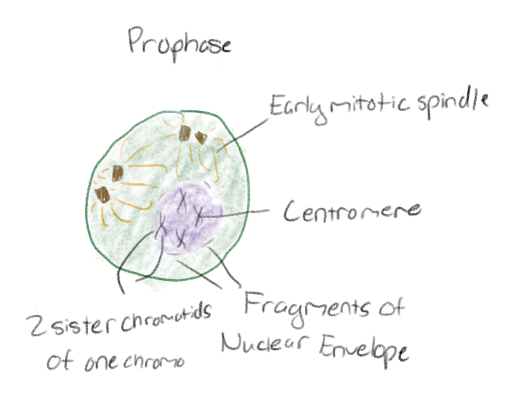
Prophase: first phase of mitosis
Nuclear envelope begins to break down
Chromosomes condense
Spindle fibers appear
Centrosomes begin to move towards opposites poles
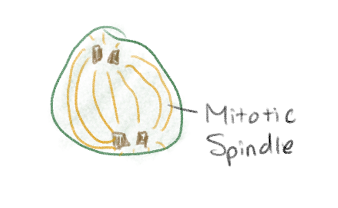
Mitotic spindle
Microtubules and associated proteins
Starts assembly at centrosomes (centrioles in animal cells only)
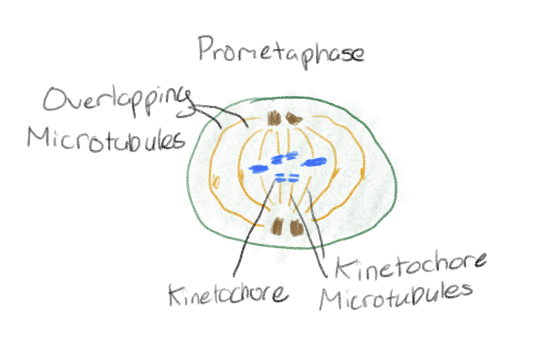
Prometaphase
Chromosomes continue to condense
Kinetochores appear at the centromere, and kinetochore microtubules attach
Kinetochore
Chromosomal structure; proteins associate with specific DNA section; attachment points for microtubules
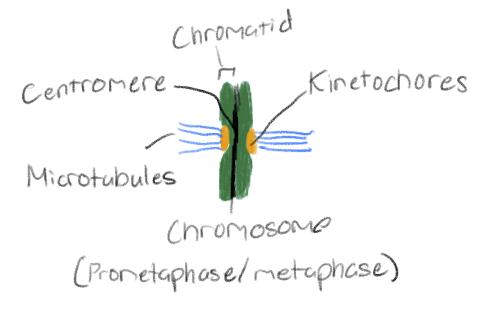
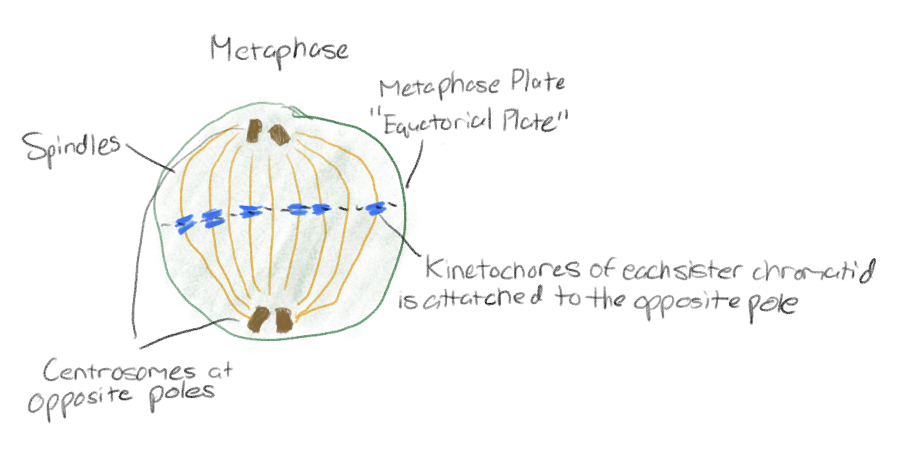
Metaphase
Mitotic spindle is fully developed
Centrosomes are at opposite poles
Chromosomes are aligned at “equatorial plate”
Kinetochore of each sister chromatid is attached spindle fiber of the opposite pole
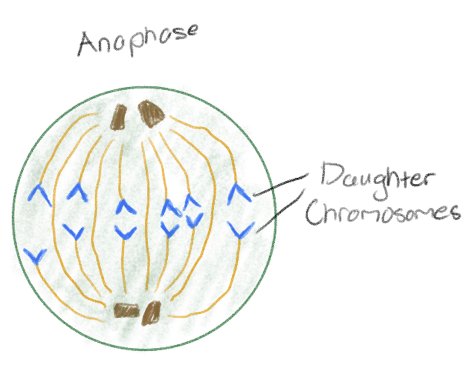
Anaphase
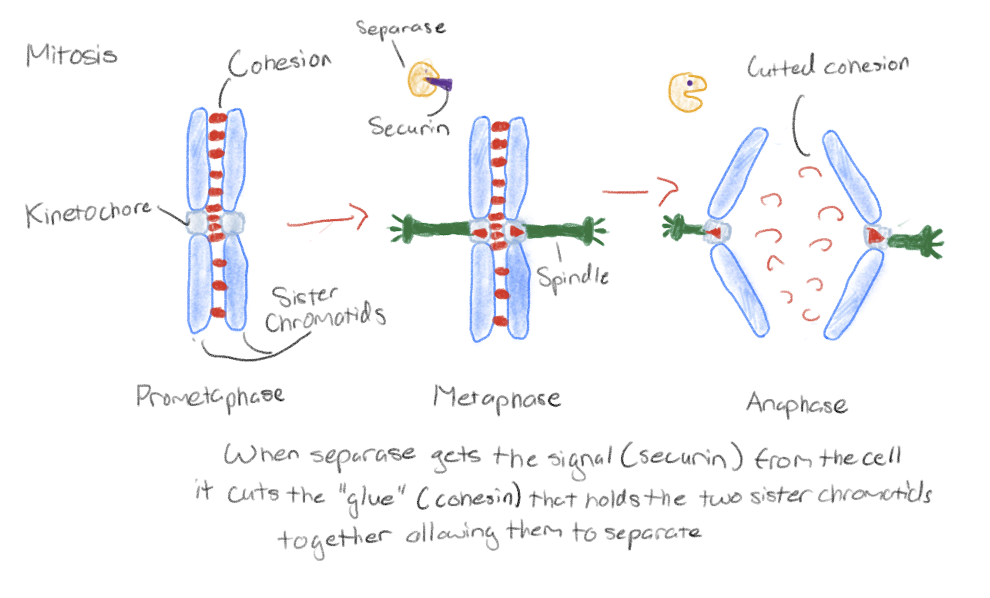
Sister chromatids are pulled apart by spindle fibers and are separated (daughter chromosomes)
What is the purpose of separase?
Telophase and cytokinesis
Chromosomes arrive at opposite poles and start to decondense.
Nuclear envelope assembles
Mitotic spindle assembly breaks down and the division of the cytoplasm begins and the cells divide
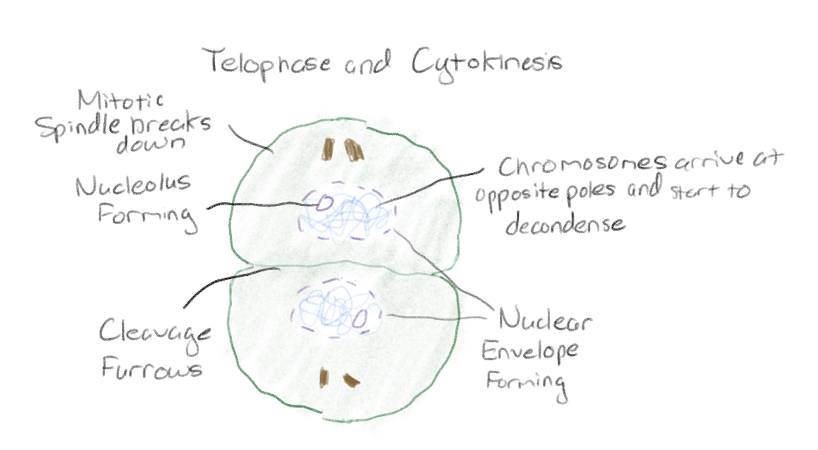
What is the difference of cytokinesis in animal cells and in plant cells?
Animal cells - cleavage furrow forms from contractile ring of actin microfilaments + myosin on the cytoplasmic side of cell
Plant cell - Vesicles containing cell wall material from Golgi move along microtubules to middle of cell, forming a cell plate
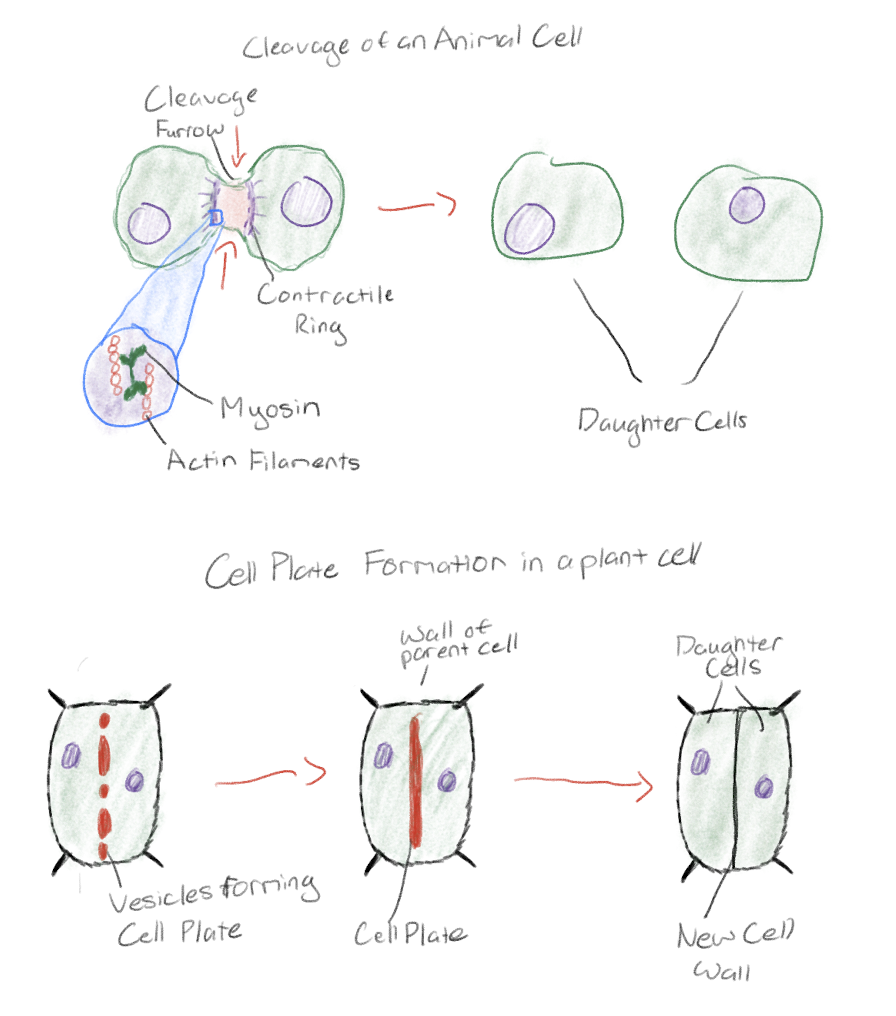
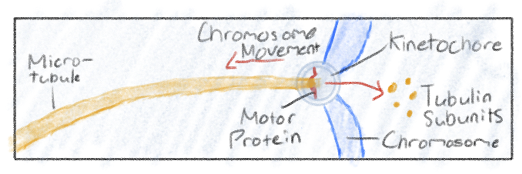
How do chromosomes move?
Microtubules pull on chromosomes from opposite directions
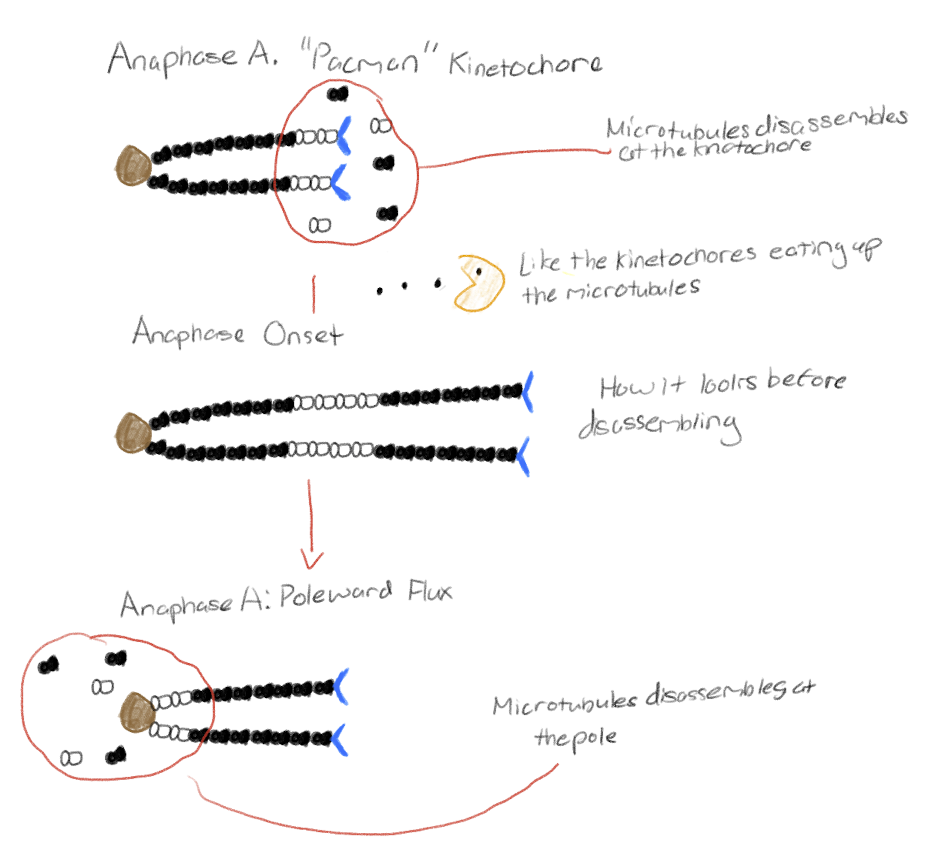
How are daughter chromosomes moved to opposite poles? (There are 2 models)
Pac-Man: Microtubules disassembles at the kinetochore
Poleward Flux: Microtubules disassembles at the pole
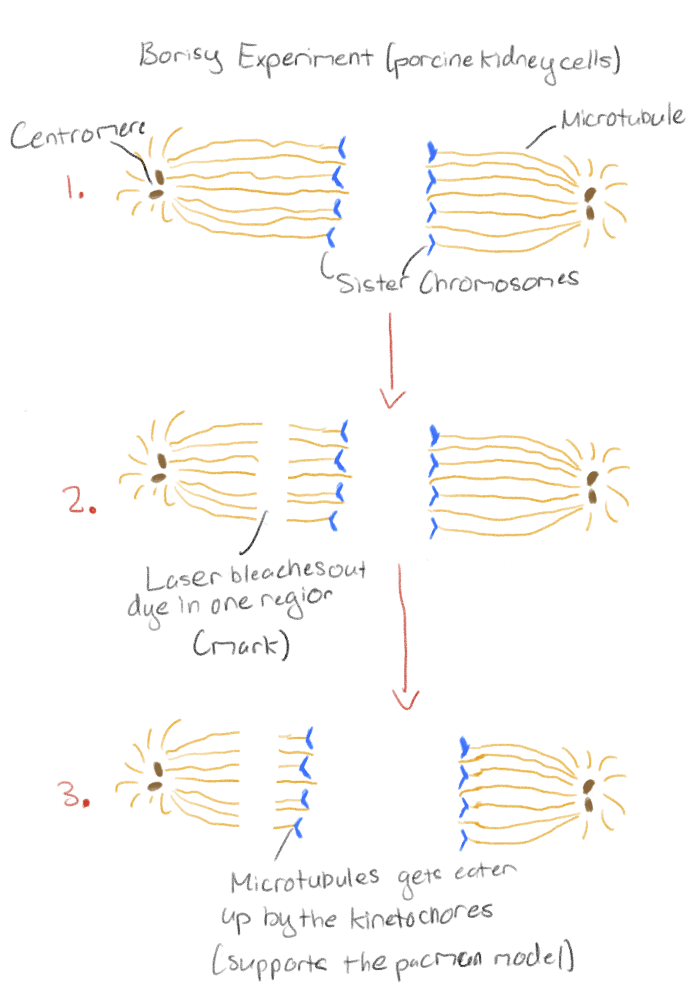
Borisy Experiment (porcine kidney cells)
Microtubules labeled with yellow dye
Laser bleaches out dye in one region (mark)
Show evidence that daughter chromosomes move to opposite poles through both the Pac-Man and the Poleward Flux as the microtubules shorten from both sides but at first it was mostly evidence for the Pac-Man model
How does the kinetochores break down the microtubules?
Are all cells in the body dividing at the same rate? Give an example.
No
Example: skin cells divide at a very fast rate while liver cells divide very slowly and rarely
Are all cells in the body mitotically active? Give an example.
No
Example: Neurons and mature muscle cells
Some cells are in G0, What does that mean?
They are not actively preparing to divide
May be temporary, may be long term (neurons, cardiac muscle)
Still performing normal cell functions
Some types of cells divide often: other types of cell _.
Do not typically divide at all
Time spent in each case of the cell cycle can what?
Vary
What triggers and coordinates events in the cell cycle?
The cell cycle control system
It responds to external and internal events
What is an external control? Give an example.
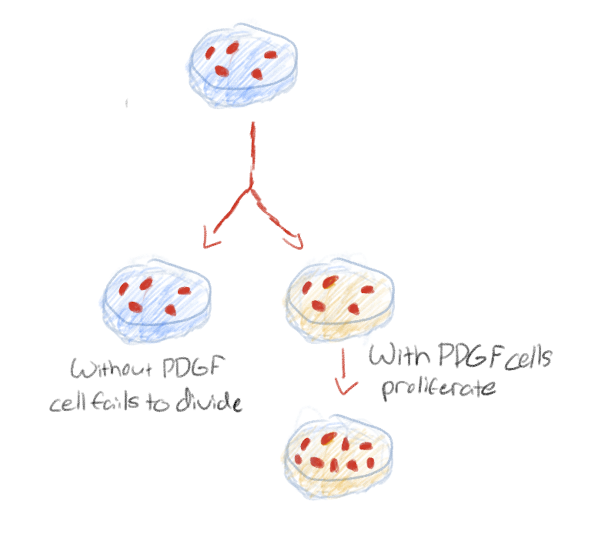
Growth factors must be present for cells to divide
Growth factors are proteins produced by certain cells that stimulate other cells to divide
Example: PDGF (platelet-derived growth factor)
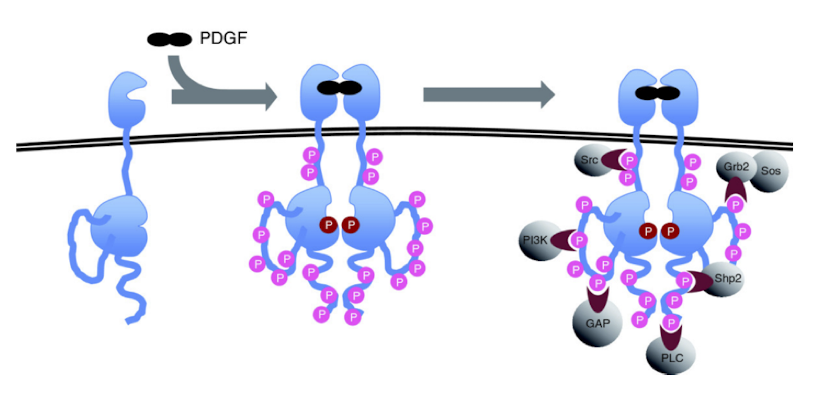
What kind of receptor is the platelet derived growth factor receptor
Receptor tyrosine kinase
What are two more examples of external control and describe them?
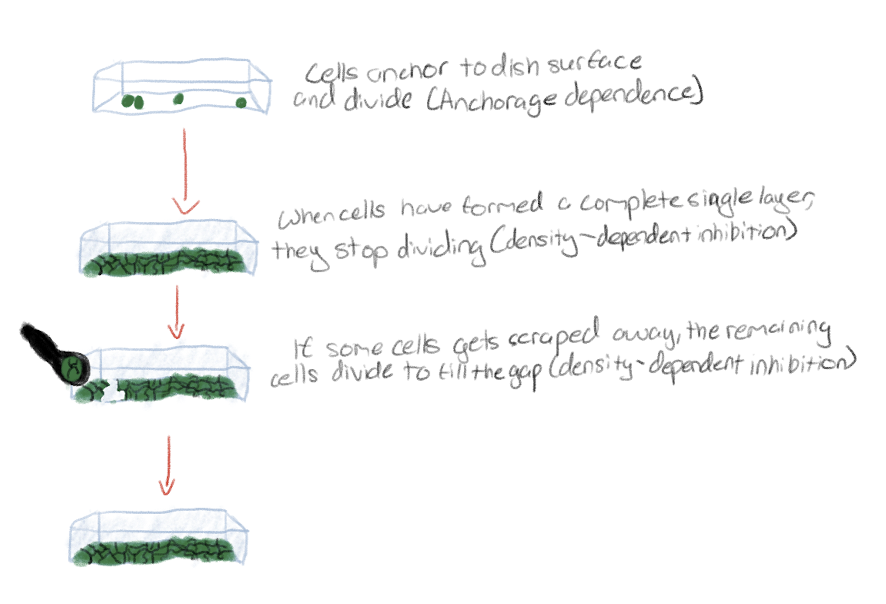
Density-dependent inhibition - when normal cells stop dividing once they become crowded
Anchorage dependence - Normal cells must be attached to a surface to divide
What are the 3 main cell cycle checkpoints?
G1 checkpoint
G2 checkpoint
M checkpoint
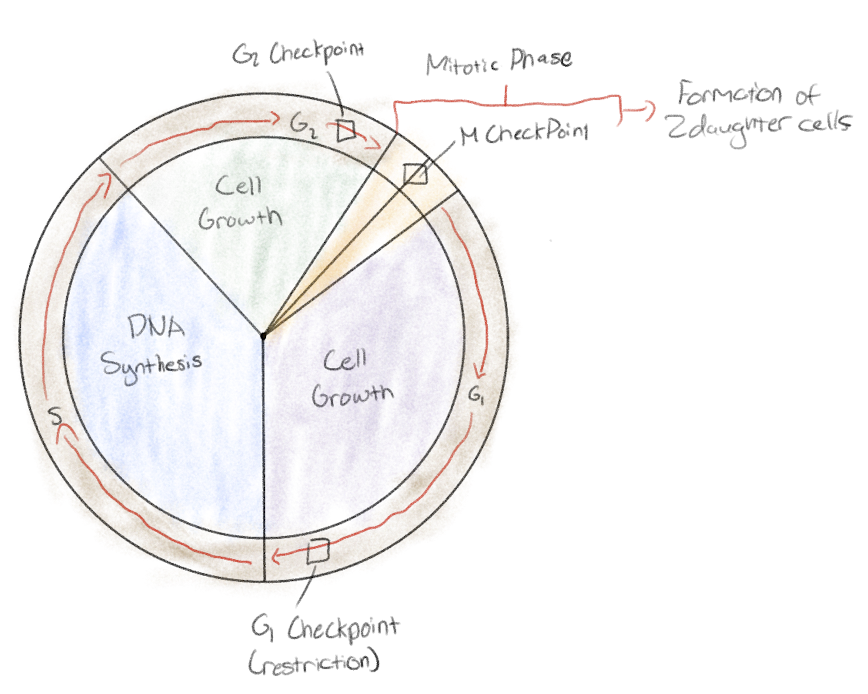
G1 checkpoint
Commit to mitosis or go to G0’
Cell size? Protein reserves? DNA undamaged?
“restriction point”
G2 checkpoint
Cell size? Protein reserves? DNA replicated?
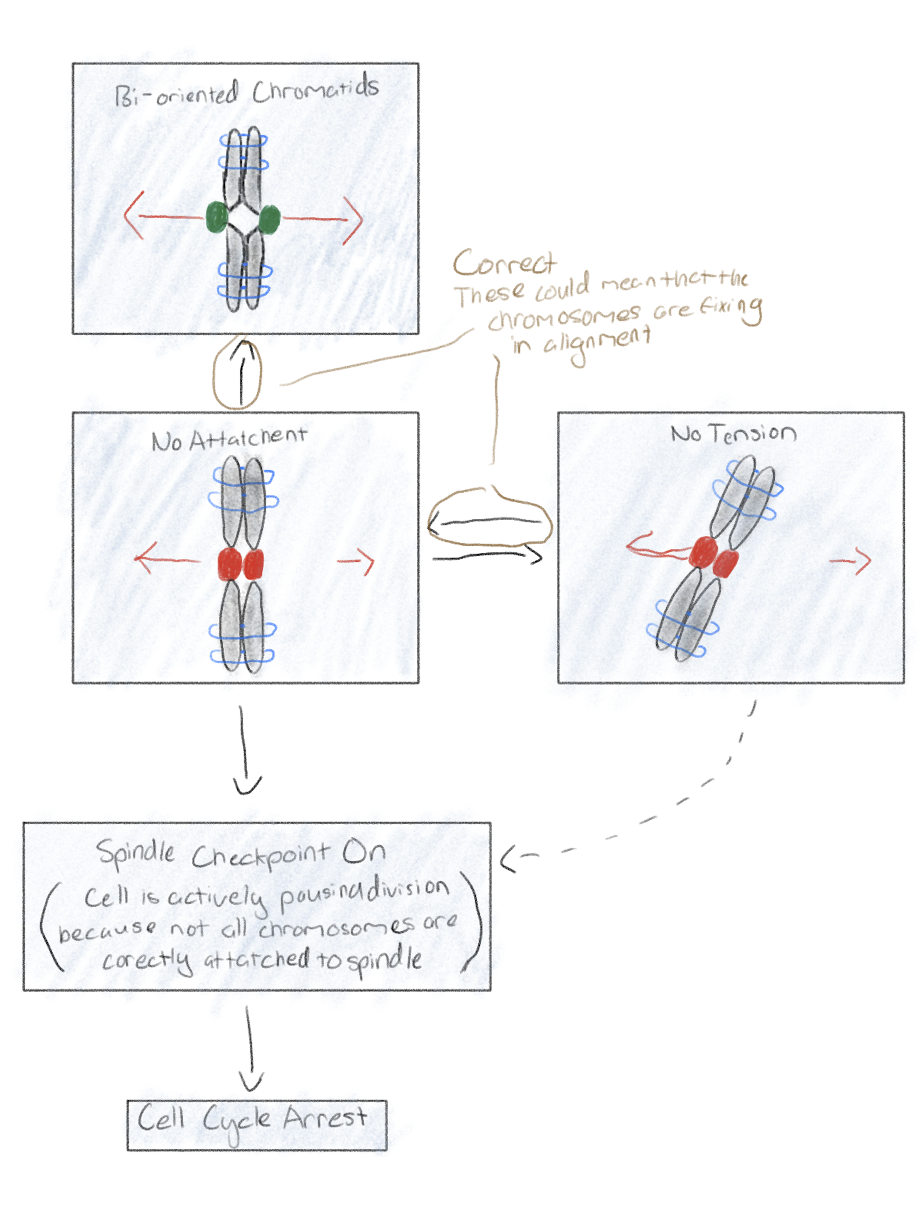
M (Spindle) Checkpoint
Occurs at the end of metaphase
Is each sister chromatid attached to microtubule from opposite pole?
“Spindle checkpoint
Anaphase does not start until all chromosomes are properly attached to spindle at metaphase plate
What is a type of a positive regulator molecule in the cell cycle and describe it?
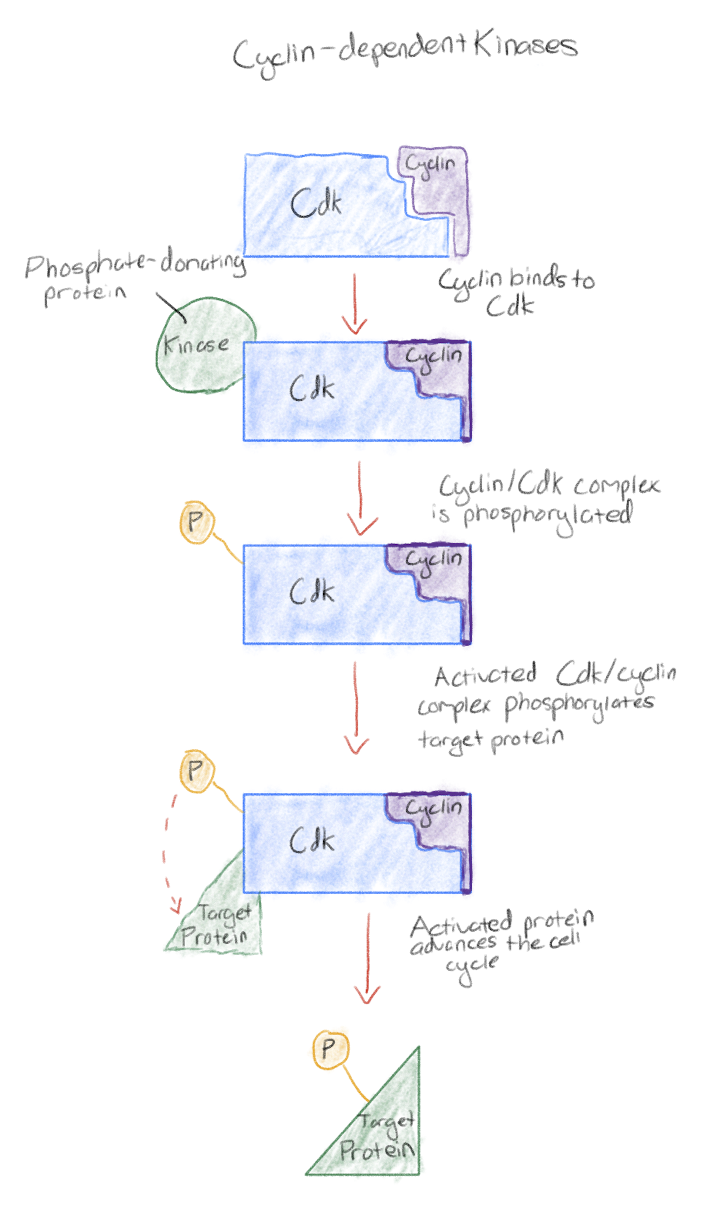
Cyclins and cyclin-dependent kinases (Cdks):
Involved in go-ahead signal at G1 and G2 checkpoints
Cdks: Active only when attached to cyclin (a protein whose concentration rises and falls within the cell during the cell cycle)
Cyclins get degraded
What are some types of a negative regulator molecule in the cell cycle? What checkpoint do they act on?
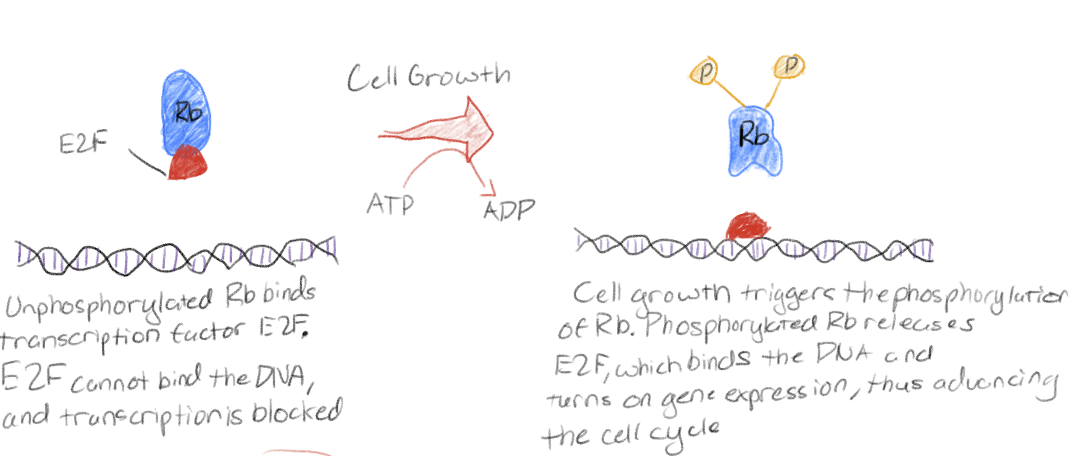
Tumor suppressor proteins: Rb (retinoblastoma), p53, and p21
Acts primarily on G1 checkpoint
Rb (retinoblastoma)
Monitors cell size
When active (dephosphorylated), binds to transcription factors to block transcription
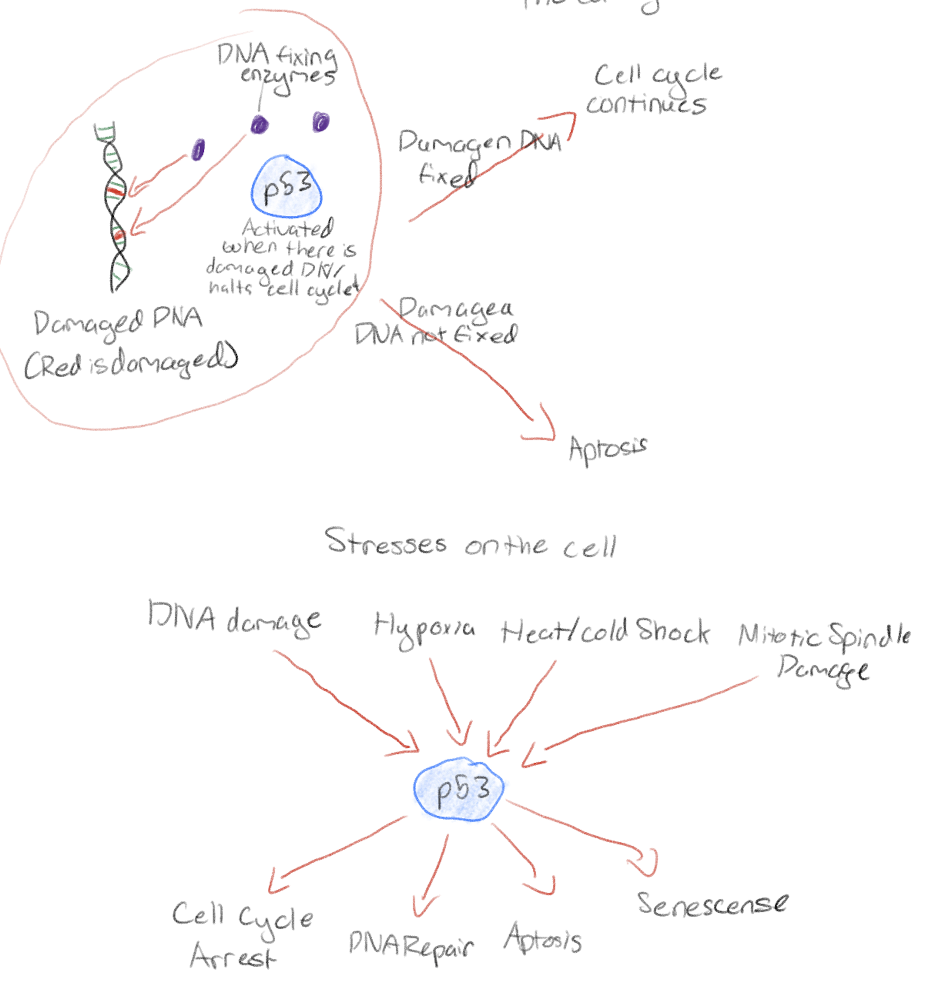
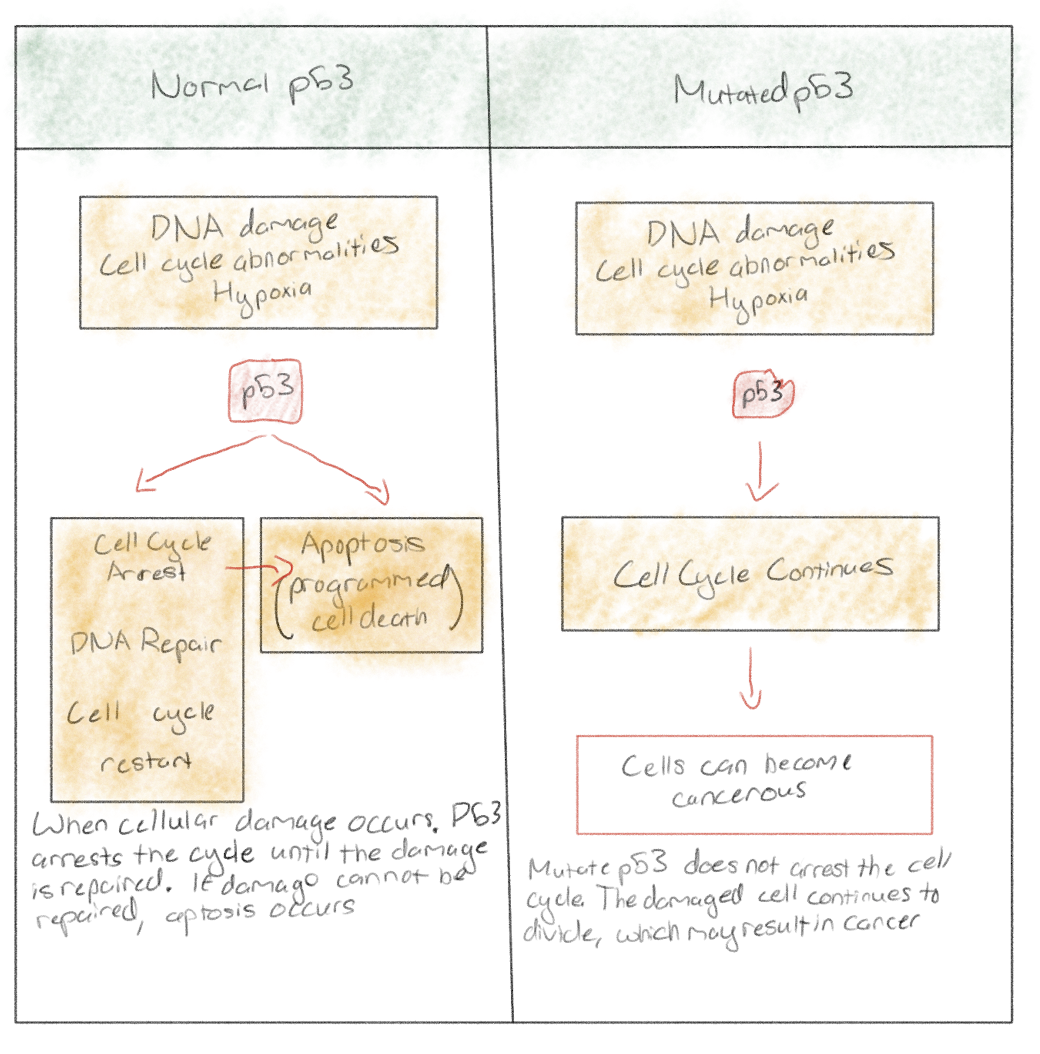
p53
Activated by damaged DNA
Halts the cell cycle and recruits enzymes to repair DNA
Activates apoptosis if DNA cannot be repaired
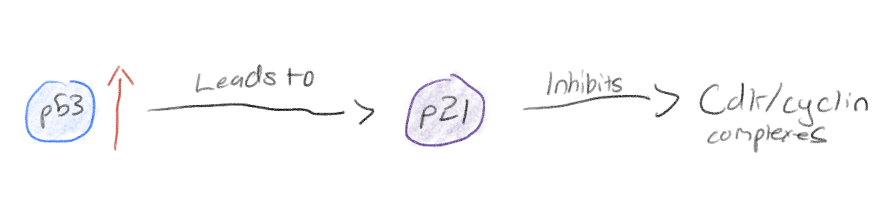
p21
Produced when levels of p53 rise
Inhibits cell division by inhibiting Cdk/cyclin complexes
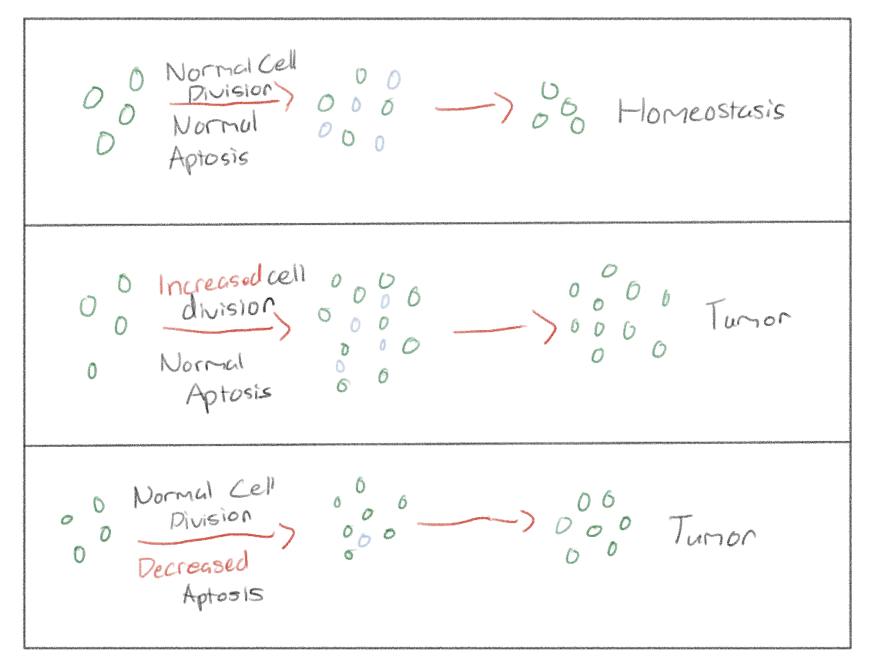
Cancer
Uncontrolled cell growth
Mutations In DNA (in regions involved with cell cycle control)
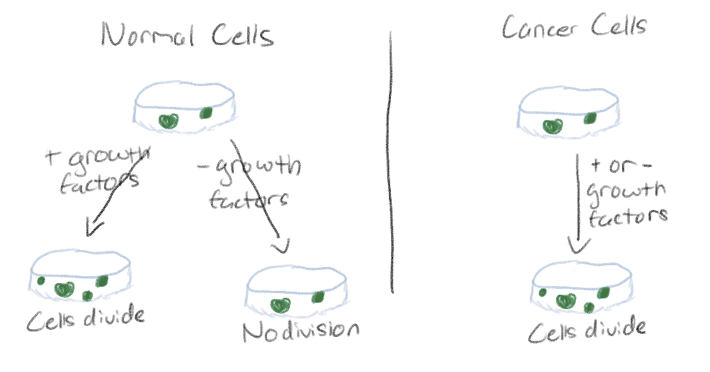
Cancer cells ignore cell cycle controls
Divide excessibely
Do not exhibit density-dependent inhibition
Do not require added growth factors in vitro
“Immortal” in vitro - (Divide forever outside the body)
Henrietta Lacks
HeLa cells: 1951
Died of cervical cancer caused by HPV
Her cells were immortal and they keep dividing even after she died
Used in many laboratories and everything
What is transformation?
The conversion of a normal cell to a cancer cell
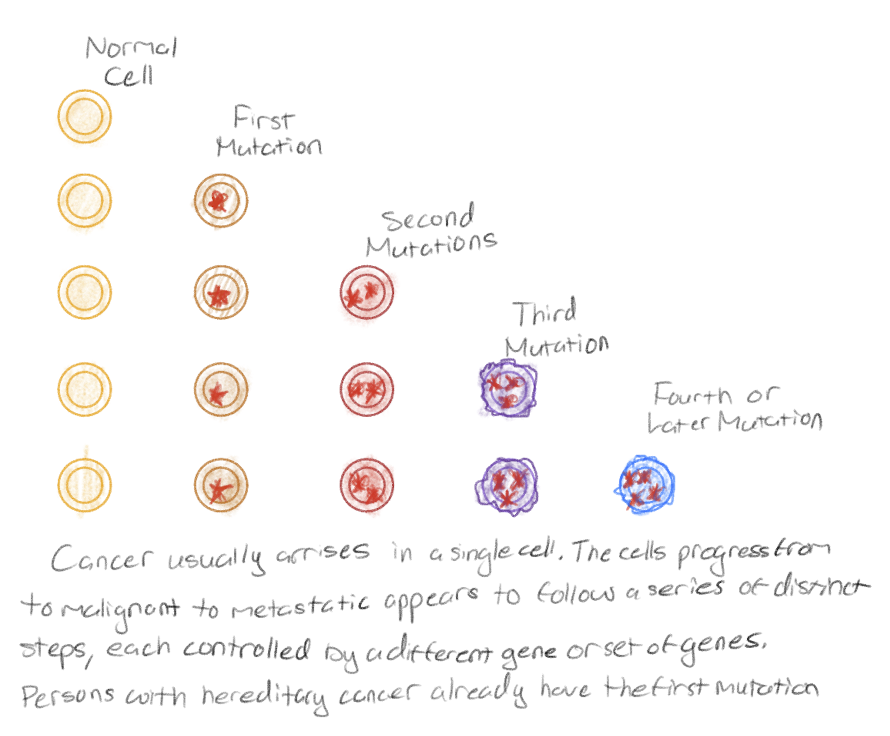
Cancer cells
My look different from normal cells
Have disrupted metabolism
Cease to carry out normal cell function
Lose their attachment to neighboring cells
Benign tumor
Abnormal cells remain at original site
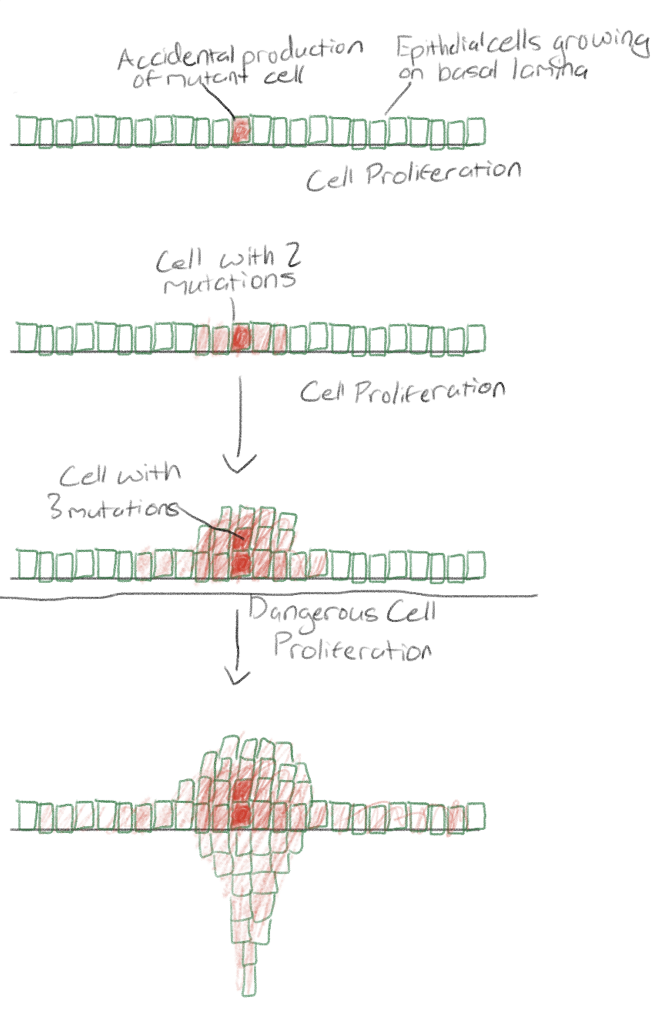
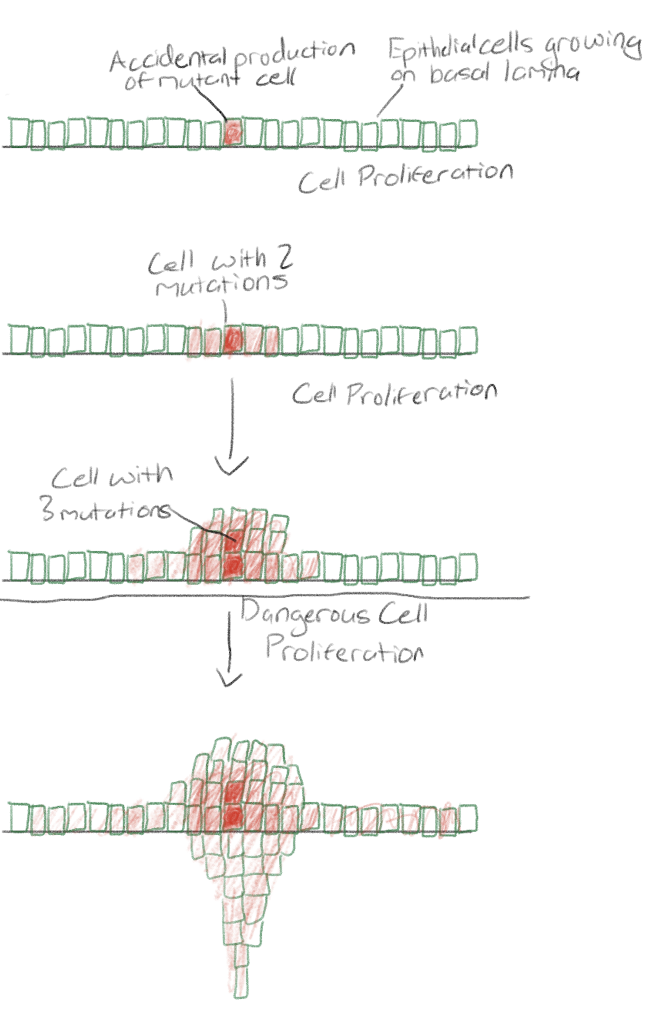
Malignant tumor
Abnormal cells invade surrounding tissue
Metastasis
Abnormal cells spread to distant locations to form new tumors
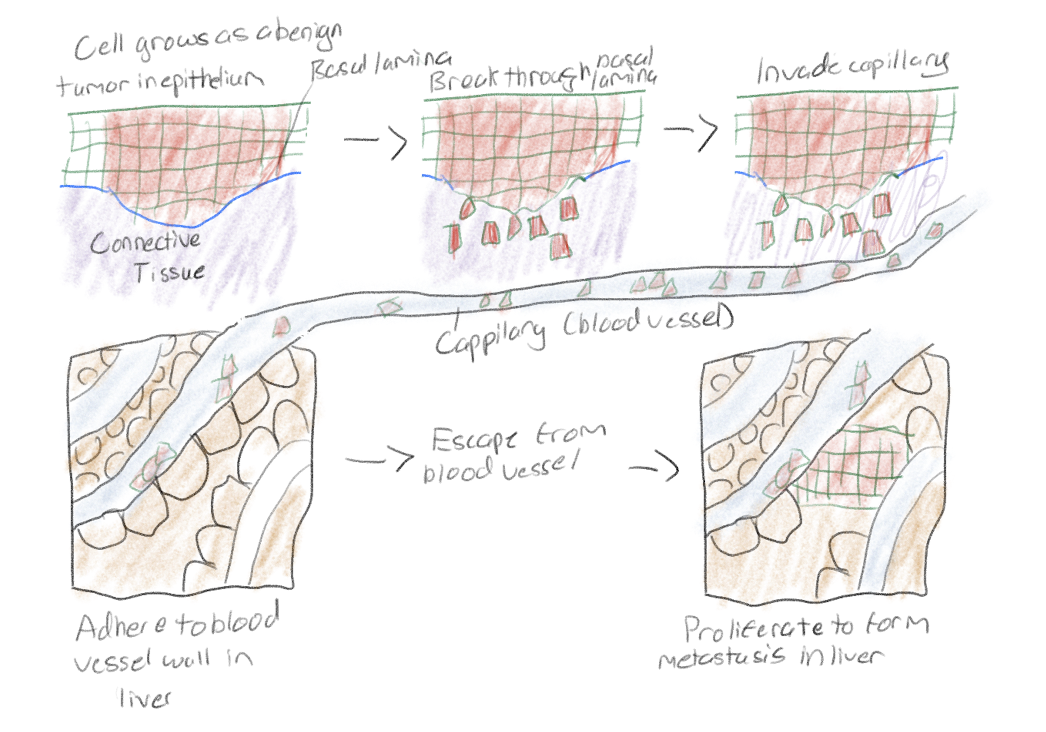
Cancer sells may secrete what?
Molecules that cause blood vessels to grow toward tumors (angiogenesis)
How do normal cells become cancer cells?
When photo-oncogenes become oncogenes
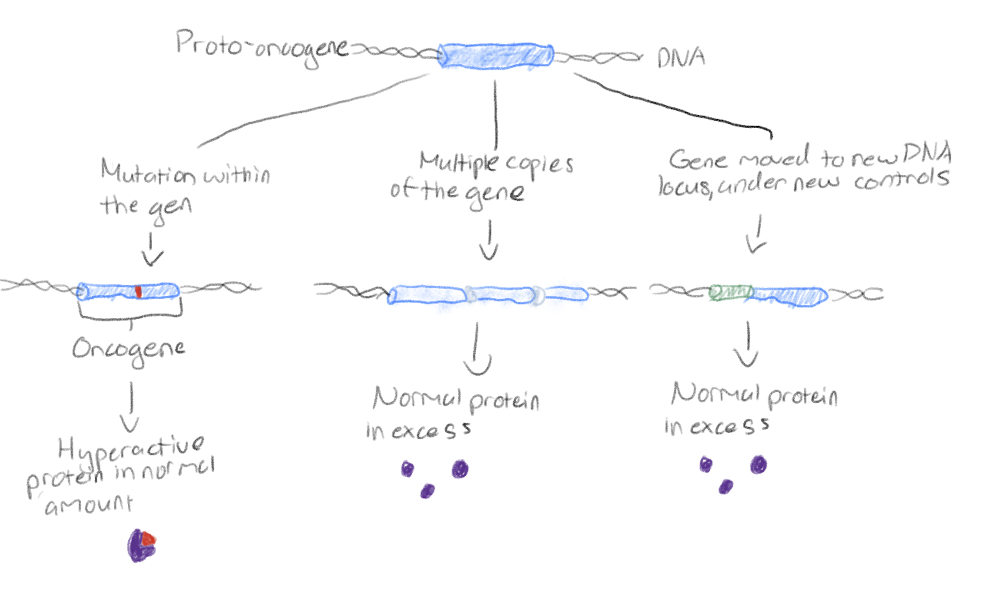
Define proto-oncogenes and oncogenes.
Proto-oncogenes - Code for proteins that stimulate cell growth and division
Can become oncogenes (before cancel gene)
Oncogenes - Cancer-causing genes (cancer gene)
How does a proton-oncogene become an oncogene?
Example: mutation that allows Cdk to be activated without binding cyclin
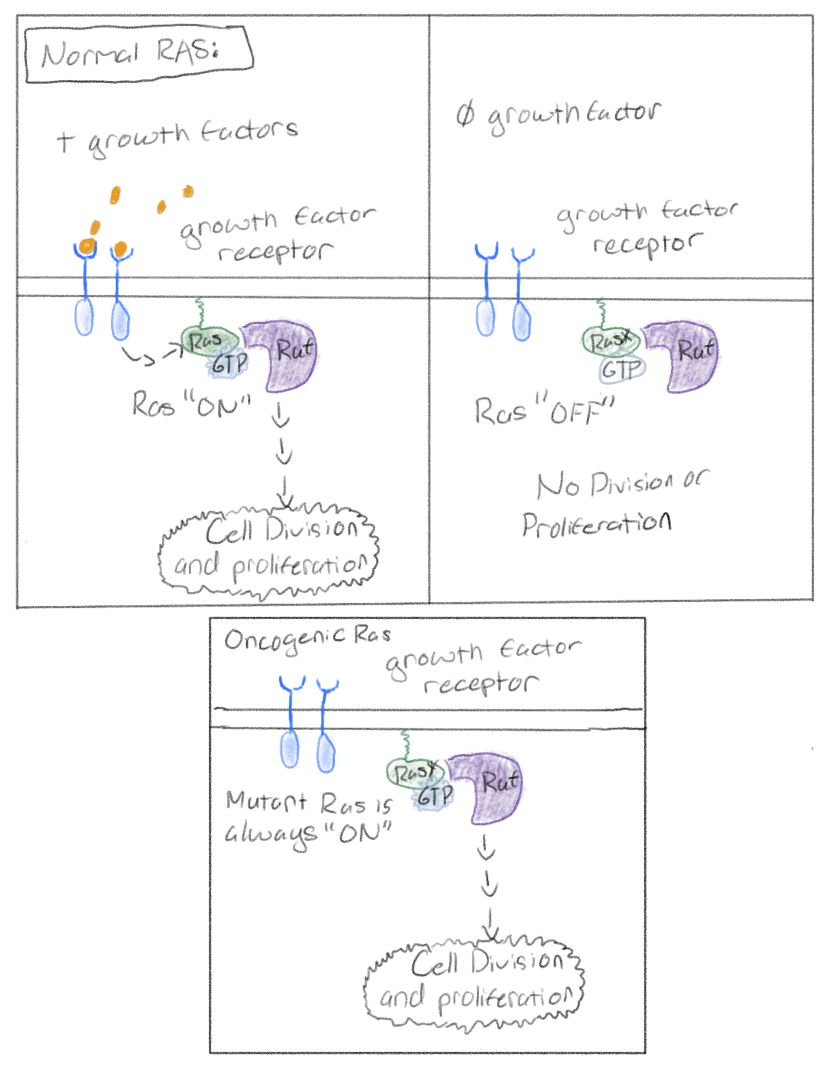
What is a oncogene example?
ras gene
ras gene
Encodes Ras protein, a G protein that relays signal from growth factor receptor to protein kinases inside of cell, stimulating cell cycle
ras mutations occur in about 30% of human cancers (around 90% of pancreatic cancer cancers
What can happen to tumor suppressor genes that make a normal cell become a cancer cell?
When a tumor suppressor gene becomes mutated
It would code for a negative regulator protein that prevents cell division
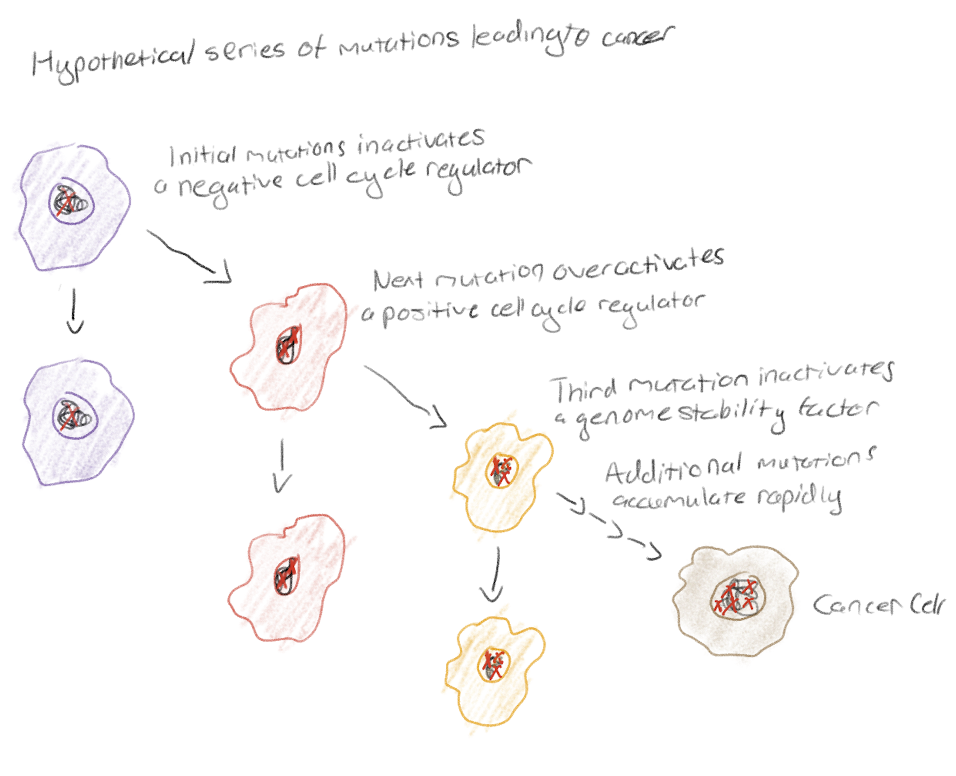
What is the multistep model of cancer development?
Around 6 changes in DNA must occur for cell to become fully cancerous, including:
Appearance of active oncogene
Loss of function tumor suppressor gene (p53)
Activation of telomerase
What are two types of cancer treatments?
Radiation and chemotherapy
Radiation
Damages DNA
You might say that this would be worse for the cell as they would be more mutations but it actually damages DNA so much to a point that it doesn’t work anymore
Very targeted
What are 2 types of chemotherapy that helps treat cance?
Taxol and Herceptin (trastuzumab)
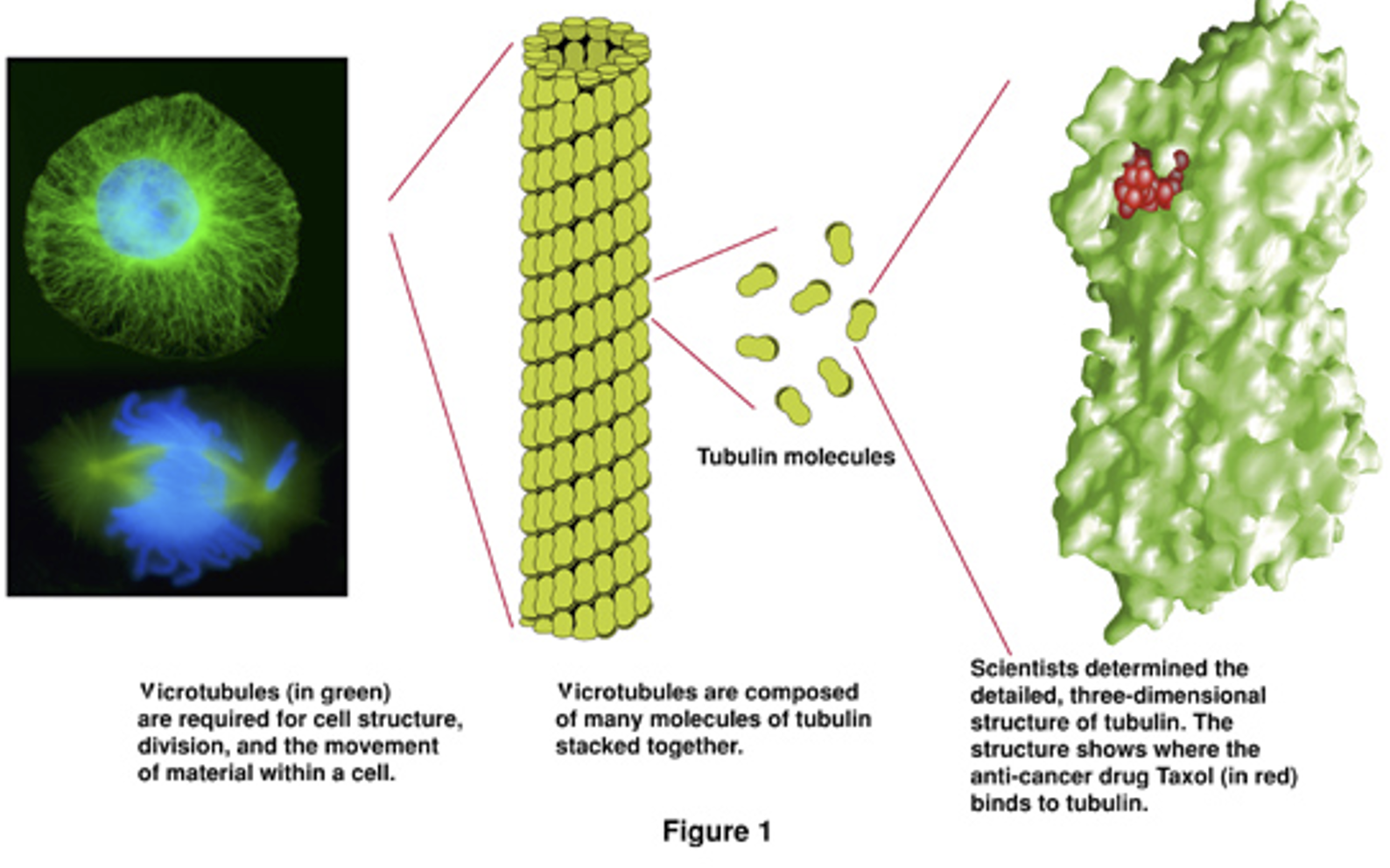
Taxol
Prevents microtubule depolymerization
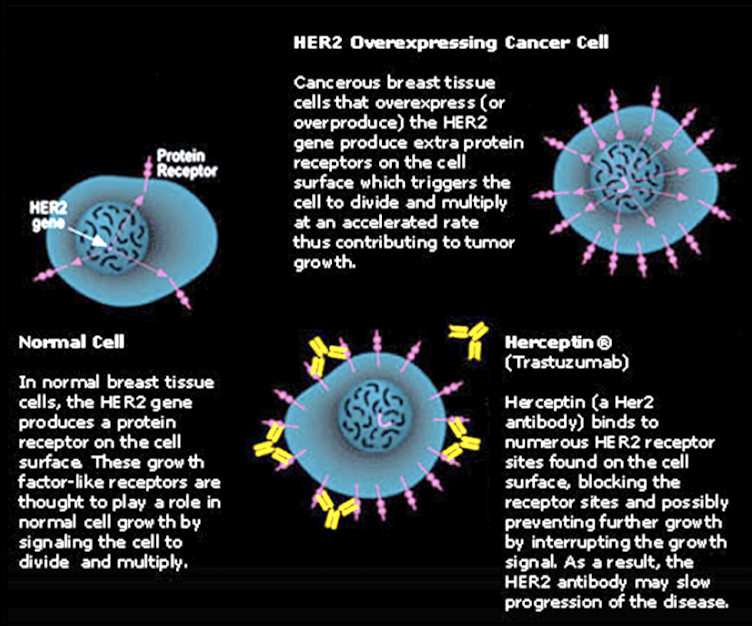
Herceptin (Trastuzumab)
Binds to receptor on certain cancer cells, blocking their growth system and marking them for destruction for the immune system
Do prokaryotes perform mitosis?
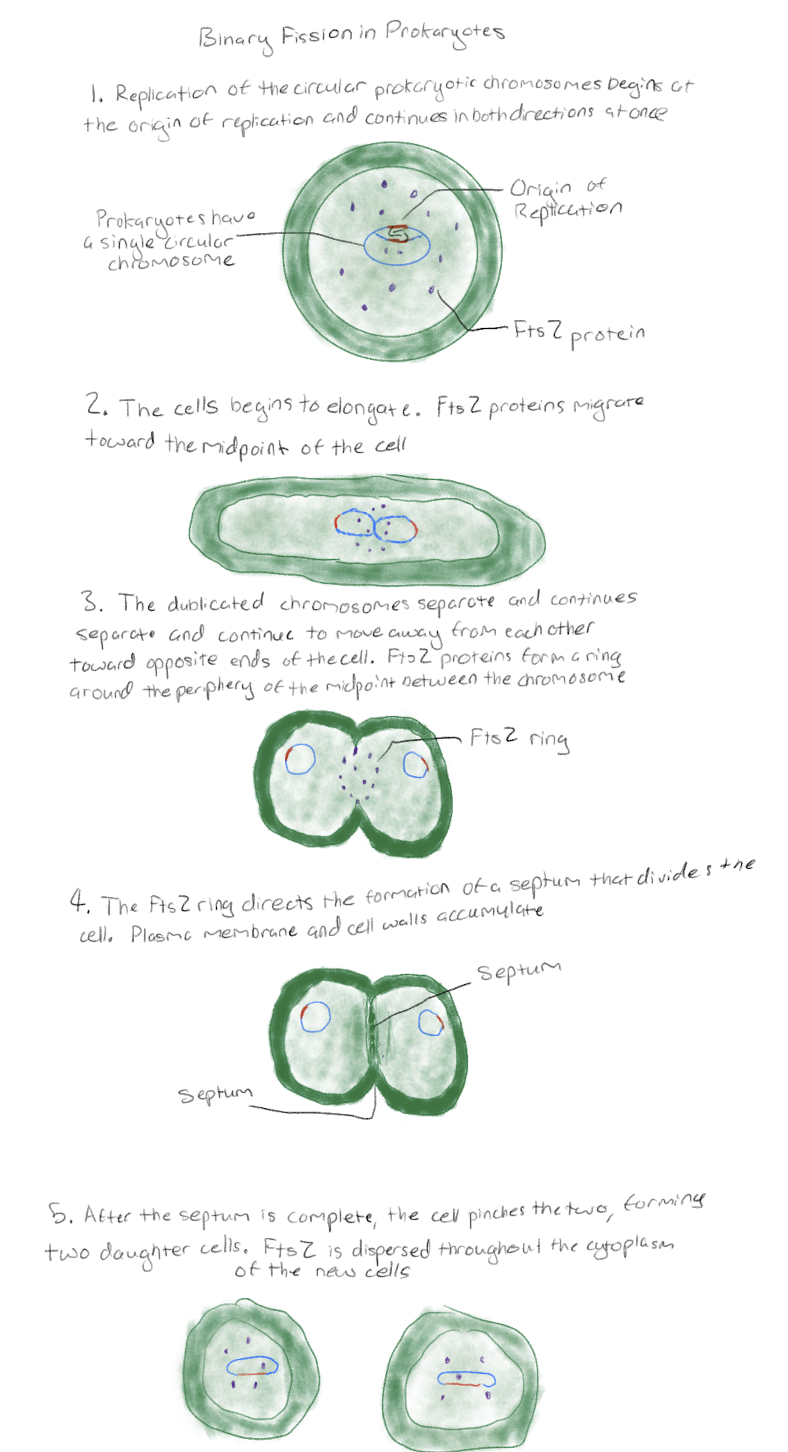
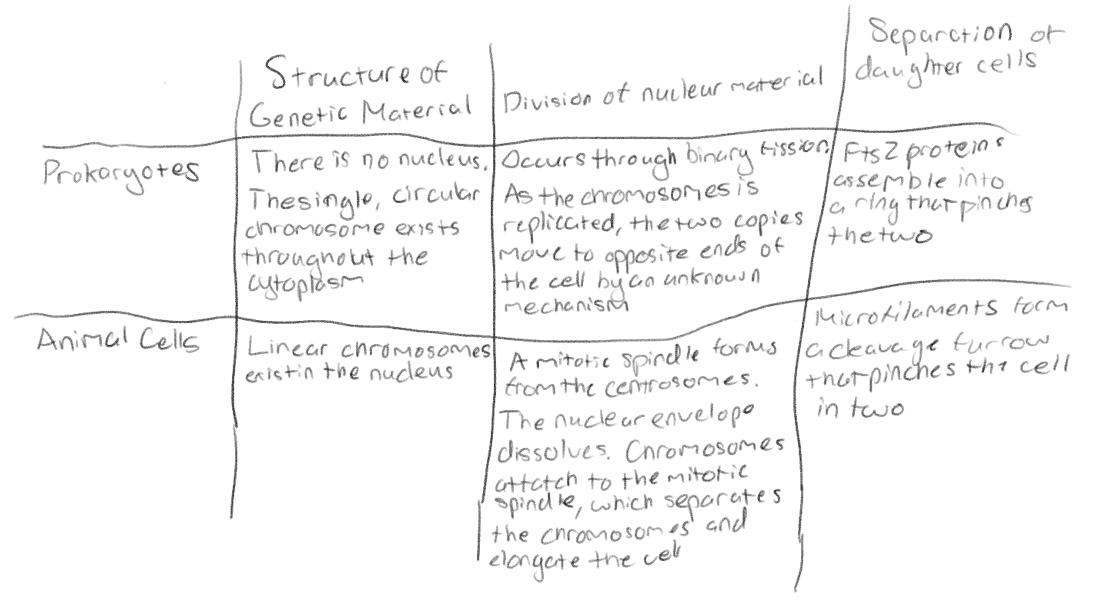
No there is no nucleus they only binary fision
Remember: bacteria have one circular chromosomes, no histones, no nucleosomes (but still have some proteins associated with DNA)
Describe the process of binary fission.
What is the difference in cell division between prokaryotes and animal cells?
 Note
Note  Flashcards (36)