ECCB 402 Lab Exam #3 - Order/Family-specific Facts
0.0(0)
 Studied by 6 people
0.0(0)
 Call with Kai
 Learn
Learn Practice Test
 Spaced Repetition
 Match
Match Flashcards
 Knowt Play
Card Sorting
1/35

Earn XP
Description and Tags
specific facts about the families/orders on lab exam #3.
Study Analytics
Name | Mastery | Learn | Test | Matching | Spaced | Call with Kai |
|---|
No study sessions yet.
36 Terms
1
New cards
What toe arrangement do many of the Coraciiformes possess?
Syndactyl
2
New cards
What two hunting styles do the insectivorous members of the family Coraciidae use?
Prey on the wing, dive to catch insects on the ground
3
New cards
How long do members of the family Todidae typically fly?
They are generally sedentary, longest recorded flight was 40m
4
New cards
How do members of the family Todidae hunt?
They perch silently and wait for insects
5
New cards
What do members of the family Meropidae typically eat?
Flying insects, dominated by Hymenoptera (wasps/sawflies/bees/ants)
6
New cards
How do members of the family Meropidae eat venomous insects?
They bang venomous insects against hard surfaces to remove their stingers while also squeezing out venom
7
New cards
What do the legs of the family Galbulidae look like?
Short and weak with zygodactyl feet
8
New cards
What do the bills of the family Galbulidae look like?
Very long bill used to catch insects in flight; similar to Old-World bee-eaters
9
New cards
What is ‘hawking’?
Feeding strategy that involves catching flying insects on the wing
10
New cards
What is ‘sallying’?
Sitting on perch and rushing prey when it’s close enough
11
New cards
What is unique about the tails of the family Ramphastidae?
They possess modified rear 3 tail vertebrae that are FUSED and attached to the spine via a ball-and-socket joint; this allows them to snap their tail forward towards their head (sleeping posture)
12
New cards
What are some adaptations members of the family Picidae possess that allow for better climbing?
Zygodactyl feet, short legs with 4 long toes (some only have 3), strong claws/legs for holding onto tree trunks
\
Stiff tail feathers that allow for climbing and foraging
\
Stiff tail feathers that allow for climbing and foraging
13
New cards
What are some uses of the sharp, straight, medium length bills of the family Picidae?
Foraging (chiseling bark for insects/grubs)
\
Breeding (making nest holes)
\
Signaling (drumming instead of song!)
\
Breeding (making nest holes)
\
Signaling (drumming instead of song!)
14
New cards
What is a unique feature of the tongues of the family Picidae?
Long, sticky barbed tongues for extracting prey
15
New cards
How do members of the family Picidae prevent brain damage from hammering bark?
Decreased brain size, increased area of brain touching skull, short duration of hammering
16
New cards
How do members of the family Picidae protect their eyes/nose from catching debris?
Eyes have nictating membrane, nostrils are slit-like with special feathers covering them
17
New cards
What is unique about the flight of the family Picidae?
Undulating flight - few rapid wing beats followed by a glide (wings tucked)
18
New cards
What is unique about the hunting strategy of the family Cariamidae?
They beat prey on the ground and rip them into smaller pieces with a sickle claw
19
New cards
What is the small ‘hook’ towards the front of the beak that helps Falconiformes kill prey?
Tomial tooth
20
New cards
What do the wings of Falconiformes look like?
Long, pointed wings that bend at the ‘wrist’ for agility
21
New cards
What are some distinctions between the ‘voice box’ of the Tyranni and Passeri suborders?
Tyranni - ‘suboscines’, simple voice box, song is ‘innate’ (not learned), 3-4 pairs of syringeal muscles
\
Passeri - ‘oscines’, complex voice box, song learned, 6 pairs of syringeal muscles
\
Passeri - ‘oscines’, complex voice box, song learned, 6 pairs of syringeal muscles
22
New cards
What is one theory about how birds in the family Pittidae find their food?
It has been proposed that they smell their prey - largest olfactory bulb in birds
23
New cards
What is unique about the breeding strategy of the family Ptilonorhynchidae?
They build bowers and dance in/around them; males will decorate bowers with many different types of objects (ex. fungus, deer dung, flowers, berries), females will visit many different bowers and then choose ideal mate
24
New cards
What are two common types of bowers and what do they look like?
Maypole bowers - sticks around a sapling
\
Avenue-type bowers - 2 walls of vertical sticks
\
Avenue-type bowers - 2 walls of vertical sticks
25
New cards
What breeding strategy do most members of the family Ptilonorhynchidae (bowerbirds) use?
Polygynous (males have >1 female mate at a time), some are monogamous
26
New cards
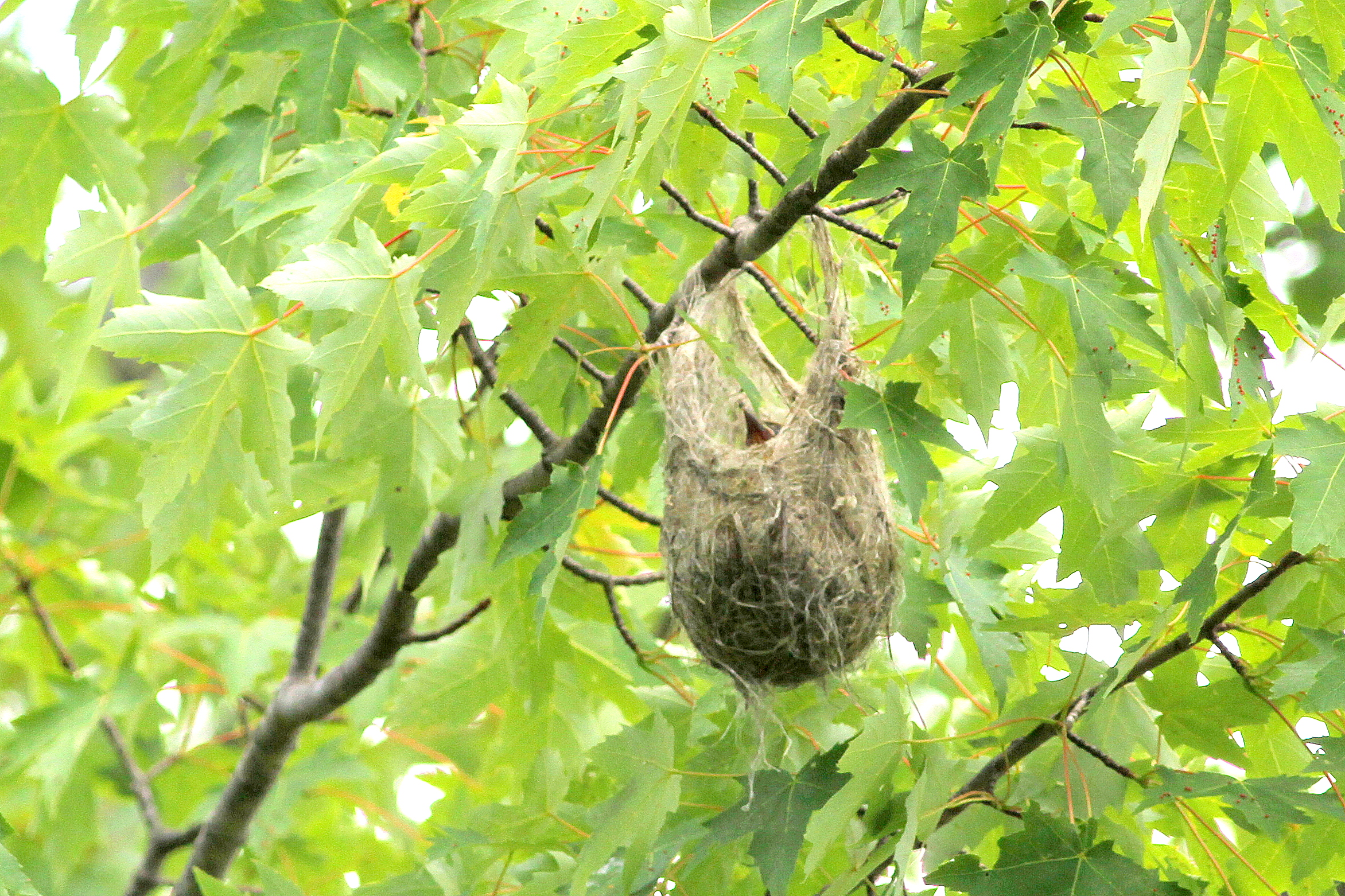
What is unique about nests of the family Oriolidae?
Nests resemble a cup suspended like a hammock from a limb
27
New cards
Where does the name of the family Laniidae come from?
Lanius - Latin for ‘butcher’
28
New cards
What is unique about how members of the family Laniidae mark territory and signal mates?
They will impale prey on anything sharp (thorns/barbed wire)
29
New cards
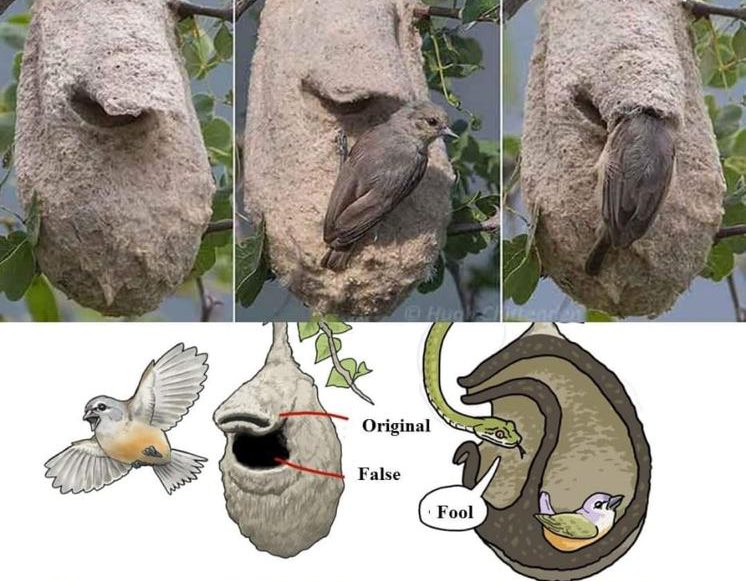
What is unique about nests of the family Remizidae?
They build nests with a false chamber - ‘true chamber’ has a closing door that seals shut with spiderwebs
30
New cards
Which member of the family Pycnonotidae is invasive in the United States?
Red-whiskered Bulbul
31
New cards
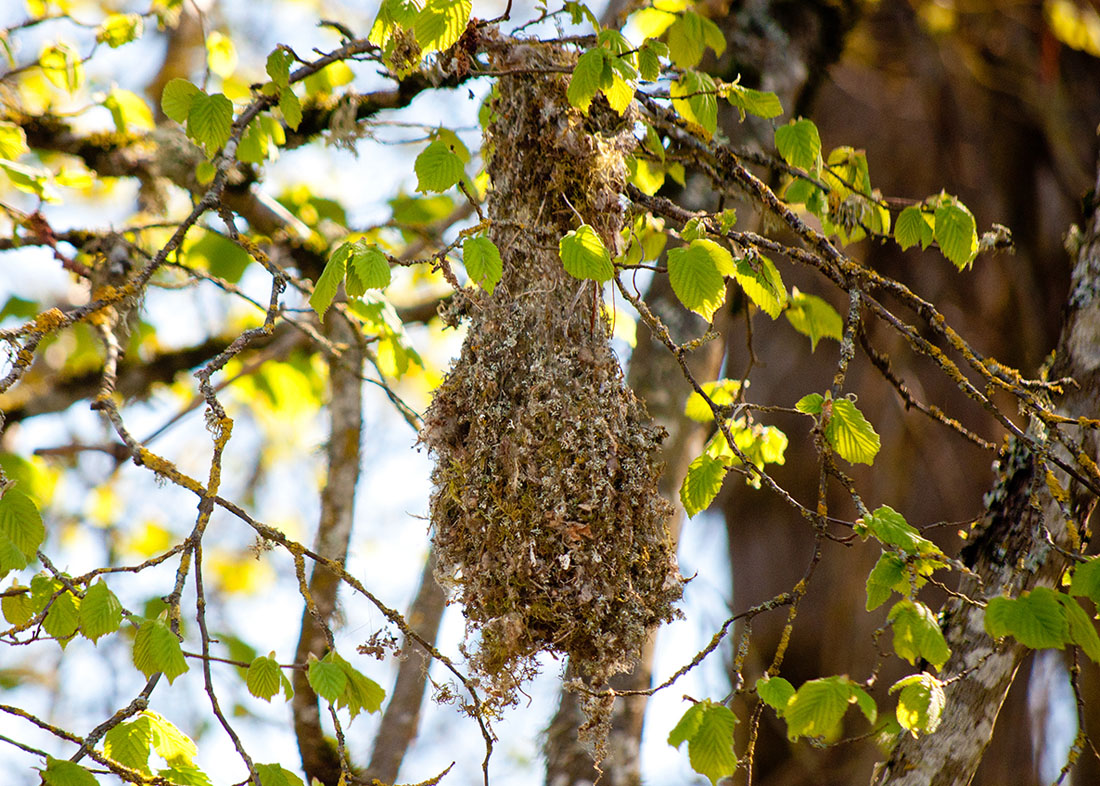
What do Bushtit (Aegithalidae) nests look like?
Elaborate hanging structures, almost ‘woven’ in construction
32
New cards
What type of metabolism does the family Regulidae have?
Very fast metabolism; they move constantly so they also have to eat constantly or risk starving within an hour
33
New cards
What unique characteristic does the family Bombycillidae have on their wings?
Red, drop-like waxy tips on secondaries, possibly linked to sex/age
34
New cards
What is special about the way birds in Sittidae move down a tree trunk?
Nuthatches (Sittidae) are the only birds that walk down trunk head-first
35
New cards
How do birds in the family Certhiidae forage?
Start at base of the tree and move to the top, then fly to the base of the next one
36
New cards
What function do the medium-long stiff tails of Certhiidae serve?
Act as ‘props’ while bird is climbing tree
 Note
Note  Flashcards (43)