L16 Mutualism
 Studied by 0 people
 Call Kai
 Learn
Learn Practice Test
 Spaced Repetition
 Match
Match Flashcards
 Knowt Play
1/43

There's no tags or description
Looks like no tags are added yet.
Name | Mastery | Learn | Test | Matching | Spaced | Call with Kai |
|---|
No analytics yet
Send a link to your students to track their progress
44 Terms
What do almost all organisms depend on?
Carbon fixers (plants)
How much energy in terrestrial ecosystems is fixed by green plants?
90% of energy in terrestrial ecosystems
What percentage of the diversity of organisms eat plants?
Approximately 30% of the diversity of organisms in the world are planteaters: herbivores and omnivores
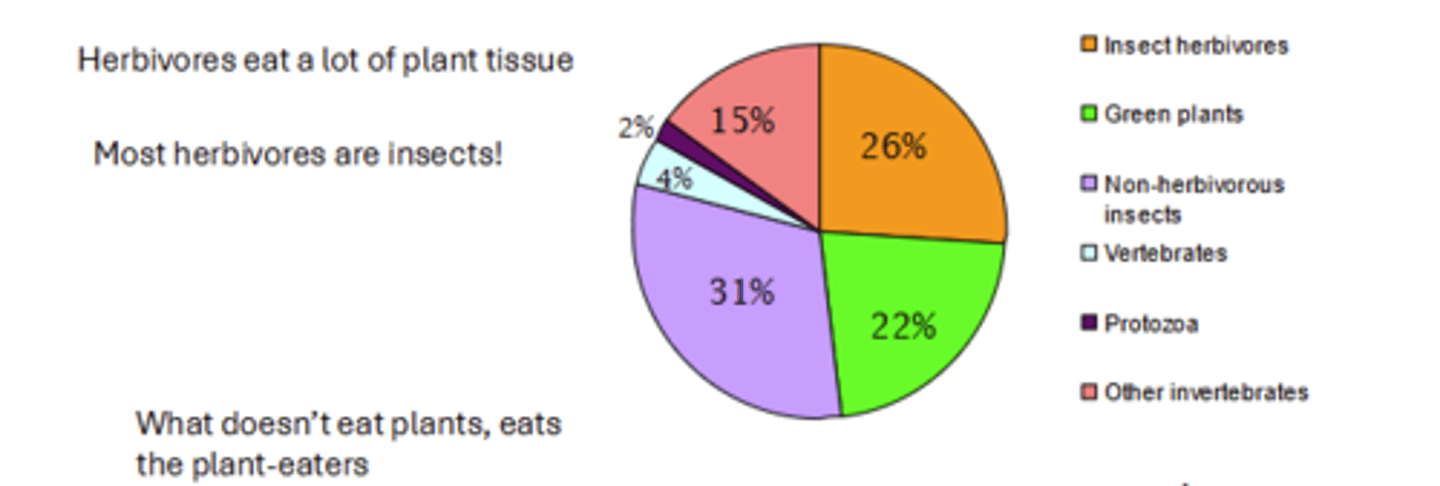
How many species of plants and animals are there? What proportion of them are athropods?
• 1.8 million described species of plants and animals
• Approx. two thirds of all species are arthropods!
Total described insect species around 925,000
20% of insects have been described
What would happen if all insects were to disappear?
humanity would not last more then a few months
What do plants rely on animals for?
- Many plants (Angiosperms) depend on animal pollinators for sexual reproduction
- Animals defend plants from other animals
- Animals also help disperse seeds
What percentage of plant species are angiosperms? what does this mean?
87% of plant species are Angiosperms, and, therefore, produce flowers
What are examples of where plants and animals have close relationships?
- Corals are part animal, part plant and represent an intimate symbiosis
- The animal cells are polyps that forage on plankton
- The plant cells are from the genus, Symbiodinium - they are dinoflagellate protozoa that live in coral cells (a.k.a.zooxanthellae)
- Both share nutrients with the other cell type and have evolved as a 'super-organism'
What is evolution?
change between generations within a population lineage of a species
What is an adaptation?
The properties of living things that enable them to survive and reproduce in nature
What is fitness?
The probability of passing on specific genes (associated with successful traits) to the next generation
What is natural selection?
The fact that certain individuals within a population possessing specific traits have a greater probability of contributing more offspring to the next generation than others. Natural selection acts on genes via individuals
What are the 2 types of ecological interactions?
- friendly
- unfriendly
What are friendly interactions?
'Friendly' interactions:
-Mutualism
-Symbiosis
-Commensalism
What are unfriendly interactions?
'Unfriendly' interactions:
-Antagonism
-Amensalism
-Competition
What is an example where organisms dont fall into the friendly or unfriendly categories?
- The red-billed oxpecker removes insect parasite sfrom many animal species -acting as a mutualist
- It becomes a parasite, however, when it feeds directly from wounds inflicted on its mutualist partner
What is mutualism?
Both species benefit from an association
What is the mutualism in frugivory and seed dispersal?
- Plants produce fruits which attract animals
- Animals eat the fruits and then 'deposit' the seeds away from parent plant
What is the mutualism in pollinators and flowers?
- Plants produce flowers with pollen and nectar rewards- Animals visit flowers to obtain nectar and pollen, and transmit pollen to conspecific flowers for plant sexual reproduction
What are examples of mutualisms?
-Frugivory and seed dispersal
- Pollinators and flowers
What are gymnosperms?
a group of seed-producing plants, meaning they have "naked seeds" that are not enclosed within a protective fruit or ovary
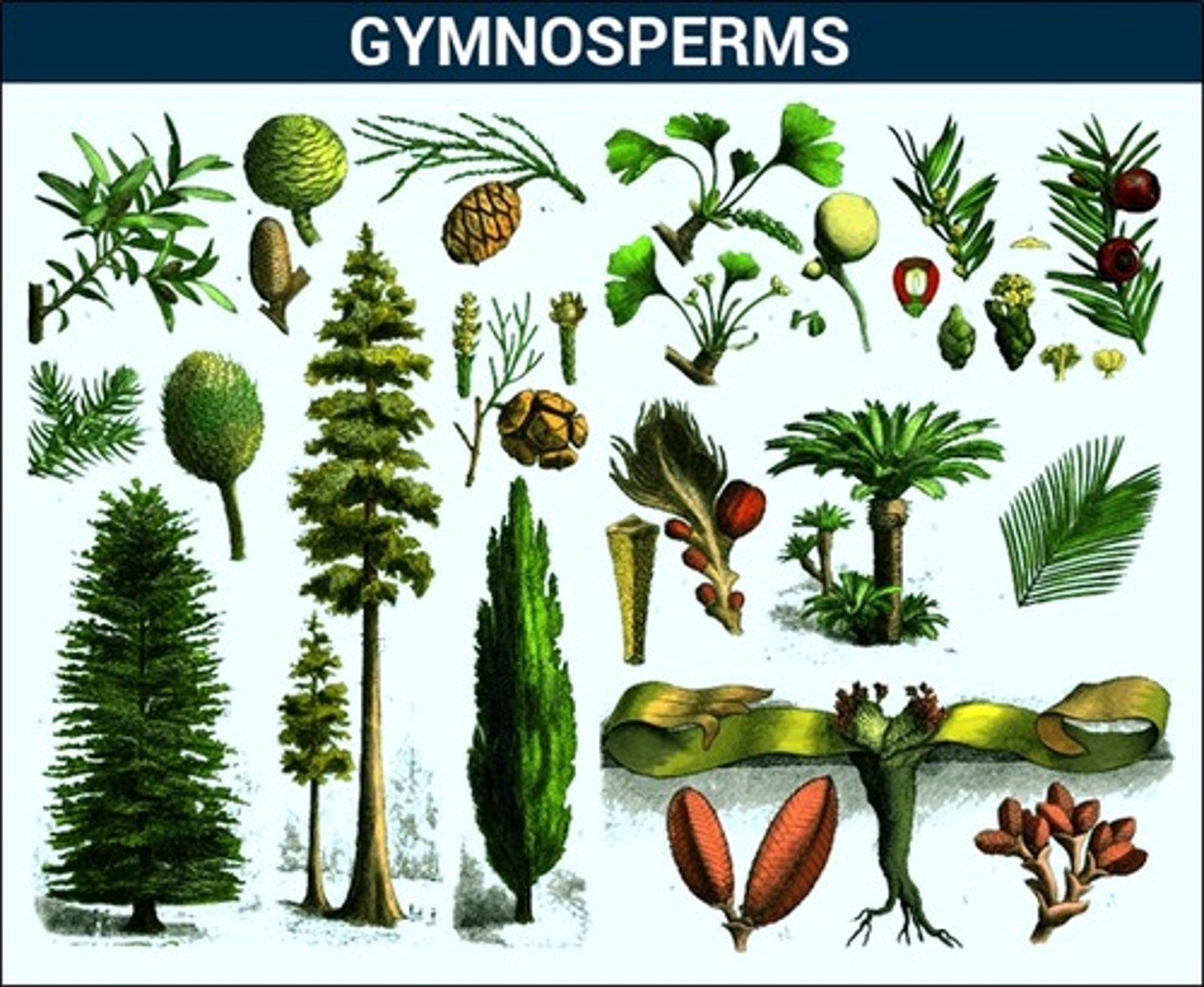
What are the features of gymnosperms?
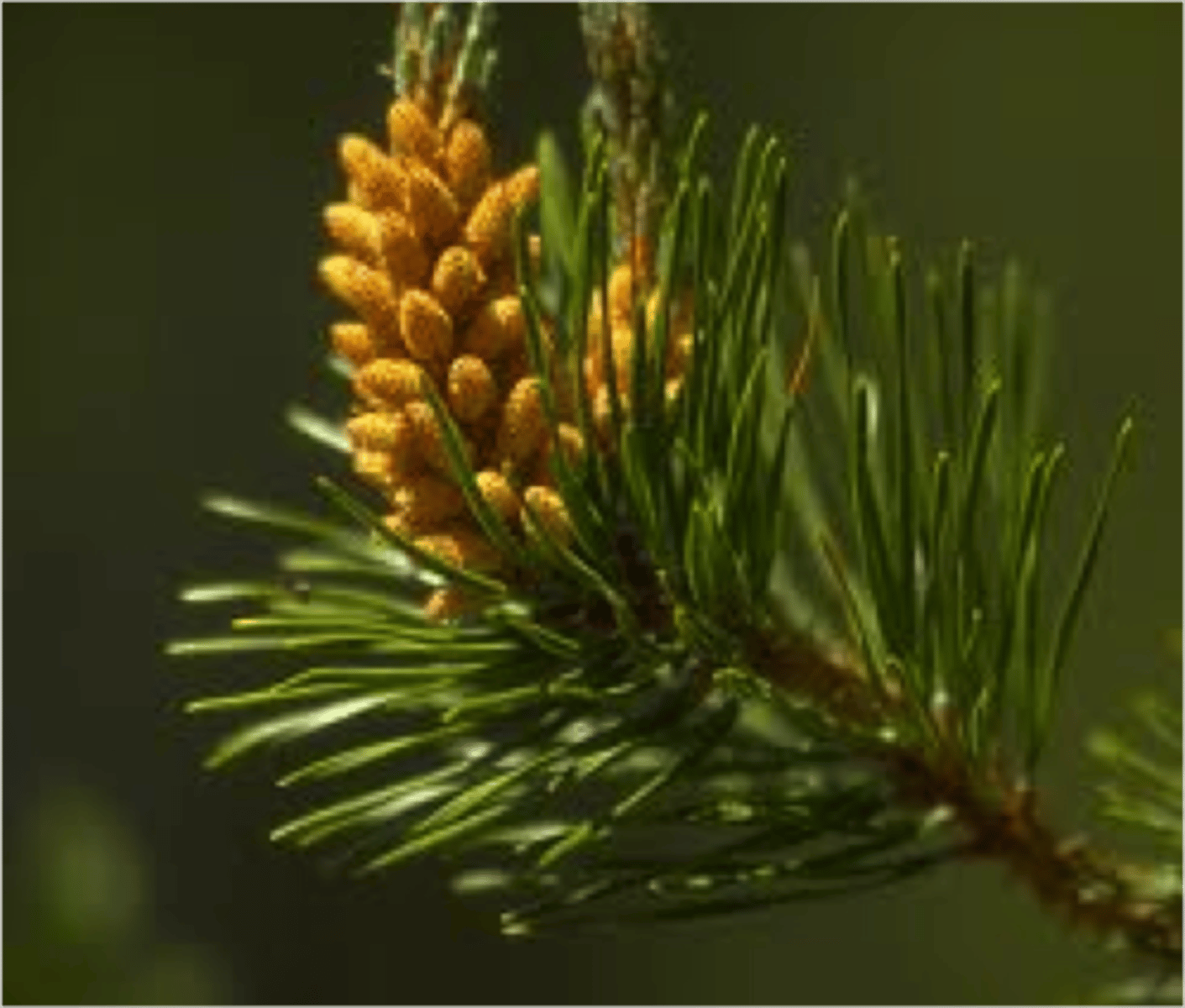
• Distinct and distant male and female reproductive organs
• Exposed ovules and seeds
• Mainly depend on wind for pollination
• Produce vast amounts of pollen
• Non-targeted pollen delivery
• Inefficient without wind
What were found to be some of the first pollinators?
Ancient scorpion flies were some of the first pollinators
Mid-Mesozoic ~250-150 MYA
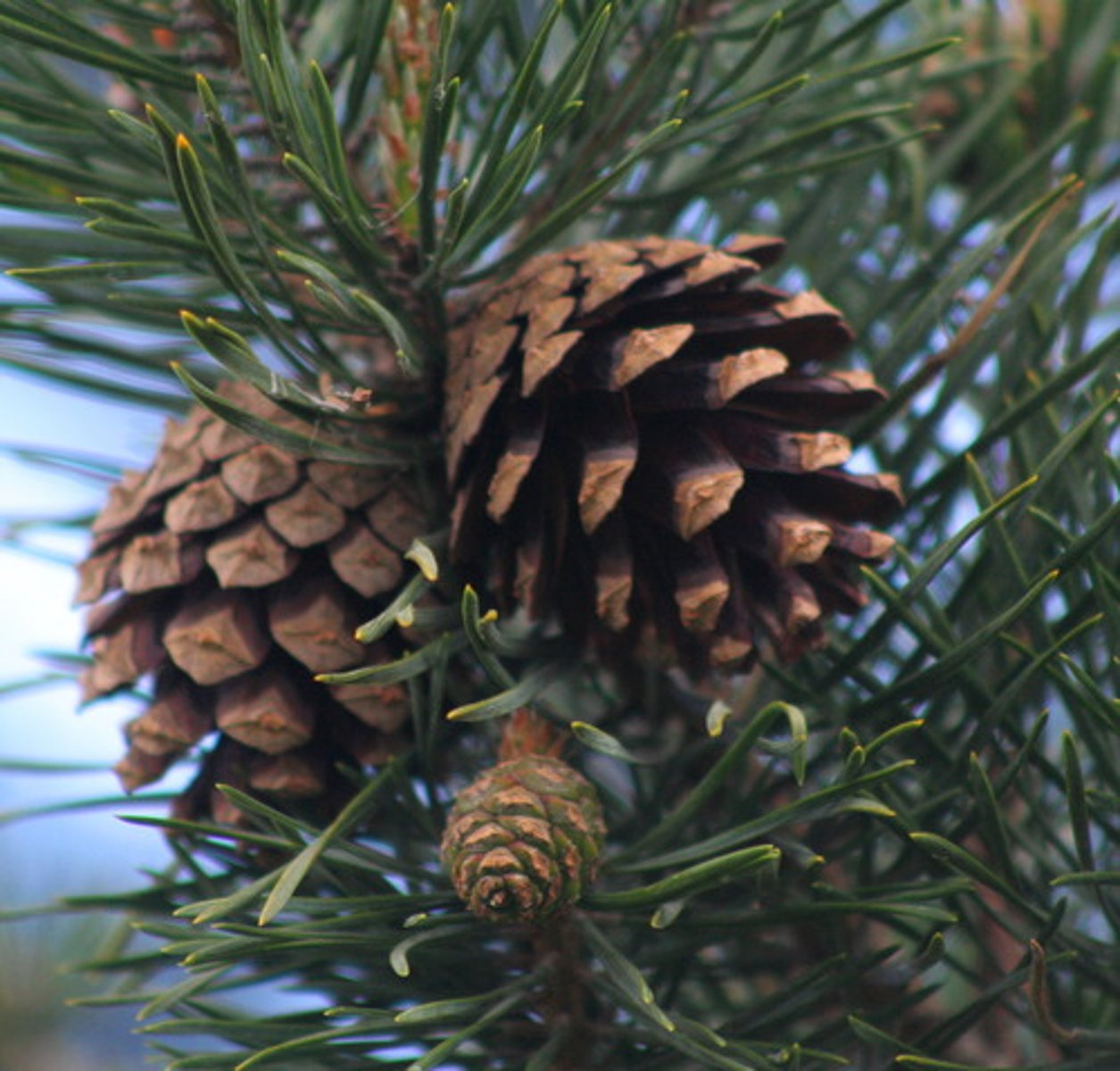
When did insects start to visit cones to collect pollen?
200 MYA insects started to visit cones, likely to collect pollen
e.g. Palaeodictyopteroidea
When did we start to see a change from gymnosperms?
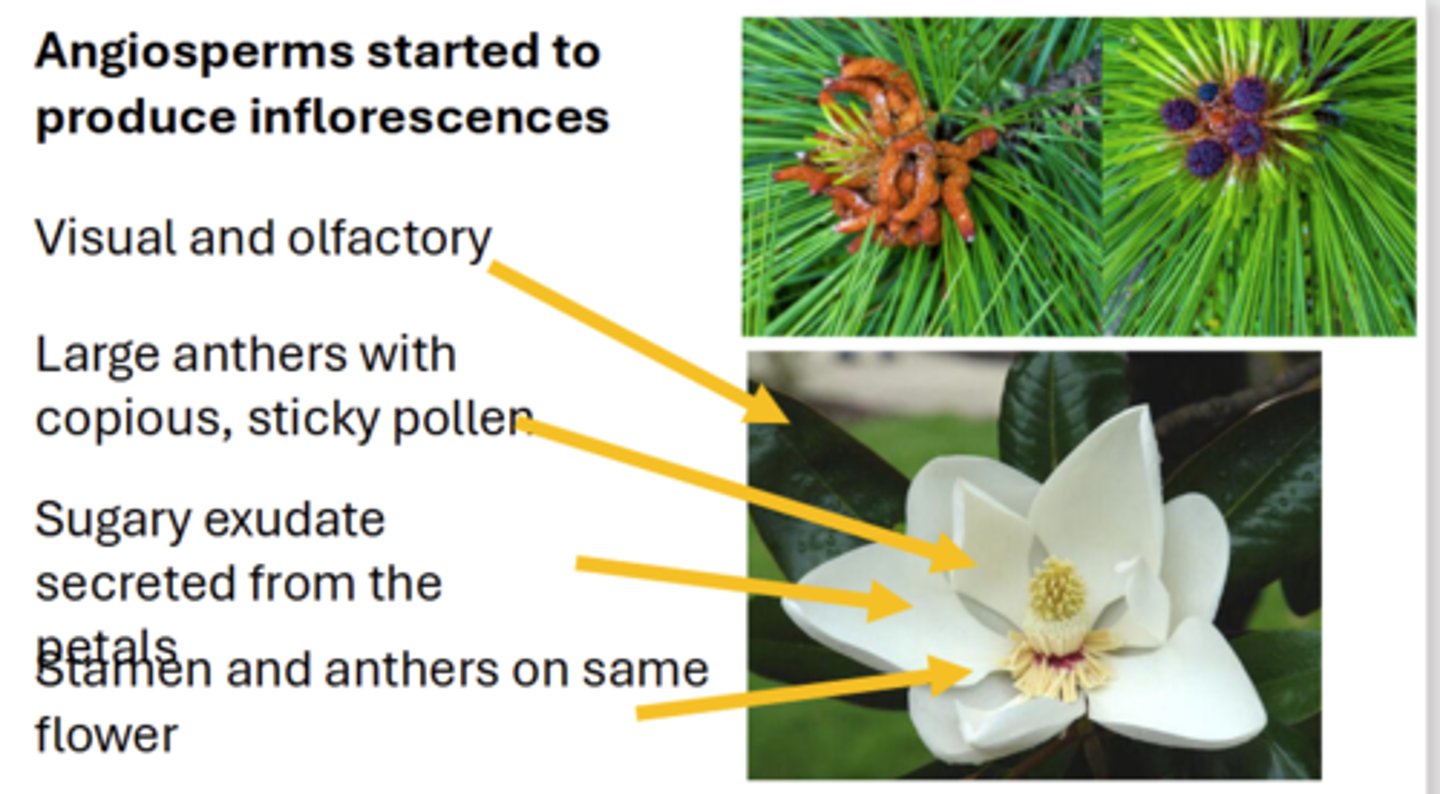
Angiosperms started to produce inflorescences
- Visual and olfactory
- Stamen and anthers on same flower
-Large anthers with copious, sticky pollen
- Sugary exudate secreted from the petals
When did bees emerge?
125 MYA and coevolve with the expansion of the eudicots (flowering plants)
now have:
- 20,000 species worldwide
- UK: 270 native species
What proportion of plants are pollinated by bees?
20%
How do bees pollinate?
- Bees have specialized structures for collecting pollen and sucking nectar
- Mouthparts arefused into a straw-like 'proboscis'
Why did plants benefit from insect pollination?
Transferral of pollen by an animal has many potential fitness benefits:
1. Pollen deposition is much more targeted and efficient than wind pollination
2. Because pollen is transferred efficiently, plant populations may be able to exist in much smaller population densities, making species less susceptible to extinction and more able to colonize new habitats
3. Because pollen transfer is not dependent on the wind, it can take place in habitats without wind (e.g. dense tropical rainforest)
4. Resources ordinarily put into pollen production can be used for primary growth, defences, and seed development
Why are bees beneficial?
1. Bees are highly efficient vectors of pollen and evolved structures to transport pollen (corbicula)
2. Bees distribute pollen widely - they fly for miles to find conspecific plants
3. Bees learn and remember which floral morphologies provide rewards
Who pollinates flowers?
- Approximately 2/3 of all pollinators are insects
- Most of the remaining 1/3 of pollinators are birds
- A few are mammals
How do flowers reward pollinators?
Flowers produce nectar to reward pollinators
- Total sugar ranges between 8 and 80% and is mostly composed of glucose, fructose sucrose
- Nectar also contains lower amounts of amino acids and other secondary metabolites
Encourages animal to come back
What are multimodal cues?
- Vary in Colour, shape, size, symmetry, scent (more traits you can provide for the pollinator, the more likely it is to remember the plant)
- Highly attractive Bees learn better
- Traits have coevolved
How do bees learn quicker?
- With multimodal ques
- make quicker decisions
What is an example of a specialised reward?
scent
How is the scent reward used?
- Some neotropical plants, including orchids, produce scent which is collected by male
- Euglossine bees for use as pheromones.
- The bees secrete saliva full of lipids onto the floral surface. The saliva absorbs the scent compounds and is then collected by the bees and placed in a modified structure on their hindleg called a 'corbicula.'
- The bees then use the fragrances they collect as a pheromone signal for attracting females
- The orchids have specialised anthers that deposit a 'pollonium' onto the back of the bee while it is taking the scent from the floral surface
When are not all mutualisms mutualistic?
Pollination by deceit is a form of antagonism
e.g.
- The dead horse arum (Helicodiscerus muscivorous) produces oligosulfide compounds that are also produced by carcasses
- This attracts carrion flies and traps them in the . When they leave, they carry the pollen with them.
- Ophrys sp. orchids emit compounds which mimic female wasp pheromones (Andrena sp.) and have visual displays that look similar to female wasps
- Male wasps visit, believing that they are finding a female, and are unwitting pollinators
How do pollinators cheat plants?
- Honest pollinators may have to climb through complex floral structures to get access to nectar
- A dishonest visitor robs the nectar by biting a hole through the flower at the nectary, thus, and failing to come into contact with the anthers/stigma and pollinate the flower!
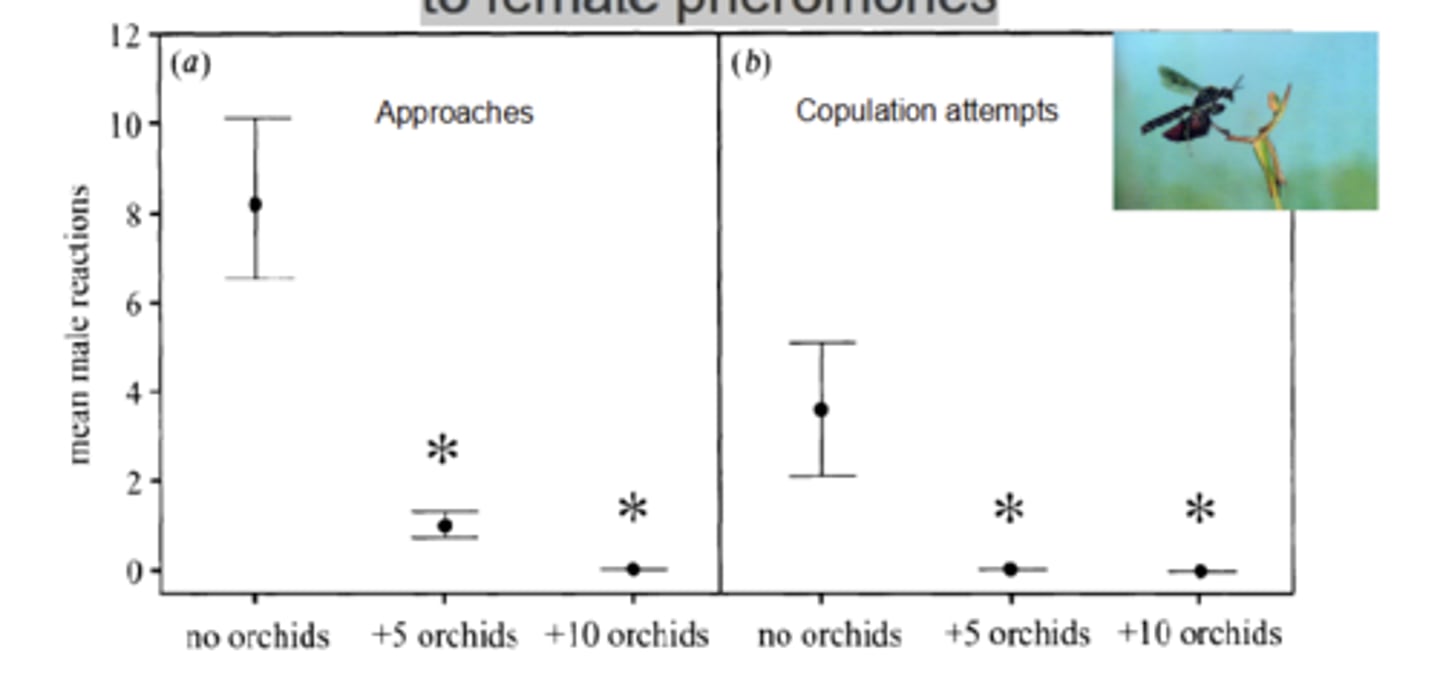
What does sexual deception by an orchid result in?
results in reduced sensitivity to female pheromones
Does caffeine in nectar effect bees?
- Caffeine is bitter-tasting to bees
- Caffeine amplifies Kenyon cell responsiveness to ACh
- Caffeine in nectar is constrained by pollinators
- caffeine improves their learning
Why has natural selection driven the production of nectar with caffeine?
- makes bee a better learning
- more guaranteed transfer of pollen
Why was the evolution of pollination by animal vectors so important?
- Pollinators can travel directly from flower to flower, and plant to plant, depositing pollen directly
- Pollinators may travel further to reach conspecific plants than pollen transferred by wind
- Most pollinators have wings, and fly from flower to flower
Why do flowers have scent?
- improve pollination success
Floral odours are often complex mixtures of many volatile compounds
- improves speed of pollinator to discover your ques
- Flowers with scent are easier to learn
What is the mutualism: dual benefits within pollinators?
Plants want efficient pollinators
An efficient pollinator
1. Visits only a few of their own flowers to collect pollen
2. Visits many, other conspecific flowers to deposit pollen
3. Visits many of their flowers to deposit pollen from conspecifics
4. Avoids the flowers of other species
Pollinators want to visit flowers that have:
1. Abundant, rich food resources
2. Easy access to resources
3. Little competition from other pollinators for access to rewards
 Note
Note  Flashcards (49)