Excretory System (Exam 3)
 Call Kai
 Learn
Learn Practice Test
 Spaced Repetition
 Match
Match Flashcards
 Knowt Play
1/49

There's no tags or description
Looks like no tags are added yet.
Name | Mastery | Learn | Test | Matching | Spaced | Call with Kai |
|---|
No analytics yet
Send a link to your students to track their progress
50 Terms
nephron
the functional unit of the kidney
the basic functional unit
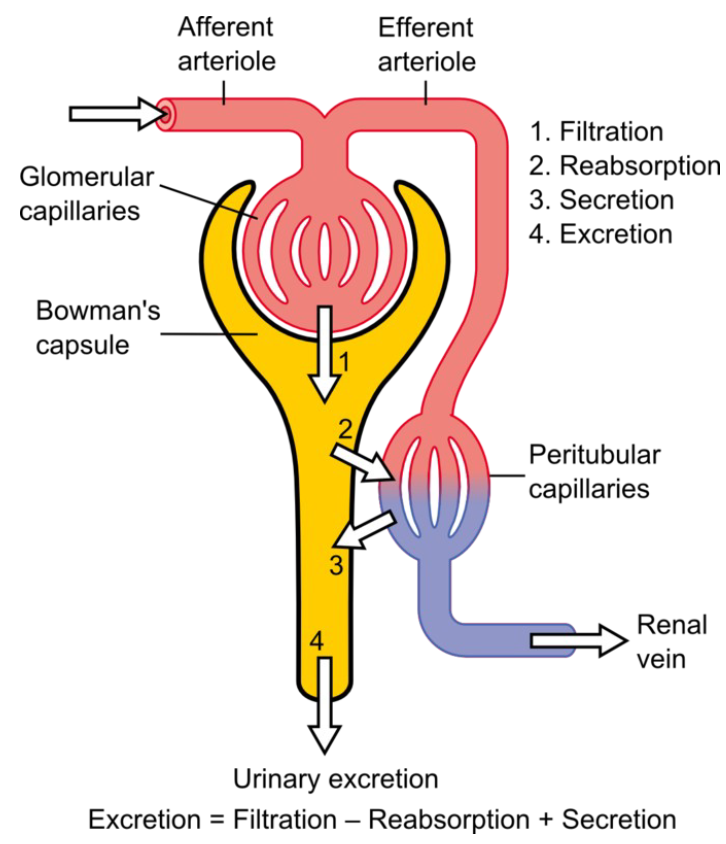
Filtrate is produced then
modified by secreting or extracting molecules in/out before excretion
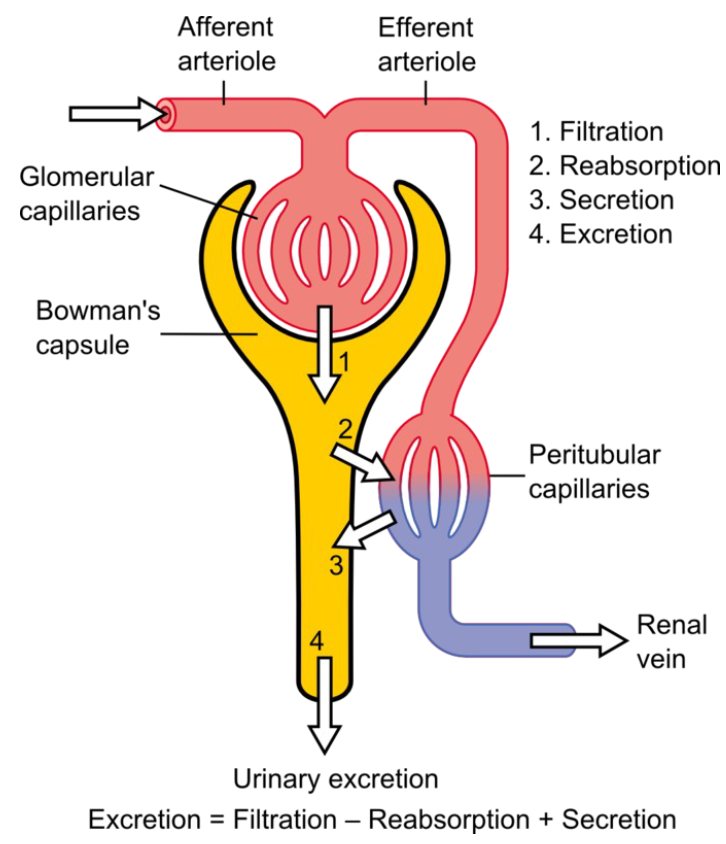
The 3 steps of urine formation in the kidneys
Glomerular Filtration
Tubular Reabsorption
Tubular Secretion
The renal corpuscle is made up of:
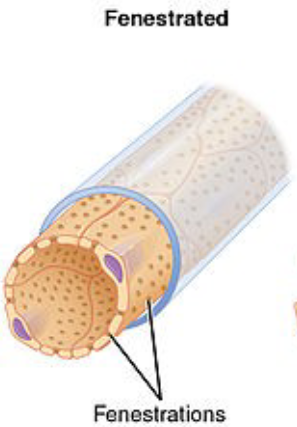
the Glomerulus* (‘ball of yarn’ - small fenestrated capillaries)
Bowman’s Capsule (container surrounding glomerulus to collect filtrate)
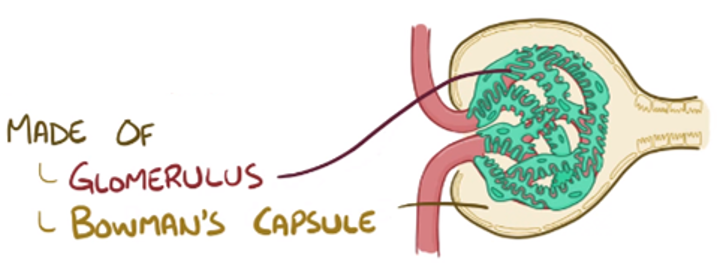
the Glomerulus
‘ball of yarn’ - small fenestrated capillaries
Glomus in cyclostomes
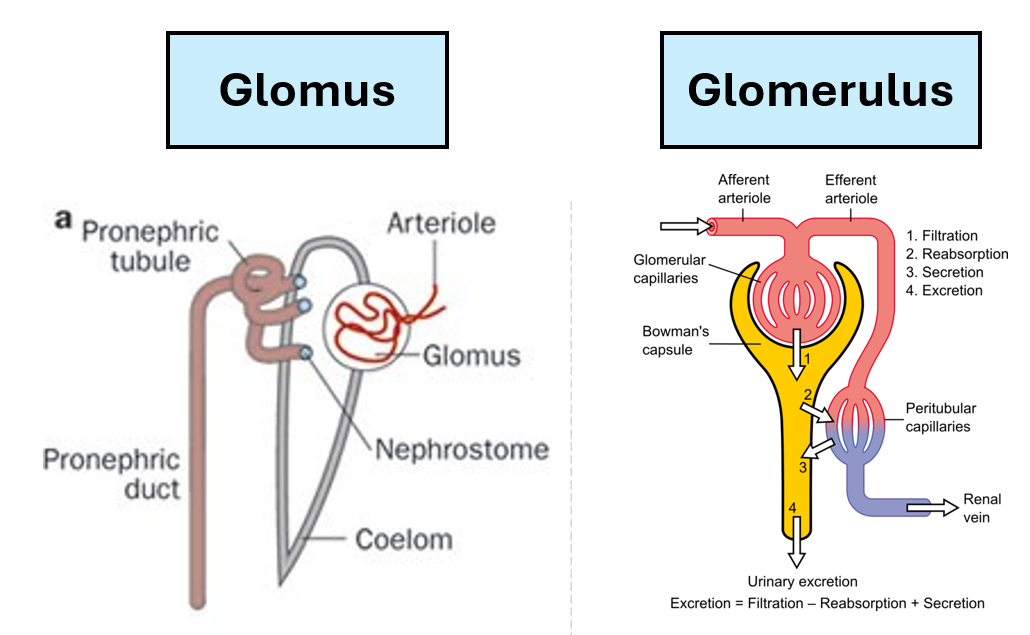
Bowman’s Capsule
container surrounding glomerulus to collect filtrate
In the renal corpuscle, the filtrate fluid and solutes…
leave the blood and enter Bowman’s capsule
What type of capillaries are in the glomerulus?
Fenestrated
Podocytes
(‘foot’- ‘cells’) make up the inner lining of the Bowman’s capsule
They surround the glomerular vessels and limit the flow out of the vessels but allow water, glucose, and salts to pass
1. Glomerular Filtration
Filtrate is produced and drained by the Bowman’s capsule
It should be free of proteins and cells (strained by the podocytes) and full of waste and salts
This includes molecules that we don’t want to urinate out!
We pull everything out, then put back in the things we want to keep
During glomerular filtration, We pull everything out, then put back in the things we want to keep, which is why….
This is why it’s filtrate and not called urine yet
In addition to podocytes, we control how leaky the glomerulus is by
altering the Hydrostatic and Osmotic Pressures
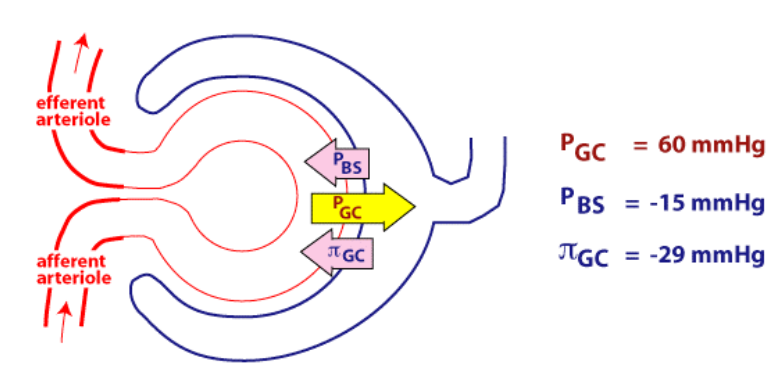
The flow is almost always into…
the lumen of the glomerulus, but the volume is what changes based on the net of applied forces
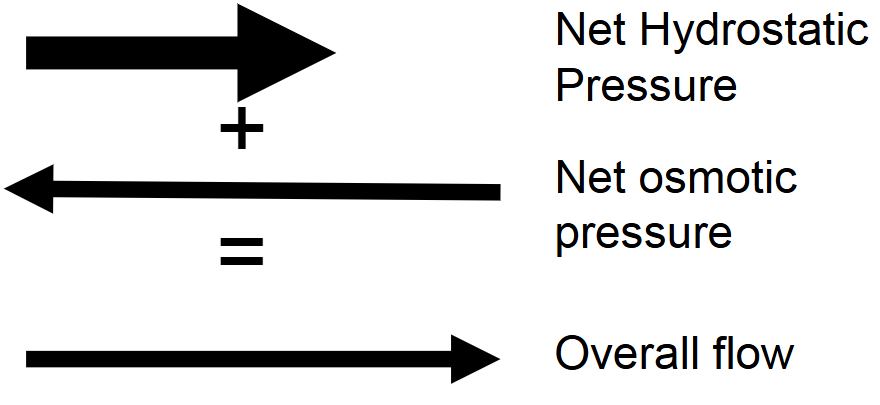
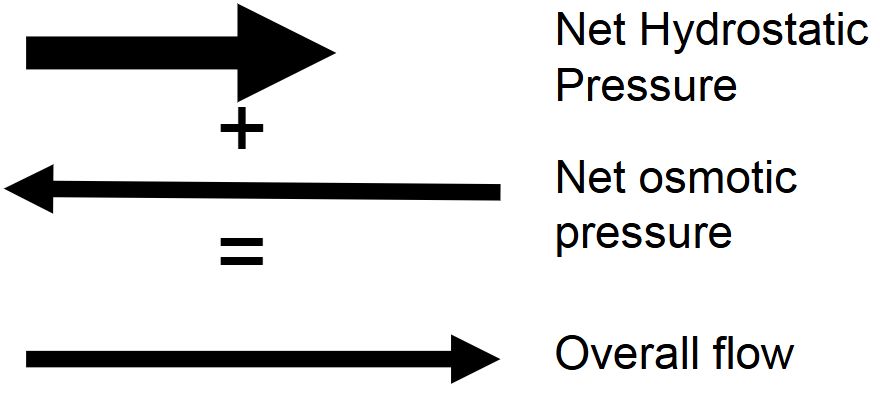
Osmotic flow =
Net Hydrostatic Pressure + Net osmotic pressure
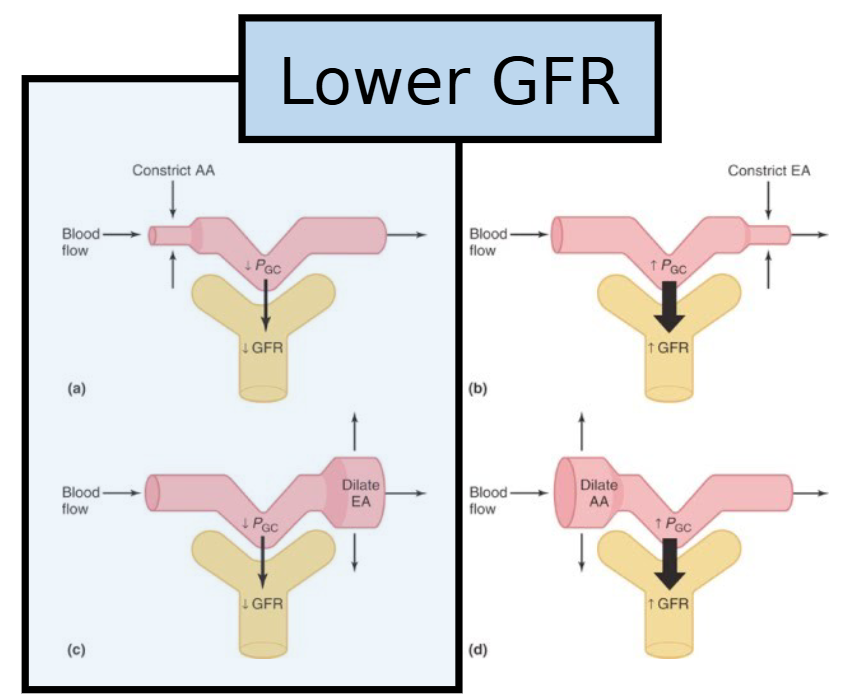
Lower Glomerular Filtration Rate
Lower GFR (<60) indicates chronic kidney disease (CKD) or failure
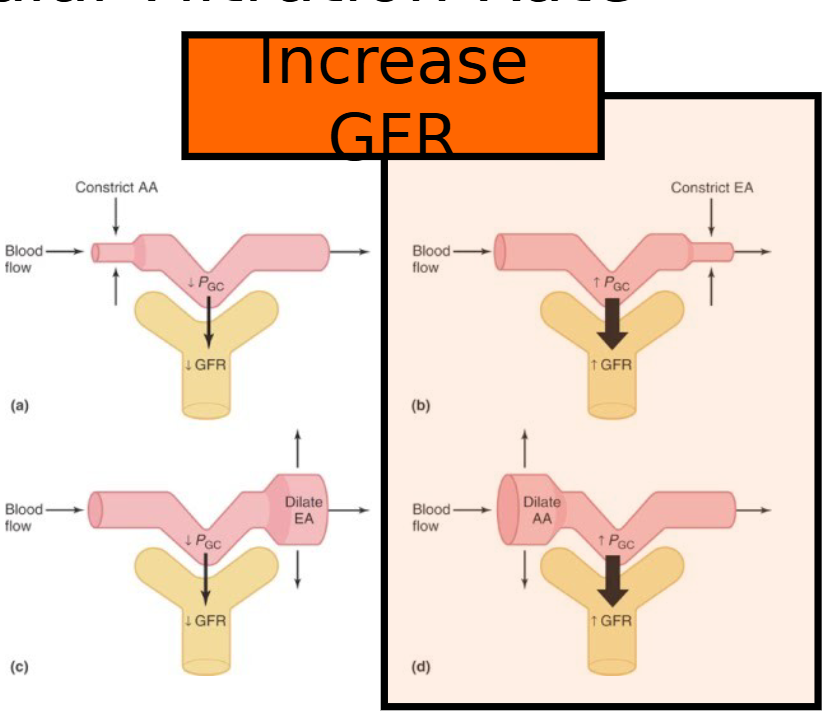
Higher Glomerular Filtration Rate
high GFR (>120-130) often indicates glomerular hyperfiltration, a state of over-filtration commonly seen in early diabetes or obesity
GFR
glomerular filtration rate measures how well kidneys filter blood
Steps of Excretion
Glomerular Filtration
Tubular Reabsorption
Tubular Reabsorption
The filtrate is drained into the proximal convoluted tubule
It still contains a lot of salt, amino acids, glucose, etc. that we want to hold on to so we Reabsorb them back out of the nephron
We reabsorb important ions back….
into the bloodstream throughout the length of the nephron tube (PCT, LoH, + DCT)
Not all sections reabsorb the same things however
Through both active and passive transport, we pull a huge amount back out of the filtrate (humans produce 180 L of filtrate per day, only have 5 liters of blood)
Tubular reabsorption relies on
active transport creating a concentration gradient that then allows other solutes to move
Tubular Reabsorption Steps
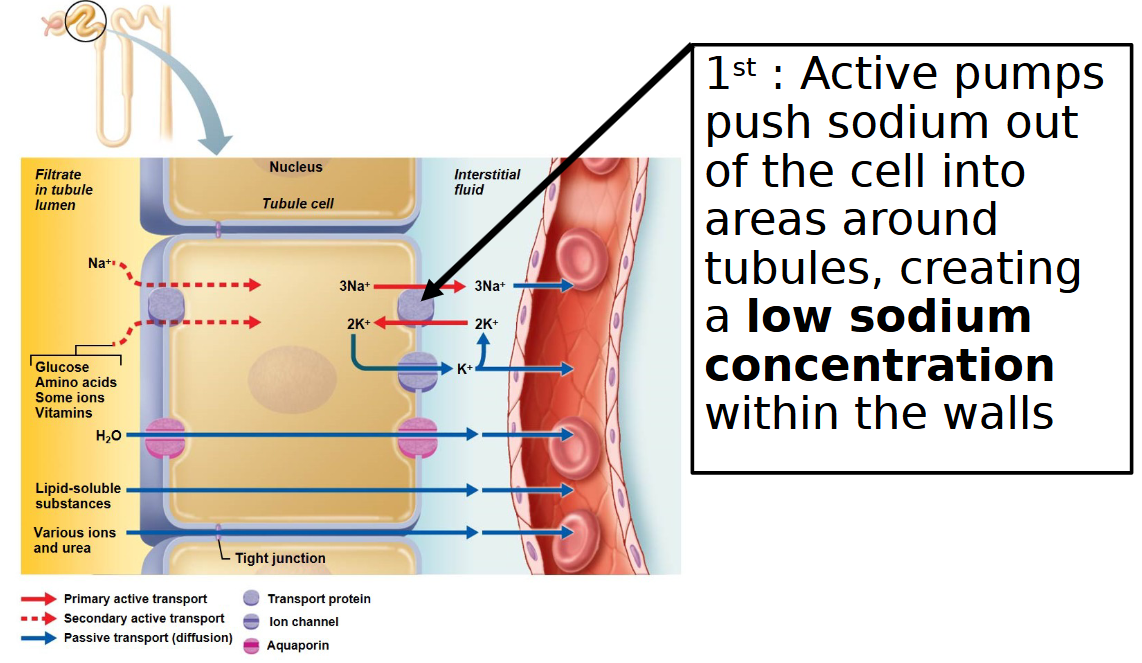
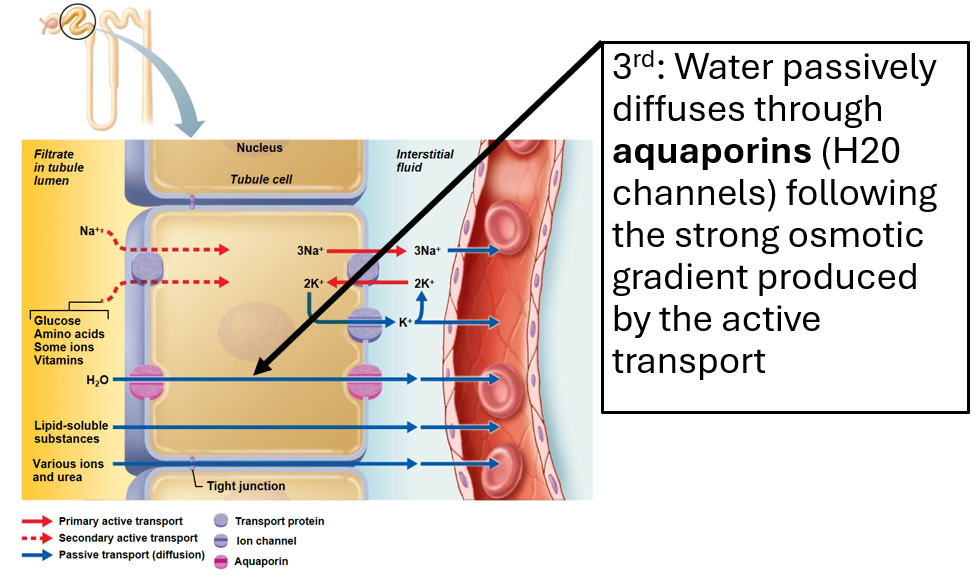
Active pumps push sodium out of the cell into areas around tubules, creating a low sodium concentration within the walls
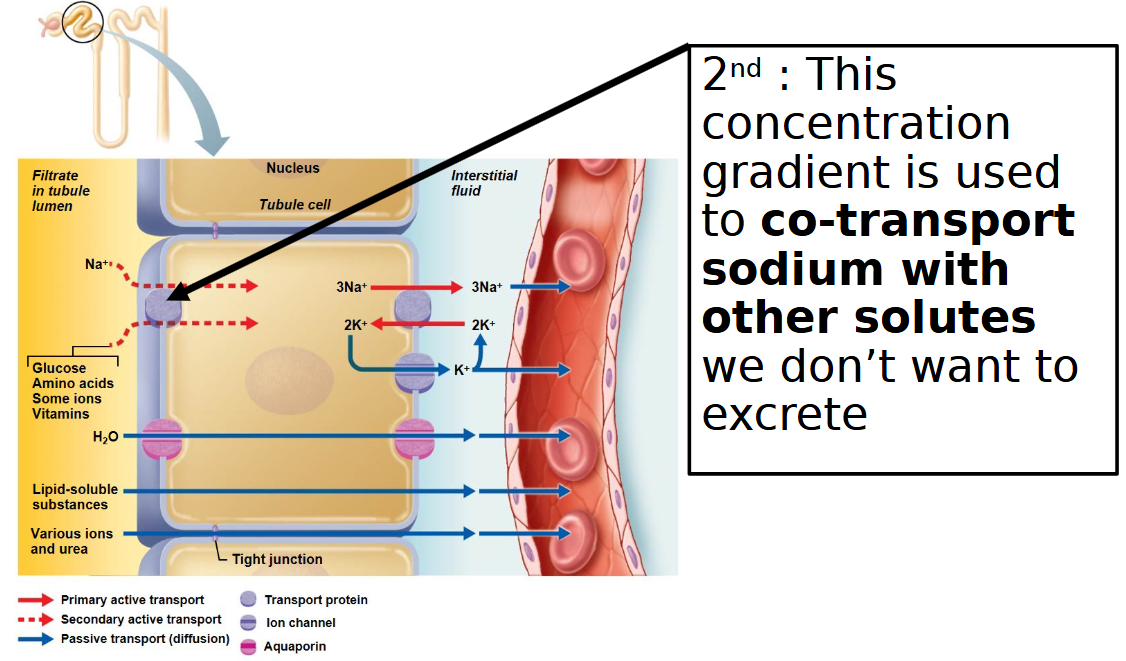
This concentration gradient is used to co-transport sodium with other solutes we don’t want to excrete
Water passively diffuses through aquaporins (H20 channels) following the strong osmotic gradient produced by the active transport
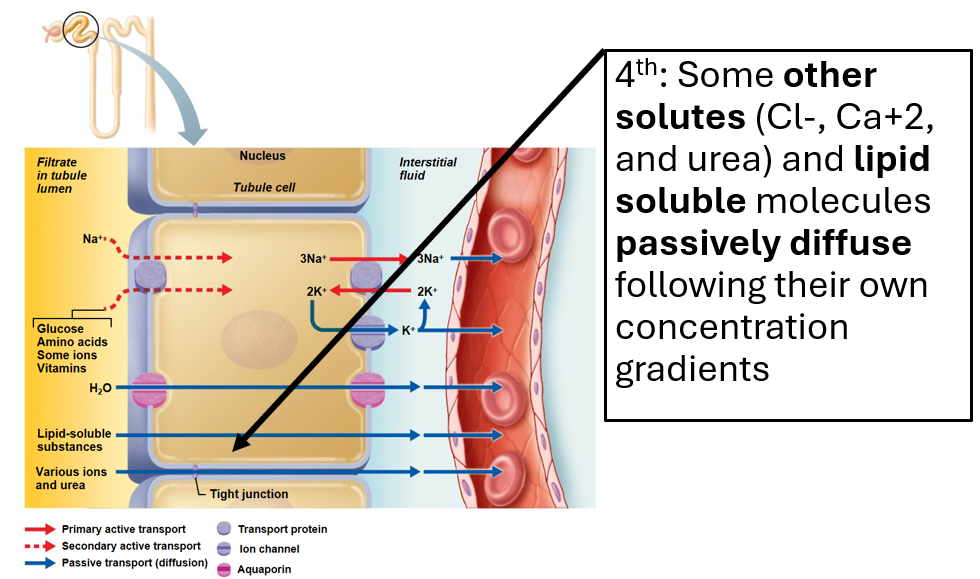
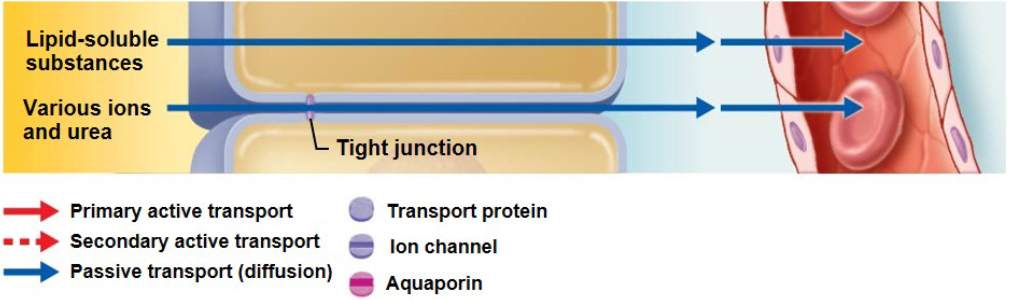
Some other solutes (Cl-, Ca+2, and urea) and lipid soluble
molecules passively diffuse following their own concentration gradients
Tubular Reabsorption First Step
Tubular Reabsorption Second Step
Tubular Reabsorption Third Step
Tubular Reabsorption Fourth Step
THC (active ingredient in marijuana) and many other recreational drugs are
lipid soluble, explaining why urine tests will be positive long after last ingestion
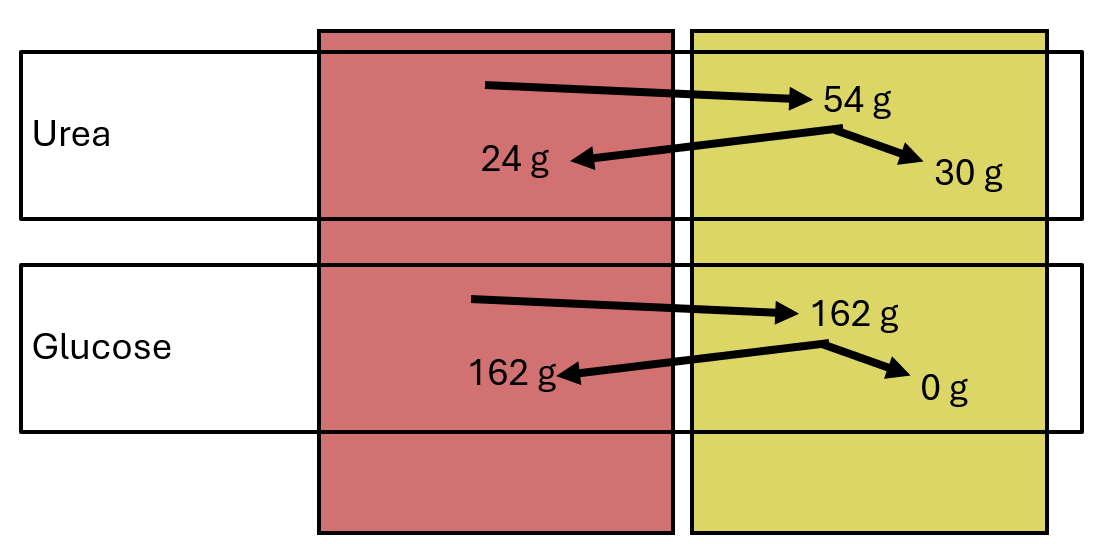
Urea and Glucose (Tubular Reabsorption)
What does the kidneys start as? (Embryology)
Starts as Intermediate Mesoderm
Differentiates into the pronephros (Head Kidney) before
changing in derived groups
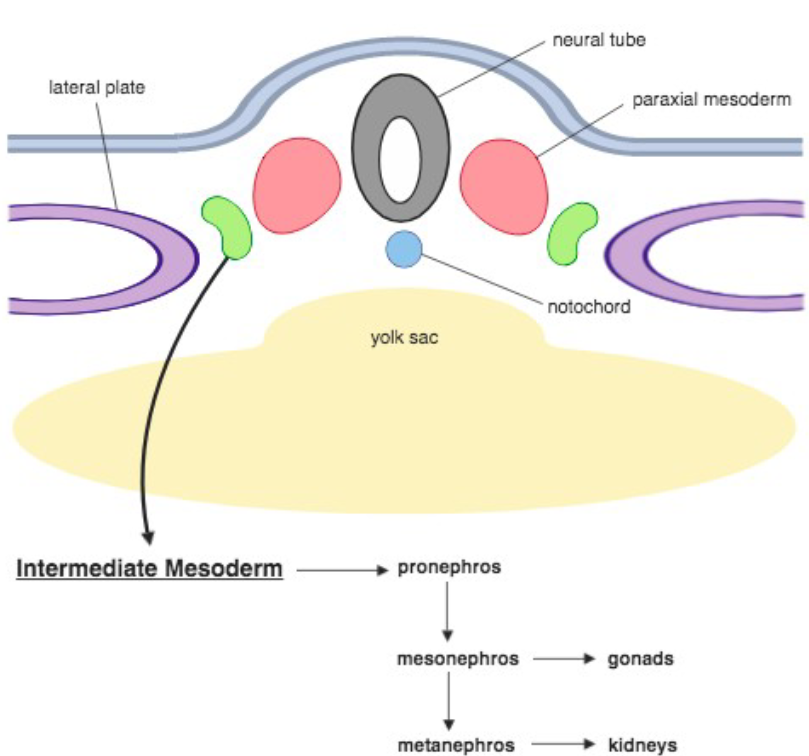
All three major structures of the kidney arise from
the nephrogenic cord/ridge that forms in early development
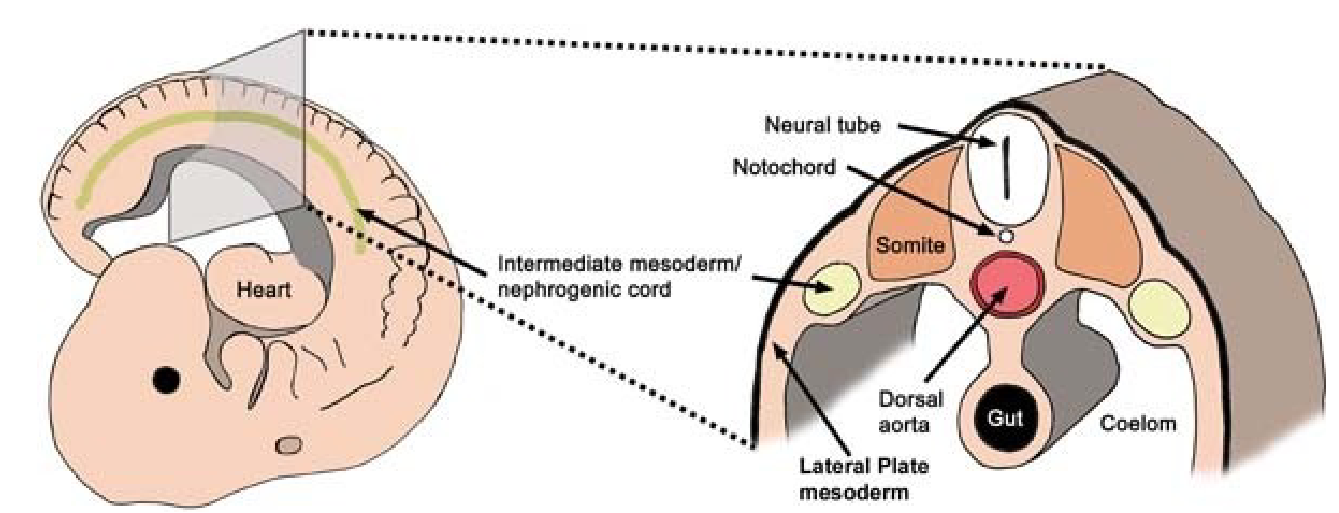
The evolutionary and embryonic development of the vertebrae kidney
Pronephron —> Mesonephron —> Metanephron
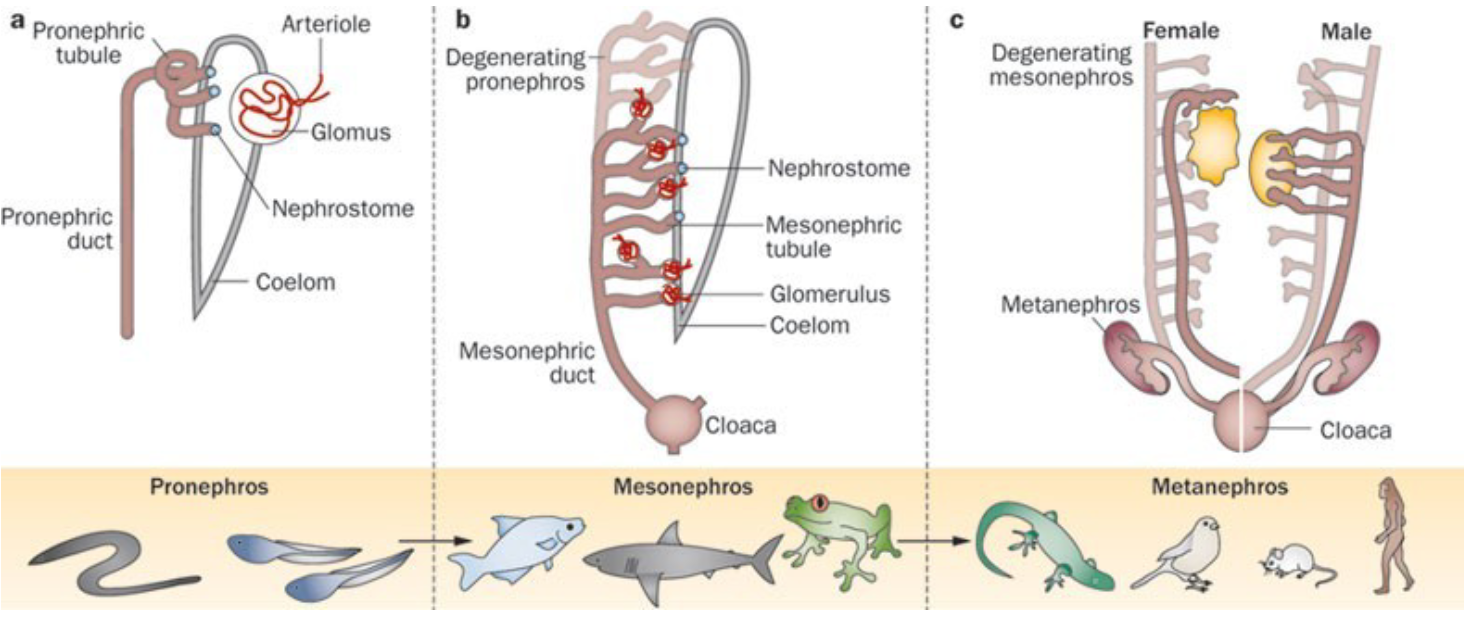
Pronephros Region
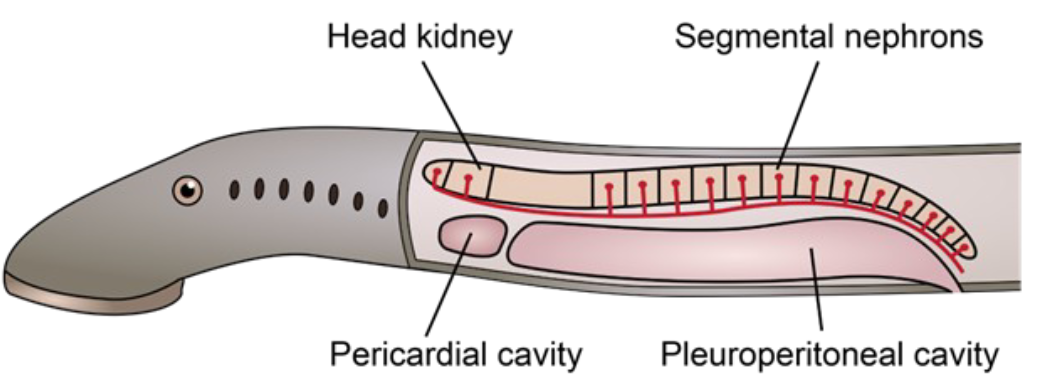
In all groups, the anterior pronephros develops but is retained in only cyclostomes (and some fish larva)
Mostly transient in derived groups
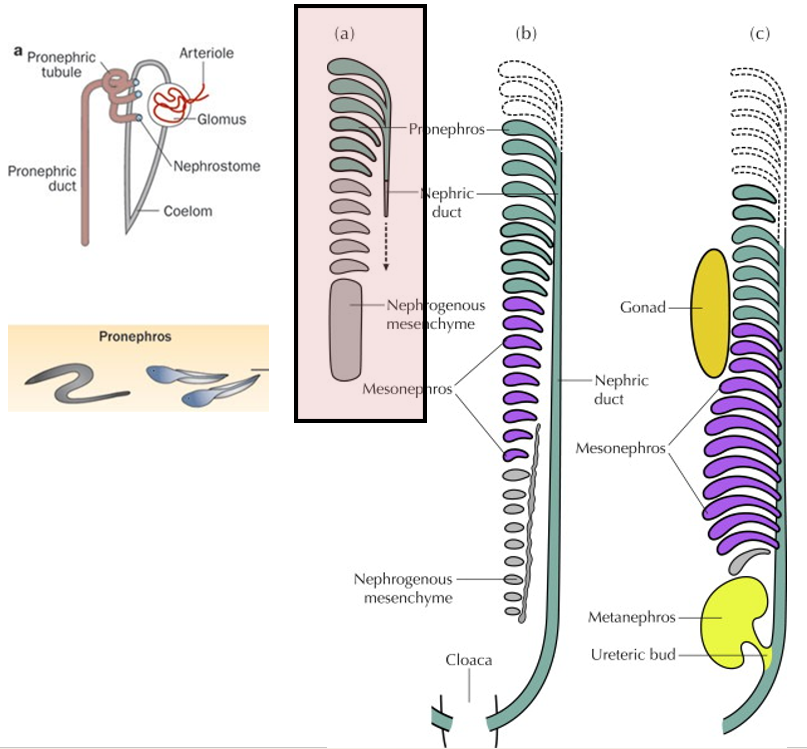
Mesonephros Region
The longer kidney tissue develops many more numerous and complex renal corpuscles
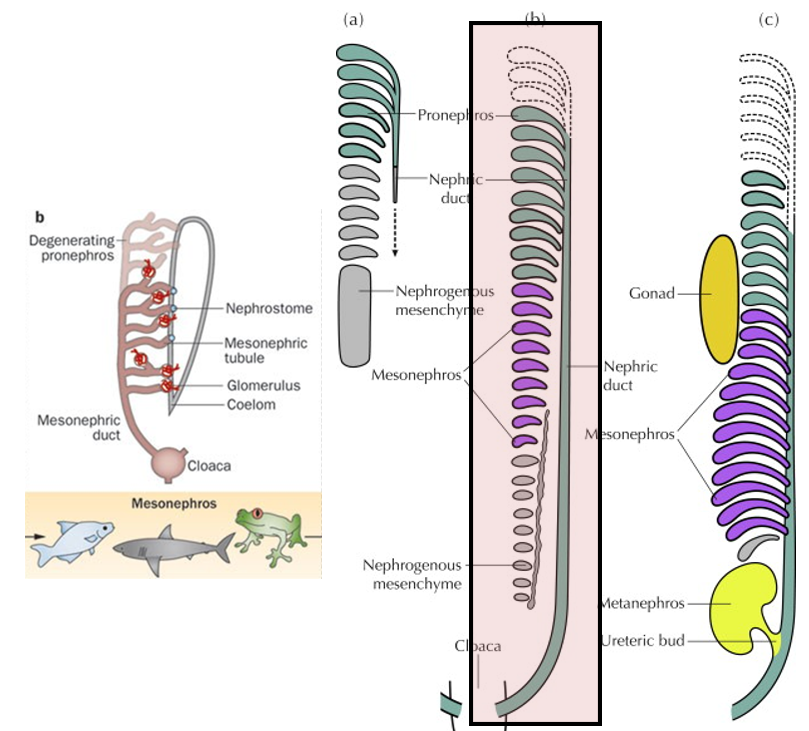
Metanephros Region
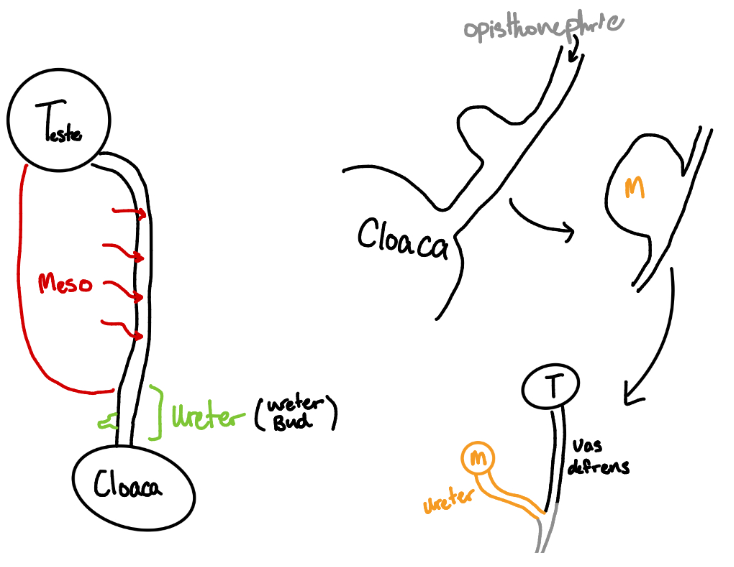
Amniote kidney develops as outpocketing of nephric duct
Mesonephric structures sometimes link with gonads
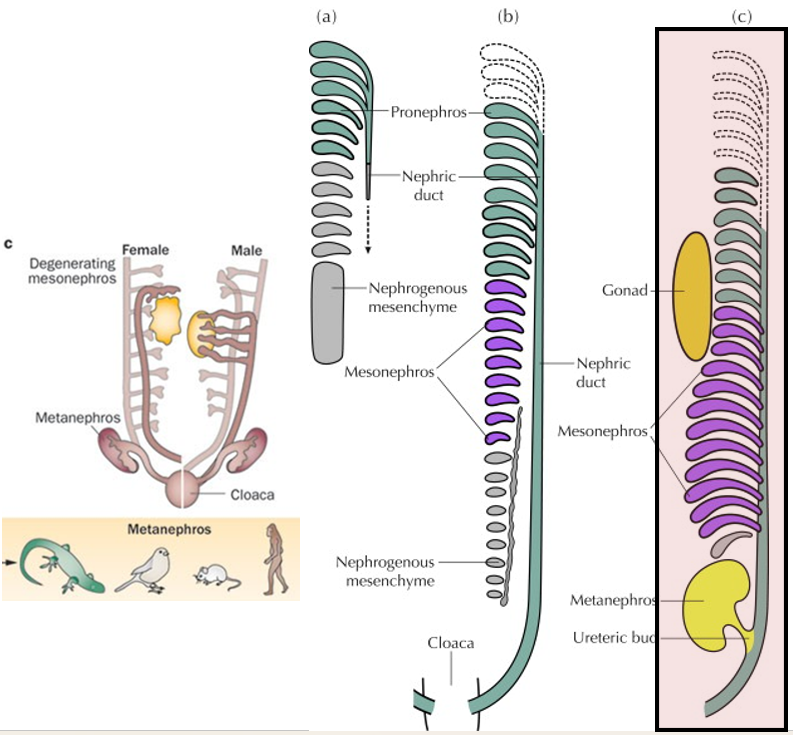
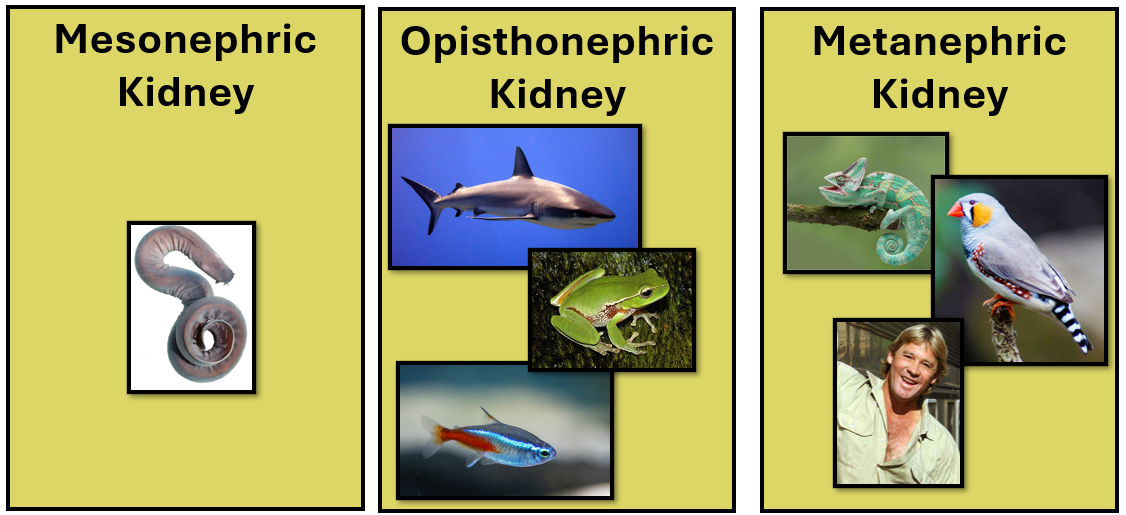
Kidney Types
Mesonephric Kidney
Opisthonephric Kidney
Metanephric Kidney
Mesonephric Kidney
Formed from both the pronephros (non-functional for excretion) and mesonephros tissue
Opisthonephric Kidney
‘Mesonephric but longer’
Pronephros mostly gone
Mesonephros significantly expands posteriorly (more excretory capacity)
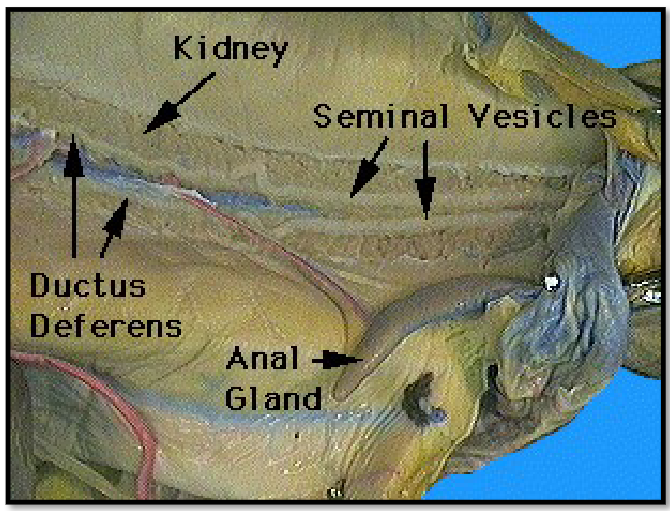
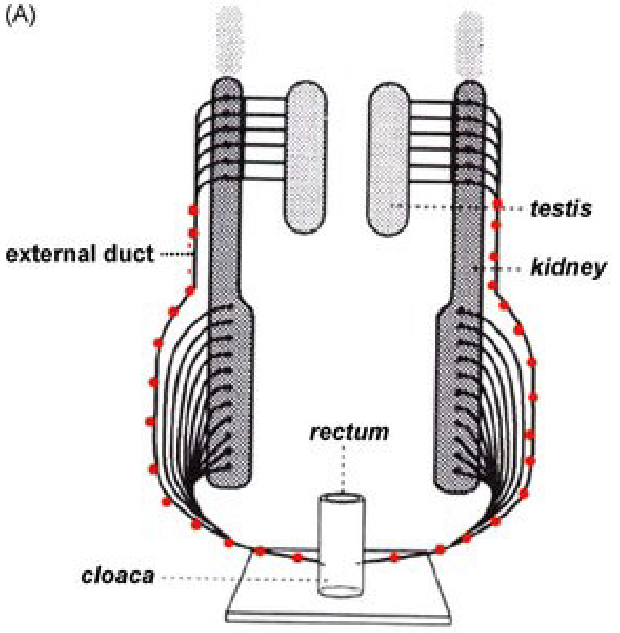
Opisthonephric Kidney (males)
Males dump sperm into mesonephric ducts (aka Wolffian ducts) which also drain urinary waste
A true ‘urogenital system’
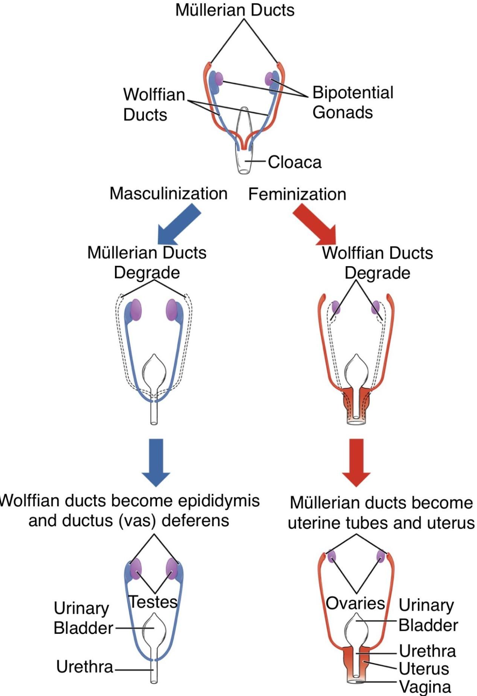
Opisthonephric Kidney (females)
In females the Mullerian ducts carry egg gametes
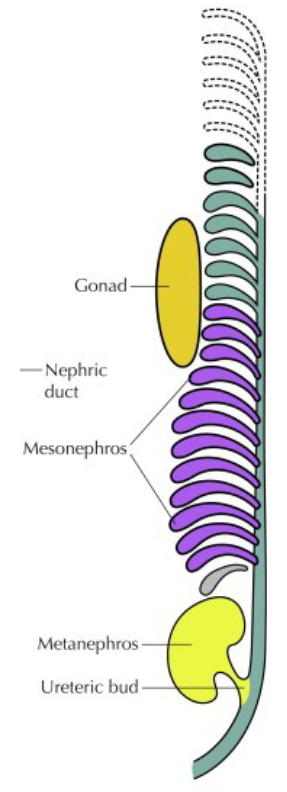
Metanephric Kidney
All of the mesonephric tissue loses excretory function and disappears
The superficial cortex and deep medulla differ in:
salt content
Structures present
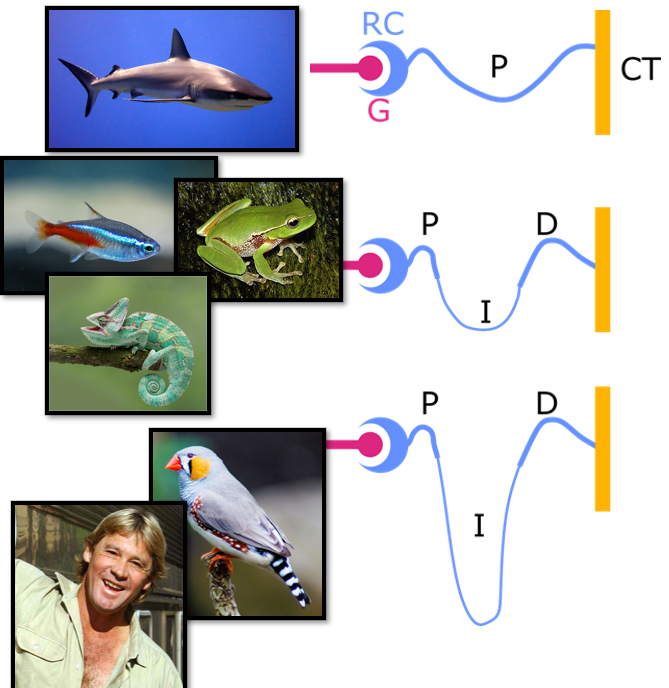
How far the intermediate segment of the nephron descends into the saltier medulla of kidney is entirely influenced by salt concentration requirements from environment
The superficial cortex and deep medulla differ in:
salt content
Structures present
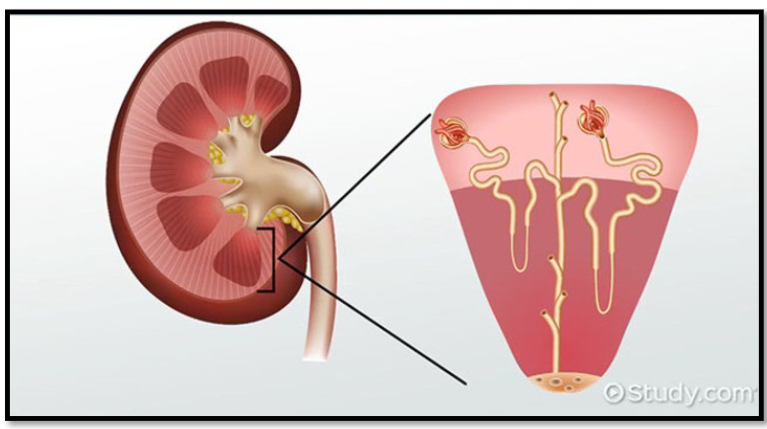
How far the intermediate segment of the nephron descends into the saltier medulla of kidney is entirely influenced by
salt concentration requirements from environment
Metanephric Kidney Drawling
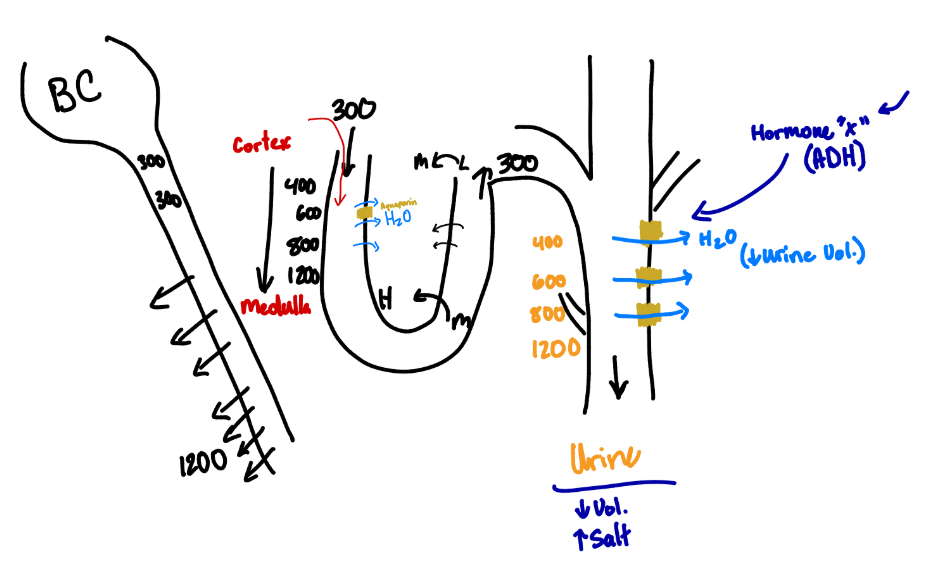
Loop of Henle Structure
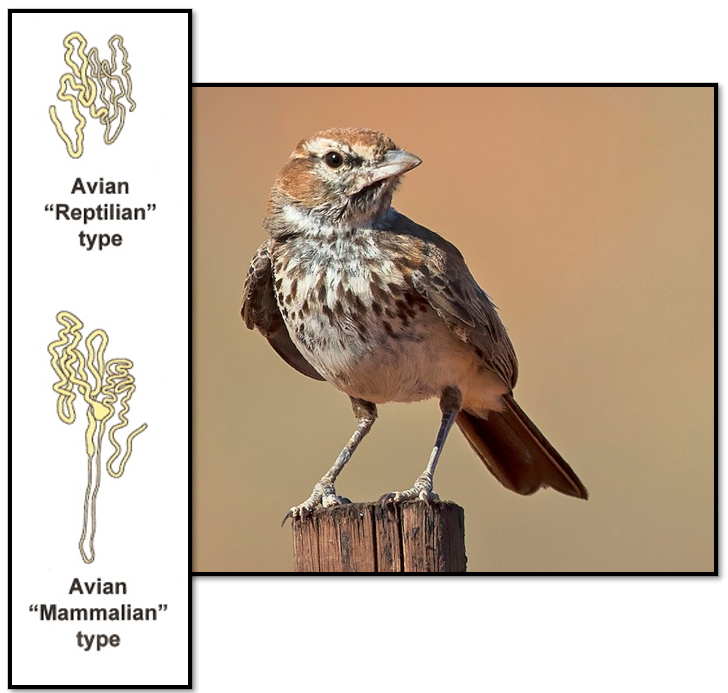
The Loop of Henle is the intermediate portion which produces concentrated urine and is only present in Birds and Mammals (convergently derived)
ADH
Anti-Diuretic Hormone
It increases urine saltiness
It decreases urine volume
Sharks
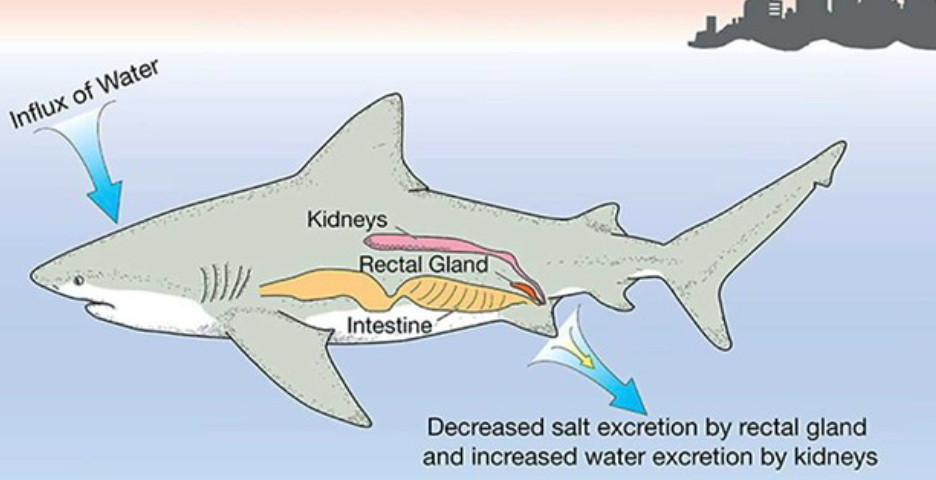
Chondrichthyes use rectal glands to excrete excess salt
Can modulate blood flow to organ to move into more freshwater systems
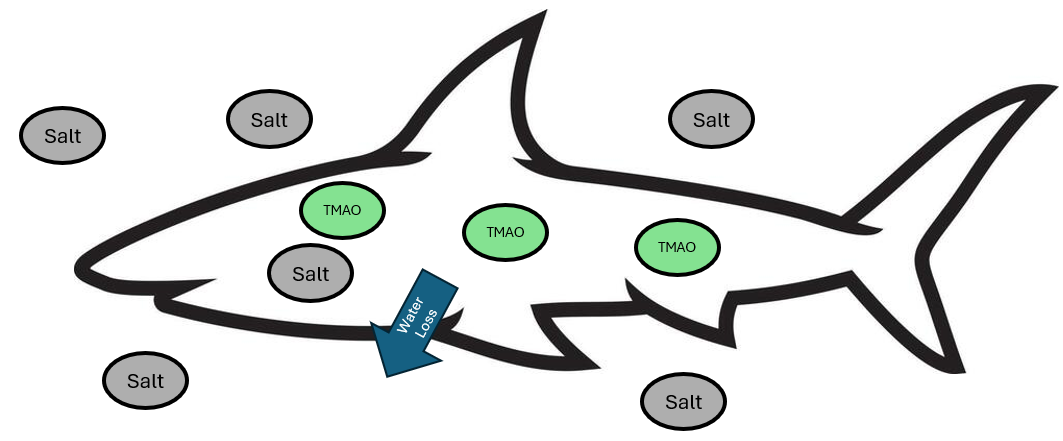
They also use trimethylamine-N-oxide (TMAO) to increase body salinity and avoid water loss
trimethylamine-N-oxide (TMAO)
Sharks use trimethylamine-N-oxide (TMAO) to increase body salinity and avoid water loss
Birds
Some animals, like the Red Lark, are so good at conserving water that they don’t ever drink
Some drink saltwater and use orbital salt glands to remove excess salinity
Mammals
Kangaroo rats also don’t drink, but also use respiratory system
modifications to conserve water

