Microbiology Exam 1- BIOL 400 - KU 2026
 Call Kai
 Learn
Learn Practice Test
 Spaced Repetition
 Match
Match Flashcards
 Knowt Play
1/87

Earn XP
Description and Tags
Spring 2026, Hotze, University of Kansas
Name | Mastery | Learn | Test | Matching | Spaced | Call with Kai |
|---|
No analytics yet
Send a link to your students to track their progress
88 Terms
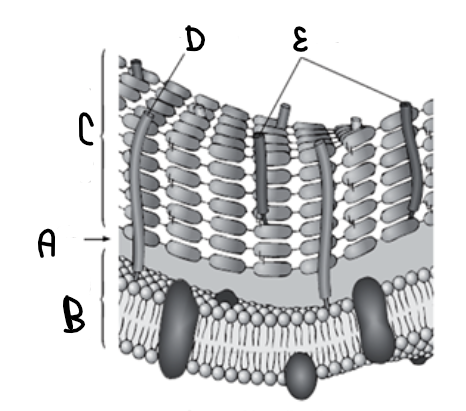
/What type of cell wall is this?
Gram positive
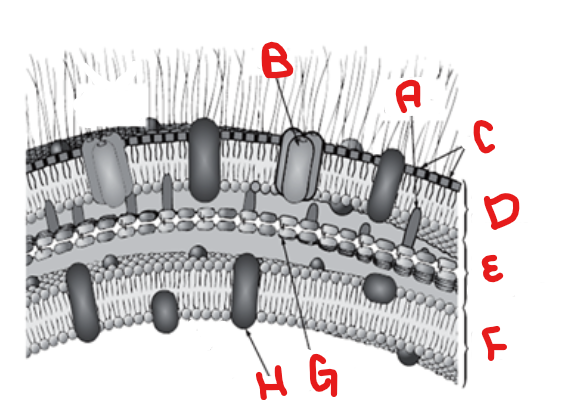
What type of cell wall is this?
Gram negative
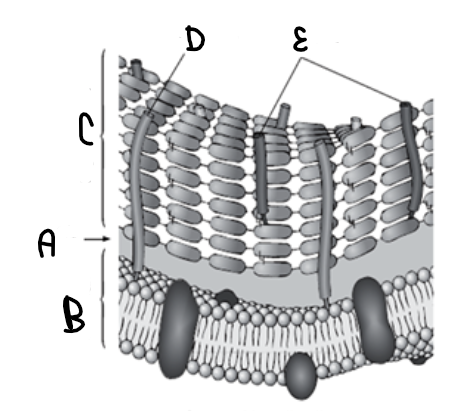
Label Structures A-E in this diagram of gram-positive cell wall
a. Periplasmic space
b. plasma membrane
c. peptidoglycan
d. lipoteichoic acid
e. teichoic acid
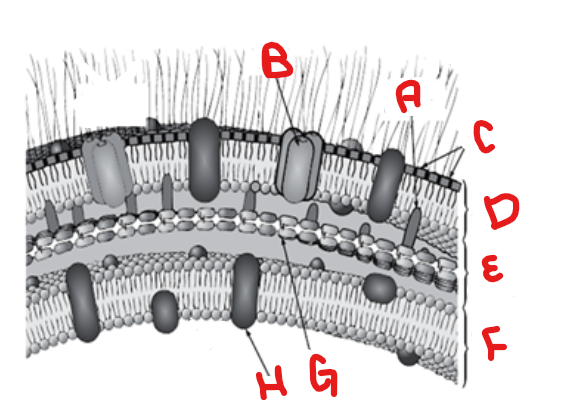
Label Structures A-H in this diagram of gram-negative cell wall
a. Braun’s lipoprotein
b. porin
c. LPS
d. outer membrane
e. periplasmic space
f. plasma membrane
g. peptidoglycan
h. integral protein
Woese
three domain system
Hooke
compound 30x
Leeuwenhoek
simple 275x
Pasteur
swan neck flask
Lister
aseptic techniques
Koch
postulates for disease-causing pathogen
Ehrlich
selective toxicity
Fleming
penicillin
Domagk
living system to test drugs
RNA Theory of Life - Why RNA? (2 functions)
catalytic and heriditary functions
Evidence for endosymbiotic theory
circular dna
double membrane
independent reproduction
unique ribosomes
Koch’s postulates (4 steps)
isolate in pure culture
infect new host
new host get sick
isolate from new host
Problems with Koch’s postulates (3 things)
pathogen may not cause symptoms
disease caused by multiple pathogen
some unable to be grown in pure culture
6 basic shapes of bacteria
cocci - circle
bacilli - rod
vibrio - curved rod
spirilla - rigid spiral
spirochete - loose spiral
pleiomorphic
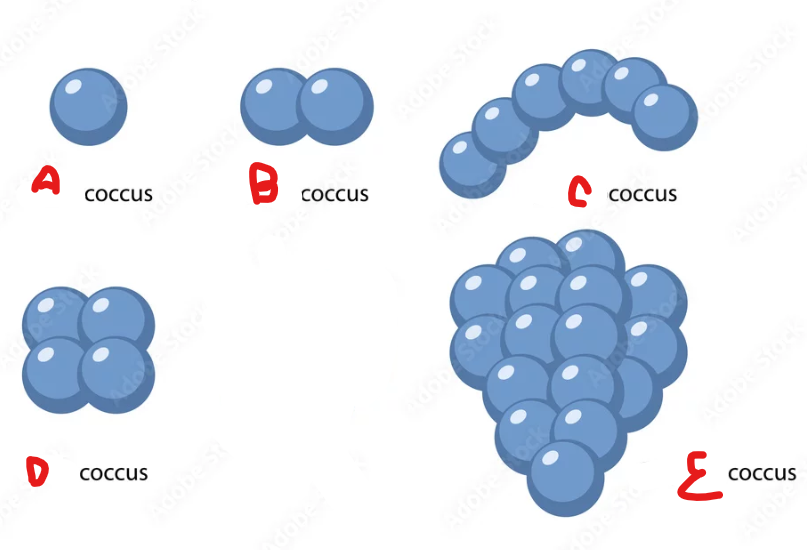
Label bacteria shapes
a. monococcus
b. diplococcus
c. streptococcus
d. tetrad
e. staphylococcus
Two types of proteins in plasma membrane
integral
peripheral
what unique about amphipathic lipids
have both hydrophobic and philic region
what 2 things do all bacterial cells have for their outer layers
plasma membrane
cell wall
How is bilayer held together?
vanderwal bonds
Factors affecting membrane fluidity
temperature
Fatty acid tail length
fatty acid saturation
in hot environments, membranes become (more/less) fluid
more
in cold environments, membranes become (more/less) fluid
less
between environmental temperature and pH, which can bacteria influence and which can they not influence
can change pH,
cannot change temperature
Primary active transport is (uni/coupled) transport, (does/doesn’t) use ATP hydrolysis and uses (ABC transporter/ion gradient)
unitransport
ATP hydrolysis
ABC transporter
Secondary active transport
ion gradient
coupled transport
symport or antiport
Group translocation
chemically modifis molecule to prevent it from leaving
4 cell well functions in bacteria
prevets osmotic lysis
maintains shape
barrier to toxic substances
contributes to pathogenicity
Name the 2 Peptidoglycan sugars (abbreviations):
NAG
NAM
How does peptidoglycan form crosslinks
using peptide part
third type of cell (not gram positive OR negative)
Acid Fast
Acid fast have slow growth and nutrient uptake due to?
huge, waxy barrier
Nucleoid
region where dna/chromosome hangs out
Capsule function
resist phagocytosis
Pili
attachment
Flagella
motility
chemotaxis
Chemotaxis
movement towards or away from stimuli
Trigger for Endospore formation
lack of food
What is an endospore resistant to
UV, dessication, extreme heat, lack of food
Two important genera of bacteria that form endospores and a disease they cause
Clostridium - tetanus
Bacillus - anthrax
Segregation of chromosome (3 steps) and cytokinesis (1 step)
ParB binds parS
ParA binds ParB - pulls DNA
ParA falls off and new ParA grabs ParB
FitZ squeezes at septation site
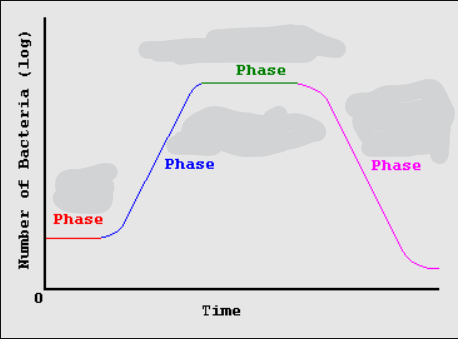
Label the Phases of growth
Lag phase
exponential phase
stationary phase
death phase
Lag phase
change in gene expression
exponential phase
max growth / quick divisions
stationary phase
lack nutrients
waste buildup
death phase
decrease in cell number
Bacteria change environmental pH through ______
metabolic changes
three pH types of bacteria
acidophiles
neutrophiles
alkaliphiles
how does pH affect proteins?
change shape and affect how protein interacts with a substrate
pH tolerance mechanisms
transporter - proton pumps
enzyme catalyzed reactions to consume H ion
movement to avoid area of undesired pH
three temperature types of bacteria
psychrophiles
mesophiles
thermophiles
How does temp affect proteins
increases speed until protein denatures
Thermophilic proteins have more connections between ________ to maintain shape
R groups
5 oxygen types of bacteria
obligate aerobe
microaerophile
facultative anaerobe
aerotolerant anaerobe
strict anaerobe
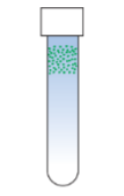
What type of oxygen use is this?
Microaerophile
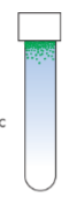
What type of oxygen use is this?
obligate aerobe
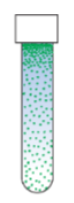
What type of oxygen use is this?
facultative anaerobe
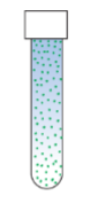
What type of oxygen use is this?
aerotolerant anaerobe
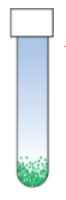
What type of oxygen use is this?
strict anaerobe
Complex media
rich media
poorly defined ingredients
supportive
Defined media
exact chemical formula of each ingredient
slow growth
Enriched media
used to grow fastidious bacteria
Selective media
inhibits growth of certain bacteria
Differential bacteria
distinguishes between bacteria
Theraputic dose
minimum dose that is effective
Toxic dose
minimum dose that is toxic to patient
Therapeutic index
ratio of toxic dose to effective dose
MIC
minimum inhibitory concentration
Disc diffusion assay - Kirby Bauer
diameter of zone of inhibition tells how effective
Larger zone of inhibition, the (more/less) effective a drug is against pathogen
more
E-test
determines minimum inhibitory concentration
5 antibiotic targets:
cell well synthesis
DNA synthesis
RNA synthesis
protein synthesis
Metabolism
2 drugs that inhibit cell wall synthesis
Penicillin
Vancomycin
Penicillin mechanism (Beta lactam)
competitive inhibitor
prevents PBP from forming crosslinks by binding to it
Resistance mechanism of bacteria against beta lactams
Beta lactamase
Vancomycin mechanism (gycopeptide)
steric inhibiter
prevents PBP from forming crosslinks by binding to substrate (D-ala peptide)
ineffective against gram negative
How does PBP form crosslinks?
binds to D-ala on peptide and connects glycan strands
2 Types of Protein synthesis inhibitors
aminoglycosides - bactericidal; irreversibly binds to ribosome
tetracyclines - bacteriostatic
2 types of Metabolic Antagonists
antimetabolites
structural analogs
Nucleic acid synthesis inhibition
fluoroquinolones - DNA polymerase
rifamycin - RNA polymerase
2 types of drug resistance
intrinsic
acquired
4 Mechanisms of acquired resistance
degrade drug
modify target
pump out drug
alternative pathway - get from environment instead

