economics : theme 2 - government objectives
 Studied by 1 person
 Call with Kai
 Learn
Learn Practice Test
 Spaced Repetition
 Match
Match Flashcards
 Knowt Play
1/11

There's no tags or description
Looks like no tags are added yet.
Name | Mastery | Learn | Test | Matching | Spaced | Call with Kai |
|---|
No analytics yet
Send a link to your students to track their progress
12 Terms
why is it rare for governments to be able to meet all its objectives at the same time?
complexity of the economy and the limitations of economic polices make this difficult
cannot control the economy, can only influence it
what is a trade-off
resolving one issue, but letting another one worsen
full employment and inflation example
when unemployment falls to low levels, there is a risk that cost push inflation will pick up
demand for labour is increasing and labour shortages in many industries and occupations may arise
this puts upward pressure on pay as employers offer higher pay both to recruit and retain their key workers
when the majority of the economically active are working / earning what happens to aggregate demand
would increase
AD↑ = C↑ + I↑ + G + (X - M↑)
if employment rises there’s an increase in consumption which leads to what type of inflation
demand pull inflation
phillips curve
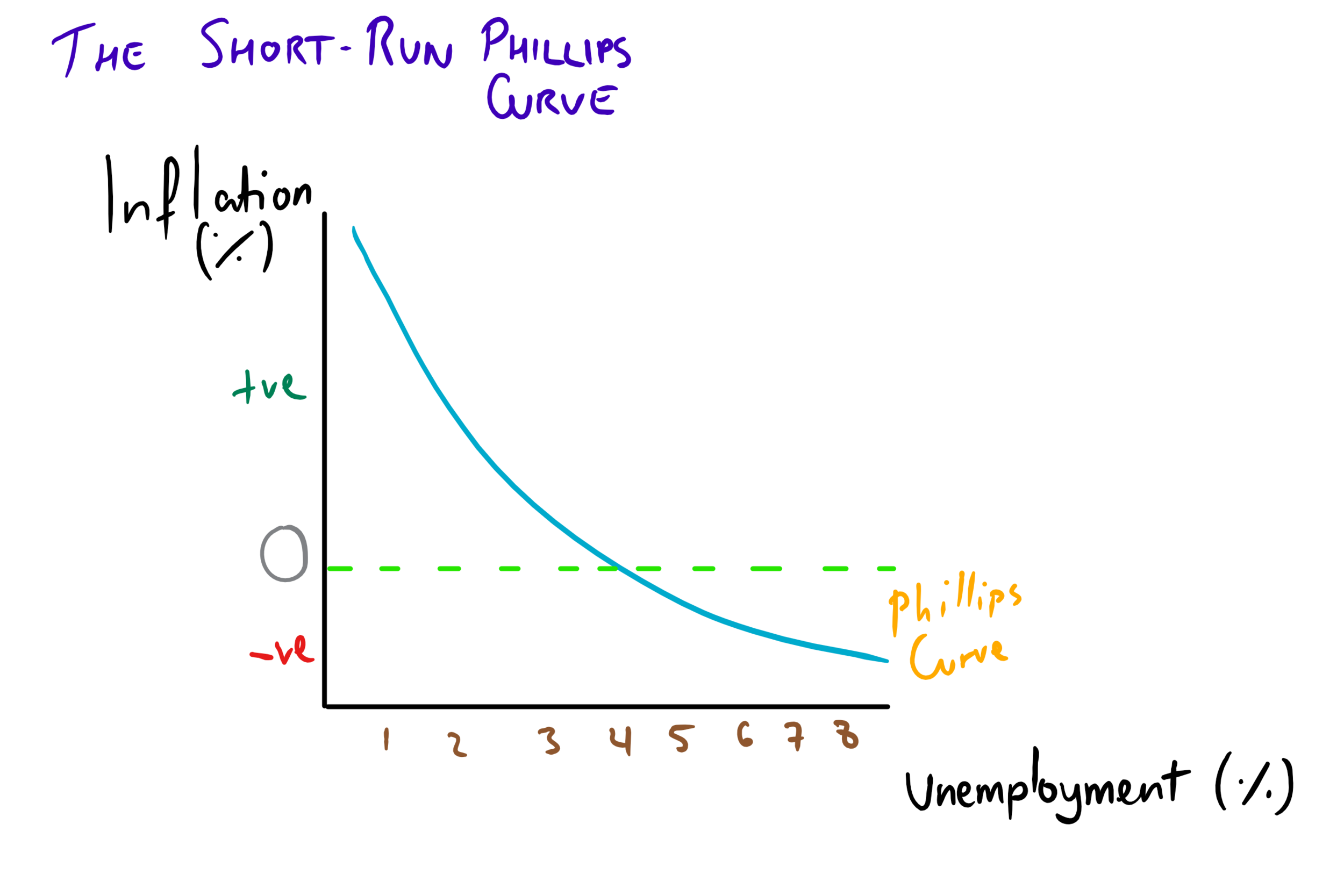
shows that inflation and unemployment have an inverse relationship
why has the Phillips curve been discredited
in recent years unemployment fell and so did inflation (between 1991 and 1997)
4 other trade off examples
economic growth and income distribution / equality
economic growth and the environment / sustainability
high employment and balance of payments equilibrium
high employment and equality of income
economic growth and income distribution / equality explanation
more income distribution would mean more gov spending on welfare which could therefore limit economic growth
if total income is increasing then GDP increases
if businesses begin to do well then those at the top (owners, managers and shareholders) will earn more which leads to an increase in GDP / economic growth but gap between the rich and the poor would widen
economic growth and the environment / sustainability explanation
if more land is being used (e.g. for farming) then this could lead to economic growth as resources are being used more effectively
high employment and balance of payments equilibrium
more people in work means higher incomes
so higher propensity to import
so worsening balance of payments
high employment and equality of income
high employment means more people in work and would most likely see their incomes rise
would lead to a wider gap between those in work (economically active) and those not working (economically inactive)
 Note
Note  Flashcards (126)