Module 5- Professional Communicaton
 Studied by 0 people
 Call Kai
 Learn
Learn Practice Test
 Spaced Repetition
 Match
Match Flashcards
 Knowt Play
1/6

Earn XP
Description and Tags
NUTR 466
Name | Mastery | Learn | Test | Matching | Spaced |
|---|
No study sessions yet.
7 Terms
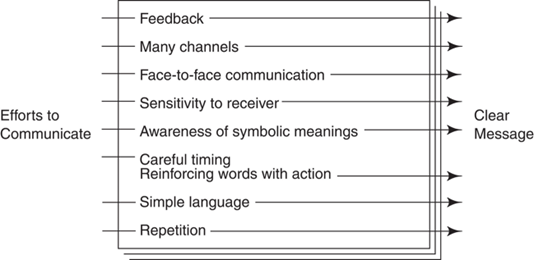
What are the key elements of effective communication for Registered Dietitians? ??
o Effective communication ensures a message is understood as intended; promotes workplace successful and optimal client outcomes
o Strategies for effective communication
§ Verbal- plan messages, use clear vocabulary, speak calmly.
§ Listening- give full attention, avoid interruptions, provide feedback.
§ Non-verbal- recognize body language, maintain eye contact, respect personal space.
§ Written- write clearly, proofread, use appropriate language.
Describe the stages of team development in interprofessional collaboration.
o Key elements: communication, clear purpose, commitment, cooperation, complementary skills, trust; enhances client-centered care and productivity.
o Forming: team members get to know each other
o Storming: conflicts arise as goals are clarified
o Norming: team becomes cohesive
o Performing: team works effectively towards goals
o Adjourning: team re-assesses roles when members leave
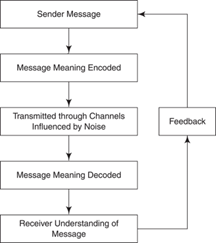
Describe the communication process.
o Communication involves a sender encoding a message and a receiver decoding it.
What are the Six Cs of effective work teams?
Communication
Clear purpose
Commitment
Cooperation
Complementary skills
Climate of trust
What are the different types of decision-making processes?
o Programmed: reached by following established policies and procedures, routine and repetitive, decision maker familiar with situation, don’t need to use a lot of judgement, made by lower-level management and employees.
o Nonprogrammed: unique, little/no precedent, not structured, need creative approach, manager must decide on what procedure to use, more difficult.
o Techniques: decision trees (assess consequences of sequence of decisions), cost-benefit, cost-effectiveness, networks (good for planning large events/things), linear programming, game theory, queuing theory, simulation, AI.
o Individual decision making
o Group decision making
§ Interacting- members discuss, argue, and agree on decision; could be existing or new groups, promote new ideas and understanding
§ Delphi- developing consensus of expert opinion
§ Nominal- want creative or alternative ideas; members of group don’t talk freely amongst themselves, write down as many solutions as possible after manager presents problem, group ranks decisions, manager accepts or rejects
§ Focus group-qualitative, want customer/patient/client feedback
Describe the conditions under which decisions are made.
Certainty exists when the outcome of a decision is known
Risk involves knowing the potential outcomes but not their probabilities
Uncertainty implies that neither the outcomes nor their probabilities are known
o Choose the decision that presents the least amount of risk when you have uncertainty
What are some barriers to effective communication?
o Hearing an unexpected message, ignoring conflicting information, differing perceptions, evaluating the source, interpreting words differently, ignoring nonverbal cues, becoming emotional, cultural differences, linguistics.
 Note
Note  Flashcards (133)