practical lab 1: bacteria, protists, & fungi
 Studied by 0 people
 Call Kai
 Learn
Learn Practice Test
 Spaced Repetition
 Match
Match Flashcards
 Knowt Play
1/113

There's no tags or description
Looks like no tags are added yet.
Name | Mastery | Learn | Test | Matching | Spaced | Call with Kai |
|---|
No analytics yet
Send a link to your students to track their progress
114 Terms
What are the 3 main domains?
Archaea
Bacteria
Eukarya
What is the order of organisms
Domain
Kingdom
Phylum
Class
Order
Family
Genus
Species
what organism(s) are the Domain Archaea and Bacteria consist of?
prokaryotic
how do Archaea and Bacteria differ?
Archara and Bacteria differ in structual, biochemical, and physiological characteristics
the most obvious though is that Archaea tend to live in extreme environments, like salty lakes and boiling hot springs.
what organisms does domain eukarya consist of?
eukaryotes
e.g. single-celled organisms, multicellular plants, fungi, and animals
what do prokaryotes consist of?
nucleoid region
ribosomes
plasmids
cell walls with peptidoglycan that is covered by a capsule (a sticky layer of polysaccharide)
what is peptidoglycan?
a network of sugar polymers cross linked by short polypeptides
how do bacteria reproduce?
binary fission
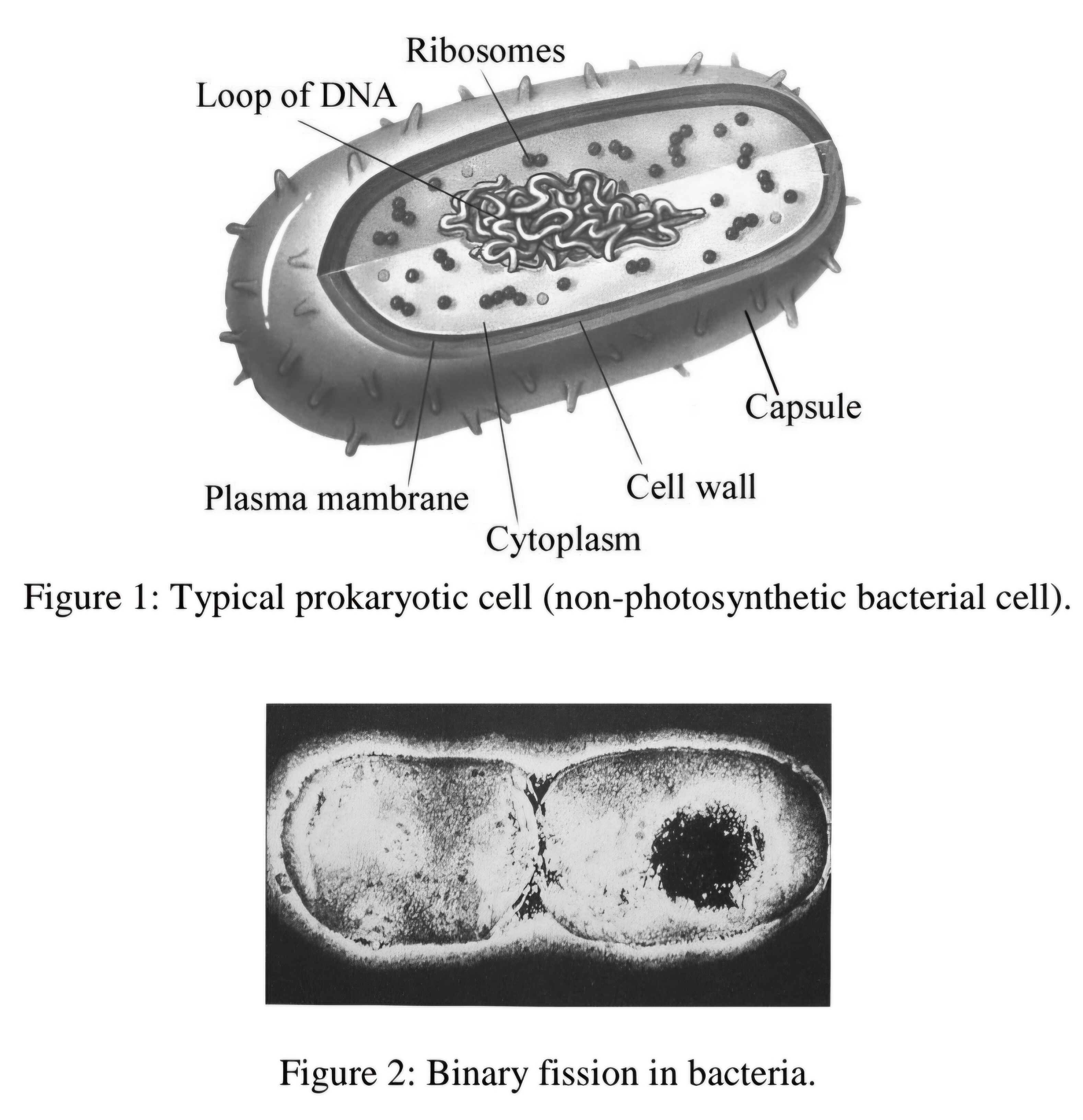
what is binary fission?
a form of asexual reproduction where the cell duplicates it's components and divides into two new cells
in other words the cell pinches into two with the complex movement of chromosomes seen in mitosis
newly produced cells become independent, but may remain attached in linear chains or grapelike clusters
what is an example of simple sexual reproduction?
conjugation
where two cells forma cytoplasmic bridge through which they pass at least a portion of a chromosome
how do most bacteria live?
they live as heterotrophs
they derive their energy from organic molecules made by other organisms
why are bacteria important?
many of these bacterias are important in the ecosystem as decomposers
they feed on dead organic matter and release nutrients locked in dead tissues
they secrete enzymes that cause the breakdown of organic matter in dead organisms and their wastes.
what does decomposition do?
the process releases key ions, such as nitrates, phosphates, and sulphates, which then become available to other organisms
what are other heterotrophs?
parasites and symbionts
parasites
also known as pathogens
these cause many of the diseases of plants and animals (including humans)
symbionts
these are heterotrophic bacteria that form partnerships with other organisms in which both benefit.
what are the three basic bacteria shapes?
Bacilli
Cocci
spirilla
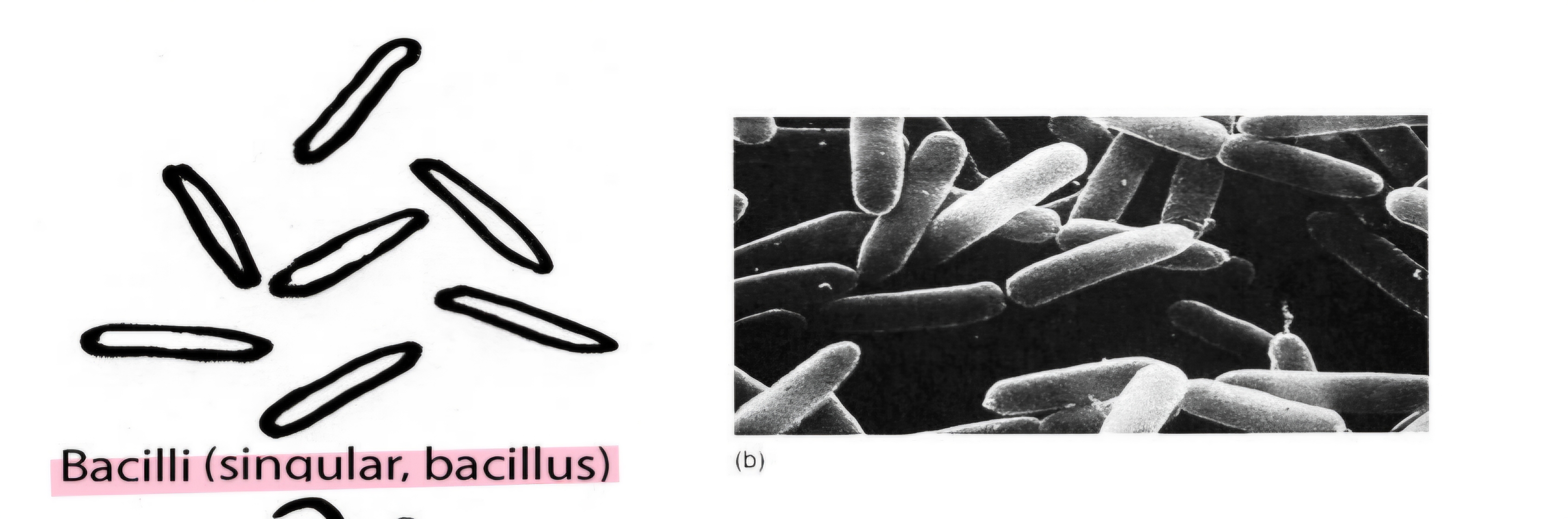
what shape are bacilli?
rods
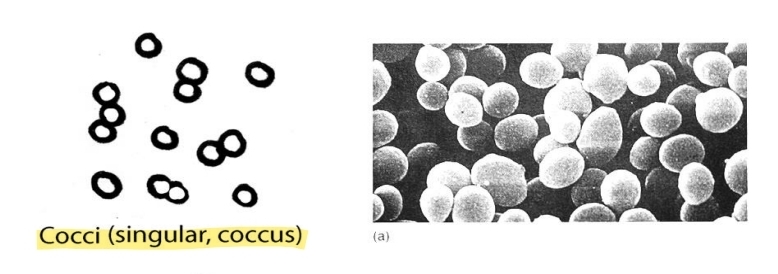
what shape are cocci?
spheres
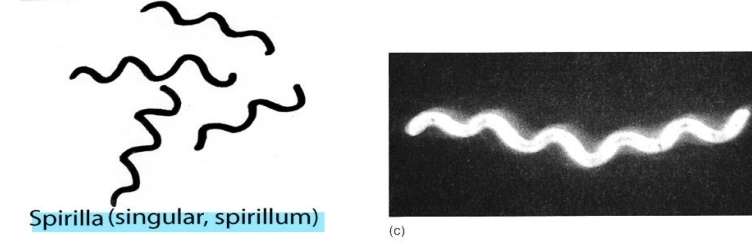
what shape are spirilla?
spirals or corkscrews
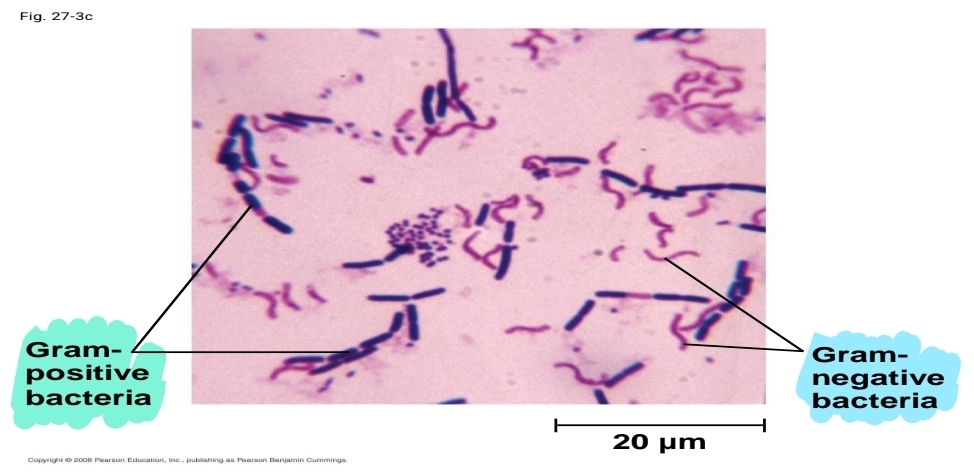
what is a gram stain
a technique used to classify bacteria into two groups based on differences in cell wall composition.
the two groups are: Gram Positive and gram negative
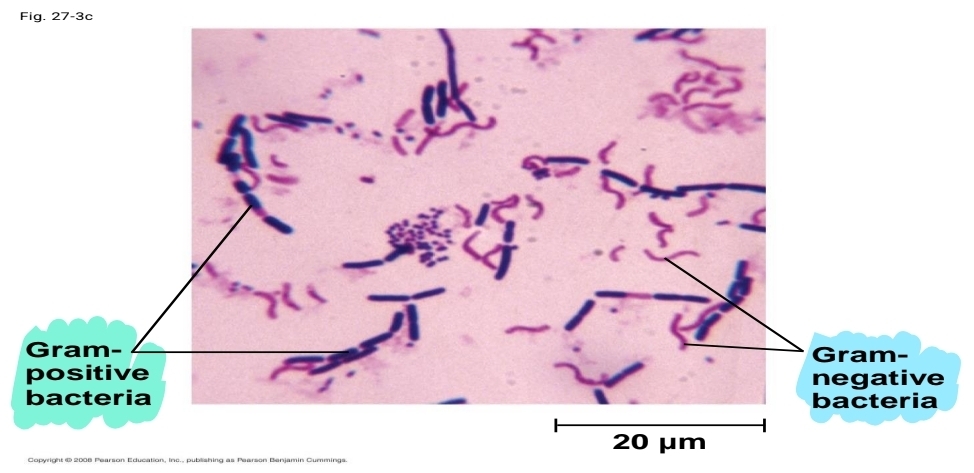
Gram positive bacteria
these bacteria have walls with a relatively large amount of peptidoglycan
the protein will trap crystal violet in the cytoplasm
therefore the cells will appear violet under the microscope
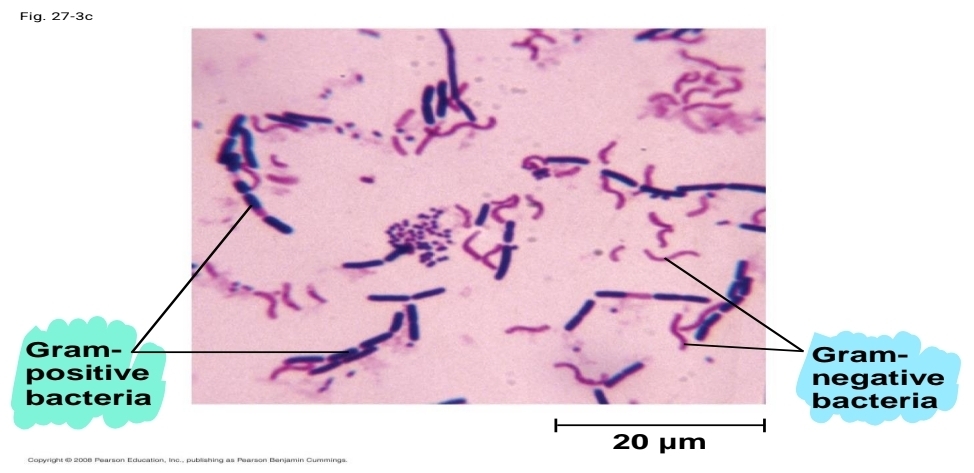
Gram negative bacteria
these bacteria's walls have less peptidoglycan
which means the crystal violet is easily rinsed from the cytoplasm
these cells will appear either pink or red under the microscope
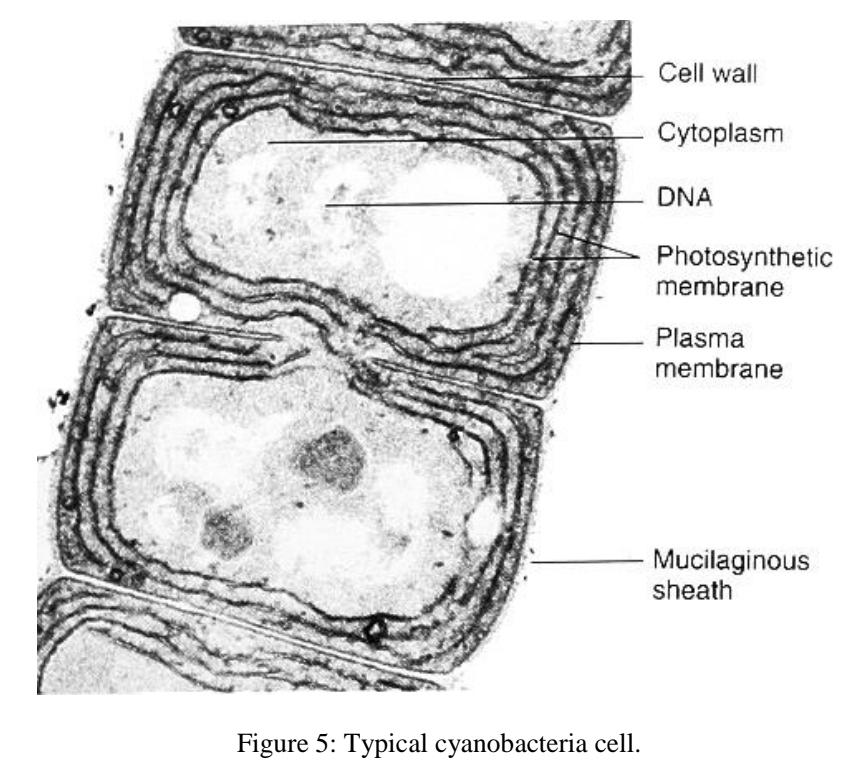
Cyanobacteria
commonly known as blue-green algae that are prokaryotic
these are autotrophic, which mean that they derive their energy from photosynthesis or the oxidation of inorganic molecules
along with chlorophyll a, they contain phycocyanin (blue) and phycoerythin (red)
their chlorophyll is in their thykaloids, extensions of the cell membrane (contains chlorophyll a & beta-carotene)
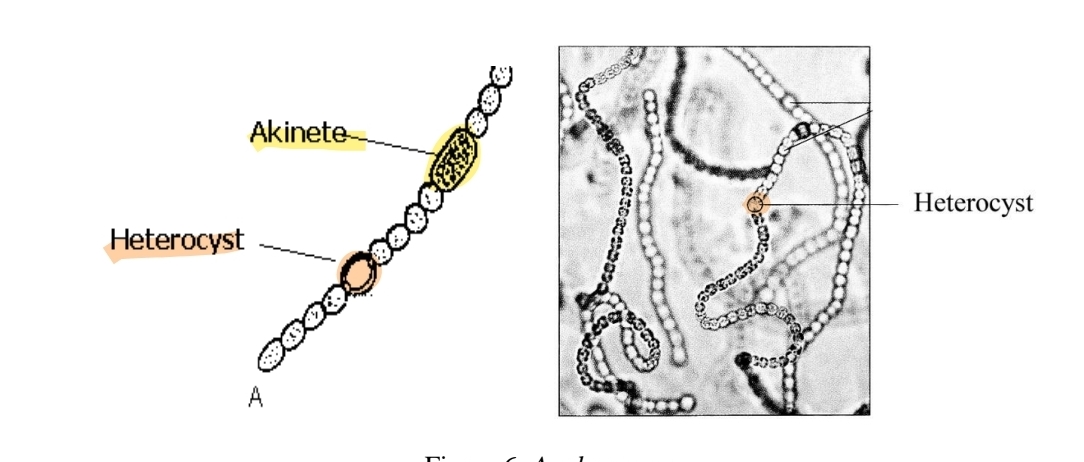
what specialized cells are produced cyanobacteria?
heterocysts
these cells take part in nitrogen-fixing
what are the roles of heterocysts?
to incorporate atmospheric nitrogen into a form useful for producing amino acids and other nitrogen containing molecules
what is the gtelatinous sheath in cyanobacteria?
seen in Gloeocapsa sp.
these are colonies which produce a thick gelatinous sheath
provides protection
when colonies bundle up together it creates a giant sheet
what else do cyanobacteria produce?
they can also produce spores
known as akinetes that are resistent to drying
these allow cyanobacteria to surviv unfavourable environmental conditions
what 3 kingdoms are in the domain eukarya?
Plantae
Fungi
Animalia
what other kingdoms are included in the domain eukarya?
several kingdoms of protists
used to be a singular kingdom Protista
however upon furtehr research they realized there are multicellular forms which resulted in the split into 7 kingdoms.
are protists eukaryotic or prokaryotic?
eukaryotic
meaning they consist of membrane-bound nucleus and other membrane bound organelles
how do protists show incredible variety?
some protists resemble animals, others resembles plants, and others still resemble fungi.
what are the general characteristics of protists?
Most are single-celled organisms however some exist as colonies of cells and others are multicellular
majority of the species are aquatic, freshwater or marine environments
terrestial protists are found in damp soil or leaf litter
protists are represented by both autotrophic and heterotrophic
reproduction can vary, but all of them can reproduce asexually while many species can reproduce sexually
what are the 3 large groups of protists?
the algae (plant-like protists)
the protozoa (animal-like protists)
the fungal-like protists
what are the 4 groups of algae (plant-like protists)
Dinoflagellates
Euglenozoans
Diatoms
Chlorophytes
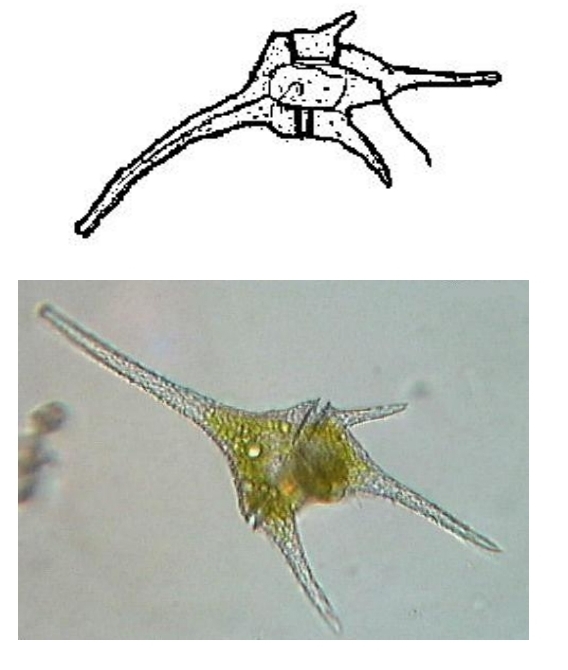
dinoflagellates (phylum dinoflagellata)
they are unicelluar protists found in both fresh and marine water
reproducion is primarily asexual
the cell wall is composed of plate-like cellulose segments
called Theca
motile dinoflagellates possess two flagella located in perpendicular grooves
this allows the algae to move through the water in a spinning motion
what happens when there is a rapid increase in algae?
this can result in an ‘algal bloom' which colours the water red or brown.
these are referred to ‘red tides’ and can cause the shellfish that eat these algae to accumulate a deadly toxin, making them toxic to eat
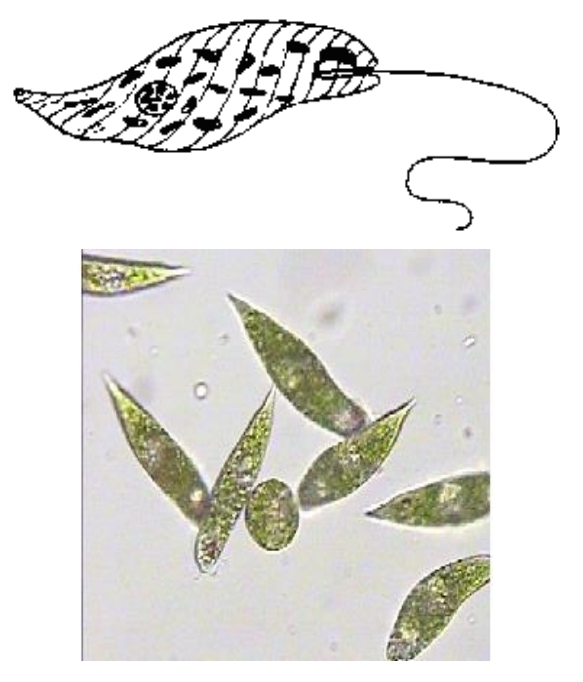
Euglenozoans (Phylum Euglenozoa)
these are unicellular flagellates which contain a spiral or crystalline rod inside their flagella
they inhabit freshwater pools and possess either one or two flagella
Reproduction is asexual by longitudinal cell division
What is the pellicle in euglenozoans?
a flexible layer of protein bands called a pellicle (found beneath the plasma membrane)
this allows them to change their body shape as they swim
Euglenozoans are mixtrophs. What does it mean?
this means in sunlight they are autotrophic but when sunlight isn’t available they can become heterotrophic
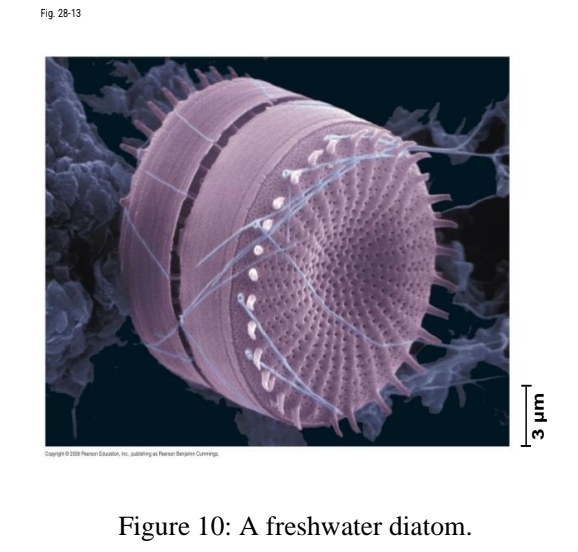
Diatoms (Phylum Bacillariophyta)
unicellular algae that have a unique glass-like wall perforated by a delicate lacework of holes and grooves.
diatoms are major component of plankton in oceans and lakes
they tend to bloom when ample nutrients are available
hug accumulations of fossilized diatom walls are major components to sediment known as diatomaceous earth
they mainly reproduce asexually by mitosis
What is the major characteristic of diatoms?
Their walls
the wall is made of silica (silicon dioxide) embedded in an organic matrix
they consist of two parts that overlap like a shoebox and it's lid
this provides effective protection from the crushing jaws of predators
What is it called when diatoms population rapidly increase?
They bloom
this is when there are ample nutrients available in their environment
What is Diatomaceous earth?
huge accumulations of fossilized diatom walls that are major components to sediment
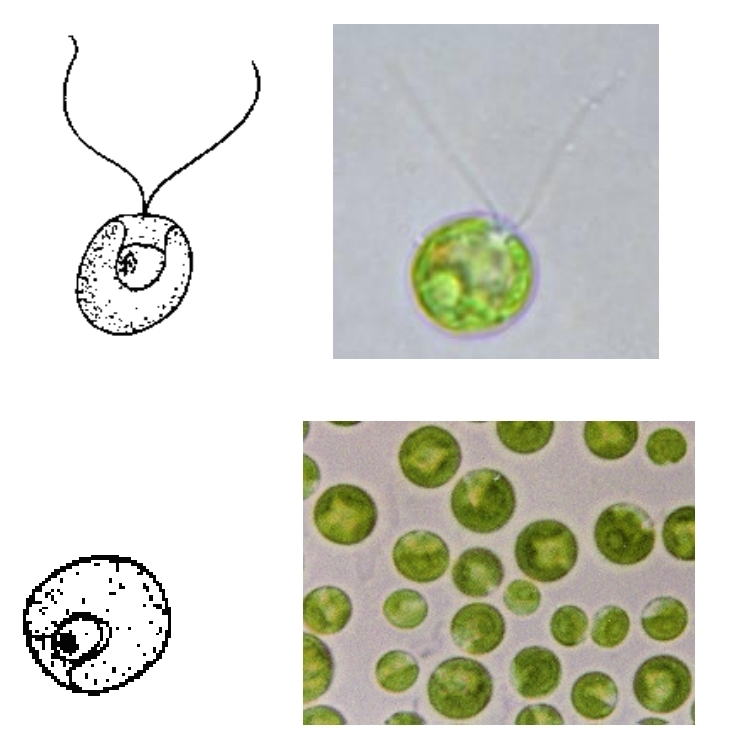
Chlorophytes (Phylum chlorophyta)
this group is known as the green algae
they share many common features with true plants such as:
they are photosynthetic, contains chlorophylls a & b and carotenoids, primary engery sources are stored as starch and both have cell walls composed of cellulose
there are 3 morphological types
unicellular
colonial
filamentous
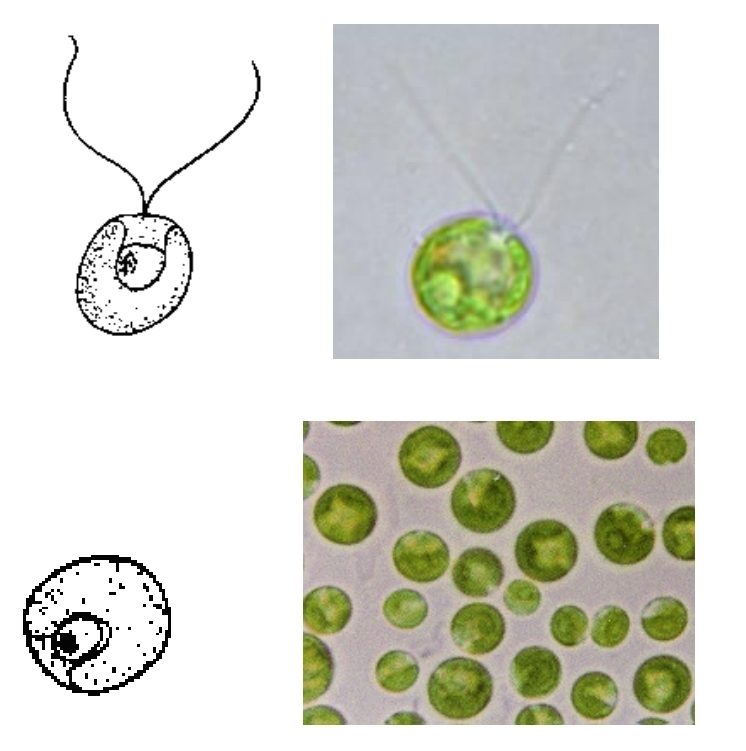
Unicellular Chlorophytes (green algae)
the simplest algae
mainly live in aquatic environments that supply nutrients, water, means of dispersal and a degree of support
there are a few that live in damp terrestrial habitats
they consist of a single cell
they have an adaptation for floatation (or predation avoidance)
Why do Unicellular cholorphytes need to stay close to the surface of the water?
they need to remain near to the surface to obtain sufficient light for photosynthesis
Why do larger/irregularly shaped unicellular chlorophytes ahve an advantage over small ones?
Larger and/or irregularly shaped cells have the advantage of being avoided by herbivores
this is because most animals that eat algae are tiny, so larger/irregular shaped algae is harder to ingest
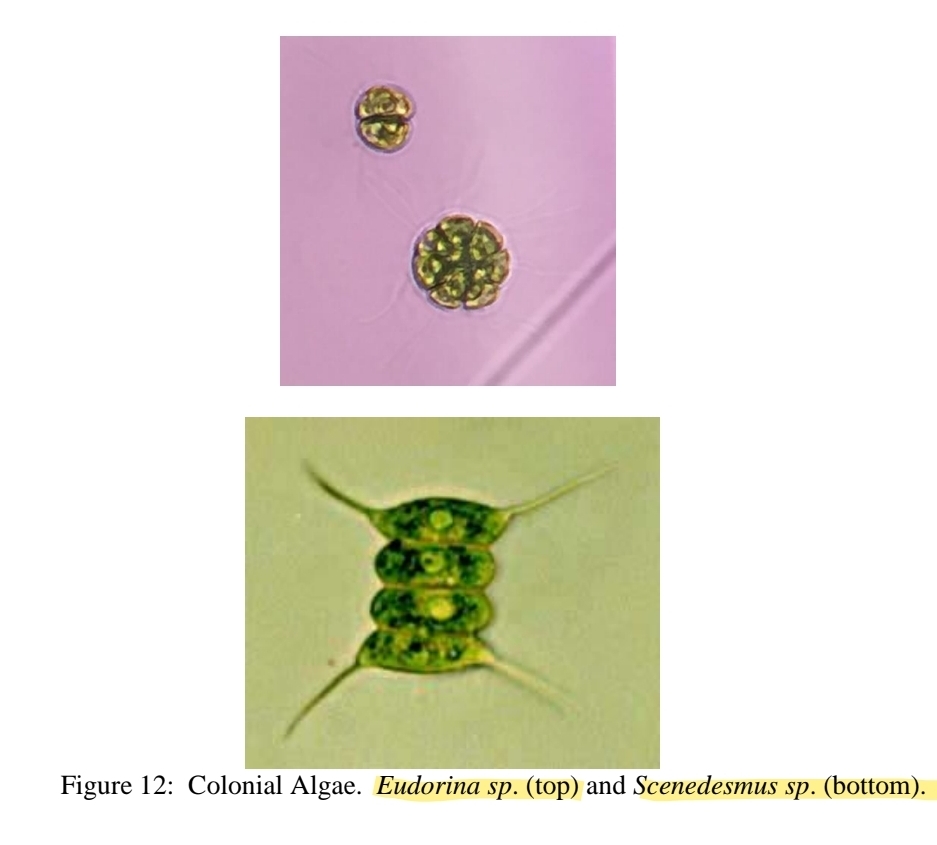
Colonial Chlorophytes
found primarily in the aquatic environment
Colonial chlorophytes divide to form colonies
division in consistent planes = regular colony
division in random planes = irregular colony
usually made up of, 16, 32, or 48 cells
Why do colonial chlorophytes inhabit shallow water?
to prevent sinking from being a colony
this ensures they stay in the photosynthetic zone
What do some colonies possess?
flagella for motility
each cell has 2 flagella
Why does each cell in the colony secrete mucilage?
The mucilage is less dense which aids in the colonies buoyancy
What is different about this colonial chlorophyte (Scenedesmus)
It has spikes, which helps it protect itself from predators
Filamentous Chlorophyta
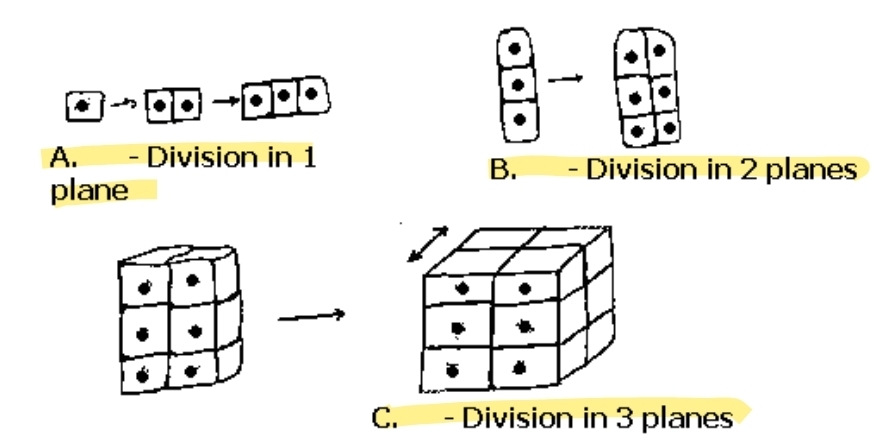
these algae can vary in how many planes they divide in
can be one, two, or three planes
What are some cellular differences between filamentous chlorophyta. What does it lead to?
thin portions for penetrating the substrate
thicker portions lie on the surface
erect portions project the mass and bear reproductive structures
this leads to division of labour among the three areas
these are algae that evolved on the substrate or lived on damp soil
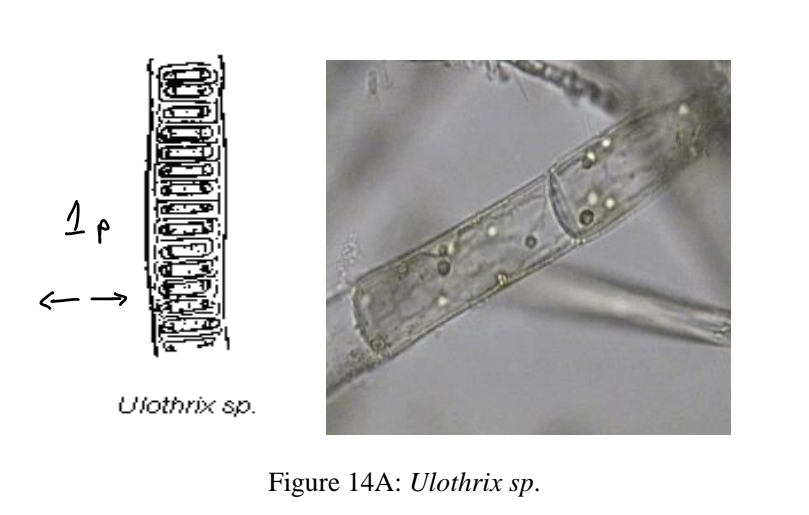
Division in one plane
creates a single chain of cells
can only divide ← or →
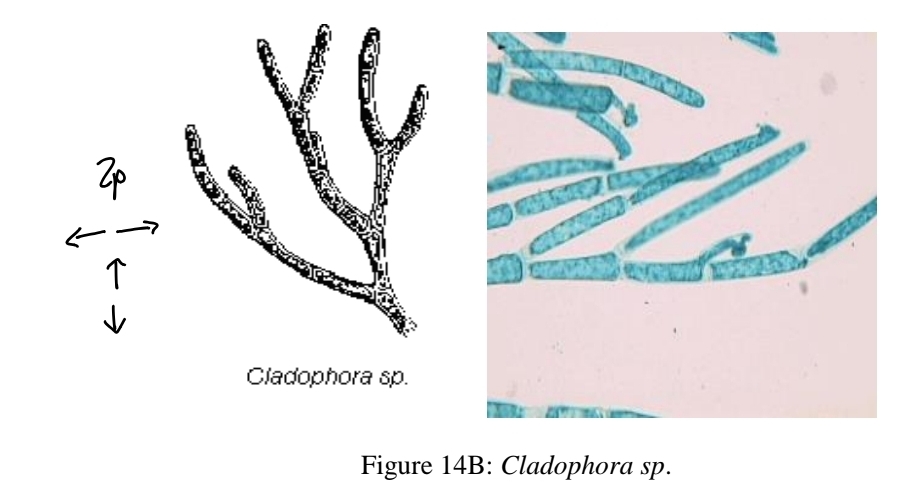
division in 2 planes
branching algae
can divide in two ways, up & down, and, left & right
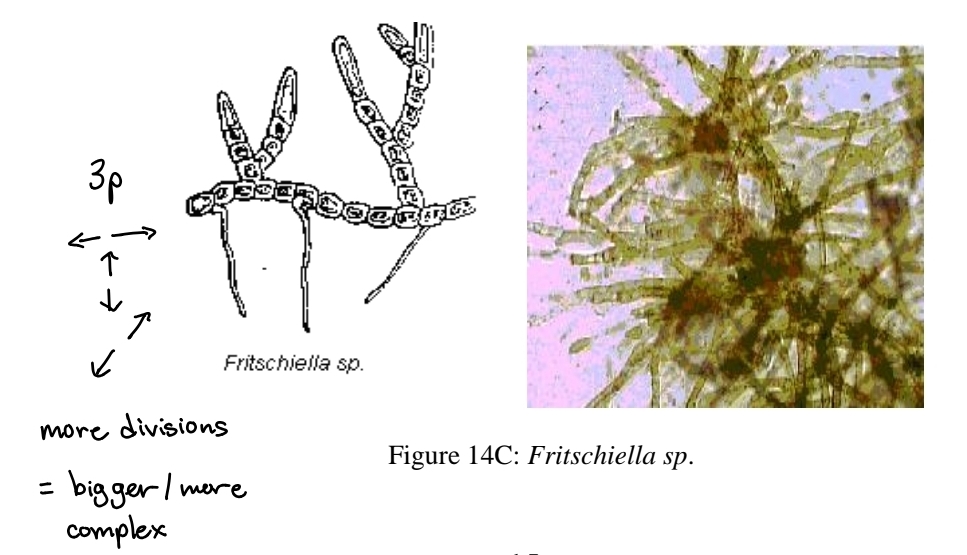
division in 3 planes
creates large algae
can divide in 3 ways, up & down, left & right, both ways diagonally
Protozoa (animal-like protists)
these are protists that are heterotrophic and motile
they are found in freshwater or marine
they have no special organelles for respiration
cell membrane is the site for gas exchange
reproduction is mainly asexual
What do protozoa, that live in hypotonic environments, have?
one or more contractile vacuoles for osmoregulation
pumps out excess water
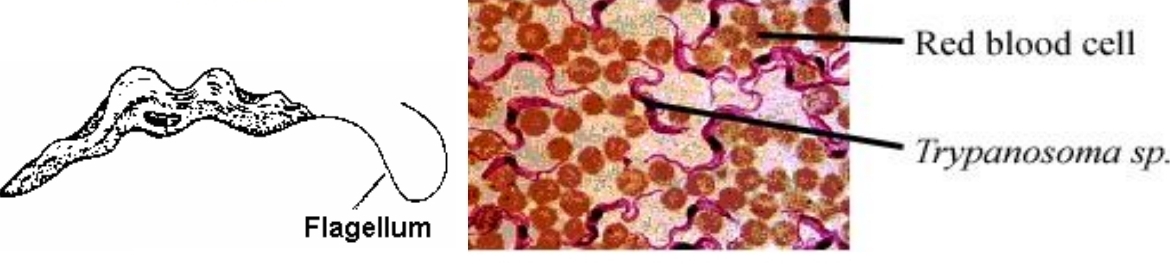
flagellated protozoans
these cause diseases in humans & domestic animals
in other words they are parasitic protozoans
e.g. Trypanosoma - lives in the blood or tissue fluids of the host
spread by insect bites (mosquitoes, sand flies, and tsetse flies)
has an elongate body and a whip-like flagellum used for loco motion
has an organized mass of dna called a kinetoplast
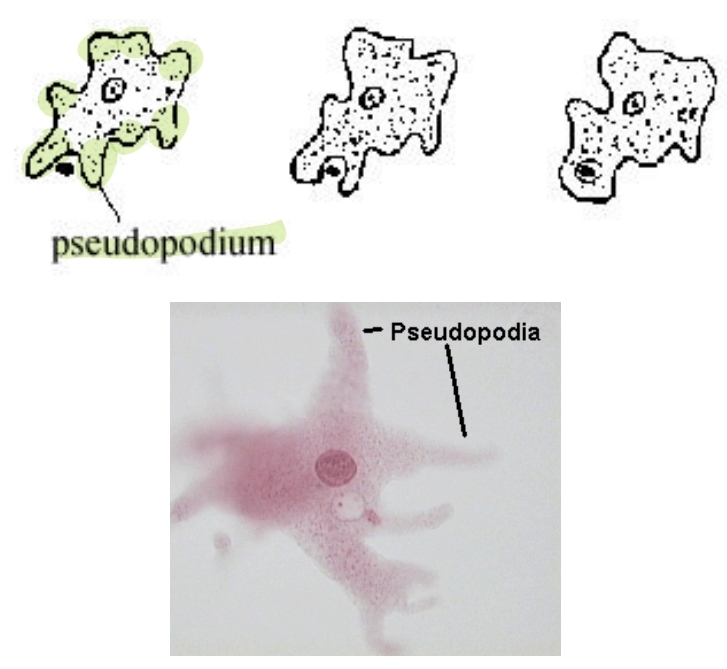
Pseudopodia-using protozoans
an amoeboid protozoa that posses flowing extensions of the body called pseudopodia (pseudopodium)
these are temporary projections of the cytoplasm that are used to engulf food and serve as locomotory structures
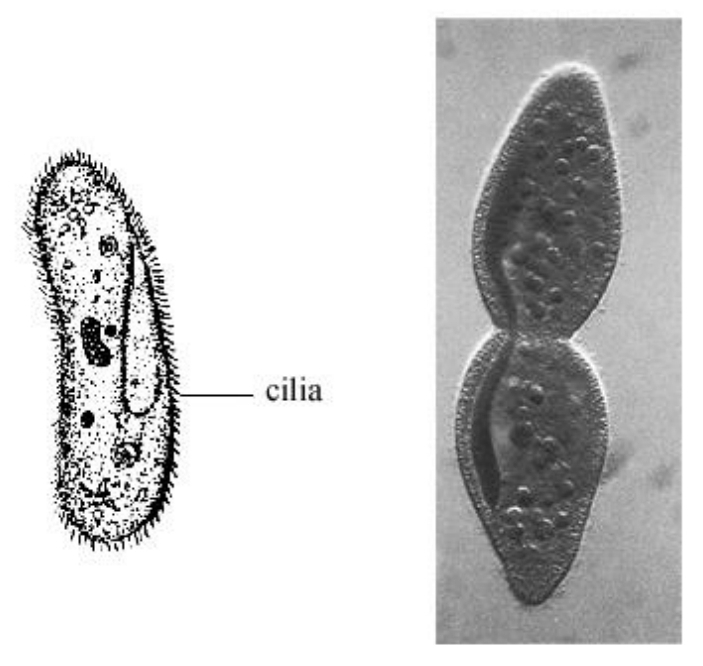
Ciliated protozoans
these have large numbers of cilia (the most specialized and complicated of the animal-like protists
the cilia is used for movement and/or feeding
they may completely cover the body or may be clustered in rows or tufts
e.g. Paramecium are free-living, unicellular, freshwater organism
reprouces asexually by binay or transverse fission
this is a division of an organism into two that are genetically similar
Fungal-like protists
consists of slime molds and water molds
used to be associated with the kingdom fungi but later found evidence that showed there is little to no relation between them
so they are grouped with the protists
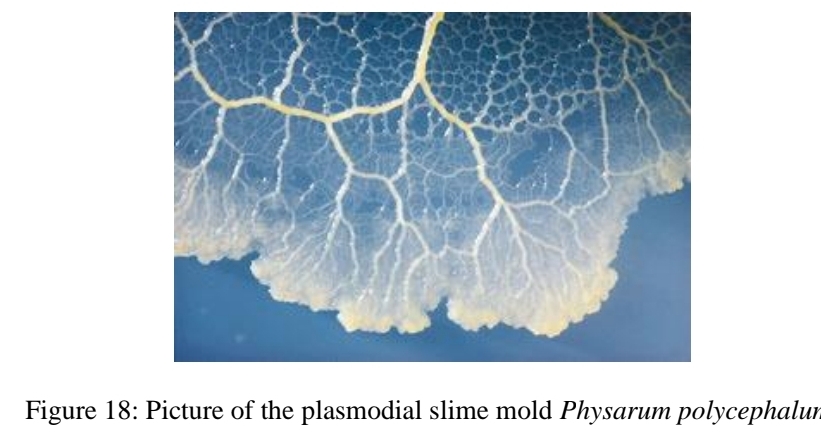
Plasmodial Slime molds
these protist stream along the damp forest floor in a mass of plasmodium.
brightly coloured cytoplasm
they are thin streaming masses of protoplam that creep alon in an amoebid fashion
resembles a moving mass of slime
as they travel that engluf (via phagocytosis) and digest bacteria, yeast cells, fungal spores, and small particles of decayed plant and animal matter
Plasmodium are coenocytic. What does it mean?
Also known as multinucleate
this means that they have many diploid nuclei that are not divided by cell walls
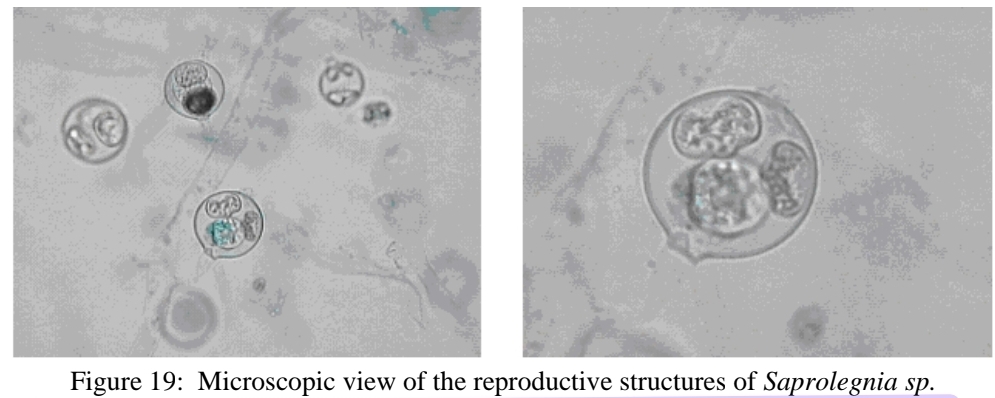
Oomycetes
these protists are water molds and downy mildews
they have cell walls that are composed of cellulose or cellulose-like polymers
they range from unicellular, highly branched, and coenocytic filamentous ones
they can also reproduce sexually and asexually
Sexual reproduction in Oomycetes
heterogamy (oogamous)
the egg is large and non-motile, and the sperm is smaller and biflagellate
the union results in the production of a thick-walled zygote, called oospore
ASexual reproduction in Oomycetes
by the means of zoospores that have two flagella
The water molds
these molds are principally aquatic, inhabiting freshwaters
they are decomposers that grow as a cottony mass on dead algae and animals
while some are weak parasites
they have profusely branched multinucleate hyphae
They can reproduce sexually and asexually
what are hyphae and what do they form?
hyphae are slender filaments of cytoplasm and nuclei
these forms colonies around decaying organic material in the water
Sexual reproduction in water molds
Sexual reproduction is by the means of gametangial contact
gametangia are gamete producing structures
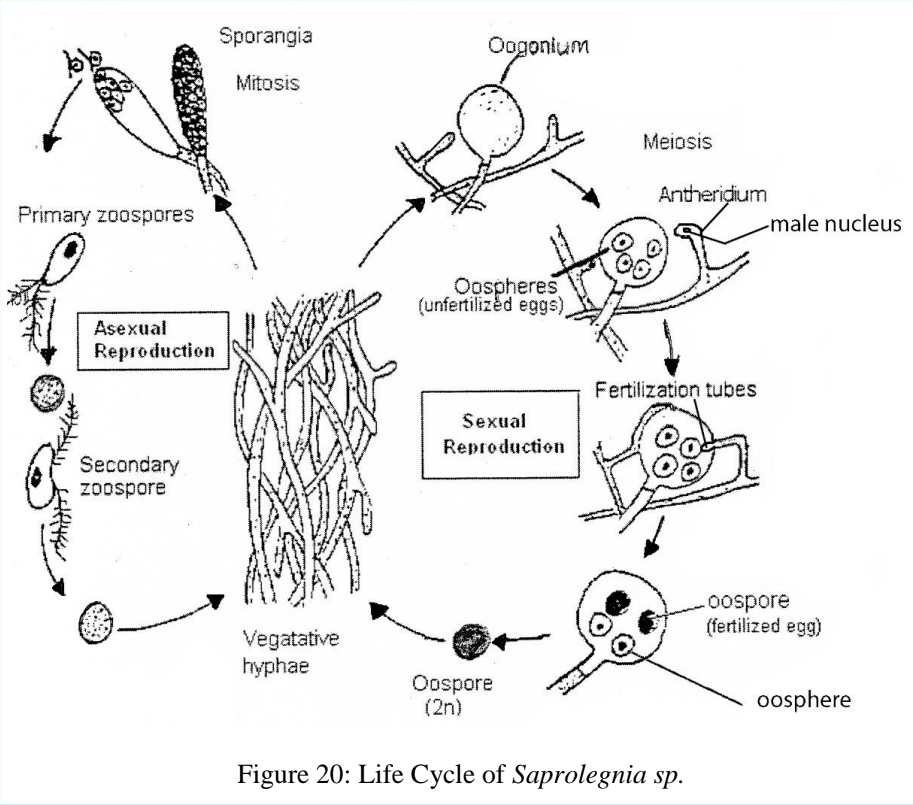
Asexual reproduction in water molds
Asexual reproduction is by the means of sporangia, which produce biflagellate zoospores
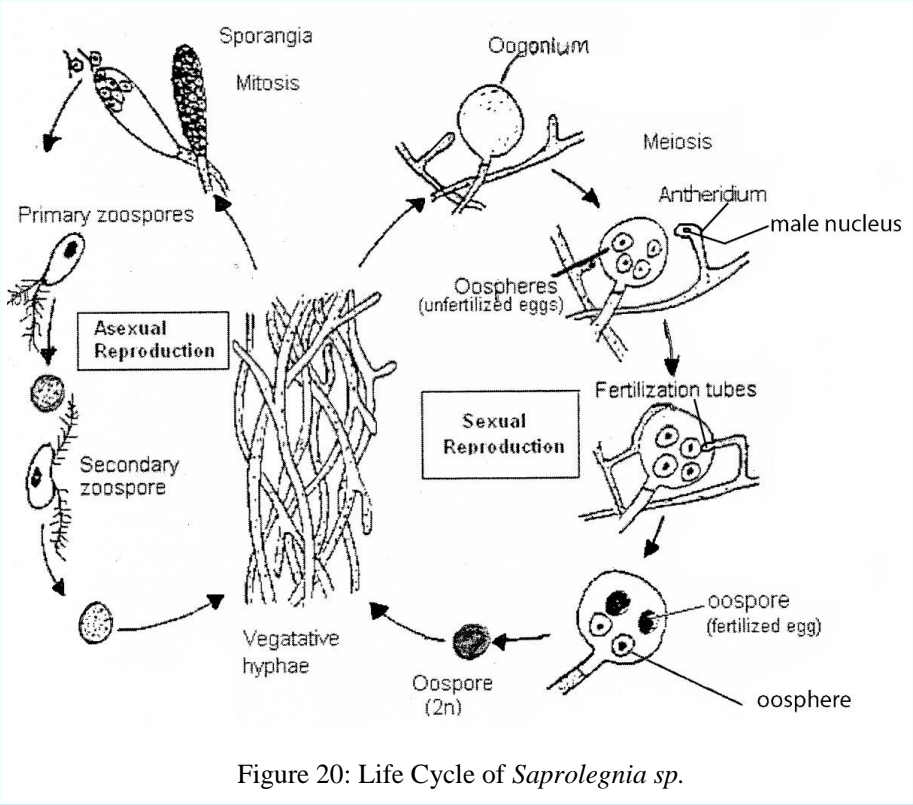
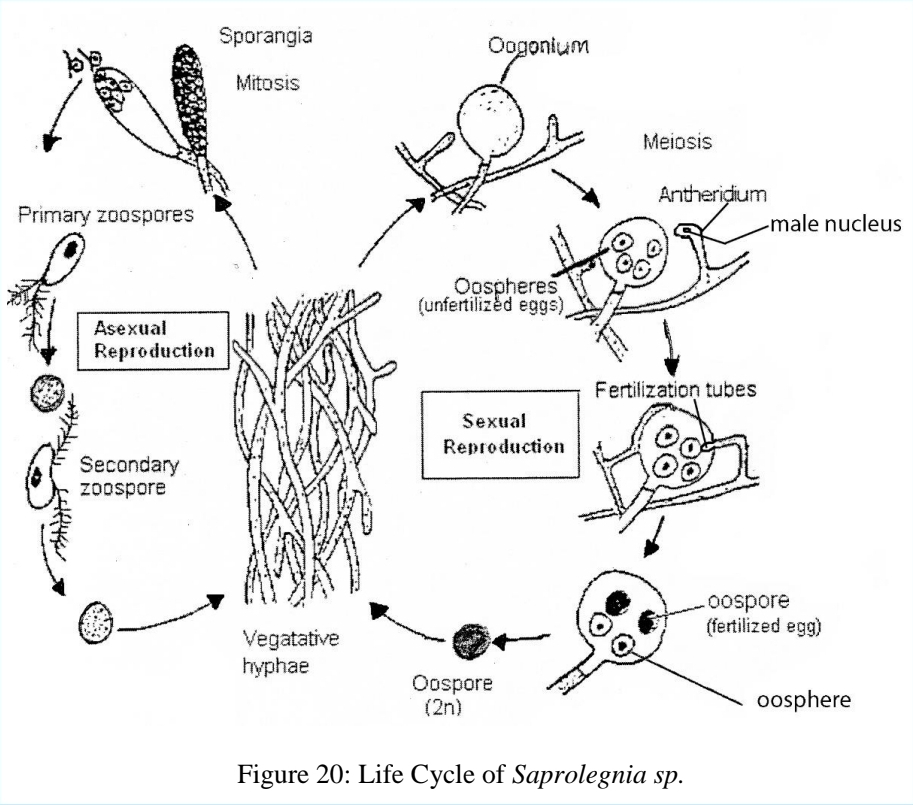
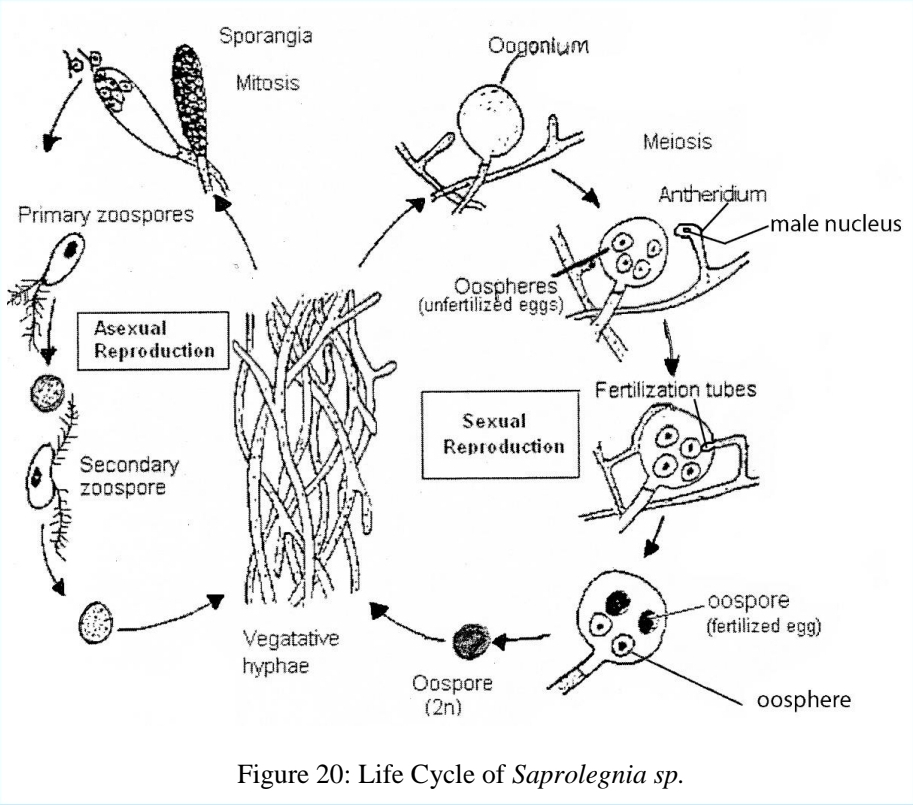
Saprolegnia
a kind of water mold
members of this genus decompose dead fish, inseacts and other organic matter in freshwater
For sexual reproduction, compatible oogonia and antheridia develop on the same diploid mycelium
meiosis occurs within these gametangia
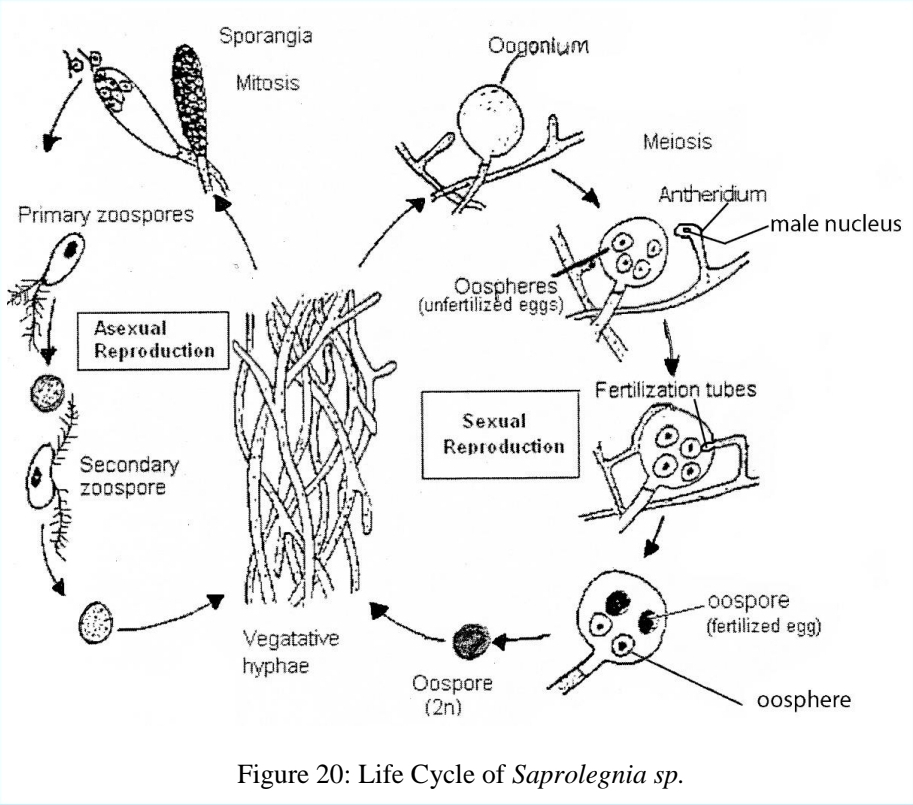
how does saprolegnia reproduce sexually? - oogonium
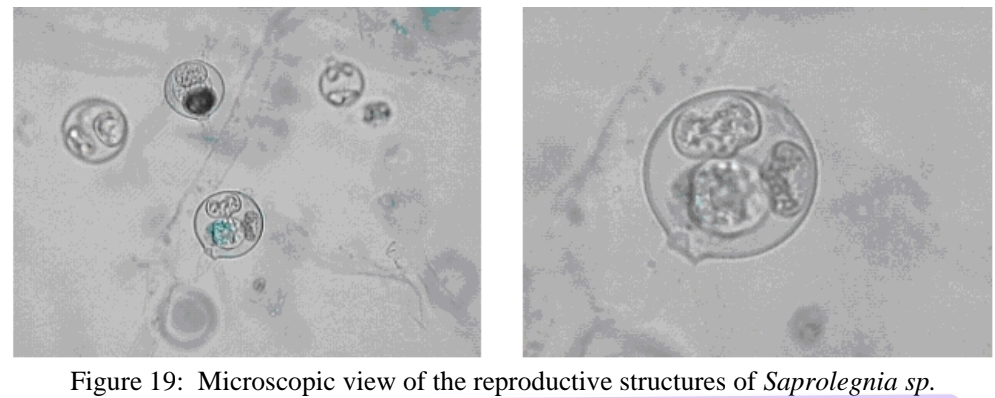
oogonia (plural_ are enlarged cells where a number of spherical eggs, called oospheres, are produced
this is found on vegetative hyphae that will be fertlized from the antheridium
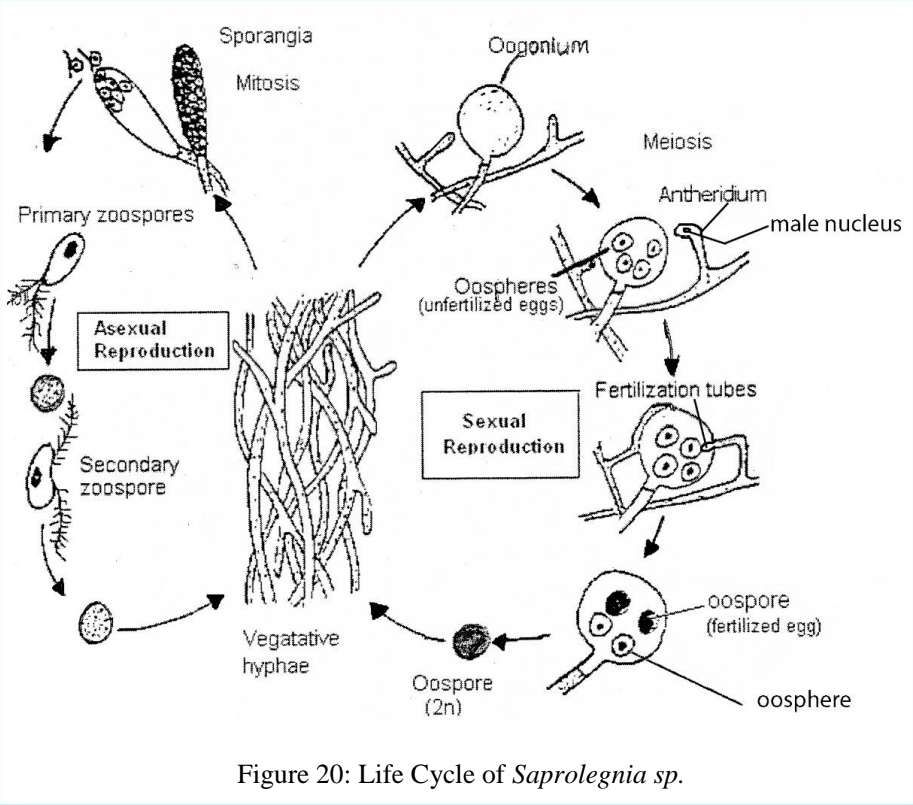
how does saprolegnia reproduce sexually? - antheridium
the antheridia develop from the tips of other filaments of thesame individual and produce numerous male nuclei
they will grow toward the oogonia and develop tubular processes called “fertilization tubes"
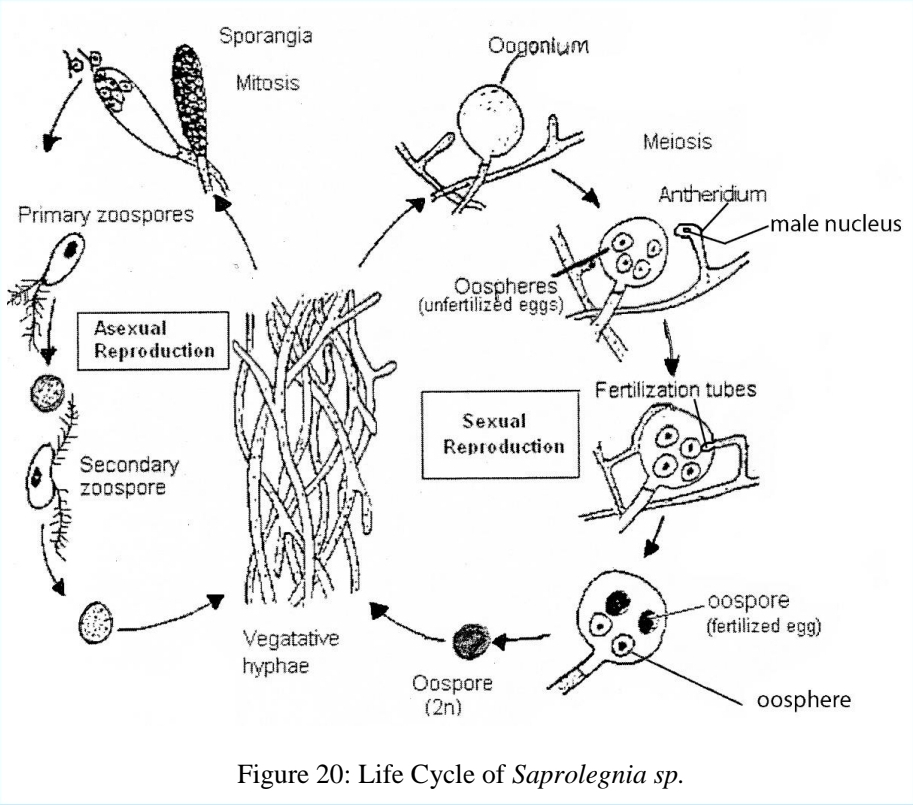
how do sparolegnia reproduce sexually? - fertilization + oospore
Male nuclei will travel down the fertilization tubes to the female nuclei and fuse with them
this will create the oospore (zygote)
this will then develop into hyphae, then into produces into sporangium, beginning the cycle anew
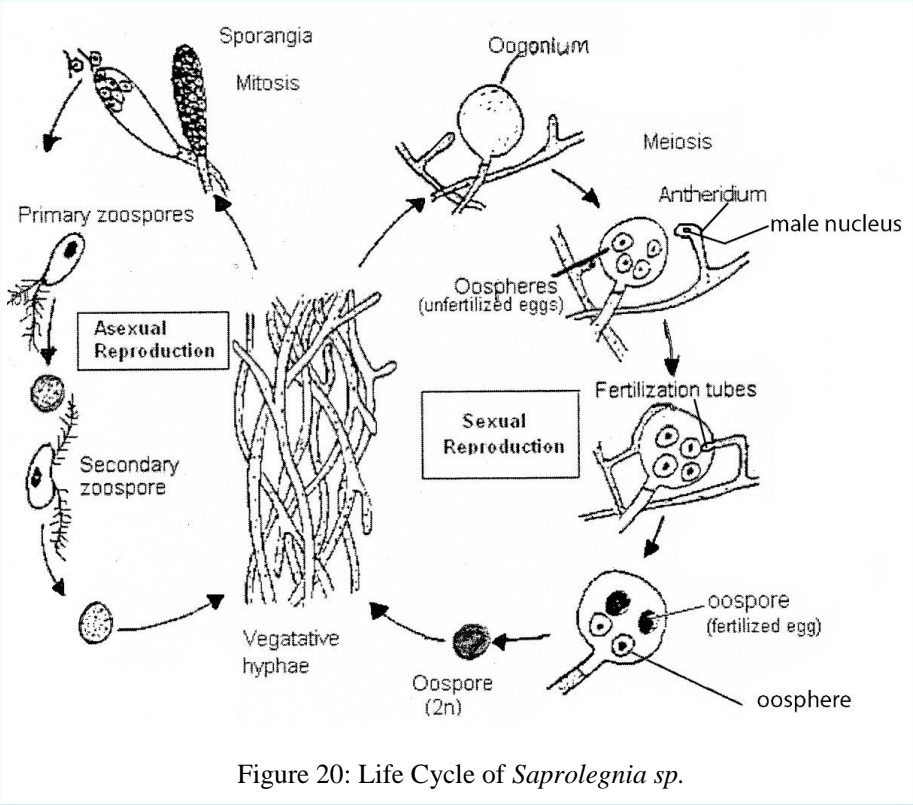
how do saprolegnia reproduce asexually?
Sporangia found on the vegetative hyphae will produce spores
these spores will exit and grow via mitosis into zoospores
The zoospores contain two flagella that will swim elsewhere, where they can grow into vegetative hyphae
the downy mildews (peronosporales)
these molds generally live on land and are parasites of plants.
these cause big impacts on plants and tremendous losses of crops each year
how do you know if a plant is infected by downy mildews?
the infected plants are distinguished by their swollen and distorted stems bearing a white layer of powdery (flower-like) sporangiophores (sporangia bearers)
these cover the surface of leaves and stems, this gives them a downy appearance
how do downy mildews infect other plants?
The sporangia produced are released and fall onto the ground to be picked up by the emerging seedlings or carried by the wind to land on the leaves of more mature plants
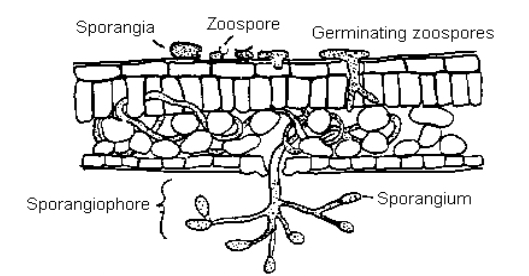
how do downy mildews affect other plants if water is present?
the sporangia germinate and release flagellated zoospores
the zoospores will swim and enter the plant tissue through open stomata or any break in the cuticle
the zoospores will then develop into hyphae, which invades the plants tissue
this forms a network called mycelium
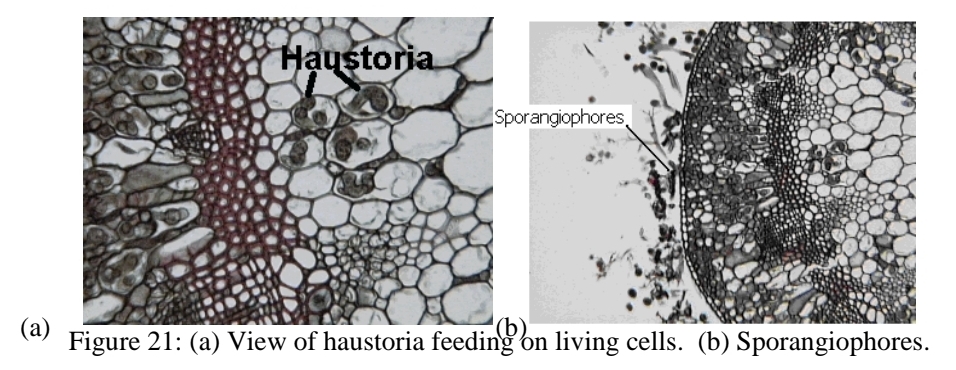
how do downy mildews infect other plants inf water is present? - mycelia
the mycelia will feed on living cells by the use of haustoria (means the one who drinks)
the haustoria will penetrate the living host’s cells, absorb nutrients, and pass the, to the growing hyphae
Kingdom fungi
the kingdom fungi are the decomposers of the biosphere
they are responsible for recycling essential chemical elements back to the environment
they help plant roots absorb water and minerals from the soil,
while the ddecomposition releases CO2 into the atmosphere and returns nitrogenous compounds and other minerals to the soil where they can be used again by green plants and eventually animals.
What is the bad side to the Kingdom Fungi?
as decomposers, they often come into direct conflict with human interests
e.g. a fungus that feeds on wood makes no distinction between a fallen tree in the forest or a railway tie
in other words fungi are equipped with a powerful arsenal of enzymes that breakdown organic products, fungi are often nuisances and are sometimes highly destructive due to having so many enzymes.
What else do fungi do that isn't decomposing things?
they reduce the palateable-ness of food and make it essentially unsafe to eat.
a number of fungi also produce extremely poisonous toxins
there are many of them that are pathogenic and attack living organisms rather than dead ones.
What is the good side to the Kingdom Fungi?
Organisms like yeast are useful for their abilities to produce substances such as ethanol and CO2 (which plays a central role in baking)
Others are of interest as sources of antibiotics, including penicillin, which was the first antibiotic to be widely used
as well as they are food potential sources of proteins
What associations are formed with the Kingdom Fungi?
They are usually between the Kingdom Plantae
fungi and plants will form associations between the plants roots, which is called mycorrhizae
this increases the absorptive surfaces of the plant roots and aid in mineral exchange between the soil and the plant.
Basic Structure of Kingdom Fungi
The basic structure of a fungus is the hypha
a slender filament of cytoplasm and nuclei enclosed by a cell wall
a mass of hyphae make up an individual organism and is collectively called a mycelium
this fungi can (seemingly) grow everywhere
The cell walls of fungi are made of chitin, the same polysaccharide that comprises the exoskeleton of insects and crustaciens
Nutrition of Kingdom Fungi - Saprophytes
Most fungi obtain food from dead organic matter and are called saprophytes
the hyphae will secrete enzymes for extracellular digestion of the organic substrate, and it will, along with the mycelium, absorb the digested nutrients
this is why fungi are called absorptive heterotrophs
Nutrition of Kingdom Fungi - Parasites
Other fungi feed on living organisms and are parasites
these parasitic fungi have modfied hyphae called haustoria
haustoria are thin extensions of the hyphae that penetrate living cells and absorb nutrients
saprophytes
fungi that feed on decomposing dead or decaying organic matter
parasites
fungi that feed on living organisms
causes bad side effects for the living organism
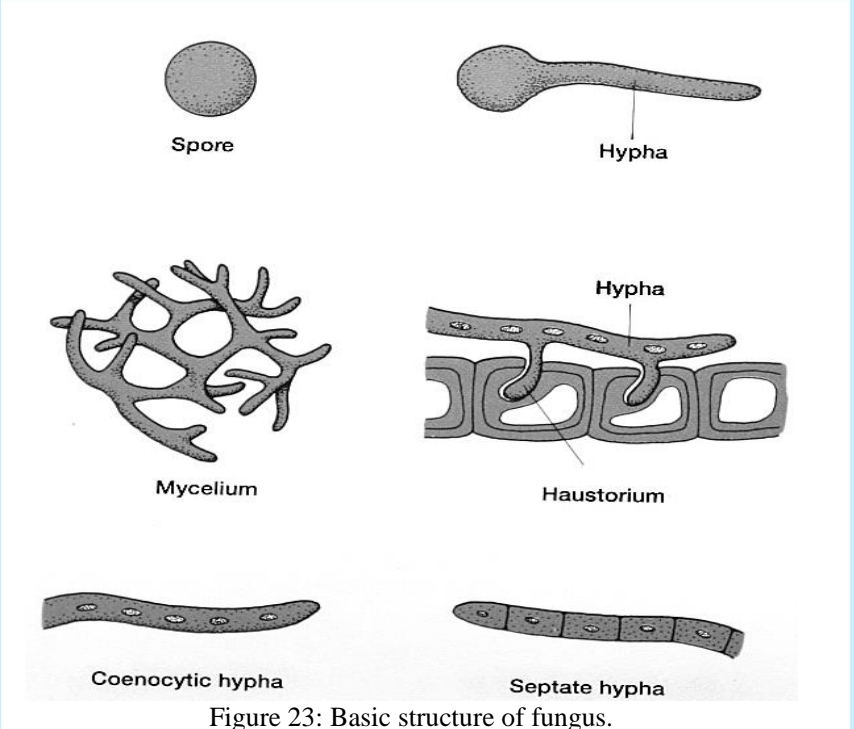
what do hyphae have in some species? What about other species?
they have cross walls called septa
this separates cytoplasm and nuclei into cells
Other species have incomplete or no septa (aseptate) and therefore are coenocytic (multinucleate)
Reproduction in Kingdom Fungi
Fungi can reproduce sexually or asexually.
Asexual Reproduction in Kingdom Fungi
This is the common way that fungi reproduce
This is done by production of haploid vegetative cells called spores in sporangia, and conidia on condiophores.
Spores are microscopic and surrounded by a covering well suited for whatever the distribution lies ahead.
Budding and fragmentation is two other ways that fungi reproduce.
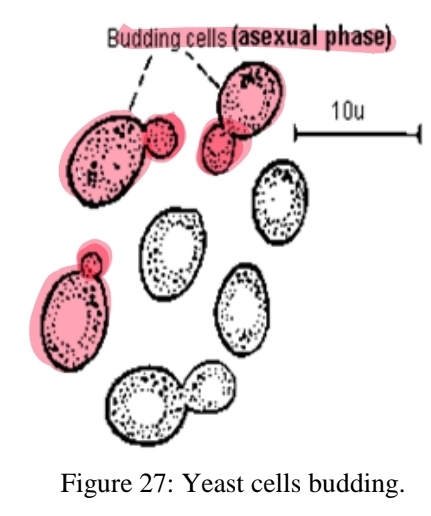
Asexual reproduction in Kingdom fungi - Budding
Budding is mitosis with uneven distribution of cytoplasm that will eventually detaches and matures into a new organism
Asexual reproduction in the Kingdom Fungi - Fragmentation
Fragmentation is the breaking of an organism into one or more pieces, each of which can develop into a new individual
Sexual Reproduction in Kingdom Fungi
Fungi reproduce sexually when hyphae of two genetically different individuals of the same species encounter each other.
But the timing of vegetative growth, meiosis, and fertilization, is unique
What are the four important features of the sexual cycle on fungi? #1
Nuclei of a (monokaryotic) fungal mycelium are haploid during much of the life cycle
 Note
Note  Flashcards (27)