Latin Culture for Midterm 2/2 (Baths at Aquae Sulis)
 Studied by 1 person
 Call Kai
 Learn
Learn Practice Test
 Spaced Repetition
 Match
Match Flashcards
 Knowt Play
1/36

Name | Mastery | Learn | Test | Matching | Spaced | Call with Kai |
|---|
No analytics yet
Send a link to your students to track their progress
37 Terms
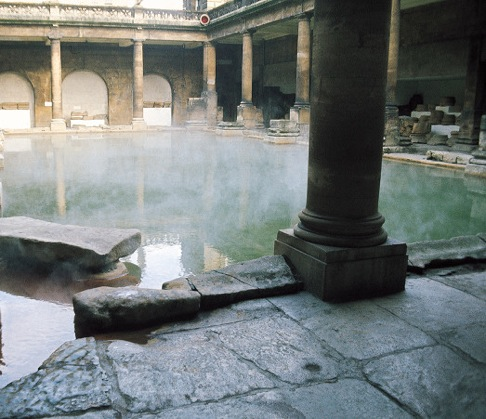
The largest of the three plunge baths at Bath: it is now called the Great Bath. Notice the steam rising from the naturally hot water.
The largest of the three plunge baths at Bath: it is now called the Great Bath. Notice the steam rising from the naturally hot water.
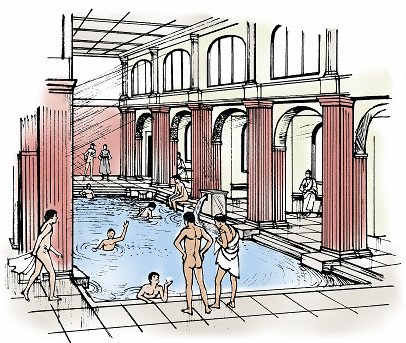
How the Great Bath probably looked around the time of our stories, late first century AD. Bathers with and without towels bathe and chat.
A carved stone portrait of a lady with fashionable hairstyle and earrings. From her tomb at Bath.
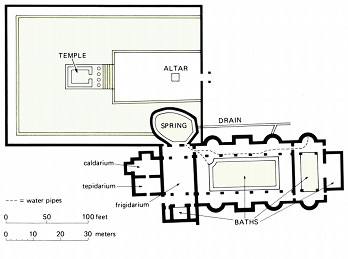
Plans of the baths and the temple at Bath, England, around 100 AD.
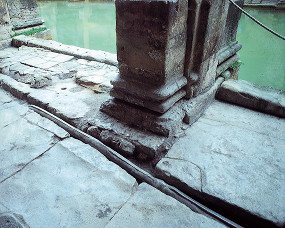

Water ran from the spring to the baths through lead pipes.
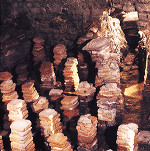
In addition to the pools of natural hot water, there was a set of baths heated by a hypocaust in the Roman mannet, with a caldarium, tepidarium, and frigidarium. Part of the hypocaust.
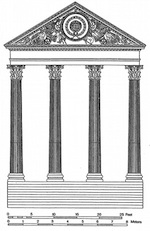
Reconstruction of the temple front. Four Corinthian columns standing above a flight of steps support a large decorated triangular pediment.
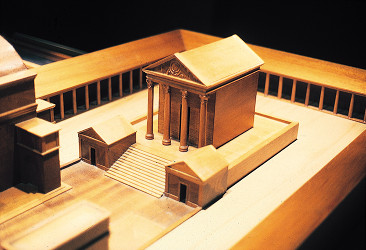
A model of the temple and the courtyard.
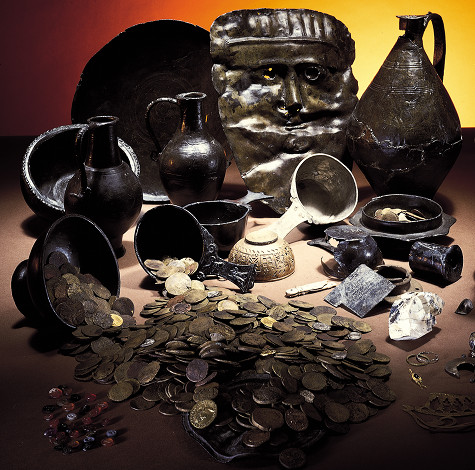
Some of the objects (coins, bowls, jugs, seal stones, a mask, and other items) people threw into the springs.

A red cornelian seal stone shows a goddess, perhaps Fortuna, holding a horn of plenty, poppy head and rudder. Thrown into the springs.

A dark agate seal stone is carved with the bust of a woman, a Maenad, looking to the left, her hair tied behind her head by a band. Thrown into the springs.

A cornelian seal stone is carved with a discus-thrower and a palm of victory in a vase. Thrown into the springs.
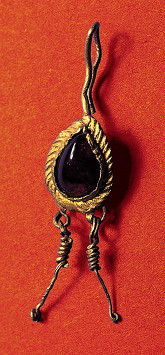
Gold earrings with pear-shaped garnet found in the springs.
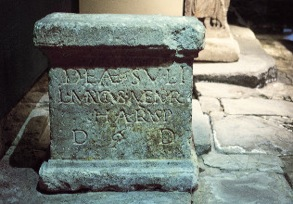
Memor set up a statue near the altar of the goddess Sulis. The statue has disappeared, but this is the statue base with his name on it. The altar is in the background.
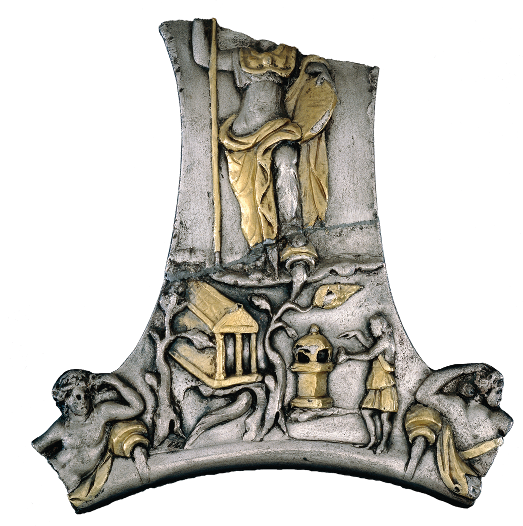
Gold and silver relief from the handle of a serving dish showing a worshipper making an offering at an altar outside a temple by a spring.
Location
Bath, UK, near Avon River, at a bend in the river
What is it?
Hot mineral springs, hot water under the earth
Amount of water produced
250,000 gallons (1,000,000 liters) of water per day
Water temperature
104-121 degrees Fahrenheit (40-49 degrees Celsius)
Where is the water from?
Water from today was rain from 10,000 years ago, sank into the Earth, rose as hot springs
Minerals
Calcium, magnesium and sodium primarily
What the Celts believed about Aquae Sulis
Sacred, home of goddess Sulis (goddess of healing), should be worshipped, believed special waters could cure and heal as well
Roman views on Aque Sulis
Saw the potential of the place - being used as pilgrimage, gained trust from the locals, built a huge public bathhouse thermis, dedicated to goddess Minerva
Sacred Spring
Most significant part of the bathhouse
Wall
Around the reservoir of water, built by Romans, lined with lead sheets, stone railing surrounds reservoir atop the wall
Roman engineering
Impressive (architecture, hypocaust, etc.), survives 21st century
thermae building shape
long and rectangular
Three primary baths (“plunge baths”) in the complex had _ ________ ______ __ ____ _______ _____
a constant source of warm, pleasant mineral water. The pool nearest to the spring had the warmest water
Traditional suite of bathhouse rooms
caldarium, tepidarium, frigidarium. hypocaust heated them.
Who built it?
Military engineers and hired plumbers - showed skill and quality - reminders of the high standards of Roman engineering
Woman’s tombstone
58 years old, from eastern gaul, died from illness she sought to remedy in Aquae Sulis.
Julius Vitalis tombstone
soldier in 20th legion, only served for 9 years, got sick and military sent him to Aquae Sulis, died at age 29
Temple constructed by Romans
Dedicated to Minerva, not Sulis; designed in Roman style with a cella, Corinthian columns, decorative pediment
How do we know Aquae Sulis was important?
A Roman Official had come. A statue was dedicated by a haruspex (Lucius Marcius Memor). Base of the statue of Minerva reveals a lot about Romans belief.
What other building were built around?
Basilica, theater, houses for residents/workers, inns for visitors
Tourism conducted by Romans
souvenir shops, employing retail workers, craftsmen could create and sell their wares (eg carved gemstones, good luck charms, jewelry, things to throw in the sacred springs)
 Note
Note  Flashcards (40)