3.3 - peds orthopedics 1
 Call Kai
 Learn
Learn Practice Test
 Spaced Repetition
 Match
Match Flashcards
 Knowt Play
1/47

There's no tags or description
Looks like no tags are added yet.
Name | Mastery | Learn | Test | Matching | Spaced | Call with Kai |
|---|
No analytics yet
Send a link to your students to track their progress
48 Terms
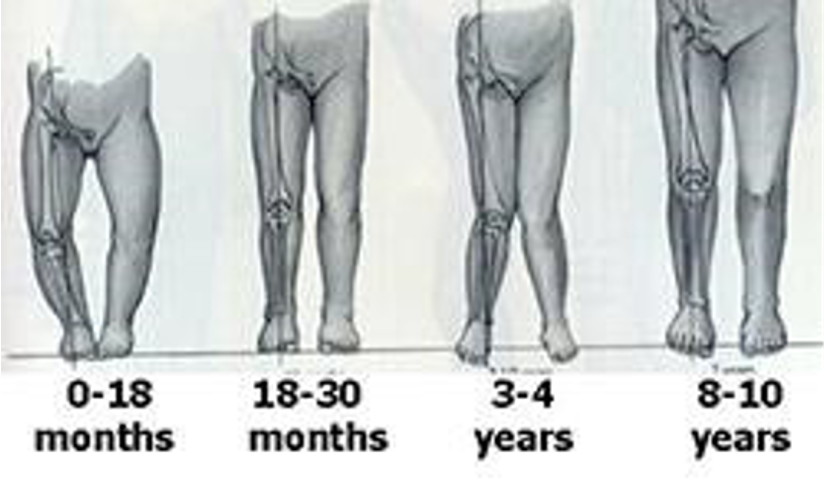
0-18 months = varus
18-30 months = straight
3-4 years = valgus
8-10 years = straight
describe the lower extremity bony alignment development from 0 months to 10 years
1-7
linear correlation in development of gait:
step length to leg length is _________ years
1-4
linear correlation in development of gait:
step length to age is ____________ years
7 years
linear correlation in development of gait:
walking velocity increases through _________ years
decreases; 1-2
linear correlation in development of gait:
cadence (decreases or increases) with age, ________ years is biggest change
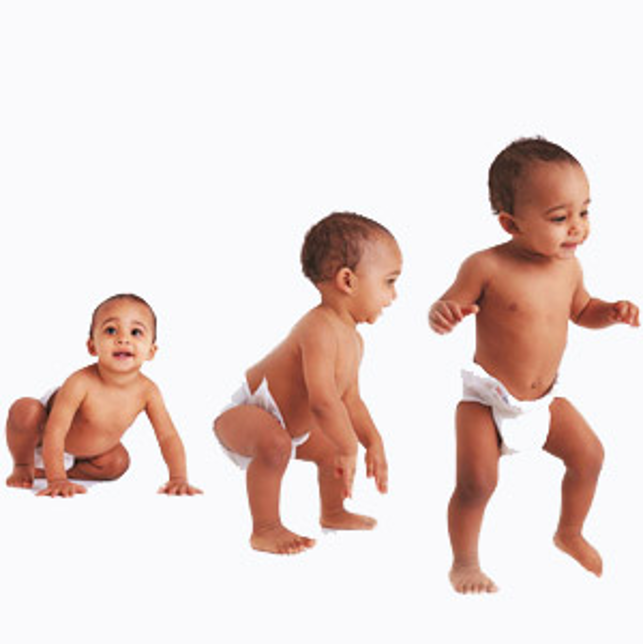
flexion, abduction, femoral anteversion
genu varum
eversion
0-9 months old:
what position is the hip in?
what position is the knee in?
what position is the calcaneus in?
8-9 months
at _________ months, there is better flexion/extension, cruising, and standing
40; 15-20
we are born with about ________ degrees of anteversion and overtime/weight bearing brings it to ________
flexion, abduction, slight ER
IR and varus
eversion
thoracic
9-15 months:
what position is the hip in?
what position is the tibia in?
what position is the calcaneus in?
where is the COM?
extensor
at 9-15 months, the __________ muscles are still underdeveloped which affects their single leg stance which limits their walking speed
24 months
what age should a child begin to heel strike
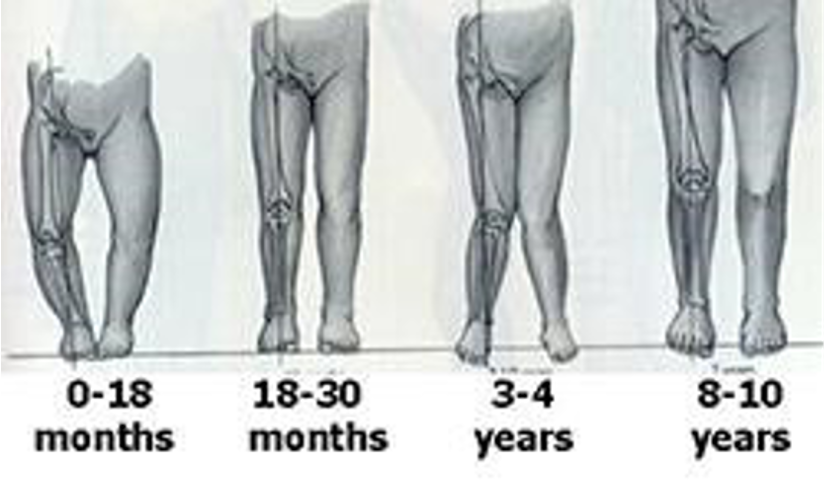
valgus; neutral
at 3-3.5 years the knees are in a __________ position and the calcaneus is in a __________ position
7 years
postural control matures at age __________
10-12 years
vision, vestibular, proprioception matures at age __________
neutral
neutral
L3
6-7 years:
what position is the tibia/femor in?
what position is the calcaneus in?
where is the COM?
6-7 years (minimal changes occur in the future after this age)
what age does the child develop a “mature gait”
soft moccasin or barefoot
what type of shoe does Dr. Buck suggest children wear
negative
is in toeing negative or positive degrees
mild = -5 - -10
moderate = -10 - -15
sever = > -15
degrees of in toeing:
mild =
moderate =
sever =
more than -15
if a child is dragging their toe during gait via toe in, we can assume they have _________ degrees of toe in
out; 10 (norm range is -3 to +20)
it is normal to have (toe in or out) about ___________ degrees
positive
is out toeing negative or positive degrees
-3 to +20
what is the normal range of out toeing
anteversion
femoral ___________
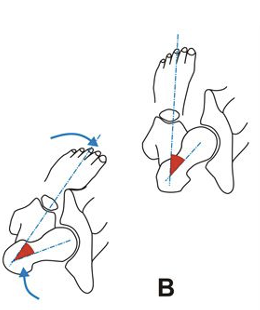
retroversion
femoral ___________
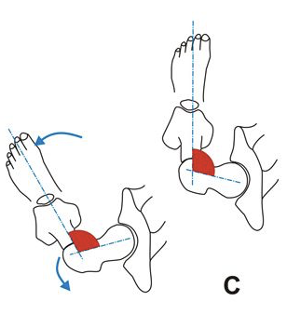
anteversion
femoral anteversion or retroversion:
too much internal rotation
retroversion
femoral anteversion or retroversion:
too much external rotation
anteversion
femoral anteversion or retroversion:
more at risk for posterior dislocation
retroversion
femoral anteversion or retroversion:
more at risk for pain and arthritis
anteversion
femoral anteversion or retroversion:
more common
craigs
ryder test
ROM
what are the options to measure femoral anteversion/retroversion
4 years
if genu varum is present after __________ age, start considering that there may be a disease
varum (bowing)
genu ___________ could lead to rickets or blounts
valgus
genu _________ can lead to knee pain and patellofemoral instability
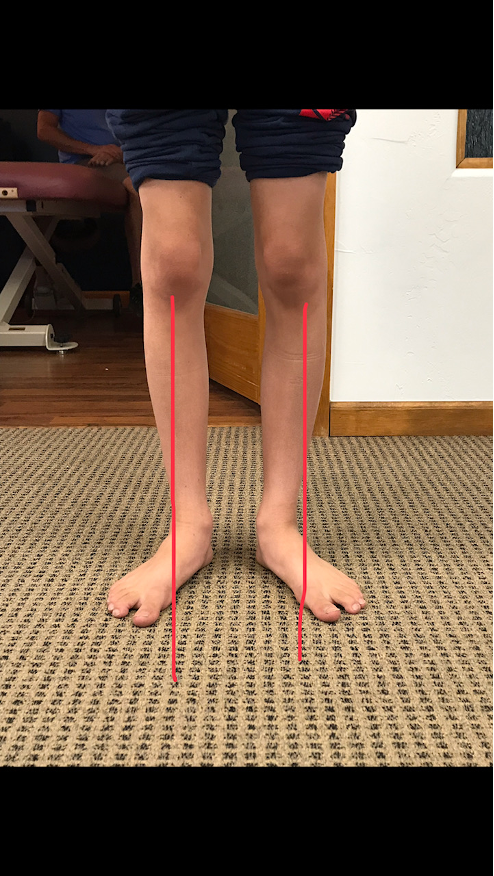
10
it is normal to have _______ degrees of tibial torsion
-; +
when measuring tibial torsion, internal degrees are (- or +) and external degrees are (- or +)
internal
internal or external tibial torsion:
most resolve
internal
internal or external tibial torsion:
treat with bracing (not always effective tho)
internal
internal or external tibial torsion:
may actually help with sprinting sports
external
internal or external tibial torsion:
predisposes of osgood-schlatter syndrome
9
more than ______ degrees of external tibial torsion predisposes someone for osteoarthritis
8 (all the slide says is 8… I’m guessing either degrees or age?)
both internal and external tibial rotation need surgery after _______
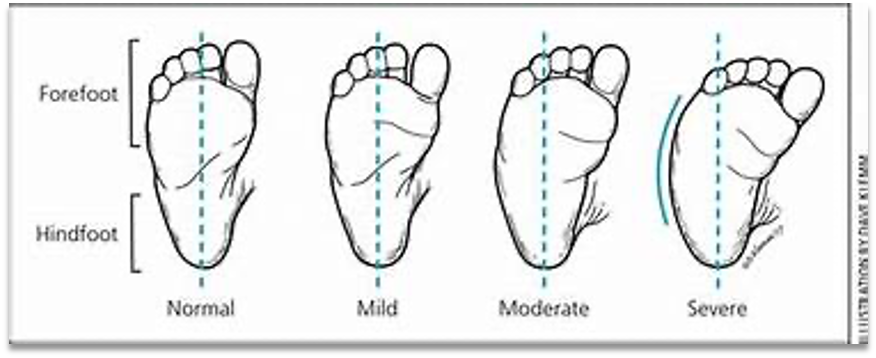
between 2-3 toes
in a normal foot, where does the midline pass
4
if the child is ________ years old or more, casting and surgery are possible interventions for metatarsus adductus
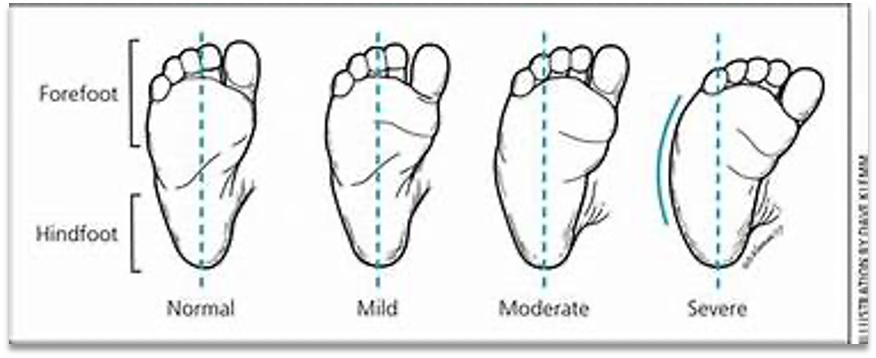
1
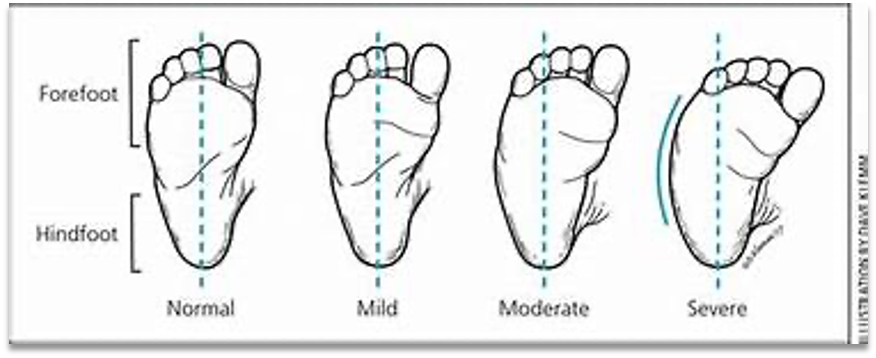
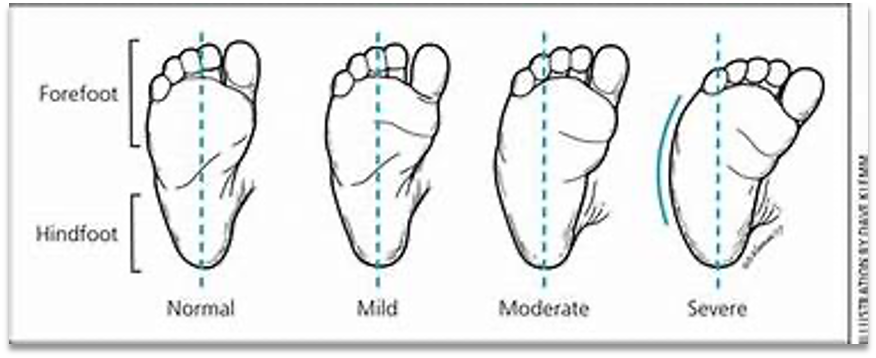
grade _________ metatarsus adductus:
mild, flexible, can correct beyond midline
2
grade _________ metatarsus adductus:
moderate, can correct to midline, stretching and shoes
3
grade _________ metatarsus adductus:
severe, cannot correct to midline
observational gait scale (OGS)
the _______________ assessment tool measures the amount of change in an individual’s gait pattern over time

