Personality Disorders: Types, Symptoms, and Treatments in Psychology
 Studied by 0 people
 Call Kai
 Learn
Learn Practice Test
 Spaced Repetition
 Match
Match Flashcards
 Knowt Play
1/73

There's no tags or description
Looks like no tags are added yet.
Name | Mastery | Learn | Test | Matching | Spaced | Call with Kai |
|---|
No analytics yet
Send a link to your students to track their progress
74 Terms
What are personality disorders?
Personality disorders differ markedly from cultural expectations, are pervasive and inflexible, and begin in adolescence or early adulthood, causing distress or impairment.
What are the three clusters of personality disorders?
Cluster A: odd or eccentric types; Cluster B: dramatic, emotional, or erratic types; Cluster C: anxious or fearful types.
What disorders are included in Cluster A?
Paranoid, schizoid, and schizotypal personality disorders.
What disorders are included in Cluster B?
Antisocial, borderline, histrionic, and narcissistic personality disorders.
What disorders are included in Cluster C?
Avoidant, dependent, and obsessive-compulsive personality disorders.
What are the hallmark symptoms of paranoid personality disorder?
General suspicion and distrust of others, including doubts about loyalty, reluctance to share information, and viewing harmless comments as threatening.
What characterizes schizoid personality disorder?
Lack of interest in social relationships, emotional coldness, and a preference for solitary activities.
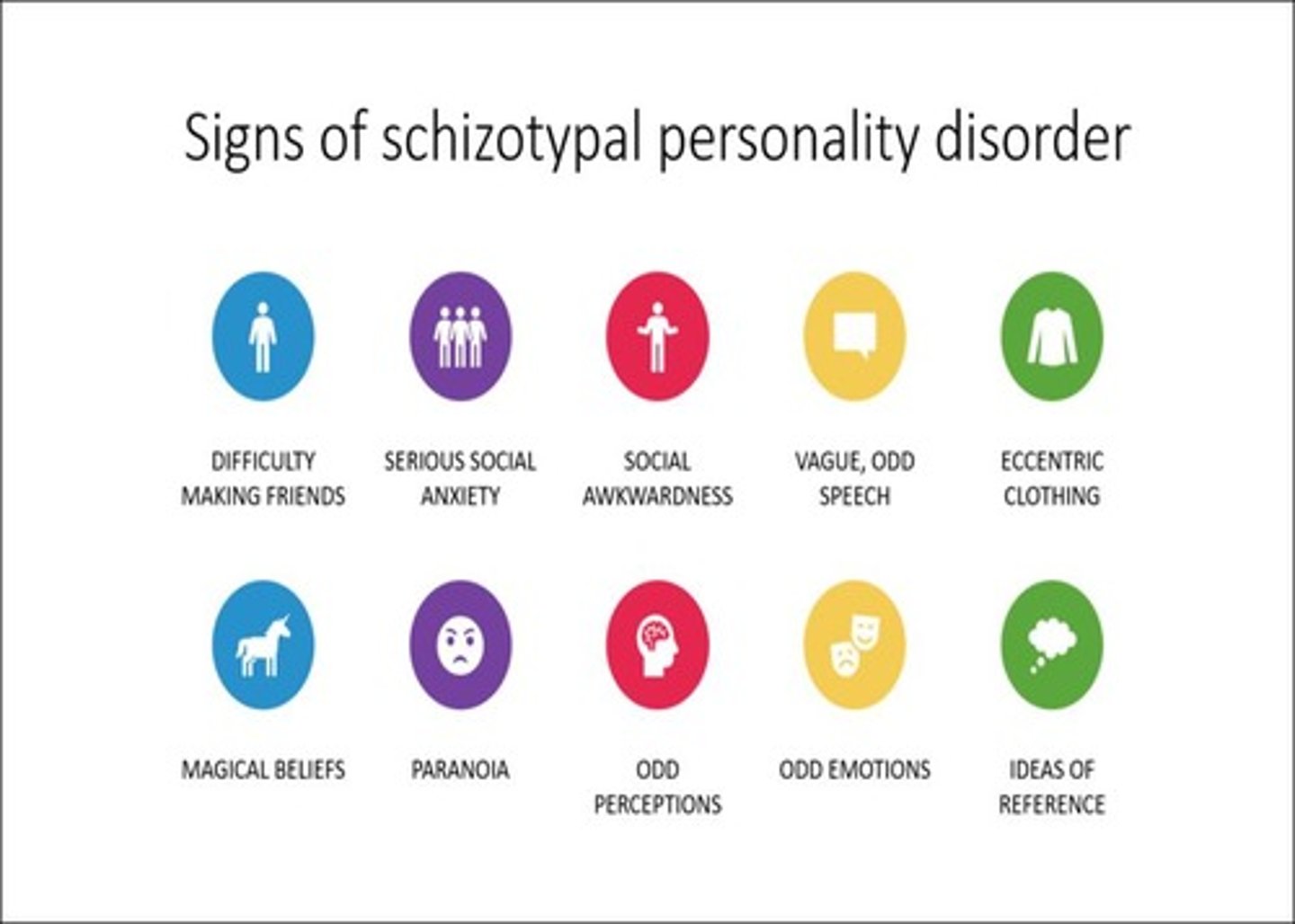
What are the symptoms of schizotypal personality disorder?
Severe social anxiety, thought disorder, paranoid ideation, and unconventional beliefs.
What is antisocial personality disorder (ASPD)?
A disorder characterized by a disregard for others' rights or feelings, deceitfulness, impulsivity, and lack of remorse.
What are the diagnostic criteria for ASPD?
Failure to conform to social norms, deceitfulness, impulsivity, irritability, reckless disregard for safety, irresponsibility, and lack of remorse.
What characterizes histrionic personality disorder?
Excessive attention-seeking behaviors, inappropriate seduction, and a need for approval.
What is the significance of affirmations in the context of personality disorders?
Affirmations promote proactive behavior, acceptance of uniqueness, and viewing failure as feedback.
What is a common misconception about antisocial personality disorder?
That it is primarily diagnosed in females; it is more commonly diagnosed in males.
What is the relationship between personality disorders and cultural expectations?
Personality disorders are defined by behaviors that markedly differ from cultural norms.
What is the typical age of onset for personality disorders?
They typically begin in adolescence or early adulthood.
What is a key feature of borderline personality disorder?
Unstable relationships, impulsivity, and intense fear of abandonment.
What is a common symptom of avoidant personality disorder?
Extreme shyness and fear of social situations.
What is a characteristic of dependent personality disorder?
Excessive need to be taken care of, leading to submissive and clinging behaviors.
What does the term 'narcissistic personality disorder' refer to?
A disorder marked by grandiosity, need for admiration, and lack of empathy.
What is the primary focus of treatment for personality disorders?
To help individuals understand their behaviors and develop healthier coping strategies.
What is Histrionic Personality Disorder (HPD)?
A pervasive pattern of excessive emotionality and attention-seeking, beginning by early adulthood.
What are the criteria for diagnosing Histrionic Personality Disorder?
Must meet five or more criteria, including discomfort when not the center of attention, inappropriate seductive behavior, and rapidly shifting emotions.
What is Narcissistic Personality Disorder (NPD)?
Characterized by persistent grandiosity, excessive need for admiration, and lack of empathy.

What are the diagnostic criteria for Narcissistic Personality Disorder?
Requires five of nine criteria, including grandiose sense of self-importance and lack of empathy.
What is Borderline Personality Disorder (BPD)?
A mental illness characterized by unstable relationships, distorted self-image, and strong emotional reactions.
What are the diagnostic criteria for Borderline Personality Disorder?
Must meet five or more criteria, including frantic efforts to avoid abandonment and impulsivity in self-damaging areas.
What is a common behavior associated with Borderline Personality Disorder?
Frantic efforts to avoid real or imagined abandonment.
What is Avoidant Personality Disorder (AvPD)?
Characterized by social ineptness and avoidance of social interaction due to fear of ridicule or rejection.
What are the symptoms of Avoidant Personality Disorder?
Includes avoiding activities involving interpersonal contact and feeling socially inept.
What is Dependent Personality Disorder (DPD)?
A long-term condition where individuals depend on others for emotional and physical needs.
What are the diagnostic criteria for Dependent Personality Disorder?
Requires five or more criteria, including difficulty making decisions without reassurance and needing others to take responsibility.
What is a key characteristic of Narcissistic Personality Disorder?
A grandiose sense of self-importance.
What is a common emotional response in individuals with Borderline Personality Disorder?
Affective instability due to marked reactivity of mood.
What type of therapy is often recommended for Borderline Personality Disorder?
Dialectical Behavior Therapy (DBT).
What is a symptom of Histrionic Personality Disorder related to self-image?
Consistently uses physical appearance to draw attention to self.
What behavior might indicate Narcissistic Personality Disorder?
Interpersonally exploitative behavior to achieve personal ends.
What is a common feeling experienced by individuals with Avoidant Personality Disorder?
Chronic feelings of inadequacy.
What is a potential impulsive behavior in Borderline Personality Disorder?
Impulsivity in areas such as spending or substance abuse.
What is the relationship pattern in Borderline Personality Disorder?
Characterized by alternating between idealization and devaluation.
What is a common issue faced by individuals with Dependent Personality Disorder?
Difficulty making everyday decisions without excessive advice.
What might individuals with Histrionic Personality Disorder exhibit in social situations?
Inappropriate sexually seductive or provocative behavior.
What is a common trait among individuals with Narcissistic Personality Disorder?
Belief that they are 'special' and should associate only with other high-status individuals.
What is a symptom of Avoidant Personality Disorder related to social situations?
Avoids new interpersonal situations due to feelings of inadequacy.
What is a common emotional state for individuals with Borderline Personality Disorder?
Chronic feelings of emptiness.
What is a potential outcome of the impulsivity seen in Borderline Personality Disorder?
Engaging in reckless driving or binge eating.
What is a characteristic behavior of individuals with Narcissistic Personality Disorder?
Shows arrogant or haughty behaviors or attitudes.
What is a potential symptom of Histrionic Personality Disorder related to speech?
A style of speech that is excessively impressionistic and lacking in detail.
What is a common reaction of individuals with Dependent Personality Disorder when faced with decision-making?
They often need others to assume responsibility for major areas of their life.
What is a key characteristic of Dependent Personality Disorder (DPD)?
Individuals with DPD have difficulty expressing disagreement due to fear of loss of support or approval.
What behavior is commonly seen in someone with DPD?
They go to excessive lengths to obtain nurturance and support from others.
What is a common fear associated with Dependent Personality Disorder?
An unrealistic preoccupation with fears of being left to take care of themselves.
What is Obsessive-Compulsive Personality Disorder (OCPD) characterized by?
An excessive need for orderliness, neatness, and perfectionism.
Name a behavior that interferes with efficiency in individuals with OCPD.
A need for perfectionism that hinders the ability to complete tasks.
What is a common treatment option for personality disorders?
Individual psychotherapy.
What psychological perspective suggests childhood events impact personality disorders?
Psychodynamic perspective.
What is the role of cognitive perspective in understanding personality disorders?
It proposes a link between personality and disruptive thought patterns.
Which personality disorder is characterized by impulsive behaviors and emotional instability?
Borderline Personality Disorder (BPD).
What therapy is specifically mentioned as effective for managing personality disorders?
Dialectical Behavior Therapy (DBT).
What is a common symptom of Histrionic Personality Disorder?
A constant need for attention and validation from others.
What is a significant risk factor for developing personality disorders according to sociocultural perspectives?
Child abuse and neglect.
What is a defining feature of Avoidant Personality Disorder?
Extreme shyness and fear of social interactions.
What does the behavioral perspective suggest about personality development?
It is shaped by reinforcements and consequences.
What is a common treatment modality for personality disorders that involves group settings?
Group therapy for personality dysfunction.
What is the main focus of psychological education in treating personality disorders?
To provide information and support for managing symptoms.
What is the impact of socioeconomic status on personality disorders?
It has been looked at as a potential cause for personality disorders.
What is a common behavior of someone with OCPD regarding responsibilities?
An inability to delegate responsibilities to others.
What is a hallmark of Antisocial Personality Disorder?
A disregard for the rights of others and social norms.
What is the significance of mindfulness in treating personality disorders?
It helps individuals develop awareness of unpleasant emotions.
What is a common outcome for individuals with untreated BPD?
They may experience impulsive actions and emotional distress.
What is the relationship between personality disorders and cultural factors?
Cultural factors can influence the diagnosis and manifestation of personality disorders.
What is a common behavior of individuals with Histrionic Personality Disorder in relationships?
They often seek attention and validation from partners.
What is a potential complication in treating personality disorders?
Resistance to therapy due to ingrained personality traits.
What does the cognitive perspective focus on in relation to personality disorders?
Disordered thought patterns that contribute to personality issues.
What is a common symptom of someone with Avoidant Personality Disorder?
Fear of criticism and rejection in social situations.
 Note
Note  Flashcards (27)