Evolution, Domestication, and Breeding of Dogs: Phylogeny, Traits, and Health
 Studied by 0 people
 Call with Kai
 Learn
Learn Practice Test
 Spaced Repetition
 Match
Match Flashcards
 Knowt Play
1/26

There's no tags or description
Looks like no tags are added yet.
Name | Mastery | Learn | Test | Matching | Spaced | Call with Kai |
|---|
No analytics yet
Send a link to your students to track their progress
27 Terms
What is phylogeny?
The history of the evolution of a species or group.
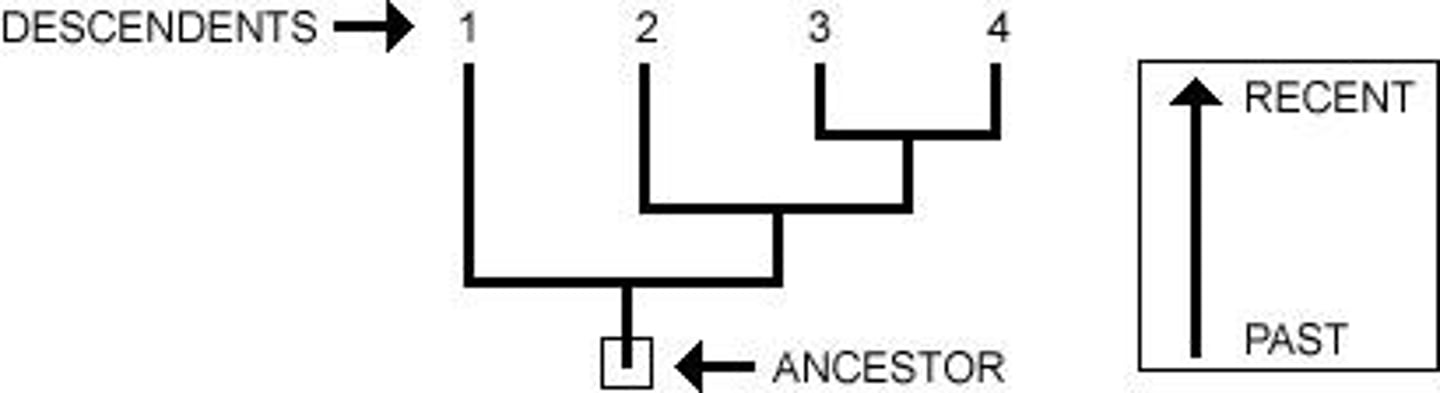
Which species is considered the closest relative to domestic dogs?
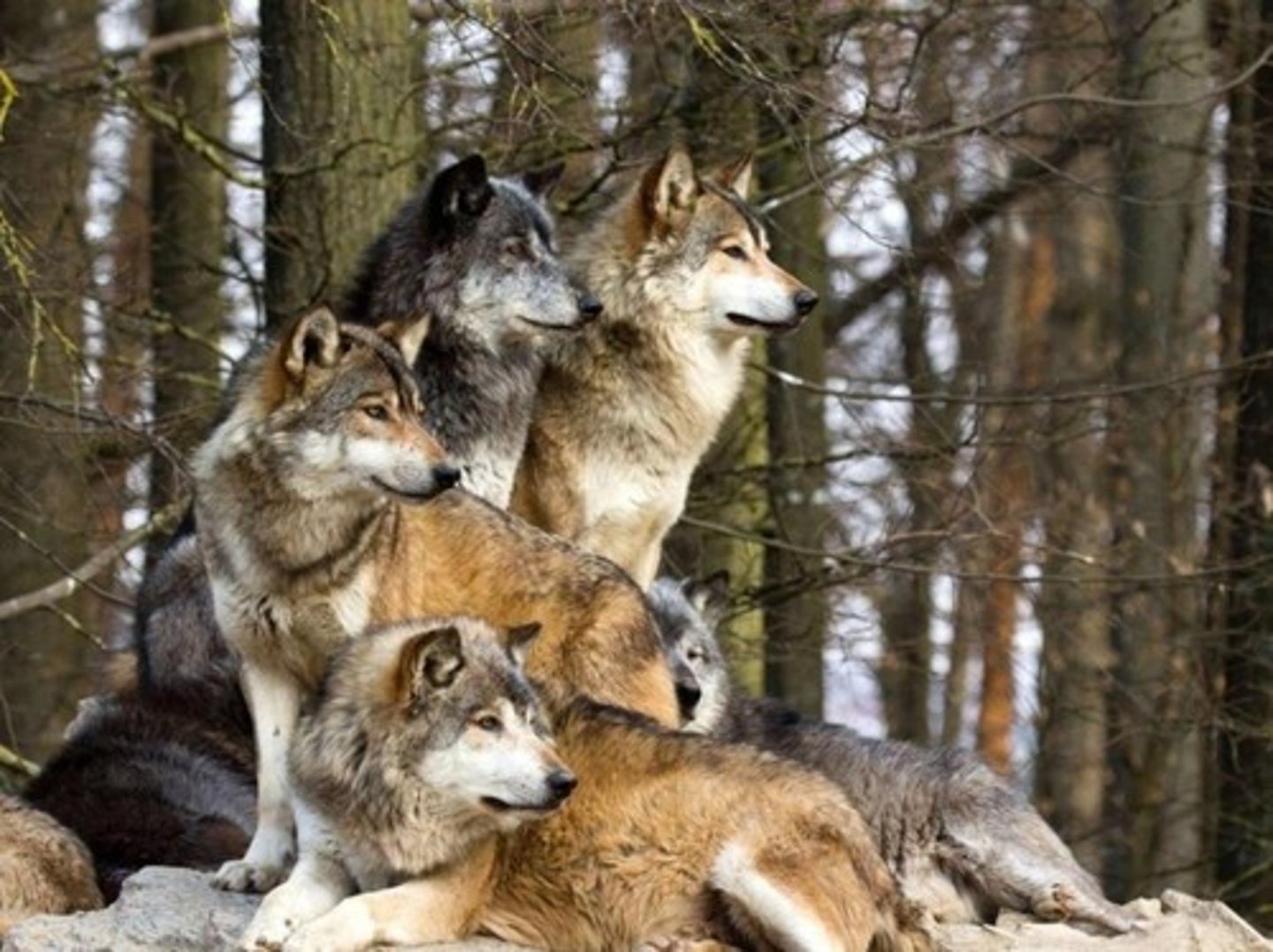
The grey wolf (Canis lupus).
What is the estimated time of divergence for the Canis genus?
Approximately 6 million years ago.
What significant event occurred over 50,000 years ago regarding ancestral wolves?
Ancestral wolves became reproductively isolated from other wolves.
What are the three main hypotheses for the domestication of dogs?
1. Human selection hypothesis, 2. Mutual benefit hypothesis, 3. Self-domestication hypothesis.
What is the dominant theory of canine domestication?
The self-domestication theory.
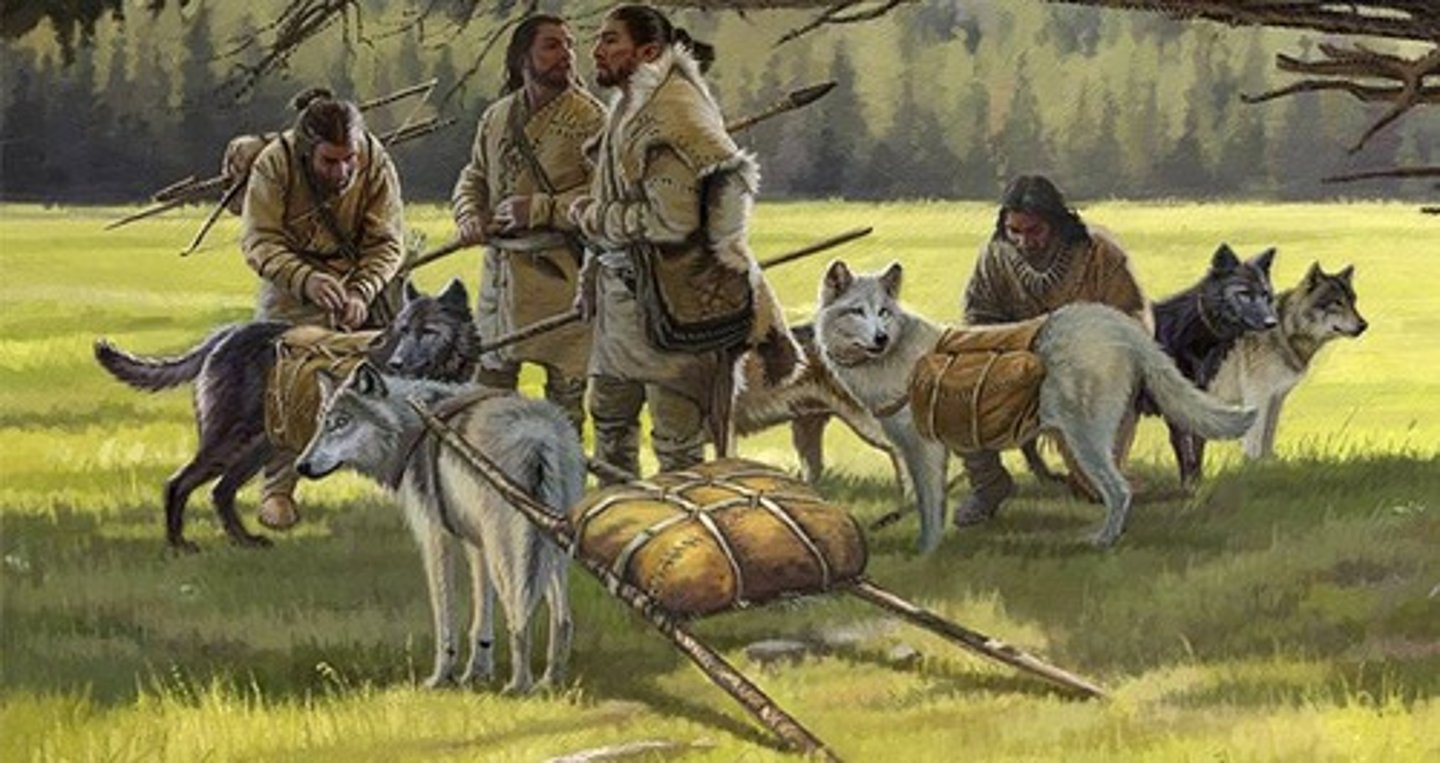
What role did natural selection play in dog domestication?
Natural selection favored wolves that were more tolerant of humans.
What is neoteny?
The retention of juvenile traits into adulthood.
What are some neotenic traits in domesticated dogs?
Large head, round face, large eyes, and less prominent nose.
When did intentional selective breeding for dog breeds begin?
3000-5000 years ago during the Neolithic period.
What is artificial selection?
The intentional breeding of animals for specific traits.
What health consequences can arise from selective breeding in dogs?
Conditions like hip dysplasia, patellar luxation, and brachycephalic airway obstruction syndrome.
What is the definition of a breed?
A group of animals within a species having a distinctive appearance developed by deliberate selection over time.
What are some early dog breeds mentioned?
Mastiffs, Spitz dogs, sight hounds, and sheep dogs.
What physical change is associated with domestication in dogs?
Floppy ears.
What is chondrodysplasia?
Inherited abnormal growth of cartilage causing disproportionate body sizes.
What is the significance of the FGF4 gene in dog breeds?
It influences growth plate calcification and is associated with chondrodysplasia.
What is brachycephalic head shape?
A short, compact skull associated with certain dog breeds.
What are some breeds that exhibit brachycephalic features?
Bulldogs, Pugs, and Boxers.
What does BOAS stand for?
Brachycephalic Obstructive Airway Syndrome.
What is a common health issue in large dog breeds?
Hip and elbow dysplasia.
What is a common health issue in small dog breeds?
Patellar luxation.
How did human migration patterns influence dog domestication?
Humans brought dogs along on migration routes, facilitating interbreeding.
What are the consequences of selective breeding on dog behavior?
Dogs became less pack-oriented and more adapted to living near humans.
What is the relationship between human traits and dog selection?
Humans tend to select for traits that evoke caretaking or nurturing behaviors.
What is the impact of the Victorian Era on dog breeding?
It accelerated the breeding process for novel and bizarre conformations in dogs.
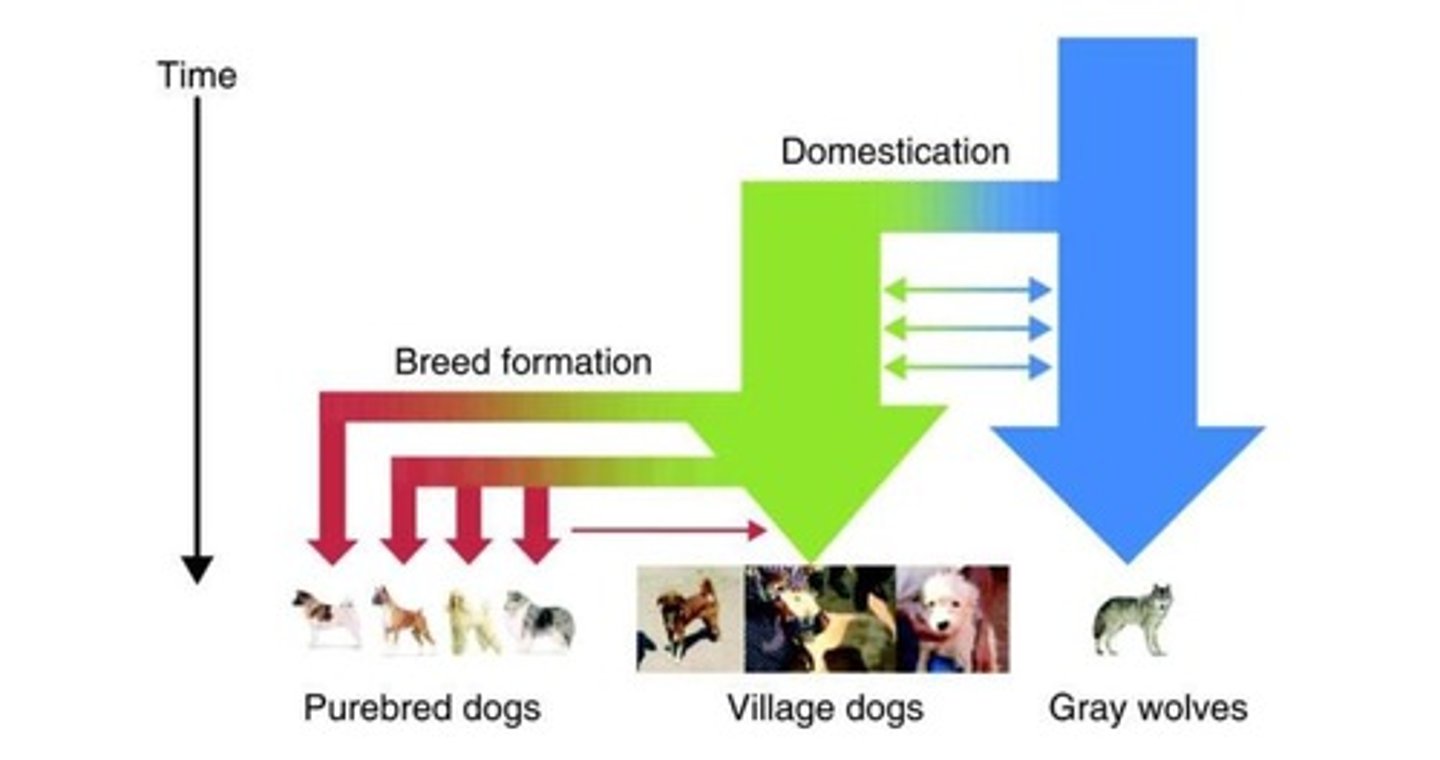
What is the significance of the term 'village dogs'?
They are ancestors of present-day dogs that existed alongside humans for thousands of years.
 Note
Note  Flashcards (126)