Psych 110 Final Study Terms & Definitions for Success
 Call Kai
 Learn
Learn Practice Test
 Spaced Repetition
 Match
Match Flashcards
 Knowt Play
1/214

There's no tags or description
Looks like no tags are added yet.
Name | Mastery | Learn | Test | Matching | Spaced | Call with Kai |
|---|
No analytics yet
Send a link to your students to track their progress
215 Terms
social psychology
the scientific study of the interactions between two or more people, one of whom, may be implied by their work. (took off prior to WWII)
attitudes
beliefs or opinions about anything
ABC model
Describes three major components of attitudes
affective (emotional state or mood; ex: says really likes apples),
behavioral (ex: eat apple),
cognitive (ex: says i like apples)
persuasion
attitude change (ex. propoganda, politics etc)
Yale Attitude Change Approach
The study of the conditions under which people are most likely to change their attitudes in response to persuasive messages
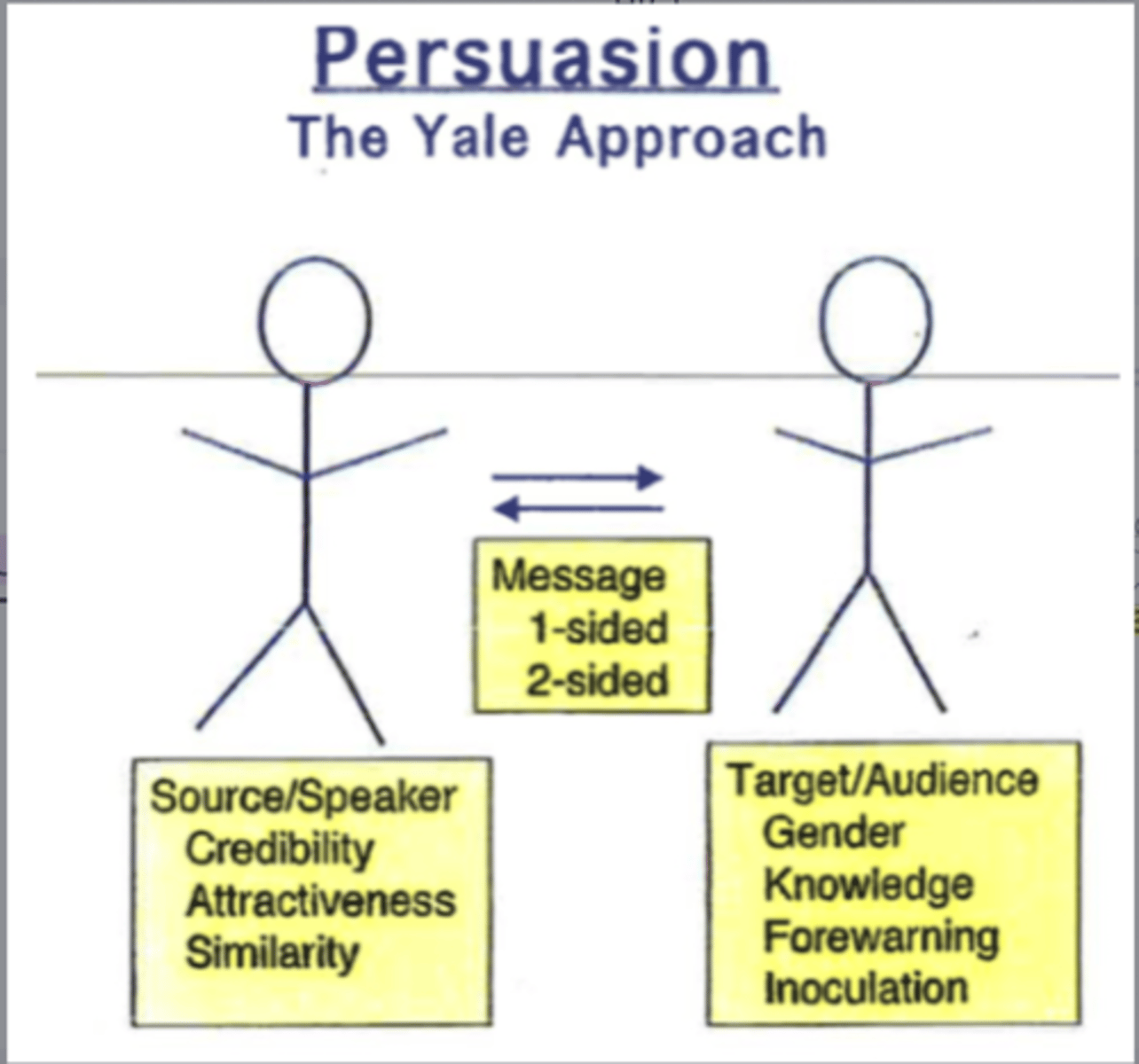
what makes a persuasive source/speaker?
credibility, attractiveness, and similarity
how can an audience/target be persuaded?
gender, knowledge, forewarning (if they know they are being persuaded), inoculation (providing a weakened form of an argument and refuting it)
1-sided messages
works best if the audience is initially in favor of the argument (pep/pregame talk)
2-sided messages
works best if the audience is initially opposed of the argument (present both sides)
cognitive dissonance theory
Leon Festinger; a drive theory of motivation and attitude change; behavior can change one's attitudes or beliefs
ex: two competing ideas (pro life but pro death penalty)
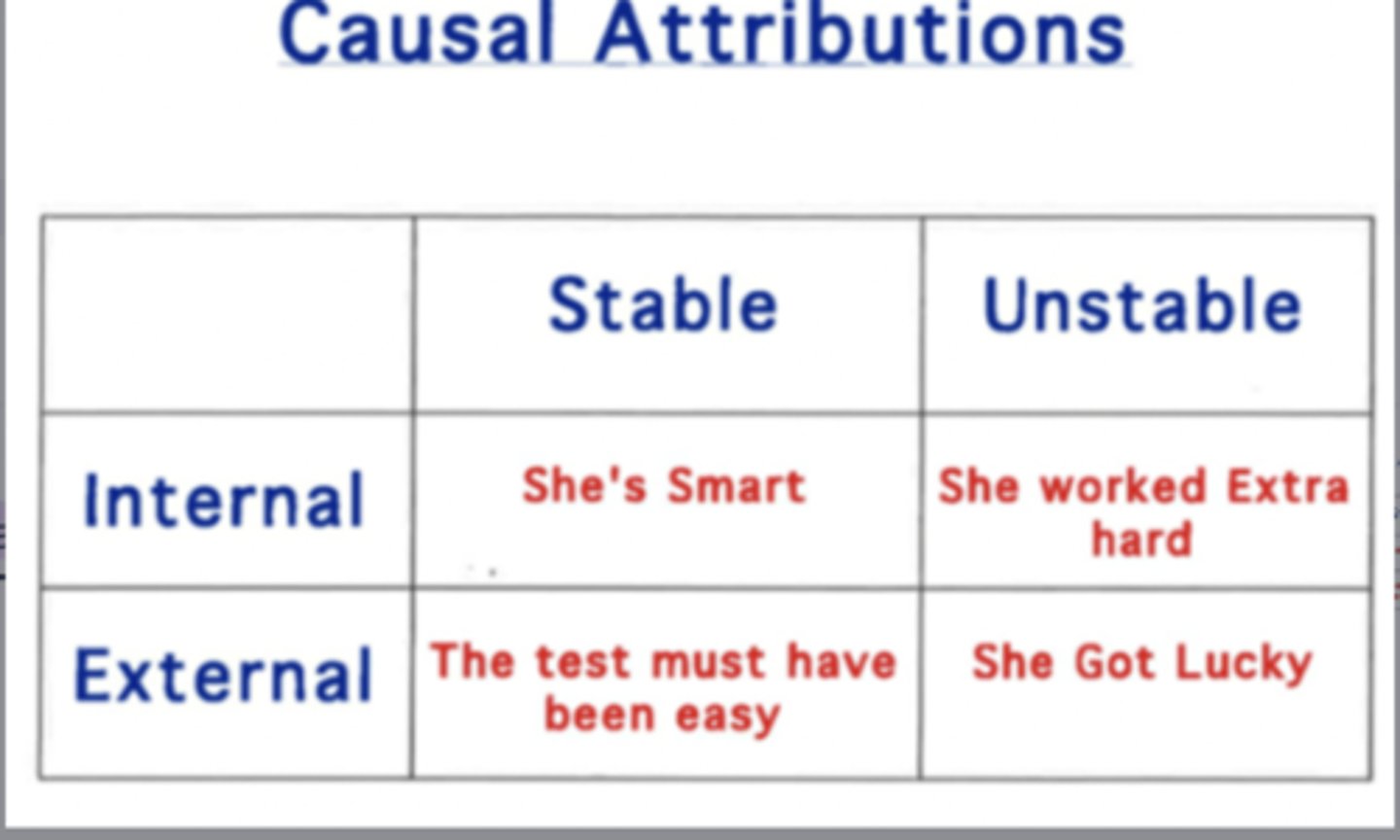
causal attribution theory
judgement about the cause of someone else's behavior (why people do things)
- Making attributions about the person is internal
- Making attributions about the test is external
- Intelligence = Stable, Effort = Unstable
fundamental attribution error
the tendency for observers, when analyzing another's behavior, to underestimate the impact of the situation and to overestimate the impact of personal disposition
ex: When someone does something you don’t like (bad/-)
We blame the person (internal attributions)
actor-observer effect
when we do something we have "reasons" (external attributions) but when someone else does that same thing we blame them
- its a Double Standard
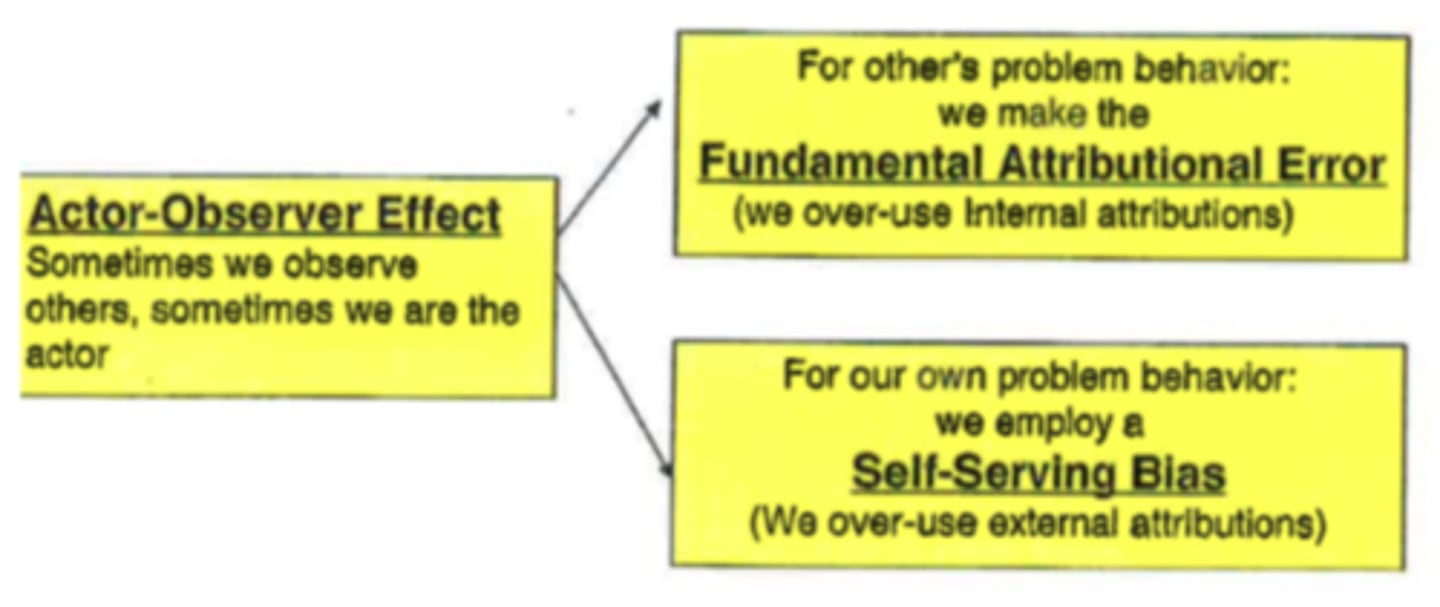
self-serving bias
the tendency for people to take personal credit for success but blame failure on external factors
ex) Did good on a test = good for me I worked hard (internal +)
Did bad on a test = blame the questions/teacher (external - )
prejudice
a feeling (attitude) usually negative, based soley on their membership in a group
discrimination
a behavior based on a prejudice
stereotypes
cognitions that they are all alike on one or more issues; A belief that members of a group are all alike
-Prejudice's are typically based on one or more stereotypes
racism
the belief that observable differences among the races are due to genetics (white supremacy and structural racism)
white supremacy
the belief that white people are superior to those of all other races
structural racism
the systems that are put in place (banks, stores,
schools) are racist
sexism
A belief that observable difference among the sexes are due to genetics
social categorization
the overwhelmingly strong tendency to divide the social world into groups that we treat very differently
us vs. them
dividing the world into two groups; we're the good people and they're the bad people (Us is always the "better" one)
illusory correlations
pattern that does not exist, but you may think exists
("selective memory process" muslims are terrorists, but if it was someone in your group, so you find all data that makes your belief true)
the ultimate attributional error
when people apply the logic of actor-observer effect to groups
when a member of another group does something bad, we blame the group (internal attribution)
HOWEVER
when a member of our own group does the same exact thing we blame the person. (external attribution)
-leads to war; everyone thinks they're the "good guy"
demagouge
someone who gains power and popularity by inflaming the anger and the prejudices of the people (dangerous)
social influence
When one person causes a change in attitude or behavior in another person, whether intentionally or unintentionally.
conformity
(asch) going along with the social norms
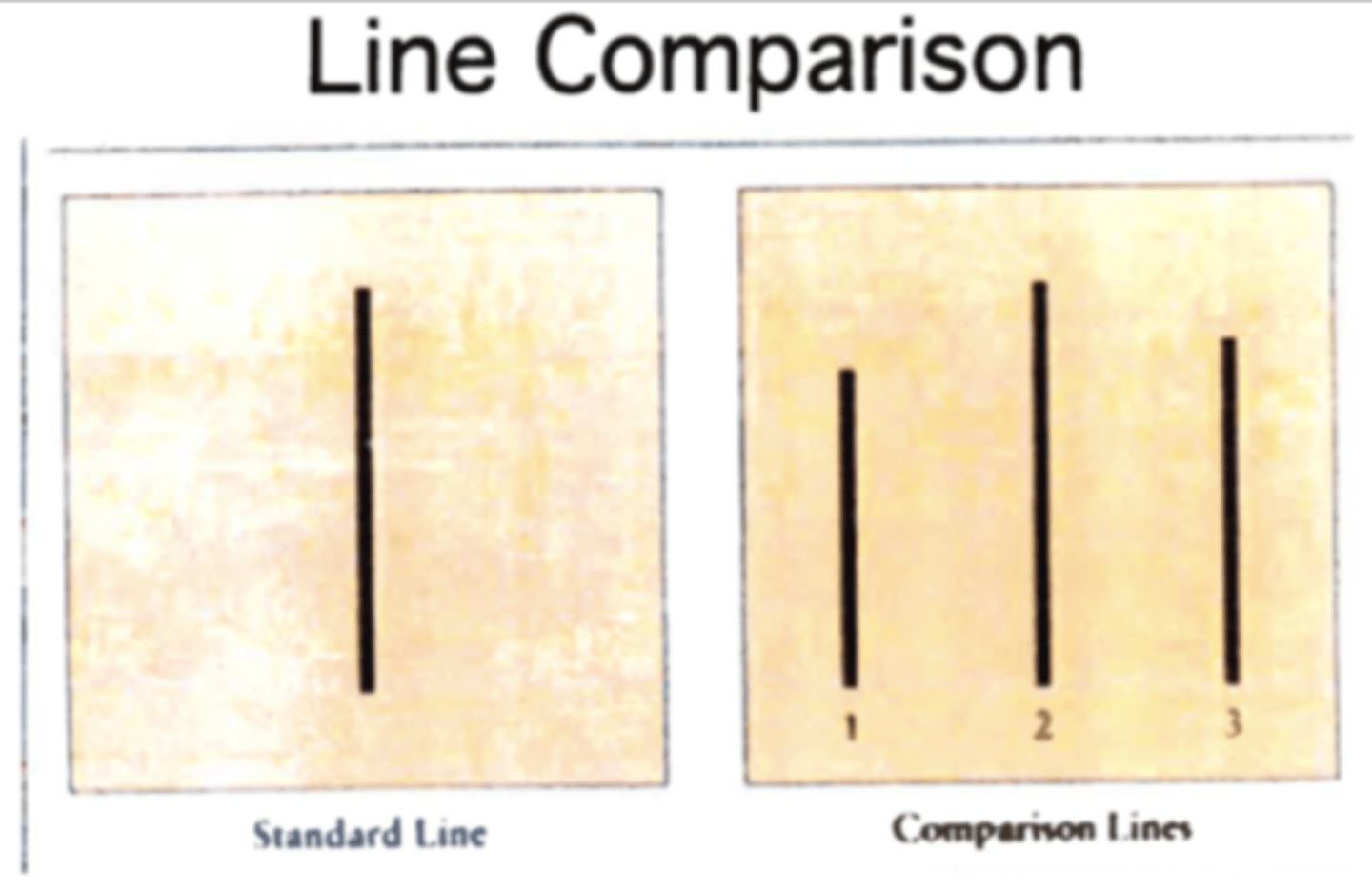
solomon asch line studies
brought people into a lab and used a confederate (person who pretends to be a participant) to give wrong answers to see how it effects the real participant (76% would conform to a wrong answer)
-if one other person says right answer then they will also say right answer
Informational Conformity
saying what everyone else was saying (maybe you missed something) so that way you are right
Normative Conformity
just wanting to fit in
compliance: 2 step strategies
going along with a specific request
1. foot-in-the-door phenomenon
2. door-in-the-face phenomenon
foot-in-the-door phenomenon
the tendency for people who have first agreed to a small request to comply later with a larger request
door-in-the-face phenomenon
tendency for people who won't agree to a large task, but then agree when a smaller request is made
obedience
A form of compliance that occurs when people follow direct commands, usually from someone in a position of authority
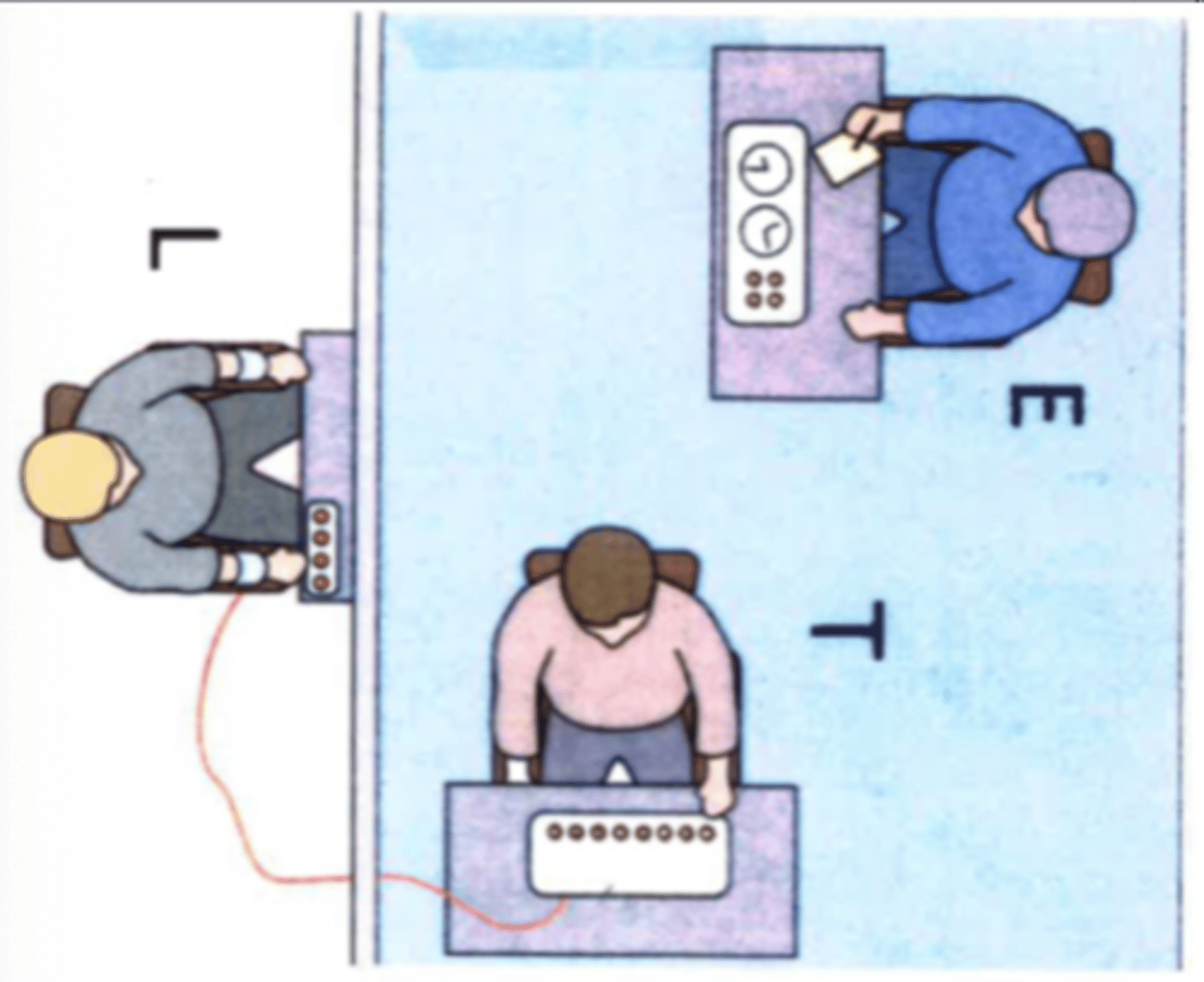
stanley milgram's study
Study on how many people would obey an authority figure when directly ordered to violate their ethical standards (shock experiment)
groupthink
(janis, 1967) Process by which a committee makes a worse decision than any single member would have made (ends badly bc no one wants to speak out against the group)
strongest influences: Highly Directive Leadership
examples of groupthink
Coke's new formula, Bay of Pigs (Kennedy knew he had too much influence so he would let group discuss without him)
mind guarding
when someone prevents you from speaking or having thoughts
illusion of invulnerability
thinking nothing can go wrong or we are in the best position, we can prevail easily
ways to avoid groupthink
play devil's advocate or require members to list potential problems
cults and brainwashing
promote groupthink by: Employing persuasive leadership that fosters loyalty and detach people from all other sources of information (parents, newspapers)
the bystander effect
the more people who are present in an emergency, the less likely it is that anyone will help
ex: Cady Genovese Case; woman murdered on her doorstep, 38 ppl watched it happen and everyone thought someone else would call 911
fear of social blunder
the fear of doing something wrong in front of other people
diffusion of responsibility
if there is one person they have 100% responsibility to do something, if there are two people, its 50% 50%, the more people there are, the less responsibility each person has, which means it's less likely for anyone to do anything
aggression instinct
(freud thanatos & eros) from the motivation lecture, instinct theories of aggression gave way to drive theories
drive (frustration-aggression hypothesis)
a popular, but outdated, theory that said all aggression stems from frustration of some desire
social learning (aggression)
the current theory that claims aggressive behavior is learned classically, operantly or observationally. this is more optimistic because it does not have to be learned. a nonviolent world is possible.
interpersonal attraction
factors include:
- similarity: birds of a feather
- proximity: boy next door
- reciprocity: they like you first
- physical attractiveness: #1 thing for college students
(opposites attract not necessarily true)
2 types of romantic love
passionate love and companionate love
passionate love
- Passion starts high but then declines as time goes on
- Passion draws them together, evolutionary
- Reproduction
companionate love
- Passion starts low but then grows as time goes on
- Old couples who are still in love and are still best friends
- The friendship that builds over time
Emotions
Charles Darwin believed everyone experiences all emotions
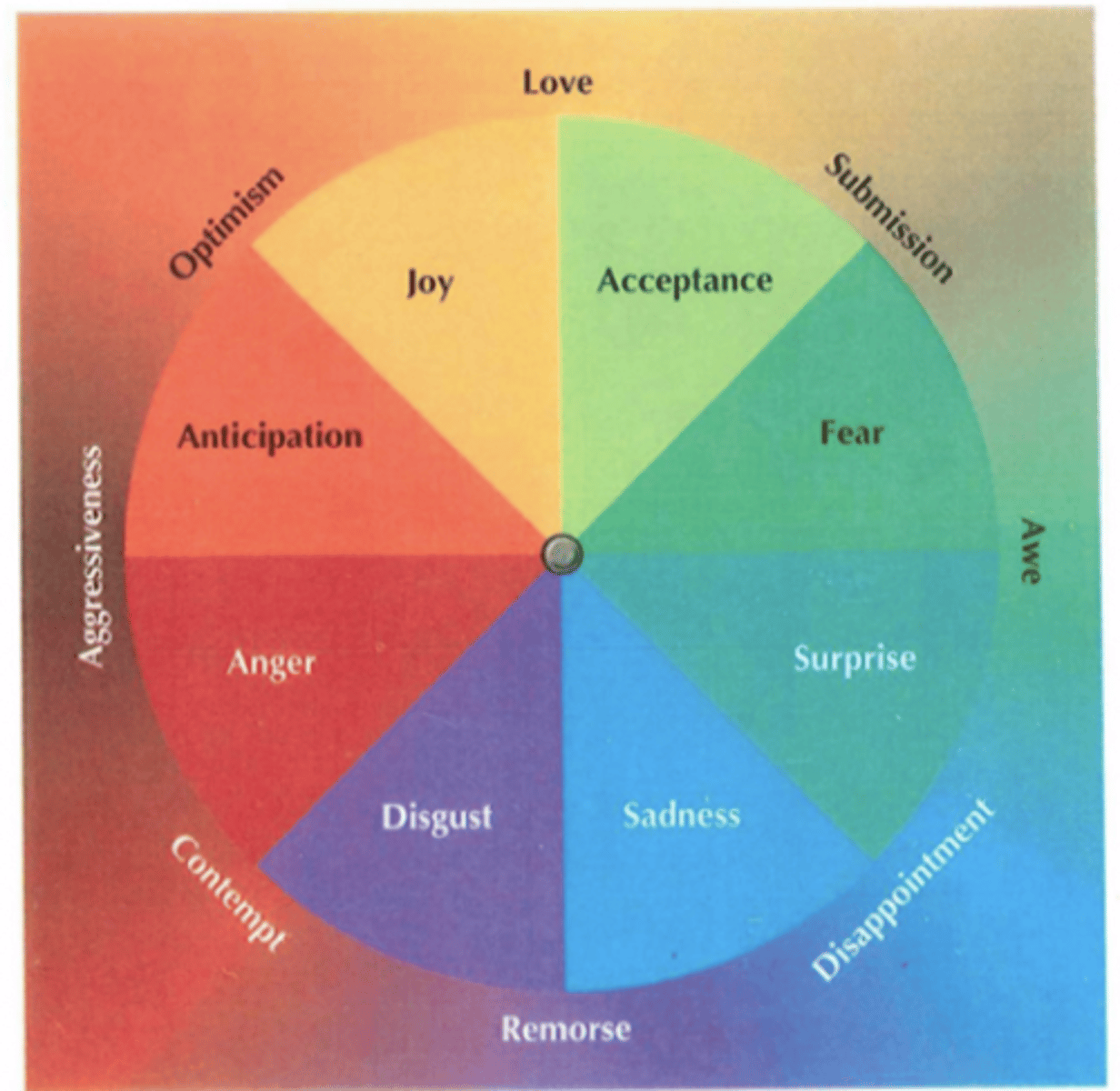
plutchik's wheel of emotions
8 primary = joy, acceptance, fear, surprise, sadness, disgust, anger, anticipation
- he claimed we can experience adjacent emotions but not ones opposite of each other
how do we know other's emotions?
facial expressions are common to all people on the planet, recognizing body language and vocal tone
Duchenne smile
(Paul Ekman) a genuine smile that involves contraction of a particular set of facial muscles
paul ekman
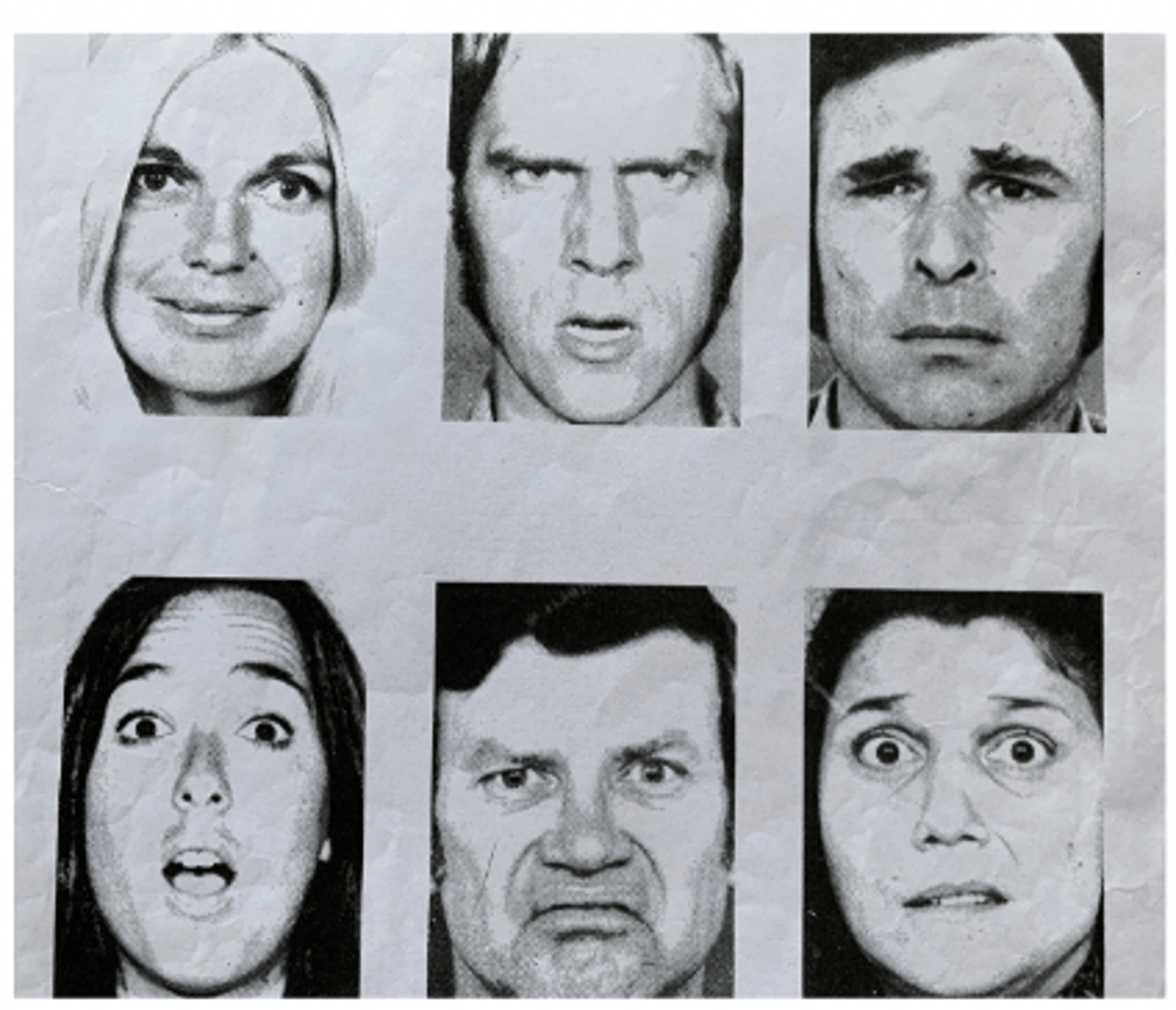
emotion; found that facial expressions are universal
- 6 basic facial expressions = happy, anger, surprised, disgust, sadness, fear
james-lange theory of emotion
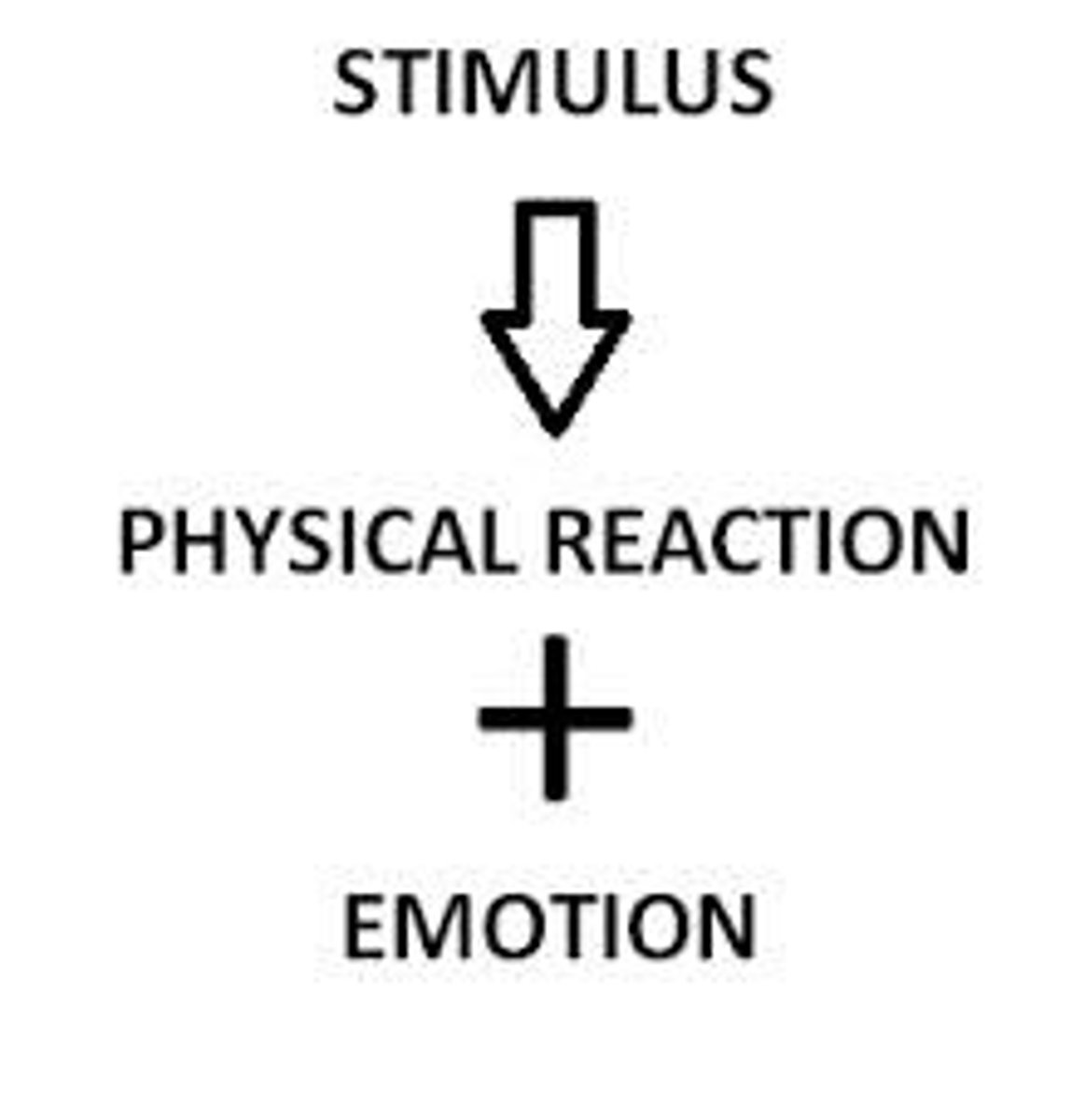
theory proposing that emotions result from our interpretations of our bodily reactions to stimuli
ex) If you perceive a stimulus (bull) you are going to have a bodily (physiological) response or adrenline rush (fight or flight) which in turn results in your experienced emotion (run=fear, punch=anger etc. )
- 1 thing leads to another thing
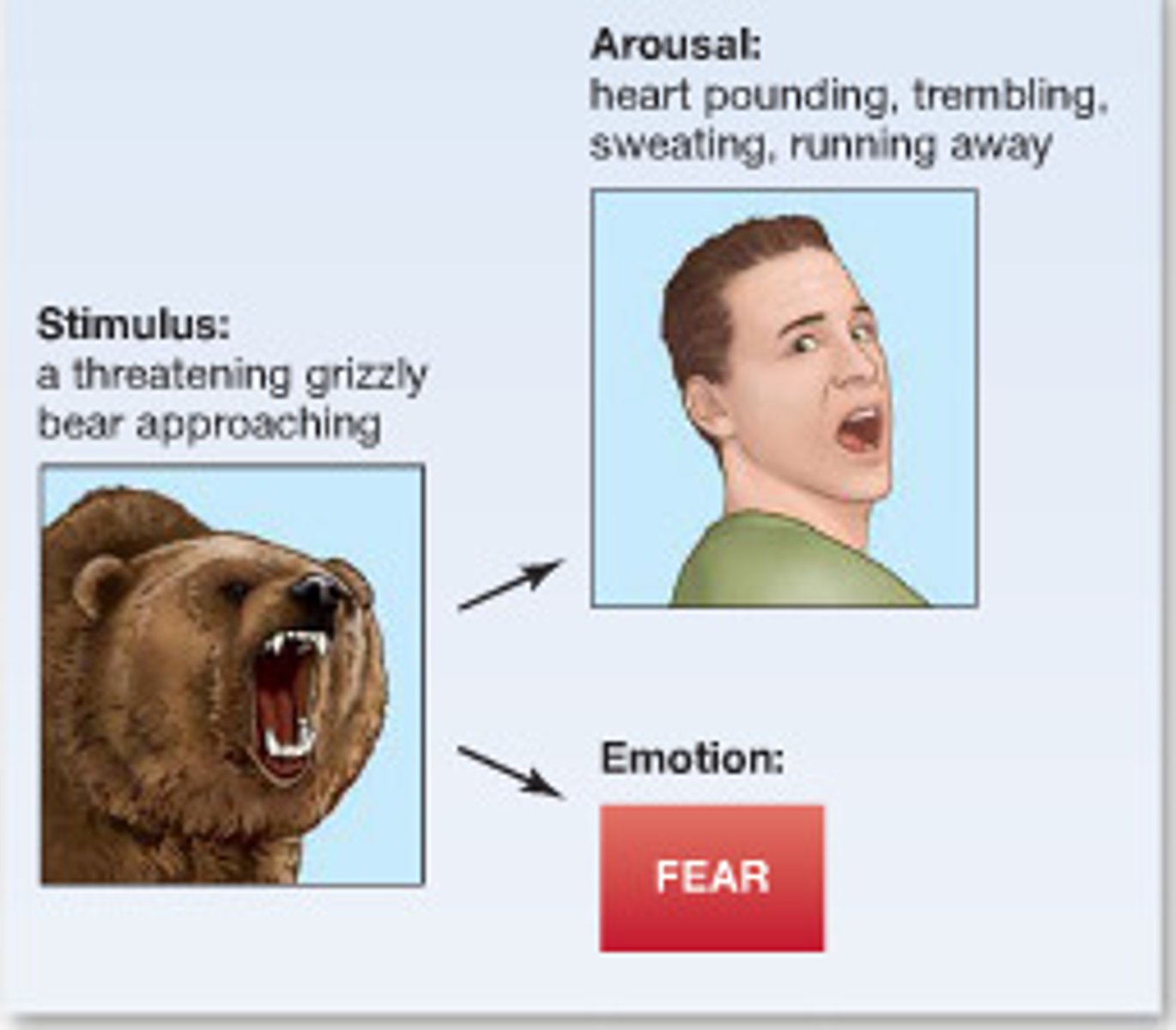
cannon-bard
the theory that an emotion-arousing stimulus simultaneously triggers (1) physiological responses and (2) the subjective experience of emotion
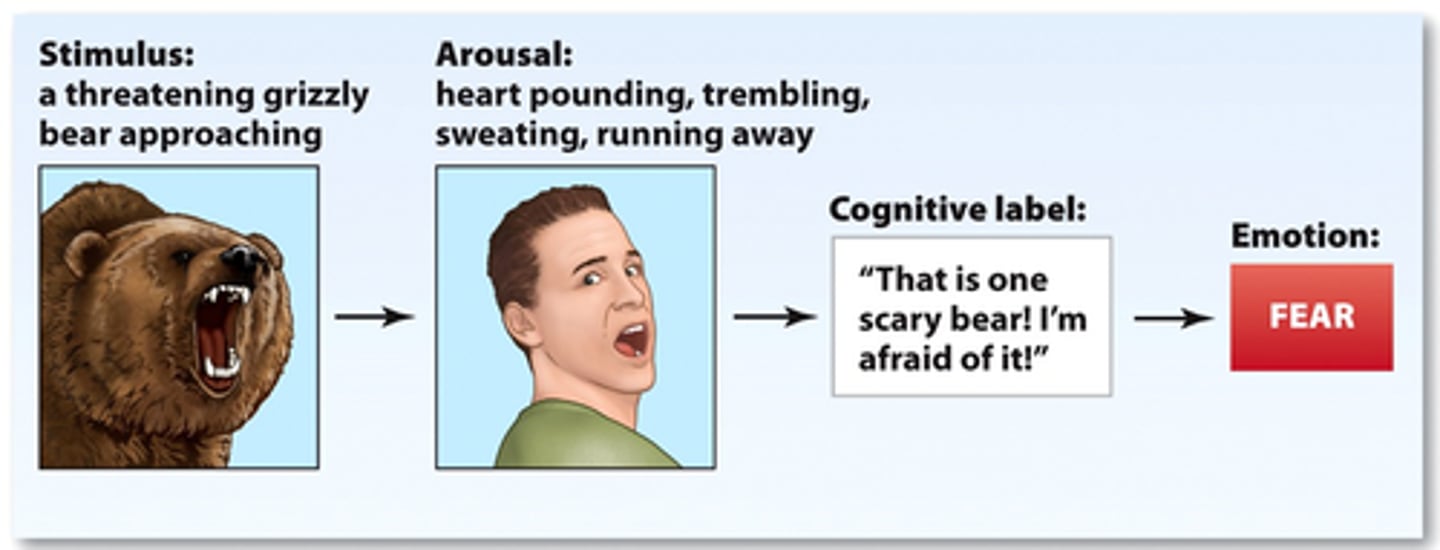
schachter & singer theory
A theory of emotion that states that both physiological arousal and cognitive appraisal must occur before an emotion is consciously experienced.
the suproxin study
People look around to their environment or those around them to see what they are feeling. Results of the experiment suggested that participants who had no explanation for their feelings were more likely to be susceptible to the emotional influences of the confederate.
Are emotions taught?
- Some are more open in expression of emotion and some are more introverted; willingness to display emotion is taught (display rules)
- Although you don't learn to smile when happy (innate), you DO learn to be able to recognize emotions on others (learned)
- Isolated Baby monkeys - will produce the correct facial expressions but will not recognize other's emotions
stress
psychological wear and tear on the body due to the demands placed on it
Sources of stress (5)
1. life-events checklist
2. cognitive appraisal lazarus
3. conflicts, decisions and choices
4. frustration
5. environmental sources
1. life-events checklist
(holmes and rahe, 1967) brief, 17 item, self-report measure designed to screen for potentially traumatic events in a respondents lifetime (divorced, lost job, grief)
- they also created a health list to see if there is a positive correlation with stress and sickness
Mind and Body Duality
(1950s) when people are under a lot of stress, they are more likely to get sick. The link between stress and health is that your immune system is suppressed.
2. cognitive appraisal
(Richard Lazarus) the interpretation of an event that helps determine its stress impact
"Try to focus on the positive" - Optimust
(ex. glass half full or half empty)
3. conflicts, decisions, and choices
decisions are a source of stress / we don't want many choices (we want a few but a lot may become insurmountable)
4. frustration
a negative emotional state that occurs when one is prevented from reaching a goal (rush hour traffic)
5. environmental sources
people are more likely to stress when uncomfortable (ex. heat, humidity, noise, crowding
unexpected, unpredictable, and uncontrollable
glass and singer study
studies showed that people did better on math problems when they thought they had control (illusion of control) or they were in a more comfortable state
Physiological Reaction
hormones and chemicals of stress
selye's general adaptation syndrome
three-stage process which describes the body's reaction to stress (GAS):
1) alarm reaction,
2) resistance
3) exahaustion
GAS: 3 stages of stress
Alarm : notice the major stressor in your life (you hate your job)
Resistance : the effort to combat that stressor (look for another job, work harder to promote)
Exhaustion : where something gives, you break down in your weakest modality=immune system (getting sick, mental health problem)
flight or fight response
an emotional and physiological reaction to an emergency that increases readiness for action (suppresses the immune system)
Coping with Stress
1. social factors
2. cognitive factors (Richard Lazarus)
3. Personality factors
4. Behavioral Factors
1. Social Factors
a. supportive friendships
b. sense of belonging
a. supportive relationships
during stressful times, it's important to have people in your life who will listen and support you
b. sense of belonging
the feeling of connectedness with or involvement in a social system or environment of which a person feels an integral part, something bigger than yourself
2. Cognitive Factors (Richard Lazarus)
a. problem vs. emotion focus
b. sense of commitment
c. internal locus of control
d. having actual control
e. learned helplessnes
a. problem vs. emotion focus
- people who tend to be more problem focused search for solutions, those who are emotion-focused just wait around for someone else to help them
- problem focused better for coping
b. a sense of commitment
to an idea and cause; people can deal with mountains of stress if they are doing it for a cause or for an idea
-ex: I am trying to solve the cure for cancer. You go through grave hardships for an idea bigger than yourself
c. internal locus of control
the perception that you control your own fate
- internal locus of control is better to cope with stress
ex) You get a bad score, you reflect and say you need to study more (internal locus) versus blaming the test and other students (external locus)
The I/E scale
test designed by Julien Rotter to measure the individual's belief that forces are or are not beyond his or her control. internals (Is) are people who believe that events are under their own control;
externals (Es) are people who believe that outcomes are controlled by outside forces such as luck, fate, God, or powerful others
d. having actual control
(rodin and langer)
people living in a nursing home improved their health by having control over their lives (1 wing treated normally, 1 experimental wing) showed that minor control over things made people live longer
e. learned helplessness
(martin seligman) (book)
Inappropriate generalization of helplessness from one situation to another.
ex) You are being taught algebra in 7th grade, but you are not ready. You figure you are no good at math, so the next year you figure you are not good at math, so you stop applying yourself.
ex) dog study with mesh floor that shocked
3. Personality Factors
a. I/E Scale
b. Type A or B
c. Optimism vs. Pessimism
d. Psychological Hardiness
a. I/E Scale
locus of control
- internal is better to cope
b. type A personality
high time urgency, but hostility is the real issue
- they do not cope well with stress
b. type B personality
personality characterized by relatively relaxed, patient, easygoing, amicable behavior.
c. optimism
a general tendency to expect good outcomes
- parents are a strong influence
- can be learned
c. pessimism
belief that life is basically bad or evil; gloominess
- parents are a strong influence
- can be learned
learned optimism (seligman)
is the idea in positive psychology that a talent for joy, like any other, can be cultivated. It is contrasted with learned helplessness. Learning optimism is done by consciously challenging any negative self talk. (seligman)
d. psychological hardiness
a personality trait characterized by control, commitment, and the embrace of challenge
Commitment vs. alienation
(psychological hardiness)
commit to something larger than yourself, mindfulness vs cutting yourself off and distancing from other people
4. behavioral factors to reduce stress
aerobic exercise, lose weight, quit smoking, reduce salt and caffeine, learn to relax, meditation, yoga, self hypnosis, biofeedback, journal writing
Psychoneuroimmunology
the study of how psychological, neural, and endocrine processes together affect the immune system and resulting health (PNI)
health psychology
a subfield of psychology that provides psychology's contribution to behavioral medicine
health studies today
cancer
aids
heart disease
smoking control
alcohol and drug addiction
stress management
Behavioral Changes
- You can change your behaviors more easily rather than change your personality
- Stress coping mechanisms

