Theory
0.0(0)
Studied by 0 people Note
Note Call Kai
 Learn
Learn Practice Test
 Spaced Repetition
 Match
Match Flashcards
 Knowt Play
Card Sorting
1/38

There's no tags or description
Looks like no tags are added yet.
Last updated 10:47 PM on 5/8/23
Name | Mastery | Learn | Test | Matching | Spaced | Call with Kai | Chat |
|---|
No analytics yet
Send a link to your students to track their progress
39 Terms
1
New cards
Theelementsofdrama
really crazy raccoons, steal very messy socks, try licking toes, singing meow meow and acting dorky
role, character, situation, voice, movement, space, time, language, texts, mood, atmosphere, audience, dramatic tension
role, character, situation, voice, movement, space, time, language, texts, mood, atmosphere, audience, dramatic tension
2
New cards
Warm up process
Real Bugs Ate Real People With Chocolate
Relax the body (face and jaw), Breathing, (diaphragm), Articulation, Resonance, Projection, Warm up the body, Character and group cohesion
Relax the body (face and jaw), Breathing, (diaphragm), Articulation, Resonance, Projection, Warm up the body, Character and group cohesion
3
New cards
Voice techniques
* 4 P’s Are Clearly Easy In Texas
* **Pitch, pace, pause, projection**
* **Articulation**: precision used in the formation of sounds and speech
* **Clarity**: accurate formation of sounds w/ the voice
* **Emphasis** - use of particular stresses in the spoken delivery of a sentence to highlight important words or phrases to improve comprehension
* **Inflection** - variation of the pitch and tone within a sentence to clarify emotional quality and intended meaning within a sentence
* **Tone** - emotional qualities added to vocal performance by adjusting the types of sounds produced by the voice
* **Pitch, pace, pause, projection**
* **Articulation**: precision used in the formation of sounds and speech
* **Clarity**: accurate formation of sounds w/ the voice
* **Emphasis** - use of particular stresses in the spoken delivery of a sentence to highlight important words or phrases to improve comprehension
* **Inflection** - variation of the pitch and tone within a sentence to clarify emotional quality and intended meaning within a sentence
* **Tone** - emotional qualities added to vocal performance by adjusting the types of sounds produced by the voice
4
New cards
Movementtechniques
* Edward From Twilight Gives Great Presents With Serious Prices
* **Energy**
* **Facial expression**
* **Time**
* **Gait**
* **Gesture**
* **Posture**
* **Weight**
* **Shape**
* **Proxemics**
* **Energy**
* **Facial expression**
* **Time**
* **Gait**
* **Gesture**
* **Posture**
* **Weight**
* **Shape**
* **Proxemics**
5
New cards
Whatisenergy?
effort and commitment used in the creation of movement and non-verbal communication
6
New cards
Whatistime?
tempo and rhythm of movement
7
New cards
Whatisgait?
manner in which an actor walks
8
New cards
Whatisweight?
adjustment of movement to create a sense of force
9
New cards
Whatisshape?
overall pattern or impression created by the body
10
New cards
whatisproxemics
position of people (and objects) in relation to each other on stage
11
New cards
whatismood?
presented on stage
12
New cards
whatisatmosphere?
created for the audience
13
New cards
what is form?
dramatic category that groups works together that share similar general characteristics or structures (like puppetry)
14
New cards
what is performance style? and types?
acting in a certain way that focuses on imitating life or presenting ideas
representational and presentational
representational and presentational
15
New cards
whatisrepresentationalstyle?
imitates life as it explores human psychology by placing characters in life-like situations and relationships on stage, characters don’t know audience is there
16
New cards
what is presentational style?
shows itself as a theatrical experience to the audience whilst the dramatic action unfolds
17
New cards
whatarestanislavski’smethods?
emotion memory, observation, analysis, magic if, fundamental questions, hot seat
18
New cards
emotionmemory
* actors actually experience (with control) the emotions of the characters
* recalling an experience to feel these emotions relevant to the scene
* recalling an experience to feel these emotions relevant to the scene
19
New cards
observation
learn more about people and behaviour
* watch and listen with real concentration
* more they observed, the more they would learn
* watch and listen with real concentration
* more they observed, the more they would learn
20
New cards
analysis
* super-objective: characters reason or motive for their behaviour
* trying to achieve something vitally important to themselves
* understand why their characters behaved as they did
* objectives: might be scenes within each scene that contributed towards the final super objective
* trying to achieve something vitally important to themselves
* understand why their characters behaved as they did
* objectives: might be scenes within each scene that contributed towards the final super objective
21
New cards
themagicif
* What if?
* ask themselves what I would do in this situation?
* project themselves into different people
allows them to understand character, deeper
* ask themselves what I would do in this situation?
* project themselves into different people
allows them to understand character, deeper
22
New cards
fundamentalquestions
Who, what are my circumstances, relationships, objective, achieve objective, what is my action, what is my super-objective
23
New cards
hotseat
where actors are asked quick fire questions that they must answer as their character
improvisation, helps develop and understand character
improvisation, helps develop and understand character
24
New cards
conventionsofinterpretingascript
circles of attention, motivation, tempo/tempo-rhythm, psychological gestures (2)
25
New cards
circlesofattention
* actors need to consider the area that their attention and actions need to be directed to
* 3 different circles:
* self: keep to yourself, not interacting with others
* conversational: having conversation with one other person, energy and attention is focused solely on them
* whole world: this is the most power and most energy-demanding of the circles
* 3 different circles:
* self: keep to yourself, not interacting with others
* conversational: having conversation with one other person, energy and attention is focused solely on them
* whole world: this is the most power and most energy-demanding of the circles
26
New cards
motivation
* a character was made up of 3 things: mind, feelings and will (or motivation)
* actor was driven by the character’s mind or feelings to choose physical actions
* looks at a characters past and their psychology while an objective looks towards their actions
* actor was driven by the character’s mind or feelings to choose physical actions
* looks at a characters past and their psychology while an objective looks towards their actions
27
New cards
tempo/tempo−rhythm
* emotions had a distinct pulse and pattern
* tempo is speed of an action (fast, medium slow)
* rhythm, internally, is the intensity of the emotion, and externally, is the pattern of gestures, movements and actions
* angry = fast, sad = slow
* tempo is speed of an action (fast, medium slow)
* rhythm, internally, is the intensity of the emotion, and externally, is the pattern of gestures, movements and actions
* angry = fast, sad = slow
28
New cards
psychologicalgestures(whoitwasdevelopedbytoo)
* developed by Michael Chekhov, worked under Stanisvlaski
* looked to find characters through a more physical approach
* psychological gestures looked to break down a characters want or trait into a physical gesture, to later affect your performance at a subconscious level via physical memory
* if you were playing a hero, you might find a gesture to symbolise the brave trait and use that in your performance
* looked to find characters through a more physical approach
* psychological gestures looked to break down a characters want or trait into a physical gesture, to later affect your performance at a subconscious level via physical memory
* if you were playing a hero, you might find a gesture to symbolise the brave trait and use that in your performance
29
New cards
psychologicalgestures2
* creative mind can flourish when using psychological gestures, which means the actor can benefit from disengaging themselves from the work
* this is the ‘inner life’ of the character, showing the different elements the character has come from
* walk on stage, you are that character instantly, off stage = not
* externalising these feelings is the role of the actor
* this is the ‘inner life’ of the character, showing the different elements the character has come from
* walk on stage, you are that character instantly, off stage = not
* externalising these feelings is the role of the actor
30
New cards
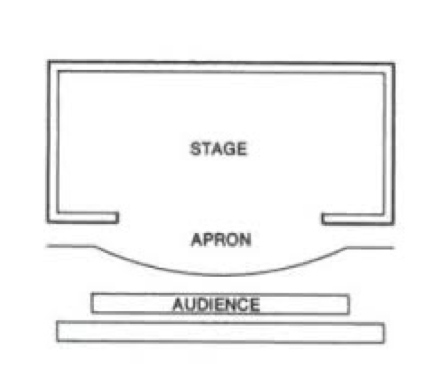
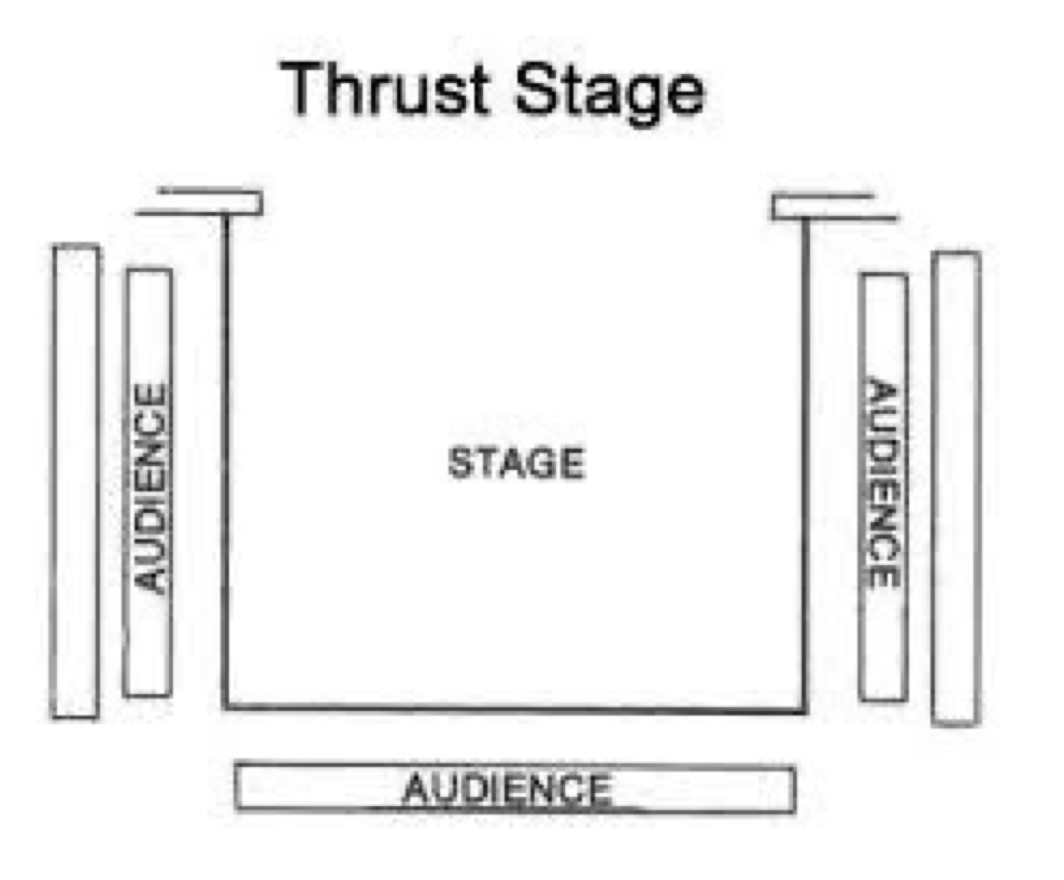
Stagetypes(thrust,vsproscenium)
thrust:
* audience on 3 sides
* close to action, makes audience feel involved
proscenium:
* creates a window
* separates audience from action
* audience on 3 sides
* close to action, makes audience feel involved
proscenium:
* creates a window
* separates audience from action
31
New cards
==Principles of design==
* Balance
* contrast
* emphasis
* harmony
* movement
* pattern
* repetition
* rhythm
* scale/proportion
* unity
* variety
* contrast
* emphasis
* harmony
* movement
* pattern
* repetition
* rhythm
* scale/proportion
* unity
* variety
32
New cards
==balance==
equal distribution of visual weight in a design, can be asymmetrical or symmetrical
33
New cards
==contrast==
design element or group of elements are juxtaposed
34
New cards
==emphasis==
element is used at a specific place to draw audience member’s eye to it - is the focal point because of its importance
35
New cards
==pattern==
consistent, repeated use, can be regular or irregular, form a sense of rhythm or not
36
New cards
==repetition==
creates a sense of cohesiveness and unity
37
New cards
==Elements of design==
* colour
* line
* shape: when a line encloses space
* space: consider dark space
* texture
* value
* line
* shape: when a line encloses space
* space: consider dark space
* texture
* value
38
New cards
Roleofascenographer
\
* use of colour, texture and shape
* venue, size of performing area, entrances and exits of actors and ease of scene changes
* use of colour, texture and shape
* venue, size of performing area, entrances and exits of actors and ease of scene changes
39
New cards
Cooperative group work processes
* Memorising (self management)
* Improvising
* Interpreting
* Listening (self-management)
* Accepting (can also be self management)
* Delegation of roles
* Developing an agreed approach
* Improvising
* Interpreting
* Listening (self-management)
* Accepting (can also be self management)
* Delegation of roles
* Developing an agreed approach