Theory
{{The Elements of Drama{{
- role
- character
- relationships
- situation
- voice
- movement
- space
- time
- language
- texts
- symbol
- metaphor
- mood
- atmosphere
- audience
- dramatic tension
Warm up process
- Real Bugs Ate Real People With Chocolate
- Relax the body (face and jaw)
- Breathing (diaphragm)
- Articulation
- Resonance
- Projection
- Warm up the body
- Character and group cohesion
Voice techniques
- 4 P’s Are Clearly Easy In Texas
- Pitch, pace, pause, projection
- Articulation: precision used in the formation of sounds and speech
- Clarity: accurate formation of sounds w/ the voice
- Emphasis - use of particular stresses in the spoken delivery of a sentence to highlight important words or phrases to improve comprehension
- Inflection - variation of the pitch and tone within a sentence to clarify emotional quality and intended meaning within a sentence
- Tone - emotional qualities added to vocal performance by adjusting the types of sounds produced by the voice
{{Movement techniques{{
- Edward From Twilight Gives Great Presents With Serious Prices
- Energy - effort and commitment used in the creation of movement and non-verbal communication
- Facial expression
- Time - tempo and rhythm of movement
- Gait - manner in which an actor walks
- Gesture
- Posture
- Weight - adjustment of movement to create a sense of force
- Shape - overall pattern or impression created by the body
- Proxemics - position of people (and objects) in relation to each other on stage
Form and style
- Form: dramatic category that groups works together that share similar general characteristics or structures (like puppetry)
- Performance style: acting in a certain way that focuses on imitating life or presenting ideas
- representational: imitates life as it explores human psychology by placing characters in life-like situations and relationships on stage
- it is an imitation of life, characters don’t know the audience is there
- presentational: shows itself as a theatrical experience to the audience whilst the dramatic action unfolds
- focuses on communication of ideas or offering of theatrical experience, it makes contact with audience during performance
{{Stanislavski’s Methods{{
- He is a representational practitioner
{{Emotion Memory{{
- actors actually experience (with control) the emotions of the characters
- recalling an experience to feel these emotions relevant to the scene
{{Observation{{
- Stanislavski’s actors encouraged to use their powers of oberservation to learn more about people and behaviour
- watch and listen with real concentration
- more they observed, the more they would learn
{{Analysis{{
- super-objective: characters reason or motive for their behaviour
- trying to achieve something vitally important to themselves
- understand why their characters behaved as they did
- objectives: might be scenes within each scene that contributed towards the final super objective
{{The Magic If{{
- What if?
- ask themselves what I would do in this situation?
- project themselves into different people
{{Fundamental Questions{{
- Who, what are my circumstances, relationships, objective, achieve objective, what is my action, what is my super-objective
{{Hot Seat{{
- where actors are asked quick fire questions that they must answer as their character
{{Conventions of interpreting a script{{
{{Circles of Attention{{
- actors need to consider the area that their attention and actions need to be directed to
- 3 different circles:
- self: keep to yourself, not interacting with others
- conversational: having conversation with one other person, energy and attention is focused solely on them
- whole world: this is the most power and most energy-demanding of the circles
{{Motivation{{
- a character was made up of 3 things: mind, feelings and will (or motivation)
- actor was driven by the character’s mind or feelings to choose physical actions
- looks at a characters past and their psychology while an objective looks towards their actions
{{Tempo/Tempo-Rhythm{{
- emotions had a distinct pulse and pattern
- tempo is speed of an action (fast, medium slow)
- rhythm, internally, is the intensity of the emotion, and externally, is the pattern of gestures, movements and actions
- angry = fast, sad = slow
{{Psychological Gestures{{
- developed by Michael Chekhov, worked under Stanisvlaski
- looked to find characters through a more physical approach
- psychological gestures looked to break down a characters want or trait into a physical gesture, to later affect your performance at a subconscious level via physical memory
- if you were playing a hero, you might find a gesture to symbolise the brave trait and use that in your performance
{{Psychological Gestures 2{{
- creative mind can flourish when using psychological gestures, which means the actor can benefit from disengaging themselves from the work
- this is the ‘inner life’ of the character, showing the different elements the character has come from
- walk on stage, you are that character instantly, off stage = not
- externalising these feelings is the role of the actor
{{Stage types{{
- audience on 3 sides
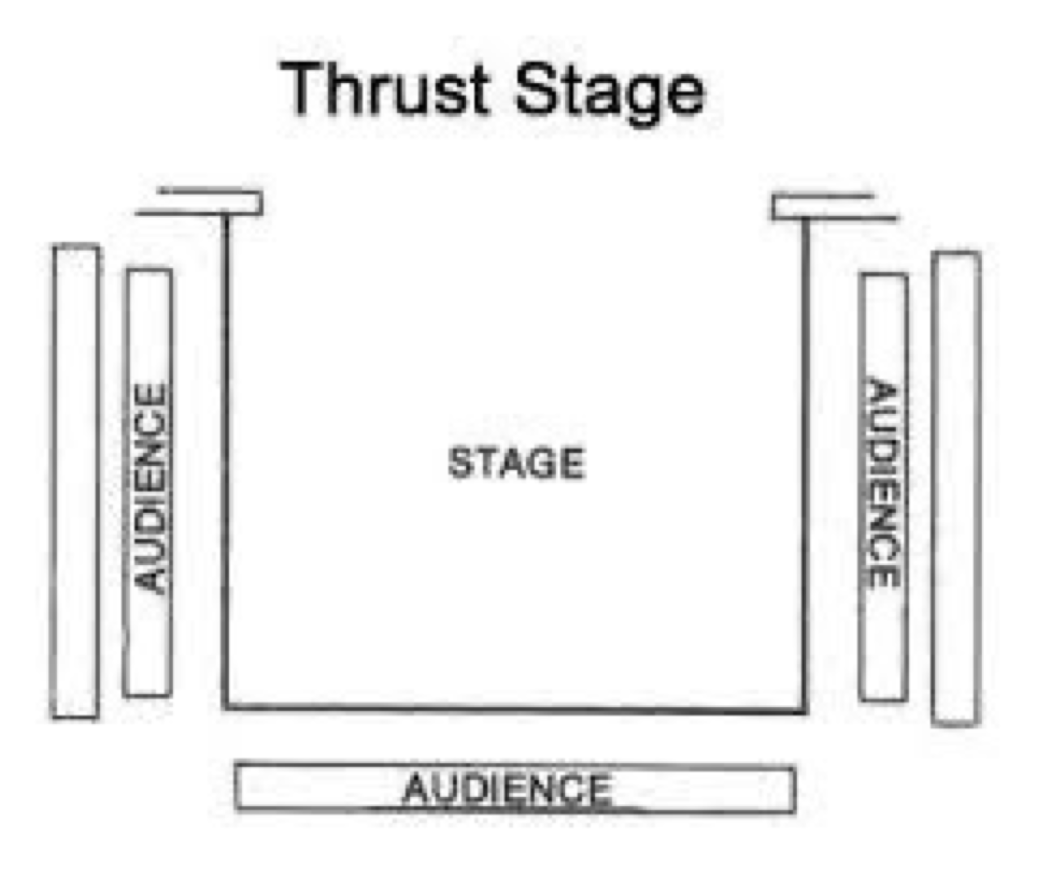
- close to action, makes audience feel involved
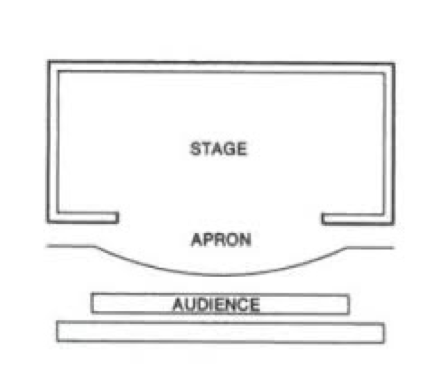
- creates a window
- separates audience from action
{{Principles of Design{{
- Balance: equal distribution of visual weight in a design, can be asymmetrical or symmetrical
- contrast: design element or group of elements are juxtaposed
- emphasis: element is used at a specific place to draw audience member’s eye to it - is the focal point because of its importance
- harmony
- movement
- pattern: consistent, repeated use, can be regular or irregular, form a sense of rhythm or not
- repetition: creates a sense of cohesiveness and unity
- rhythm
- scale/proportion
- unity
- variety
{{Elements of Design{{
- colour
- line
- shape: when a line encloses space
- space: consider dark space
- texture
- value
{{Scenography{{
- use of colour, texture and shape
- venue, size of performing area, entrances and exits of actors and ease of scene changes
Cooperative group work processes
- Memorising (self management)
- Improvising
- Interpreting
- Listening (self-management)
- Accepting (can also be self management)
- Delegation of roles
- Developing an agreed approach
mood: presented on stage
atmosphere: created for the audience