busn 1210 week 2 managing groups and teams
 Studied by 7 people
 Call with Kai
 Learn
Learn Practice Test
 Spaced Repetition
 Match
Match Flashcards
 Knowt Play
1/12

There's no tags or description
Looks like no tags are added yet.
Name | Mastery | Learn | Test | Matching | Spaced | Call with Kai |
|---|
No analytics yet
Send a link to your students to track their progress
13 Terms
group
2 or more interacting and independent individuals who come together to achieve particular goals
team
group whose members work intensely and interdependently on a specific, common goal
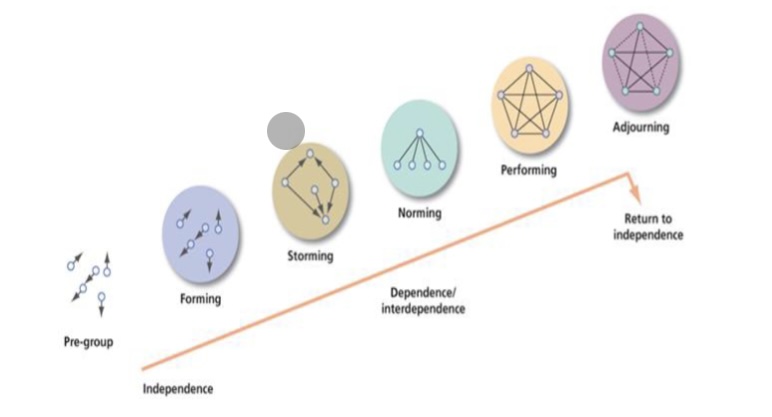
tuckman’s 5 stages of group and team development model
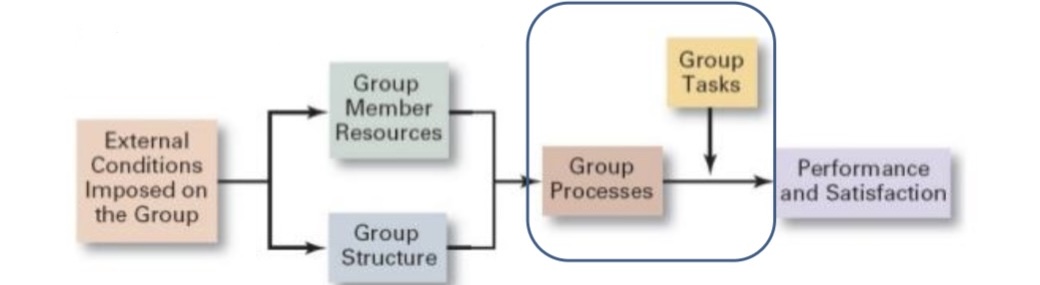
group performance satisfaction model
conflict
process that begins when one party perceives that another party has negatively affected, or is about to negatively affect, something that the first party cares about
functional
supports the goals of the group and improves its performance
dysfunctional
hinders group performance
task conflict
relates to the content and goals of the work
process conflict
conflict over how work gets done
relationship conflict
focuses on interpersonal relationships
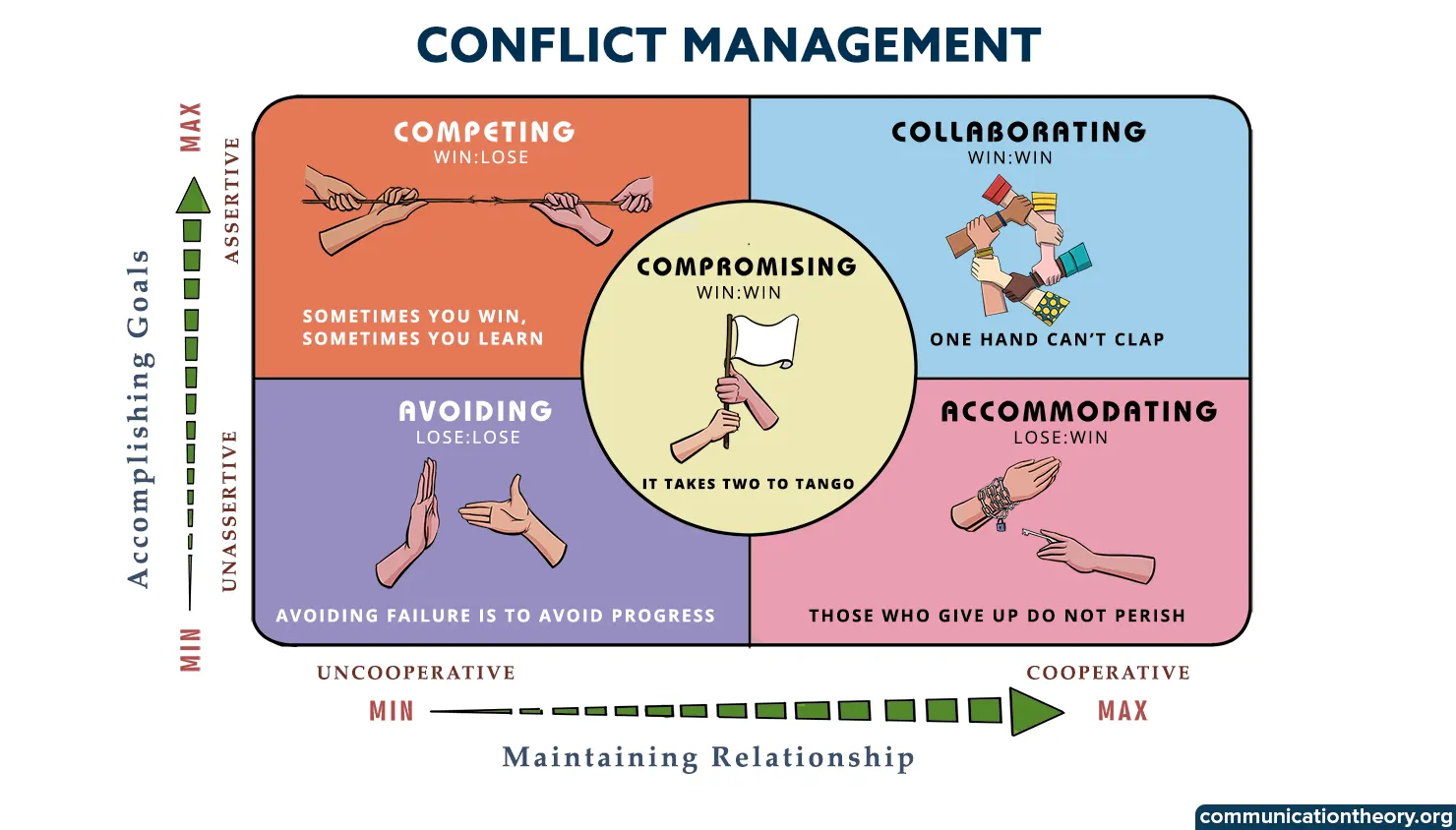
conflict resolution model
assertiveness: trying to satisfy one’s own concerns
forcing
problem solving
cooperativeness: trying to satisfy the other person’s concerns
avoiding
yeilding
sweet spot: compromising
characteristics of an effective team
clear purpose
informality
participation
listening
civilized disagreement
consensus decisions
open communication clear rules and work assignments
shared relationship
external relations
style diversity
self assesment
unique considerations for managing global teams
group member sources
group structure
group processes
manager’s role
 Note
Note  Flashcards (40)