Definition of viruses, structure of viruses.
 Studied by 0 people
 Call with Kai
 Learn
Learn Practice Test
 Spaced Repetition
 Match
Match Flashcards
 Knowt Play
1/11

There's no tags or description
Looks like no tags are added yet.
Name | Mastery | Learn | Test | Matching | Spaced | Call with Kai |
|---|
No study sessions yet.
12 Terms
Virion
extracellular, infectious, inactive form
Vegetative virus
replicative form (autonomous extrachromosomal element)
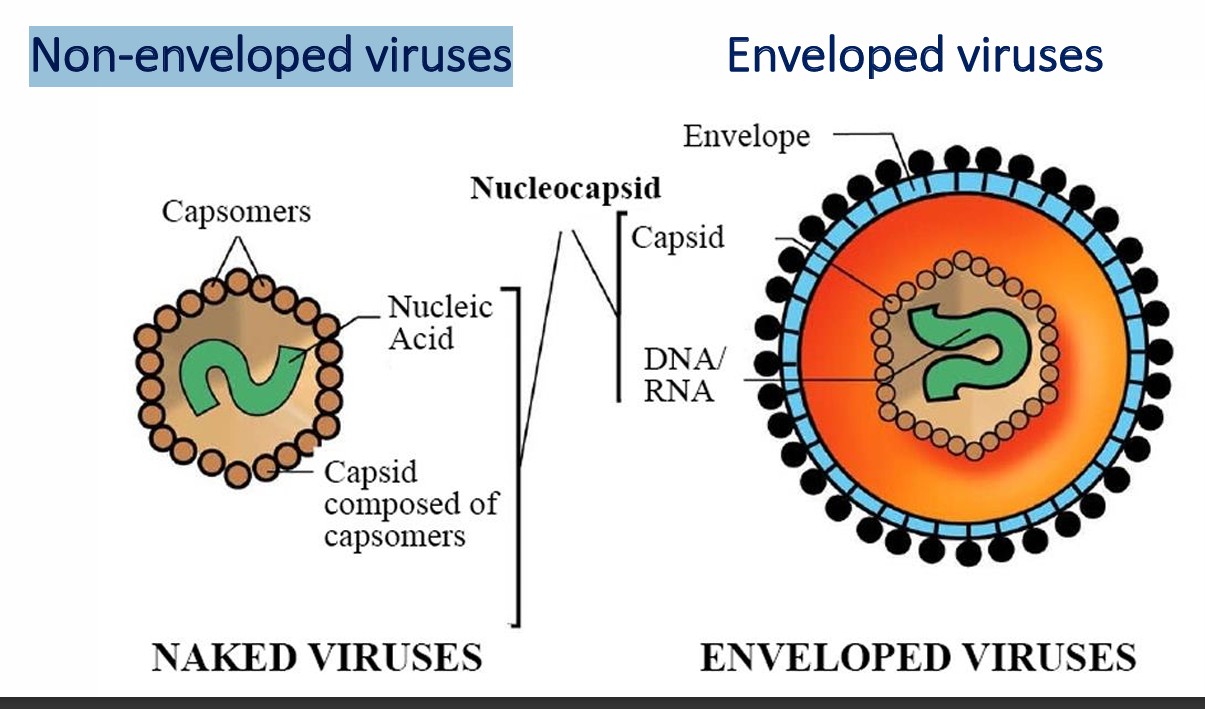
Structure of the virion
1. Protein coat (capsid)
2. Nucleic acid (DNA)
3. Envelope (peplon) - lipid membrane
4. Envelope proteins (peplomers)
5. Enzymes
6. Nucleic acid (RNA – retroviruses)
Classification – Based on Morphological Characteristics
Non-enveloped viruses
Enveloped viruses
3 Basic Structures of the Capsid
Icosahedral
Helical
Binary
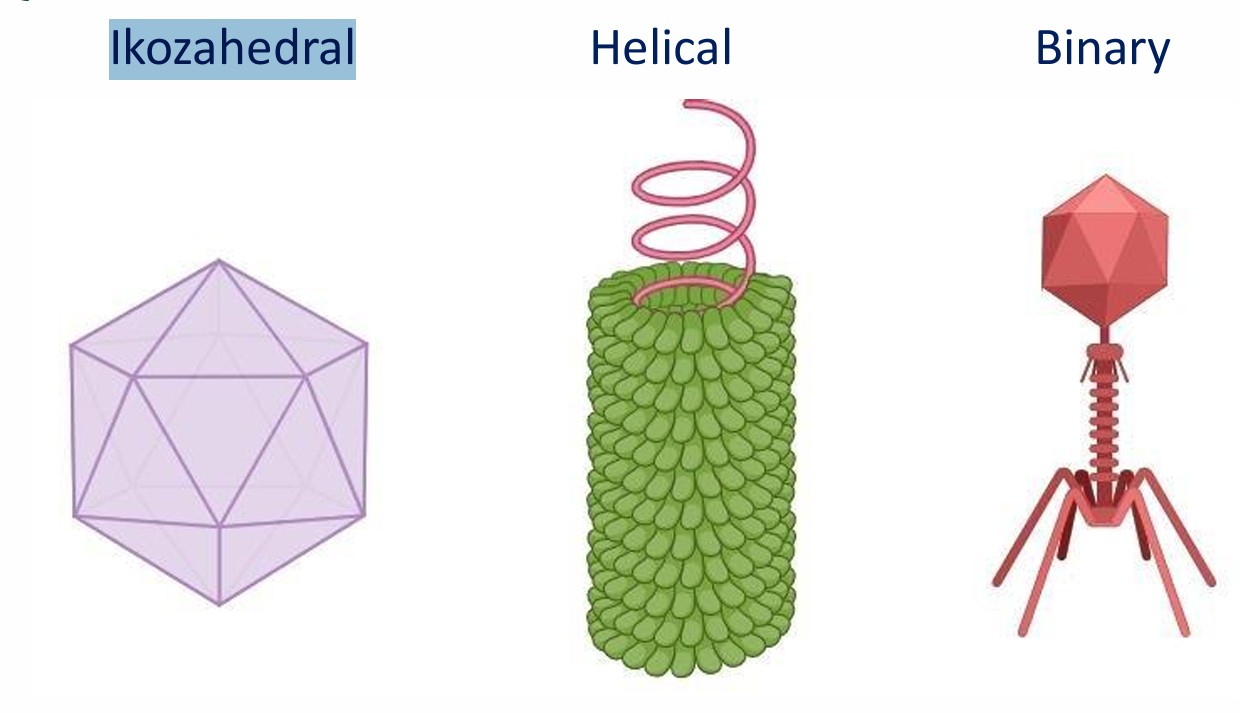
Helical
Paramyxoviridae - mumps
Orthomyxoviridae - influenza
Rhabdoviridae - rabies
Filoviridae- ebola
Icosahedral
Adenoviruses
Polyomaviridae
Binary
Bacteriophages
Capsid
• Morphological units: Capsomeres
• Metastable structure
Capsid Functions
Protection of the genome
Recognition and “packaging” of the genome
Interaction with cell membranes and acquisition of the envelope
“Transport” of the genome: binding to receptors, membrane fusion, uncoating of the genome, and delivery to the appropriate location
Envelope - Peplon
• Outer envelope = phospholipid bilayer
• Peplomer = (glyco)protein embedded in the peplon
• The envelope originates from the infected host cell membrane (determines host-cell specificity).
Membrane sources
• Nuclear membrane – derived envelope: Herpesviruses
• Endoplasmic reticulum/Golgi–derived envelope: Coronaviruses, Bunyaviruses, Hepadnaviruses
• Plasma membrane – derived envelope: Orthomyxoviruses, Paramyxoviruses, Rhabdoviruses, Arboviruses, Retroviruses, Togaviruses
 Note
Note  Flashcards (24)