BASIC SURGICAL INSTRUMENT - NCMN 109 SKILLS
 Studied by 0 people
 Call with Kai
 Learn
Learn Practice Test
 Spaced Repetition
 Match
Match Flashcards
 Knowt Play
1/61

There's no tags or description
Looks like no tags are added yet.
Name | Mastery | Learn | Test | Matching | Spaced | Call with Kai |
|---|
No study sessions yet.
62 Terms
Retracting and Exposing Instruments
used to hold back or retract organs or tissue to gain exposure to the operative site.
look at the blade, not the handle
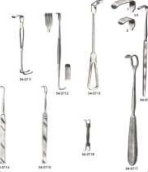
Retracting and Exposing Instruments
"self-retaining" (stay open on their own)
"manual" (held by hand).
Deaver retractor
(manual) is used to retract deep abdominal or chest incisions. Available in various widths.
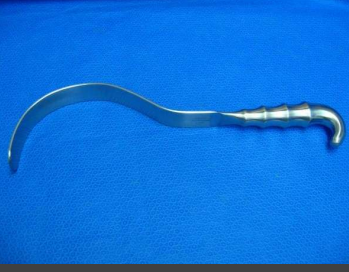
Richardson retractor
(manual) is used to retract deep abdominal or chest incisions
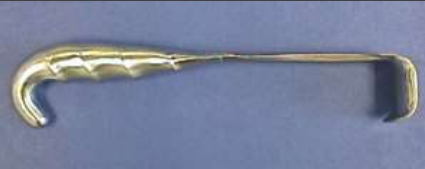
Army-Navy retractor
(manual) is used to retract shallow or superficial incisions. Other names: USA, US Army.
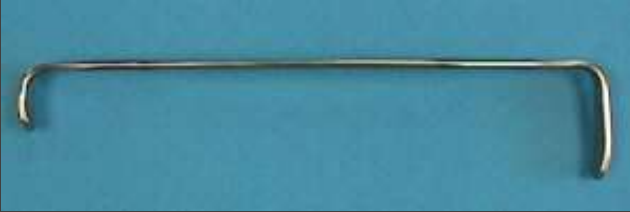
Goulet
(manual) is used to retract shallow or superficial incisions
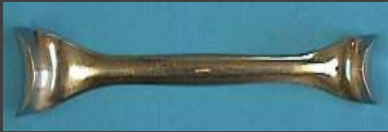
malleable or ribbon retractor
(manual) is used to retract deep wounds. May be bent to various shapes.
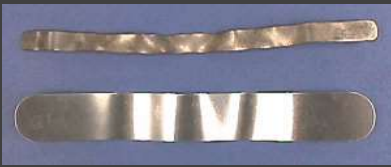
Weitlaner retractor
(self-retaining) is used to retract shallow incisions.
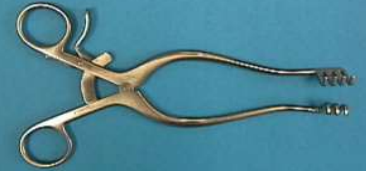
Gelpi retractor
(self-retaining) is used to retract shallow incisions.
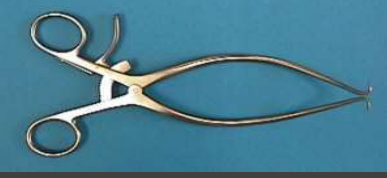
Balfour with bladder blade
(self-retaining) is used to retract wound edges during deep abdominal procedures.
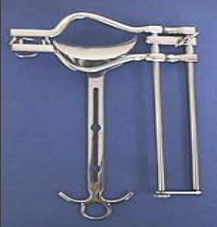
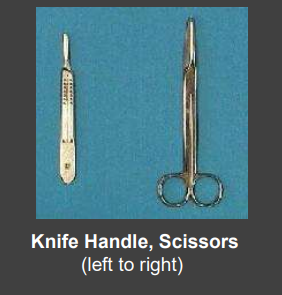
Cutting and Dissecting Instruments
are sharp and are used to cut body tissue or surgical supplies.
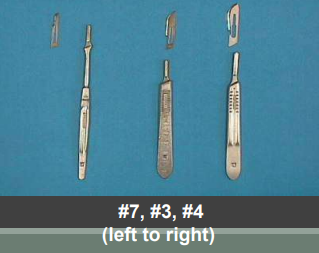
7 handle with 15 blade (deep knife)
Used to cut deep, delicate tissue.
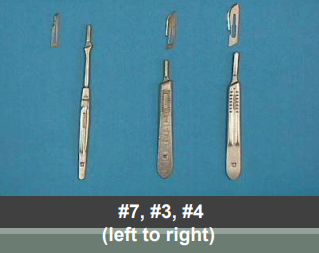
3 handle with 10 blade (inside knife)
Used to cut superficial tissue.
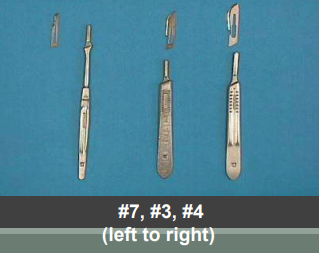
4 handle with 20 blade (skin knife)
Used to cut skin.
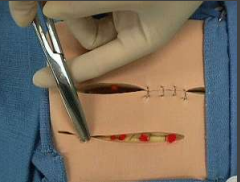
Straight Mayo scissors
Used to cut suture and supplies. Also known as: Suture scissors.
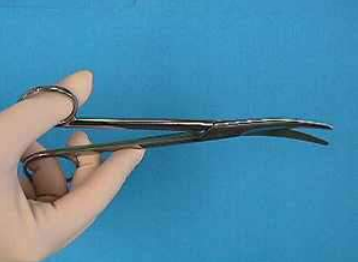
Curved Mayo scissors
Used to cut heavy tissue (fascia, muscle, uterus, breast). Available in regular and long sizes.
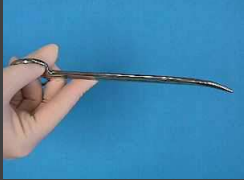
Metzenbaum scissors
Used to cut delicate tissue. Available in regular and long sizes.
Clamping and Occluding Instruments
are used to compress blood vessels or hollow organs for hemostasis or to prevent spillage of contents
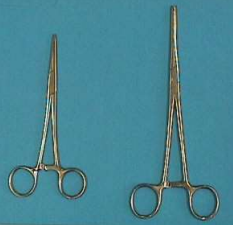
hemostat
is used to clamp blood vessels or tag sutures. Its jaws may be straight or curved. Other names: crile, snap or stat.
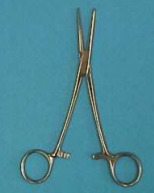
mosquito
is used to clamp small blood vessels. Its jaws may be straight or curved.
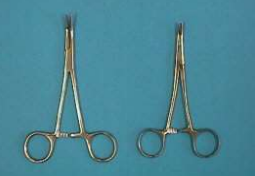
Kelly
is used to clamp larger vessels and tissue. Available in short and long sizes. Other names: Rochester Pean.
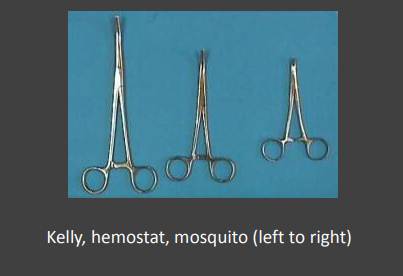
burlisher
is used to clamp deep blood vessels. Burlishers have two closed finger rings. Burlishers with an open finger ring are called tonsil hemostats. Other names: Schnidt tonsil forcep, Adson forcep.
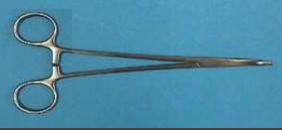
right angle
is used to clamp hard-to-reach vessels and to place sutures behind or around a vessel. A right angle with a suture attached is called a "tie on a passer." Other names: Mixter.
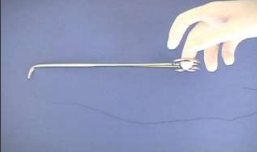
hemoclip applier with hemoclips
applies metal clips onto blood vessels and ducts which will remain occluded.
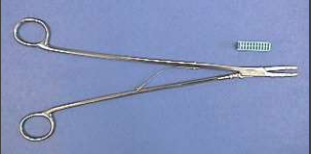
Grasping and Holding Instruments
are used to hold tissue, drapes or sponges.
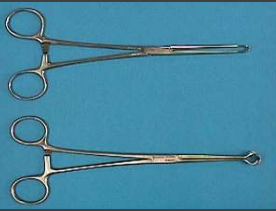
Allis
is used to grasp tissue. Available in short and long sizes.
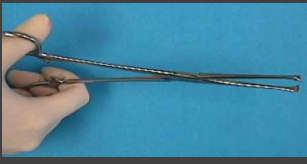
Judd-Allis
holds intestinal tissue
heavy allis
holds breast tissue.
Babcock
is used to grasp delicate tissue (intestine, fallopian tube, ovary). Available in short and long sizes
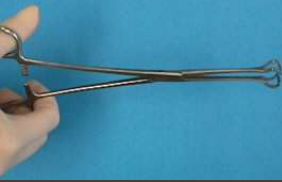
Kocher
is used to grasp heavy tissue. May also be used as a clamp. The jaws may be straight or curved. Other names: Ochsner.
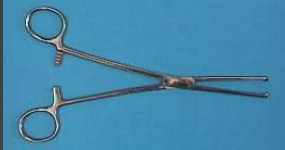
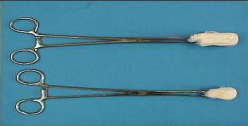
Foerster sponge stick
is used to grasp sponges. Other names: sponge forcep.
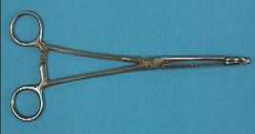
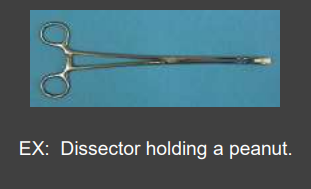
dissector
is used to hold a peanut.
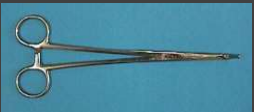
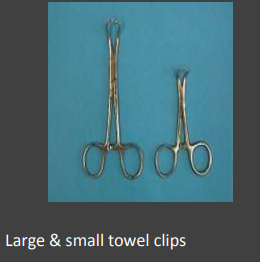
Backhaus towel clip
is used to hold towels and drapes in place. Other name: towel clip.
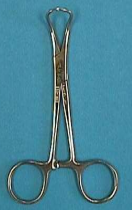
Pick ups, thumb forceps and tissue forceps
are available in various lengths, with or without teeth, and smooth or serrated jaws.
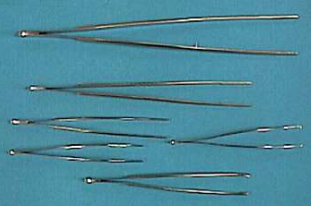
Russian tissue forceps
are used to grasp tissue.
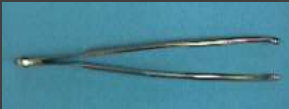
Adson pick ups
are either smooth: used to grasp delicate tissue; or with teeth: used to grasp the skin. Other names: Dura forceps
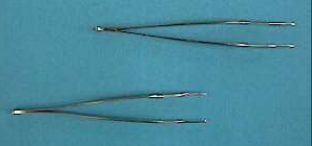
dressing forceps.
Long smooth pick-ups
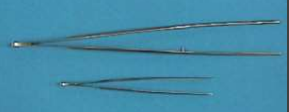
Short smooth pick-ups
are used to grasp delicate tissue.
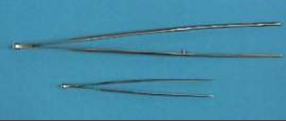
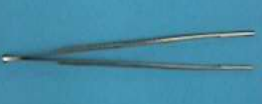
DeBakey forceps
are used to grasp delicate tissue, particularly in cardiovascular surgery.
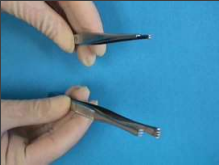
Thumb forceps
are used to grasp tough tissue (fascia, breast). Forceps may either have many teeth or a single tooth. Single tooth forceps are also called "rat tooth forceps."
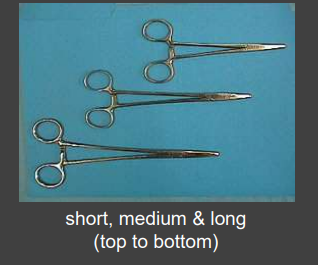
Mayo-Hegar
needle holders are used to hold needles when suturing. They may also be placed in the sewing category.
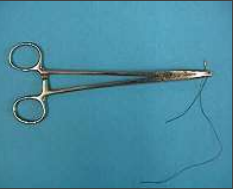
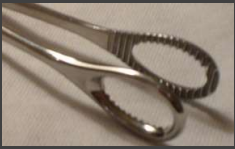
Sponge Forceps
Used to hold gauze squares or sponge to “mop up” the surgical site
Jaws are serrated
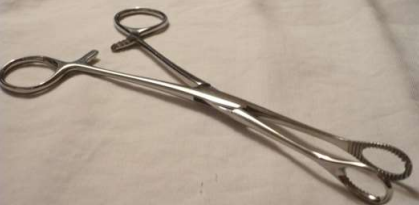
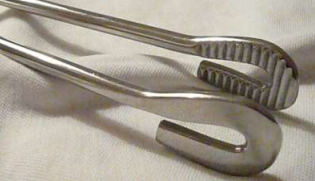
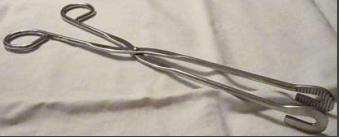
Transfer Forceps
When sterile, transfer forceps; arrange items on sterile tray transfer items to sterile field
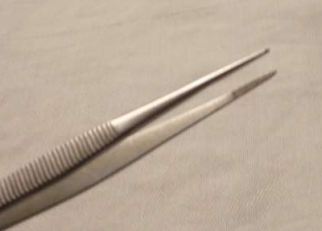
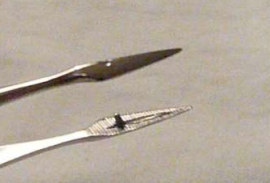
Splinter Forceps
Fine tip for foreign object retrieval
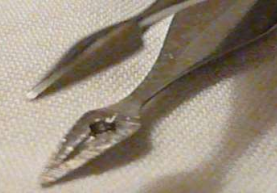
Walter Splinter Forceps
Very fine tip Spear-head design
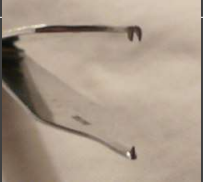
1x2 Toothed Tissue Forceps
Used for grasping and holding tissue, muscle or skin surrounding a wound. Single toothed on one side; fits between two teeth on the other side. Available as 1x2 or 2x3 or 3x4
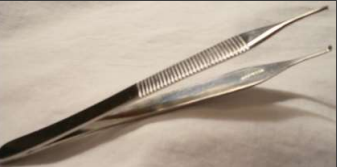
Plain Thumb Forceps
Used to hold tissue in place when applying sutures. Used to gently move tissues out of the way during exploratory surgery. Used to insert packing into or remove objects from deep cavities
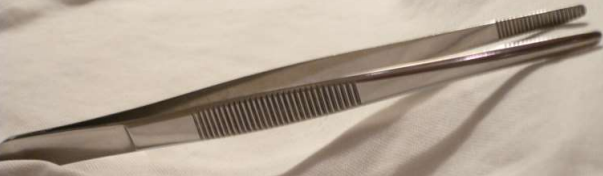
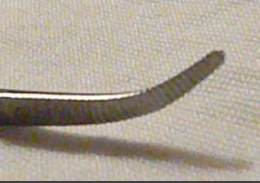
Curved Mosquito Hemostat
Used to hold delicate tissue. Used to compress bleeding vessels. Jaws are fully serrated
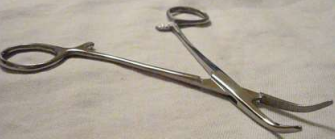
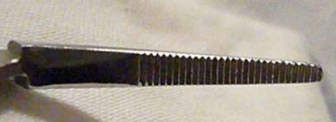
Kelly Hemostat
Used to clamp small vessels or hold tissue Jaws are partially serrated. Curved or straight
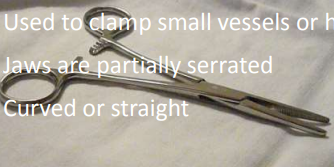
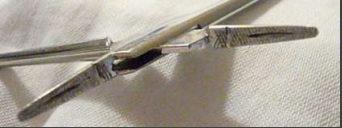
Needle Holder
Used to hold and pass a suturing needle through tissue. Has groove to hold needle within jaws
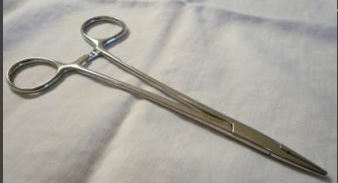
Towel Clamp
Adds weight to drapes and towels to ensure they stay in place. Allow exposure of the operative site
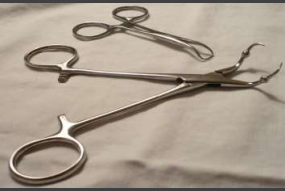
Skin Hook
Flat end is a blunt retractor. Three-prong end may be sharp to dull. Used to retract small incisions or secure a skin edge for suturing
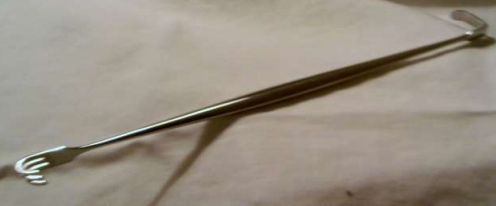
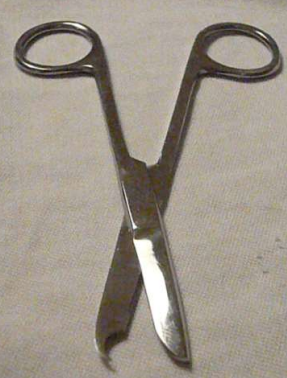
Iris Suture Scissors
Used to remove sutures. Blade has beak or hook to slide under sutures
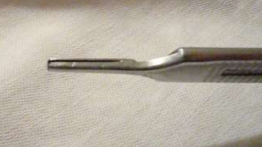
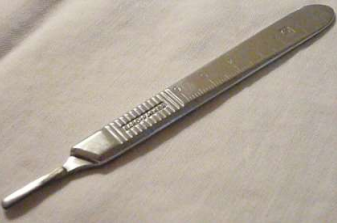
Scalpel Holder
Holds scalpel blade. Acts as a handle
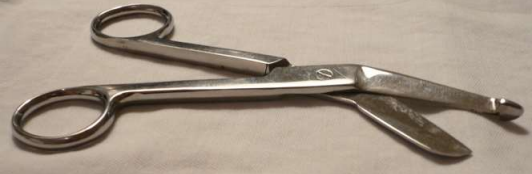
Lister Bandage Scissors
Used to remove bandages and dressings Probe tip is blunt; inserted under bandages with relative safety
Sharp/Sharp Scissors
Used to cut and dissect tissue. Both blade tips are sharp
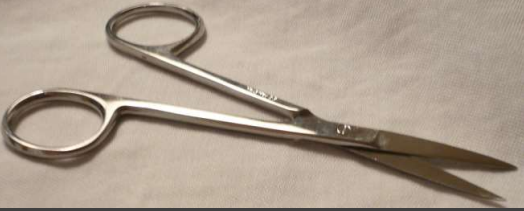
Blunt Scissors
Used to cut and dissect fascia and muscle One blunt tip and one sharp tip
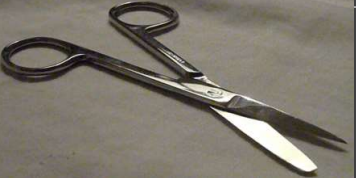
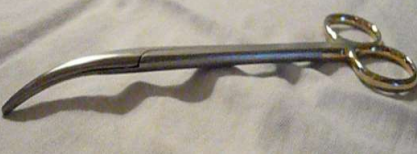
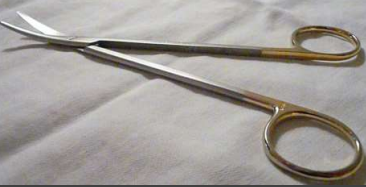
Curved Blunt/Blunt Scissors
Both blade tips are blunt Can be curved or straight
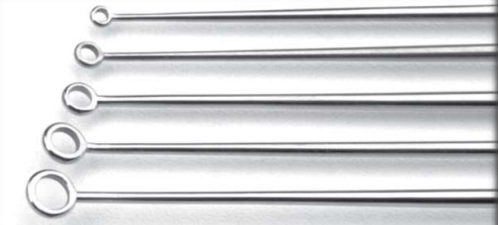
Ear Currette
Can have sharp or blunt scraper ends Used to remove ear wax from ear canal
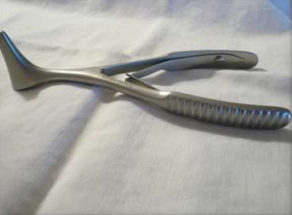
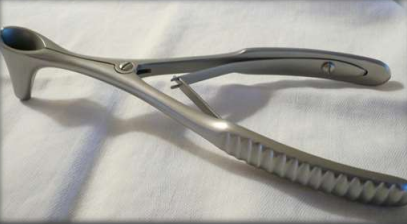
Nasal Speculum
Used to spread nostrils during examination
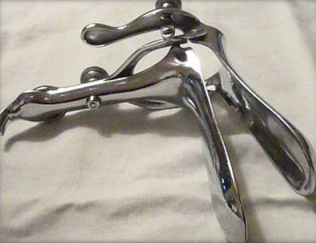
Vaginal Speculum
Used during gynecological exam or procedure. Dilates the opening of the vaginal cavity, allowing for inspection of the vagina and cervix. Facilitates access for observation and treatment
 Note
Note  Flashcards (24)