Unit 1: Planaria and Earthworm Anatomy
 Studied by 0 people
 Call Kai
 Learn
Learn Practice Test
 Spaced Repetition
 Match
Match Flashcards
 Knowt Play
1/48

There's no tags or description
Looks like no tags are added yet.
Name | Mastery | Learn | Test | Matching | Spaced | Call with Kai |
|---|
No analytics yet
Send a link to your students to track their progress
49 Terms
asymmetry
no points of symmetry
radial symmetry
multiple points of symmetry
mirrors
bilateral symmetry
5
earthworms have blank hearts
heart, blood, blood vessels, lymph nodes, and lymphatic system
parts of an earthworm’s circulatory system
brain, spinal cord, nerves, nerve cord
parts of an earthworm’s nervous system
dorsal, ventral
in the earthworm…
brain is on blank side
nerve cord is on blank side
mouth → pharynx → esophagus → crop → gizzard → intestine
digestive tract in earthworm order
mouth → pharynx → esophagus → stomach → small intestine → large intestine
digestive tract in human order
hermaphrodites
worms are blank, meaning they exchange and store sperm in seminal receptacles
remove nitrogenous waste
what do nephridia in earthworms do?
true
T/F: (earthworm) the brain attaches to the ventral cord
false
T/F: (earthworm) the dorsal side of the worm is lighter than the ventral side
true
T/F: (earthworm) the clitellum is located toward the anterior of the worm
true
T/F: (earthworm) the esophagus lies beneath the pharynx
true
T/F: (earthworm) earthworms are hermaphrodites
false
T/F: (earthworm) the ventral nerve cord and ventral blood vessel are connected
false
T/F: (earthworm) the pale string like structure running the length of the ventral side of the worm is the blood vessel
false; 5
T/F: (earthworm) the earthworm has 14 aortic arches
true
T/F: (earthworm) the dorsal blood vessel can be seen from the worm’s exterior
false
T/F: (earthworm) seminal vesicles are part of the worm’s digestive system
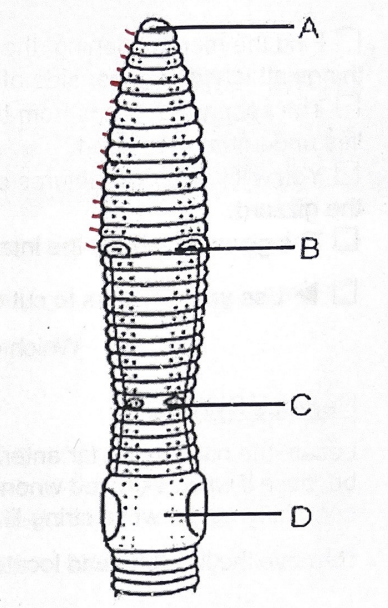
A: mouth
B: sperm ducts
C: genital setae
D: clitellum
(earthworm)
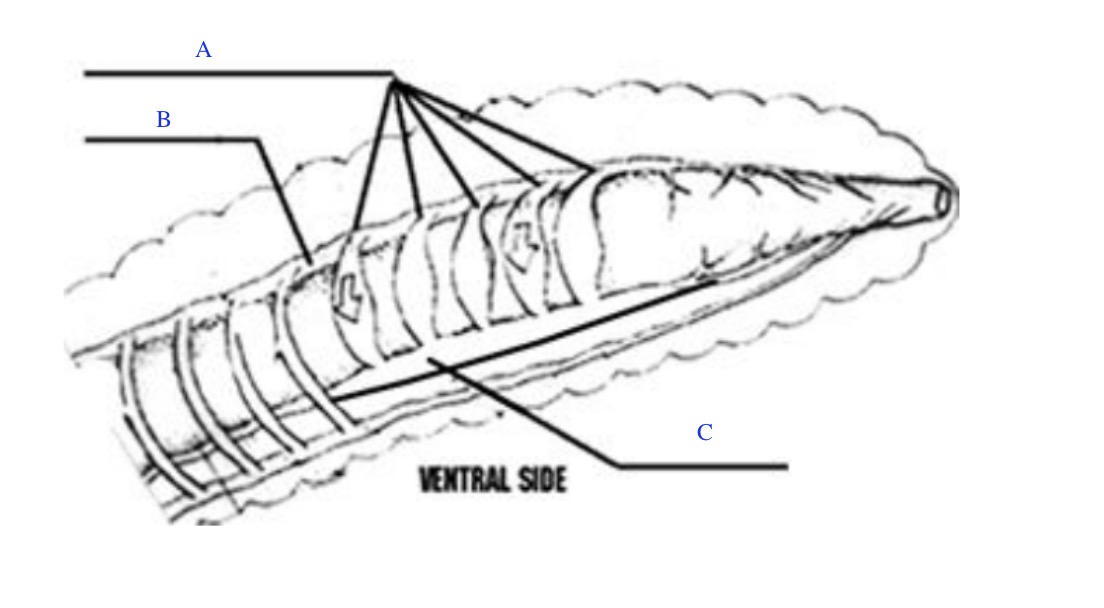
A: hearts
B: dorsal blood vessel
C: central blood vessel
(earthworm)
gizzard
(earthworm) which has the harder exterior?
A: intestine
B: gizzard
C: crop
label A, B, and C
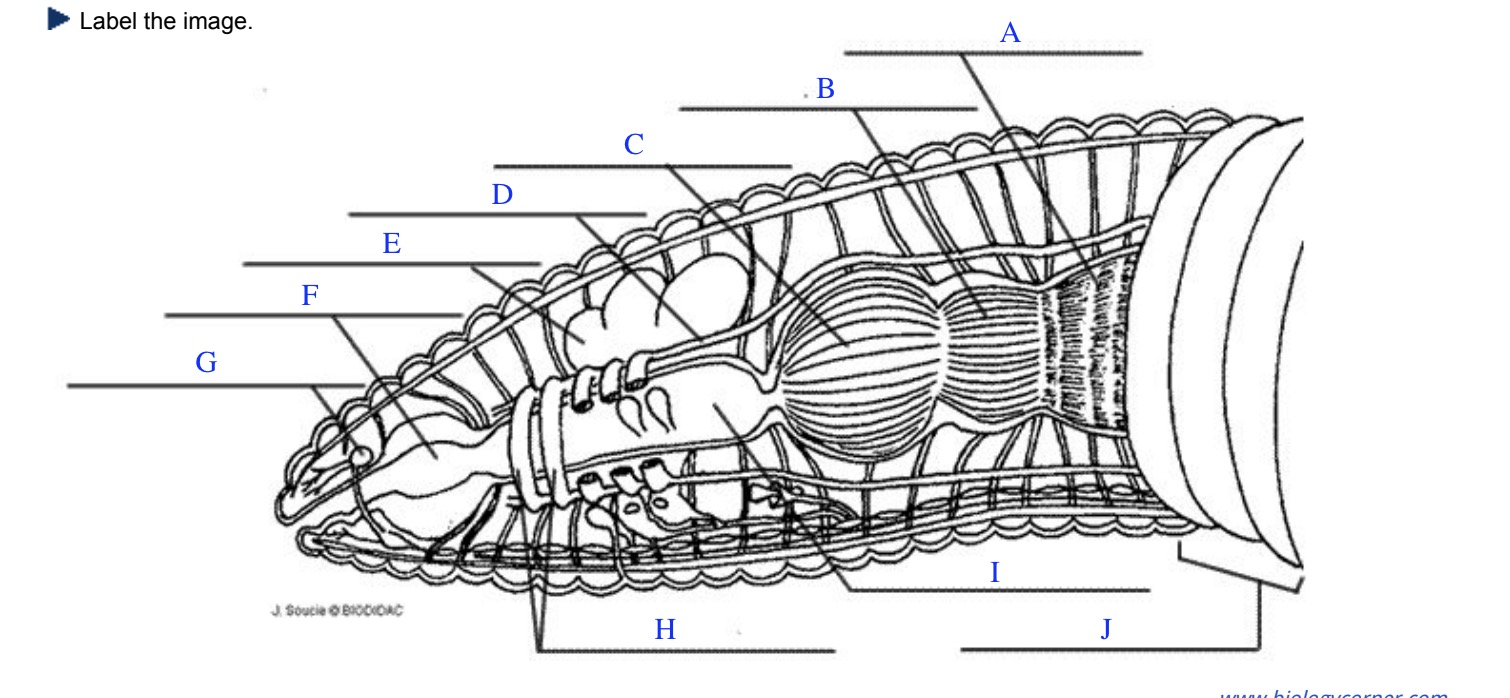
D: dorsal blood vessels
E: seminal vesicles
F: pharynx
label D, E, and F
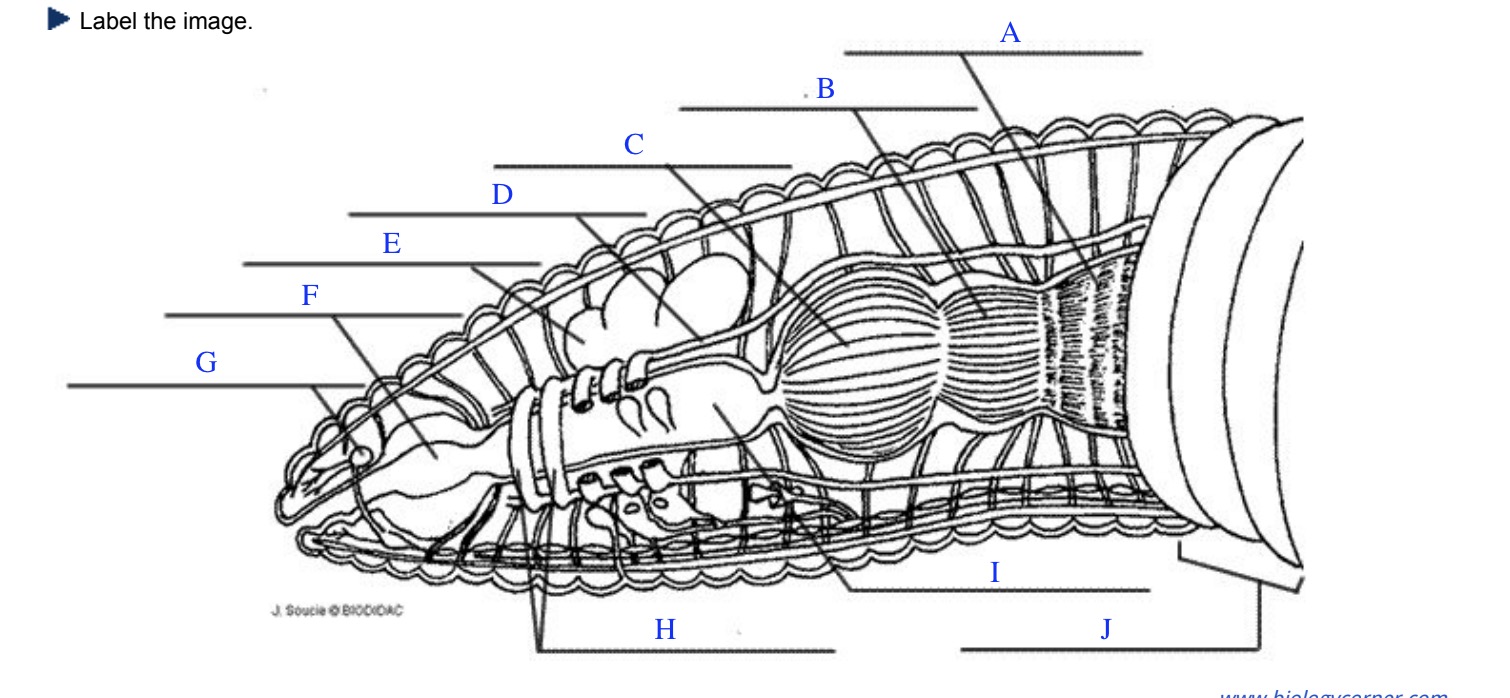
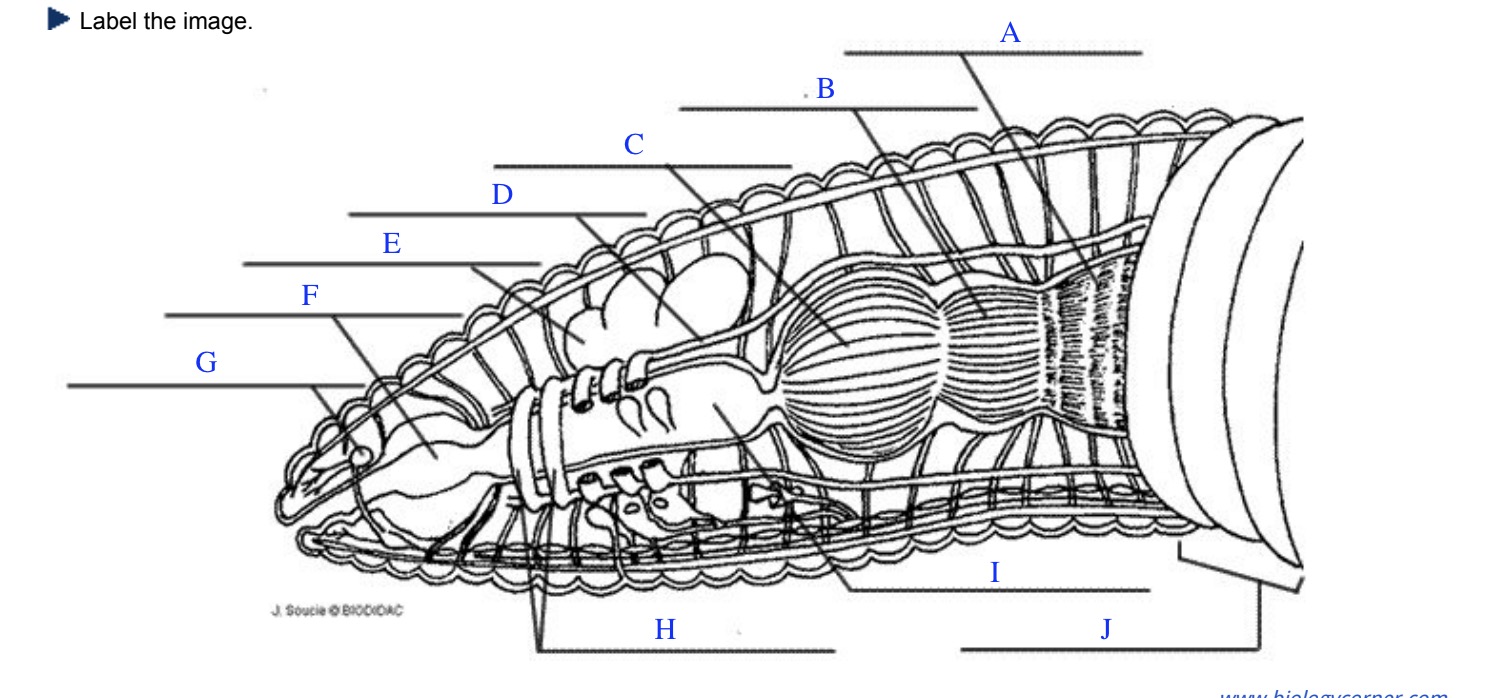
G: brain
H: aortic arches
I: esophagus
J: exterior segments
label G, H, I, and J
bilateral; humans also have it
(planaria) What type of symmetry do planarians have and how does it compare to human symmetry?
ganglia; the anterior region
(planaria) what serves as the brain for the planaria? what region is it located in?
a majority of sense organs are in the anterior region; yes
(planaria) what is cephalization? do humans exhibit this?
flame cells remove waste; excretory system
(planaria) how do planaria remove waste? what is the name of this system?
sexually: two pair up (hermaphrodites) ; asexually: transverse fission
(planaria) how do planaria reproduce?
acoelomate body
(planaria) an animal that has no internal body cavity to hold organs is called an blank
by cutting the planaria
(planaria) how did we mimic transverse fission in the lab?
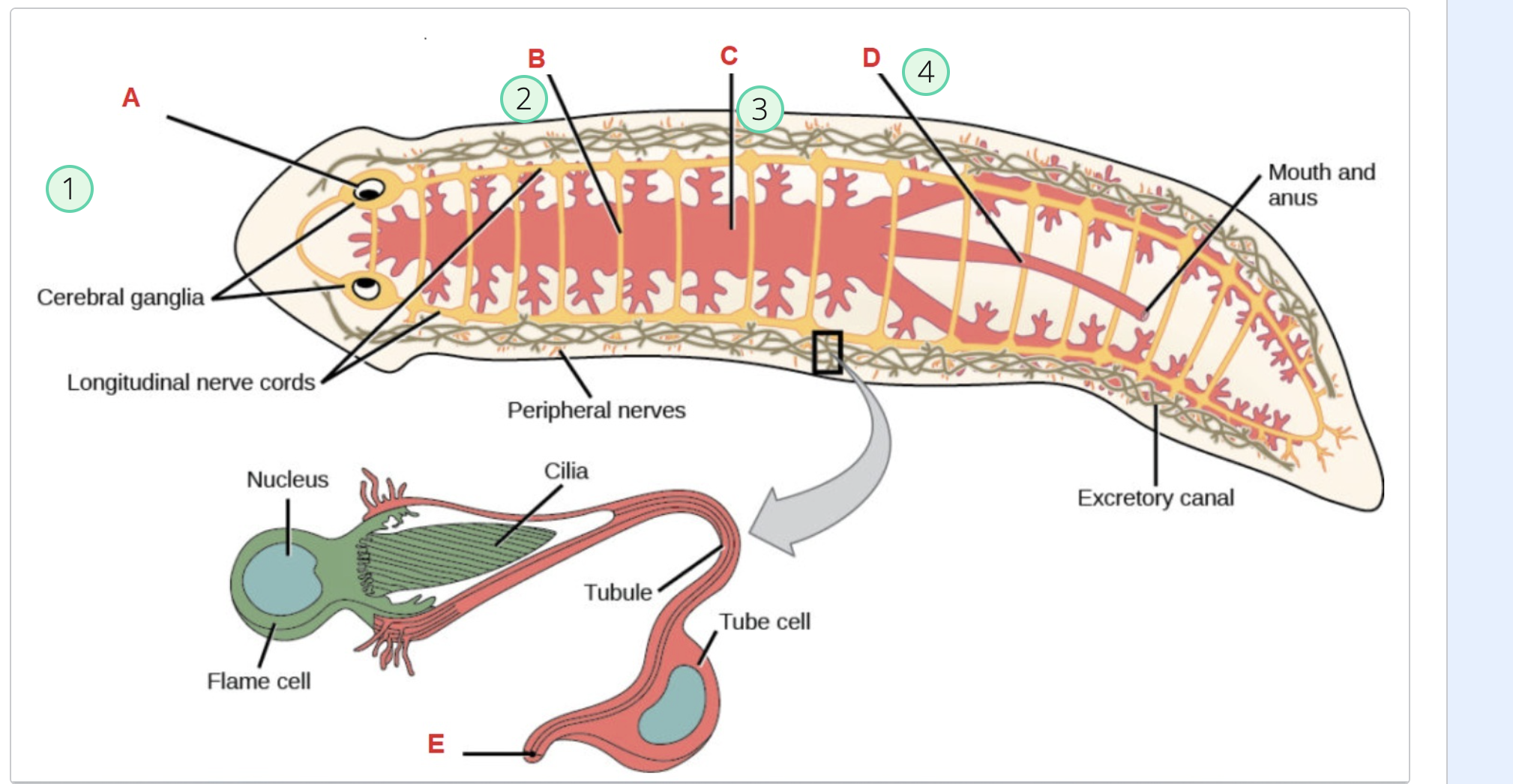
1: eyespots
2: transverse nerve
3: intestine
4: pharynx
5: anus/mouth
label 1-5
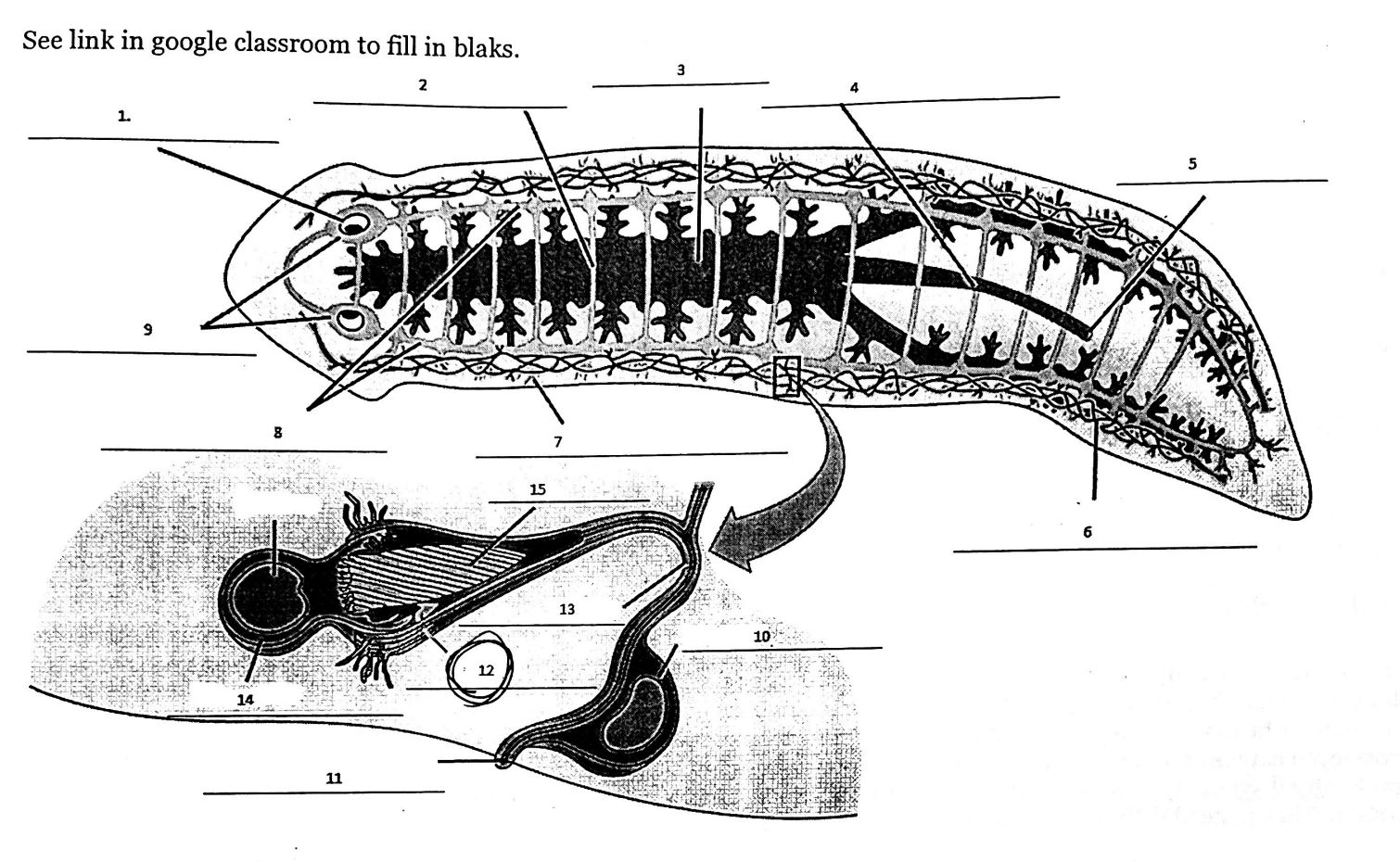
6: excretory canal
7: peripheral nerves
8: longitudinal nerves
9: cerebral ganglia
10: tube cell
label 6-10
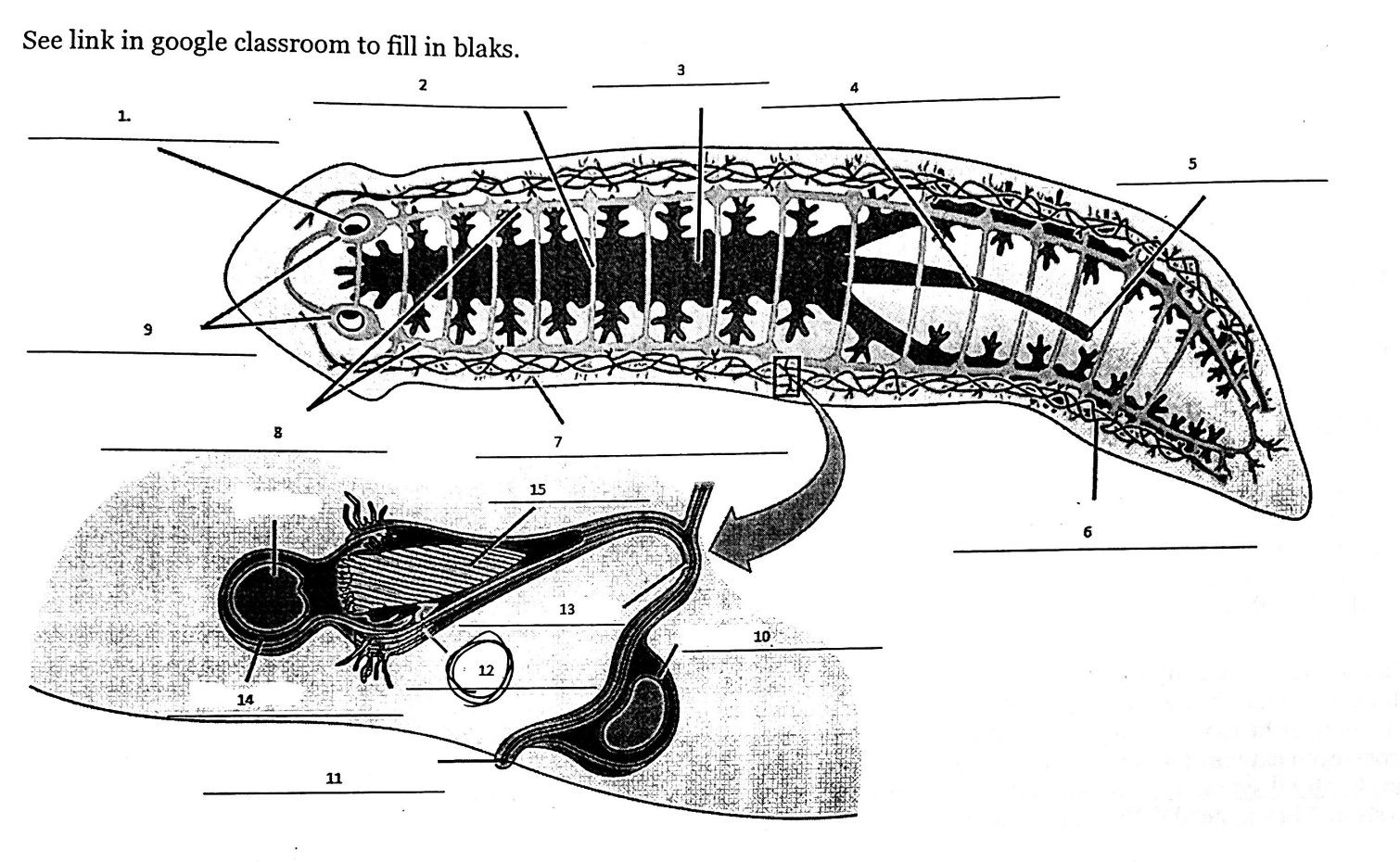
11: excretory pore
13: tubule
14: flame cell
15: cilia
label 11-15 (except 12)

kidneys; excretory
Planaria remove waste using a network of flame cells and tube cells found on the periphery on the organism.
Earthworms remove waste using the nephridia found along multiple segments.
Humans use their blank to filter out waste.
All three are examples of an organ system that removes waste. This system is called the blank system.
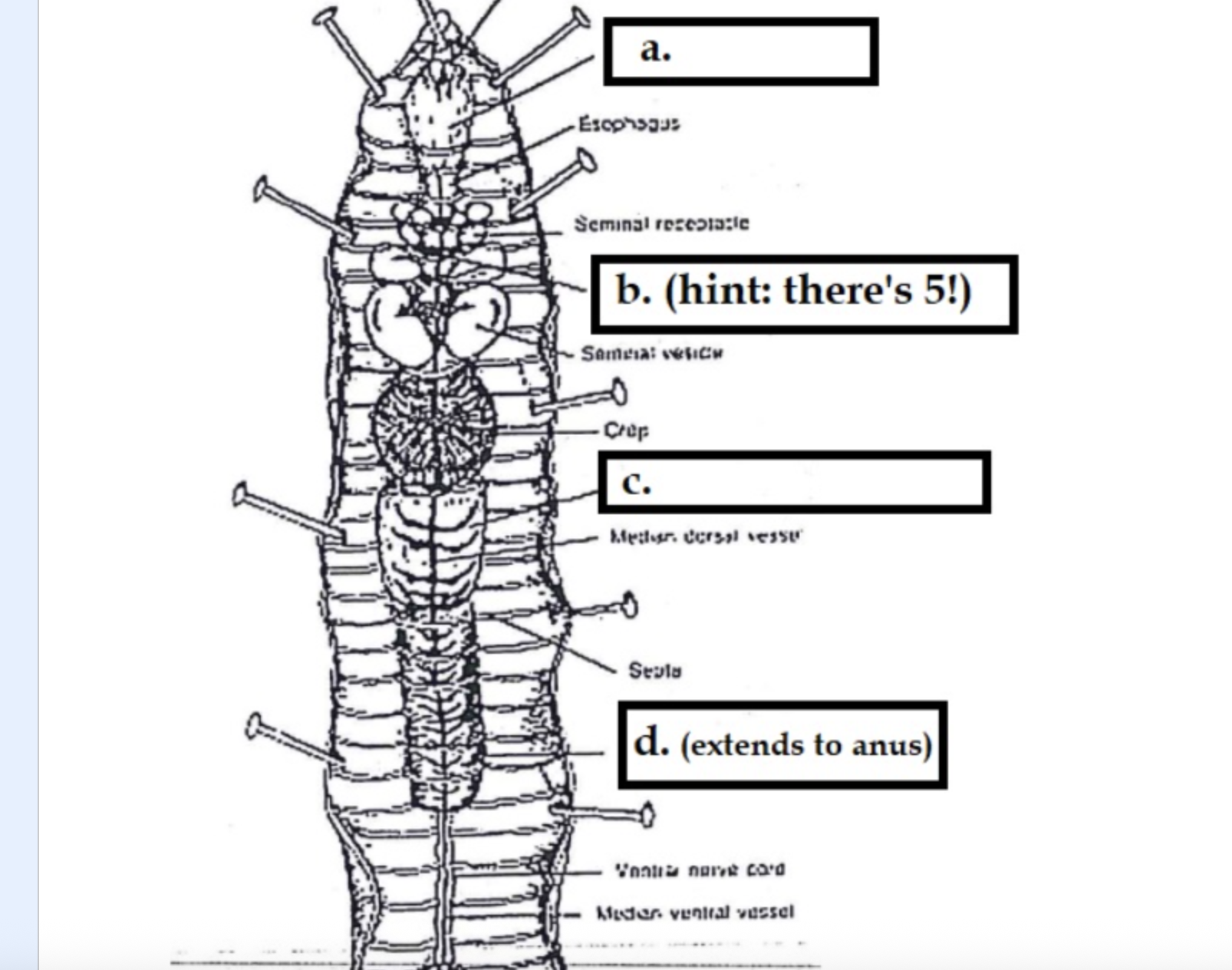
A: pharynx
B: hearts
C: gizzard
D: intestine
1: eyespot
2: transverse nerve
3: intestine
4: pharynx
both asymmetrical and bilateral
describe the crab’s symmetry
throat
what is the pharynx in humans?
sand dollar, sea anemone
radial symmetry examples
human, planaria, earthworm
bilateral symmetry examples
sea coral, sea sponge
asymmetrical symmetry examples
nephridia
(earthworm) which of the following are excretory organs found in each segment which removes nitrogenous waste?
nervous system
(earthworm) Includes the brain, spinal cord, nerves, nerve cord, and regulates the body's responses to stimuli
digestive system
(earthworm) Breaks down food for nutrients, energy, and materials used for growth or repair
circulatory system
(earthworm) Transports oxygen to cells in the body for cellular respiration using a network of blood vessels and the heart as a pump; also includes the lymphatic system
 Note
Note  Flashcards (30)