Apostrophes
In the English language, apostrophes are used for three purposes:
- to indicate possession
- to replace one or more letters in a contraction
- to form the plural of single numbers and letters
Please read and understand each rule. Then check out Common Apostrophe Mistakes to see if you can spot what's wrong!
1.
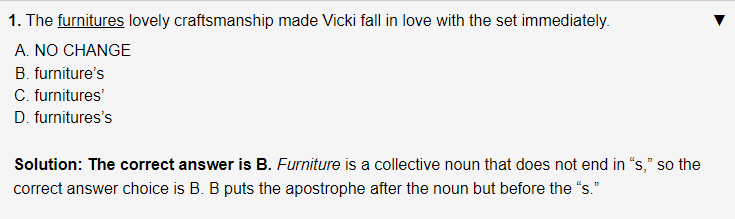
Apostrophes are used in various ways to indicate ownership. First, let's discuss the singular possessive, where a singular noun indicates possession of something. Here are some examples.
the boy***’s*** shoes
the cat***’s*** meow
Marla***’s*** paintings
my father***’s*** glove
- Note that the singular is the possessor, not the trailing noun. In the possessive singular, the apostrophe comes after the possessive pronoun, followed by an ``s''.
- For plural possession, make the noun plural, followed by an apostrophe. The same applies to surnames. Add an 's' to the name and staple the apostrophe.
- Use apostrophe + s because "woman" and "children" are singular and plural nouns. While referring to multiple individuals, these terms refer to groups as a single entity. We have a group of several people.
- Add an apostrophe and an "s" to form possessive pronouns for singular, plural or indefinite pronouns that do not end in "s".
2.
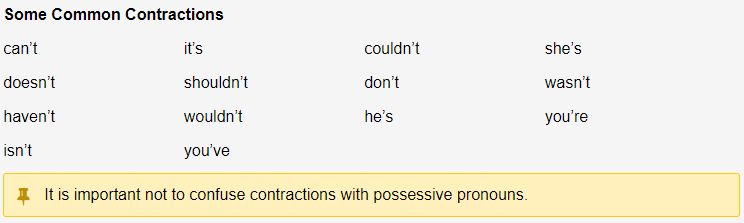
Apostrophes are also used to replace missing characters in contractions.
A contraction is a combination of two words with some letters removed.
It's raining again outside. (It's raining again.) We compete against each other in elections. (We/We competed against each other in elections.) If you want to go to the movies with me, you should go now. (If you go to the movies with me, you should go now.) My cousin should have taken the bus. (My cousin should have taken the bus.) Didn't Nabeel know that class had started? (Nabir didn't realize class had started.)
3.
Did you dot your i’s and cross your t’s? \n There are a total of four7’s in my phone number.