Chapter 1 Comp Networks
 Call Kai
 Learn
Learn Practice Test
 Spaced Repetition
 Match
Match Flashcards
 Knowt Play
1/43

There's no tags or description
Looks like no tags are added yet.
Name | Mastery | Learn | Test | Matching | Spaced | Call with Kai |
|---|
No analytics yet
Send a link to your students to track their progress
44 Terms
What is the Internet?
A vast global network of interconnected computers and servers that enables information storage, retrieval, and communication.
What are the key components of Internet structure?
Servers, data centers, routers, switches, and networking protocols.
What does TCP stand for?
Transmission Control Protocol
What is the role of protocols in networking?
Protocols define the format, order of messages sent and received, and actions taken on message transmission and receipt.
What are user access points in networking?
Devices and connection points that users interact with directly, such as end systems or hosts.
What is an access network?
The last-hop connection between end systems and the Internet, including components like copper wires and fiber optic cables.
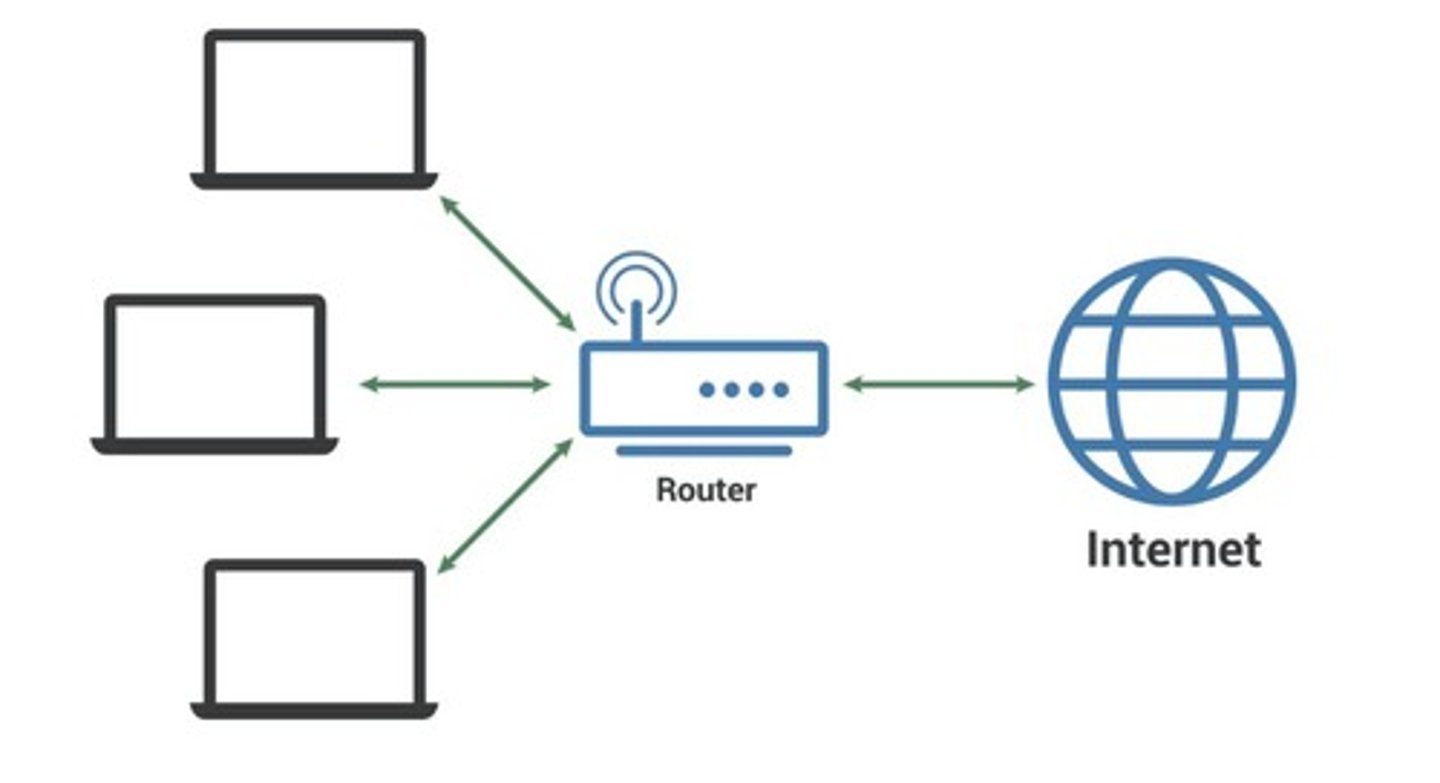
What is a home network typically composed of?
A broadband modem, a wireless router, and various connected devices.
What distinguishes enterprise networks?
They are highly scalable and designed to support hundreds to thousands of users across multiple locations with advanced security measures.
What are the two categories of physical media in networking?
Guided media and unguided media.
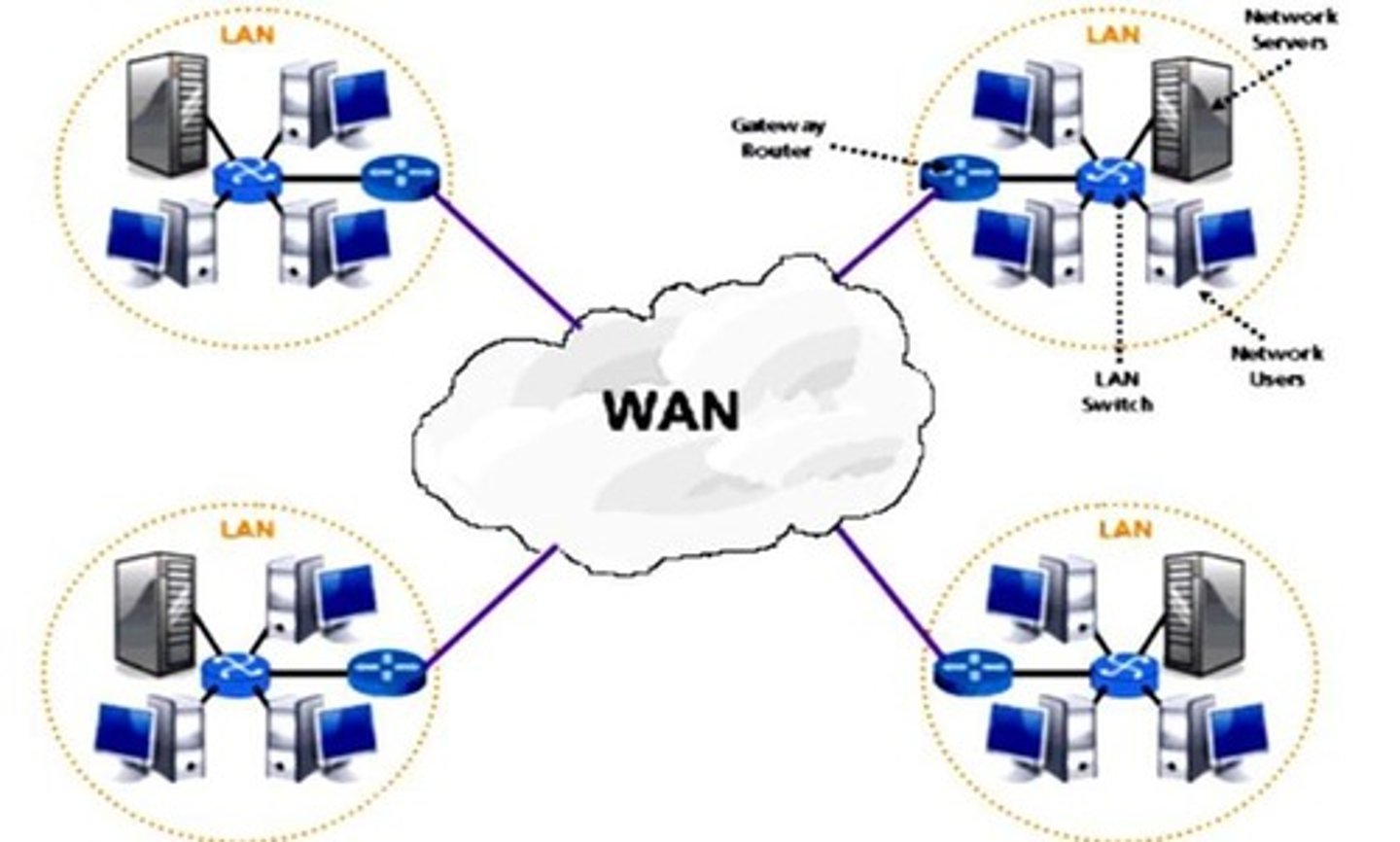
What is a Local Area Network (LAN)?
A network that connects devices within a limited area, such as a residence or office building, typically using Ethernet or Wi-Fi technology.
What is a Wide Area Network (WAN)?
A network that connects devices across large geographical areas, typically managed by multiple telecommunication providers.
What is a bus topology?
A network topology where all devices are connected to a single communication line and data is broadcasted from one device to another.
What is packet switching?
A method of segmenting data into packets before sending them over a digital network, where each packet travels independently.
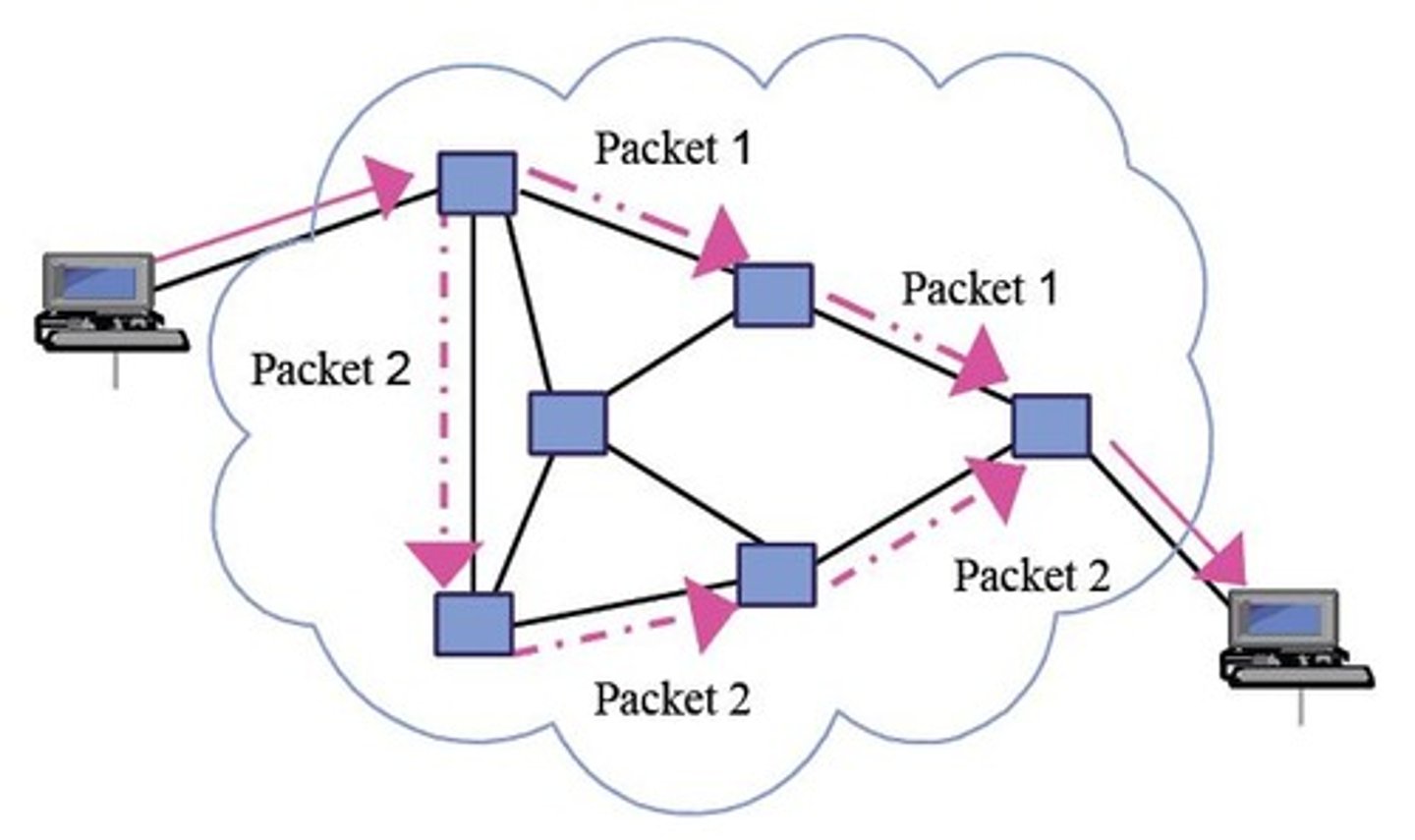
What is the function of routing in a network?
To determine the source-destination paths taken by packets.
What is the difference between routing and forwarding?
Routing is a global action determining paths for packets, while forwarding is a local action moving packets from input to output links.
What is circuit switching?
A method where end-to-end resources are reserved along a path for the duration of a communication session.
What happens if the arrival rate to a link exceeds its transmission rate?
Packets will queue, waiting to be transmitted, and may be dropped if the router's memory fills up.
What is the store-and-forward method in packet switching?
The entire packet must arrive at a router before it can be transmitted on the next link.
What is queuing delay in networking?
The delay that occurs when packets are waiting in a queue to be transmitted on an output link.
What is the purpose of error handling protocols?
To specify how errors are detected, reported, and corrected to ensure reliable data exchange.
What are the two types of network topologies mentioned?
Bus topology and mesh topology.
What is the primary function of the network core?
To interconnect the Internet's end systems through a mesh of packet switches and links.
What is Frequency Division Multiplexing (FDM)?
A method where optical and electromagnetic frequencies are divided into bands, with each call allocated its own band for transmission.
What is Time Division Multiplexing (TDM)?
A method where time is divided into slots, allowing each call to transmit during its allocated time slot.
What are the two main types of switching in networks?
Circuit switching and packet switching.
How does packet switching differ from circuit switching?
Packet switching sends data in packets over shared networks, while circuit switching establishes a dedicated path for the duration of a call.
What is the maximum data rate for each user in a circuit-switched network with a 1 Gb/s link?
Each user can transmit at 100 Mb/s when active.
What is the probability of more than ten users being active simultaneously with 35 users?
This requires a statistical analysis based on independent user activity.
What is the structure of the Internet described as?
A network of networks connecting millions of access ISPs.
What is one option for connecting access ISPs to global transit ISPs?
Connecting each access ISP to one global transit ISP under an economic agreement.
What may arise if one global ISP becomes a viable business?
Competitors may emerge, leading to regional networks connecting access networks to ISPs.
What role do content provider networks play in the Internet structure?
They run their own networks to bring services and content closer to end users.
What is propagation delay in network performance?
The time it takes for a signal to travel between two endpoints of a link.
What is bandwidth?
The maximum rate at which data can be transferred across a network connection over time.
What is throughput?
The rate at which data is successfully transmitted from one point to another, often less than bandwidth due to various factors.
What is a Denial-of-Service (DoS) attack?
An attack that renders a network or host unusable by legitimate users.
What is malware?
Software intentionally designed to cause damage to a computer or network.
What is IP spoofing?
Forging the source IP address in a packet to make it appear as if it comes from a different address.
What is packet sniffing?
Intercepting and logging traffic that passes over a network.
What is one defense against DDoS attacks?
Setting thresholds for the number of requests a server can accept from a single source.
What is the OSI model?
A conceptual framework used to understand network interactions in seven layers.
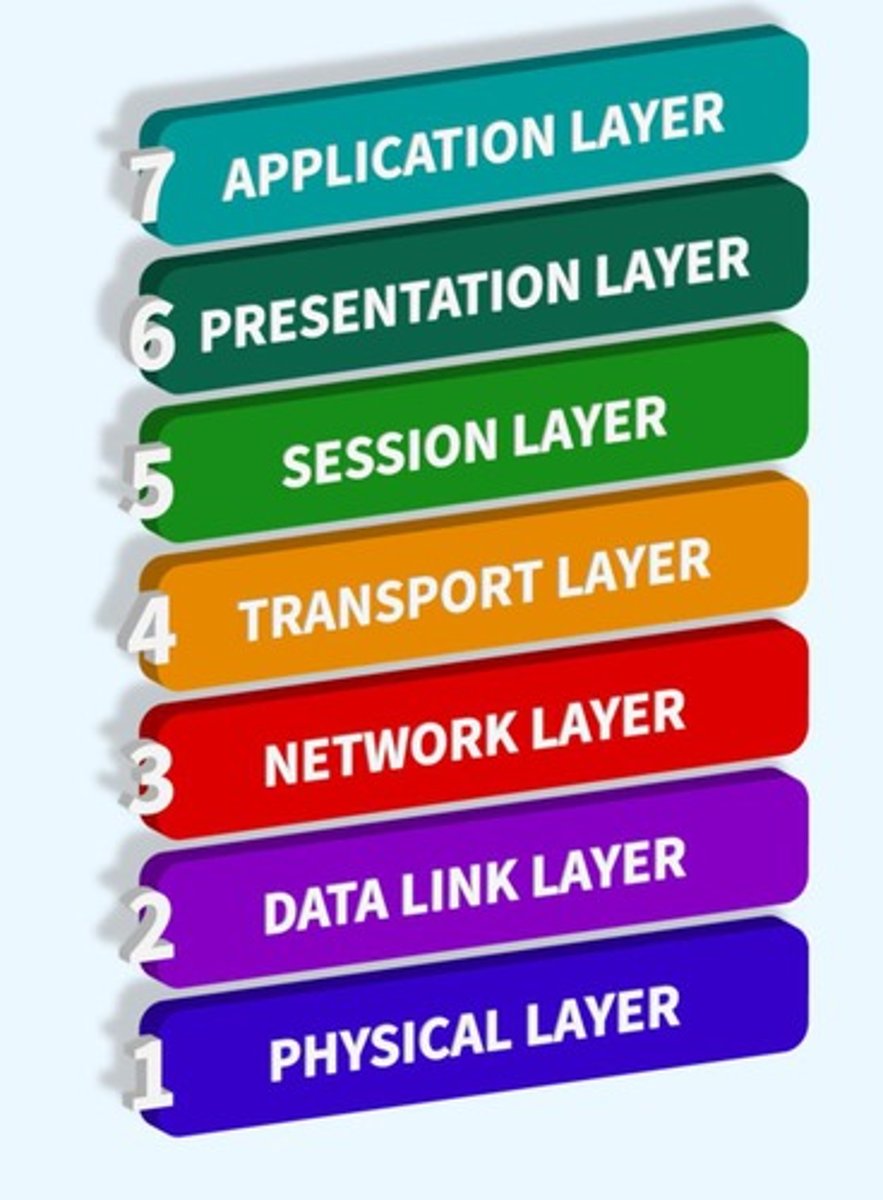
What does the Application layer in the OSI model do?
It interacts with software applications that implement a communicating component.
What is the function of the Transport layer in the TCP/IP model?
It transports application-layer messages between endpoints and controls communication.
What is encapsulation in networking?
The process of wrapping data with protocol information at each layer of the OSI or TCP/IP model.

