islamic calligraphy
 Call Kai
 Learn
Learn Practice Test
 Spaced Repetition
 Match
Match Flashcards
 Knowt Play
1/27

There's no tags or description
Looks like no tags are added yet.
Name | Mastery | Learn | Test | Matching | Spaced | Call with Kai | Chat |
|---|
No analytics yet
Send a link to your students to track their progress
28 Terms
aniconic
all islamic art, no images in animal, human, or divine form
shahada
I witness that there is no God but Allah and that Muhammed is his prophet
tawhid
unity and oneness of God
geometry of the spirit
shahada
unity and oneness of God
indivisible unity of the point is analogous to the oneness of God, the ineffable, infinite mystery of God
the point
divine tawhid = unity of the point
point: a location in space representing a position only
points: building blocks from which other geometric objects are made
euclid
but when the point moves it creates something outside of itself - something finite that we can know
euclid
that which has no part - it cannot be divided; it has no length, width, or depth; the point lacks extension, area, volume
what happens when the point moves
the point creates a line, then an arc, then a full circle
from the circle comes the triangle, the square, the hexagon, and on
the point generate forms, dimensions, space that can be measured and experienced
the point is the center, that which generates all other forms. It is the One that contains the Many
3 elements of islamic art
geometric patterns: stars, circles, interlacing lines, polygons
biomorphic designs (arabesques): curvilinear designs based on plant forms: flowers, scrolling vines, stems, leaves
calligraphy
4 geometric elements of islamic art
star patterns
girih patterns
girih tiles
tessellations
arabesque
the vegetal/ floral patterns - the flowing, curvilinear designs based on plant forms (scrolling vines, stylized leaves, flowers)
complex star polygon
most important star patterns
range from 5-pointed stars to 16-pointed stars
these radiate outward with interlacing geometric shapes. Interlacing is what makes them complex.
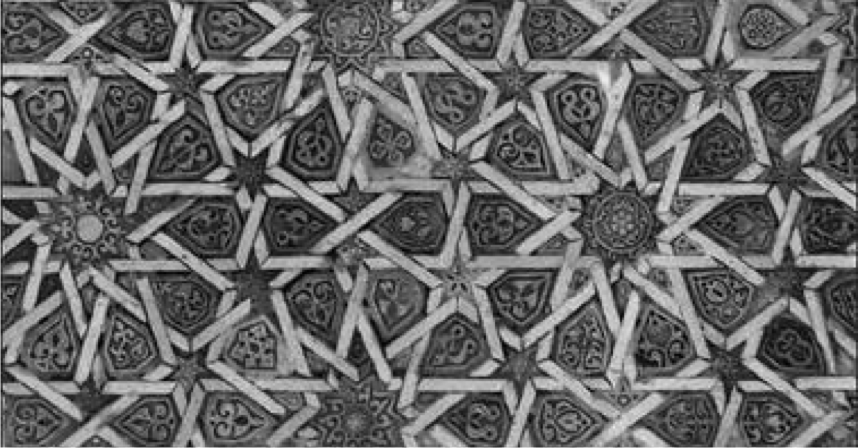
girih patterns
girih: from Persian word for “knot”
interlaced geometric patterns made with angled lines called strapwork
lines of these polygons overlap; they weave over and under each other forming knot-like designs
radial symmetry that radiates from central points
symbolize the interconnectedness of existence
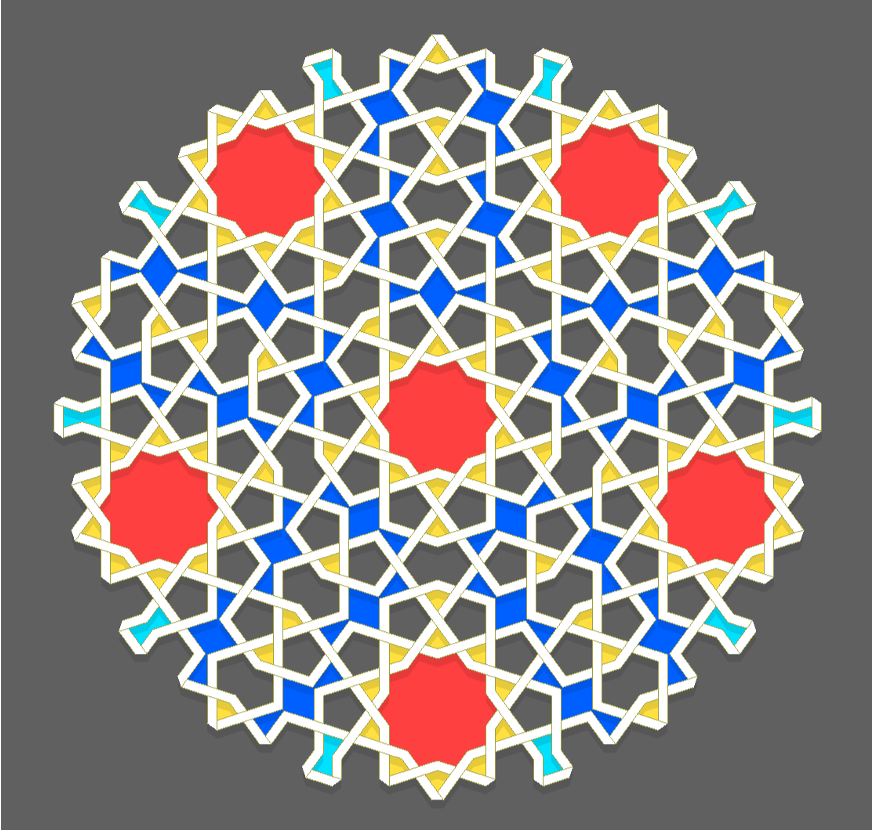
girih tiles
geometric shapes used in islamic architectural decoration
five girih tiles
used to create repeating(periodic) patterns or non-repeating (aperiodic) patterns
length of the edges of all 5 tiles is exactly the same
so they can be arranged edge to edge to create patterns
they are painted with decorative lines or girih patterns on their surfaces
fit the tiles together. The joints between them disappear, leaving the painted patterns to form the knotwork design
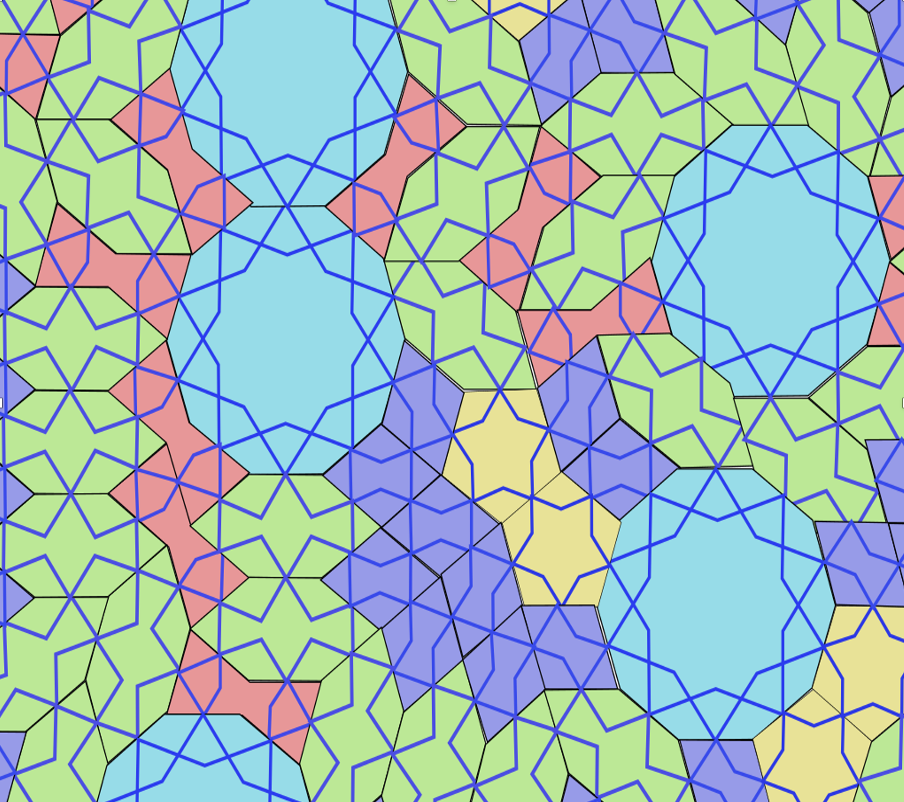
5 girih patterns
decagon: regular 10 sided polygon
pentagon: regular 5 sided polygon
bowtie/ butterfly: an irregular hexagon that resembles a bowtie shape
rhombus: a quadrilateral with all sides equal length
elongated hexagon: an irregular hexagon that is longer than it is wide

tessellation
covering surfaces with repeating (periodic) geometric patterns that fit together perfectly without gaps or overlaps
geometric precision (shapes that interlock seamlessly)
infinite repetition: no focal point or border - pattern could theoretically continue forever
symmetry: rotational, reflectional, and translational
suggests the infinite nature of Allah
purpose of islamic art
to enable humankind to experience the presence of God
sacrament is something that enables one to experience the presence of the divine
ornament
islamic art is ornament, more than decoration
serves as a way to express the inexpressible, manifest the unmanifest, make the visible invisible
ornaments testify to the existence of Allah and enable humankind to experience presence of allah
allah in arabic

5 calligraphic types
kufic, maghribi, thuluth, naskh, diwani
kufic
sharp straight lines
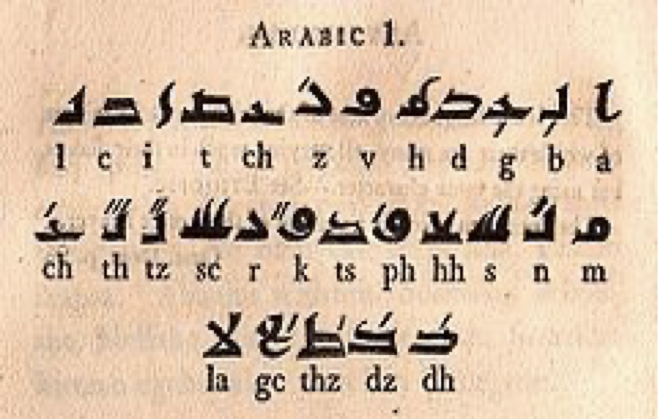
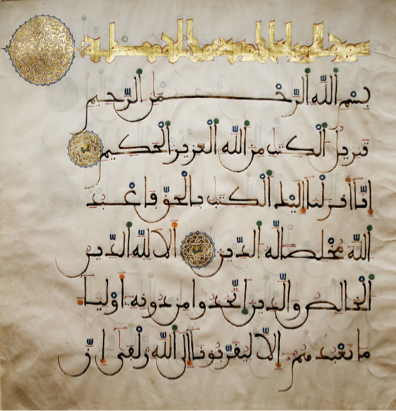
maghribi
bowls
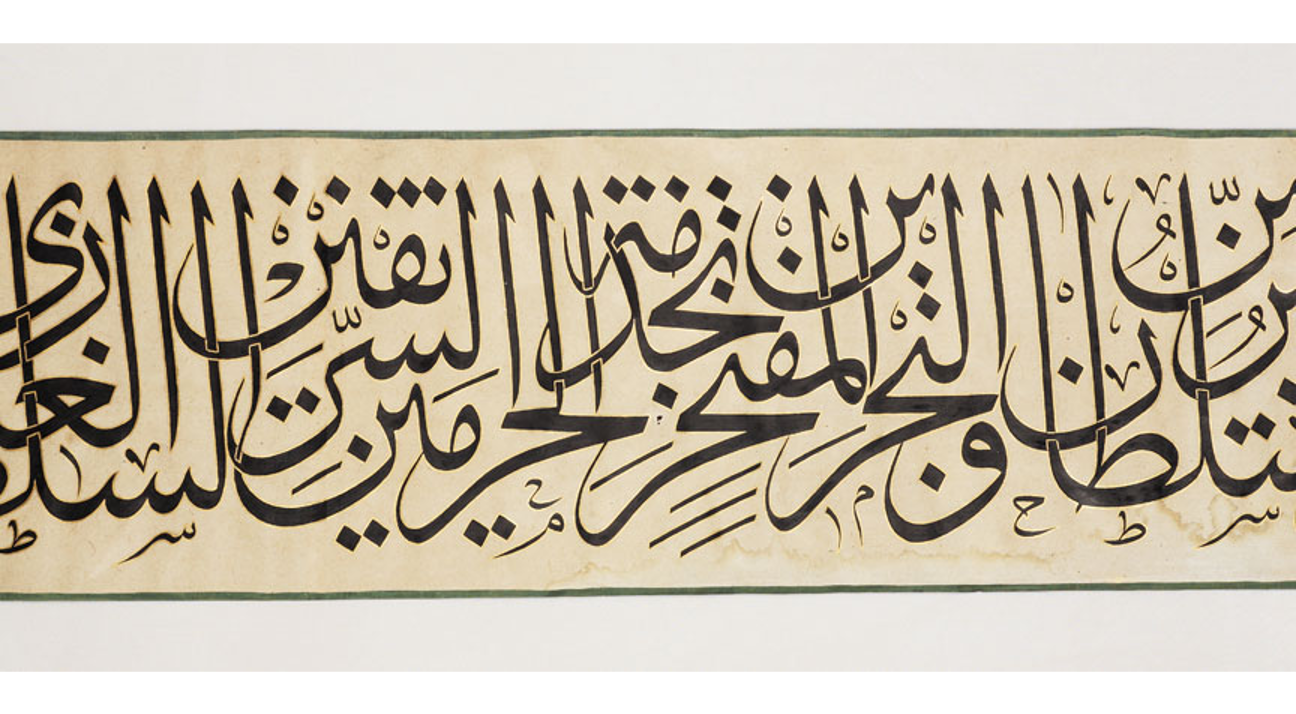
thuluth
fish hooks
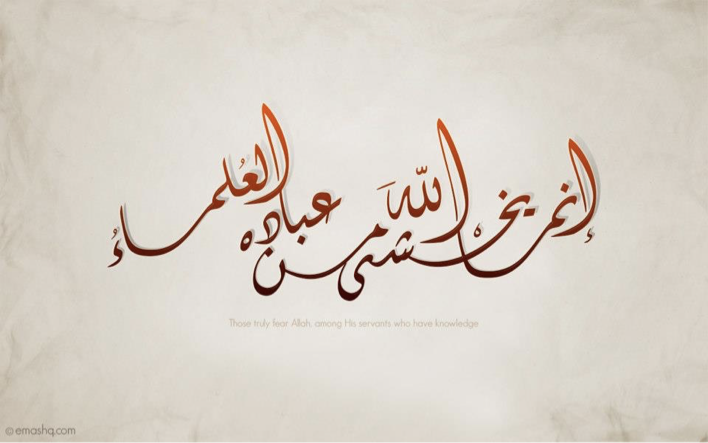
naskh

diwani
graceful
calligraphy
“beautiful” + “writing”
calligraphy is music for the eyes
calligraphy takes the written word and transforms it into performance and worshop
writing is the tongue of the hand
yeah
one performs the world, it is not read silently
qur’an: recitation
performed through reciting, writing, and viewing the qur’an
so seeing the word is an occasion for a sacramental experience
word is transformed into image