BILD 1 - Unit Exam 2
 Studied by 0 people
 Call with Kai
 Learn
Learn Practice Test
 Spaced Repetition
 Match
Match Flashcards
 Knowt Play
1/66

Name | Mastery | Learn | Test | Matching | Spaced | Call with Kai |
|---|
No analytics yet
Send a link to your students to track their progress
67 Terms
Identify the different components of a chemical reaction
There are two main components which are the reactants and products. The reactants are the starting materials of the reaction and the products are the ending material. In some of these reactions there are catalysts, such as enzymes that lower the activation energy.
Define metabolism. Distinguish between catabolic and anabolic pathways
Metabolism is the collection of chemical reactions within a cell to make it function. Catabolic pathways are breaking down complex molecules to release energy such as cell respiration. The amount of energy released is based on the structure and thermal energy of the molecule. The more complex the structure or thermal energy, the higher amount of energy is released. Anabolic pathways synthesize complex molecules which use up energy like protein synthesis.
Describe kinetic and potential energy including the more specific types we generally deal with in this class.
Kinetic energy is movement energy like thermal energy. Thermal energy is generated by the movement of molecules, the faster the molecules are moving the more thermal energy it has. Heat is created when thermal energy is being transferred. Potential energy is positional energy like chemical energy. Chemical energy is the energy in bonds, which can be released when the bonds are broken. This energy is based on the complexity of the molecule, the larger the molecule the more energy.
Describe the ATP molecule and identify where the high energy electrons are stored in the molecule.
The ATP molecule is made up of ribose sugar, adenine, and triphosphate group (3 phosphates). The high energy electrons are stored in the triphosphate group because when hydrolysis occurs in the triphosphate group a Pi (inorganic phosphate) and ADP (Adenosine diphosphate) is created. Leaving behind some energy to be used after a phosphate is broken off. In other words the energy is in the bond between the final two phosphates
Describe several reasons why cells use ATP.
Cells use ATP because it's the main source of energy for most processes as it drives cellular work. For instance it is used in transport, mechanical, and chemical work. ATP can power transport proteins by allowing its energy to change the shape of the protein in order to let things in and out of the cell. In mechanical work it provides energy for motor proteins to move over the cytoskeletal track in order to move vesicles. In chemical work ATP is used to synthesize complex molecules in endergonic reactions like building macromolecules
Distinguish between endergonic and exergonic chemical reactions.
Endergonic reactions are when energy is coming in or being used up in order to make the products, similar to anabolic reactions. As reactants tend to have lower energy levels than products, so energy is required to make the products. Exergonic reactions are when energy is being released because the reactants have a higher energy level than the products. So the extra energy is released when the reaction is complete, similar to catabolic reactions
Describe how enzymes affect a chemical reaction.
Enzymes are catalysts which lower activation energy, in other words, less energy is used in order to drive a chemical reaction. This makes the reaction not only more efficient but less energy wasting. As it binds substrates, specifically reactant molecules, in their active site and stabilizes the temporary transition state so it's easier for the reaction to proceed.
Explain how an enzyme works. Use the words substrates, active site, and product in your explanation.
The enzyme starts with substrates entering and binding at its active site. The substrates are held in the active site by weak interactions like hydrogen bonds. The enzyme then lowers the activation energy for the reaction which converts the substrates into products. After the reaction is complete the products are released from the active site in order for the active site to be available for new substrates
Describe how the following factors influence enzyme reactions: pH, temperature, substrate concentration, enzyme concentration, and inhibitors
pH
Each enzyme has its optimal pH level based on its environment. If the pH is too high (basic) or too low (acidic) it disrupts the hydrogen bonds holding the enzyme’s structure together. As hydrogen bonds tend to be very weak, causing the protein to fall apart and stop functioning.
Temperature
Based on the enzyme’s environment the optimal temperature can be different from others. The enzyme being at optimal temperature causes effective and frequent collisions between the substrate and the enzyme's active site positive, making the perfect reaction. Temperatures above optimal causes molecules to move too fast due to the thermal energy. Causing the protein to shake itself apart in the tertiary and secondary structure, losing its functionality. Temperatures below optimal does not cause the protein to fall apart but rather everything is slowing down as substrates are not reaching the enzyme's active site as frequently.
Substrate concentration
Increasing substrate concentration increases reaction rate because there is a higher chance for more substrates to collide with the active sites of enzymes, therefore more enzyme reactions can occur. The opposite occurs when substrate concentration decreases.
Enzyme concentration
Increasing enzyme concentration increases the rate of reaction if there are enough substrates. As there are enough enzymes for substrates to bind at their active site.
Inhibitors
Inhibitors slow down or block enzyme activity. As substrates are prevented from binding to the enzyme’s active site. Competitive inhibitors bind at the active site preventing substrates from entering and noncompetitive inhibitors alter the shape of the active site.
Describe what it means when an enzyme is “denatured” and why this happens.
When an enzyme is “denatured” it means its protein structure loses its 3D shape, in other words, it unfolds causing it to lose its function. This happens because extreme environmental conditions, such as high temperature or changes in pH, break the weak bonds that hold the enzyme's specific structure together. These are usually the hydrogen bonds in the secondary or tertiary level. The loss of this shape, particularly the active site, prevents the enzyme from binding to its substrate and carrying out its catalytic function.
Define an inhibitor
An inhibitor is when an enzyme or protein is prevented from doing its job because a molecule is bound to the protein. They do this by blocking the active site, altering the protein’s shape, or disruption of function. They can be competitive or noncompetitive.
Describe the difference between competitive inhibition and non-competitive inhibition.
Competitive inhibitors are when a molecule binds at the active site and will block substrates from entering. Its only weakness is that it is not that effective if there is too much substrate concentration. As the inhibitor directly competes with the substrate for the active site. Noncompetitive inhibitors bind on the secondary site known as the allosteric site. This alters the tertiary structure of the enzyme which prevents substrates from binding at the active site. So it does not need to compete with the substrates.
Outline a simple experiment that could be used to distinguish between competitive and non-competitive inhibitors.
A simple experiment that could be used is one with five different reaction tubes where the concentration of enzymes and concentrations of inhibitors is constant in each tube. However, each one will have different amounts of substrates, increasing the amount from one reaction tube to the next. If the reaction rate increases with the increasing amounts of substrates then it is a competitive inhibitor. This is due to the fact that high numbers of substrates reduce the effectiveness of the inhibitors causing the reaction rate to be higher. Therefore, the reaction rates should be increasing when the amount of substrates is increasing, if it's a competitive inhibitor. If the reaction rate stays the same for all the reaction tubes then it's a noncompetitive inhibitor. As a noncompetitive inhibitor's effect can not be overcome by the increasing number of substrates like competitive inhibitors.
Describe the principles of diffusion and osmosis.
Diffusion is when molecules have a net movement from high concentration to low concentration areas. This movement is generally random however if you start a molecule in a high concentration area, overtime, diffusion will result in them indeed up balance. This is known as equilibrium, where concentrations are balanced but there is still random movement. Osmosis is the movement of water across a semi permeable membrane from an area of higher water concentration to an area of lower water concentration. This movement is due to the fact that water likes to move from a low solute concentration to a high solute concentration which creates environments like hypertonic, hypotonic, and isotonic.
Define the terms hypotonic, isotonic, and hypertonic. Explain how animal and plant cells respond to these conditions.
Hypotonic is when the solute concentration inside the cell is greater than outside the cell, causing water to travel inside the cell. Causing the cell to swell up or eventually burst. Hypertonic is when the solute concentration outside the cell is greater than inside the cell causing the movement of water to go outside the cell. Which causes the cell to shrivel up. Isotonic is when the solute inside and outside the cell are equal so water is able to enter and exit the cell without causing an issue.
Animal cells
Hypotonic
Water rushes in, causing the cell to swell and potentially be lysed (burst)
Isotonic
Water movement is balanced or at equilibrium, and the cell maintains its normal shape
Hypertonic
Water moves out of the cell causing it to shirk and shrivel. It creates a spiky or start shape because even when the cell membrane is deflating the cytoskeleton is still intact, creating spikes.
Plant cells
Hypotonic
Plants prefer to be in this state as the water rushing in creates a turgid state or turgor pressure. As the pressure is going against the cell wall, however, the rigid cell wall prevents it from bursting.
Isotonic
There is not enough pressure to inflate the cell walls so it stays limp, known as flaccid. Which is why the plant will wilt because its not able to maintain turgor pressure
Hypertonic
Water moves out so the cell membrane pulls away from the cell wall in a process called plasmolysis. The membrane itself is deflated as water leaves but the cell wall is intact.
Describe factors that affect a molecule’s ability to enter the cell and how these are dealt with, including determining how a molecule is likely to enter the cell
The molecule’s size, polarity, and charge can affect its ability to enter the cell. Small and nonpolar molecules can easily diffuse through the phospholipid bilayer as it can travel through the hydrophobic tails, known as passive transport. Polar or charged molecules can’t pass the hydrophobic region of the membrane without help as the tails are nonpolar. Polar and charged molecules can also use passive transport but through a method called facilitated diffusion. Which is diffusion but through a channel protein, however, this method is limited as it only allows movement from high to low concentrations without using energy. Polar and charged molecules can also use active transport where solutes can move against their concentration gradients. Usually through proton pumps and cotransporters. However, this process requires energy, usually in the form of ATP. Large molecules enter through phagocytosis or pinocytosis.
Recognize and describe the different types of transport across a membrane (diffusion, facilitate diffusion, osmosis, active transport, large cargo transport). Provide example(s) of each type of transport.
Diffusion
Type of molecule: Small and nonpolar
Energy Used?: No as its a type of passive transport
Function: Moves molecules from an area of high concentration to low concentration due to random molecular motion. Until it reaches equilibrium.
Example: Oxygen and carbon dioxide moving across the membrane
Facilitated Diffusion
Type of molecule: Polar or charged
Energy Used?: No as its a type of passive transport
Function: Moves molecules from high to low concentration through channel proteins in the membrane
Example: Aquaporing - protein channels that allow water to pass through
Osmosis
Type of molecule: Water
Energy Used?: No as its a type of passive transport
Function: a special type of diffusion where water molecules travel across a semi permeable membrane from an area of low solute (high water) concentration to an area of high solute (low water) concentration
Example: Hypertonic or Hypotonic
Active Transport
Type of molecule: Polar or Charged
Energy Used?: Yes, usually from ATP
Function: Movement of molecules against the concentration gradient
Example:
Sodium/Potassium Pump: ATP used to maintain charge and concentration gradient
Proton Pumps: Use ATP to pump hydrogen ions out the cell to create electrochemical gradient
Sucrose-H+ Cotransporter: used energy from H+ gradient to bring sucrose into cell
Large Cargo Transport
Type of molecule: Large
Energy Used?: Yes, usually ATP
Example
Phacotytosis: membrane engulfs large particles forming a food vacuole
Pinocytosis: Cell membrane pinches a piece and takes inside
Identify reasons cell communication is essential.
Cell communication is essential because it allows both multicellular and single-celled to regulate activities like embryo patterning, coordination among cells, motility, and environmental sensing. In embryo patterning cells communicate to determine their rules during growth, communication also allows different types of cells to work together in order to coordinate a defense. Motility allows cells to communicate with other cells so they can get more resources when they are low. Environmental sensing is when cells detect and respond to changes in their surroundings to maintain homeostasis.
Distinguish between paracrine and endocrine (hormonal) signaling
Paracrine signaling is when cells are using vesicles to release some sort of signaling molecules into the surrounding area. All the cells in the surrounding area can potentially detect the signal if they need to. This coordinates activity of the cells in a specific area. Endocrine (hormonal) signaling is when there is a longer signaling distance compared to paracrine. This is when cells release a signaling molecule, usually a hormone, which is transported through the bloodstream, creating a fast full body signaling approach. This coordinates functions across different parts of the body.
Outline the stages of a generic signaling pathway.
There are three stages of generic signaling pathway reception, transduction, and response. Reception is when something has to detect the signal, this is when a signaling molecule outside the cell is being bound to a receptor protein in the membrane. Transduction is the passing of the message from one protein to another from the surface until it gets to the nucleus. Response is when there is some type of chance in the cell, there the signal is getting to the nucleus and telling the cell to either make more or less of some product.
Explain the steps of GPCR signal reception.
The process begins with three proteins known as the G protein couples receptor, G protein with GDP, and an enzyme. A signaling molecule outside the cell will bind to the G protein coupled receptor on the plasma membrane, which activates the receptor protein. The now activated receptor is then going to find its target G protein that is floating around the cell membrane. The G protein will then release its GDP and bind to a GTP from the environment, activating the G protein. The now activated G protein will then bind to an enzyme, which activates the enzyme. The enzyme then does what it needs to do for the cell like producing cAMP. The signaling molecule then detaches from the GPCR making the receptor inactive again. The enzyme then becomes inactive after the G protein leaves. The G protein then hydrolyzes the GTP to create a GDP and Pi (inorganic phosphate) turning itself off
Describe the process of ion channel signal reception
Ion channel signal reception is a type of gated channel, as they are proteins embedded in the membrane with a small flap. This protein lets ions in and out of the cell through its flap. The flap opens when a signal molecule binds, letting in specific ions the protein is in charge of is let through. When the signal molecule leaves the flap closes. This allows changes in the electrical charge or ion concentration inside and outside the cell.
Describe the role of intracellular receptors, including how their signaling molecules are different from cell surface receptors.
Intracellular receptors detect the signals inside the cell rather than on the membrane. These receptors detect the signals inside the cell rather than on the membrane as the signaling molecule is able to cross the cell membrane and bind to the receptor in the cytoplasm. They are different from cell surface receptors because they skip the transduction step in order to compress the pathway as the receptor itself goes into the nucleus on its own and triggers the response itself. In other words the receptor directly causes the response. The only limitation is the signaling mole has to be small and nonpolar in order to enter the cell on its own and it loses the ability to do signal amplification
Define the role of secondary messagers
Secondary messengers are intracellular messengers that help pass a signal from the receptor to the signal transduction pathways. They can relay the signal, amplify the signal, and activate other pathways. When relaying the signal it can produce a secondary messenger inside the call. It can also amplify a signal as it can produce multiple secondary messenger molecules to create a stronger cellular response. It can also activate other pathways like the activation of protein kinases.
Describe how cAMP can function as a secondary messenger between GPCR signal reception and transduction via a phosphorylation cascade.
cAMP can function as a secondary messenger between GPCR signal reception and transduction as the enzyme activated by the GPCR can be an adenylyl cyclase. The activated adenylyl cyclase can use ATP to produce cyclic AMP (cAMP) by removing two phosphates and linking the remaining phosphates in a ring structure. This cAMP is now the secondary messenger, it carries the signal from the membrane deeper into the cell. The cAMP can bind and activate the first protein kinase in the signaling pathway to begin a phosphorylation cascade, where one kinase activates another by adding phosphate groups. The cascade amplifies the signal and leads to the final cellular response. The signal ends when cAMP is broken down.
Outline the process of a phosphorylation cascade as a mechanism of signal transduction.
Phosphorylation cascade is a series of reactions inside the cell in which enzymes called kinases activate one another by adding phosphate groups, passing along and amplifying the original signal received at the cell membrane. It begins with the detection of a signaling molecule at the surface of the cell which creates an activating relay molecule. They relay molecules can then bind to the first inactive protein kinase and activate it, known as Kinase A. Once kinase A is activity it is going to find kinase B. It's going to spend an ATP to add a phosphate group to the kinase B so it activates leaving behind an ADP. Kinase B can then activate something else such as the target protein that is going to do the response or it can activate another kinase until it reaches the target protein. The phosphatase (PP) then cuts the phosphate group back off to inactive it after there has been a cellular response.
Describe the process of signal amplification and how a phosphorylation cascade can contribute to it.
Signal amplification is the process by which a small initial signal is strengthened inside the cell so that it triggers a large cellular response. Even though only a few signaling molecules may bind to receptors, the number of activated molecules inside the cell grows at each step of the pathway, like a chain reaction. For instance, a single signaling molecule can activate multiple receptors or G proteins on the membrane, as well as activating many enzymes inside the cell. The role of phosphorylation cascade is one of the main mechanisms that causes signal amplification. As it works like a domino effect where one kinase activates several others, each of those activating many money. By the end, a single signal at the surface can result in hundreds or thousands of activated proteins inside the cell.
Distinguish between oxidation and reduction reactions.
Oxidation is when one of the reactants is losing electrons, therefore becoming an anion. When oxidation occurs there is usually an energy release. In reduction reactions one of the reactants is gaining electrons, therefore becoming a cation. Where energy is usually stored.
Outline the complete chemical formula for cellular respiration and identify the oxidation and reduction components.
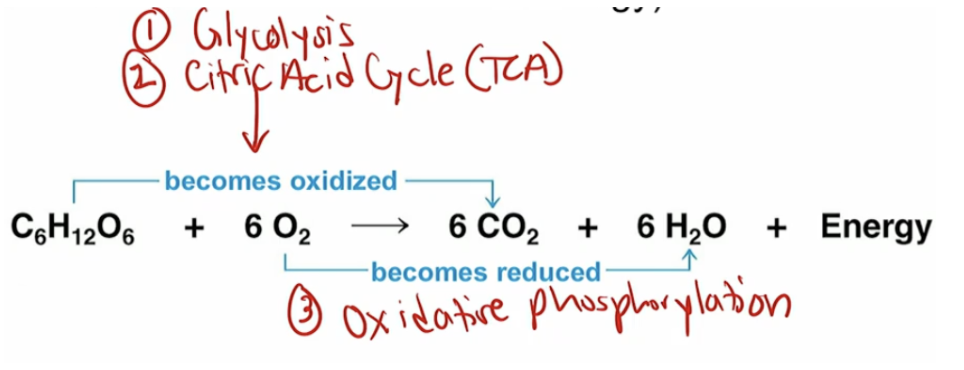
Glucose is oxidized as it is losing electrons as seen through the loss of hydrogens. Oxygen is reduced because it is gaining electrons as seen by the addition of hydrogens to create water.
Draw the anatomy of the mitochondrion including the outer and inner membrane, intermembrane space, and matrix. Identify what reactions of cellular respiration occur in which parts of the mitochondrion.
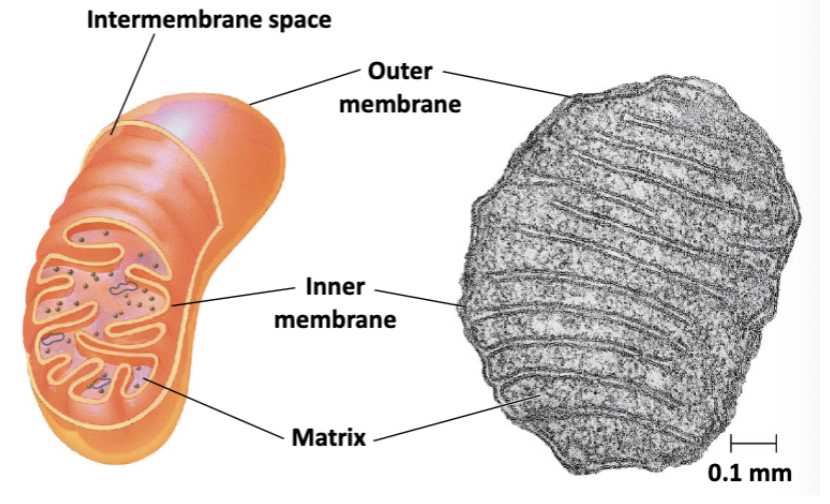
Glycolysis occurs in the cytoplasm, the citric acid cycle occurs in the mitochondrial matrix, and oxidative phosphorylation (ETC and ATP synthase) occurs in the inner membrane.
Describe the process of glycolysis, and determine where it occurs in a cell, how much ATP is produced, and the important reactants and products involved.
Glycolysis is the first step of cellular respiration, occurring in the cytoplasm. It begins the breakdown of glucose and starts realising its energy. It does this by using 2 ATP to break down the glucose into two pyruvates, which are three carbon chain molecules. The creation of the two pyruvates create 4 ATP giving a net gain of 2, as well as 2 NADH
1 Glucose, 2 ATP, and 2 NAD+ → 2 Pyruvate, 4 ATP (net 2), 2 NADH
Explain the role of NAD+/NADH in cellular respiration
The role of NAD+/NADH in cellular respiration is to hold onto high energy electrons until they are needed. It starts with NAD+ which takes electrons very easily. When glycolysis produces high energy electrons NAD+ attracts the electrons and will store it. It usually takes two electrons and a hydrogen from the environment to neutralize the charge, creating NADH. These electrons are held onto until they are needed for the electron transport chain to create an electrochemical gradient for ATP synthesis.
Describe the citric acid cycle (including pyruvate oxidation), and determine where it occurs in the cell, how much ATP is produced, and the important reactants and products involved.
The citric acid cycle is the second step in cellular respiration occurring in the mitochondrial matrix. In pyruvate oxidation, each of the two pyruvates will turn to Acetyl CoA as the first carbon in the chain will be released, creating an NADH. The Acetyl CoA can then enter the citric acid cycle where the rest of the carbons are released as CO2 making more energy molecules like NADH, ATP, and FADH2. Each pyruvate produces 1 ATP, 4 NADH, 1 FADH2, however, since two pyruvates are used there are 2 ATP, 8 NADH, 2 FADH2
Reactants: 2 Pyruvates
Products: 6 CO2, 2 ATP, 8 NADH, 2 FADH2
Describe how oxidative phosphorylation produces ATP in cellular respiration. Identify the electron donors, electron acceptor, and mechanism of ATP synthesis.
Oxidative phosphorylation produces ATP in cellular respiration through an electron transport chain and chemiosmosis. The process begins when NADH and FADH2 donate the high energy electrons they were holding on to the electron transport chain made up of a series of proteins. NADH donates its electrons in complex I and FADH2 donates theirs in complex II. These electrons continue to pass a series of increasing electronegative proteins releasing energy specifically at protein complexes I, III, IV to have proton pumps to produce an electrochemical gradient. At the end of the chain oxygen, the terminal electron acceptor, creates water. Then chemiosmosis occurs because the H+ ions pumped into the intermembrane space now want to move back into the matrix, where ATP synthase allows them to come back through causing the enzyme to spin, allowing it to create ATP.
What is an electrochemical gradient? Explain how it is formed by the electron transport chain and how it is used.
An electrochemical gradient is where there is a difference in hydrogen ion concentrations across a membrane. The electron transport chain creates this electrochemical gradient through the proton pumps, as the protein pumps in protein complexes I, III, and IV move the hydrogen ions from the matrix into the intermembrane space. The electrochemical gradient forms because there are higher hydrogen ion concentrations in the intermembrane space rather than the matrix. It is used to power ATP synthase because the hydrogen ions pushed into the intermembrane space now want to go back into the matrix due to diffusion, but its main way is through ATP synthase which can flow the hydrogen ions back in and generate ATP.
Identify the significance of ATP synthase in oxidative phosphorylation.
ATP synthase is very important in oxidative phosphorylation because it is the stage of cellular respiration that produces most of the cell’s ATP. When the ATP synthase is passing the hydrogen ions back through the matrix the enzyme spins, the spinning motions provide the energy needed to join an ADP and inorganic phosphate to form ATP. Generating a vast majority of ATP in aerobic respiration about 26 to 32 ATP per glucose molecule.
Describe when a cell would perform fermentation instead of aerobic cellular respiration. What are some examples of products of fermentation? Give specific examples of cells/organisms that perform fermentation reactions.
A cell would perform fermentation instead of aerobic cellular respiration when there is no oxygen available and when a rapid energy is needed but oxygen supply is limited. As oxygen is needed to be the terminal electron acceptor so NADH can be recycled back to NAD+. There are two types of fermentation, lactic acid fermentation and alcoholic fermentation. Lactic acid fermentation can be found in certain bacteria that is used in yogurt and cheese production. It can also be found in muscle cells when they are in oxygen-deprived conditions such as needing a burst of energy to run away from a bear. Alcoholic fermentation can be found in yeast to make bread or alcohol production.
Contrast aerobic and anaerobic respiration in terms of terminal electron acceptor and ATP produced. Explain the role of electronegativity in these differences.
Aerobic and anaerobic respiration are different in terminal electron acceptors because aerobic respiration has oxygen as the terminal electron acceptor but anaerobic respiration uses alternative molecules like nitrate, sulfate, or sulfur. When it comes to ATP production aerobic always produces more ATP, around 26 to 32 due to the stronger electron pulls of oxygen allowing maximal energy extraction from NADH and FADH2. As oxygen’s high electronegativity allows it to efficiently pull electrons through the ETC, creating a strong proton gradient to drive more ATP synthesis. Anaerobic respiration’s production of ATP varies based on terminal e- acceptor, but always less than Aerobic. The electron accepters in anaerobic respiration are less electronegative compared to oxygen so they have a weaker electron pull. Creating a small proton gradient, producing less ATP.
Explain the relationship between photosynthesis and cellular respiration. How do the products of these reactions fuel each other?
Photosynthesis and cellular respiration use each other's products in order to start their process. Photosynthesis uses the products of cellular respiration as their reactants in order to generate sugars. Cellular respiration uses the products of photosynthesis as their reactants in order to get energy from breaking down the sugars. The oxygen in photosynthesis can be used as the terminal electron acceptor and the glucose can be used to be broken down in glycolysis. The carbon dioxide from cellular respiration can be used as the carbon source for building sugars and the water can be used as the electron source to replace electrons lost during light reactions.
Diagram a chloroplast including the inner and outer membranes, intermembrane space, and the location of the thylakoids and stroma. Identify which reactions of photosynthesis occur in which parts of the chloroplast.
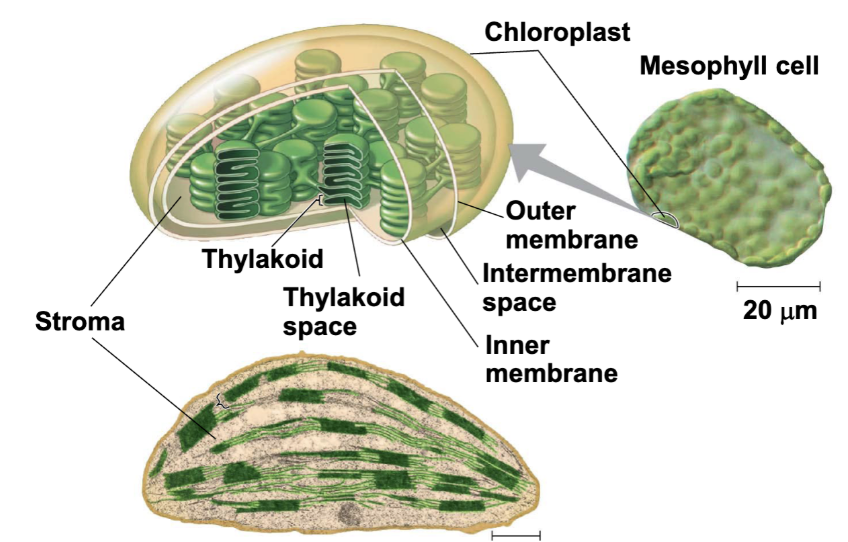
Light reactions occur in the thylakoid and the calvin cycle occurs in the stroma.
Define photosynthesis and give the complete chemical formula. Identify the oxidation and reduction components.
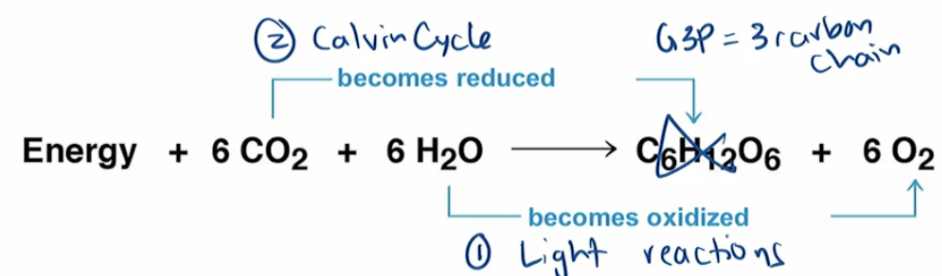
Photosynthesis is the process of using light energy to produce sugars. Using carbon dioxide and water as the reactants. Carbon dioxide is being reduced because it is gaining electrons or hydrogens to produce. Water is being oxidized because it is losing electrons or losing hydrogens.
List three organisms that perform photosynthesis.
Three organisms that perform photosynthesis are plants, multicellular algae, and cyanobacteria
Diagram the light-dependent reactions of photosynthesis. Identify where it happens in the plant cell, what is used, and what is produced at this stage.
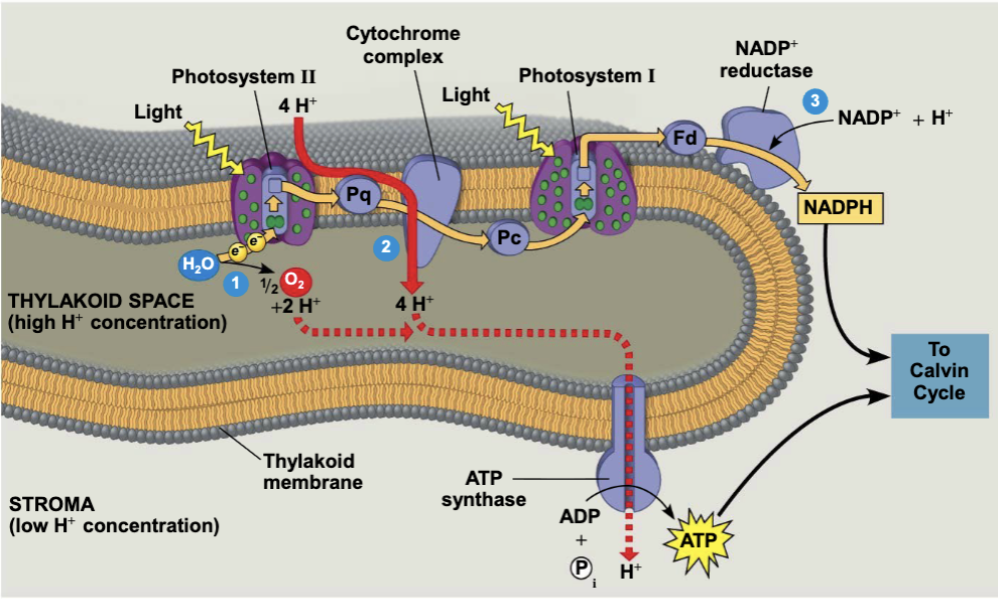
The light-dependent reactions of photosynthesis occur in the thylakoid membranes of the chloroplasts. At this stage water, light energy, ADP+Pi, and NADP+ are the reactants. At this stage ATP, NADPH, and O2 are the products. First the photon is absorbed by photosystem II to create a high energy electron, which is then taken by an electron transport chain where a pronoun pump creates a proton gradient. ATP synthase can then occur to produce ATP for the calvin cycle. The electron can then go to photosystem I where a photon makes it high energy again but to produce NADPH.
Describe the role of photosystems and the molecule chlorophyll in the light reactions.
Photosystems are made up of complex proteins, chlorophyll, and an especially pair of chlorophyll in the center. Its responsibility is to capture the light energy from photons and funnel it into the electrons. There are two phosystems, photosystem I and photosystem II. Photosystem II occurs first and creates high energy electrons for the ETC and photosystem I re-energizes that electron and creates NADPH. In these photosystems the chlorophyll are responsible to absorb the light energy when a photon strikes it. As the energy absorber is bounced around the chlorolytic molecules until it reaches the special pair in the center. The energy then is transferred to one of the electrons in order to create a high energy electron.
Diagram the three states of the light-independent (Calvin Cycle) reactions of photosynthesis. Identify where it happens in the plant cell, what is used and what is produced at this stage.
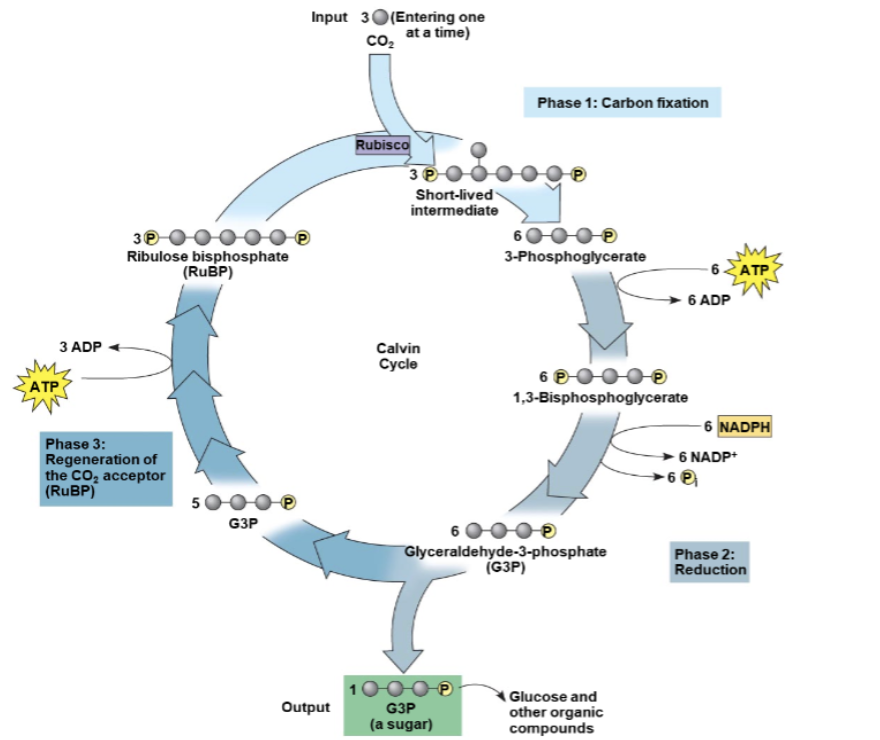
The calvin cycle occurs in the stomata and it has three stages to it , carbon fixation, reduction, and regeneration.
Carbon fixation is when the rubisco is taking carbon from the air and fixing it into a solid carbon. Usually turing a three 5-carbon molecules into six 3-carbon chains so its more stable
Used: 3 CO2 from the atmosphere
Produced: Six 3-carbon chain molecules
Reduction is when energy like ATP and NADPH is added to the 3-carbon chains turning it into a high energy molecule known as G3P
Used: ATP and NADPH
Produced: 1 G3P
Remaining 5 G3P stay in the cycle
Regeneration is when some energy is used to convert the five remaining G3P back into the starting RuBP
Used: ATP
Produced: RuBP is regenerated for cycle to restart.
Identify the significance of the enzyme Rubisco to the process of photosynthesis.
The enzyme Rubisco has a large significance when it comes to the process of photosynthesis because it drives the first major step of the Calvin cycle which is carbon fixation. Rubisco is in charge of taking carbon dioxide from the atmosphere and attaching it to a 5-carbon molecule called RuBP. Without this step, the calvin cycle can not go through its process to produce G3P.
Explain the differences between C3, C4, and CAM photosynthesis.
C₃ photosynthesis is often referred to as “normal photosynthesis” because it occurs in plants that live in cool, moist environments with plenty of water and sunlight — conditions where photosynthesis can proceed without major issues. In contrast, C₄ plants grow in hotter environments where high temperatures cause the stomata to close for long periods to prevent water loss. When the stomata are closed, CO₂ cannot enter the plant, which can lead to photorespiration. To overcome this, C₄ plants evolved a spatial separation between CO₂ fixation and the Calvin Cycle. In these plants, CO₂ is initially captured in the mesophyll cells and stored in a 4-carbon compound (C₄ molecule). When the stomata close, this stored CO₂ is released into the bundle sheath cells, allowing the Calvin Cycle to continue even when the rest of the plant is deprived of CO₂. CAM photosynthesis takes a different approach by separating CO₂ fixation and the Calvin Cycle by time rather than by location. CAM plants live in extremely hot, arid environments where the stomata must remain closed during the day to prevent water loss. Instead, they open their stomata at night, taking in as much CO₂ as possible and storing it in C₄ compounds. During the day, with the stomata closed, these plants release the stored CO₂ to fuel the Calvin Cycle, allowing photosynthesis to continue while conserving water.
Describe why C4 and CAM photosynthesis are considered metabolic compromises.
C₄ and CAM photosynthesis are considered metabolic compromises because, while they help plants survive in hot, dry environments, they also require extra energy to function. In C₄ photosynthesis, plants must use additional ATP to capture and store CO₂ in a 4-carbon compound and then transport it to the bundle sheath cells. This extra step prevents photorespiration when the stomata are closed but uses more energy than C₃ photosynthesis. In CAM photosynthesis, plants open their stomata at night to take in CO₂ and store it as a C₄ compound, then use that CO₂ during the day when the stomata are closed. This conserves water but slows the overall rate of photosynthesis because CO₂ intake is limited to nighttime. In both cases, plants trade efficiency for survival — they use more energy or fix carbon more slowly, but these adaptations allow them to continue photosynthesis and conserve water in stressful, hot, or dry environments.
Compare and contrast RNA and DNA in terms of structure and function
Both RNA and DNA are made up of nucleotides, share three nitrogenous bases (A,G,C), carry genetic information, and use complementary base pairing. RNA and DNA are different based on their sugar, nitrogenous base, and their structure.
Sugar
DNA has decoyribose sugar
RNA has ribose sugar
Nitrogenous base (both have A, C, and G)
DNA has thymine due to T
RNA has uracil due to U
Structure
DNA has a double helix shape where the two stands are opposite of each other
RNA has many different jobs so it has different shapes
List the three rules given for synthesizing DNA and RNA molecules.
Rule 1: Double strands are always antiparallel
Stands have to be in opposite orientations when they react
This is also true when DNA is reacting with RNA, as well as any other nucleic acids
Rule 2: Only add nucleotides to the 3’ end
Cannot build/grow on the 5’ end, only the 3’ end
When a new nucleotide wants to be added to the strand the back two phosphate groups will get split off, providing the energy to attach the phosphate of the new nucleotide to the 3’ OH group of the previous nucleotide
Rule 3: RNA polymerase can make strand from scratch, DNA polymerase cannot
RNA polymerase can just come in and bind to the upper started and start making it when the RNA primer is not in the way
DNA polymerase needs the yellow piece (RNA primer) in order to get started
Describe the process of transcription, identify the roles of the key enzyme, proteins, and DNA region involved, and where it occurs in the cell.
Transcription is the process of making an RNA copy of a DNA sequence. Which can later be used for protein synthesis or perform other functions. In prokaryotes it occurs in the cytoplasm and in eukaryotes it occurs in the nucleus. During the initiation stage, RNA polymerase attaches to the promoter with the help of transcription factors and unwinds a small portion of the DNA to expose the template strand. In the elongation stage, RNA polymerase reads the DNA template strand in the 3′ to 5′ direction and adds complementary RNA nucleotides to the growing RNA strand, following base-pairing rules where uracil (U) replaces thymine (T). Once RNA polymerase reaches a termination sequence on the DNA, transcription ends, and the RNA molecule is released. This RNA can then either undergo further processing, as in eukaryotes, or immediately function, as in prokaryotes.
Apply DNA and RNA base pairing rules during transcription.
DNA adenine (A) pairs with RNA uracil (U)
DNA thymine (T) pairs with RNA adenine (A)
DNA cytosine (C) pairs with RNA guanine (G)
DNA guanine (G) pairs with RNA cytosine (C)
Explain the three things that occur during mRNA processing and the role for each step
5′ Cap Addition – A modified guanine nucleotide is added to the 5′ end of the mRNA. This cap identifies the molecule as mRNA, protects it from degradation by enzymes, and helps the ribosome recognize and bind to the mRNA for translation.
Poly-A Tail Addition – A chain of adenine nucleotides is added to the 3′ end of the mRNA. This tail also protects the mRNA from degradation and aids in exporting the mRNA from the nucleus. Additionally, it helps the mRNA form a loop structure that facilitates ribosome binding during translation.
Splicing – Non-coding regions called introns are removed, and the coding regions called exons are joined together. This process ensures that the mRNA contains only the sequences that will be translated into protein. The spliceosome, a complex of proteins and RNA, performs this task.
Explain the steps of translation.
Translation is the process by which the information in mRNA is used to build a protein. It occurs in the cytoplasm on ribosomes and has three main stages: initiation, elongation, and termination.
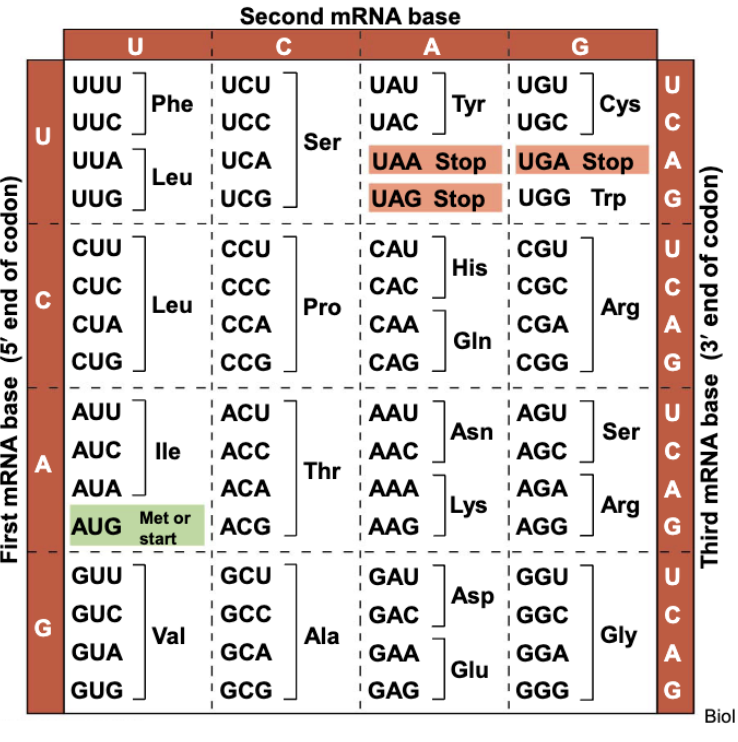
Initiation – The small ribosomal subunit binds to the mRNA near the start codon (AUG). A tRNA carrying methionine pairs its anticodon with the start codon. Then, the large ribosomal subunit attaches, positioning the tRNA in the P site, ready to begin elongation.
Elongation – During elongation, tRNAs bring amino acids to the ribosome according to the codons on the mRNA:
A new tRNA with the correct amino acid enters the A site.
The ribosome transfers the growing polypeptide chain from the tRNA in the P site to the amino acid on the tRNA in the A site.
The empty tRNA exits through the E site, and the ribosome shifts, moving the new tRNA into the P site.
This cycle repeats, lengthening the polypeptide chain one amino acid at a time.
Termination – When a stop codon (UAA, UAG, or UGA) enters the A site, a release factor binds instead of a tRNA. The ribosome releases the completed polypeptide, and the ribosomal subunits separate. The mRNA may be reused for additional rounds of translation.
Distinguish the three types of RNA molecules involved in translation, including their name, function, and structure.
The three types of RNA molecules involved in translation are messenger RNA (mRNA), transfer RNA (tRNA), and ribosomal RNA (rRNA).
mRNA
Function: mRNA carries the genetic instructions copied from DNA in the form of codons, which specify the order of amino acids in a protein.
Structure: It is a single-stranded linear molecule that includes a 5′ cap, coding region, and 3′ poly-A tail in eukaryotes. The ribosome reads its sequence in groups of three nucleotides (codons) to determine which amino acids to add next during translation.
tRNA
Function: tRNA acts as an adaptor molecule that translates the codon sequence of mRNA into an amino acid sequence. Each tRNA carries a specific amino acid and has an anticodon that pairs with the corresponding mRNA codon.
Structure: It has a distinctive cloverleaf shape formed by hydrogen bonding, with one end holding the amino acid and the other containing the anticodon loop.
rRNA
Function: rRNA forms the core structural and catalytic components of the ribosome, where protein synthesis occurs. It helps correctly align the mRNA and tRNAs and catalyzes the formation of peptide bonds between amino acids.
Structure: rRNA combines with ribosomal proteins to form the two ribosomal subunits—a small and a large subunit—that clamp around the mRNA during translation.
Define open reading frame and how it is determined.
An open reading frame (ORF) is the portion of an mRNA molecule that is actually translated into a protein. It is defined as the continuous sequence of codons that begins with a start codon (AUG) and ends with a stop codon (UAA, UAG, or UGA), without any interruptions by stop codons in between. The ORF is determined by reading the mRNA sequence in groups of three nucleotides (called codons) starting at the first AUG codon near the 5′ end. This start codon establishes the reading frame, meaning it determines how the sequence of nucleotides will be grouped into codons. Translation continues in this frame until a stop codon is reached, signaling the end of the protein-coding region.
Utilize the genetic code table to determine the amino acid sequence from mRNA
Define mutation.
A mutation is a change in the DNA sequence of an organism. Mutations can result from errors in DNE replication during cell division, exposure to mutagens or a viral infection. Can be in a small or big scale but it is considered as a mutation at any scale. In small mutations one to two nucleotides are changed. In large mutations it's usually a chane in large segments of a chromosome or an entire chromosome.
Classify small scale mutations based on effect.
Single nucleotide-pair substitutions
3 possible outcomes at the protein level
Silent Mutations
A change in the DNA sequence that does not alter the amino acid sequence of the protein.
No change in protein structure or function
Missense Mutation
A single nucleotide change that results in a different amino acid being added to the protein.
May have little to severe impact depending on how the new amino acid affects the protein’s shape and function.
Nonsense Mutations
A mutation that changes an amino acid codon into a stop codon, causing premature termination of translation
Produces a shortened, usually nonfunctional protein
Nucleotide-pair insertions or deletions
Frameshift mutations
Caused by the insertion or deletion of nucleotides that are not in multiples of three, shifting the reading frame.
Alters every amino acid after the mutation, usually creating a nonfunctional protein.
Diagram the Trp Operon, including all components needed for proper function, in the presence or absence of tryptophan.
Functions needed
Regulatory gene (trpR) – codes for the repressor protein
Promoter (P) – where RNA polymerase binds
Operator (O) – the “on/off” switch for transcription
Structural genes (trpE, trpD, trpC, trpB, trpA) – code for enzymes that synthesize tryptophan
Tryptophan present
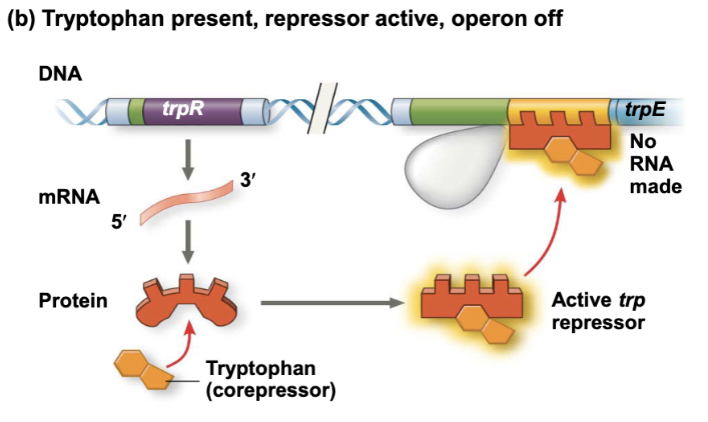
When tryptophan is present it will bind to the inactive repressor protein, causing it to become active. It will block the polymerase from making tryptophan because there is already some present. Tryptophan is a corepresser because its helping the repressor protein doing its job
Tryptophan absent
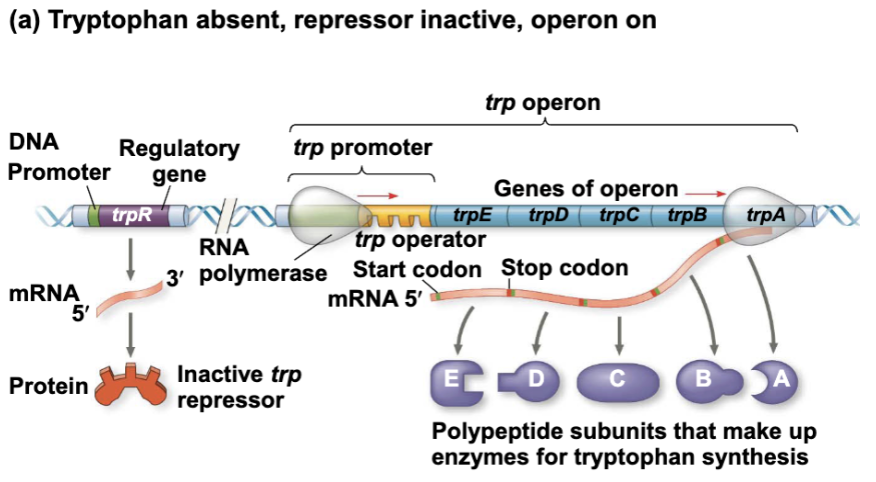
There are the five genes in the operon to make enzymes in order to make tryptophan. When the trp operon is produced the repressor is inactive. The repressor is present and floating around, its not doing anything. So the polymerase can travel through to get a transcription and have it translated. The repressor is inactive because enzymes are needed to make the tryptophan, it only activated when there are some present in the environment
Diagram the Lac Operon, including all components needed for proper function, in the presence or absence of lactose.
Regulatory gene (lacI) – makes the repressor protein
Promoter (P) – where RNA polymerase binds
Operator (O) – the DNA “switch” that the repressor binds to
Structural genes:
lacZ lacY
lacA
Lac Operon Present
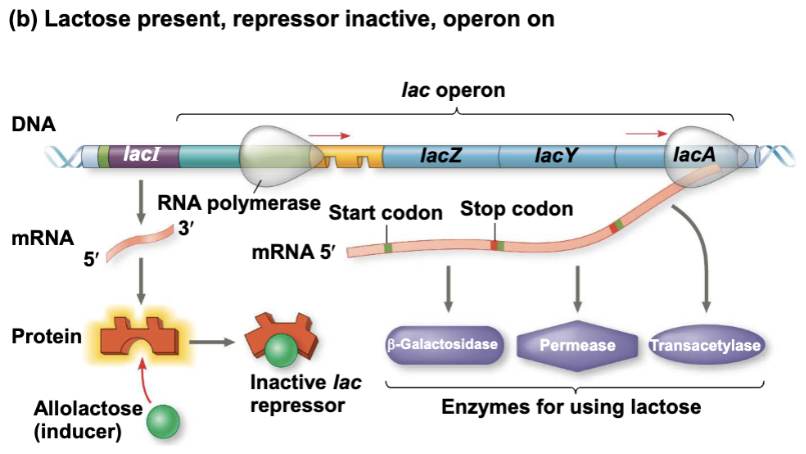
When there is lactose it's going to bind to the regulatory protein to turn the repressor inactive. This will allow transcription and it will produce the enzymes needed for utilizing lactose. Known as an inducer because it is causing the formation of new enzymes
Lac Operon Absent
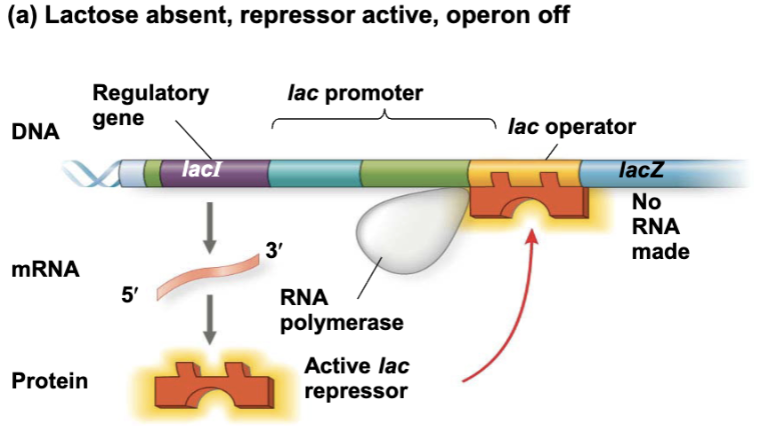
The repressor is active all on its own to block transcription. Once the repressor is produced it is automatically active and functional. This prevents the creation of enzymes that use lactose for energy. This stores the little amount of lactose that is left because there are no enzymes to use it for energy
Compare and contrast the function of repressible and inducible operons.
Both repressible and inducible operons are types of gene regulation systems found in prokaryotes. They control whether certain genres are transcribed based on the cell’s environmental conditions. However, they operate in different ways. Repressible operons stop gene expression when enough product is made but inducible operons start gene expression only when the substrate is available. Repressible operons are generally on as the repressor protein is made in an inactive form. Where a corerepressor can bind to a repressor to activate it, the active repressor then binds to the operators blocking RNA polymerase and stopping transcription. For instance in a trp operon, when tryptophan is absent the operon is usually on, but once it's present it binds to the repressor and turns it off. An inducible operon’s state is usually off as the genes are not transcribed unless needed. The repressor protein is made in an active form that binds the operator to prevent transcription, however, when an inducer is present it can inactivate it. Allowing the RNA polymerase to transcribe. When the lactose is absent the operon is off, but when it is present it acts as an inducer and the person is on.
Predict how rearranging or modifying portions of the operon would affect expression and regulation.
Modifying or rearranging portions of an operon can significantly affect gene expression and regulation because each component plays a specific role. Changes to the promoter, for example, can alter RNA polymerase binding: weakening or removing the promoter can reduce or stop transcription, while a stronger promoter may lead to overexpression of all operon genes even when they are not needed. Alterations to the operator can prevent the repressor from binding, which in a repressible operon like the trp operon would cause the genes to be continuously expressed regardless of tryptophan availability, or conversely, a permanently “off” operator could block transcription entirely. Modifications to the regulatory gene can also disrupt control: deleting or inactivating the repressor gene may lead to constitutive expression, while overexpression of the repressor could prevent transcription even when an inducer, such as lactose in the lac operon, is present. Finally, rearranging or deleting structural genes within the operon may not stop transcription of the other genes but can disrupt the coordinated production of proteins, potentially impairing metabolic function. Overall, any change in the promoter, operator, regulatory gene, or structural gene arrangement can lead to inappropriate activation or repression of the operon, affecting the cell’s ability to efficiently respond to environmental signals.
Identify stages during gene expression that can be subject to regulation.
Gene expression can be regulated at multiple stages, each allowing the cell to control protein production efficiently. First, chromatin modification affects whether DNA is accessible for transcription: tightly packed heterochromatin is usually inactive, while loosely packed euchromatin allows transcription. Second, transcriptional regulation controls whether RNA polymerase transcribes a gene. This includes the action of promoters, enhancers, silencers, and transcription factors, which can activate or repress transcription. Third, RNA processing can regulate gene expression by alternative splicing, capping, and adding poly-A tails, affecting which mRNA isoforms are produced and their stability. Fourth, mRNA stability and transport influence how long an mRNA is available for translation and whether it reaches the cytoplasm. Fifth, translation regulation controls whether ribosomes synthesize proteins from the mRNA, often through initiation factors or regulatory proteins. Finally, post-translational regulation affects protein activity, folding, modification (like phosphorylation), or degradation. By regulating gene expression at these multiple stages, cells can fine-tune protein levels in response to internal and external signals.
Describe how and why DNA packaging can affect expression of a gene.
DNA packaging affects gene expression by controlling how accessible a gene is to the transcription machinery. In eukaryotic cells, DNA is wrapped around histone proteins to form nucleosomes, which are further folded into higher-order chromatin structures. When DNA is tightly packed into heterochromatin, RNA polymerase and transcription factors cannot easily access the gene, so it is transcriptionally inactive. In contrast, when DNA is loosely packed into euchromatin, the gene is accessible, allowing transcription to occur. Chemical modifications to histone tails, such as acetylation, can loosen chromatin and promote transcription. This regulation allows cells to control which genes are active in a particular cell type or in response to environmental signals, conserving energy and ensuring proper cellular function
Explain the role of transcription factors and contrast general and specific transcription factors
Transcription factors are proteins that bind to sequences of DNA (control elements) to regulate transcription. General transcription factors are required for transcription of ALL genes. It has low rates of transcription (if no specific transcription factors are present), in other words, not going to express the gene super strongly. Specific transcription factors are required for transcription of FEW genes. It can activate (activators) or repress (repressors) transcription and it can bind specific DNA sequences/other proteins.
Describe the process of alternative splicing and how it functions as a regulation mechanism.
During splicing, non-coding regions called introns are removed, and coding regions called exons are joined together. In alternative splicing, certain exons can be included or excluded, or different splice sites can be used, resulting in different combinations of exons. This allows a single gene to produce multiple protein variants with distinct structures or functions. Alternative splicing functions as a regulatory mechanism because it enables cells to control protein diversity and function without changing the underlying DNA sequence. By selectively including or excluding exons, cells can respond to developmental cues, environmental signals, or tissue-specific needs, producing proteins tailored for specific conditions or cell types. Essentially, it increases the versatility of the genome and allows fine-tuned regulation of gene expression at the RNA level.
 Note
Note  Flashcards (40)