Biology Chapter 29: Plant Diversity 1
 Call Kai
 Learn
Learn Practice Test
 Spaced Repetition
 Match
Match Flashcards
 Knowt Play
1/46

There's no tags or description
Looks like no tags are added yet.
Name | Mastery | Learn | Test | Matching | Spaced | Call with Kai |
|---|
No analytics yet
Send a link to your students to track their progress
47 Terms
1.2 BYA
cyanobacteria and protists on land
500 mya
colonization of land by plants, animals, fungi
charophytes
green algae, closest relatives of plants
shared traits between charophytes and plants
rings of cellulose, flagellated sperm, phragmoplast
phragmoplast
scaffold for cell plate assembly
embryophytes
plants with embryos
Derived traits of plants
1. alternation of generations
2. multicellular, dependent embryos
3. walled spores in sporangia
4. multicellular gametangia
5. apical meristems
Alternation of generations
the alternation between the haploid gametophyte and the diploid sporophyte in a plant's life cycle
gametophytes produce ____________ by ____________ which fuse and develop into __________
haploid gametes; mitosis; diploid sporophyte
sporophytes produce __________ by _________ that develop into _____________
haploid; meiosis; gametophytes
embryo
diploid, grows into sporophyte, dependent on nutrients from parents, retained in tissue of female gametophyte
sporocytes
diploid cells that undergo meiosis to generate haploid spores
sporopollenin
a layer of durable polymer that prevents exposed zygotes from drying out
gametangia produce ___________
gametes
male gametangia
antheridia, produce and release sperm
female gametangia
archegonia, produce a single nonmotile egg fertilized in the archegonium
apical meristems
localized regions of cell division at the tips of roots and shoots
470 mya
plants colonize land
bryophytes
nonvascular plants
vascular tissue in plants
Made up of xylem and phloem, it transports fluid and nutrients internally
seedless vascular plants include
lycophytes, manilophytes
lycophytes
club mosses, spike mosses, quillworts
monilophytes
ferns, horsetails, whisk ferns, relatives, most widespread of seedless vascular plants
gymnosperm
group of seed plants that bear their seeds directly on the scales of cones, "naked seed"
angiosperm
A flowering plant which forms seeds inside a protective chamber called an ovary.
bryophytes include
liverworts (Hepatophyta), mosses (Bryophyta), hornwarts (Anthocerophyta)
Dominant generation in bryophytes
gametophyte
Bryophyte gametophytes
a spore germinates into a gametophyte composed of a protonema, 1+ gamete producing gametophores, and rhizoids, flagellated sperm produced in antheridia and egg in archegonium, water required for fertilization
protonema
A mass of green, branched, one-cell-thick filaments produced by germinating moss spores.
gametophores
In bryophytes, a fertile stalk that bears gametangia
Bryophyte Sporophytes
grow out of archegonia, and are the smallest and simplest sporophytes of all extant plant groups, consist of a foot, seta, and sporangium which discharges spores through a peristome
bryophyte sporophytes picture
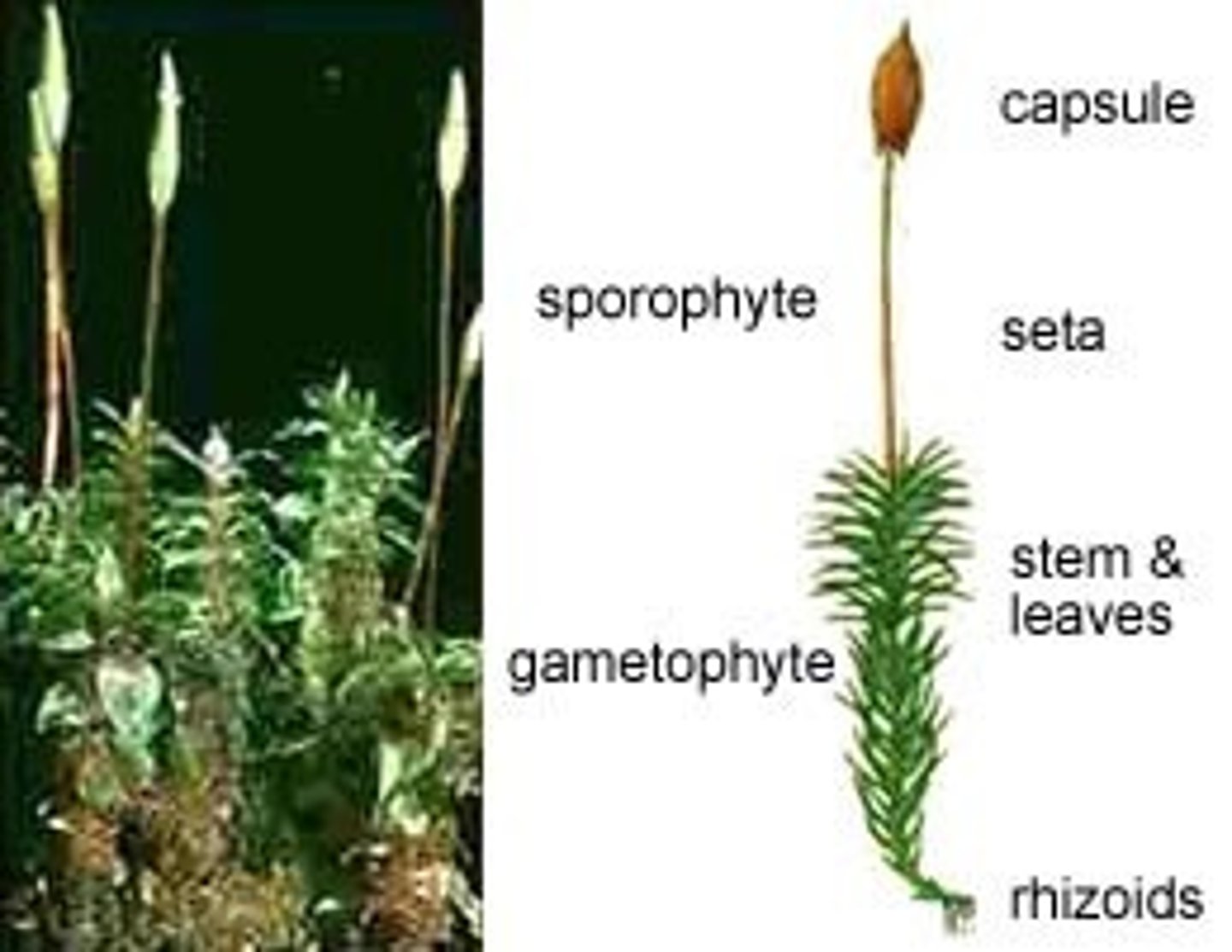
ecological importance of moss
reduce nitrogen loss from soil
Seedless vascular plants appear
425 mya
dominant stage in seedless vascular plants
sporophyte
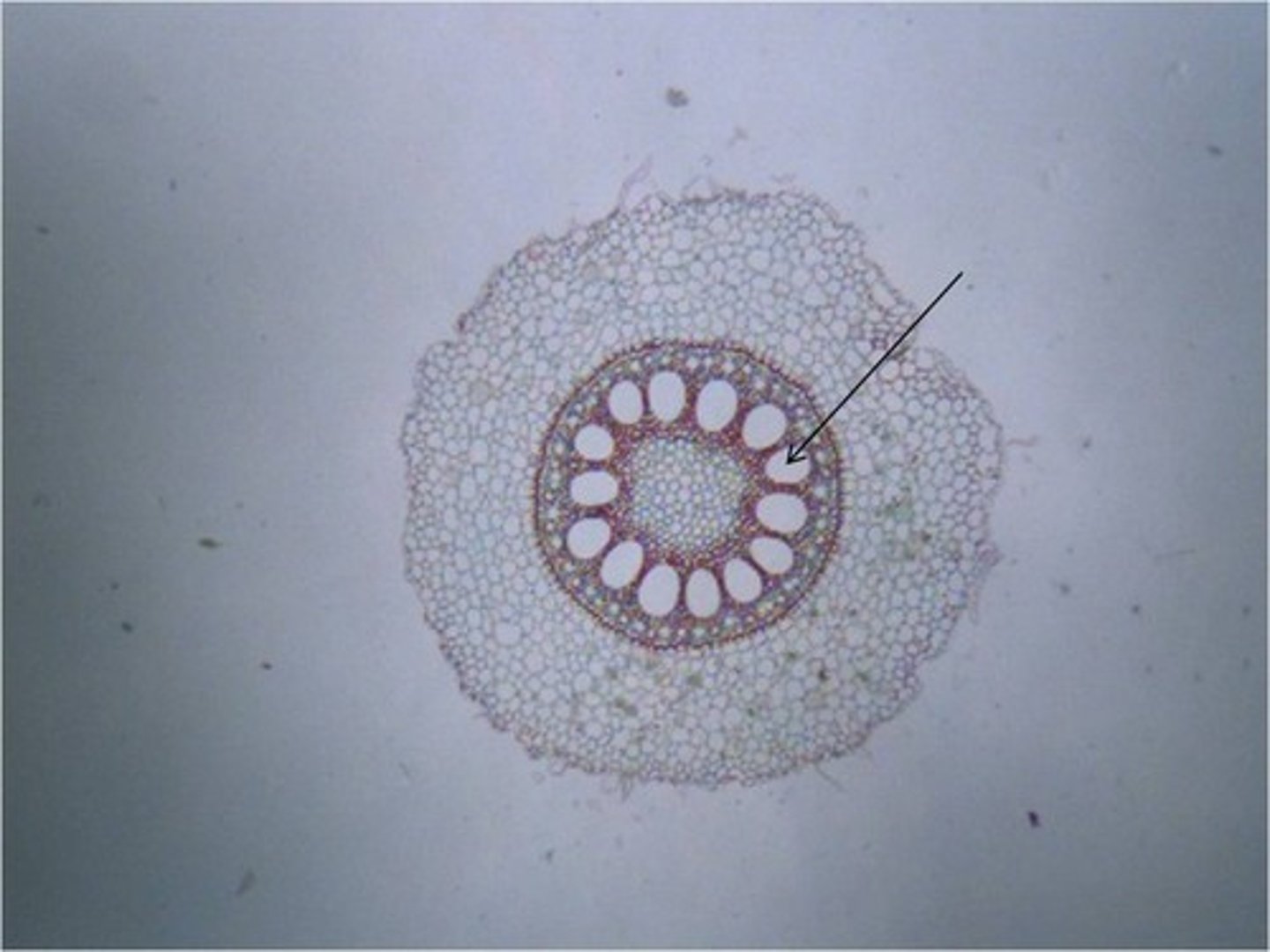
xylem
transports water and minerals, includes tube shaped cells called tracheids, flow upwards, dead at maturity, cells strengthened by lignin
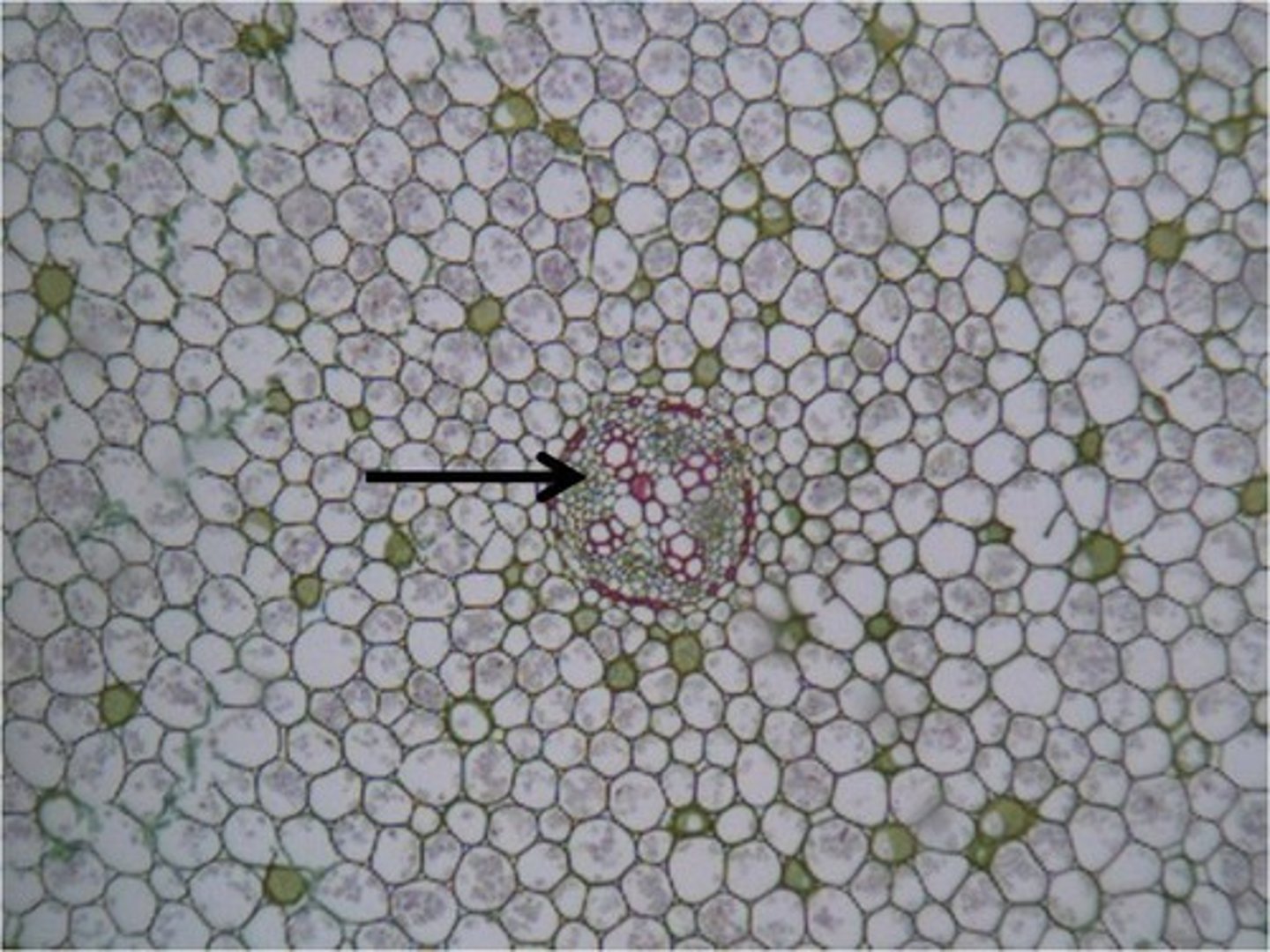
phloem
transport food, flows up and down
roots
Absorbs water and minerals from the ground. Anchors plant in ground.
leaves
The main photosynthetic organs of vascular plants.
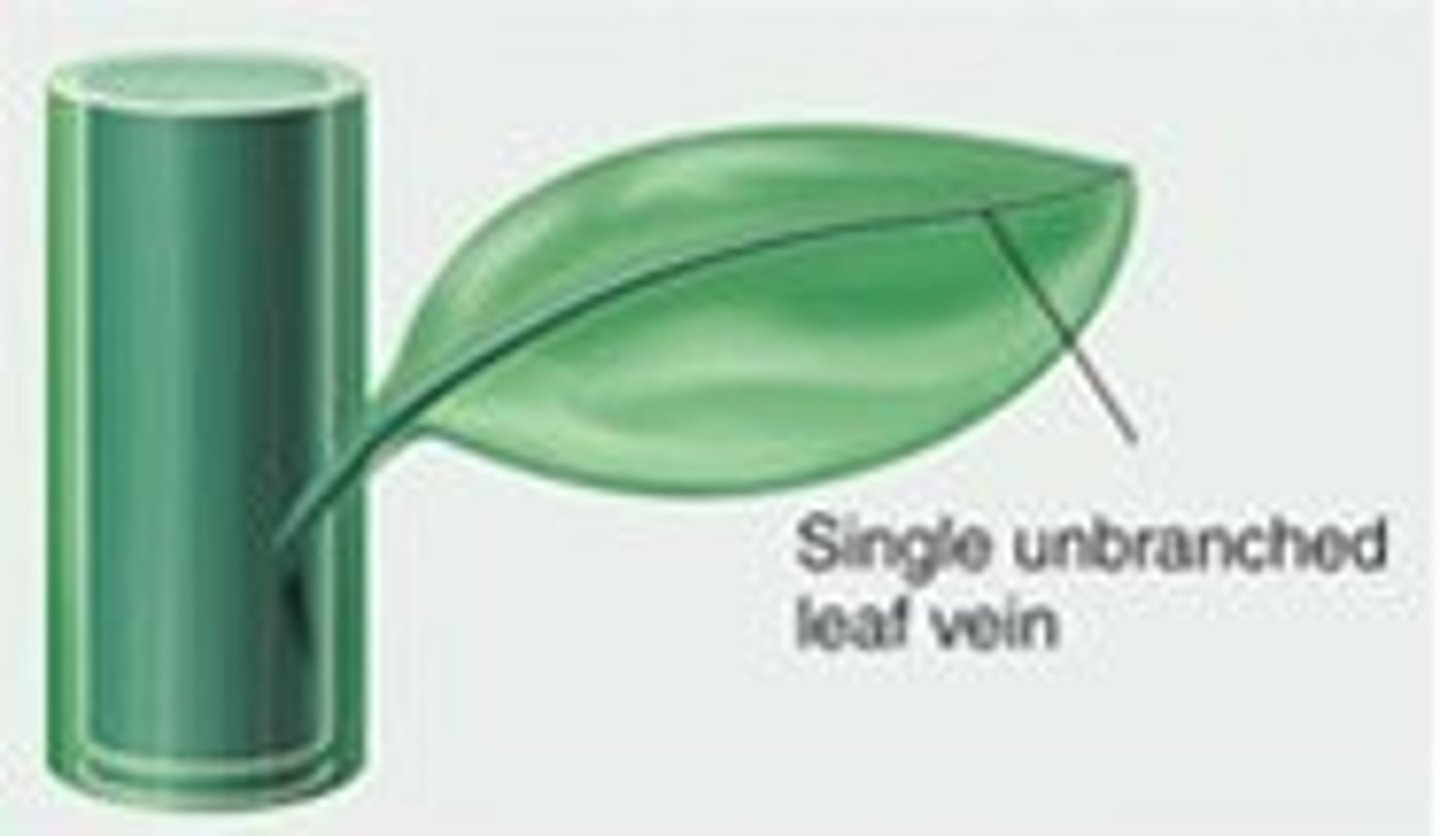
microphylls
leaves with a single vein
megaphylls
leaves with a highly branched vascular system
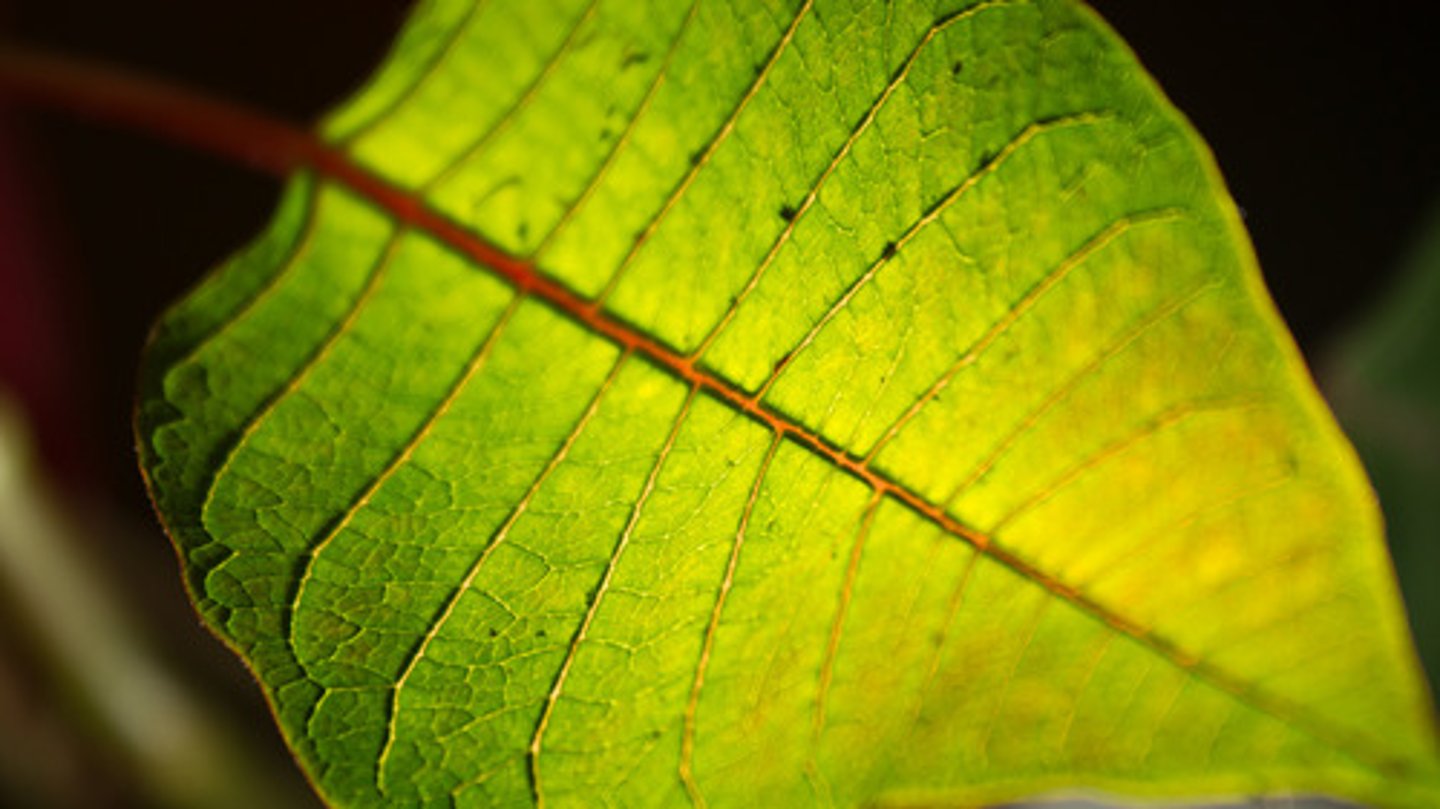
sporophylls
modified leaves that bear sporangia
sori
clusters of sporangia on underside of sporophylls
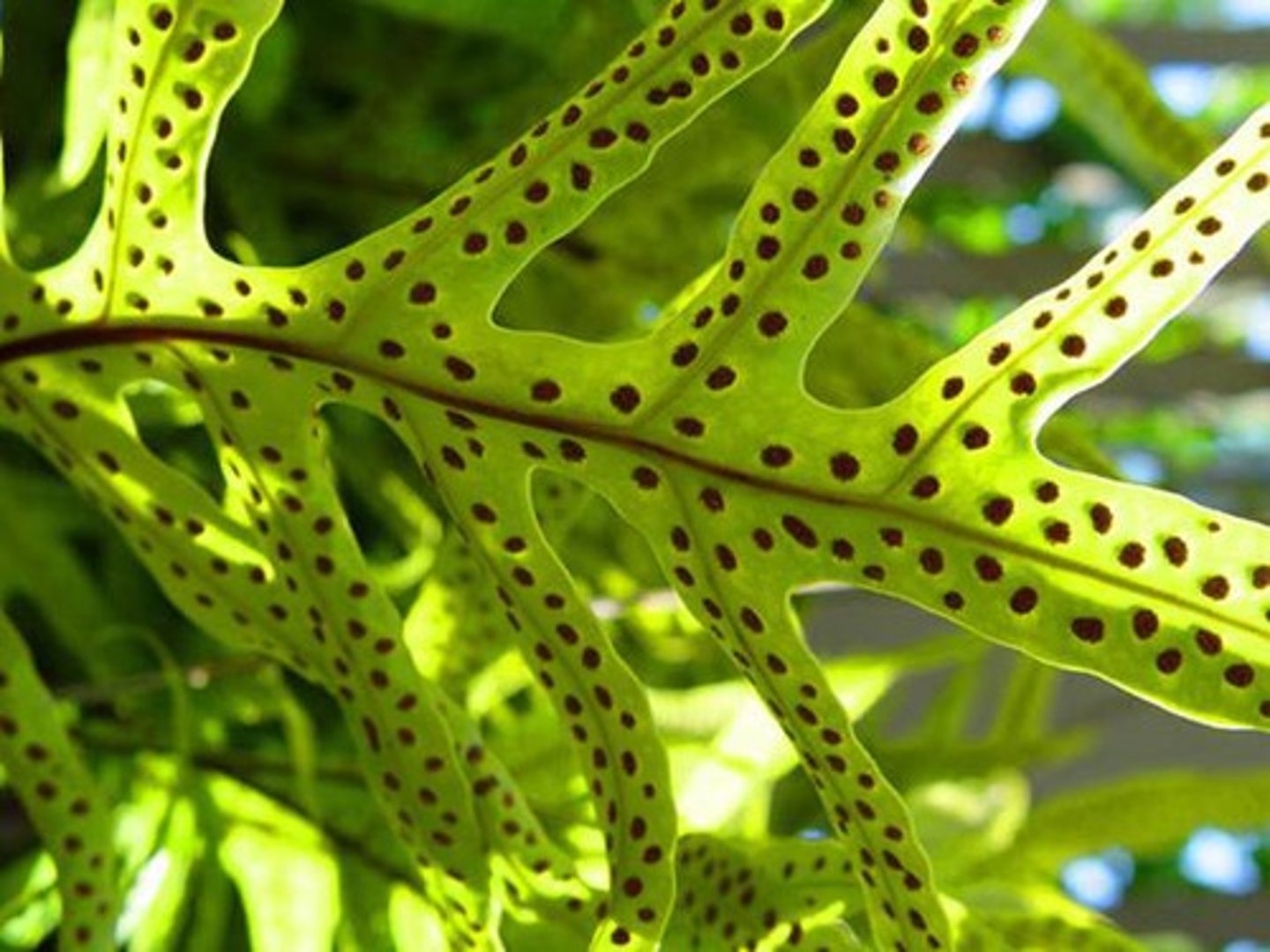
strobili
cone like structures formed from groups of sporophylls
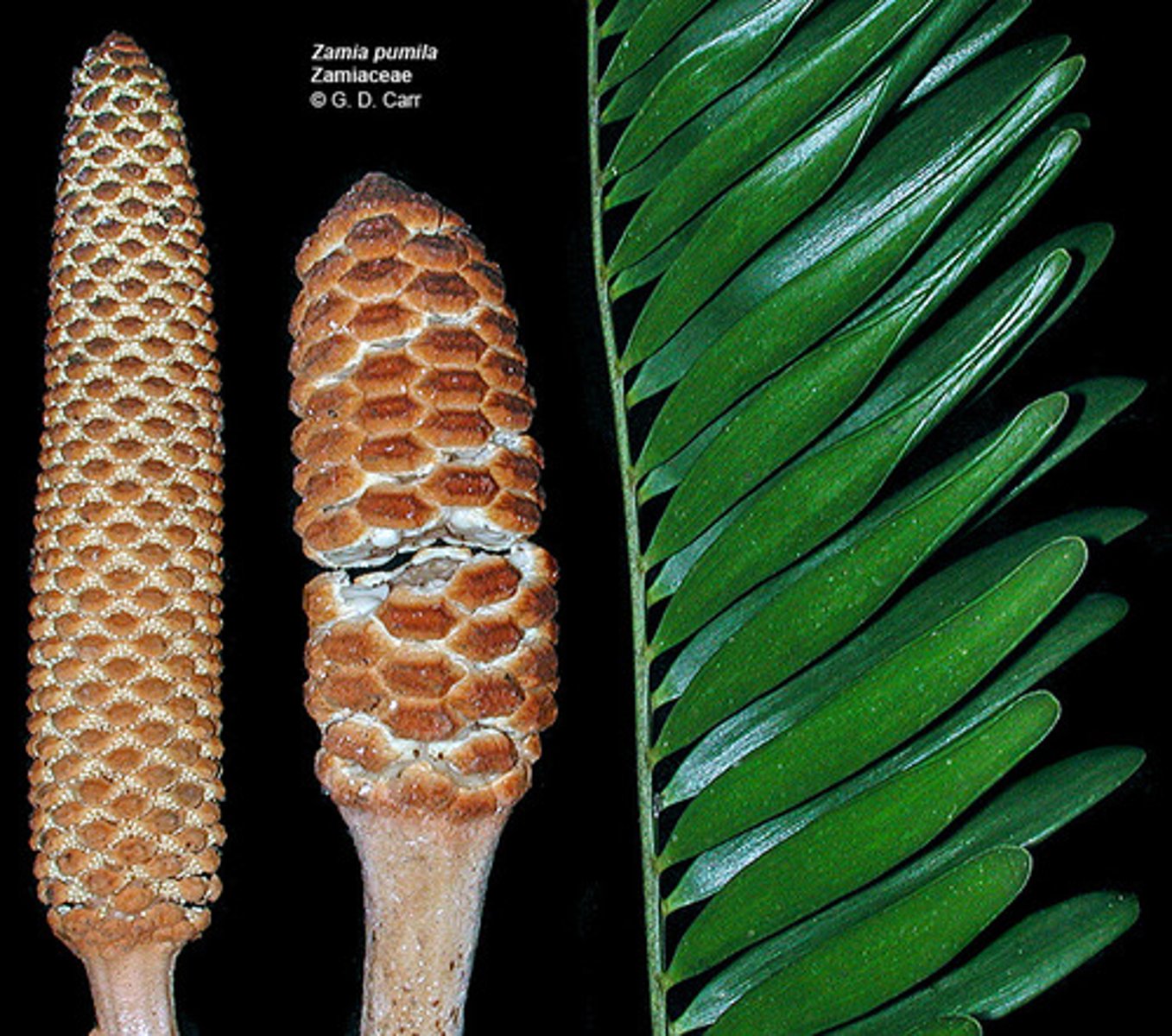
Most seedless vascular plants are
homosporous, producing one type of spore that develops into a bisexual gametophyte
Heterospores produce
megaspores (female gphyte) and microspores (male gphyte)
-phyll
leaf or leaflike

