Instruments - OPD Lab
 Studied by 0 people
 Call Kai
 Learn
Learn Practice Test
 Spaced Repetition
 Match
Match Flashcards
 Knowt Play
1/78

There's no tags or description
Looks like no tags are added yet.
Name | Mastery | Learn | Test | Matching | Spaced | Call with Kai |
|---|
No analytics yet
Send a link to your students to track their progress
79 Terms
HANDLE OR SHAFT
Part grasped in the operator’s hand.
Usually straight.
It is smooth, knurled, and/or serrated for better instrument control
SHANK
Connects the handle to the blade or nib.
Smooth, round, tapered, and contrangled.
Have one or more bends to avoid the tendency to twist in use where force is applied.
Shank Angles
Straight
Mon-angle (one)
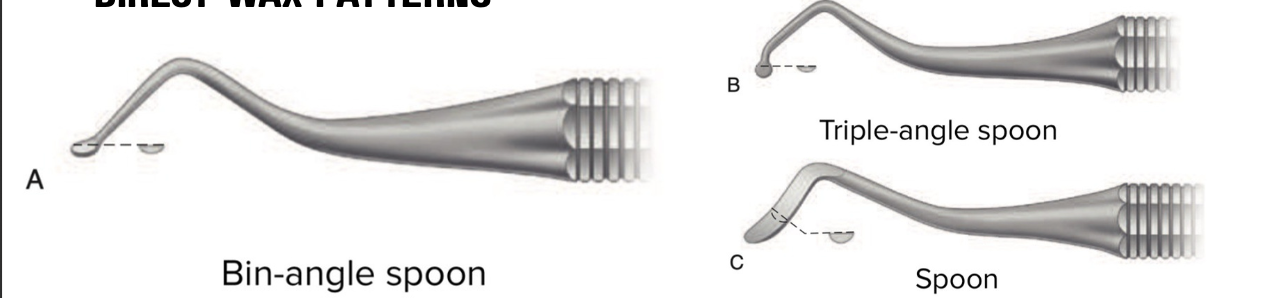
Bin-angle (two)
Triple-angle (three)
Contra-angled
BLADE OR NIB
The working part of the instrument, begins at the last angle.
CUTTING: Blade
NON-CUTTING: Nib
The end of the Nib, or working surface, is known as FACE
Function
Manner of Use
Design of the Working End
Shape of shank
BLACK’S CLASSIFICATION SYSTEM BY INSTRUMENT NAME
categorized instruments by:
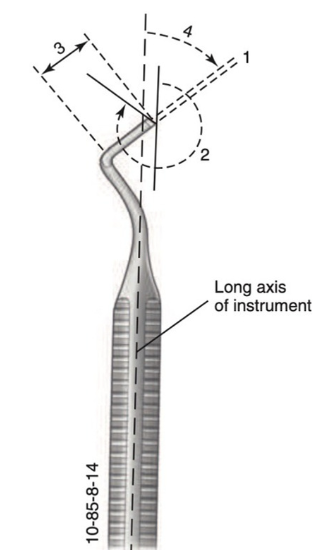
3-number code: WLA
Width of the blade (tenths of an MM)
Length of the blade (MM)
Blade Angle (relative to the long axis of the handle in clockwise centigrade or hundredths of a circle)
What’s the instrument formula? - 3-number code:
4-number code: WCLA
Width of the blade (in tenths of a mm)
Cutting edge angle (degrees centigrade) Instrument is positioned so that this number always exceeds 50.
Length of the blade (in mm)
Blade Angle (relative to the long axis of the handle in clockwise centigrade or hundredths of a circle) Instrument is positioned such that this number is always 50 or less.
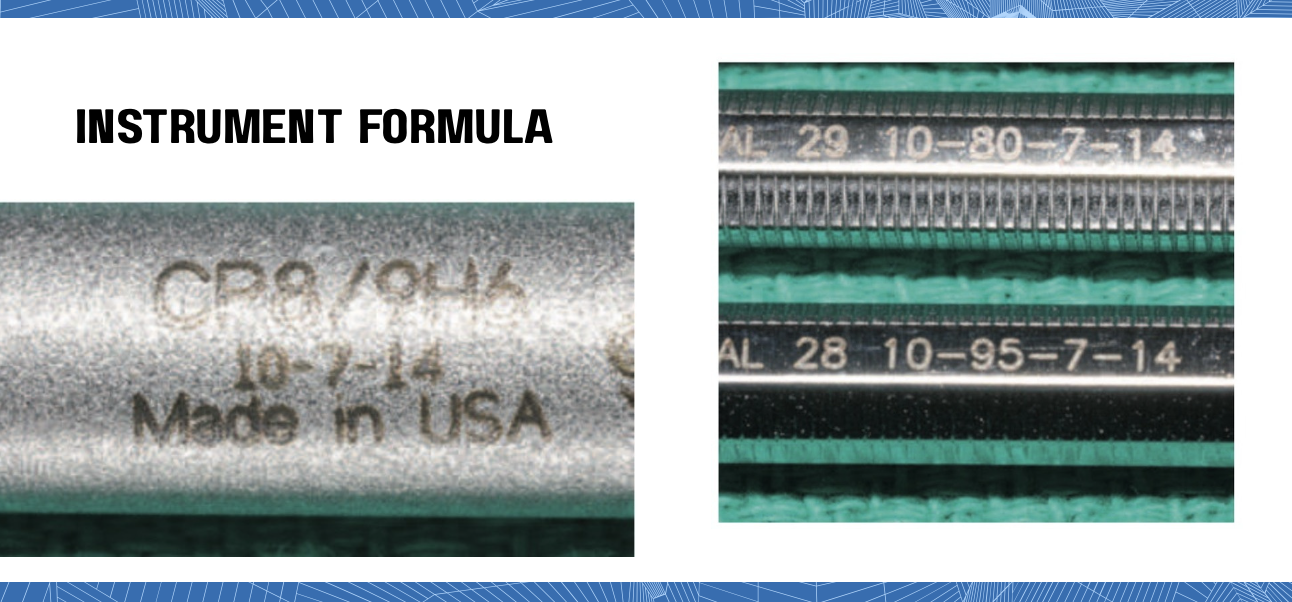
360
The centigrade angle is expressed as a percent of _____ degrees
e.g. 85 = 85% x 360 degrees = 306 degrees
e.g. 14 = 14% x 360 degrees = 50.4 degrees
Explain how to solve for the angle
Interpret:
e.g. 85 = ?
e.g. 14 = ?
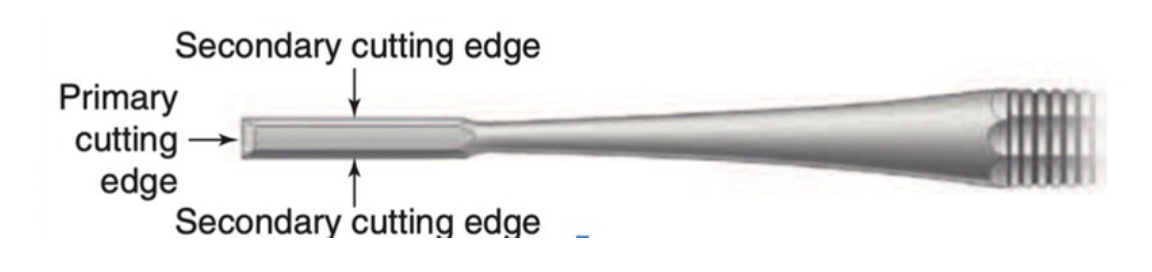
PRIMARY CUTTING EDGE
BEVELS
Single bevel on the end of the blade
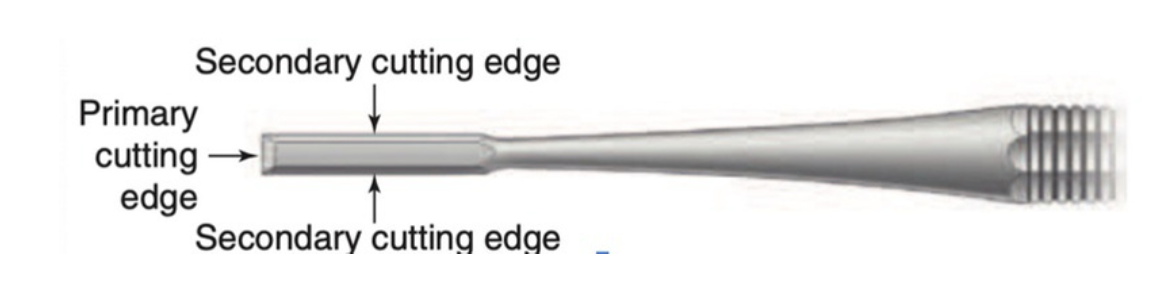
SECONDARY CUTTING EDGES
BEVELS
Two additional BEVELS extending from the primary edge.
spoon excavator
gingival margin trimmers
enamel hatchets
What are single-beveled instruments?
If bevel is on the right - RIGHT INSTRUMENT - moved from right to left
If bevel is on the left - LEFT INSTRUMENT - moved from left to right
RIGHT and LEFT BEVELS
(Single-beveled instruments: spoon excavator, gingival margin trimmers, enamel
hatchets)
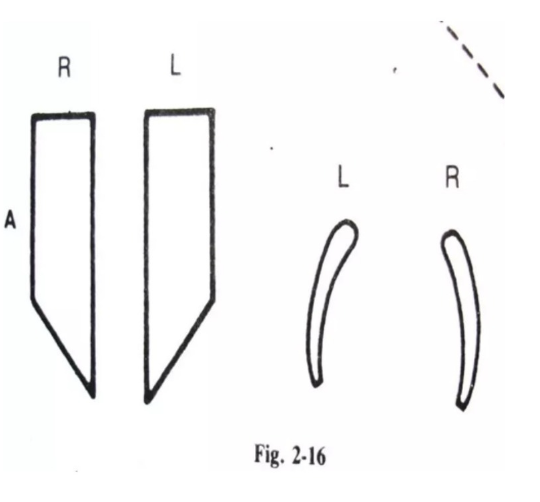
Chisels
Hoes
MESIAL and DISTAL BEVELS - EXAMPLES
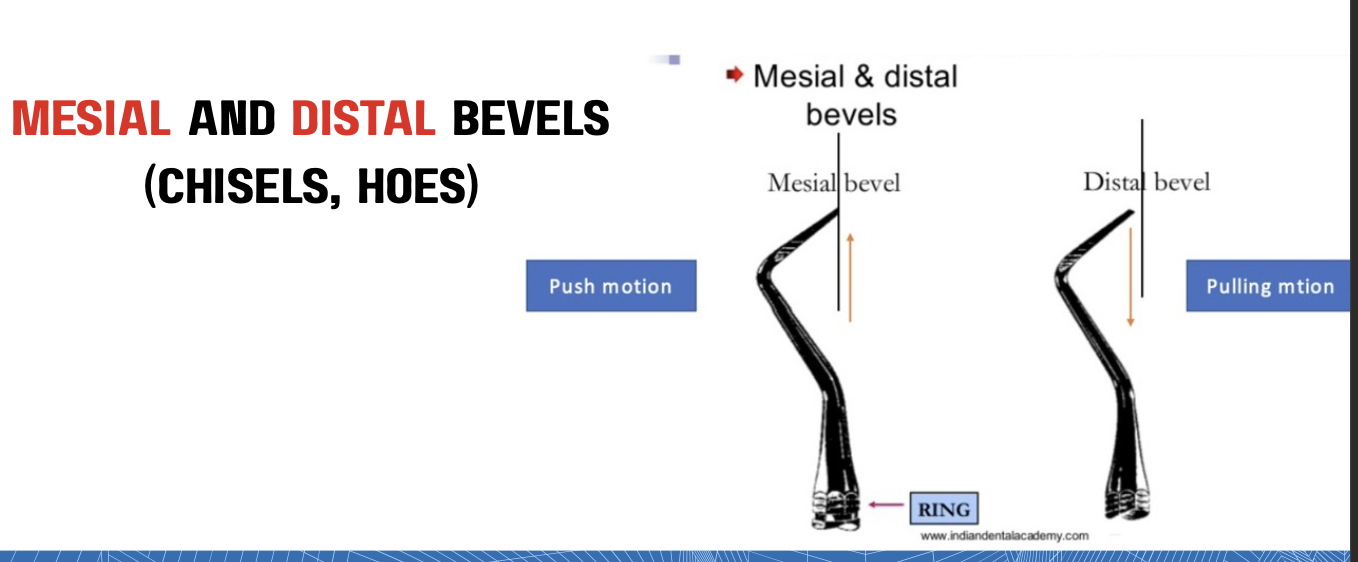
DISTAL BEVEL
If primary bevel is not visible - ?
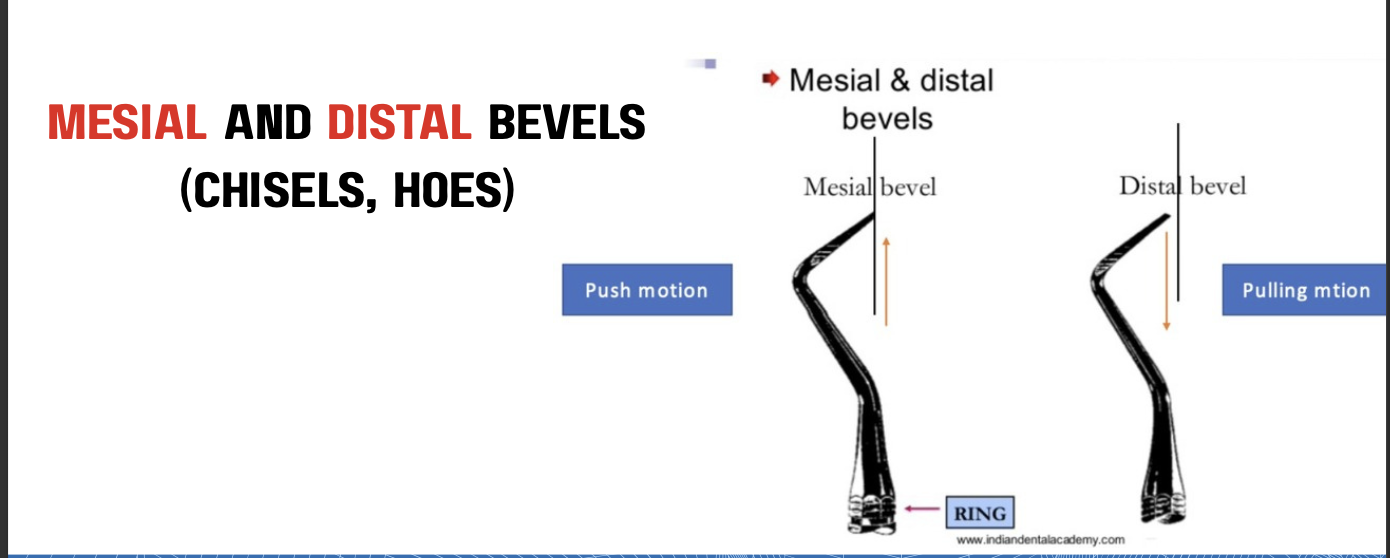
MESIAL or REVERSE BEVEL
If primary bevel is seen - ?
Excavators
For removal of carious tissue, refinement of the internal aspects of the preparation
Establishment of correct anatomical restoration
Ordinary Hatchets
Hoes
Angle Formers
Spoons
Examples of Excavators
Excavators - ORDINARY HATCHETS
Primarily on anterior teeth for preparing retentive areas
Sharpening internal line angles, particularly for direct gold restorations.
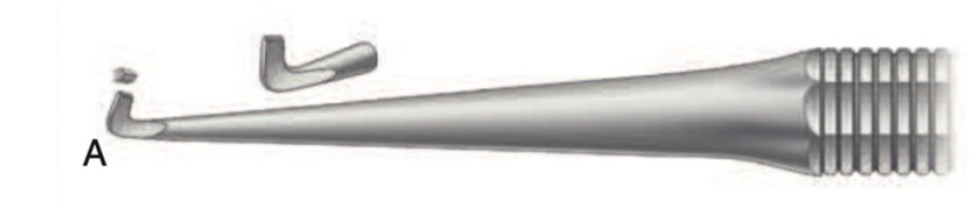
Excavators - HOES
For planing tooth preparation walls and for forming line angles.
Commonly used in Class III and V preparations to ensure removal of unsupported enamel
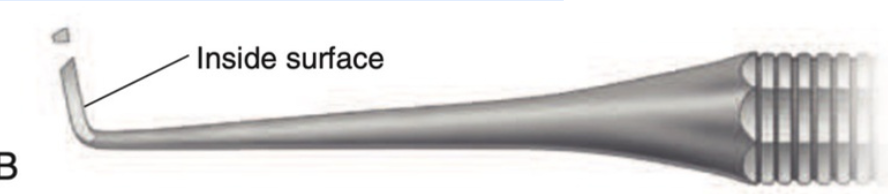
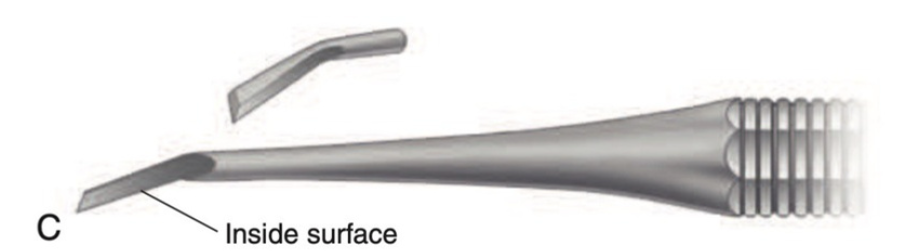
Excavators - ANGLE FORMERS
For sharpening line angles and creating retentive features in dentin in preparation for gold restorations.
Also used when placing a bevel on enamel margins.
Excavators - SPOON EXCAVATORS
For removing soft carious tissue and carving amalgam or direct wax patterns
CHISELS
Intended primarily for cutting enamel
Straight, slightly curved or bin-angle
Enamel hatchets
Gingival margin trimmers
KINDS OF CHISELS
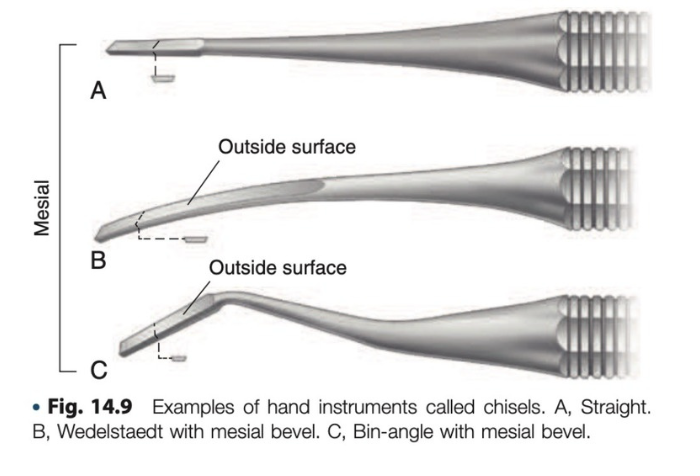
CHISELS - STRAIGHT, SLIGHTLY CURVED, OR BIN-ANGLE
Force used is essentially a straight thrust or a pushing motion.
For bin-angle and Wedelstaedt (slightly curved) chisels.
Blades w/ distal bevel used to plane a wall that faces the blade’s inside surface.
Blades w/ mesial bevel used to plane a wall that faces the blade’s outside surface.
CHISELS - STRAIGHT, SLIGHTLY CURVED, OR BIN-ANGLE
CHISELS - ENAMEL HATCHET
Used for cutting enamel and comes as right or left types for use on opposite sides of the preparation.
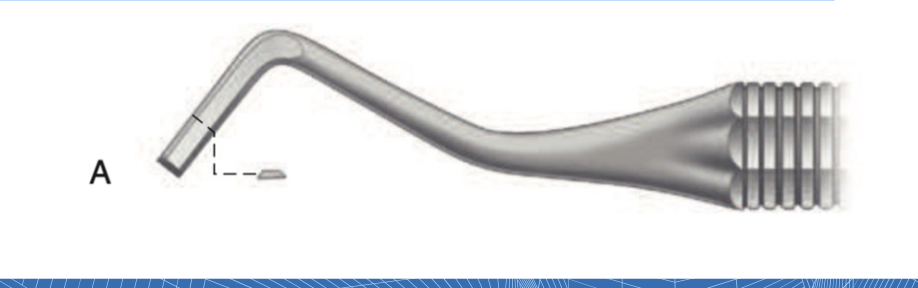
CHISELS - GINGIVAL MARGIN TRIMMER
Used to eliminate unsupported enamel on gingival walls of proximal preparations.
Knife
File
Discoid-cleoid
OTHER CUTTING INSTRUMENTS - Used for trimming restorative material rather than cutting tooth structure
OTHER CUTTING INSTRUMENTS - KNIVES
Finishing knives, amalgam knives, or gold knives
Used for trimming excess restorative material on the gingival, facial, or lingual margins of a proximal restoration.
Trimming and contouring the surface of a Class V restoration
OTHER CUTTING INSTRUMENTS - FILES
May also be used to trim excess restorative material and are particularly useful at gingival margins
Push/pull instrument
OTHER CUTTING INSTRUMENTS - DISCO-CLEOID
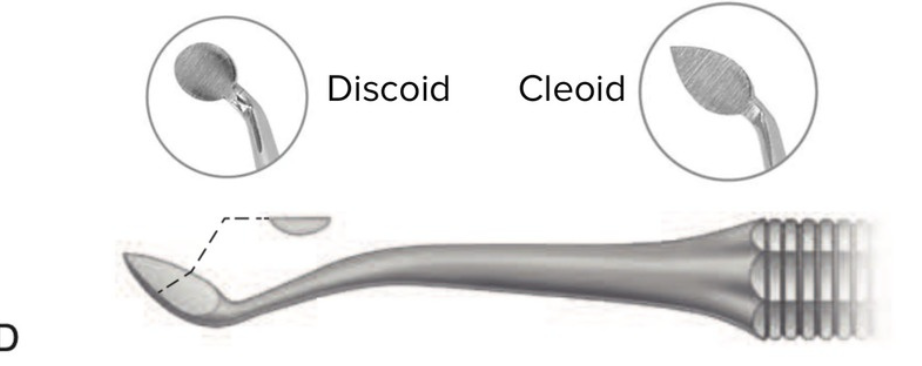
1. MODIFIED PEN GRASP
2. INVERTED PEN GRASP
3. PALM-AND-THUMB GRASP
4. MODIFIED PALM-AND-THUMB GRASP
What are the instrument grasp techniques?
MODIFIED PEN GRASP
Permits the greatest control of the instrument
The tip of the ring finger is placed on a nearby tooth surface of the same arch as a rest.
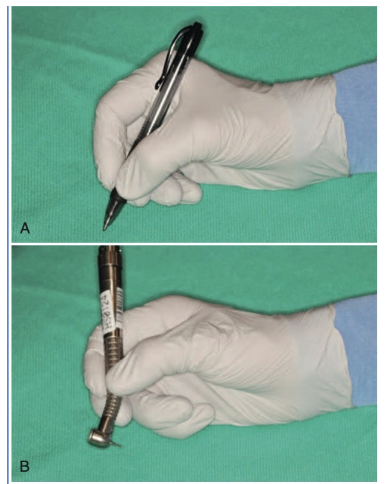
INVERTED PEN GRASP
Used mostly for tooth preparations employing the lingual approach on anterior teeth
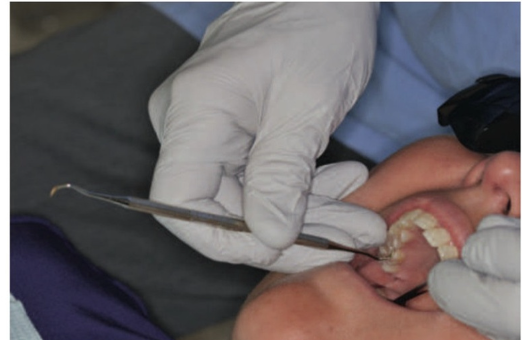
PALM-AND-THUMB GRASP
Rest is provided by supporting the tip of the thumb on a nearby tooth of the same arch or on a firm, stable structure.
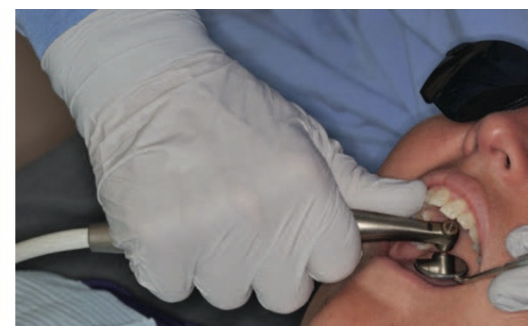
MODIFIED PALM-AND-THUMB GRASP
Usually employed in the area of the maxillary arch and is best adopted when the dentist is operating from a rear-chair position.
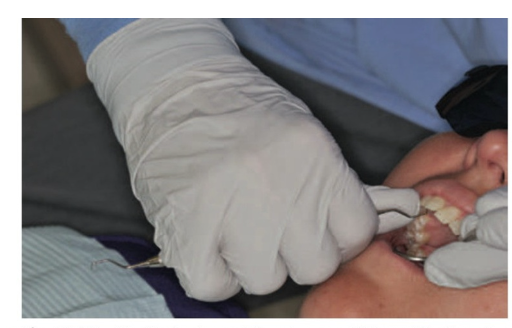
RESTS
To steady the hand during operating procedures.
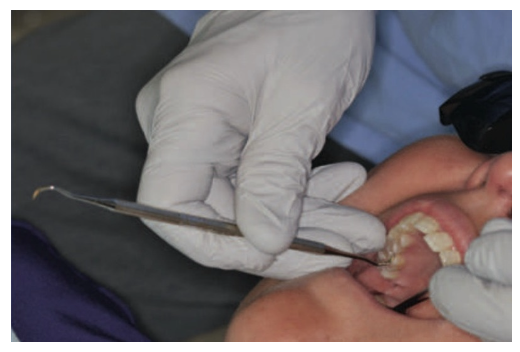
GUARDS
Hand instruments or other items used to protect soft tissue from contact with sharp cutting or abrasive instruments
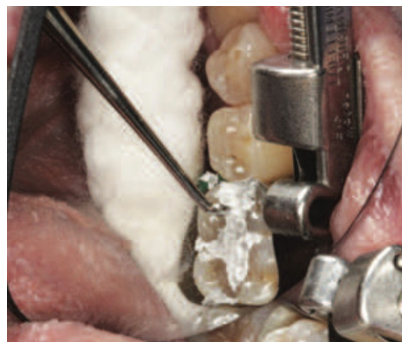
DENTAL HANDPIECE
Powered rotary cutting instrument
Air-driven and electric motor-driven
2 technologies of dental handpiece:
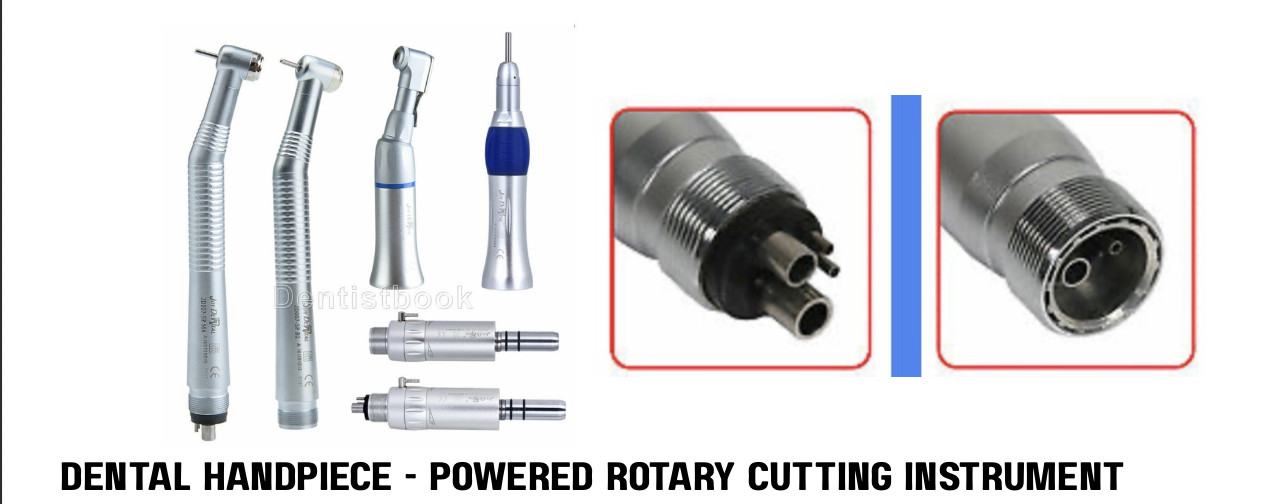
High / ultrahigh speed
200,000 rpm
40,000 rpm
Electric handpiece motors operate up to
Quieter than air-driven handpieces
Cut with high torque
Offer absolute control over rotary instrument revolutions per minute (rpm)
Offer a single motor with multiple attachments (straight or contra-angle type)
ADVANTAGES OF ELECTRIC HANDPIECES
LOW-SPEED CUTTING
ineffective, time consuming, and requires a relatively heavy force application
Heat and vibration are the main sources of patient discomfort
For cleaning teeth, caries excavation, and finishing and polishing procedures.
HEAT AND VIBRATION
are the main sources of patient discomfort
For cleaning teeth, caries excavation, and finishing and polishing procedures.
Diamond and carbide cutting instruments remove tooth structure faster and with less pressure, vibration, and heat generation
Types of rotary cutting instruments needed is reduced because smaller sizes are more universal
Better control and greater ease of operation
Instruments last longer
Patients less apprehensive
Increased operation efficiency
ADVANTAGES OF HIGH RPM
LASER EQUIPMENT
A crystal or gas is excited to emit photons of a characteristic wavelength that are amplified and filtered to make a coherent light beam.
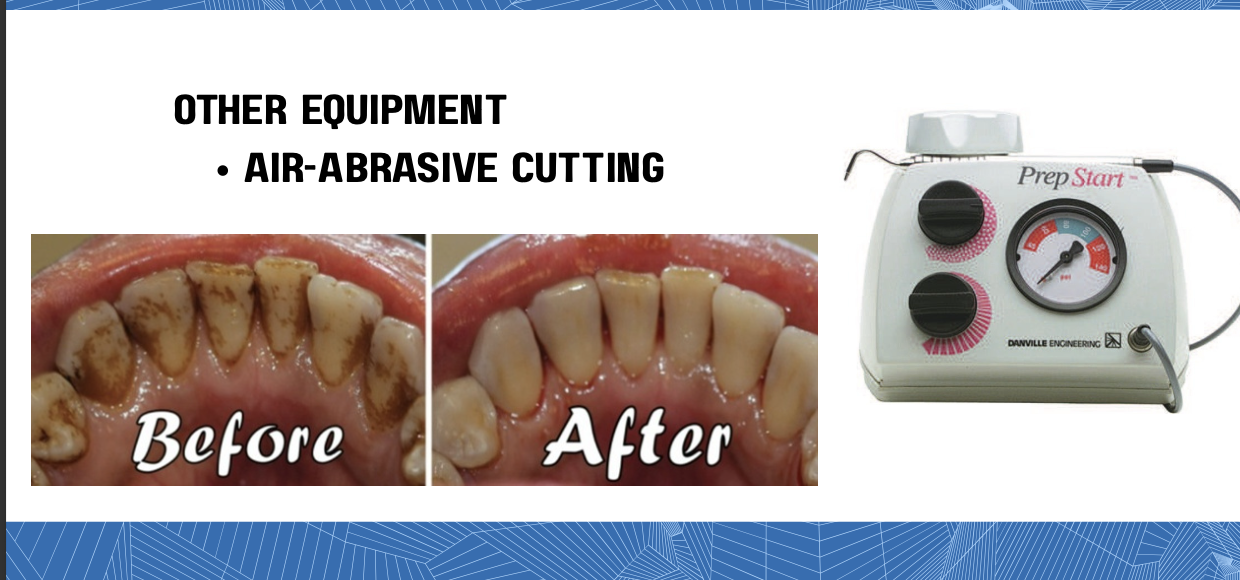
AIR-ABRASIVE CUTTING
Not generally accepted for tooth preparation
Only helpful for stain removal, debriding pits and fissures before sealing, and micromechanical roughening of surfaces to be bonded.
Shank, Neck, and Head
Parts of a dental bur/instrument
Shank –
the part that fits into the handpiece
Neck –
connects the head to the shank
Head –
the working part of the instrument
Head size
Head shape
Bladed/abrasive (dental burs and diamond abrasive instruments)
HEAD DESIGN CLASSIFICATIONS:
BURS
All rotary cutting instruments with bladed cutting heads
Used for:
→ Tooth preparation
→ Finishing metal restorations
→ Surgical removal of bone
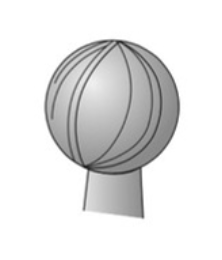
ROUND BUR
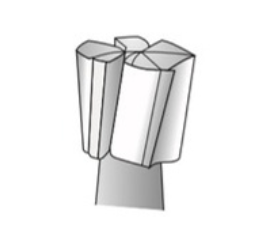
INVERTED CONE
PEAR-SHAPED
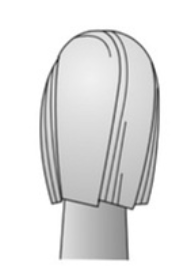
STRAIGHT FISSURE
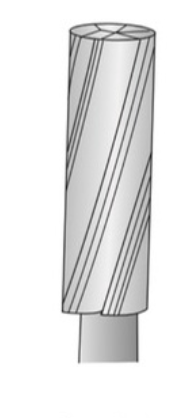
TAPERED FISSURE
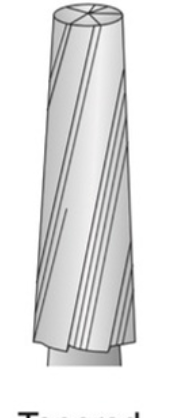
Ranges from 12 to 40 blades.
Finishing Bur Blades
The bur head should be as symmetrical as possible.
Bur Head Symmetry
 Note
Note  Flashcards (21)