Seen Slides 2
 Call Kai
 Learn
Learn Practice Test
 Spaced Repetition
 Match
Match Flashcards
 Knowt Play
1/11

Earn XP
Description and Tags
These flashcards cover key concepts and artifacts from ancient Greek art and architecture, focusing on their origin, material, and style.
Name | Mastery | Learn | Test | Matching | Spaced | Call with Kai |
|---|
No analytics yet
Send a link to your students to track their progress
12 Terms
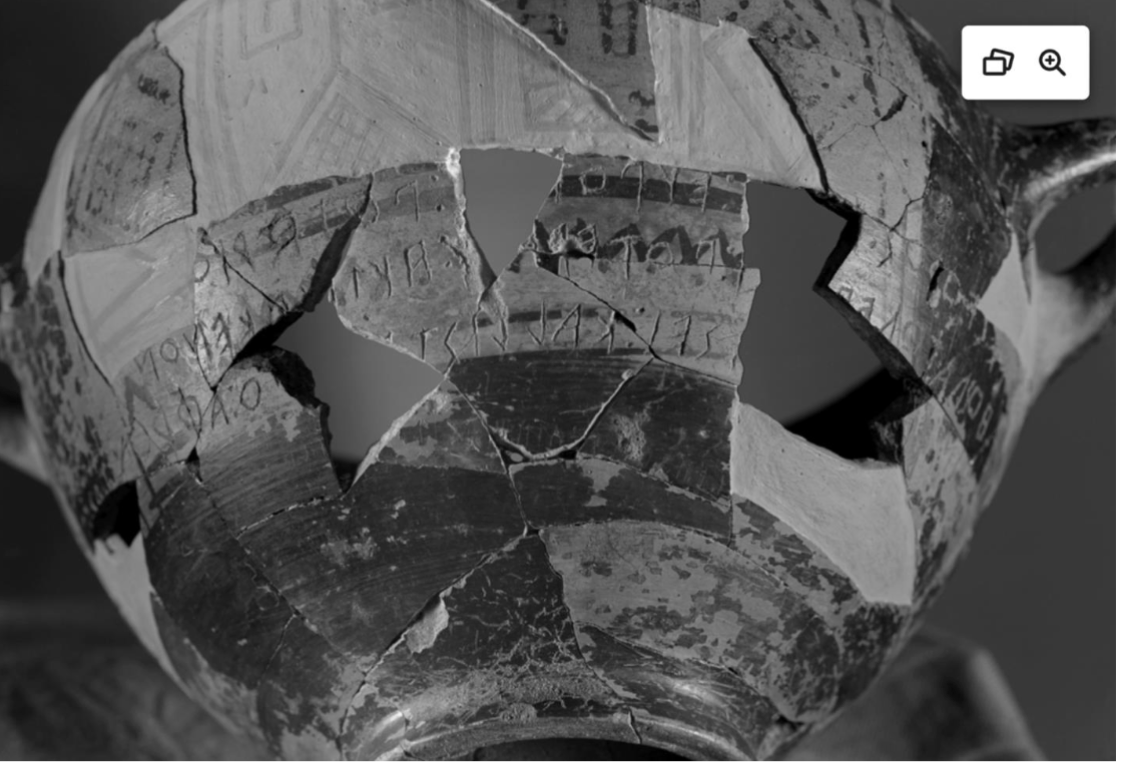
Cup of Nestor
What: “Cup ofNestor” (Rhodian bowl)
Where: Pithekoussai
When: ca. 730 BC
Material: Ceramic
Inscription: “I am the cup of Nestor, who ever drinks of me will be blessed by aphrodite”
As a Rhodian-style vessel found in an Italian settlement, it reflects vibrant long-distance exchange networks and the cosmopolitan character of early Greek colonies in the central Mediterranean.
By referencing Nestor from the Homeric epics, the cup proves that epic traditions were widely known and transmitted orally across the Greek world long before they were written down.
The inscription represents one of the earliest appearances of the Greek alphabet, showing not only technological adoption but also how writing initially circulated casually through trade communities rather than only in elite mainland centers.
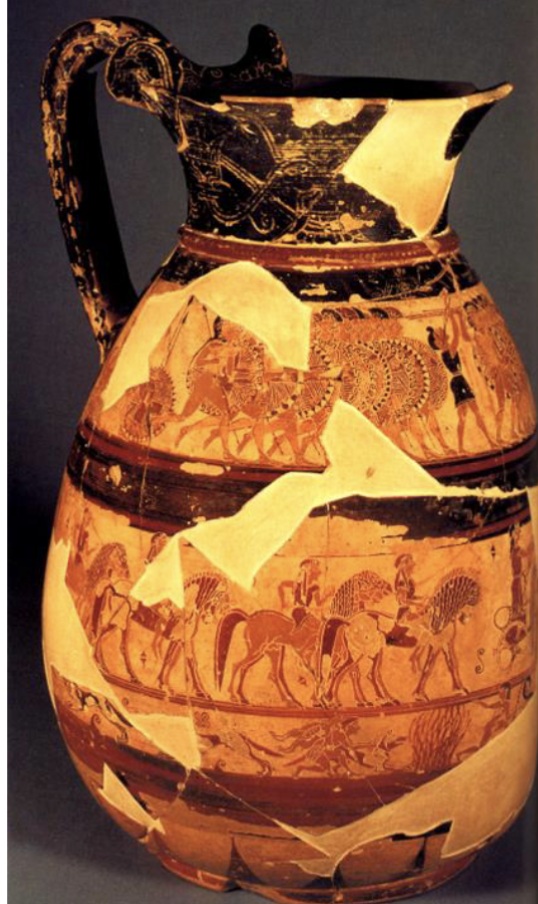
Chigi Olpe
What: “Chigi Olpe”
Where: made in Corinth,
found at Veii in Italy
When: 650-640 BC
Material: Ceramic
Technique/Style:Protocorinthian
The vessel exemplifies the technical peak of Protocorinthian fineware, showing how Corinthian artisans pioneered miniaturist black-figure painting before Athens dominated the medium.
Its presence in an Etruscan tomb at Veii demonstrates the prestige of Corinthian pottery abroad and highlights the intensity of cultural exchange between Greeks and Etruscans in the Orientalizing period.
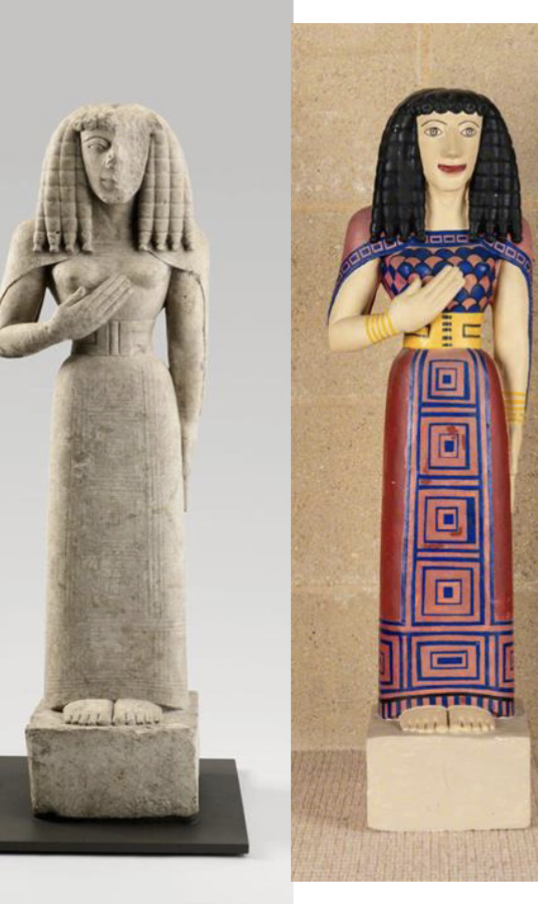
Lady of Auxerre
What: “Lady of Auxerre” (and painted reconstruction)
Where: Crete, probably from Eleutherna
When: 640-620 BC
Material: Limestone, pigment
Technique/Style: Daedalic
As a hallmark of the Daedalic style,Shows the shift from wood/terracotta to limestone carving, an important technical evolution leading toward kouroi and korai.
Features like the stylized hair and narrow waist reveal the deep impact of Eastern Mediterranean aesthetics on Greek art, reminding us that Greek identity was shaped through cross-cultural interaction rather than isolation.
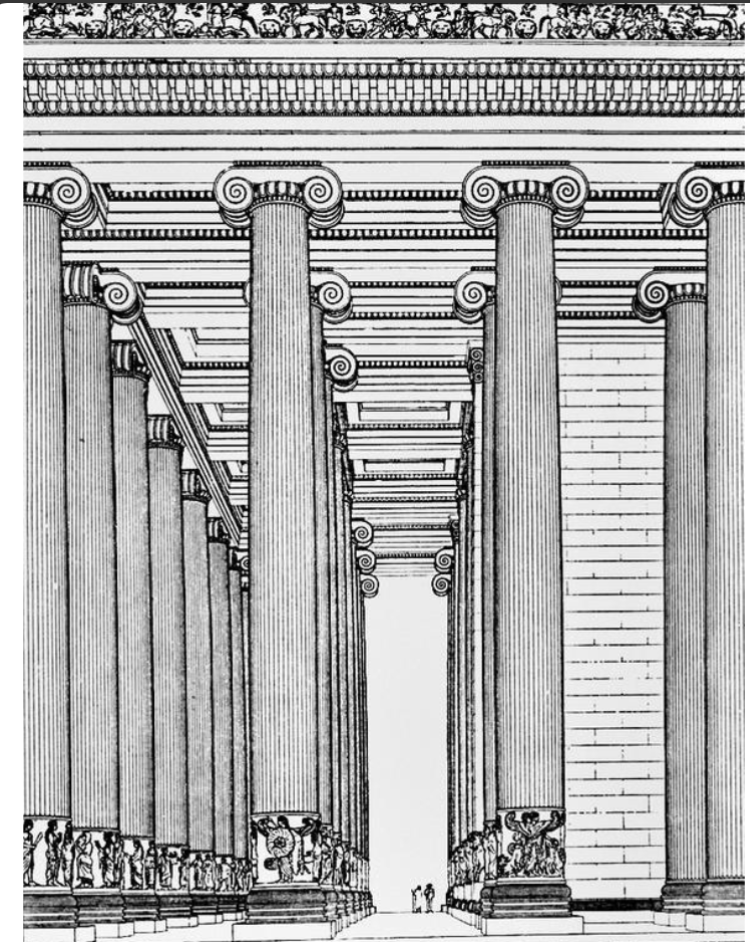
Temple of Artemis (Ephesus)
What: Reconstruction drawing of Temple of Artemis
Where: Ephesus
When: 560-550 BC
Material: Marble, limestone
Order: Ionic
This temple is one of the earliest and grandest expressions of the Ionic order, showing how eastern Greeks favored elaborate ornamentation and developed a distinctive architectural identity separate from the Doric mainland.
As a major center of worship for Artemis, the temple shows how architecture functioned as a political statement, uniting Ionian communities and projecting their cultural prestige.
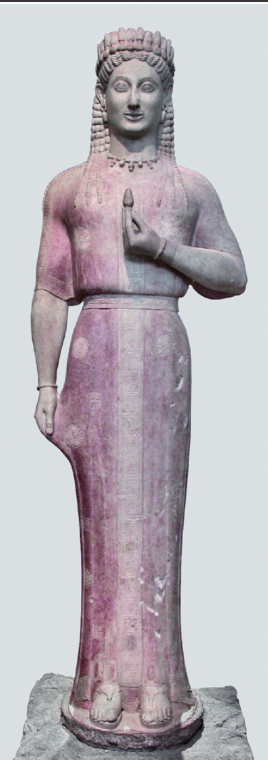
Phrasikleia Kore
What: Phrasikleia kore
Where: Merenda, Attica
When: ca. 550-540 BC
Material: Marble, pigment
Inscription: “I am the monument of
Phrasikleia, who will forever be
called ‘maiden’ (kore), since the
gods have allotted me this instead
of marriage”
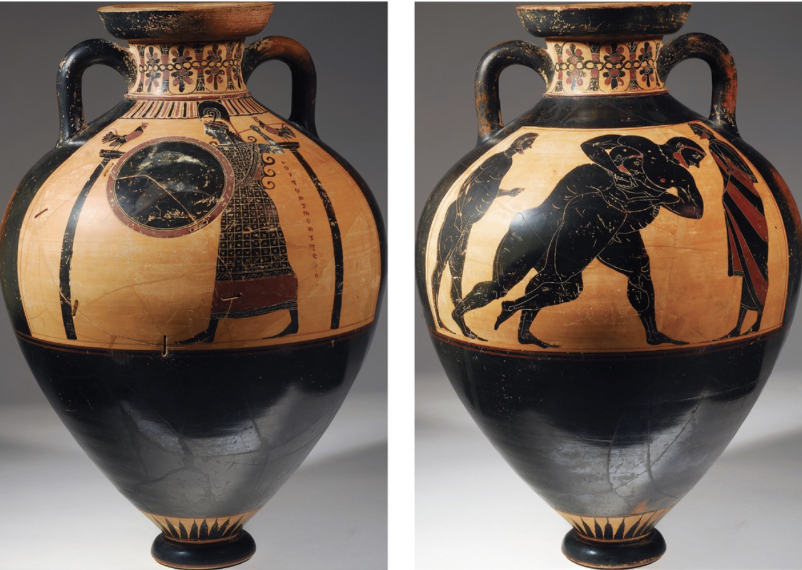
Panathenaic prize amphora by Exekias
What: Panathenaic prize amphora by Exekias
Where: made in Athens, found in Vulci
When: ca. 540 BC
Material: Ceramic
Technique: Attic Black-Figure with ancient repair
shows value of athleticism and like to show off
shows that people would come from all would come over to play these games
valued because it was repaired
olive oil as a prestigious prize given to victors in the Panathenaic Games, symbolizing the significance of athletic competition in Athenian culture.
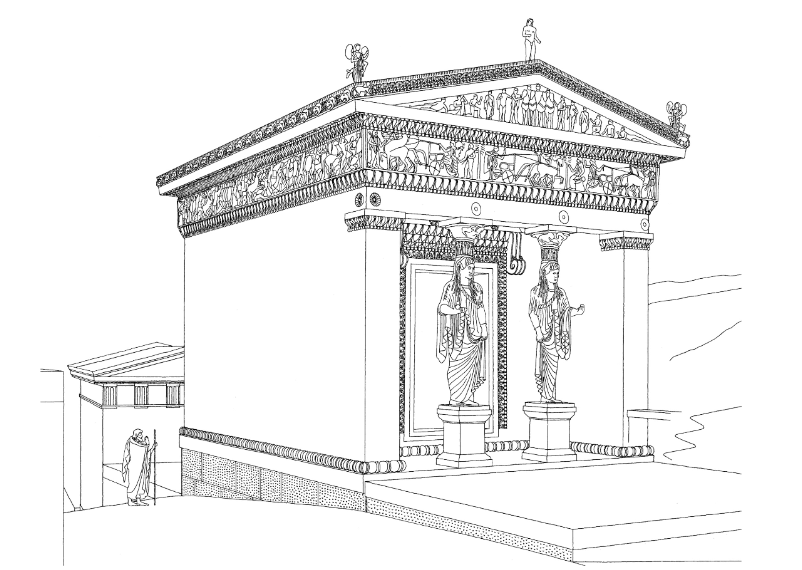
Reconstruction drawing of Treasury of the Siphnians
What: Reconstruction drawing of Treasury of the Siphnians
Where: Delphi
When: ca. 525 BC
Material: Marble on a limestone foundation
Order: Ionic, with caryatids
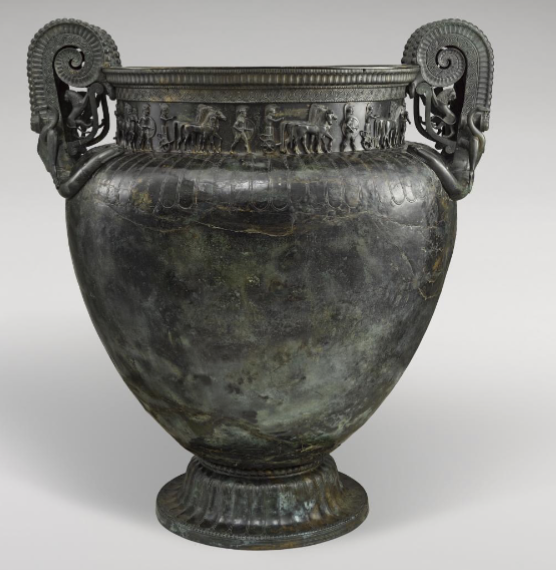
Vix Krater
What: Vix Krater
Where: Vix, France
When: 530-520 BC
Material: Bronze
Technique: sheet- bronze work for body, lost-wax casting for handles and decoration
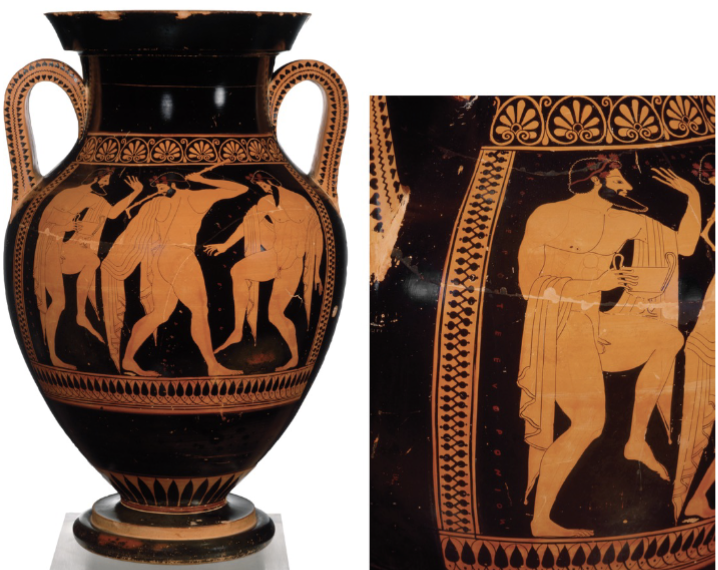
Amphora by Euthymides
What: Amphora by Euthymides
Where: Athens
When: ca. 510 BC
Material: Ceramic
Technique: Attic Red-Figure
Inscription: “Euphronius never [did this]
shows competition
short hair shows development in greek identity
shows more fluid poses with increased naturalism.
part of pioneer group in red-figure pottery, known for innovative styles.
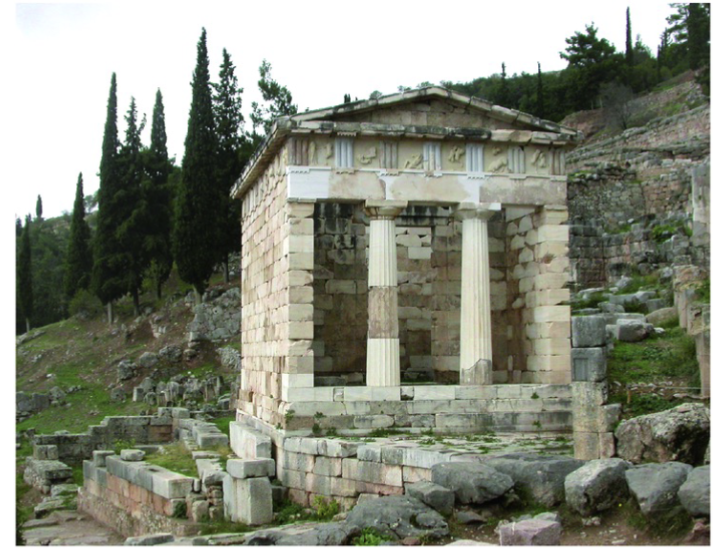
Treasury of the Athenians
What: Treasury of the Athenians
Where: Delphi
When: after 490 BC
Material: Parian marble
Order: Doric
Inscription on the projecting base on the left: “The Athenians from the
Persians as first fruits from the battle of Marathon”
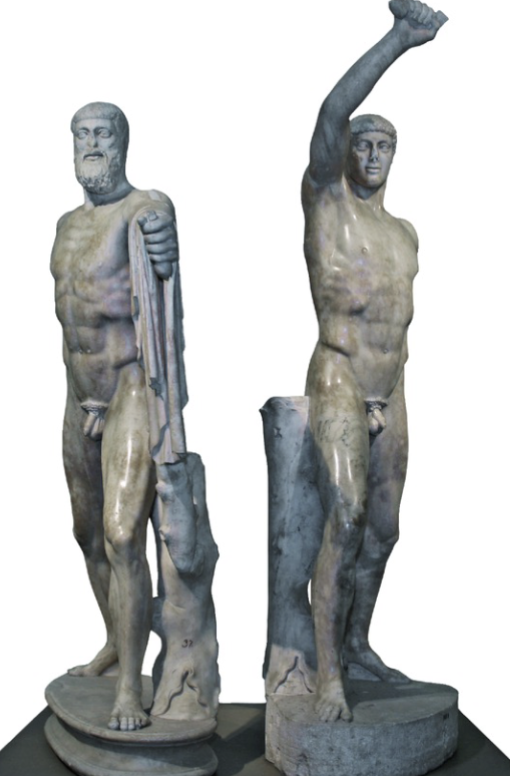
Roman marble copy of statue of the Tyrannicides by Kritias
and Nesiotes
What: Roman marble copy of statue of the Tyrannicides by Kritias
and Nesiotes
Where: Athens
When: 477/476 BC
Material: Marble (original was bronze)
romans value greek art and kind of everything and democracy
more fluid pose and realism contrapposto
original was bronze and non existent now
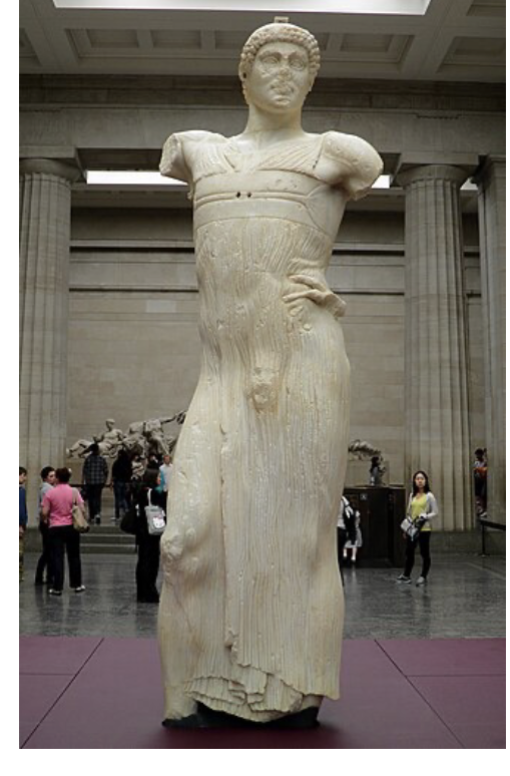
Mozia Charioteer
What: Mozia Charioteer
Where: Mozia, Sicily
When: 470-460 (or as late as
450) BC
Material: Parian marble
severe style- shows new age of classical
found in sicily and they love greek stuff since they own their land, shows physical and cultural domination
sheer, which is rare, new visual interest and greek identity
Explore top notes

Explore top flashcards
