Chapter 6 --Lipids: Fats, Phospholipids, and Sterols
 Studied by 4 people
 Call Kai
 Learn
Learn Practice Test
 Spaced Repetition
 Match
Match Flashcards
 Knowt Play
1/90

There's no tags or description
Looks like no tags are added yet.
Name | Mastery | Learn | Test | Matching | Spaced | Call with Kai |
|---|
No analytics yet
Send a link to your students to track their progress
91 Terms
Lipids
A class of nutrients that do not dissolve in water
What are the three classes of lipids?
Triglycerides, phospholipids, and sterols
triglycerides
The major form of lipid in the body and in food (95% of lipids). They are located in the adipose tissue, and they're comprised of various fatty acids that determine the function and health effects of TGs.
structure of TGs
3 fatty acids + glycerol molecule
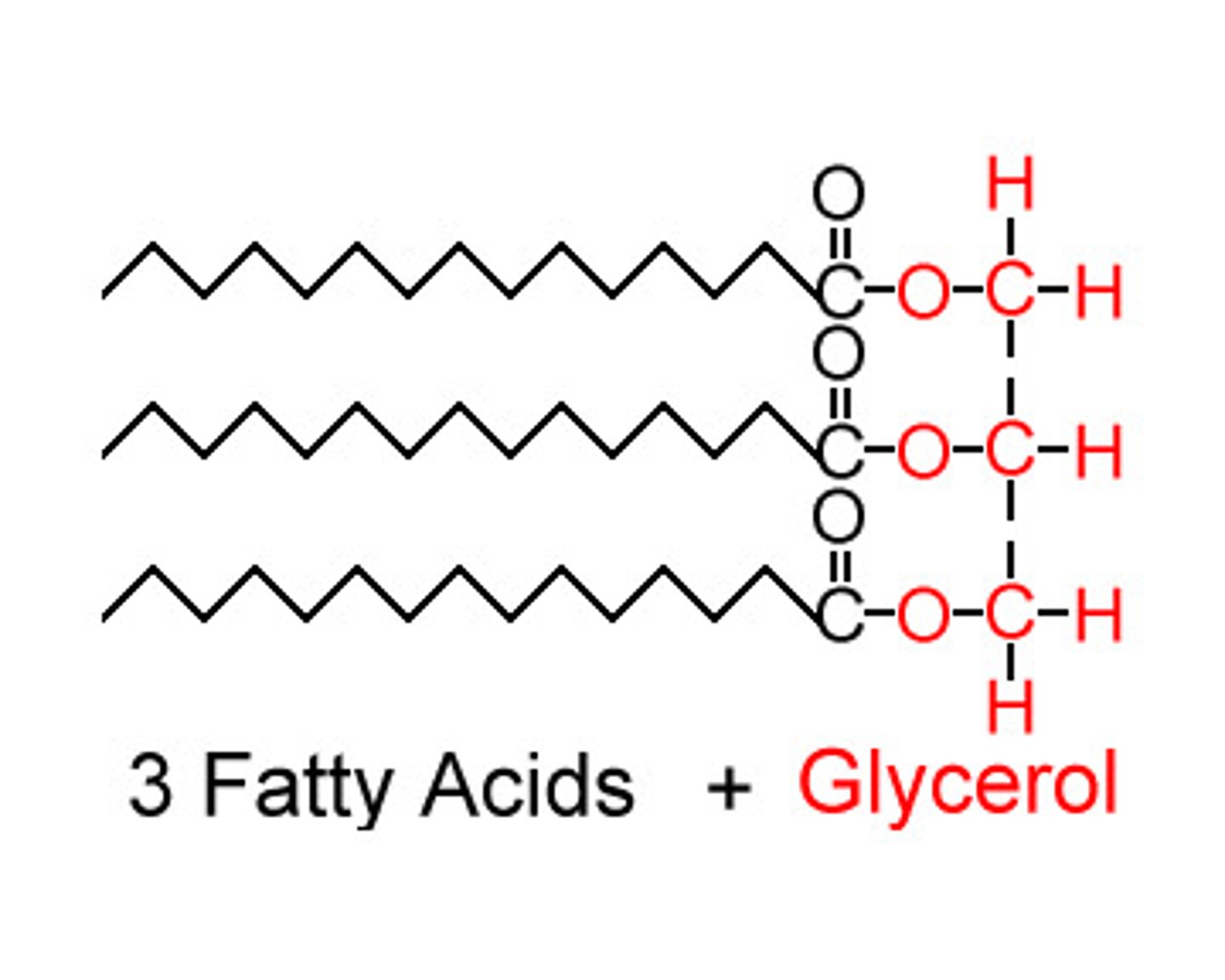
composition of a fatty acid
A chain of carbon atoms (hydrocarbon chain), the length of which can vary, with a carboxylic acid end (hydrophilic) and an omega/methyl end (hydrophobic)
Features of the fatty acid hydrocarbon chain
Each carbon in the chain is attached to two carbon atoms and up to two hydrogen atoms. When 2 adjacent carbons along the chain are each missing a hydrogen, a double bond forms between the adjacent carbons
Differences between fatty acids
1. Chain length (dictates water solubility, where less is more)
2. Degree of saturation (# of hydrogens attached to a carbon atom)
Saturated fatty acids
All carbon atoms are "saturated" with hydrogens; no carbon-carbon double bonds.
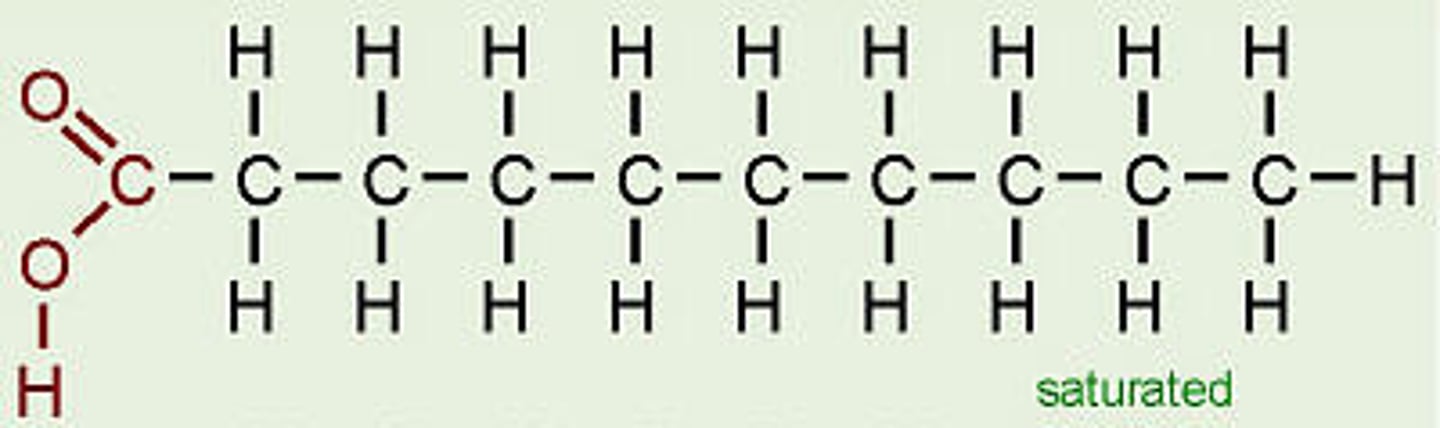
Features of saturated fatty acids
> found more abundantly in foods from animal sources than in those from plant sources
> TGs that are high in saturated fatty acids are solid at room temp because the fatty acid chains are straight, which makes them pack tightly together
> Diets high in saturated fatty acids are associated with an increased risk for heart disease
monounsaturated fatty acid (MUFA)
fatty acids that have one point of unsaturation--aka 1 "carbon-to-carbon" double bond
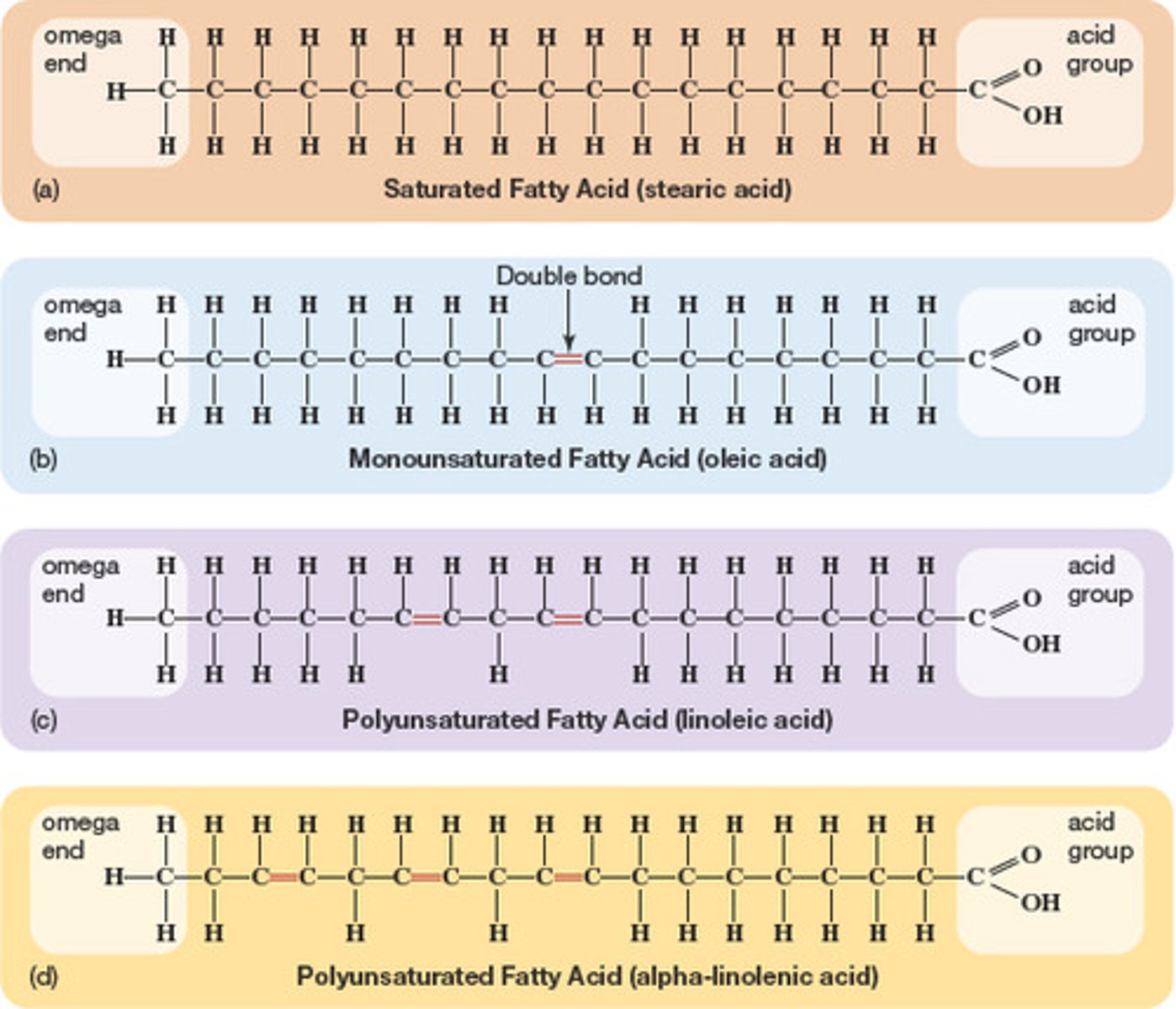
examples of good MUFA sources
oils from olives, avocados, peaneuts, canola seeds, safflower seeds, and sunflower seeds; almonds, pecans, cashews, etc; peanut and almond butters; seeds (pumpkin, sesame, safflower); salmon
polyunsaturated fatty acids (PUFA)
Fatty acids with two or more double bonds.
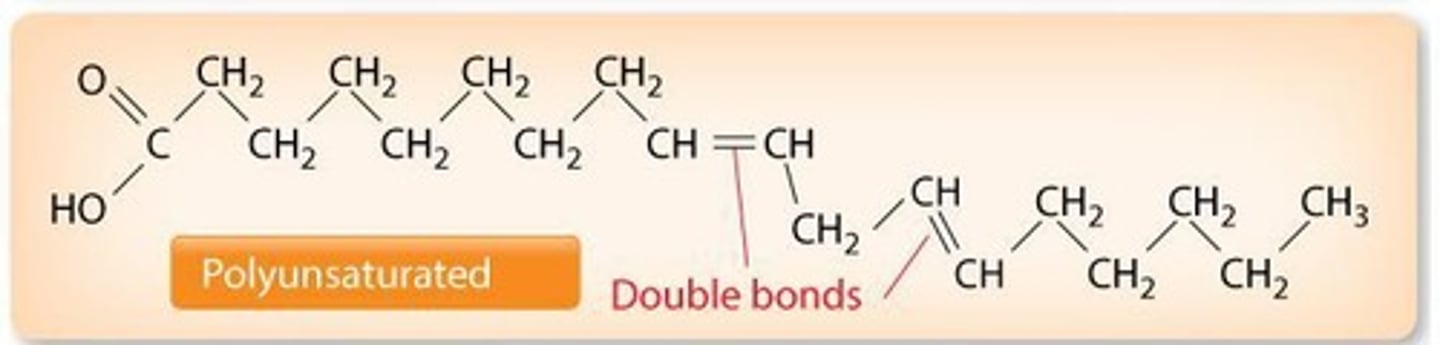
Why are PUFA and MUFA liquids at room temperature?
The fatty acid chains are bent, which prevents tight packing.
linoleic acid (Omega-6 PUFA)
An essential PUFA where the first double bond occurs between the 6th and 7th carbon atoms from the "omega" end of the fatty acid
sources of linoleic acid
oils (sunflower, corn, etc.) and nuts (pine nuts and walnuts) and seeds (pumpkin)
Alpha-linolenic acid (ALA) (Omega-3 PUFA)
An essential PUFA where the first double bond occurs between the 3rd and 4th carbon atoms from the "omega" end of the fatty acid
Sources of ALA
flaxseed oil, canola oil, chia seeds, flaxseds, walnuts, salmon, other fish oils
Trans fatty acids
Unsaturated fatty acids that have a trans double bond
Features of trans fats
>small amts occur naturally (meat and dairy products)
>most are made during hydrogenation (where hydrogen atoms are forced onto the carbon-carbon double bonds of UNsaturated fats--> this prevents spoilage
> increase risk of heart disease
Ranking dietary fats from healthiest to least healthy
1. PU Omega-3
2. MUFAs
3. PU Omega-6
4. Saturated fats
5. Industrialized/trans fats
Phospholipids
a lipid consisting of a glycerol bound to two fatty acids and a phosphate group.
Structural benefit of phospholipids
soluble in both water and fat. Fatty acids are fat soluble while the phosphate group and glycerol are water soluble.
Two key roles of phospholipids
1. Serve as a structural component of cell membranes
2. Needed for normal functioning of nerve cells, including brain cells
Sterols
Interconnecting rings of carbon atoms with side chains of carbon, hydrogen, and oxygen attached
Cholesterol
A sterol that is made by the liver but also obtained from the diet.
Functions of cholesterol in the body
> component of cell membranes
> component of myelin
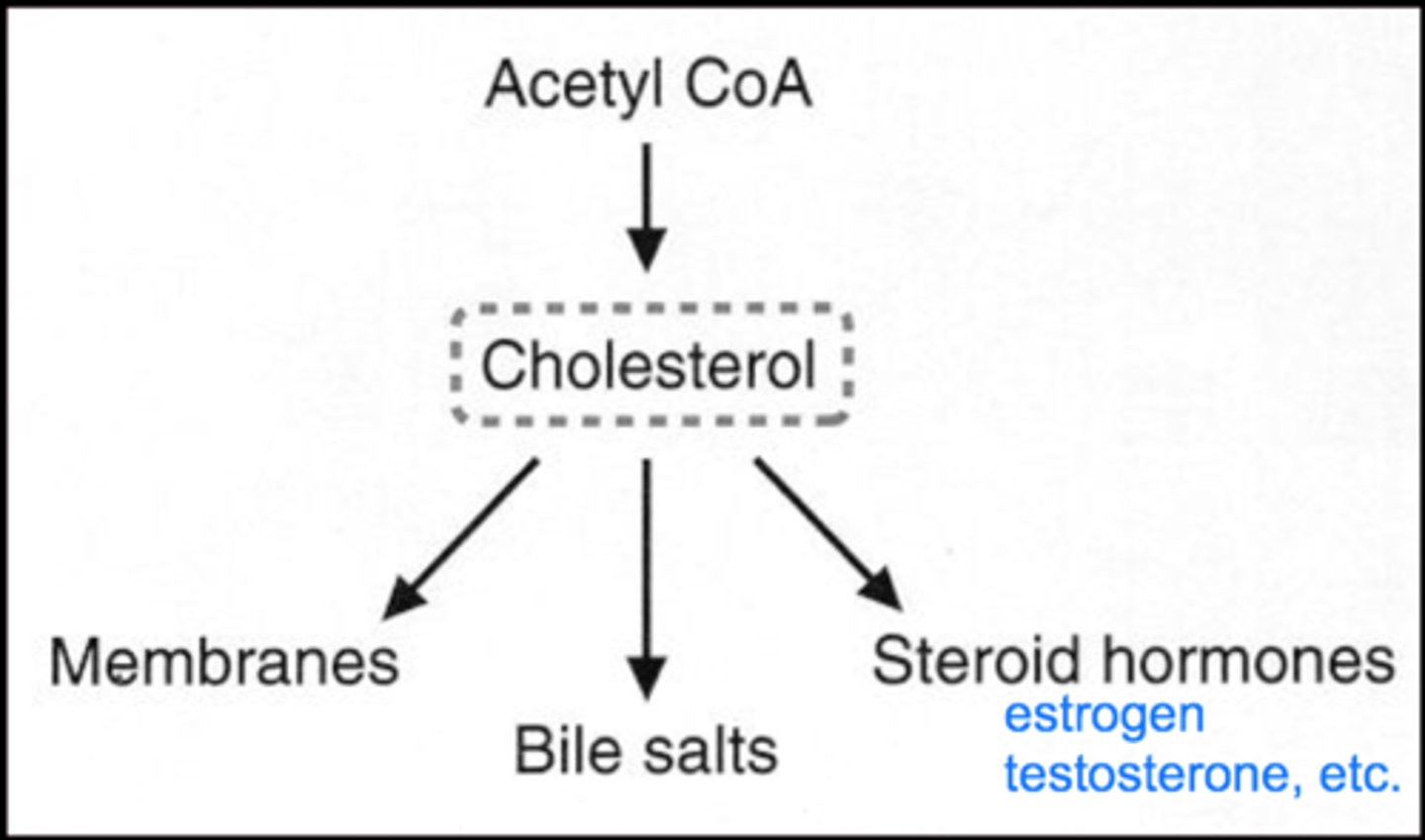
> needed to make bile salts
> required for the making of steroid hormones, such as cortisol, vitamin D, and testosterone + estrogen
mechanical digestion + limited chemical digestion
-mouth: lingual lipase begins to break down some TGs
-stomach: gastric lipase begins to break down some bonds of short-chain fatty acids
What is the process of absorption into and transport out of the small intestine?
Presence of fat is detected > hormones secreted > triggers the release of an appropriate amount of bile from the liver or gallbladder and bicarbonate-rich pancreatic juice (also contains lipases)
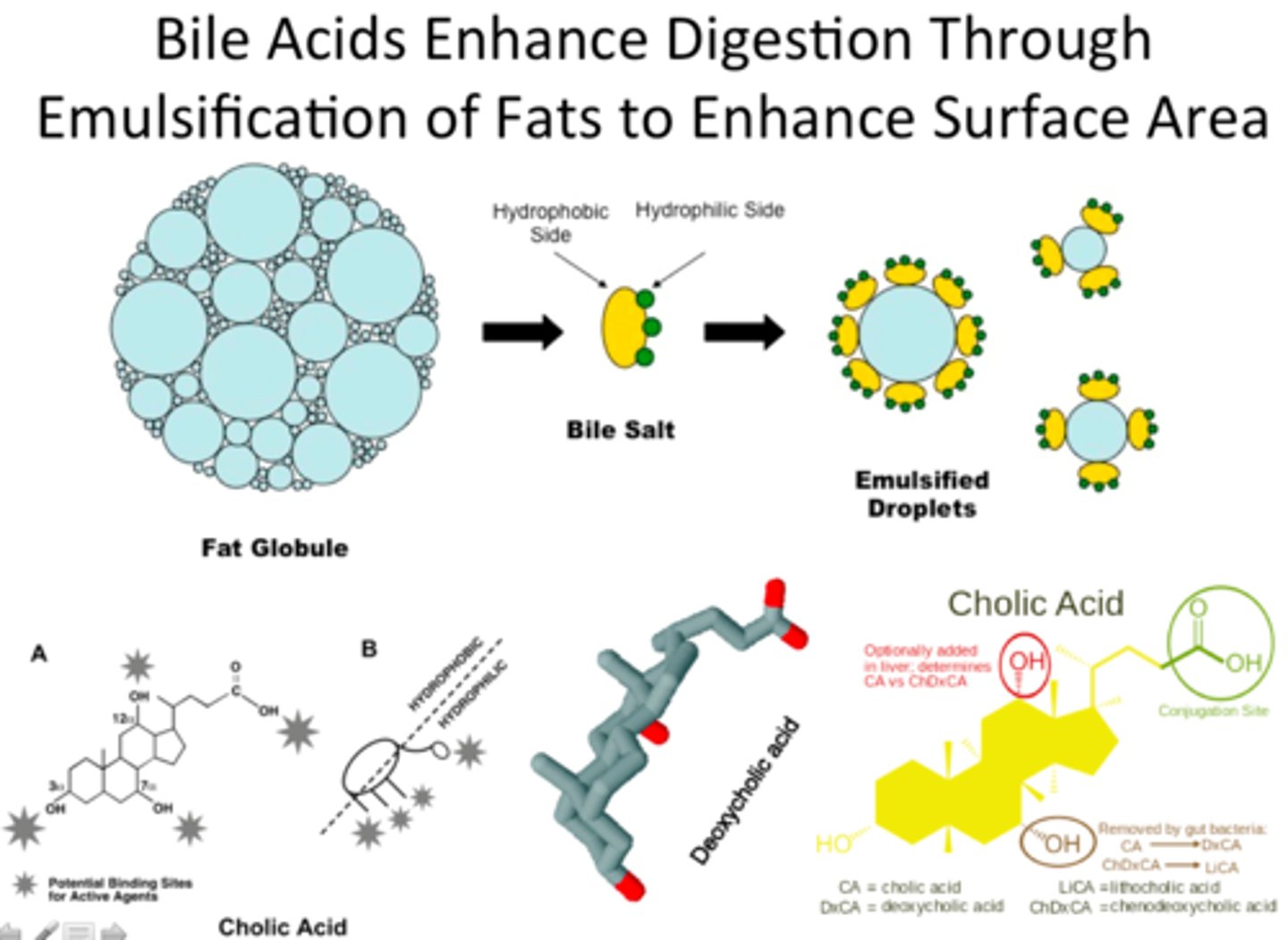
How do bile salts enhance lipid digestion and absorption?
They emulsify lipids in the watery environment, which keeps the lipids suspended as small particles in the chyme, increasing the surface area and allowing the lipases to work
What does pancreatic lipase do to most TGs?
It breaks them down into 2 free fatty acids and monoglyceride
What does pancreatic lipase do to some TGs?
It breaks them down into 3 free fatty acids and glycerol
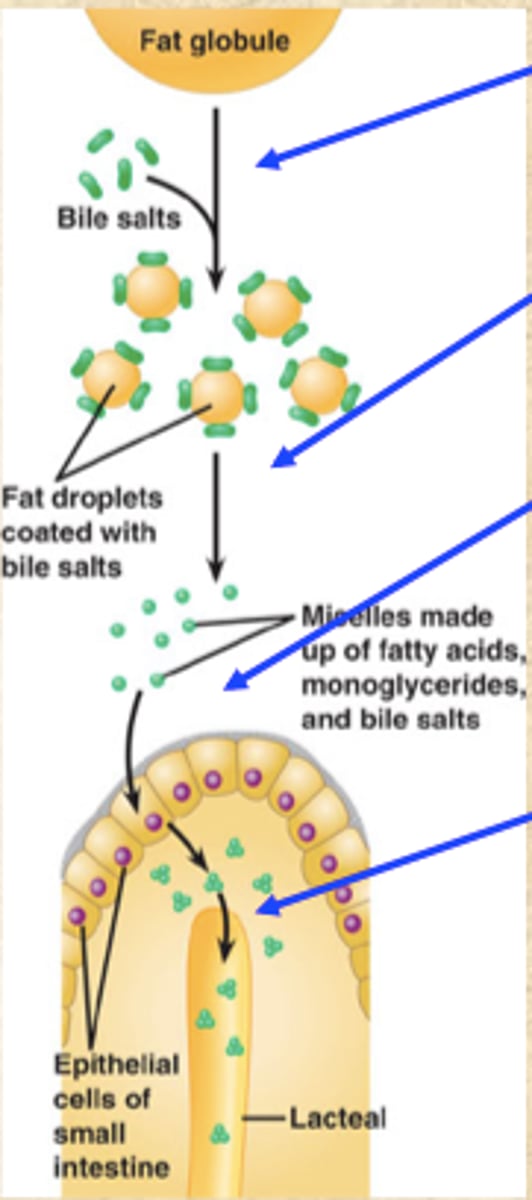
What is micelle and how is it formed?
It is a spherical lipid cluster formed in the small intestine when most of the products of fat digestion are surrounded by bile salts.
What does micelle facilitate?
The absorption of fats. All of the fat's components are not water soluble, so the micelle encases them so they can traverse the aqueous part of the GI tract.
Composition of a micelle
Long-chain fatty acids, monoglycerides, cholesterol, phospholipid fragments, fat-soluble vitamins, and bile salts
What kinds of vitamins do micelles absorb and what are they?
Fat-soluble vitamins + A, D, E, & K
What is one ramification of a diet too low in fats?
Hindering the absorption of fat-soluble vitamins, which we need fats to absorb
What is the role of the bile salt with respect to the micelle?
Bile salts surround the micelle, which enable it to diffuse into the microvilli of the enterocytes. There, the inner components of the micelle are released and enter the absorptive cells
What are the products of fat digestion that are NOT incorporated into micelles and can enter the absorptive cells via simple diffusion? Why?
Glycerol and short-chain and medium-chain fatty acids BECAUSE they are water soluble.
All fats are hitch-hikers--they hitch a ride with micelles.
What is the fate of bile salts after fat digestion?
They return to the liver for reuse or become a component of feces
What is the fate of short-chain and medium-chain fatty acids with 2 to 12 carbons after being digested from fat?
They are water soluble so they don't need assistance leaving enterocytes, so they exit the capillary network of the villus and go to the liver via the HPV.
What is the fate of the micelle (minus the bile salts) and the glycerol?
They are reassembled into triglycerides and phospholipids
What are chylomicrons?
They are lipoproteins formed in the enterocytes to transport lipids away from the GI tract.
How are chylomicrons made?
They are made of cholesterol, reassembled TGs, and fat-soluble vitamins that are coated with a thin layer of protein, phospholipids, and cholesterol.
What is a lipoprotein?
A water-soluble structure that transports lipids through the bloodstream
What is significant about the size of chylomicrons?
They are big and therefore cannot enter the capillaries of the villi. Thus, they leave via lacteals that drain into larger lymph vessels that dump into the bloodstream.
What is the fate of the components of the chylomicrons?
The chylomicrons circulate in the blood and deliver TGs to the cells of the body
How do the TGs delivered by chylomicrons get into body cells?
Lipoprotein lipases located on the surface of cells lining the blood vessels break down the TGs, allowing the fatty acids and glycerol to enter cells when needed
What is the fate of the fatty acids and glycerol digested from TGs by lipoprotein lipases?
They are used for energy and/or reassembled into TGs
enterohepatic circulation
The process of soluble fiber binding to bile salts and cholesterol to become part of feces rather than being reabsorbed
gallstones
Hard particles of cholesterol (and other solids) that can accumulate in the gallbladder or block the bile duct
What is the most active site of lipid synthesis in the body?
The liver
What can fatty acids from the blood be used to make in the liver?
Triglycerides (TGs) and cholesterol
What other substances can the liver cells use to make fats?
Carbohydrates (CHOs), proteins, and/or alcohol
How are lipids transported out of the liver?
By very-low-density lipoproteins (VLDL)
very-low-density lipoproteins (VLDLs)
A lipoprotein made by the liver that carries lipids from the liver and delivers TGs to the cells of the body via the bloodstream
What percent of the VLDL's volume to TGs make up?
About 55-65%
What effect does the removal of TGs by body cells have on the size and composition of the VLDLs?
They become smaller, denser particles. They shift in the proportion of lipids to proteins.
What is the fate of the VLDLs after the removal of most of the TGs?
More than half return to the liver. The rest in the blood are transformed into low-density lipoproteins, which are cholesterol-rich.
low-density lipoproteins
A lipoprotein that transports cholesterol to cells of the body.
What is an important role of LDLs?
They deliver cholesterol to cells
What is the process of cholesterol delivery to cells via LDLs?
The LDL binds to an LDL receptor on the cell membrane, which allows the LDL to enter the cell, removing it from ci
What is the health risk of certain types of circulating LDLs?
People with high blood levels of smaller/denser LDLs are more likely to develop atherosclerosis than people with low levels of these LDLs
What has been implicated in increasing blood LDL levels?
High intakes of saturated and trans fats
high-density lipoproteins (HDLs)
A lipoprotein that picks up unneeded cholesterol from cells and transports it to the liver for recycling
What is significant about the role of HDLs?
They decrease cholesterol levels in the blood
What is the fate of cholesterol collected in the liver?
Some is dismantled and some is transported to organs with high requirements for cholesterol
What is one thing that increases HDL levels?
Exercise
What are the functions of lipids in food?
They provide texture, flavor, and aroma, which stimulates the appetite. They also provide satiety and impart tenderness to certain foods.
What are the functions of lipids in the body?
* Concentrated source of energy at 9 Cal/1g fat
* Body's chief storage form of energy
* Provide padding around vital internal organs (adipose)
* Insulate the body against extreme temperatures (adipose)
* Building materials for cell membranes and other compounds like hormones, bile salts, and vitamin D
* Provide essential fatty acids
* Aid in the absorption of fat-soluble vitamins and some phytochemicals
* Needed for healthy skin and hair
Arachidonic acid (AA)
An omega-6 PUFA made from linoleic acid
EPA and DHA
Omega-3 PUFAs that are made from alpha-linolenic acid and associated with heart health
Why are EPA and DHA associated with heart health?
They are essential fatty acids that decrease inflammation, lower blood pressure, and reduce blood clotting
What are symptoms of an essential fatty acid deficiency?
Dry, scaly skin, hair loss, abnormalities of the liver, poor wound healing, impaired vision and hearing, and major effects on the neurological and physiological growth of newborns, infants, and very young kids
Eicosanoids
Regulatory molecules with hormone-like functions that can be made from omega-6 or omega-3 fatty acids
Functions of eicosanoids
* Help to regulate the contraction/relaxation of muscles
* Help to regulate the dilation/constriction of blood vessels
* Help to regulate blood clot formation, blood pressure, and blood lipid levels
* Involved in the immune response (fever, inflammation, pain)
Why is it important for the diet to be adequate in omega-3 fatty acids?
It is important for heart health that we have omega-3 fatty acids because they make their brand of eicosanoids
How can you increase dietary intakes of EPA and DHA? And why should you?
Consume more fish, especially fatty fish, and other seafood. They are used to make heart healthy eicosanoids.
What is the most common type of heart disease?
Coronary artery disease (aka coronary heart disease)
Cause of CAD
Plaque buildup in the walls of the arteries that supply blood to the heart (coronary arteries) and other parts of the body.
Hypertension
A chronic condition characterized by abnormally high blood pressure that persists even when a person is relaxed. Atherosclerosis can contribute to the development of it.
What dietary factor can increase blood levels of total cholesterol and LDLs?
A diet high in fatty acids and trans fats
What dietary factor is associated with an increased risk of hypertension?
A diet high in sodium
What dietary components can contribute to an increased risk of cardiovascular disease?
A diet high in calories, added sugars, and alcohol
AMDR for fat
20-35% of total calories
Ratio range of linoleic acid to ALA
5:1 or 10:1--> for every 5 to 10 omega-6s, we should take in 1 omega-3
Dietary guidelines for lipid intakes
-saturated fat intakes--> less than 10% of total calories/day
-trans fat--> keep as low as possible
-cholesterol--> as little as possible while having a balanced, nutrient-dense diet
Metabolism of fat
The breakdown of TGs into fatty acids and glycerol molecules to produce energy
What is the fate of the fatty acids digested from TGs?
They are transported into the mitochondria and undergo beta oxidation
What is Hormone Sensitive Lipase?
An enzyme located in fat cells for the catabolism of fat cells. It ensures that availale glucose is used frist for energy by the cells in the body
beta oxidation (short-n'-sweet version)
A multi-step metabolic process by which fatty acids are broken down to produce energy. Each fatty acid is split into 2 carbon units that form acetyl-CoA. High energy electrons are released
The fate of the acetyl-CoA produces in beta oxidation IF oxygen and enough CHO are available
It enters the citric acid cycle, where carbon dioxide and more high energy electrons are released
 Note
Note  Flashcards (34)