ancient egypt pictures to know
 Studied by 0 people
 Call Kai
 Learn
Learn Practice Test
 Spaced Repetition
 Match
Match Flashcards
 Knowt Play
1/26

There's no tags or description
Looks like no tags are added yet.
Name | Mastery | Learn | Test | Matching | Spaced | Call with Kai |
|---|
No analytics yet
Send a link to your students to track their progress
27 Terms
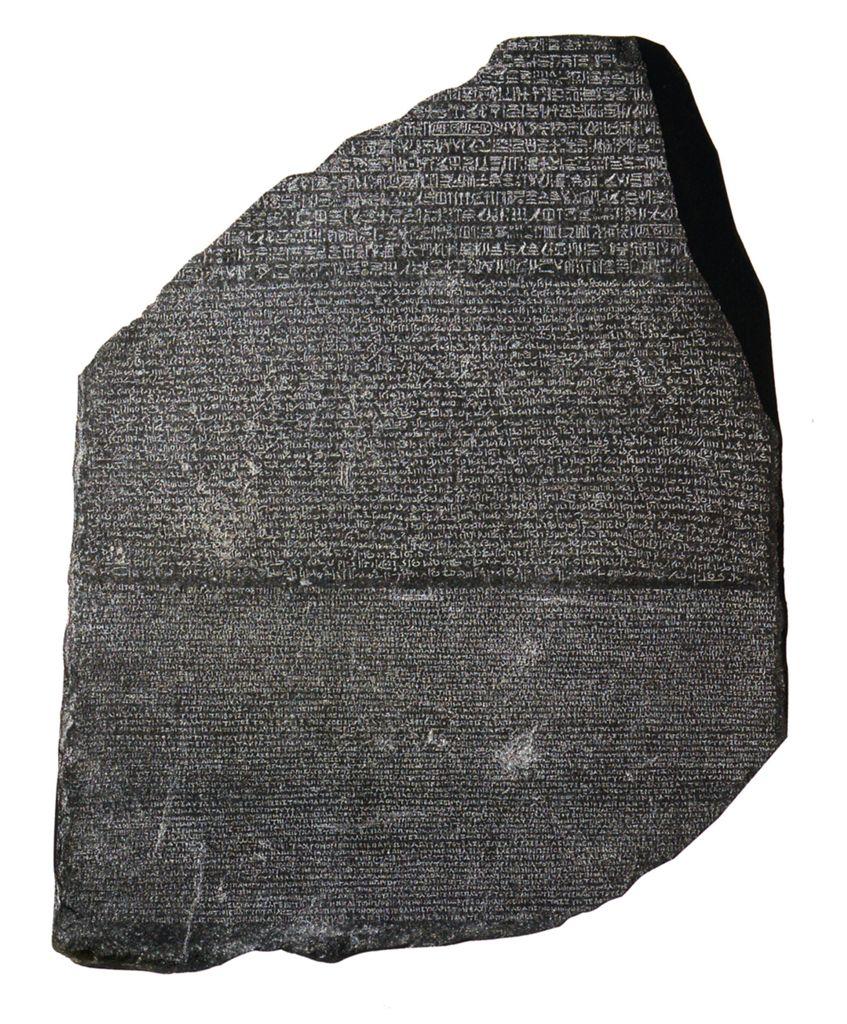
allowed for translation of heirglyphics
Rosetta Stone
196 BCE
Greco-Roman Period

made out of terracotta
found in a tomb at ma’mariya
Naqada Female Figure
3400 BCE
Pre-Dynastic Period
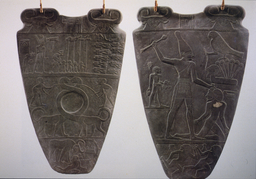
palette was used to grind minerals for eye makeup for soldiers
showed Narmer’s name contained in a Serekh
found in Hierakonpolis showing the first Pharaoh (Narmer)
Palette of Narmer
3,000 BCE
Early Dynastic Period
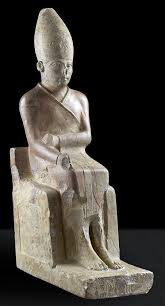
he’s shown wearing the crown of upper Egypt
Statue comes from the Temple of Horus at Hierakonpolis
Khasekhemwy in Heb-Sed Robe
2750 BCE
Early Dynastic Period
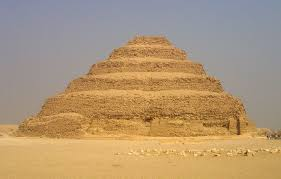
Was built by Imhotep (Djoser’s architect), the first to build in stone
The first pyramid in Egyption history; marks the beginning of the Old Kingdom
Step Pyramid & Enclosure of Djoser at Saqqara
2700 BCE
Old Kingdom
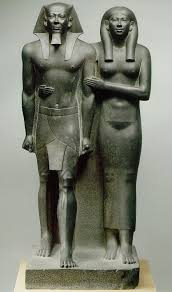
Showed Menkare and his only named wife
From the Valley Temple at Giza
Pharaoh Menkaure and Khamerernebty
2500 BCE
Old Kingdom
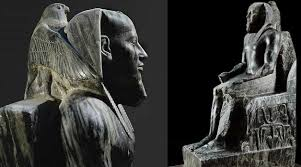
the hawk behind his head represents Horus
Pharaoh Chafre
2500 BCE
Old Kingdom
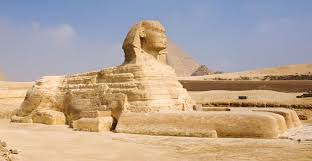
implies royal power and protection
at the entrence of Chafre’s pyramid
made from limestone that was already in Giza
Great Sphinx of Giza
2500 BCE
Old Kingdom
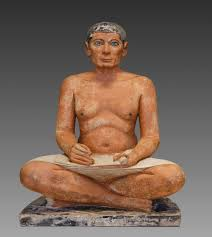
has blood shot eye’s because he’s a tired worker
made of limestone and found in Saqqara
Seated Scribe (named Kay)
2500 BCE
Old Kingdom
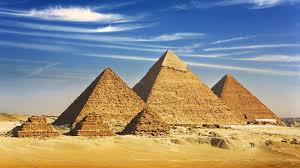
constructed to honor the pharaohs and serve as their tombs after death
built on an elevated area called the Giza Plateau
Great Pyramids at Giza
The 3 Pyramids of Khufu, Chafre, and Menkare
2500 BCE
Old Kingdom
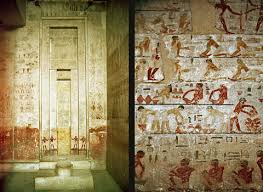
shows Ti hunting hippos, hippos stand for everything to do with chaos
Tomb of Ti at Saqqara
2500 BCE
Old Kingdom
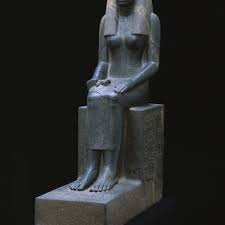
possibly holding lotus flower in hand
found in valley of the kings in Thebes
Lady Sennuwy
1950 BCE
Middle Kingdom
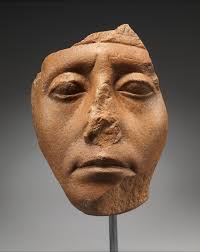
softer expression, signs of aging, more naturalistic art style
Face of Pharaoh Senwosret
1850 BCE
Middle Kingdom
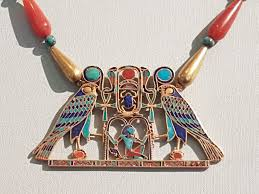
was found in this princess’s shaft tomb
shows the akht symbol and the scarab bettle
worn from necklace made from gold, carnealian, and lapiz luzuli
Pectoral of Princess Sit-hathor-yunet
1900 BCE
Middle Kingdom
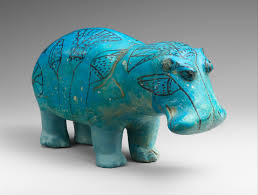
made of faience which makes it blue
is a hippo representing isfet/chaos
has a different colored leg because of modern restoration
Faience Hippo - William
1850 BCE
Middle Kingdom
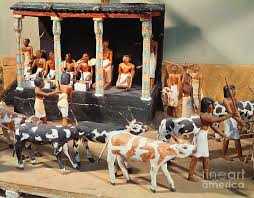
From tomb of Meketre
shows a courtyard where the inspection of cattle took place
Cattle Census: model from Meketre’s Tomb
1950 BCE
Middle Kingdom
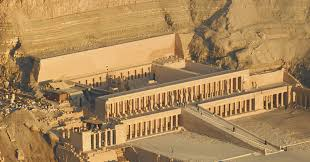
Temple of one of the few female Pharaohs, she represented herself pictorially as male. She represent peace and prosperity
Temple of Hatshepsut at Deir El Bahari
1450 BCE
New Kingdom
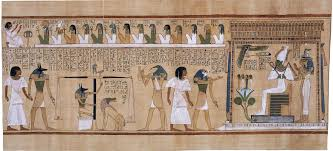
Shows Hu-Nefer in the judgement area getting his heart weighed against the feather of maat
psychostasis scene meaning judging the soul.
painted onto a papyrus scroll
Book of the Dead of Hu-Nefer (psychostasis scene)
1300 BCE
New Kingdom
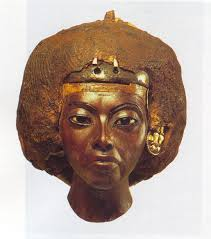
shows a stern and angry expression with wrinkles, she is the wife of Amenhotep III and mother of Akhenaten
Head of Queen Tiye
1350 BCE
New Kingdom
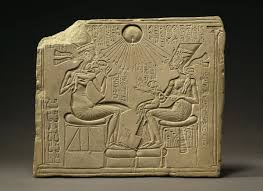
symbolizes the families connection to the Aten
came from a house shrine
Amarna Stele (Akhenaten & Nefertiti & family)
1350 BCE
New Kingdom; Amarna Period
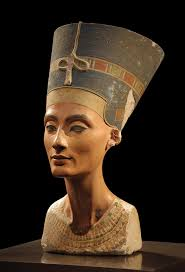
made by architect Senmut
unknown if her missing eye is on purpose or not
made of painted limestone from Tel El-Amarna
Bust of Nefertiti
New Kingdom; Amarna Period
1350 BCE
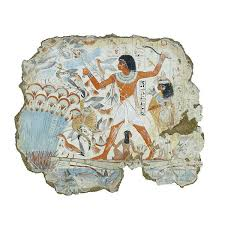
From his tomb in western Thebes found in the chapel part of it
Shows him and his cat hunting birds in the Marshes
Only shows half of the scene, the other half is missing
Nebamum Hunting in the Marshes
1300 BCE
New Kingdom
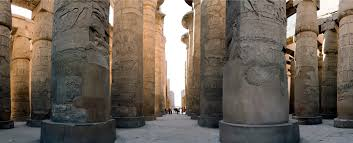
likely used for festivals and as a ceremonial entrance, the hall connects the main temple to the other parts of the complex.
the huge walls and columns are covered in hieroglyphs and relied carvings depicting many things, making it one of Egypts most impressive architectural works.
Hypostyle Hall in the Temple of Amun at Karnak
1250 BCE
New Kingdom

The largest temple in Egypt
All the sculpted and decorated parts were removed and cut away from the mountain they were on and were transported to higher ground and reassembled.
Abu Simbel Temple
1250 BCE
New Kingdom
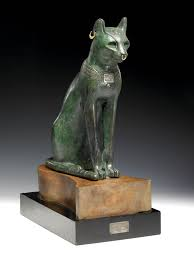
Has scarab beetle on his head and chest symbolizing rebirth
Only a Pharaoh/someone very wealth could afford to have this
made of bronze with gold ordaments
The Gayer-Anderson Cat
Late period
600 BCE
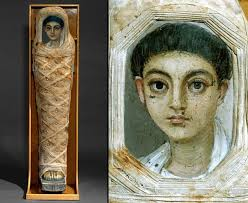
paintings on wood representing the mummy and then placed over the mummy.
a type of Roman period mummy that features a lifelike portrait.
the youths body appears to have been in an advanced state of decomposition.
Mummy of a youth from Hawara
100 BCE
Greco-Roman Period
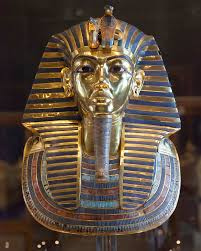
gold funerary mask made with 22 pounds of cold and has inlays of lapis lazuli and carnelian.
From the tomb of tutankhamun, in the Valley of the Kings at Thebes.
A ceremonial mask placed over the face of the mummified Pharaoh.
Designed to protect the pharaoh and help his soul transition to the afterlife.
Mask of Tuntakhamen
1330 BCE
New Kingdom
 Note
Note  Flashcards (31)