agec5001 sustainable development
 Studied by 0 people
 Call Kai
 Learn
Learn Practice Test
 Spaced Repetition
 Match
Match Flashcards
 Knowt Play
1/28

There's no tags or description
Looks like no tags are added yet.
Name | Mastery | Learn | Test | Matching | Spaced | Call with Kai |
|---|
No study sessions yet.
29 Terms
Earth Summit 1992
Rio de Janeiro, June 1992
1878 represented countries
a UN conference on environmental development (focused on sustainable dev!)
sustainable dev
a type of dev that meets the need of the present population without compromising the ability of future generations to meet their own needs
key components of sustainable dev:
intergenerational equity
meeting current needs
preserving future capacity
balancing between dev & conservation
strengths of the definition of “sustainable dev”
broad appeal
flexible framework
unifying concept
adaptable to contexts
weaknesses of the definition of “sustainable dev”
lack of precision
difficult of operationalize
can mean different things
hard to measure
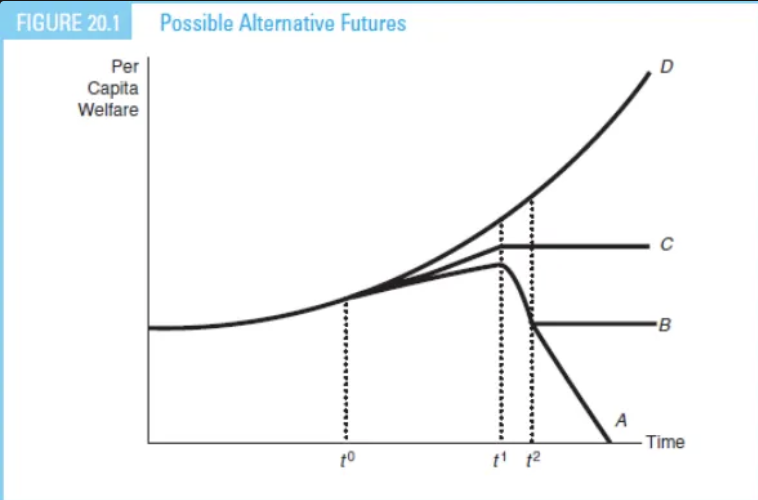
4 potential scenarios of human welfare:
A. decline to zero welfare
B. initial growth, then decline to a steady state
C. growth to a steady state (sustainable)
D. continued to exponential growth
3 key dimensions of sustainability
the existence of positive sustainable welfare levels
the magnitude of sustainable welfare vs. current levels
sensitivity to current actions
market imperfections that threaten sustainability
open-access resources
intertemporal externalities
market power (ex: climate change)
efficiency vs. sustainability — key finding
restoring efficiency is neither necessary nor sufficient for sustainability
3 scenarios for efficiency vs. sustainability
inefficient but sustainable
already sustainable w/out efficiency
ex: traditional fishing villages using low-impact methods
inefficient and unsustainable
quotas makes the market more efficient → efficiency achieves sustainability
ex: an overfished, open-access fishery
inefficient and unsustainable
efficiency can maximize profits, however it’s not sustainable long-term
ex: oil fracking
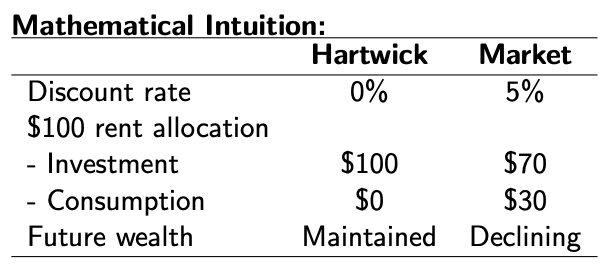
the Hartwick rule (1977)
sustainable constant consumption requires investing ALL scarcity rent from depletable resources in capital
implications of the Hartwick rule
zero net savings from resource depletion
build capital to offset resource decline
markets with positive discount rates violate this rule
additional policies needed beyond efficiency
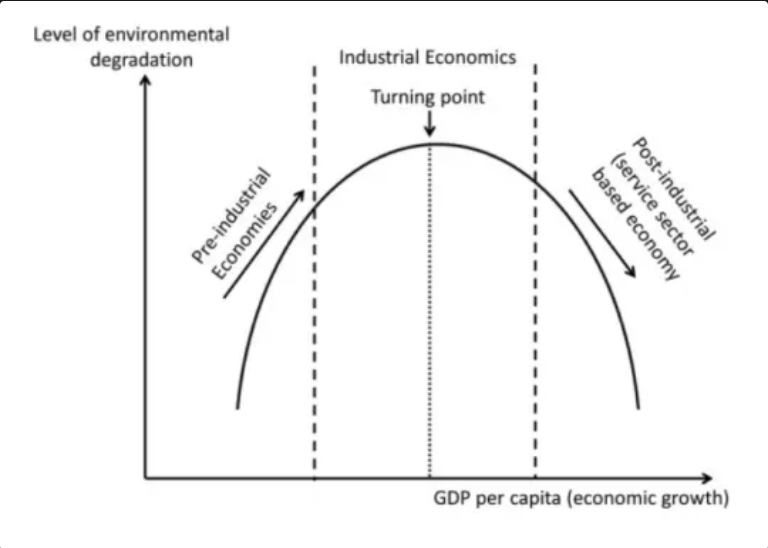
the environmental Kuznets curve (EKC)
initial phase: growth increases pollution
later phase: growth reduces pollution
**mixed results: only applies to some pollutions
potential problems to trade & envi
pollution havens
a “race to the bottom”
exploitation for weak regulations
pressure on resources
potential benefits to trade & envi
tech transfer
economic growth → envi protection
efficiency gains
the North American Free Trade Agreement (NAFTA)
took effect in 1994
lowered tariff barriers & promoted the free flow of goods & capital
integrated the US, CA & MX into a single, giant market
findings & surprises of the NAFTA
findings:
no pollution haven effect
industry shifts away from pollution-intensive sectors
scale effect dominated (doubled emissions)
surprises:
envi spending fell 45%
income reached the EKC turning point
no policy response materialized
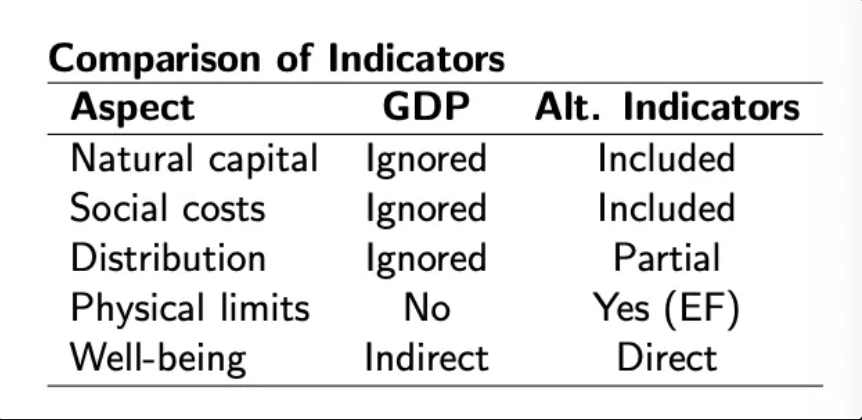
problems with GDP as a measure of welfare
includes depreciation (use net domestic product instead)
affected by inflation (uses real values)
ignores distribution
treats natural capital depletion as income
Hicksian income
the max value one can consume during a period of time, and still be as well off at the end compared to the beginning
alternative indicators to using GPD to measure human welfare
physical & adjusted economic measures (ecological footprint & GPI) and human dev focus (HDI)
GDP alternative, physical & adjusted economic measures: ecological footprint
definition: a physical measure of how much of the Earth’s resources we use, expressed in “global acres” (ie. shows how many Earths we would need if everyone lived in a given country); highlights physical limits to growth
6 tracked components: carbon footprint, cropland, grazing land, forest land, fishing grounds, built-up land
global status: humanity currently uses resources at a rate of 1.7 Earths = we’re overshooting
GDP alternative, physical & adjusted economic measures: genuine progress indicators (GPIs)
definition: an adjusted economic indicator that measures personal consumption, while adding benefits & subtracting costs that GDP ignores; measures real welfare and not just economic activity
adds: value of unpaid work, benefits from public infrastructure
subtracts: envi degradation costs, costs of crime & inequality
key takeaway: since the 1970s, GDP growth has not translated to genuine well-being progress for humanity as a whole
GDP alternative, human dev focus: human dev index (HDI)
definition: a composite index measuring average achievement in 3 basic dimensions of human dev (life expectancy at birth, education & GNI per capita) on a scale of 0-1
top: Norway (0.954) → high health, education, & income
bottom: Niger (0.377) → low health, education, & income
limitations: HDI doesn’t capture inequality within a country, envi sustainability & political freedom
key insight: HDI moves beyond GDP to measure capabilities & opportunities, but not wealth
Bhutan’s approach to gross national happiness
9 dimensions: psychological well-being, time use, community vitality, culture, health, education, envi diversity, living standards & governance
findings: 49% of men were happy vs. 33% of women
results: education & time are key barriers to happiness
Kahneman & Deaton (2010) case study
2 types of well-being:
emotional well-being
definition: day-to-day happiness (how often you experience positive & avoid negative emotions)
findings: plateaus at an annual income of $75000
reasoning: once basic needs are met, extra money won’t significantly improve daily moods
life evaluation
definition: overall satisfaction with your life
findings: continues to rise with income, even beyond $75000
reasoning: high income provides status, comfort, opportunities & a sense of achievement
the Hartwick rule when converting resource wealth to sustainable capital
key idea: if a country extracts non-renewable resources, it should invest the profit (ie. scarcity rent) into long-lasting productive assets (factories, education, tech)
in practice:
year 1: $1M profit from oil fracking, invest all $1M into factories & education
year 2: less oil left, however factories are now producing income (total wealth unchange)
year 3: maintain the same level of consumption even after oil runs out
scarcity rent
the additional profit earned from controlling a scarce & finite resource (ex: oil from oil fracking)
the discount rate problem
discount rate: how much we value money today vs. the future
markets use a positive discount rate (5%), meaning that $1 today is work more than $1 next year
leads to people consuming more money today instead of investing it for the future
how the discount rate problem violates Hartwick’s rule
Hartwick’s rule assumes r = 0% (future generations’ welfare = present), while markets use r = 5% (future generations’ welfare < present)
→ results in markets under-investing resource rents
ex: Norway (a success, only spends returns & preserves wealth) vs. Nigeria (a failure, consumes revenue & invests very little)
 Note
Note  Flashcards (20)