8 and 9- Spay Neuter 1 & 2
 Call Kai
 Learn
Learn Practice Test
 Spaced Repetition
 Match
Match Flashcards
 Knowt Play
1/61

There's no tags or description
Looks like no tags are added yet.
Name | Mastery | Learn | Test | Matching | Spaced | Call with Kai |
|---|
No analytics yet
Send a link to your students to track their progress
62 Terms
ovariohysterectomy (OHE)
___ describes the surgical removal of the ovaries and uterus
ovariectomy (OVE)
___ describes surgical removal of the ovaries
orchiectomy
___ describes surgical removal of the testicles
castration
____ describes surgical removal of male or female sex organs (interchangeable for orchiectomy)
hysteotomy
___ describes surgical incision into the uterus
gonadectomy
___ describes excision of ovary or testis
limit reproduction
primary goal of reproductive and genital surgery
not normally necessary
when it comes to antibiotic considerations during OHE/castration
abx. efficacious against E. coli
what kind of antibiotics are typically used in pyometra sx.
blood-prostate barrier penetration
when performing a sx. on the prostate we should consider the need for _____
remove ovaries with or without uterine horns and body or testes with secure ligature placement
though there are a variety of techniques for neutering dogs and cats, the goals are still the same...
ovariohysterectomy (OHE)
what is the the traditional method of surgical sterilization of female dogs in the United States and technically a longer and more complicated procedure
ovariectomy (OVE)
what is the traditional method of surgical sterilization of female dogs in European countries and is typically a quicker procedure with a smaller incision
OHE technique
what is shown here
7 weeks
early gonadectomy is safe in dogs and cats over _____ old and is done to reduce reproduction in shelter animals
1. increased obesity
2. amount of daily food consumption
3. activity level
4. lower urinary tract disease
5. long bone fractures
6. arthritis
7. immune suppression
8. small urethra
early age gonadectomy (>7wks old) is not associated with....
1. does NOT decrease urethral diameter
2. does NOT increase incidence of lower urinary tract disease and obstruction
in terms of early age gonadectomy in male cats, it does not cause...
95%
reduced incidence of mammary neoplasia by ____ if early age gonadectomy is done before first heat
25%
reduced incidence of mammary neoplasia by ____ if early age gonadectomy is done after 3rd heat
increased bone length
early age gonadectomy can cause delayed physeal closure by 8-9 wks resulting in...
lower morbidity; quicker anesthetic recovery
early age gonadectomy is associated with _____ and _____
1. overhand hemostat technique
2. figure of eight hemostat technique
3. encircling or transfixation ligature
what surgical techniques are used in feline castration
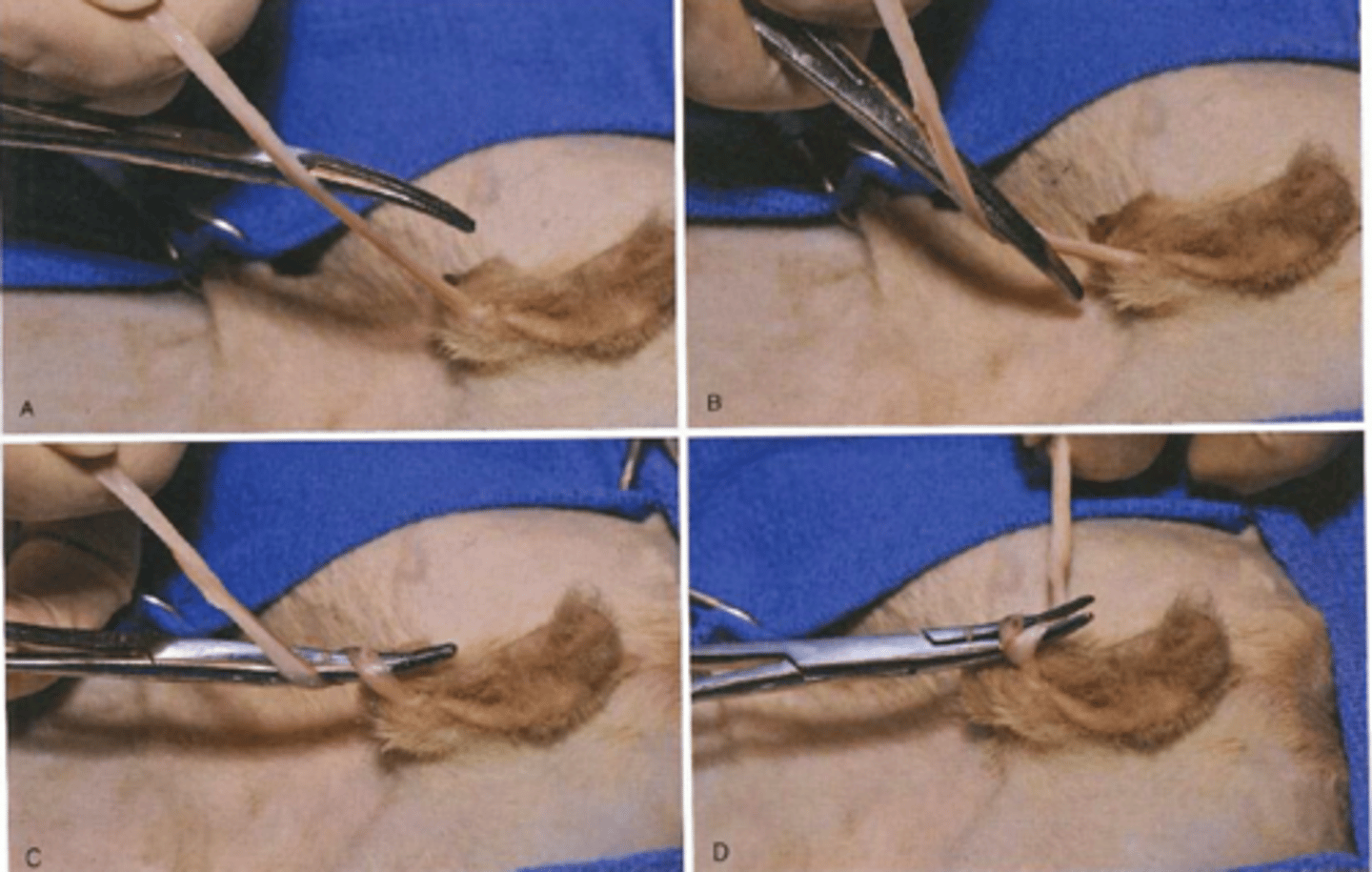
overhand hemostat technique
what feline castration technique is shown here that we use at LMU
1. male fertility and decreased male aggressiveness
2. roaming
3. undesirable urination behavior
indications for canine castration to reduce overpopulation by inhibiting...
1. prostatic diseases
2. perianal adenomas
3. perineal hernias
canine castration can help prevent androgen related diseases such as...
there are many (congenital abnormalities, testicular/epididymal abnormalities, scrotal neoplasia, trauma or abscess, inguinal-scrotal herniorrhaphy, scrotal urethrostomy, epilepsy control, control of endocrine abnormalities, testicular infection, testicular torsion, testicular trauma, perianal adenomas, prostatic cysts, prostatitis, benign prostatic hyperplasia (BPH), prostatic abscesses, sex-hormone associated alopecia)
when it comes to indications for canine castration indication...
29%
testicular tumors occur in ____ of intact males
1. 50% in 3 weeks
2. 2-3 months
in dogs with uncomplicated benign prostatic hyperplasia (BPH) canine castration will decrease prostate size by ______ and clinical signs will resolve in ____
95%
canine castration will lead to resolution of ____ perianal adenomas
1. prostatic carcinoma
2. hemangiosarcoma
3. osteosarcoma
4. transitional cell carcinoma
canine castration with have a higher risk for...
prescrotal
what canine castration approach is easiest and most common
perineal
what canine castration approach is used to avoid repositioning patient but can cause testicles to be more difficult to exteriorize
scrotal
what canine castration approach is sometimes used in prepubertal patients
abdominal
what canine castration approach is used when there is a retained testicle
left side
for right handed surgeons, castration of adult dog is easier when performed on the _____ of the dog
(stretched and stripped) <1 cm diameter
closed castration can be used in any size dog as long as spermatic cord is...
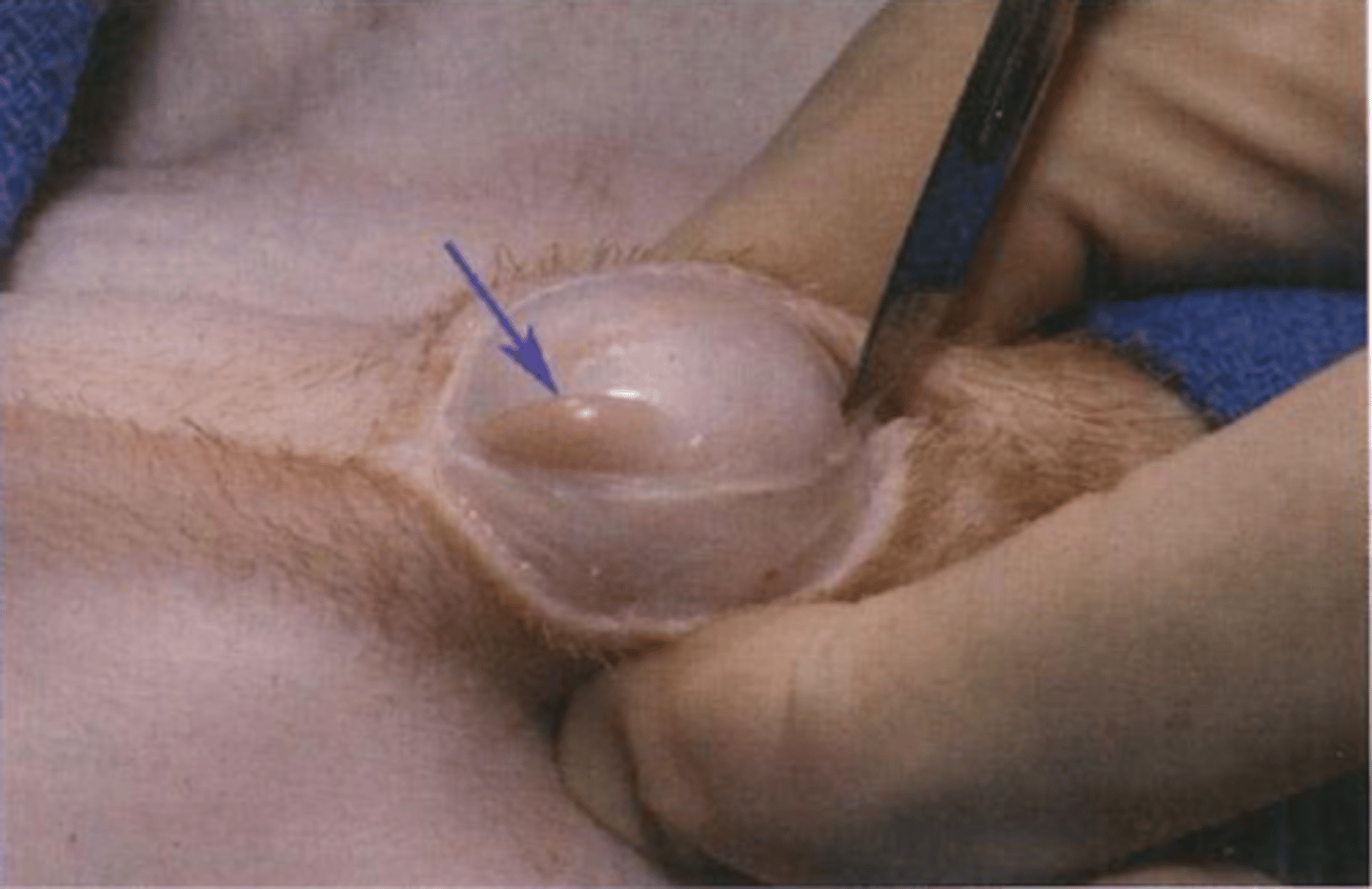
gubernaculum; ligament of the epididymis
the scrotal ligament is the embryonic remnant of ___ and was once referred to as ___
proximal
in a closed castration, a circumferential (encircling) lig. is placed ____ to the transfixation lig.
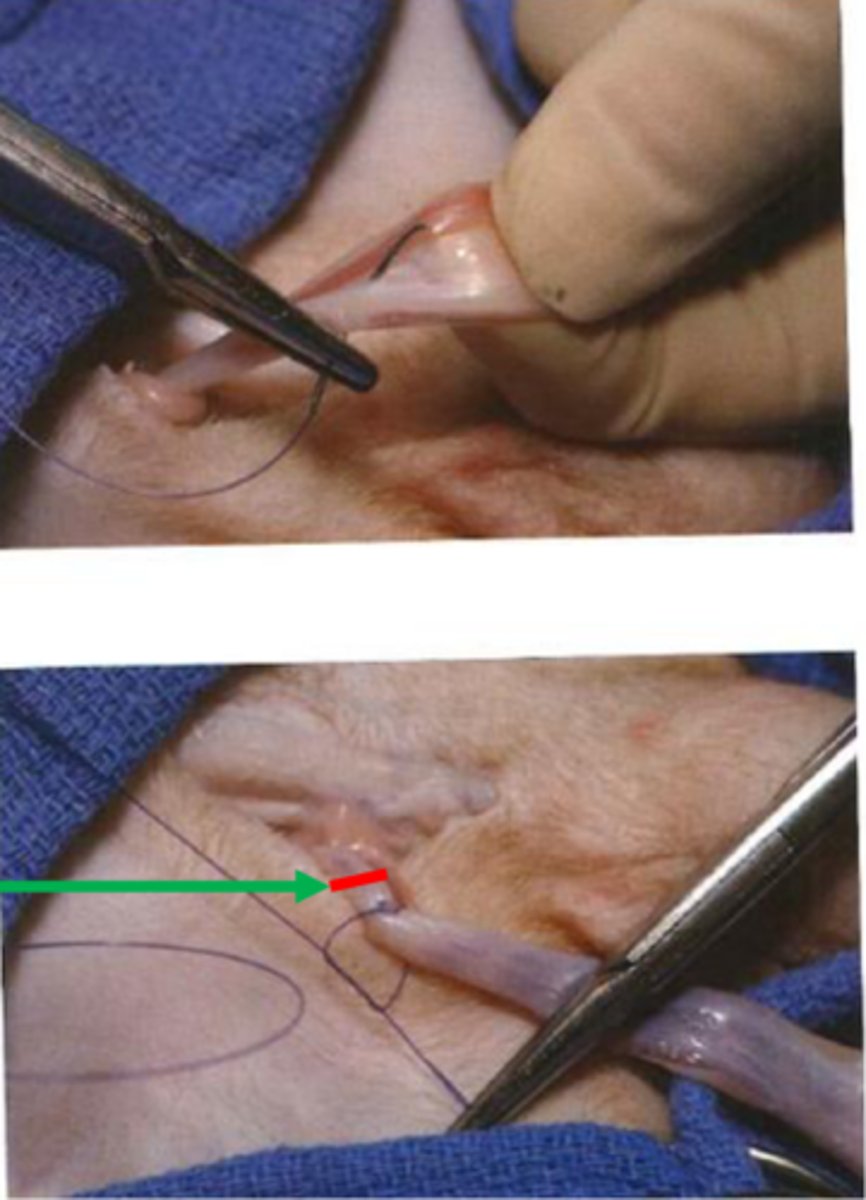
a three clamp technique for a closed castration
what is shown here
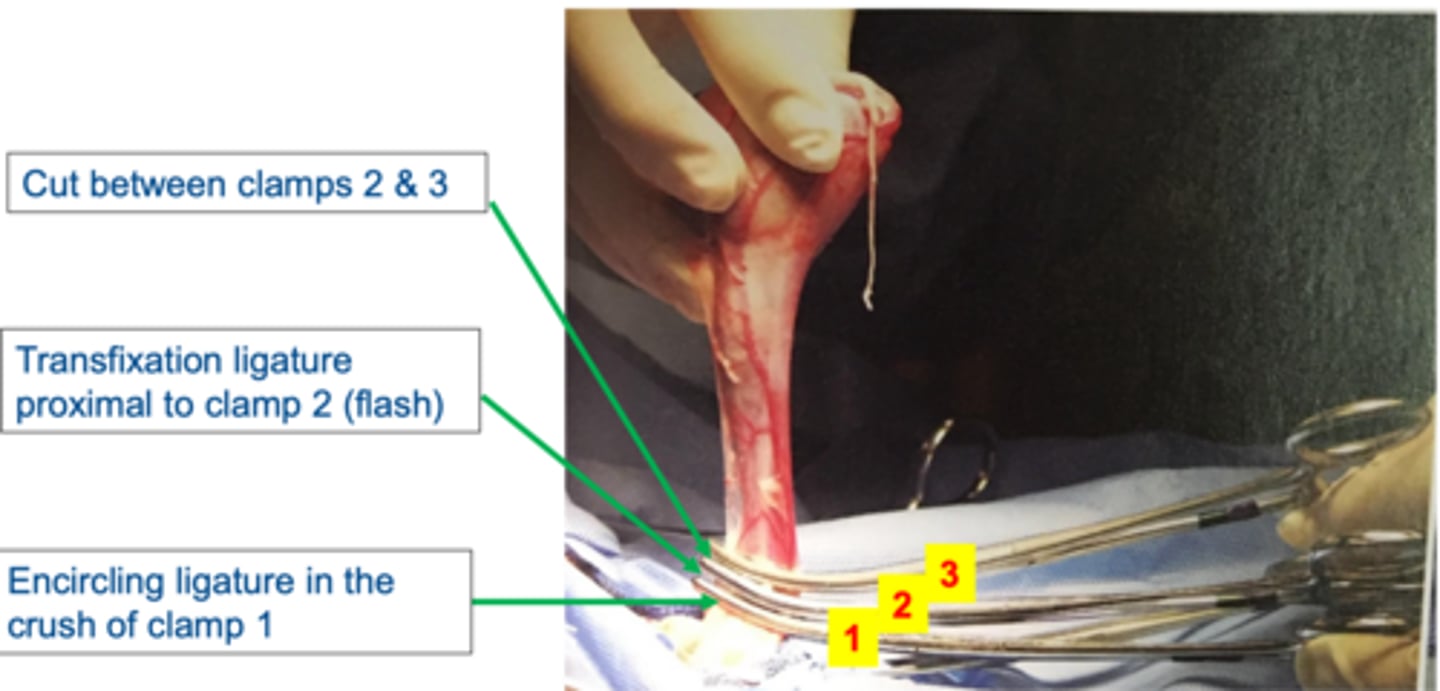
inspect cords for hemorrhage
when performing a closed castration, it is important to inspect what before replacing in patient
the urethra
when closing a castration you should avoid...
(stretched and stripped) >1cm diameter
open castration is used when spermatic cord...
open castration
what procedure is shown here
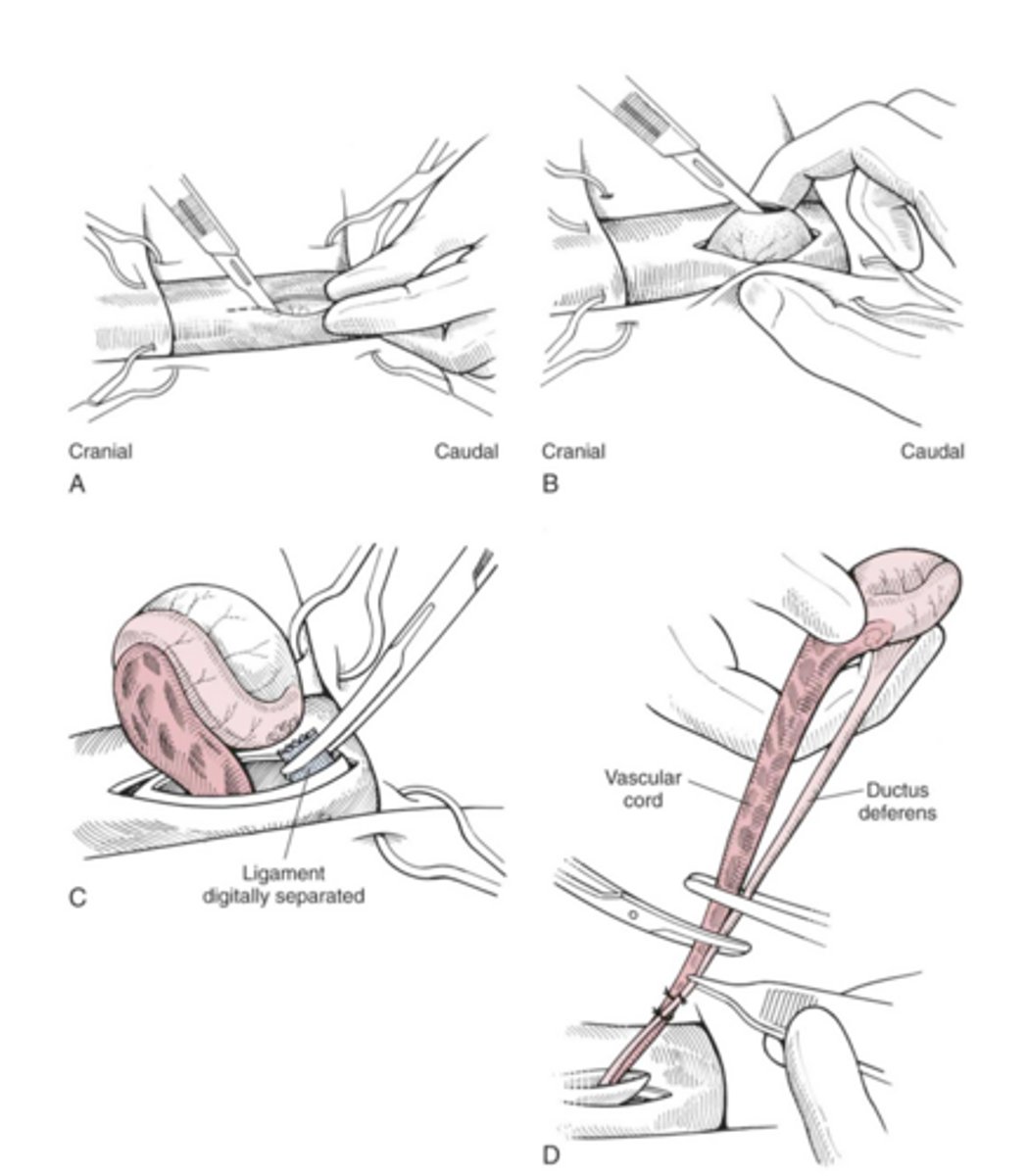
they are not clamped
when it comes to canine castration, large cords are easier to transfix if...
1. scrotal dermatitis
2. neoplasia
3. dogs with thin, pendulous scrotal sacs
4. dogs that live in kennels
5. enlarged testicle
6. severe scrotal dermatitis
when might scrotal ablation be performed
1. plan incision to leave ample skin
2. penis/urethra deep to excision
when considering technique for a scrotal ablation, what are two important things to keep in mind
ovariohysterectomy
traditional method of surgical sterilization of female dogs in the US defined as surgical removal of the ovaries and uterus
1. prevent estrus/unwanted offspring
2. prevent mammary tumors or congenital anomalies
3. prevention/tx. of pyometra, metritis, neoplasia, cysts
4. uterine trauma/torsion/prolapse
5. subinvolution of placental sites
6. vaginal prolapse or vaginal hyperplasia
7. control of endocrine abnormalities like diabetes or epilepsy
8. control for dermatoses like demodex
indications for ovariohysterectomy
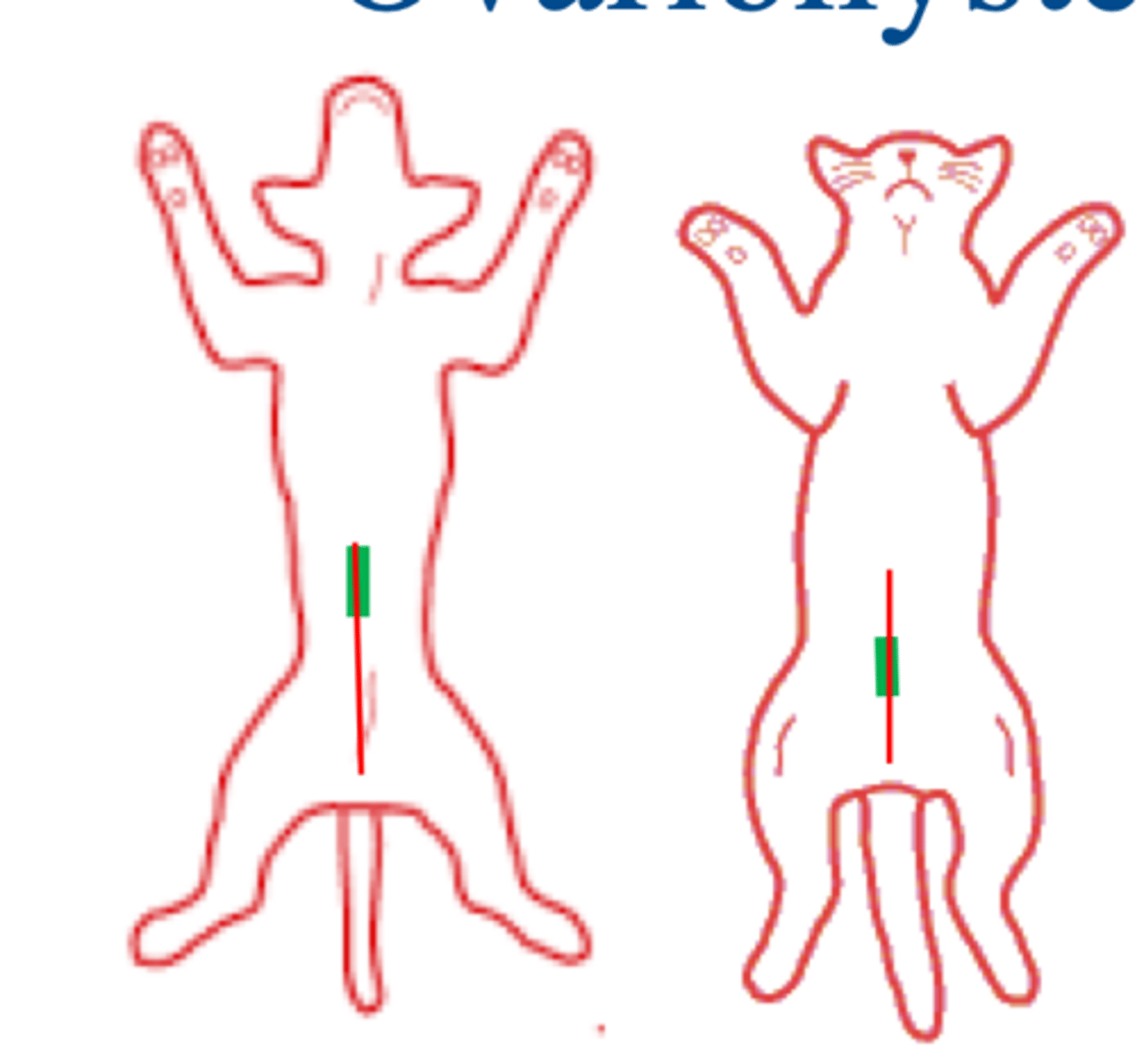
1. dogs: cranial 1/3
2. puppies/kittens: middle 1/3
3. cats: middle 1/3
where are the ovariohysterectomy incision points for dogs, puppies, and cats when drawing an imaginary line from the umbilicus to the pubis***
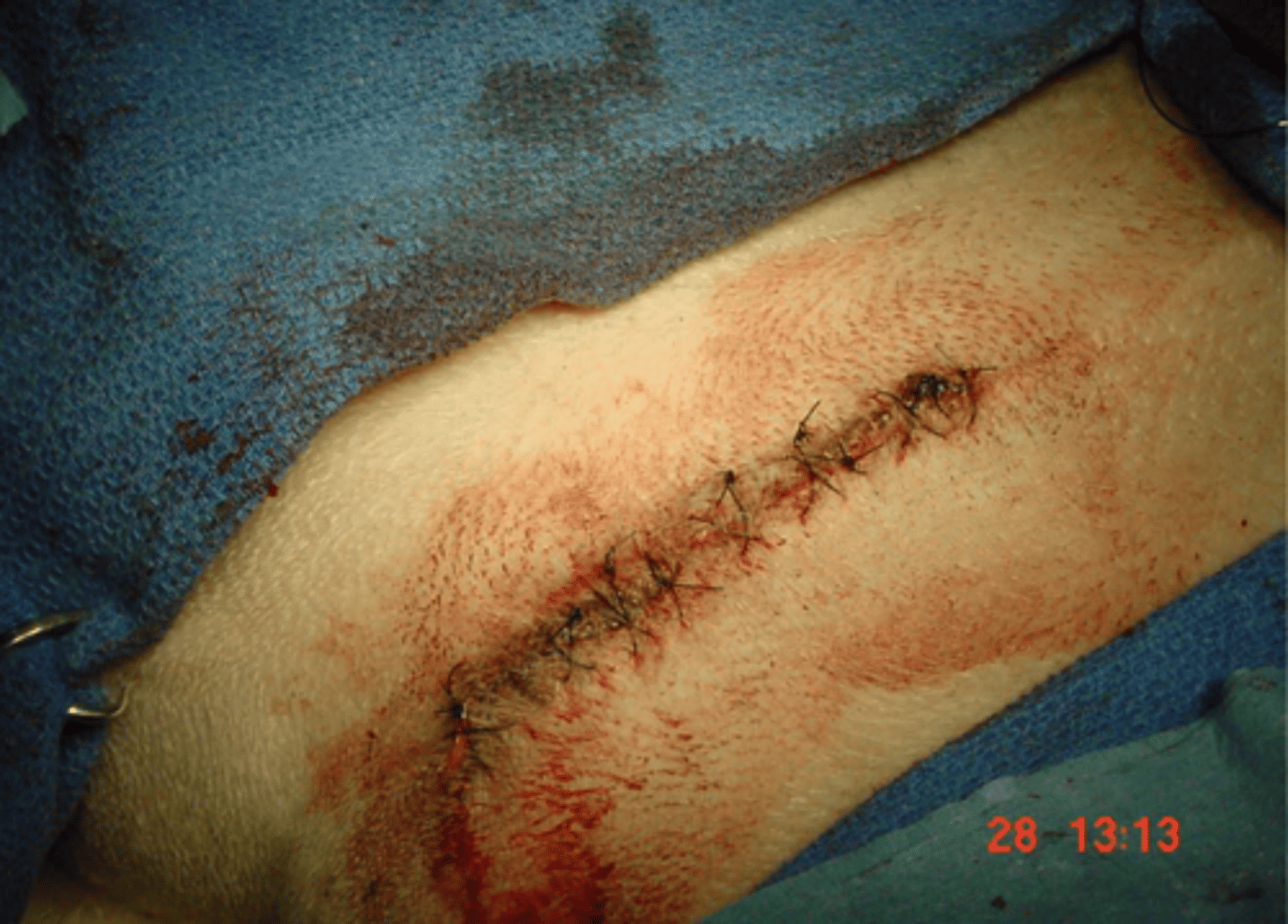
at the linea alba (midline)
where is the actual incision placed when performing an OHE
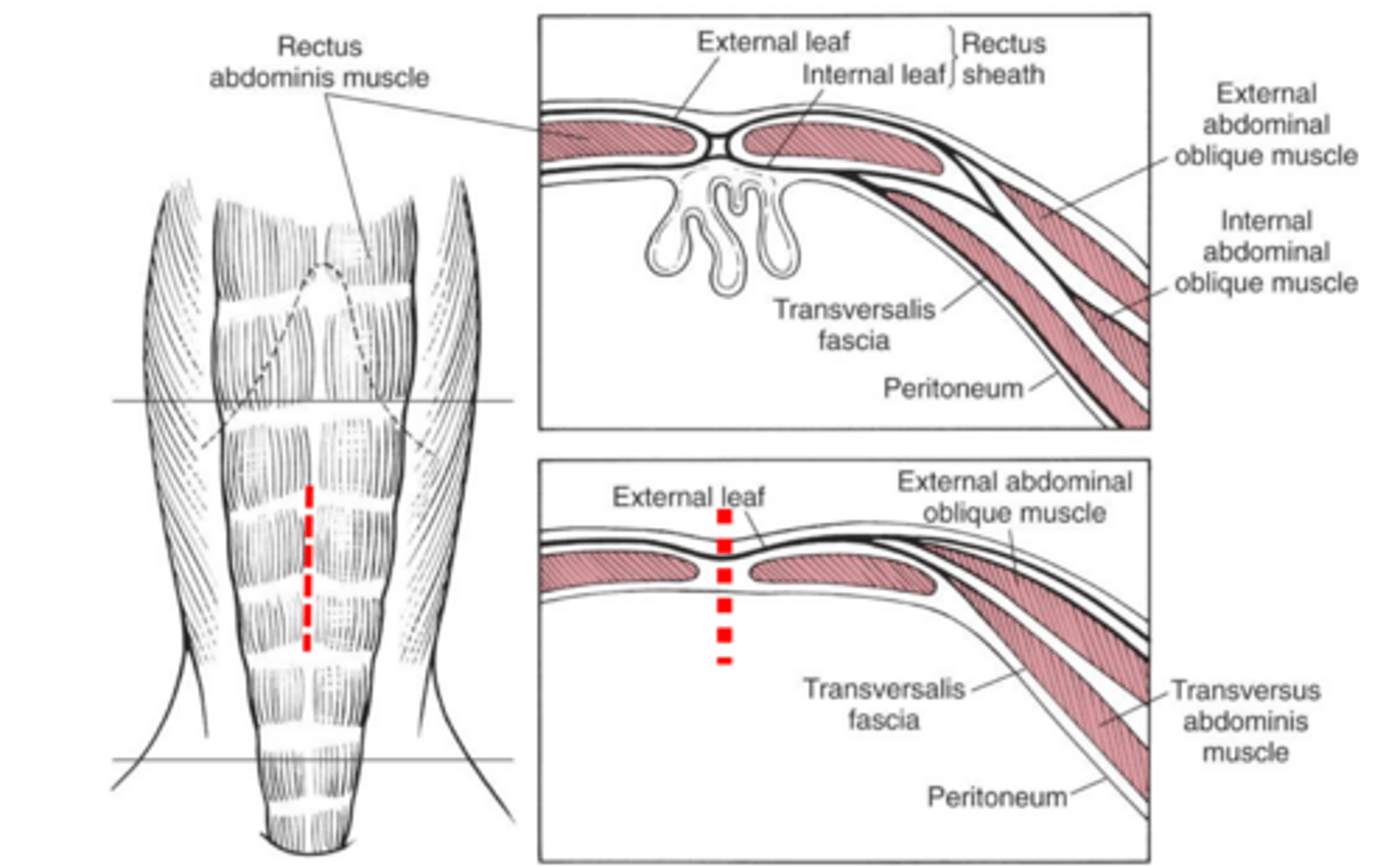
linea alba and external rectus sheath
what layers are you cutting through and closing (ideally) when performing a spay
right ovary
which ovary is considered to be "tighter" when trying to break the suspensory ligament
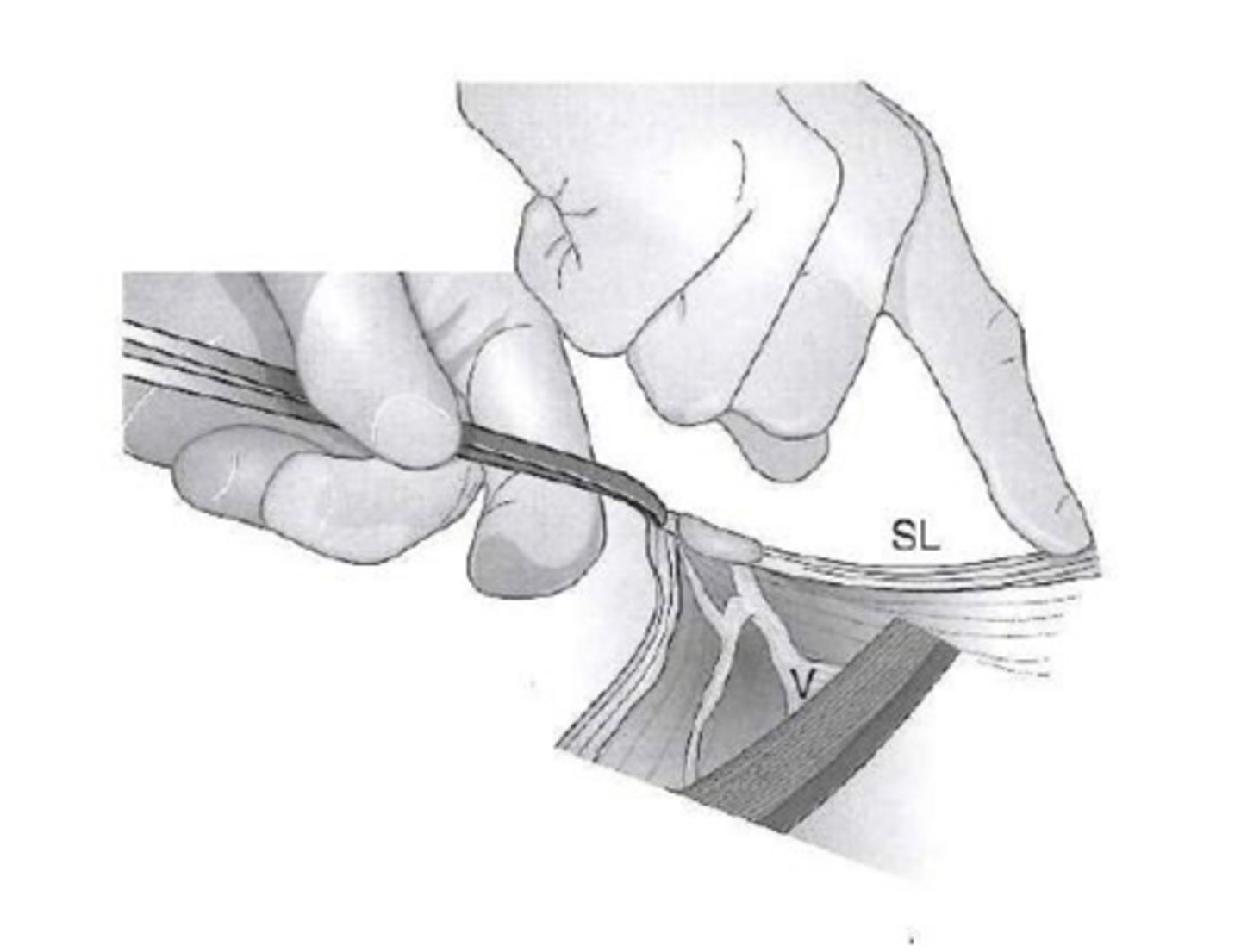
1. "this feels too tight"-hook snags and doesn't want to pull
2. "this feels too loose"-hook comes out of incision with omentum or loop of small intestines
3. "this feels just right"-if it feels right its there
what is Dr. Thompsons "Goldilocks Theory" of spay hook usage when determining if you are hooked around the right structure
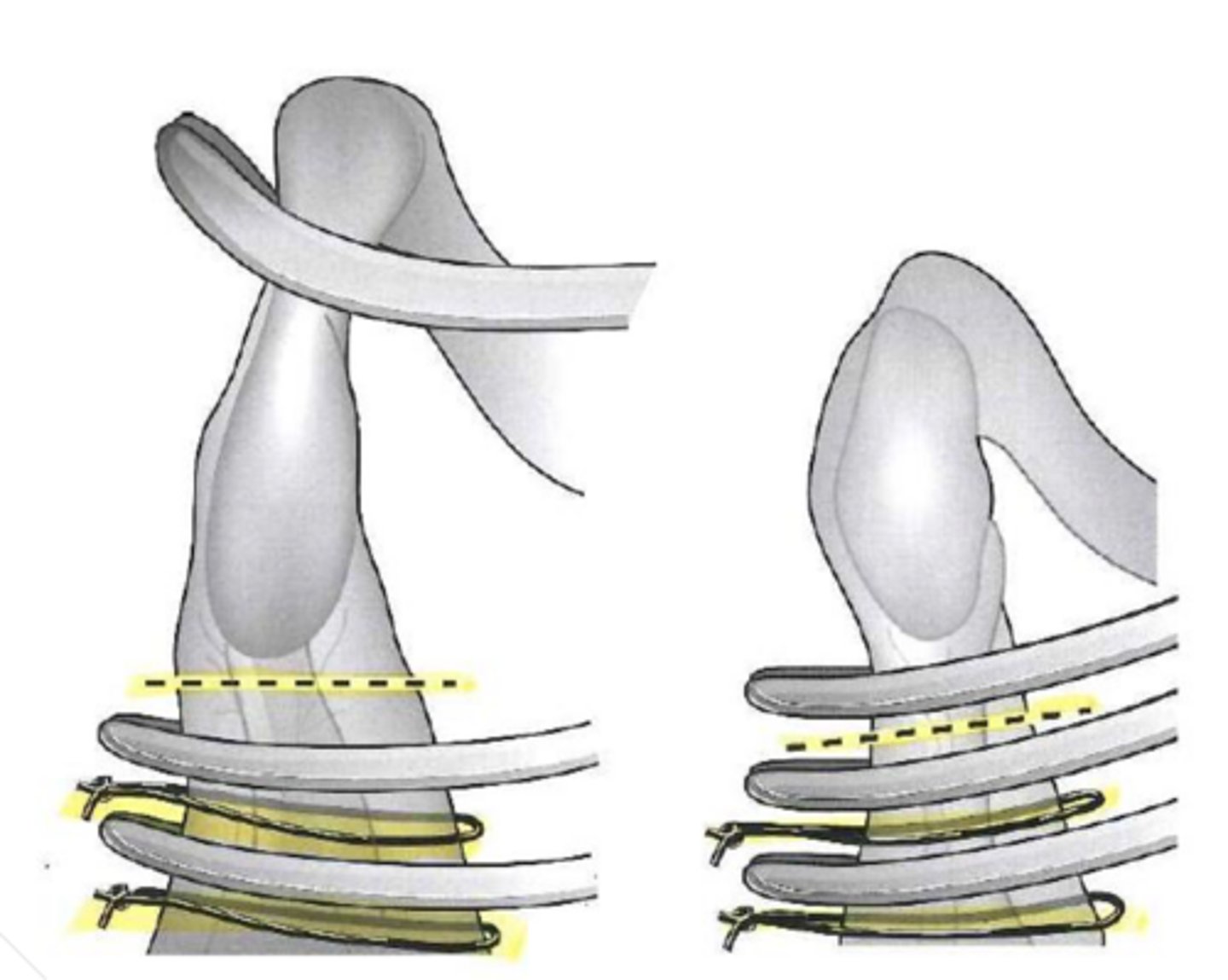
modified 3-clamp technique
what technique is shown on the left side and is indicated if there is not space to apply all three clamps so you leave one clamp on the proper ligament
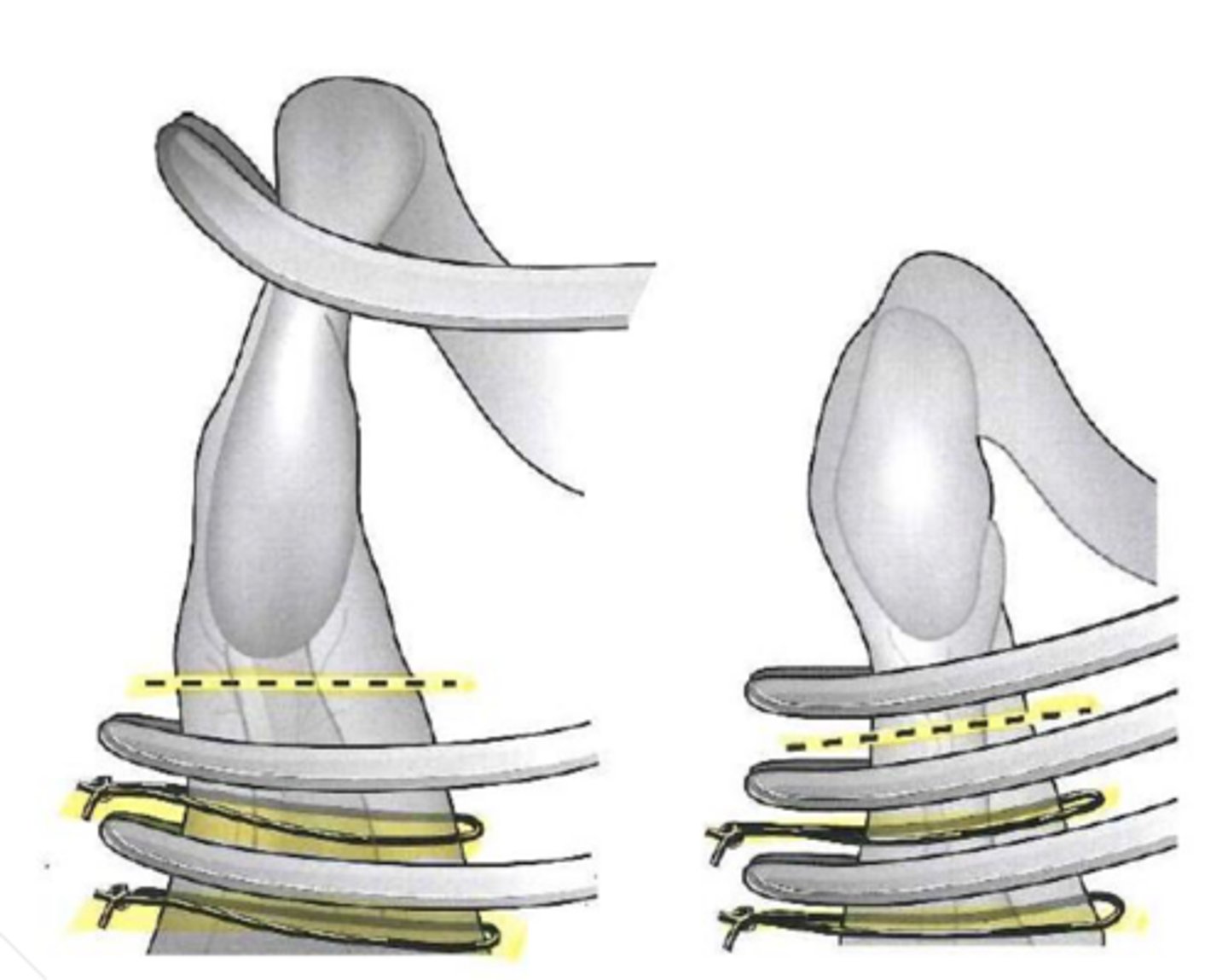
3-clamp technique
what technique is shown on the right side and is the standard method that applied all three clamps on the same side of the ovary
circumfrental lig. closer to heart and transfixing lig. farther from heart
specifics of ligating the uterus
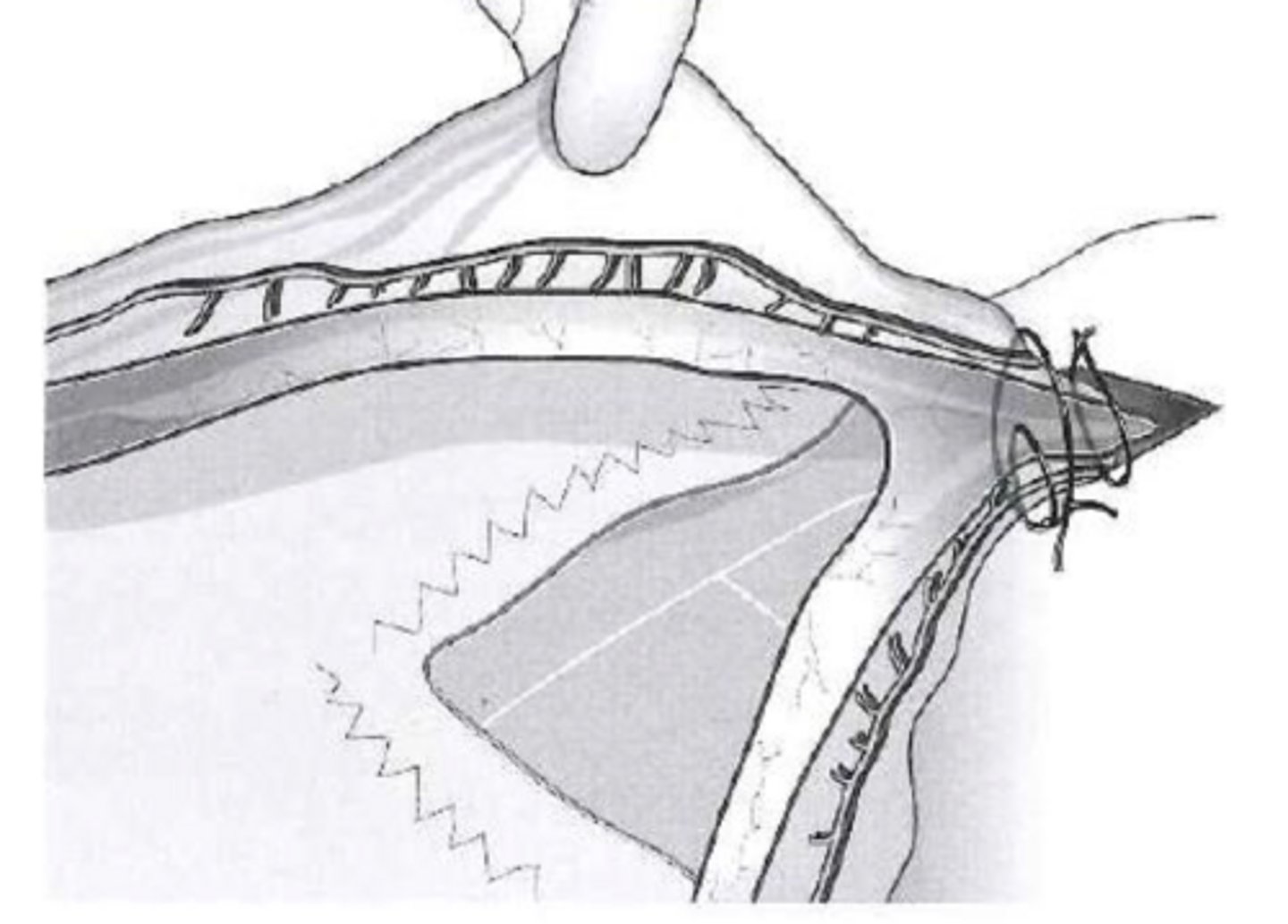
if uterine body is friable and appears unhealthy such as when it is post-partum
when might the use of clamps have the same effect as scissors in an OHE procedure and lead to severing the uterus
3 layer closure using monofilament absorbable suture
closure for OHE and castration
clots
though seeing some blood at the site of an OHE is normal, ____ are an indication that there is a problem
disorder characterized by C/s related to functional residual ovarian tissue after an OHE
what is ovarian remnant syndrome
1. dogs dx. with baseline progesterone concentrations
2. cats dx. with progesterone concentrations 7d after administration of HCG
how can we dx. ovarian remnant syndrome in dogs vs. cats
surgically explored while in estrus
when it comes to ovarian remnant syndrome, affected animals should be ______

